
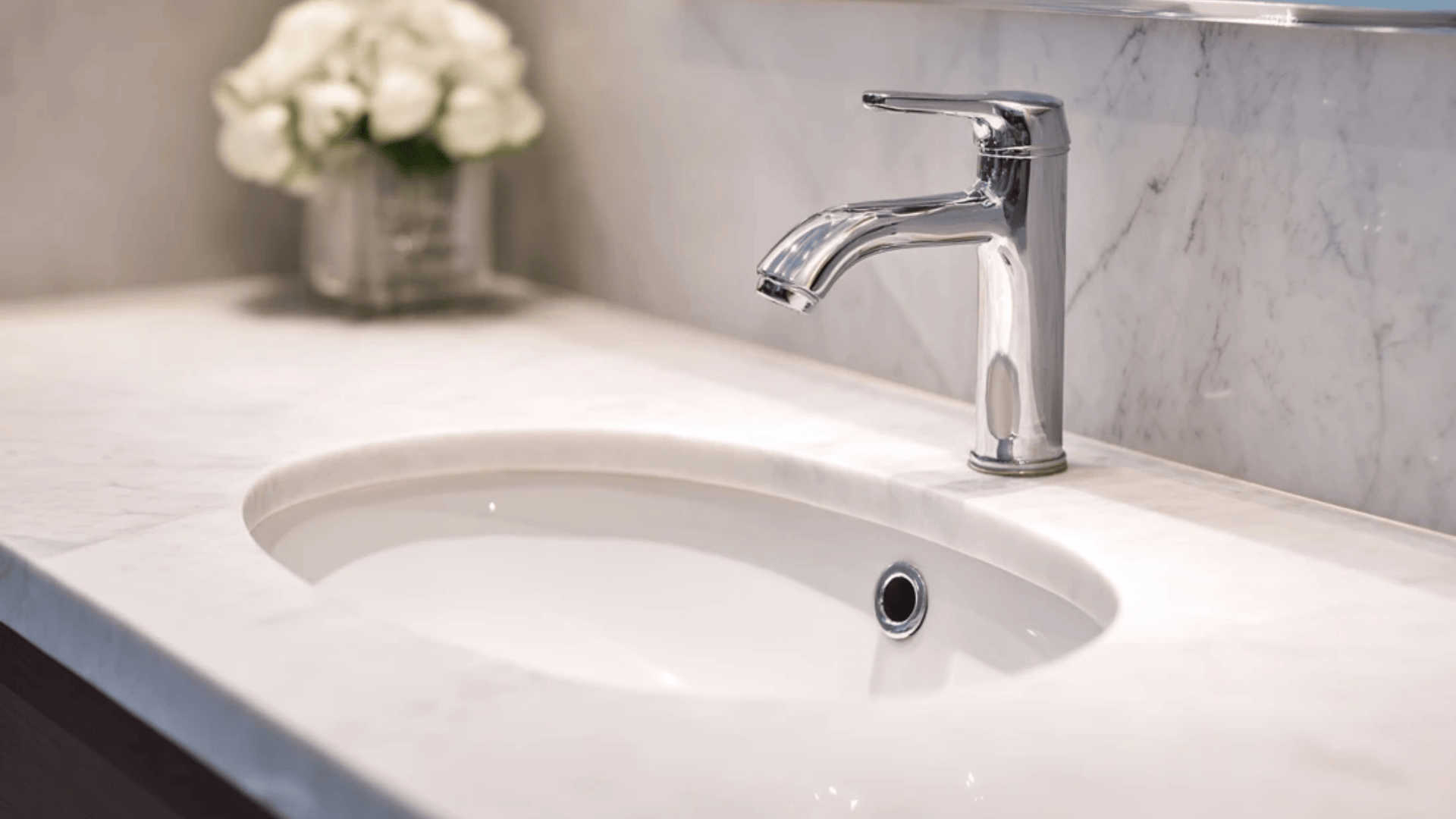
Choosing the right bathroom sink is an important decision that shapes how your bathroom looks and works every day.
The sink affects your daily routines, such as washing your hands, shaving, and brushing your teeth.
It also impacts how easy your bathroom is to clean and how well it fits the available space. A well-chosen sink can make a small bathroom feel bigger or add style to a plain one.
From modern wall-mounted designs to classic pedestal styles, each option has its benefits.
By understanding the different types, materials, and installation options, you can select a sink that perfectly suits your style, space, and budget.
Role of a Sink in Your Everyday Comfort
A bathroom sink plays a key role in daily routines; it’s where you wash your hands, brush your teeth, and prepare for the day.
It shapes how smoothly your bathroom functions, with the right size and height making tasks easier and preventing splash-back or strain.
The placement and design also influence how you move around the space, affecting comfort and convenience.
Beyond being a simple fixture, the sink connects style with purpose, guiding how the entire room feels and flows.
A well-chosen sink not only supports practical needs but also creates a balanced space that works effortlessly for you every day.
What Are Bathroom Sinks Made Of (Materials)
The material of a sink determines its comfort in use, upkeep needs, and how it complements the bathroom’s layout.
- Ceramic / Porcelain: Common and affordable; offers consistent color, smooth surface, and resists odor build-up.
- Acrylic: Quick to install; lightweight structure makes it suitable for temporary setups and mobile applications.
- Natural Stone: Adds natural variation; blends well with earthy décor and offers solid visual depth.
- Metal (Steel, Copper, Cast Iron): Keeps temperatures well; suits bathrooms that need a lasting shine and resilience.
- Glass: Reflects light effectively; ideal for smaller spaces needing a more open visual feel.
- Resin/Composite Stone: Offers consistent color throughout the surface; can be molded into unique, integrated shapes.
Summary Comparison Table
| Material | Durability | Maintenance | Approx. Cost | Best Use |
|---|---|---|---|---|
| Ceramic / Porcelain | High | Low | $50–$200+ | Family bathrooms |
| Acrylic | Moderate | Low | $40–$150 | Guest washrooms |
| Natural Stone | Very High | High | $200–$600+ | Designer bathrooms |
| Metal | High | Medium | $150–$400 | Modern interiors |
| Glass | Moderate | Medium | $80–$250 | Accent bathrooms |
| Resin / Composite | High | Medium | $120–$350 | Personalized setups |
Note: Prices are approximate and can vary depending on location, brand, and material.
Common Types of Bathroom Sinks
Bathroom sinks vary widely in style, installation method, and functionality to suit different space requirements and design preferences.
1. Wall-Mounted Sink
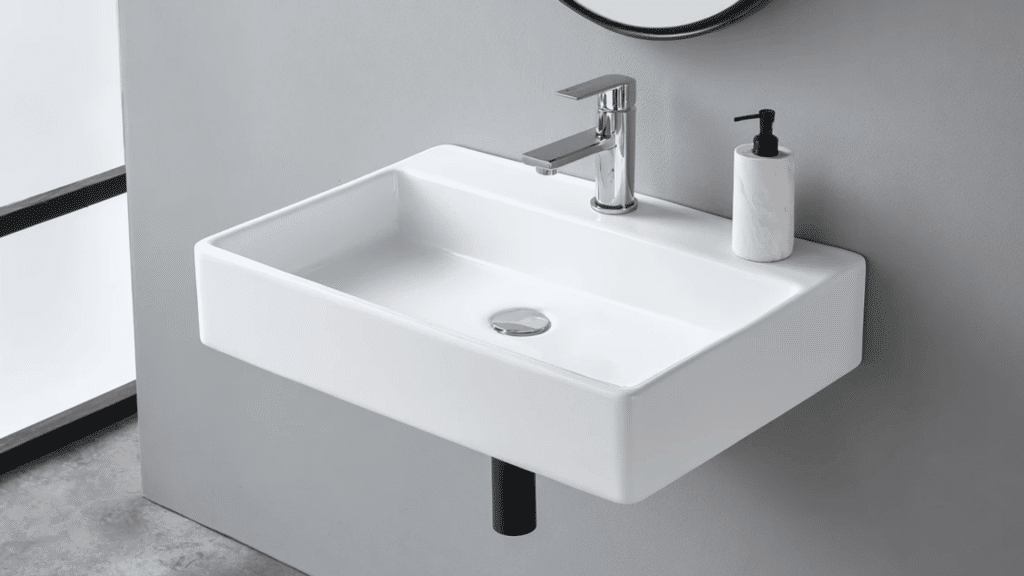
Wall-mounted sinks attach directly to bathroom walls without touching the floor. They’re popular in compact bathrooms and contemporary designs where floor space matters most.
These fixtures create an open, airy feeling while keeping cleaning simple under the basin.
| Pros | Cons |
|---|---|
| Saves valuable floor space | Offers minimal counter surface |
| Makes floor cleaning easier | Requires sturdy wall reinforcement |
| Height can be adjusted | Plumbing pipes remain visible |
Perfect for tight spaces where maximizing every square inch of floor area makes a real difference.
Recommended Product: VitrA S50 Wall‑Hung Basin
2. Pedestal Sink
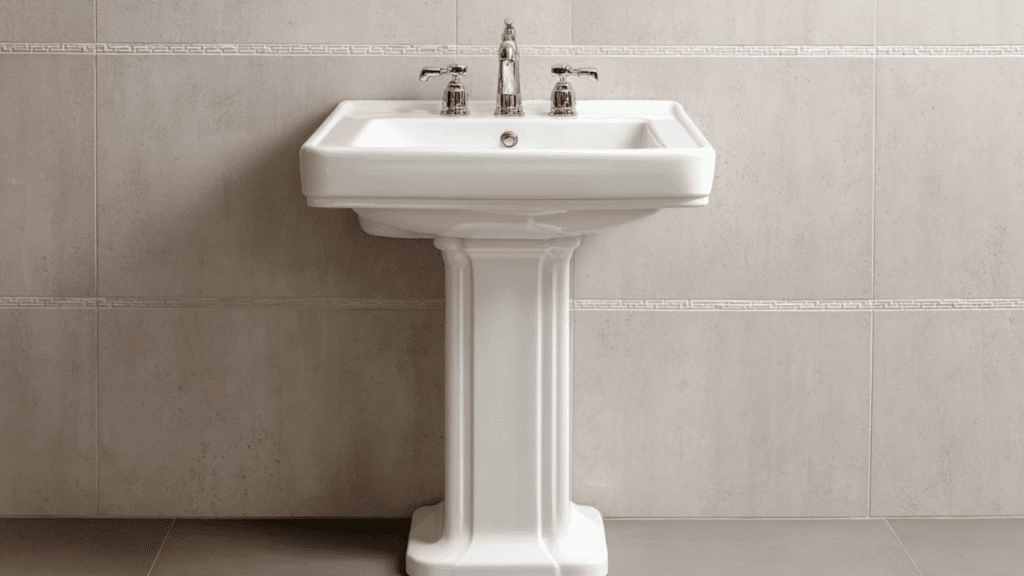
Pedestal sinks feature a basin resting on a decorative column that hides pipes and plumbing connections.
They work well in traditional bathrooms and smaller powder rooms where storage isn’t a priority. The freestanding design creates a classic, uncluttered appearance.
| Pros | Cons |
|---|---|
| Conceals plumbing effectively | Provides no storage options |
| Works in narrow areas | Limited counter space available |
| Creates clean visual lines | Installation height is fixed |
Great for bathrooms, prioritizing a tidy, traditional look without the need for built-in cabinetry.
Recommended Product: Kohler Devonshire Pedestal Lavatory
3. Vanity Sink
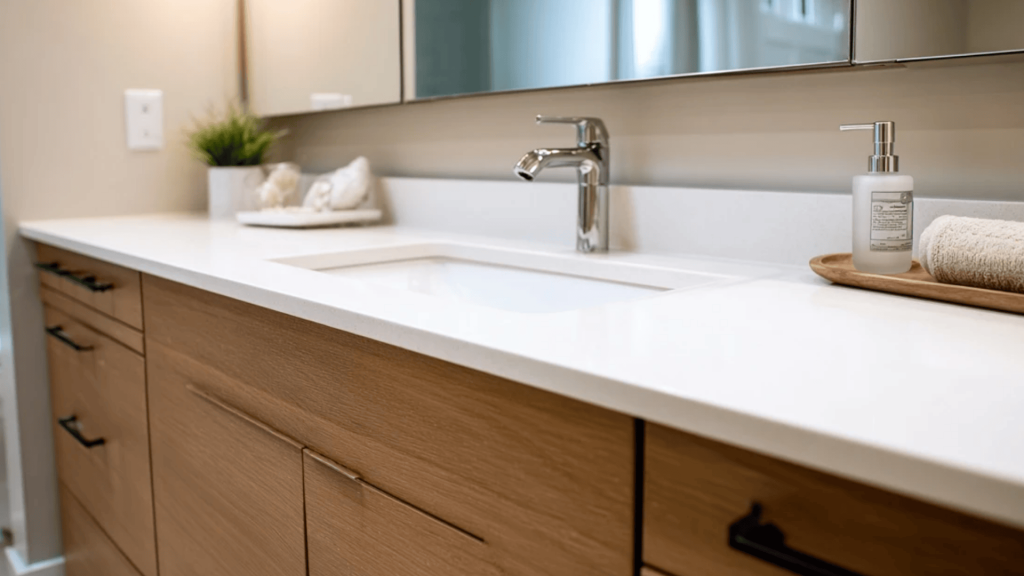
A vanity sink integrates into a cabinet or countertop unit, combining the basin with storage drawers and shelving.
These fixtures are highly functional and come in countless styles, sizes, and finishes. They completely hide plumbing while providing storage for bathroom essentials.
| Pros | Cons |
|---|---|
| Includes built-in storage | Takes up more floor space |
| Available in many designs | Installation is more involved |
| Hides all plumbing parts | Cost can be higher |
The top choice for family bathrooms where organization, storage, and daily functionality are absolute priorities.
Recommended Product: American Standard Studio S 24″ Vitreous China Vanity Top
4. Undermount Sink
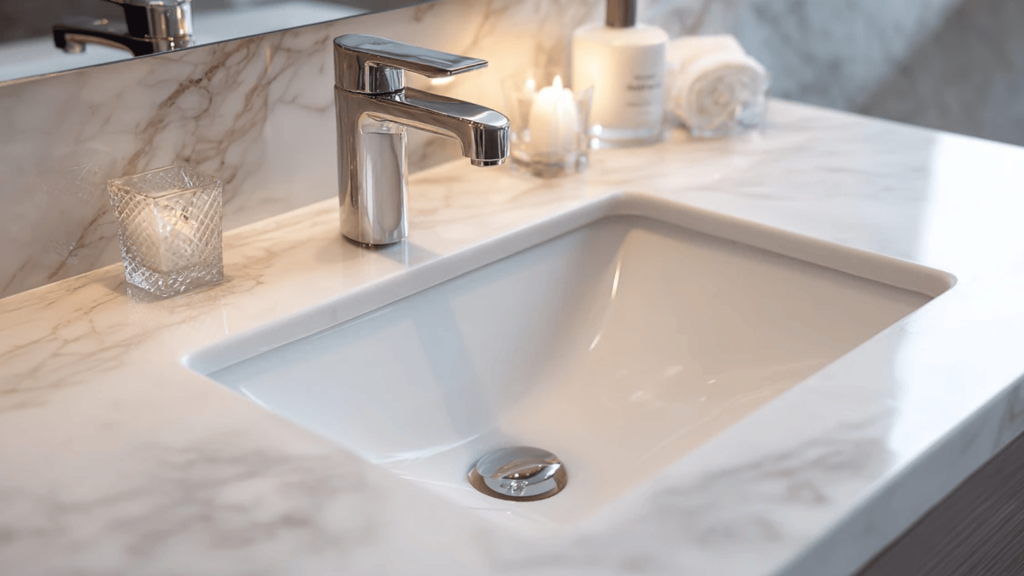
Undermount sinks install beneath the countertop surface, creating a flush, continuous appearance.
The rim sits below the counter level, making spills easy to wipe directly into the basin. This installation style works best with solid surface materials.
| Pros | Cons |
|---|---|
| Creates a smooth counter surface | Installation costs more money |
| Simplifies counter cleaning | Needs a solid countertop material |
| Delivers a contemporary appearance | Replacement is more difficult |
Perfect for contemporary bathrooms seeking a clean, uninterrupted countertop with minimal visual breaks.
Recommended Product: Duravit Rectangular Undermount Sink
5. Drop-In Sink
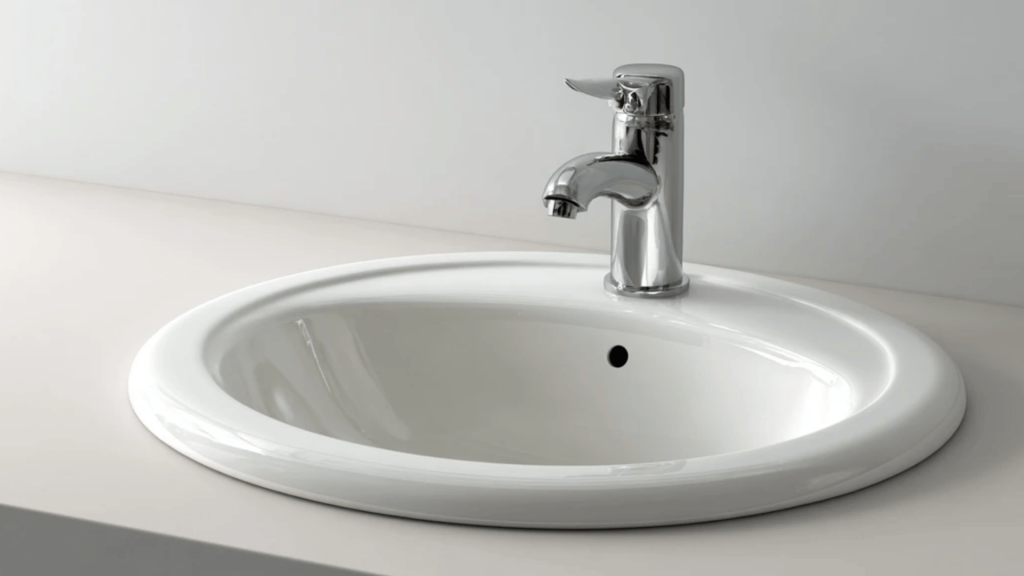
Drop-in sinks rest within a countertop cutout, with the rim sitting atop the surface. Installation is straightforward and affordable since the rim supports the entire basin weight.
These fixtures fit most standard countertop openings without specialized modifications.
| Pros | Cons |
|---|---|
| Quick and easy installation | The rim can trap dirt |
| More affordable option | Creates raised counter edges |
| Fits standard openings | Lacks a sleek appearance |
An excellent choice for budget-conscious updates or straightforward sink replacements without extensive renovation work.
Recommended Product: TOTO Clayton Self-Rimming Lavatory
6. Vessel Sink
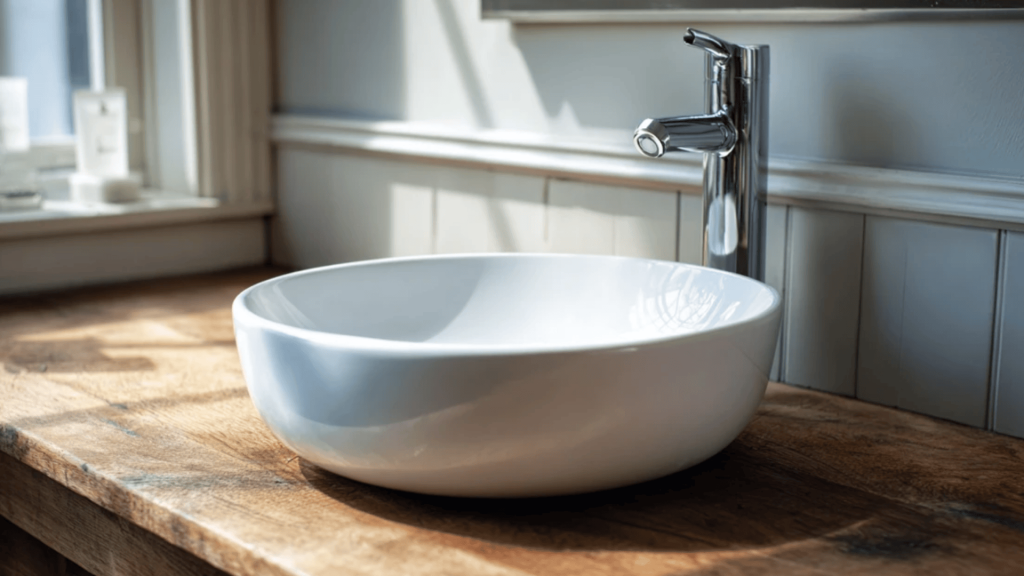
Vessel sinks sit completely above the countertop, like decorative bowls. They make bold design statements and come in various materials, including glass, stone, ceramic, and metal.
The basin becomes a focal point rather than just a functional fixture.
| Pros | Cons |
|---|---|
| Creates striking visual impact | Water splashes more easily |
| Available in diverse materials | Requires faucet height adjustment |
| Simple countertop mounting | Needs taller faucet installation |
Best suited for design-forward spaces where the sink serves as both a functional fixture and a decorative centerpiece.
Recommended Product: KOHLER Caxton Vessel Sink
7. Trough Sink
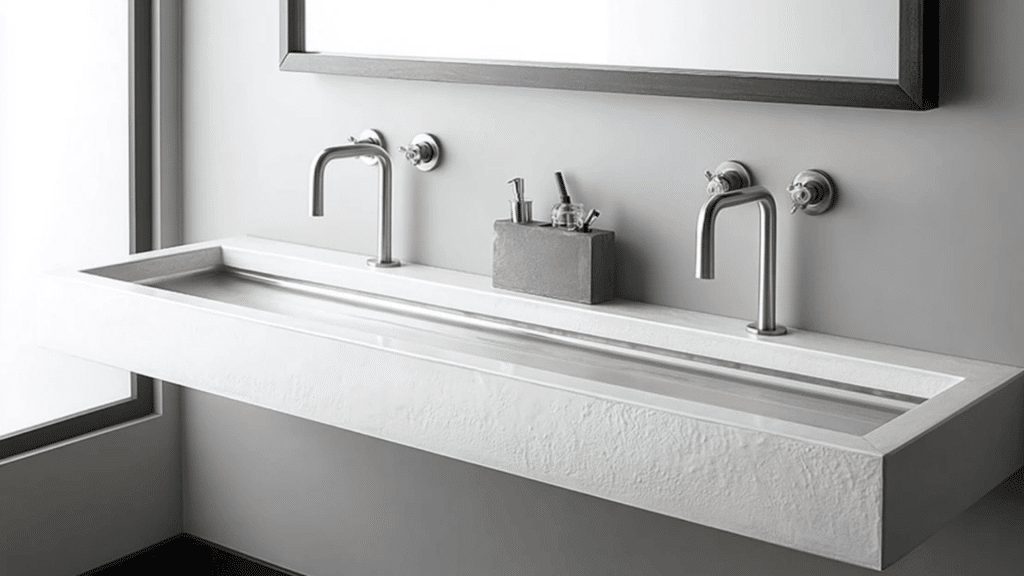
Trough sinks are long, shallow basins that accommodate multiple faucets along their length.
They’re practical for shared bathrooms where two people need simultaneous access. The rectangular shape provides generous washing space and a distinctive contemporary look.
| Pros | Cons |
|---|---|
| Accommodates multiple users simultaneously | Requires more installation space |
| Offers distinctive contemporary styling | Uses more water overall |
| Provides easy-to-clean surface | Weighs more than standard options |
A practical yet stylish solution for master or family bathrooms where multiple users need access simultaneously.
Recommended Product: IKEA LILLÅNGEN series double-sink
8. Corner Sink
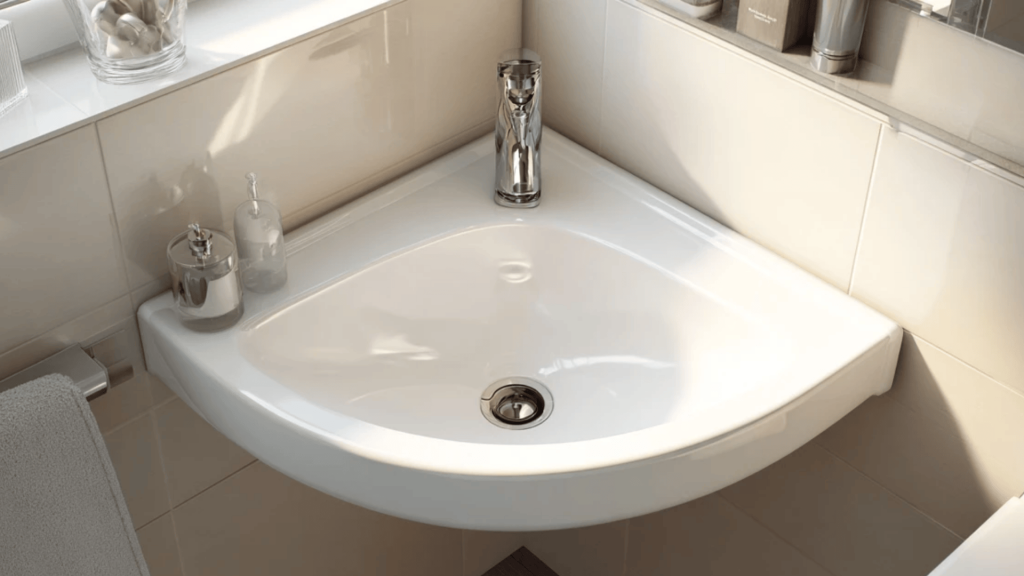
Corner sinks fit into bathroom corners, making them ideal for tight layouts and small powder rooms.
These space-saving fixtures retain full functionality while freeing up valuable wall space for other fixtures or storage.
| Pros | Cons |
|---|---|
| Maximizes tight spaces effectively | The basin size is smaller |
| Opens up the floor area | Fewer style options available |
| Provides easy plumbing access | May limit the counter area |
A clever space-saving option for compact or irregularly shaped bathroom layouts where standard fixtures won’t fit.
Recommended Product: Roper Rhodes Zest Corner Basin
Choosing the Perfect Sink for Your Bathroom Space
Selecting the right sink style, material, and setup helps create a balanced space that fits both function and design.
- Small bathrooms benefit from wall-mounted or pedestal sinks that free space and make cleaning easier.
- Family bathrooms need vanity sinks with durable surfaces and wider counters for everyday practicality.
- High-end spaces work best with vessel or trough sinks using stone, glass, or metal for visual appeal.
- Shared layouts suit double sinks that support simultaneous use without crowding the space.
- Budget projects favor drop-in ceramic or acrylic sinks for affordable updates with minimal plumbing changes.
A well-matched sink enhances comfort, saves space, and complements your bathroom’s overall style and purpose.
Installation Methods & Considerations
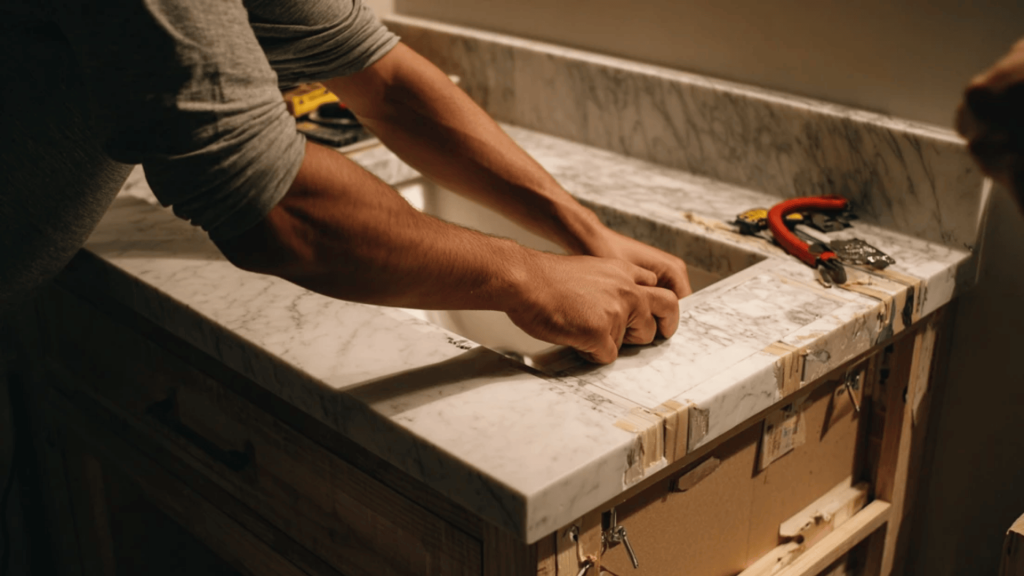
Bathroom sinks fall into four main installation types, each influencing the amount of space they require and how they function.
1. Wall-Fixed Installations
These sinks attach directly to the wall, making them perfect for smaller bathrooms needing an open, airy layout.
- Installed using heavy-duty brackets and anchors for reliable support.
- Plumbing can be hidden or used decoratively with metal finishes.
- Corner sinks fit tight angles using customized drainage alignments.
Wall-fixed designs maximize floor space, improve accessibility, and create a clean, uncluttered bathroom appearance.
2. Floor-Supported Installations
These rely on the floor for support and work best where balance and stability are key installation priorities.
- Pedestal versions rest on columns that hide plumbing and support the basin’s weight.
- Trough sinks use reinforced bases or framed structures for strength.
- Plumbing must be aligned precisely before installation to prevent leaks.
Floor-supported sinks combine practicality with sturdiness, offering dependable setups for family or shared bathrooms.
3. Countertop Installations
Installed above or partly into a counter, these sinks allow flexible faucet placement and simple replacement when updating décor.
- Drop-in models rest on countertop rims for quick installation.
- Vessel sinks sit fully above the counter, requiring taller faucets.
- Semi-recessed sinks extend outward for shallow counters.
Countertop styles suit bathrooms that prioritize variety and easy upgrades without heavy remodeling.
4. Integrated Installations
Integrated sinks connect directly with vanities or countertops, delivering a seamless, practical, and long-lasting fixture setup.
- Undermount designs attach beneath countertops for a smooth finish.
- Vanity sinks come pre-fitted into moisture-resistant cabinets.
- Plumbing is concealed for a neat appearance and easy cleaning
Integrated setups offer simplicity and strength, making them ideal for modern bathrooms with coordinated, cohesive designs.
Maintenance Tips for Bathroom Sinks
Regular maintenance keeps your sink looking fresh, functioning properly, and lasting longer, regardless of the material or style you choose.
- Ceramic / Porcelain: Clean gently with mild soap; avoid abrasives and dropping heavy items to prevent chipping.
- Natural Stone: Reseal annually, wipe up spills promptly, and avoid acidic or harsh cleaners that can cause surface etching.
- Metal: Dry surfaces after use; prevent watermarks and allow natural patina on copper, if preferred.
- Glass: Use soft cloths for cleaning; avoid impact and remove water spots to maintain clarity.
- Composite / Solid Surface: Wipe with non-abrasive cleaner; repair light scratches by buffing or sanding as needed.
Simple, consistent care preserves beauty, prevents wear, and ensures your sink remains durable and easy to maintain for years.
Making The Decision
Your bathroom sink does more than hold water; it shapes how the entire room feels and functions every day.
The right choice blends practicality with design, turning ordinary routines into moments of ease and comfort.
Think about how you want the space to feel each time you walk in: calm, bold, or efficient.
From material to installation, every detail contributes to that experience. Explore options, take measurements, and picture how each choice fits your lifestyle.
Ready to create a bathroom that feels complete? Start browsing trusted sink collections today and find the one that truly reflects your taste and purpose.
Frequently Asked Questions
How Can I Prevent Water Spots On My Sink?
Wipe the surface dry after each use to prevent mineral deposits and dulling stains.
What Is The Easiest Sink Shape To Clean?
Round or oval basins are easiest since they have no sharp corners or tight edges.
Can I Install A New Sink Without Changing Plumbing?
Yes, as long as the new sink matches the existing pipe placement and drain alignment.
Is It Safe To Use Bleach On Bathroom Sinks?
Only use diluted bleach occasionally; strong solutions can harm coatings or weaken finishes.
