
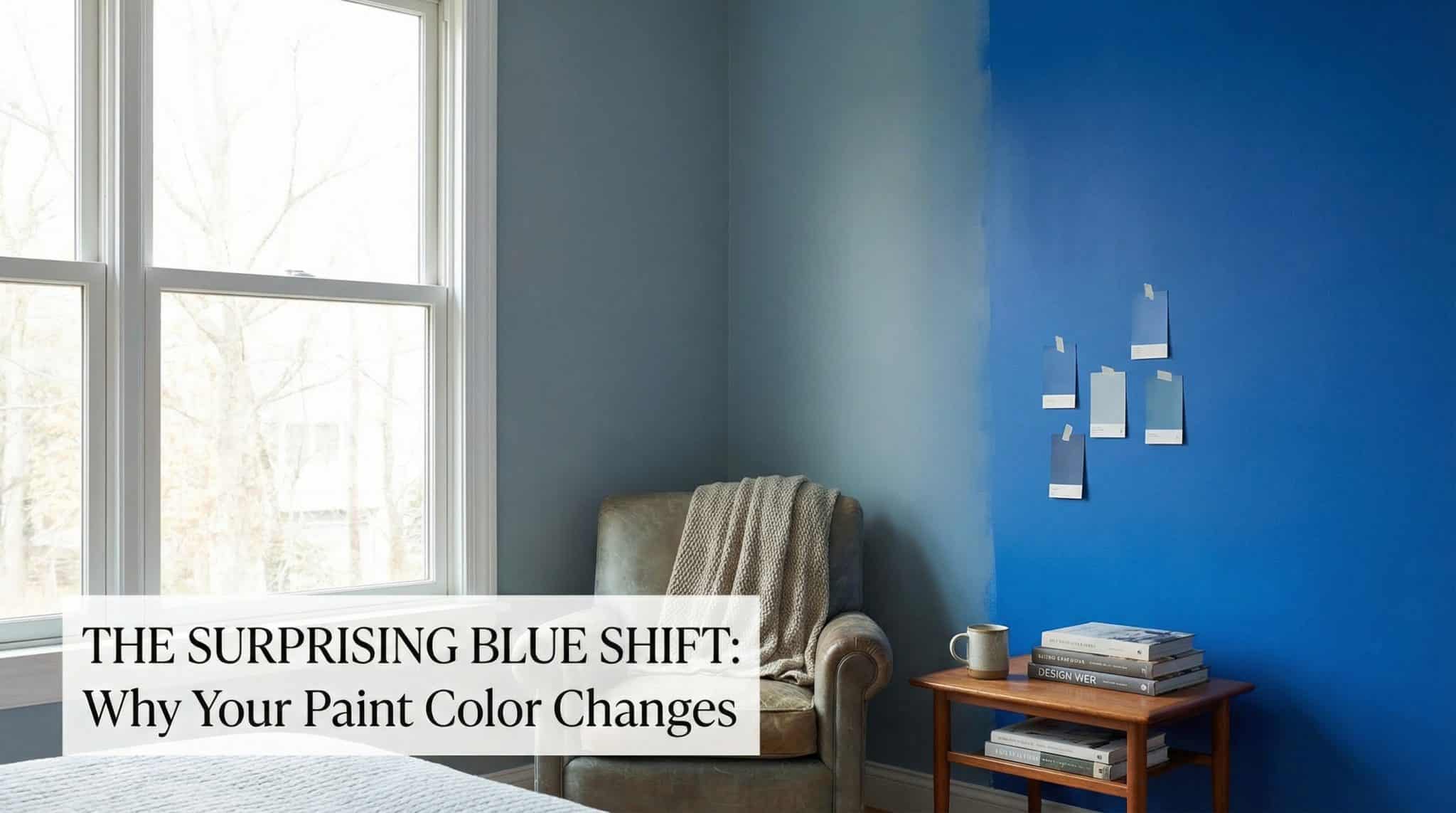
If you’ve ever fallen deeply in love with a blue paint chip in the store—only to put it on your wall and watch it turn into “sad hospital scrubs” by dinner… hi. Welcome. Your north facing room isn’t broken. It’s just doing that thing north facing rooms do: making perfectly nice colors look weirdly chilly and a little dead inside.
I’ve been burned by this too. I once painted a north facing office what I swore was a soft, cozy blue… and it read like a damp gray hoodie in a room that already had the personality of a spreadsheet. Learn from my pain.
The good news: you can absolutely have blue in a north facing room and love it. You just can’t pick it like you would in a sunny room. (North light has rules. It’s… bossy.)
What north light is doing to your blue (and why it feels personal)
North facing windows don’t get direct sunlight. They get cool, indirect light—basically light that bounced off the sky and showed up already wearing a blue filter.
So here’s what happens:
- Cool undertones get louder. (Blue, gray, purple… they all start shouting.)
- Warm undertones get muted. (Yellow, beige, anything “sunny” gets quietly escorted out.)
- Colors look flatter. North light is softer and dimmer, so a color that looks crisp on a chip can look like it’s running on 3% battery on your wall.
And the weather makes it extra spicy:
- Clear day: even more cool/blue light coming in, so your blue can go icier.
- Overcast day: light gets diffused and gray, so your blue can go… yep… grayer.
North light is consistent, which sounds nice until you realize it’s consistently cool. Like that one friend who “just tells it like it is.”
The undertone thing you can’t ignore (sorry)
In a north facing room, undertone is the whole plot. The warm vs cool undertones are how you end up repainting on a Saturday, which is a very specific kind of heartbreak.
Blues that usually fail in north light
These tend to go dull, gray, or weirdly purple:
- Blue grays (the gray takes over)
- Periwinkles / purple leaning blues (hello, 1997 nursery vibes)
- Icy sky blues (they can look clinical fast)
Blues that usually behave
The winners tend to have a little built-in warmth to fight the chill:
- Green leaning blues (teal-ish, ocean-y, peacock-y)
- Blue greens
- Deep navies with a hint of green
If you want that “blue” to stay blue in north light, a tiny nudge toward green can be your saving grace.
My favorite quick undertone test (it’s stupid simple)
Take your paint chip and hold it up against a sheet of bright white paper in the actual room (midday is great). The white paper is like turning the contrast up on your eyeballs—you’ll suddenly see what the color is hiding.
- If it tips teal, you’ve got green in there (usually good for north light).
- If it starts whispering lavender, that purple undertone is going to party hard in your room.
- If it goes flat and dusty, there’s a decent amount of gray (proceed with caution).
Do this before you get emotionally attached. Paint chips are flirts.
Blues I actually like for north facing rooms (aka: the safer bets)
Paint is wildly personal, and your floor/furniture matters, but if you want a starting point, the Daphne Blue shade is a helpful reference in north light:
- Benjamin Moore Palladian Blue – pretty, airy, and green leaning. (Heads up: it can read more green by evening. Warm lamps help.)
- Sherwin-Williams Rainwashed – soft and calm, doesn’t disappear into gray sadness.
- Benjamin Moore Van Deusen Blue – a classic deeper blue that holds its own. (I like it when you want “real navy” energy.)
- Farrow & Ball Hague Blue – moody and rich, with enough pigment to stay dramatic instead of dull.
- Sherwin-Williams Riverway or Benjamin Moore Caribbean Teal – both keep their richness because they lean into that blue green sweet spot.
- Farrow & Ball Stiffkey Blue – deep and gorgeous if you love a more muted, stormy blue that still has presence.
One quick “compare and beware” example: Sherwin-Williams Naval can lean a bit more purple in some rooms, which can go colder in north light. Not a “never,” just a “test it like you mean it.”
Nighttime matters: don’t let your light bulbs sabotage you
Daytime north light is what it is. Evening lighting is the part you can control. Take the win.
Here’s the rule I live by:
North facing room = warm bulbs.
- Aim for 2700K-3000K (warm white) to add back the warmth your room is missing.
- Avoid 4000K+ “cool white/daylight” unless your goal is “interrogation room chic.”
Also: please don’t rely on one sad overhead light. Layer in a couple lamps or sconces. Light at different heights makes paint look richer and more intentional (and makes everyone look better too, honestly).
Finish talk (because yes, it changes the vibe)
- Eggshell or satin: my go-to for north facing rooms. It reflects just enough light to keep the color alive without screaming “shiny!”
- Matte: pretty, but it eats light. If you insist on matte (I get it, it’s chic), go a little deeper with your blue so it doesn’t turn chalky.
- Semi gloss/gloss: save it for trim/doors unless you want your walls to reflect every life choice you’ve ever made.
Test your paint like a grown-up (north rooms punish shortcuts)
If you do nothing else, do this. North facing rooms will absolutely humble you.
- Paint a BIG sample (at least 12″ x 12″, bigger is better).
Even better: paint a foam board so you can move it around.
- Test two different walls (next to the window and opposite it). The light is not the same.
- Look at it in multiple moods:
- – clear day
- – overcast day
- – nighttime under your actual lamps
Watch for red flags:
- It goes weirdly gray for half the day
- A surprise purple cast shows up
- It looks flat unless every light in the house is on
If that happens, don’t panic—just shift to a blue with more depth or a slightly greener undertone.
Commit only when you’ve seen it behave in real life. Skipping this is how people end up repainting while muttering, “Why did I do this to myself?” into a roller tray.
The bottom line
North facing rooms aren’t anti-blue—they’re just picky. If you choose a blue with the right undertone (hello, blue green), give it a finish that reflects a little light, and use warm bulbs at night, your room stops fighting you and starts cooperating.
Grab a few samples, do the white paper undertone test, and tape those big swatches up like you’re building a tiny paint gallery. The right blue is out there—and once you find it, north light can sit down and behave.