
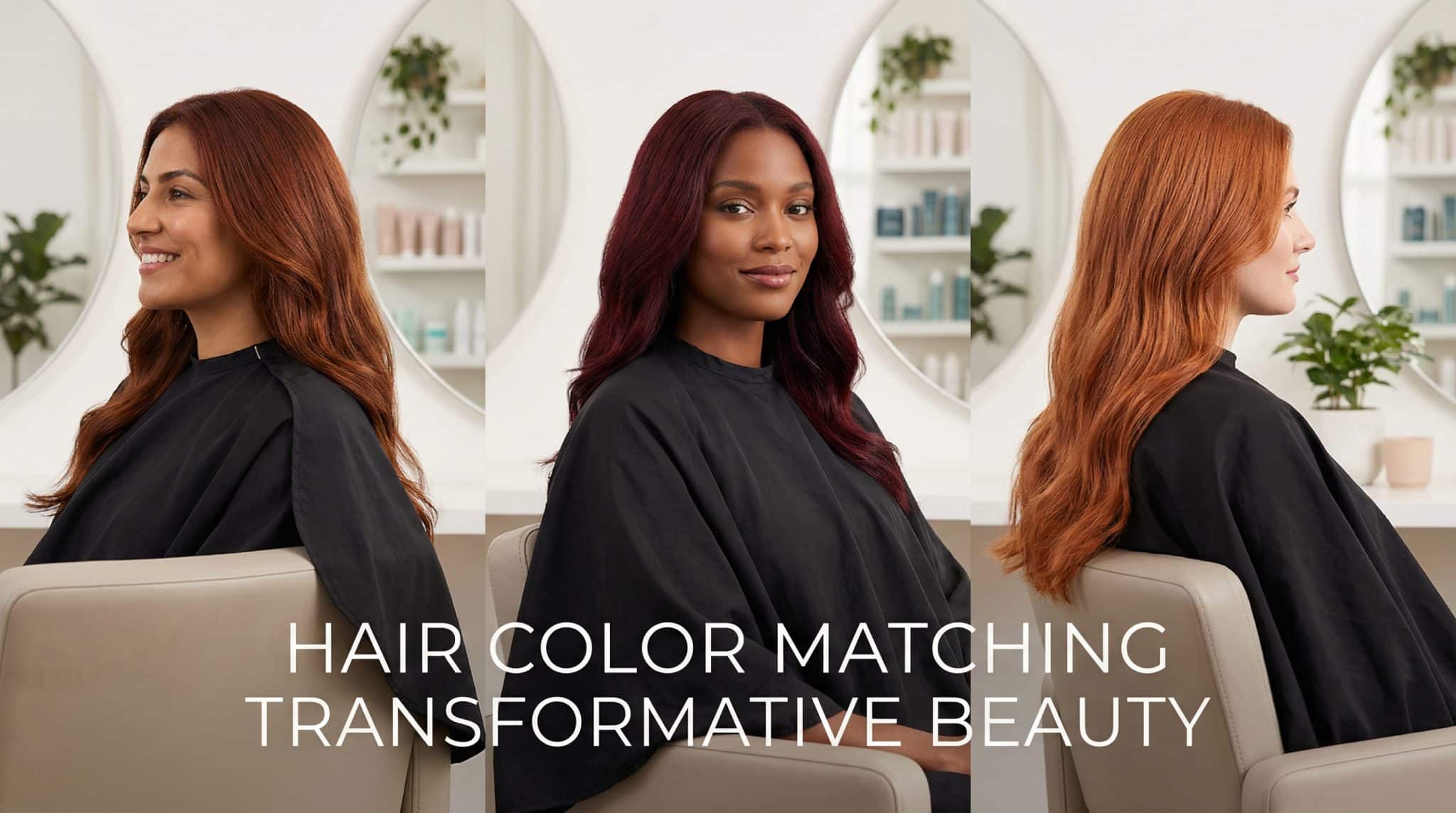
You know that dreamy reddish brown hair color you saved at 1:13 a.m. because it screamed “cozy fall heroine who owns matching loungewear”? Yeah. On your head it can turn into “why do I look…slightly seasick?” in about four business seconds.
And nine times out of ten, it’s not because you “can’t pull off red.” It’s because you grabbed a reddish brown with the wrong undertone for your skin.
Reddish brown isn’t one color. It’s a whole chaotic friend group: copper, auburn, mahogany, cherry cola, burgundy… and they do not all behave the same in daylight. Let’s get you matched up so you stop side eyeing yourself in the bathroom mirror like it personally betrayed you.
First: The 3 Second Undertone Test (No Lab Coat Required)
Undertone is your skin’s underlying “temperature.” Not how light or deep your skin is—more like the vibe humming underneath it.
Grab natural light (a window is fine. Don’t go standing in your driveway like a suspicious raccoon unless you want to).
1) The Vein Test
Look at the veins on your inner wrist:
- Green-ish veins → you’re usually warm
- Blue or purple veins → you’re usually cool
- A confusing mix → you’re probably neutral (a.k.a. the teacher’s pet of hair color options)
2) The Jewelry Test
Hold gold near your face. Then silver.
- If gold makes you look more alive → warm
- If silver makes you look clearer → cool
- If both look good → neutral
Here’s the line I want tattooed on every hair color box: undertone is the vibe, depth is the volume knob. You can be fair and warm or deep and cool undertone is still the thing deciding if “reddish brown” looks expensive or… medically concerning.
Okay, So Which Reddish Brown Actually Works for You?
Ignore shade names like they’re honest. They’re not. (“Cherry cola” could mean anything from romantic brunette to “I spilled merlot on my head.”)
Instead, look for clue words:
- Warm leaning words: copper, gold, caramel, cinnamon, ginger, orange
- Cool leaning words: violet, wine, plum, berry, merlot, magenta
- Neutral friendly words: mahogany, chestnut, auburn (depending on the formula)
If you’re warm
Your best friends are auburn, copper, ginger, warm mahogany anything with a golden/orange glow and a quick mahogany warm cool test.
What to avoid: purple heavy burgundies. On warm skin, they can go a little muddy and give “tired Victorian orphan” when you were aiming for “radiant.”
If you’re cool
You want reddish browns with a purple/wine base: burgundy, cherry cola, plum leaning brown, rose brown.
What to avoid: super golden copper (it can read straight up orange on cool undertones, and not the cute Aperol Spritz kind).
If you’re neutral
You can play on both sides. The deciding factor is usually:
- How bold do you want it?
- How often do you want to maintain it? (Because red is beautiful and also… needy.)
Personally, if you want lower drama, deeper shades like classic mahogany brown tend to fade a little more gracefully than bright copper, which loves to vanish the second you look away.
Now Pick the Right Depth (So It Doesn’t Wear You)
Once you’ve got undertone handled, then you pick how light/dark/intense you go.
Here’s the quick cheat sheet:
- Fair + warm: go for strawberry auburn, light copper, peachy warm red brown. Super deep shades can look harsh fast.
- Fair + cool: look at cool cherry, soft burgundy, rosy brown reds (less orange, more berry).
- Medium skin: you’ve got range. Cinnamon, auburn, mahogany usually look great adjust based on how bold you want to be.
- Deep skin + warm: stunning with rich copper, dark rust, deep auburn, golden red browns. Face framing warmth can be chef’s kiss.
- Deep skin + cool: go for ruby, burgundy, red violet those jewel tones look ridiculously good.
- Olive skin (my favorite wild card): orange leaning reds can go a bit murky because olive has that green undertone. Olive skin often looks amazing in burgundy/merlot/violet red. If you love copper, it usually behaves better as warm ribbons over a deeper base instead of full on orange warmth everywhere.
Your Starting Hair Color Matters (Annoying, But True)
I wish hair color worked like paint slap it on, get the Pinterest result, go eat chips. But hair has a history. And opinions.
- Very dark hair (black to deep brown): you can usually see mahogany, burgundy, deep auburn without lightening. But if you want that red to look obviously red in normal lighting, you might need some lift.
- Medium brown hair: this is the sweet spot. You can get most reddish browns with less effort (sometimes even a gloss/toner situation).
- Light brown to blonde: deposit only color can give you copper, strawberry, rose brown without extra damage great if you want to “try on” red.
Translation: your hair’s “before” changes the “after.” This is why two people use the same shade and one looks like a cinnamon goddess and the other looks like a penny.
What to Say at the Salon (So You Don’t Leave With “Surprise Orange”)
Pinterest is inspiration. Pinterest is not a consultation. (Ask me how I know.)
Try these lines:
- If you’re warm: “I want a warm reddish brown more gold/copper, not ashy.”
- If you’re cool: “I want a reddish brown with a wine/plum base. I don’t want it pulling orange.”
- If you’re neutral: “I can go warm or cool. I want it to feel (subtle / bold) and fade nicely.”
And ask:
- “Does this formula lean warm or cool?”
- “As it fades, will it go brassy? What should I use at home?”
- “Would you tweak this to suit my undertone?”
Also: bring photos where the person has similar coloring to you, not just a cute haircut and good lighting. Lighting is a liar.
Test Drive the Shade (Before You Marry It)
If you’re nervous (valid), do one of these:
- Virtual try ons: not perfect, but it narrows the panic.
- Semi-permanent color: a low commitment fling. Great for “is this me?” energy.
- Strand test at the salon: the gold standard. Check it in daylight and indoor lighting because reds shape shift like they’re in witness protection.
Skip the test if you want, but I’m telling you: your bathroom lighting will snitch later.
Keeping Red Fresh (Because Red Fades Like It’s Paid to Leave)
Red pigments fade faster than brown. Gorgeous, dramatic, and slightly high maintenance basically the theater kid of hair colors.
A realistic touch up vibe:
- Bright copper/ginger/cherry: ~every 4-6 weeks
- Copper/cinnamon/mahogany: ~every 6-8 weeks
- Deep auburn/burgundy: ~every 8-10 weeks
What actually helps:
- Sulfate free, color safe shampoo
- Color depositing conditioner (leave it on a few minutes, let it do its job)
- If you’re cool red: a purple toning product occasionally can help prevent the orange creep
- If you’re warm red: a blue toning product can calm down brassiness if it starts going too “traffic cone”
- Heat/UV protection (sun + hot tools = fade city)
Bonus cheat: reddish brown balayage with darker roots can stretch appointments way longer because regrowth blends instead of announcing itself like a headline.
The Whole Point (So You Actually Love the Mirror Again)
If you match the shade undertone to your skin undertone, you’re already halfway to “wow.” After that, choosing depth and planning for maintenance is just making sure future you doesn’t feel personally attacked by fading.
So yes, go for the reddish brown. Just pick the one that actually likes you back.
Now go find your perfect red brown… and may your bathroom lighting be kind.