
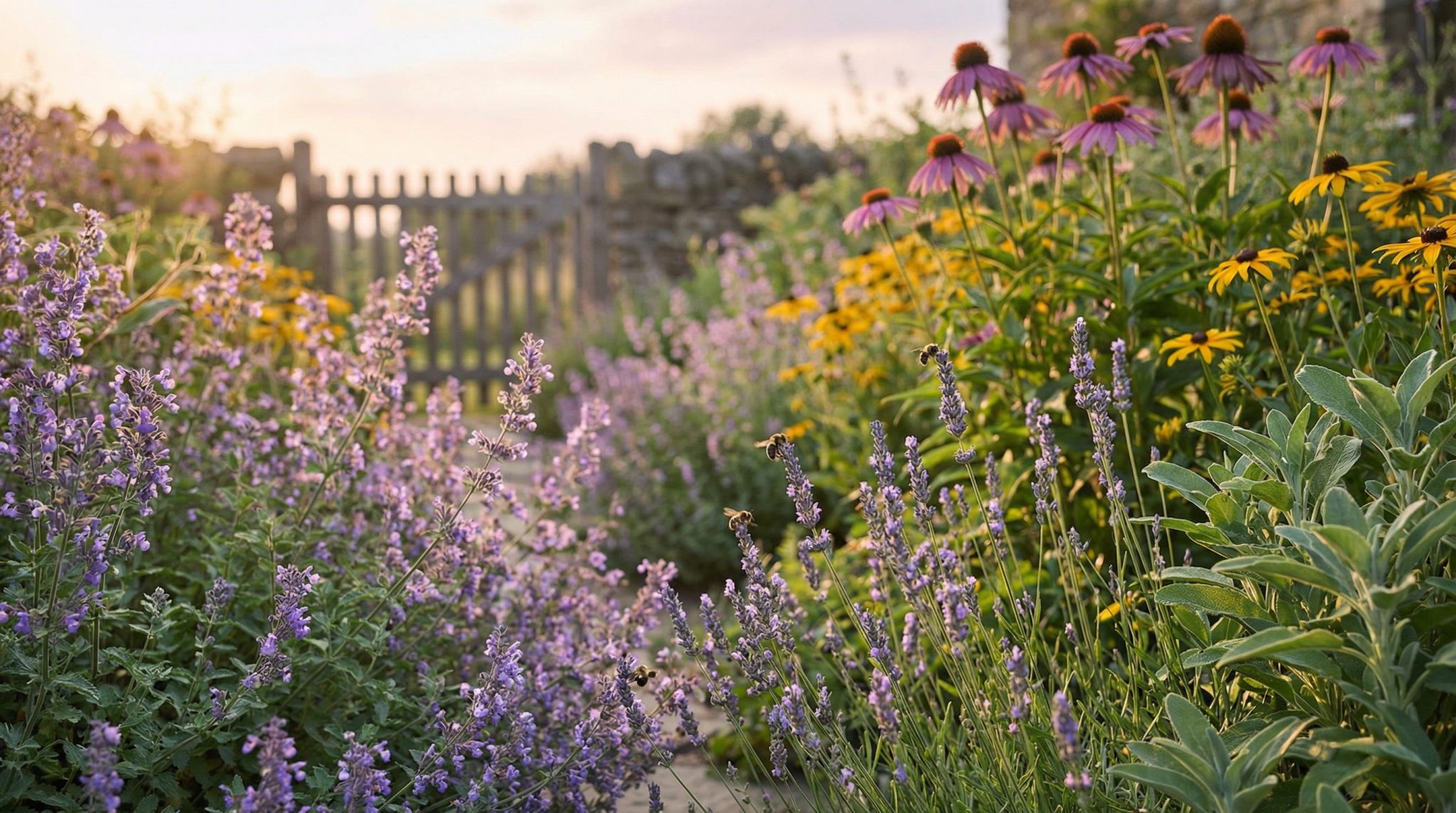
Most cottage garden articles sell you on “effortless romance” and then quietly ghost you the second the weeds show up. So let me say the part out loud: a cottage garden is the opposite of a high maintenance diva… once it’s established.
Year one? A little clingy.
Year two? It starts pulling its weight.
Year three? It’s basically running the place like a tiny plant mafia dense growth shades out weeds, self-seeders patch the bald spots, and beneficial insects show up like unpaid security guards.
The trick is not “work harder.” The trick is pick plants that actually like your yard (and stop believing the lie you tell yourself at the garden center: “I’ll just move it later.” You will not. Ask me how I know.)
So here’s the version of cottage gardening that’s realistic for people with jobs, knees, and a limited appetite for drama.
The 5-Step Cottage Garden Plan (That Won’t Ruin Your Weekend)
1) Figure out what you’re working with (before you buy “just one more” plant)
You need three facts:
- Sun: Full sun is 6+ hours. Part shade is 3-6. Under 3 is shade shade (the kind that laughs at lavender).
- Drainage: After a big rain, does the water hang out like it pays rent? Bad drainage. If it soaks in within ~30 minutes, you’ve got options.
- Your USDA zone: It’s the reality check your cart needs. (Zone 5 peonies? Sure. Zone 9 peonies? That’s a heartbreak hobby.)
This is the boring part like reading the IKEA instructions first but it saves you actual money and swearing.
2) Build a “3-layer” garden (aka: bones, muscles, jewelry)
Cottage gardens look casual, but they’re not random. The easiest ones have layers:
- Anchors (the bones): shrubs, small trees, roses, big grasses. These keep your bed from looking like sad dirt from November to March.
- Workhorses (the muscles): long blooming perennials that show up month after month without needing a daily pep talk.
- Accents (the jewelry): self-seeders, airy things, climbers, and “movement” plants that make it feel loose and romantic.
If you do nothing else, do this. It’s the difference between “charming cottage” and “confusing plant yard sale.”
3) Choose plants that behave (and skip the needy ones)
“Low maintenance” is marketing. Truly easy plants tend to:
- handle some drought once established
- not require staking
- resist disease
- either bloom a long time or look good when they’re not blooming
And yes, some classic cottage beauties are… a lot.
The “I look cute but I’m exhausting” hall of fame
- Delphiniums (flop city, plus humidity tantrums)
- Hybrid tea roses (spray routines, fussy pruning, constant opinions)
- Sweet peas (support + deadheading + perfect conditions… for what?)
- Tulips (in many climates they’re basically expensive annuals)
Swaps I’ll choose every time:
- Russian sage instead of delphiniums (tall + blue, way less drama)
- disease resistant shrub roses instead of hybrid teas
- daffodils instead of tulips (reliable = romantic, fight me)
4) Plan for blooms in more than one season
A garden that peaks in June and then emotionally checks out by July is usually a planning problem.
My lazy but effective rule:
1 spring thing + 2 summer workhorses + 1 fall/winter structure plant = you look like you know what you’re doing.
Also: leave some seed heads and grasses standing in winter. It looks pretty and birds treat it like a snack bar.
5) Accept the timeline (because plants don’t sprint)
This is where most people sabotage themselves (also me, historically).
Year one looks sparse. Perennials are building roots, not putting on a Broadway show. Do not panic and cram annuals into every gap. I did that once and my bed looked incredible for eight minutes… and then year two showed up and everyone started fighting for space like it was Black Friday.
Quick Plant Picks by Situation (Because You’re Busy)
Full sun (6+ hours)
- catmint
- coneflower
- black eyed Susan
- yarrow
- Russian sage
- sedum ‘Autumn Joy’ (only if soil drains well)
- lavender (only if soil drains fast)
Part shade (3-6 hours)
- hardy geranium
- astilbe
- coral bells (Heuchera)
- lady’s mantle
- bleeding hearts
- hostas + ferns (a foliage first cottage vibe is still a vibe)
Heavy clay
- catmint
- black eyed Susans
- hardy geranium
Skip lavender and sedum unless you like donating plants to the compost pile.
Deer pressure
Often ignored:
- catmint
- Russian sage
- lavender
- yarrow
- ornamental grasses
(“Often” is the key word. Deer didn’t read the label.)
My Favorite “Workhorse” Perennials (The Ones That Earn Their Keep)
If you plant any 3-5 of these that match your sun + soil, you’ll feel the garden start to shift from “project” to “pleasure.”
- Catmint (Nepeta ‘Walker’s Low’): absurdly dependable, long bloom, drought tough, and it softens edges beautifully. Also a fantastic “lavender substitute” for heavy soil.
- Black eyed Susan (Rudbeckia): bright, cheerful, and low fuss. It’ll even self-seed politely in many gardens.
- Coneflower (Echinacea): blooms + pollinators + seed heads for birds. It’s the full package.
- Hardy geranium: the part shade hero. It’s not flashy in a “wedding centerpiece” way, but it fills and blooms and behaves.
- Russian sage: tall, airy, and hard to kill in sun. (My favorite category of plant.)
- Sedum ‘Autumn Joy’: fall color champ, but only if it’s not sitting in wet feet.
- Lavender: gorgeous and scented and bee loved… but only if your drainage is excellent. Wet soil + lavender = funeral.
Pick your workhorses first. Then you get to add the fun stuff like garden arch vines.
Self-Seeders: The Cottage Garden Cheat Code
Self-seeders are how you get that “it just happened like this” look (which is the garden equivalent of “I woke up like this,” aka suspicious but delightful).
My easy favorites:
- Cosmos (basically beginner proof)
- Foxglove (biennial, but reseeds so you get blooms yearly once it’s going — toxic if eaten, so keep it away from curious pets/kids)
- Hollyhocks (vertical drama, old school charm)
- Bachelor’s buttons (scatter them, feel smug)
How to keep them from taking over your life:
Stop deadheading about 6-8 weeks before frost so seeds can mature. In spring, thin seedlings so they’re not packed like a subway at rush hour. If one gets too enthusiastic, clip seed heads before they drop.
Structure: The Difference Between “Pretty” and “Pretty All Year”
If you want a cottage garden that still looks like something in January, you need anchors.
My low drama picks:
- Panicle hydrangeas (Limelight, Vanilla Strawberry, etc.) they bloom on new wood, so pruning is forgiving
- Disease resistant shrub roses (the kind you don’t have to emotionally support)
- Ornamental grasses leave them up in winter, cut back in late winter, feel accomplished
Choose 1-3 anchors, place them first, then fill around them. Bones first. Party second.
What Maintenance Actually Looks Like (Realistic Edition)
Year one: you’re establishing the bed
This is the only year I’m going to ask you to be consistent.
- Water: deep soak about once a week for the first 8-12 weeks (about 1″ total from rain/hose)
- Mulch: 2-3″ helps so much with weeds and moisture
- Weeding: yes, you’ll weed. But if you stay ahead of it early, you’re not doomed forever.
Also: it will look a little bare. That’s normal. Plants are not influencers. They don’t peak immediately.
Year two and beyond: the “ohhh, now I get it” phase
- Spring: cut back grasses, clean up dead stems, maybe divide a fast spreader
- Summer: deadhead if you feel like it, water only in real drought
- Fall: plant bulbs, edit anything that’s spreading too much, leave most things standing for winter interest
By this point, the garden starts doing that magical cottage thing: it fills in, it shades weeds, it attracts pollinators, it looks like you have your life together.
(Your secret can be that you absolutely do not.)
The Beginner “Just Start” Kit (Simple, Cheap, Works)
If you’re in roughly Zones 4-8 and you want a starter combo that won’t spiral:
- 1 panicle hydrangea (anchor in a corner/back)
- 1 ornamental grass (back for height + winter interest)
- 1 coneflower (middle)
- 1 black eyed Susan (middle)
- 1 catmint (front/edge)
- sprinkle cosmos seeds in the gaps
Give it a season. Then watch year two show off. By year three you’ll be dividing plants and handing extras to neighbors like some kind of wholesome garden fairy.
And that’s the real secret for dreamy cottage garden ideas: cottage gardens get easier because they get fuller. You’re not creating a perfect, frozen design. You’re building a little ecosystem that learns how to take care of itself one good plant decision at a time.