
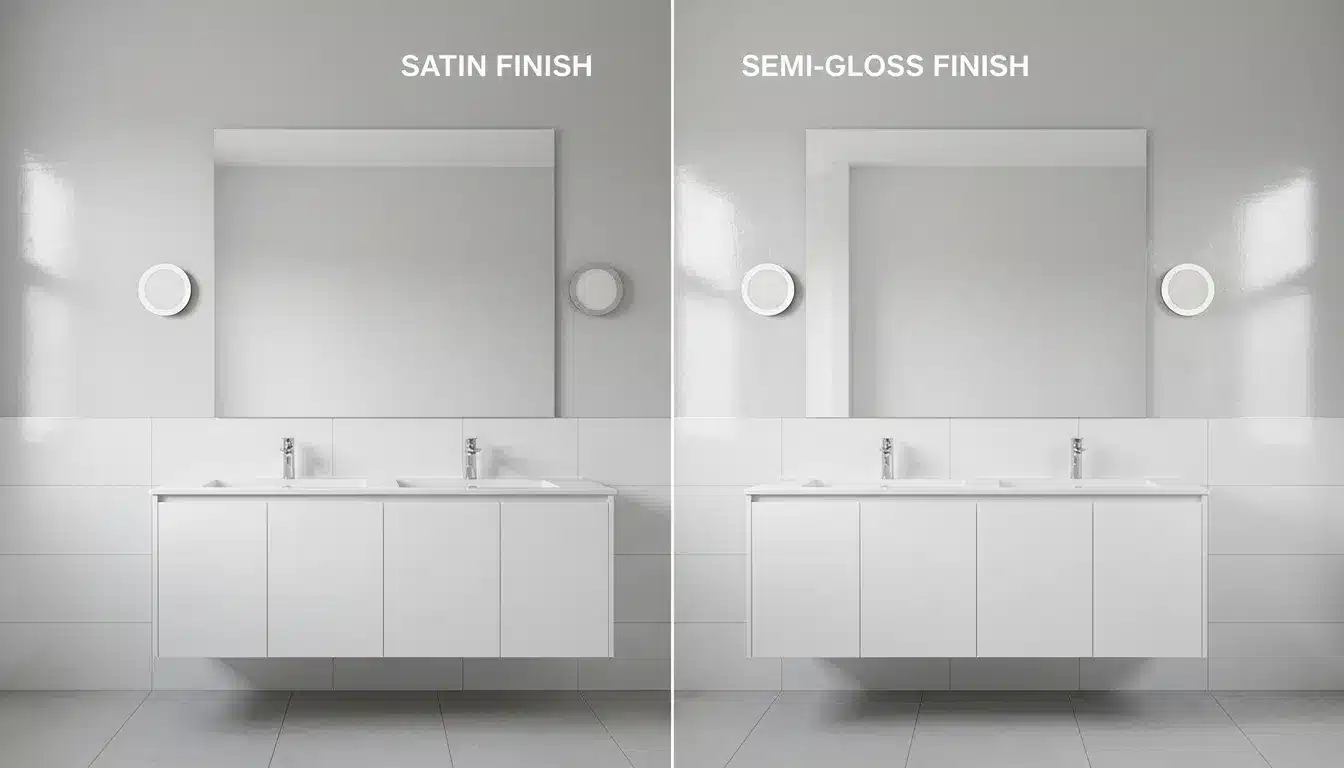

The Bathroom Paint Sheen Most People Get Wrong (Yep, Still)
If you’ve ever stood in the paint aisle holding a satin sample in one hand and semi gloss in the other like you’re defusing a bomb… hi. Same.
Bathroom paint fails all the time, and not because everyone is using “bad paint.” It’s usually because the sheen choice doesn’t match the reality of the bathroom. And bathrooms are basically tiny weather systems: steam, splashes, harsh lighting, and the occasional cleaning frenzy when company’s coming and you panic scrub everything in sight.
So let’s settle the satin vs. semi gloss debate in a way that actually helps you based on your ventilation, your wall situation, and how hard your bathroom gets used.
First: what “sheen” really means (without putting you to sleep)
Sheen is how shiny your paint looks once it dries. The shinier it is, the more resin it has, which usually means:
- it’s tougher and more wipeable
- it resists moisture better
- it also highlights every bump, patch, and “mysterious texture choice” on your wall
And bathrooms? Bathrooms love to expose your sins. Vanity lights hit at weird angles. Steam clings to walls. Water drips off elbows. A finish that looks totally fine in a living room can look… aggressively shiny and chaotic in a bathroom.
My opinionated rule of thumb: satin for most people, semi gloss for special circumstances
Satin: the “I want this to look good without losing my mind” choice
Satin is my default recommendation for most bathroom walls because it’s the sweet spot: durable enough, but not so shiny that it tattles on your drywall.
Pick satin if:
- your exhaust fan actually works (or you at least use it)
- your walls have any flaws (old plaster, patch jobs, a few dents from life happening)
- you want a finish that’s forgiving if you’re DIYing
- you’d like touch ups later to not look like a weird shiny bandage
If you’re thinking, “My walls are not perfect,” congratulations—you live in a real house. Satin is your friend.
Semi gloss: the “my bathroom is basically a sauna” choice
Semi gloss absolutely has a place, but it’s pickier. It’s tougher and more moisture resistant, but it can also turn your wall texture into a full blown feature film.
Semi gloss makes sense if:
- the bathroom is windowless and stays humid forever
- your fan is weak/broken/only there for decoration
- it’s a high traffic bathroom (kids, roommates, people who apparently bathe like dolphins)
- you’re painting a surface that gets touched and wiped constantly
The catch: your walls need to be smooth and well prepped, because semi gloss will highlight everything. Like, everything. I once painted a semi gloss sample in a bathroom and suddenly noticed a drywall seam I’m pretty sure was installed during the Clinton administration. Couldn’t unsee it.
The two paint problems people blame on “bad paint” (but it’s usually sheen + technique)
Here are the only terms you really need to know:
- Flashing: when you touch up a spot and it dries to a different sheen, so the patch screams “I HAVE BEEN TOUCHED.” Semi gloss is notorious for this.
- Lap lines: those darker/shinier bands from overlapping paint that dried too fast. Keeping a wet edge helps (more on that in a sec).
If you love the idea of easy touch ups later, satin is generally less dramatic about it.
Okay, so what should you use where?
Here’s what I do (and what I recommend to friends who don’t want a bathroom paint saga):
- Walls: Satin in most bathrooms. Semi gloss only if humidity is a constant problem and the walls are smooth.
- Ceiling: If ventilation is good, flat/matte is fine. If your ceiling regularly gets condensation (the “it’s raining indoors” vibe), consider satin up there too.
- Trim + doors + cabinets: Semi gloss all day. These get handled, bumped, and wiped, and semi gloss holds up really well.
Mixing sheens is normal. Classic combo: satin walls + semi gloss trim. It’s like jeans and a nice top—practical, but still pulled together.
The part everyone wants to skip (but shouldn’t): how to make it look good
You can pick the “right” sheen and still end up with a hot mess if you rush the prep and ignore paint project costs. Here’s the bare minimum that actually matters:
- Patch and sand like you mean it. Fill holes, smooth rough spots, and feather out patches. Shiny paint over a lumpy patch is… not subtle.
- Spot prime repairs. Especially in a bathroom. Bare patches will drink paint differently and show through.
- Paint in manageable sections and keep a wet edge. Translation: don’t bounce around the room like a caffeinated squirrel. Work steadily so you’re not painting next to areas that already started drying (hello, lap lines).
- If you’re using semi gloss, use a better roller. A foam roller or high quality microfiber roller will give you a smoother finish than the cheap fluffy one that sheds like a golden retriever.
The real “pro tip”: ventilation is part of the paint job
I don’t care what sheen you pick—if your bathroom fan is weak and you never run it, your paint is going to suffer. Run the exhaust fan during showers and for 15-20 minutes after. (Yes, it’s annoying. Yes, it works.)
If your fan sounds like a dying lawnmower and still doesn’t clear steam… honestly, consider fixing that before you spend money on paint upgrades. Paint can’t outsmart swamp air.
Quick decision cheat sheet (because you have things to do)
- Good fan + normal bathroom use + walls aren’t perfect: Satin walls
- Steam lingers forever + lots of wiping + walls are smooth: Semi gloss can work
- Trim/cabinets/doors: Semi gloss
- Ceiling that gets wet: consider satin (otherwise matte is fine)
Before you commit, do one simple thing: stand in your bathroom at night with the vanity lights on and look at your walls from an angle. Whatever flaws show up then? A shinier sheen will spotlight them like it’s auditioning them for Broadway.
Pick the sheen and soft blue wall color that won’t annoy you every single morning while you’re brushing your teeth—because nothing says “great start to the day” like being personally attacked by a shiny wall patch.