
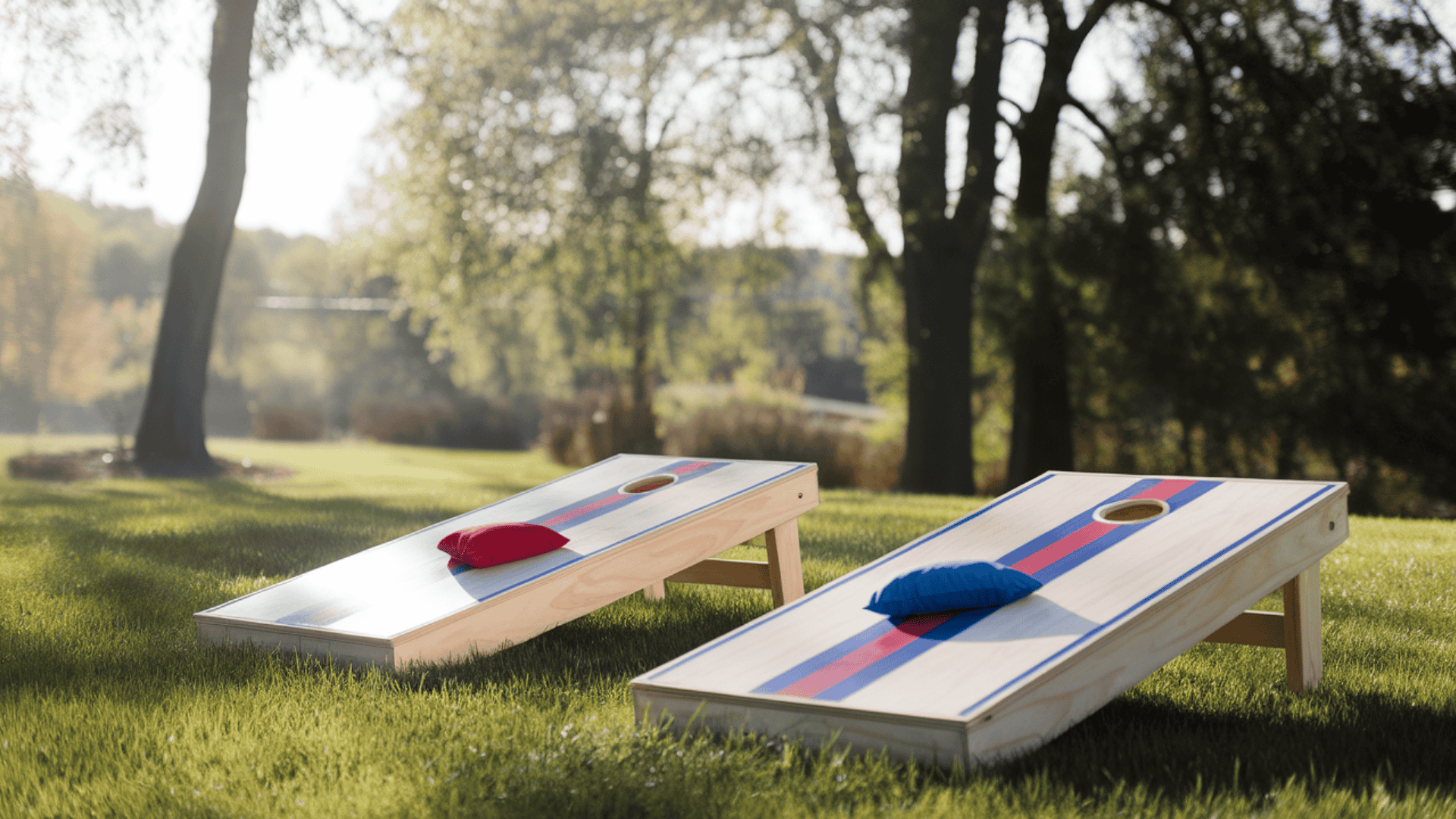

Ever set up cornhole boards only to realize mid-game that something feels off?
Maybe the distance was wrong, the boards weren’t level, or your throws didn’t land right. Small setup mistakes can ruin an otherwise perfect game day.
Getting the official distance and setup correct makes all the difference. It keeps games fair, competitive, and fun for everyone playing.
In this guide, you’ll learn the official distance for cornhole boards, how to measure accurately, common setup mistakes to avoid, and tips for adjusting the game to fit your space.
Plus, we’ll cover the basic rules and ways to improve your overall cornhole experience. Let’s get started!
What is Cornhole?
Cornhole is a popular lawn game where players toss bean bags at a raised wooden board with a hole cut into it.
The aim is simple: land your bag on the board for 1 point, or get it through the hole for 3 points. It’s easy to learn but takes practice to master.
This makes it ideal for casual backyard fun, family get-togethers, and serious competitive play alike.
Official Distance and Key Rules for Cornhole Boards
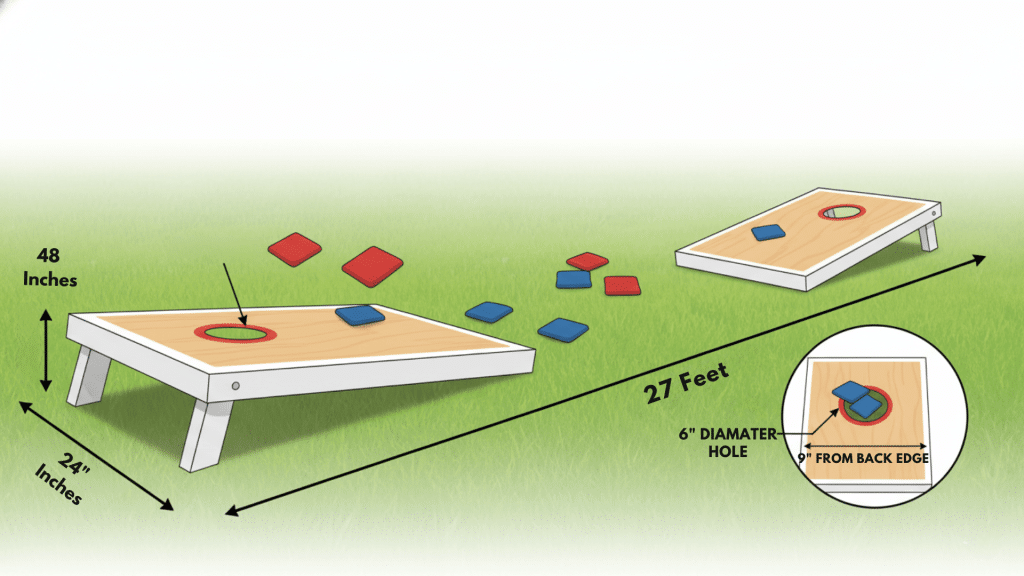
The official distance between cornhole boards is 27 feet, measured from front edge to front edge.
This standard is used in all professional tournaments run by the American Cornhole Organization (ACO) and American Cornhole League (ACL). Following this distance ensures fair play and keeps the game challenging for everyone involved.
Keyboard Specifications:
- Board Size: Each board measures 24 inches wide by 48 inches long
- Hole Size: The hole is 6 inches in diameter
- Hole Position: Located 9 inches from the back edge of the board
- Distance: 27 feet between the front edges of both boards
While 27 feet is the standard for competitive play, you can adjust based on your space. Many casual players set boards 20 to 25 feet apart when playing at home. This shorter distance still provides a fun experience without requiring a large yard or playing area.
Why is the Official Distance Important?
The 27-foot distance keeps cornhole fair and competitive for everyone. It ensures both players face the same level of difficulty, which matters in tournaments and casual games alike.
This standard distance also allows players to practice consistently and build their skills over time. At 27 feet, the game hits the sweet spot between being too easy and too challenging.
It tests your accuracy without making the game frustrating, which is why organizations like the ACO and ACL stick to this measurement for all official competitions.
Adjusting Cornhole Board Distance for Different Spaces
Not everyone has 27 feet of open space for cornhole. The good news is you can adjust the distance to fit your yard, basement, or playing area. The key is maintaining a consistent setup, so players know what to expect each time they play.
Distance Adjustments by Location:
- Smaller Yards: Reduce the distance to 20 or 25 feet if your backyard is limited
- Indoor Play: Set boards 15 to 20 feet apart for basements or indoor spaces
- Beginners and Kids: Shorten the distance to make the game easier and more fun for younger players
- Tight Spaces: Even 12 to 15 feet can work if you’re learning the basics
These changes help make cornhole accessible no matter where you play. Just remember to measure carefully and keep the same distance each time.
This way, everyone gets a fair shot, and you can still enjoy a competitive game even without the full 27 feet of space.
How to Measure the Cornhole Board Distance Accurately
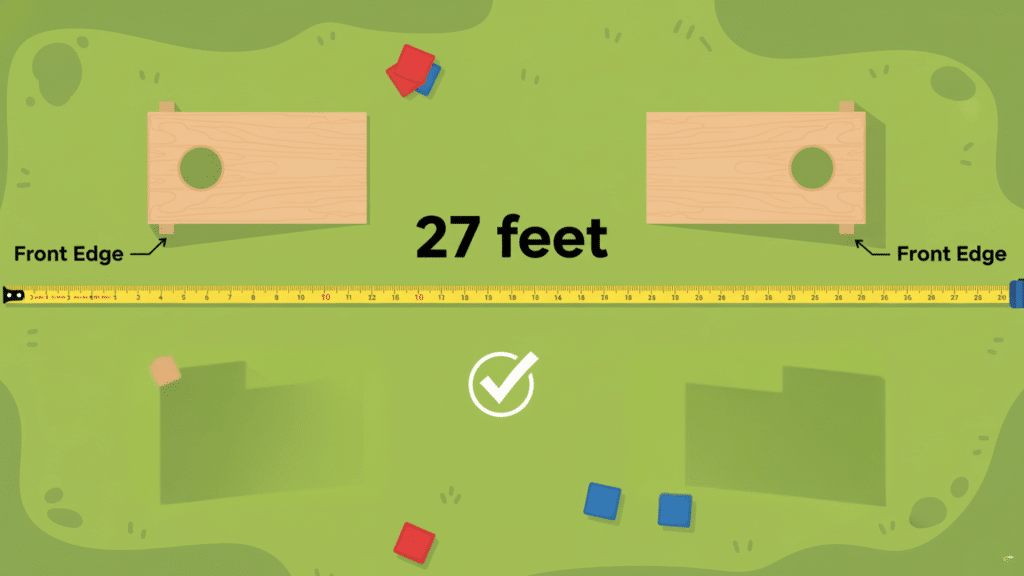
Getting the distance right is crucial for a fair game. Taking accurate measurements ensures consistency every time you play. Here’s the proper way to measure and set up your cornhole boards.
1. Use a Measuring Tape
Always measure from the front edge of one board to the front edge of the other board.
Make sure the tape is straight, and the distance is exactly 27 feet for official play. A metal or fabric measuring tape works best since it won’t stretch or bend during measurement.
2. Mark the Spot
Once you’ve found the proper distance, mark where each board should sit. Use chalk, tape, or small markers on the ground to show the exact placement.
This saves time during future setups and keeps your games consistent, especially if you play in the exact location regularly.
3. Check Leveling
Before you start playing, check that both boards sit level on the ground. Use a leveling tool or look at the boards from different angles to spot any tilts.
Even a slight slope can change how bags land and slide, so take a moment to adjust the boards until they’re completely flat.
How to Create the Perfect Cornhole Setup
Setting up your cornhole area correctly makes a big difference in how well you play. A proper setup keeps the game fair, safe, and fun for everyone. Follow these guidelines to create an ideal playing space every time.
| Setup Element | What to Do | Why It Matters |
|---|---|---|
| Flat Surface | Play on level, even ground | Prevents bags from sliding off unexpectedly and keeps throws consistent |
| Space Around Boards | Leave room for players to move and spectators to watch | Allows free movement and prevents accidents during play |
| Proper Lighting | Use good lighting for night games | Eliminates shadows that can throw off your aim and accuracy |
| Mark the Placement | Use tape or markers to show where the boards go | Keeps setup consistent, especially in new locations or tournaments |
These simple steps take just a few minutes and significantly improve your gameplay. A well-prepared cornhole area means fewer interruptions, better throws, and a more enjoyable experience for players and spectators alike.
How to Play Cornhole: Basic Rules
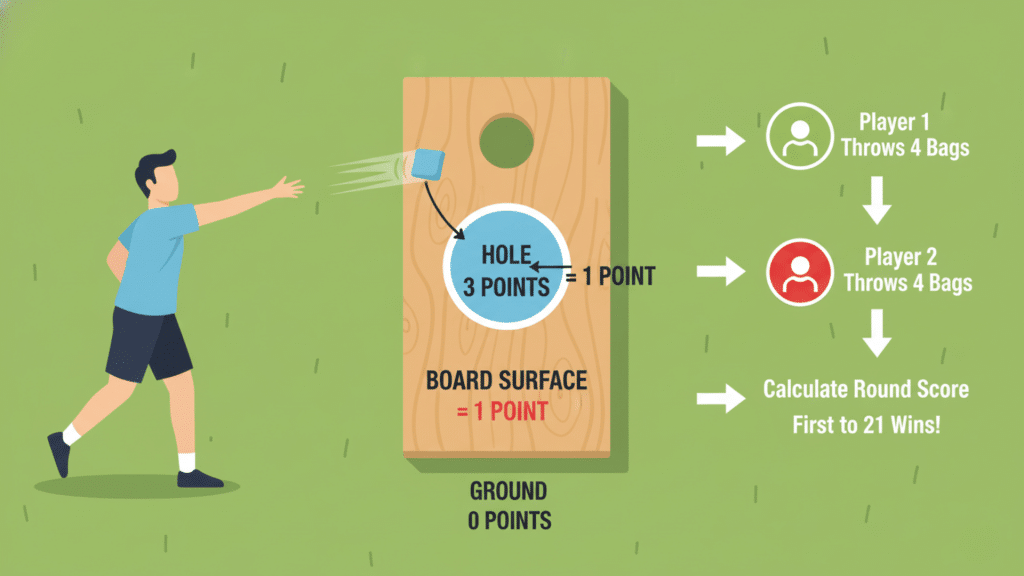
Cornhole is straightforward to learn but offers plenty of room for skill development. Here are the essential rules you need to know before you start playing.
Basic Cornhole Rules:
- Objective: Score points by tossing bags into the hole for 3 points or landing them on the board for 1 point.
- Game Setup: Each player gets four bags and tosses from behind the front edge of their board, taking turns until all bags are thrown.
- Scoring System: A bag through the hole earns 3 points, a bag resting on the board earns 1 point, and bags that fall off earn nothing.
- Winning the Game: The first player or team to reach exactly 21 points wins, with points calculated after each round using cancellation scoring.
- Cancellation Scoring: After both players throw all bags, subtract the lower score from the higher score to determine who earns points that round.
- Fouls: Stepping over the front edge of the board while throwing results in a foul, and that bag doesn’t count for points.
These rules keep the game simple while maintaining competitive balance. Once you understand the basics, you can start working on your throwing technique and strategy.
Mistakes to Avoid with Cornhole Board Distance
Even experienced players make setup mistakes that can throw off the entire game. These errors might seem small, but they impact fairness and accuracy. Here’s what to watch out for and how to fix it.
| Mistake | How to Avoid It | Why It Matters |
|---|---|---|
| Incorrect Distance | Use a measuring tape to confirm 27 feet between front edges | Wrong distance changes the difficulty and makes practice inconsistent |
| Uneven Surface | Place boards on flat, level ground and check for slopes | Even slight tilts affect bag accuracy and cause unfair advantages |
| Misaligned Boards | Make sure both boards are parallel and face each other directly | Crooked boards create unequal angles and mess up your throwing line |
Taking a few extra minutes to check your setup prevents these issues. A proper setup means everyone plays on equal terms, and your practice sessions will actually improve your skills. Whether you’re playing casually or preparing for a tournament, avoid these mistakes, and you’ll have a better game every time.
Additional Tips for a Better Cornhole Experience
Ready to step up your cornhole skills? These extra tips will help you enjoy the game even more and keep things fresh.
- Try Game Variations: Once you know the basic rules, try fun variations like Around the World or create your own house rules to keep games interesting.
- Upgrade Your Equipment: Invest in high-quality boards and bags designed for serious play to improve performance and durability over time.
- Host a Tournament: Organize a friendly tournament with friends or family to add some competitive energy and make your gatherings more memorable.
- Stay Active: Practice your throwing technique regularly to build muscle memory, improve accuracy, and get some light exercise while having fun.
Final Thoughts
The official 27-foot distance for cornhole boards keeps the game fair, challenging, and enjoyable for everyone.
By measuring accurately, checking your setup, and following the basic rules, you’ll create a consistent playing experience every time.
Whether you’re hosting a backyard barbecue or preparing for tournament play, these guidelines ensure you’re playing cornhole the right way.
Remember, you can always adjust the distance to fit your space or skill level. The goal is to have fun while improving your accuracy and technique.
Ready to set up your perfect cornhole game? Share your setup tips or questions in the comments below. Want more cornhole strategies and game ideas?
Check out our other guides for helpful insights!