
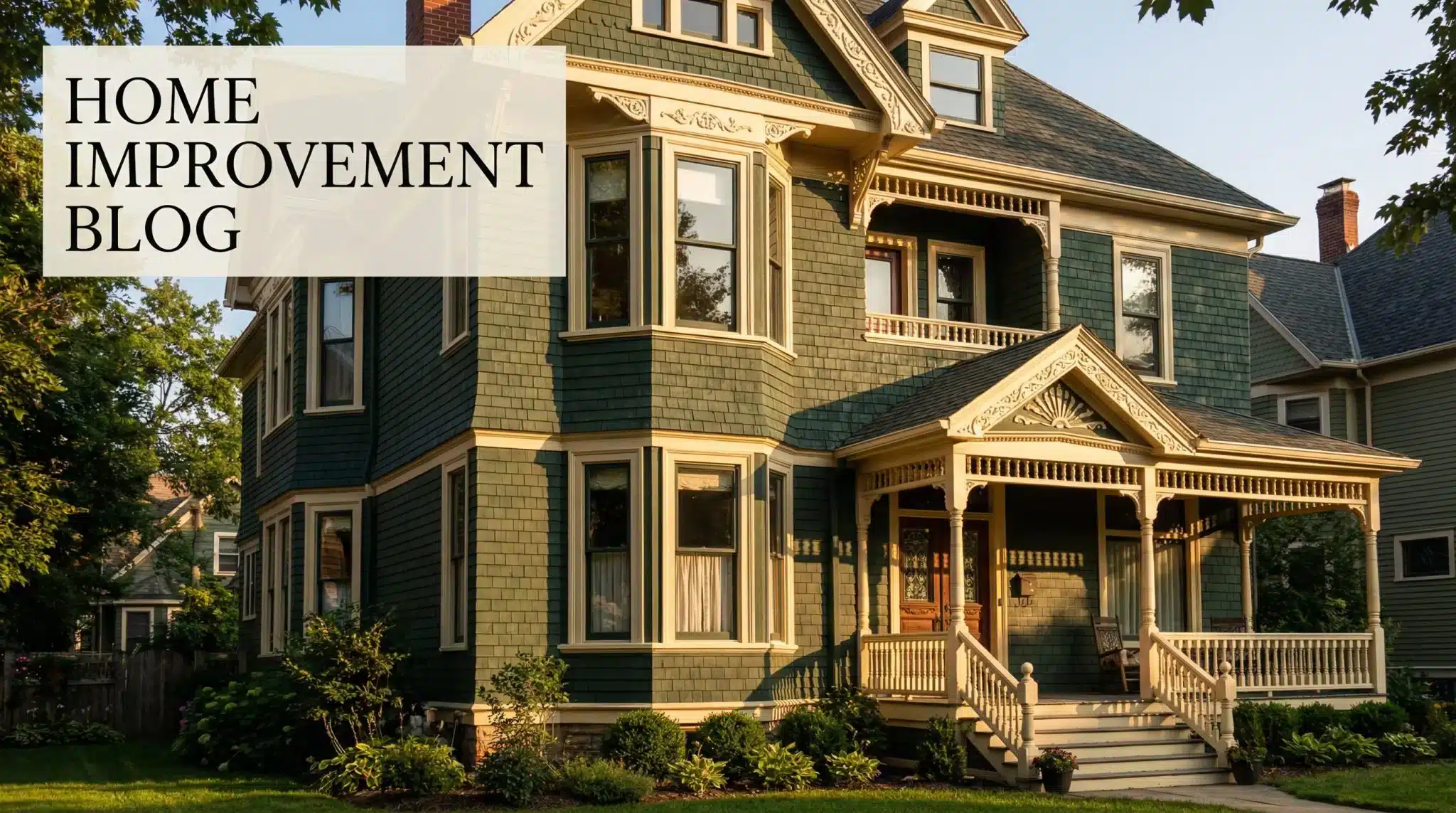

Picking a dark green for a Victorian house sounds romantic until you’re standing in the paint aisle holding 17 almost identical swatches, whispering, “But this one is… moodier?” like a person who has lost the plot. Been there.
Here’s the thing most people miss: Victorian dark green is less about finding “the perfect green” and more about choosing the right depth, undertone, and placement. Get those three right and you’ll look like you hired a historic color consultant. Get them wrong and your house will read “mysterious hedge” from the curb. (No offense to hedges. They’re doing their best.)
Let’s make this easy.
Why Victorians were obsessed with dark green (and why you should be too)
Victorians didn’t do shy. They moved away from the lighter Georgian look and went for deeper, richer colors—colors that felt like stained wood, velvet drapes, and “yes, I own a fainting couch.”
Also: by the late 1800s, new pigments made saturated greens more accessible, so dark green became a tasteful way to say, “I have money and opinions.”
But here’s the key: they usually didn’t paint the entire house near black green. They used it like eyeliner—strategic, dramatic, and best applied where it counts.
Which brings us to the question you actually care about…
Where dark green looks best on a Victorian (spoiler: not everywhere)
If you want a classic, historic look, put the darkest green on the “jewelry” of the house, not necessarily the whole dress.
My favorite places for Victorian dark green:
- Front door (the visual anchor, the handshake, the “welcome to my personality”)
- Window frames/sashes (especially if you want that layered, old house depth)
- Shutters (if you have them and they’re not purely decorative lies)
- Railings, gates, downspouts (the little supporting characters that make it feel intentional)
And yes, there’s a practical side: dark paint hides grime and wear better—especially on sills and anything that gets touched or splashed.
The fancy window trick I will always love
Victorian painters often did dark outer frames with lighter inner sashes. The light sash keeps the windows from looking like black holes, and the dark frame hides dirt. It’s a bit extra. Which is… kind of the point with Victorians.
The “magic number” that saves you from regret: LRV
LRV = Light Reflective Value. It’s a 0-100 scale (0 is black, 100 is white) that tells you how much light a color reflects.
Outdoor light is brutal. It will humble your cutest paint choice in minutes. LRV helps you predict how dramatic (or muddy) your green will look outside.
Here’s the range that works best, in real life:
- For full siding (body color): aim for LRV 25-35
- If you want my honest “sweet spot”: LRV 30-35
- It reads deep and historic without turning into a heat absorbing void.
- For accents (doors/shutters/window frames): LRV 10-20
- That’s where the near black, rich Victorian drama lives.
A few quick reality checks:
- Below ~25 on full siding can look very heavy unless your trim is crisp and your house has lots of detail breaking it up.
- Above ~40 starts losing that “Victorian weight.”
- Above ~55 is basically “minty” territory, and your house will start giving cottagecore instead of 1880s swagger.
Undertones: the part nobody wants to deal with (but you have to)
Every green has a lean: warm (olive/brown) or cool (blue/gray). Your job is to match that lean to roof colors with dark green and the stuff you’re not changing.
Look at your:
- brick/stone
- roof color
- hardscaping
- anything you can’t (or won’t) replace because, you know, money
Landscaping is secondary because it changes. Your shrubs do not get a vote. (They already take up enough space emotionally.)
A simple cheat:
- Warm brick / bronze roof / reddish tones → pick olive or brown leaning greens
- Gray stone / blue black roof / cooler masonry → pick blue/gray leaning greens
- Deep shade or wooded lots → avoid greens that go neon in sun. Look for dirtier gray brown greens
My no spiral, five step plan (because you have a life)
- Decide placement first. Accents only? Full siding? (This determines everything.)
- Pick the LRV band. 25-35 for siding, 10-20 for accents.
- Match undertones to fixed materials. Brick and roof are the boss here.
- Adjust for light exposure. Full sun = go a bit lighter. Heavy shade = you can go darker.
- Choose 2-3 candidates max and test them. Not 12. You’re not building a paint museum.
Dark green paint colors that usually nail the Victorian vibe
I’m going to keep this tight—because long lists make my eyes cross.
For maximum drama (doors + shutters): LRV ~10-20
These are the “nearly black but still green if you’re close enough” shades.
- Benjamin Moore Yorktown Green HC-133 (LRV ~11)
Cool leaning, classic historic, looks especially good with cooler stone/roofs. - Benjamin Moore Essex Green (LRV under 20)
Very deep and formal. Gorgeous on accents. On full siding it can go goth mansion fast. - Sherwin-Williams Rookwood Dark Green SW 2816 (LRV ~11)
Warmer, historic, rich. Great if you’ve got warm brick or bronze tones. - Sherwin-Williams Pewter Green SW 6208 (LRV ~12)
A gray green that plays nicely with cool stone and less “Christmas wreath.”
Trim note (important): with ultra dark greens, skip bright, stark white. It can look harsh and modern—like a tuxedo with running shoes. Go for softer, dirtier off whites.
For full siding that still feels historic: LRV ~25-35
This is the range that gives you depth without turning your house into a solar oven with soft evergreen exterior paint.
- Benjamin Moore Creekside Green (LRV ~31)
Reliable, grounded, doesn’t swing wildly in different light. - Benjamin Moore Kennebunkport Green HC-123 (LRV ~31)
Very “classic New England Victorian energy.” - Benjamin Moore Louisburg Green (LRV ~33)
Cooler leaning and a little crisper—nice in bright sun. - Benjamin Moore Herb Bouquet (LRV ~35)
Softer sage, holds up in sun without going pastel.
Shades I’d personally skip for “Victorian dark green”
Anything that reads mint, teal, chartreuse, or pastel—and yes, that includes Benjamin Moore Prescott Green HC-140 (LRV ~56) if your goal is truly “dark Victorian.” It’s pretty! It’s just… not the assignment.
Trim + accents: don’t let the “white” ruin everything
“White” is not one color. White is an entire dramatic family reunion.
For trim next to mid dark greens (LRV 25-35), I like:
- Benjamin Moore White Dove
- Sherwin-Williams Alabaster
- Benjamin Moore Dove Wing
If you’re doing an ultra dark green (near black accents), go softer and dirtier with your trim—nothing glaring.
Door color ideas (because the door is your house’s handshake)
If your siding is dark green, the door is where you can have a little fun:
- Warm wood stain (always classic)
- Deep brick red (chef’s kiss with olive greens)
- Black with a navy lean (sharp and grown up)
A quick reality check: light, climate, and “my house faces the sun like a magnifying glass”
Weather does not care about your Pinterest board.
- Full, blasting sun all day (south/west exposure):
Avoid going ultra dark on huge wall areas unless you’re okay with more fading and wear. Stick closer to LRV 30-35 for siding when possible. - Heavy shade / cloudy climates:
You can go darker, but watch for “muddy.” Test, test, test. - Shingles vs flat siding:
Dark green on shingles often looks ridiculously expensive because the shadow lines add depth. Flat siding can look heavier faster.
Also: dark green + brick foundation is a forever classic combo. Brick warms it up and keeps the whole thing from feeling too icy or too severe.
Finish in one sentence (because you don’t need a dissertation)
- Siding: eggshell/satin
- Trim: satin/semi-gloss
- Door: semi-gloss/gloss (it’s the focal point—let it shine a little)
When dark green might not be your best move (yes, I said it)
I love dark green. I will defend it. But I won’t lie to you.
Consider pivoting if:
- your house is tiny and dark green will make it feel like a little lump of seriousness
- you’re surrounded by dense evergreens and your home will blend in like camouflage
- you have historic district rules (check first—ask me how I know)
Test before you commit (tiny chips are liars)
If you do one thing from this whole post, do this.
- Paint at least an 18″ x 18″ sample on the actual surface.
- If you can, do one sample in sun and one in shade.
- Look at it for a week. Seriously.
My lazy but effective routine:
- morning (cool light)
- midday (harsh truth light)
- sunset (warm, flattering light that will seduce you)
- overcast (the “okay but what do you really look like?” check)
And please, for the love of your weekend: compare samples side by side. Your brain cannot accurately remember yesterday’s green. Your brain can barely remember why you walked into the garage.
If you’re stuck between two, go a touch darker—sunlight almost always makes exterior paint look lighter than you expect.
The takeaway (so you can stop thinking about green at 2 a.m.)
Victorian dark green looks incredible when you: 1) put it in the right place (often accents), 2) choose the right depth (LRV matters), and 3) match undertones to your brick/roof (not your hydrangeas).
Test big, pick once, and then go enjoy your very opinionated, very handsome Victorian house.