
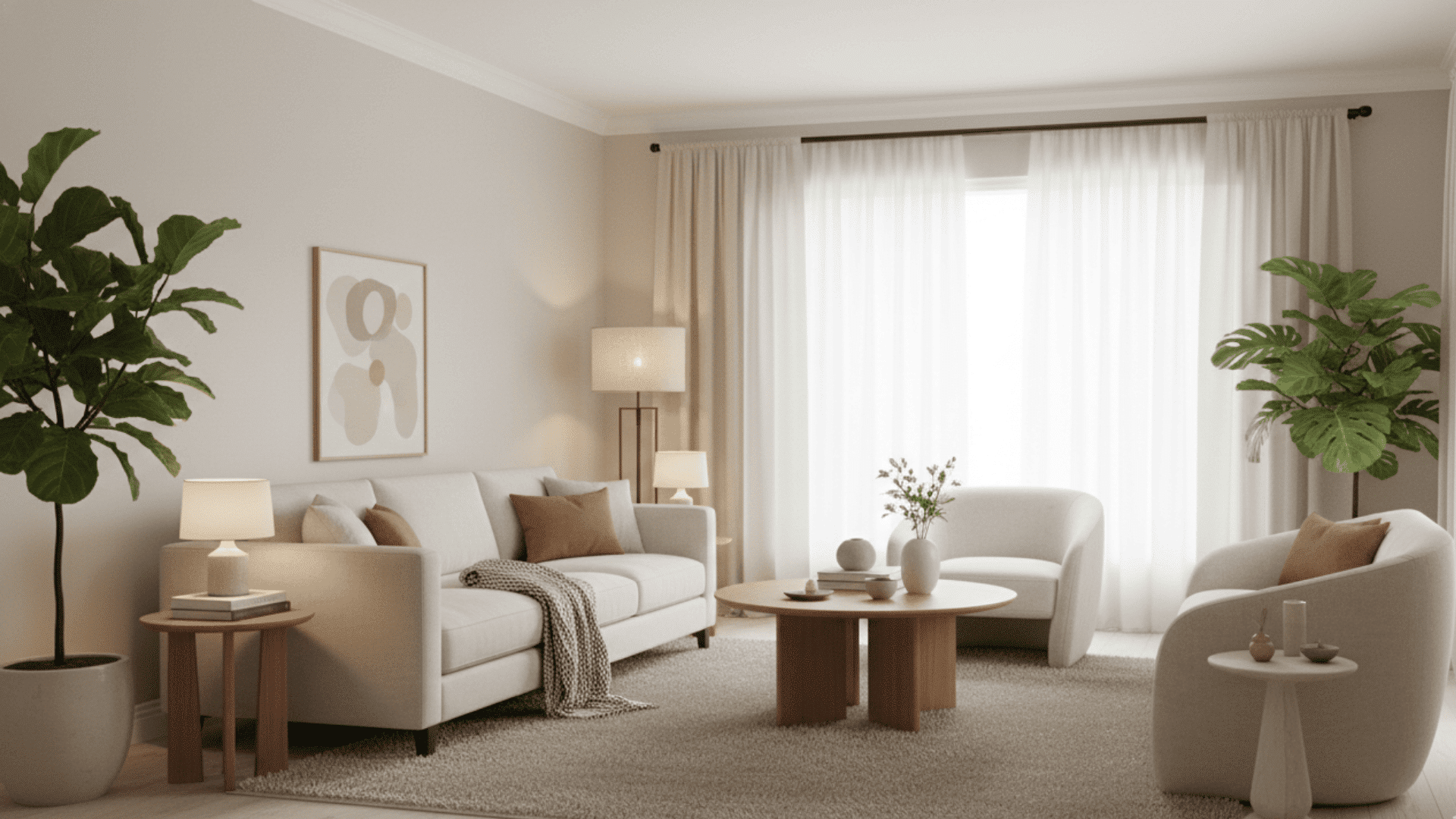

Creating a living room that feels calm and inviting often comes down to how the space is arranged. Feng Shui offers a simple way to shape the room to support comfort, clarity, and connection.
With a few thoughtful placements and minor adjustments, you can refresh the atmosphere and encourage smoother energy flow.
It is less about perfection and more about creating a room that feels balanced the moment you walk in.
In this blog, we will learn how to set up the layout, apply key Feng Shui rules, use the five elements, choose supportive decor, avoid common mistakes, and refresh the space with easy everyday steps.
What Is a Feng Shui Living Room?
A Feng Shui living room is a space arranged with intention so energy can move through it with ease.
Everything from the way the furniture sits to the colors, textures, and natural elements works together to create balance. When these pieces line up, the room feels calm, inviting, and connected.
It becomes a place where you naturally relax, enjoy conversations, and feel emotionally at ease. The goal is not perfection. It is creating a setting that feels supportive the moment you step inside.
Fundamental Feng Shui Rules for the Living Room
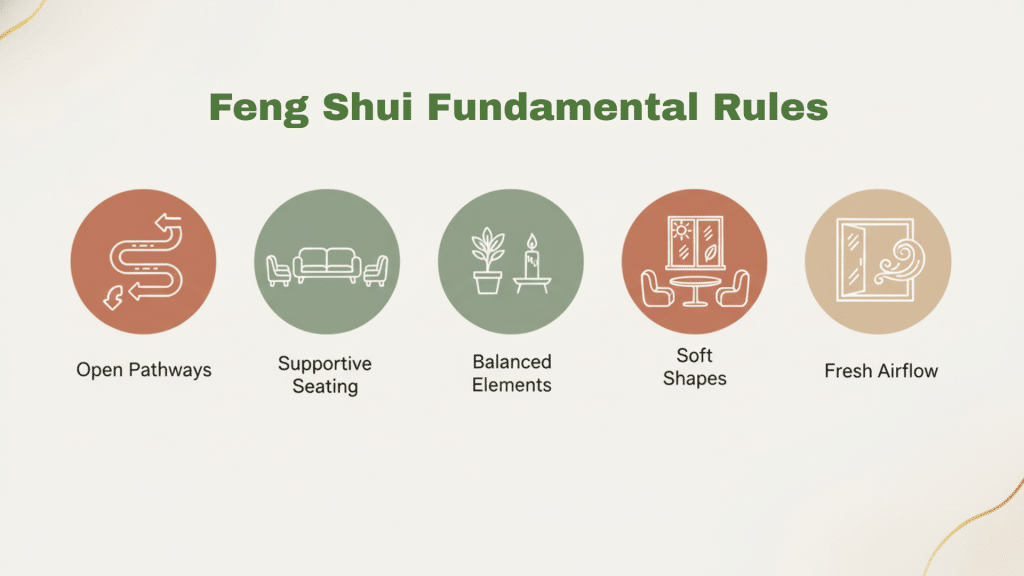
A few core principles shape how a living room feels the moment you step inside. These simple Feng Shui rules help the space breathe, flow, and support daily comfort.
- Keep walkways clear so energy flows easily: Open paths help the room feel lighter and more comfortable to move through.
- Place the main seating in the command position: Your main seat should face the entry so you feel supported and aware.
- Do not block windows or doors: Clear openings invite fresh energy and brighten the room.
- Incorporate all five elements: wood, fire, earth, metal, water. A mix of natural elements creates harmony and emotional balance.
- Use meaningful, positive decor: Choose items that lift your mood and support a calm atmosphere.
- Maintain good lighting and fresh air: Light and airflow refresh the space and strengthen its energy.
- Avoid clutter and broken items: A clean room removes heaviness and keeps the energy steady.
- Choose soft edges over sharp shapes when possible: Rounded forms help the room feel kinder, safer, and more inviting.
Do’s and Don’ts of Feng Shui Living Rooms
A few simple habits can strengthen the balance in your living room, while confident choices can disrupt its. Knowing what to follow and what to avoid makes a noticeable difference.
| Do’s | Don’ts |
|---|---|
| Keep the room clutter-free | Do not block entrances |
| Use healthy plants | Do not place mirrors facing the front door |
| Maintain good symmetry | Do not store clutter under furniture |
| Choose decor thoughtfully | Do not let the TV take over the room |
| Allow fresh air and natural light | Do not keep broken or unused items |
Steps to Feng Shui Your Living Room
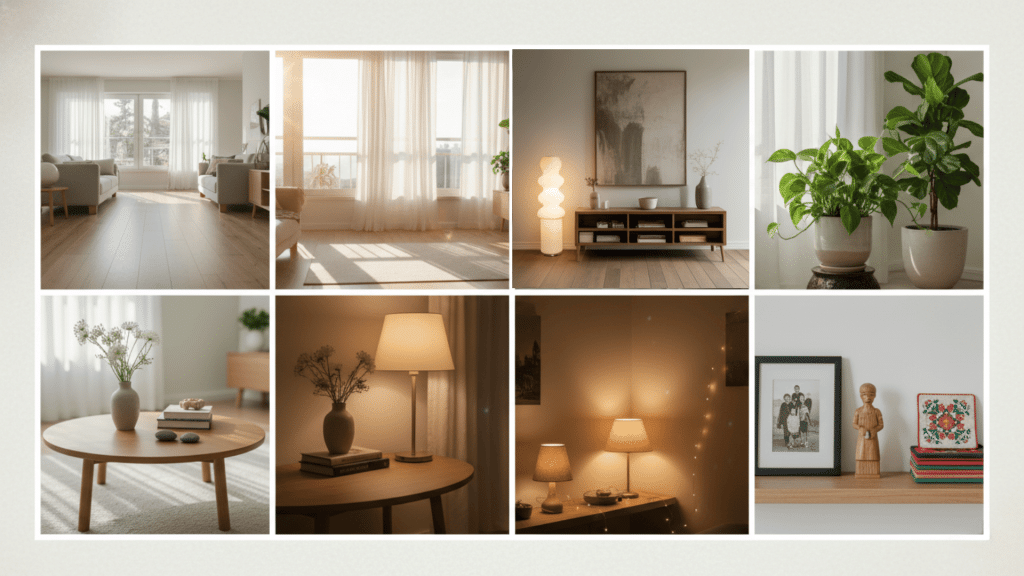
Creating balance starts with a few intentional steps that guide how the room flows and feels. These simple actions help you shape a living space that supports comfort and clarity.
Step 1: Evaluate the Space
Take a slow walk from the entrance and notice how the room feels. Look for blocked paths, dark corners, or furniture that interrupts movement.
Ask yourself if the seating encourages natural conversation and whether the room feels light or heavy. This quick check shows you exactly where to begin.
Step 2: Adjust the Layout
Place the sofa against a supportive wall to create a grounded feeling. Arrange chairs and tables to allow easy interaction without crowding.
Leave a little space behind furniture so energy can move freely instead of getting stuck.
Step 3: Use the Command Position
Make sure the main seating faces the entry without sitting directly in its line of sight. You should feel supported by a wall or solid surface behind you.
This placement brings a sense of ease, awareness, and comfort to anyone entering the room.
Step 4: Bring in the Five Elements
Aim for a gentle balance so that no single element overwhelms the space.
| Element | Meaning | How to Add It |
|---|---|---|
| Wood | Creativity | Plants, wooden pieces |
| Fire | Energy and warmth | Candles, warm light |
| Earth | Stability | Neutral shades, pottery |
| Metal | Clarity | Frames, bowls |
| Water | Calm and flow | Glass items, soft blues |
Step 5: Improve Lighting
Use sunlight during the day and add layers like floor lamps and table lamps for the evening. Warm bulbs help soften the atmosphere and create a cozy glow. Lighting should lift the space without feeling harsh.
Step 6: Add Meaningful Decor
Choose artwork that brings a sense of joy and calm. Add soft textiles to ground the room and rounded shapes to ease sharp corners. A few personal items can warm the space, but avoid anything with a harsh or unsettling look.
Step 7: Clear Energy Drains
Remove items that weigh down the room, such as broken pieces, crowded shelves, or dull plants. Reduce the presence of electronics when possible and clear visible clutter. Even minor adjustments can refresh the energy almost instantly.
Ideal Feng Shui Living Room Layout
A supportive layout helps the room feel welcoming, steady, and easy to move through. The goal is to arrange the space so everyone feels connected and the energy flows without interruption.
When the main pieces sit in balanced positions, the room naturally becomes more comfortable and inviting.
Key points to follow:
- Anchor the sofa on a supportive wall
- Arrange seating in a U shape or a gentle semi-circle
- Keep pathways clear from the entry to the main seat
- Place the TV off to the side rather than in the center
- Add plants in corners to lift stagnant energy
- Use a rug to ground and define the seating area
Feng Shui Living Room Tips
Minor adjustments can make a surprising difference in how your living room feels. These simple Feng Shui tips help you create a space that stays bright, calm, and welcoming.
- Keep windows clean to allow fresh chi: Clear windows brighten the room and help energy flow more easily.
- Use mirrors to reflect light, not clutter: Place mirrors where they bounce natural light and expand the space.
- Choose rounded furniture to soften the space: Curved edges create a gentle, welcoming feel in the room.
- Add greenery for vitality: Healthy plants bring life, movement, and uplifting energy.
- Use warm layered lighting: Soft lighting adds comfort and creates a calm, inviting mood.
- Refresh the scent with natural oils or incense: A light, pleasant scent helps reset the energy and lift the atmosphere.
7 Practical Feng Shui Living Room Ideas
Bringing Feng Shui into your living room can be both simple and creative. These practical ideas help you shape a space that feels balanced, comfortable, and easy to enjoy.
1. Nature-Inspired Living Room
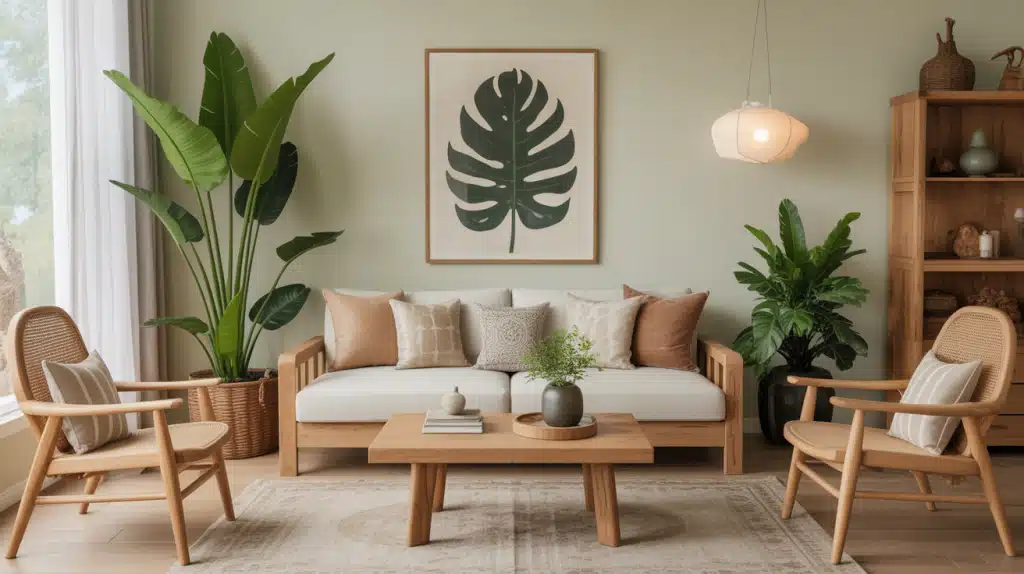
A nature-inspired space brings calm and grounding through organic textures and gentle colors. Wood furniture adds warmth, earthy tones create a soft backdrop, and large leafy plants lift the energy.
This style works well if you want a soothing room that feels peaceful the moment you step inside.
2. Minimalist Balanced Room
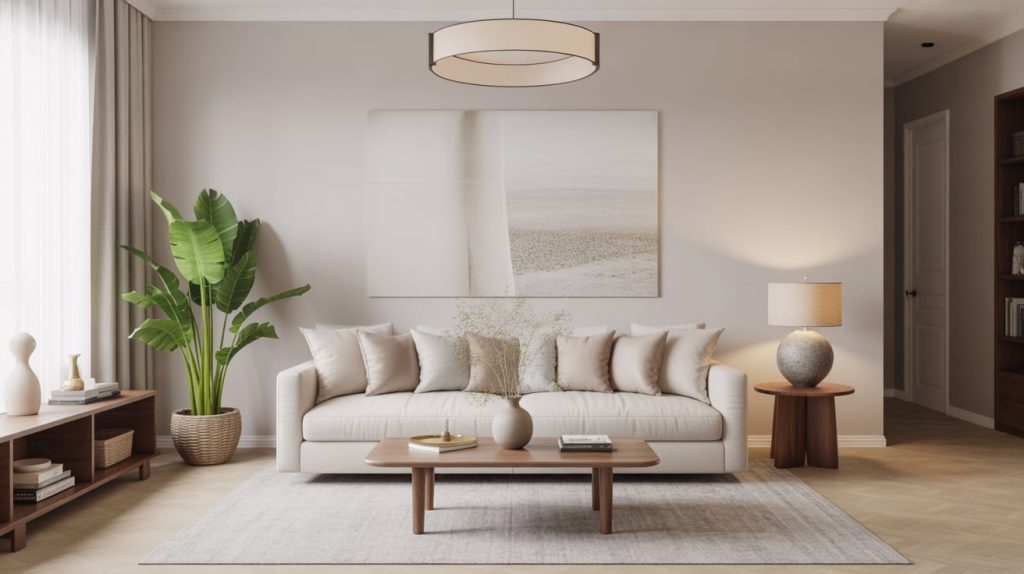
A minimalist approach keeps the living room light and easy to breathe in. Clutter-free surfaces help energy move smoothly, while soft neutrals create a calm base.
Every decor piece has a purpose, which keeps the room intentional without feeling empty.
3. Family Focused Layout
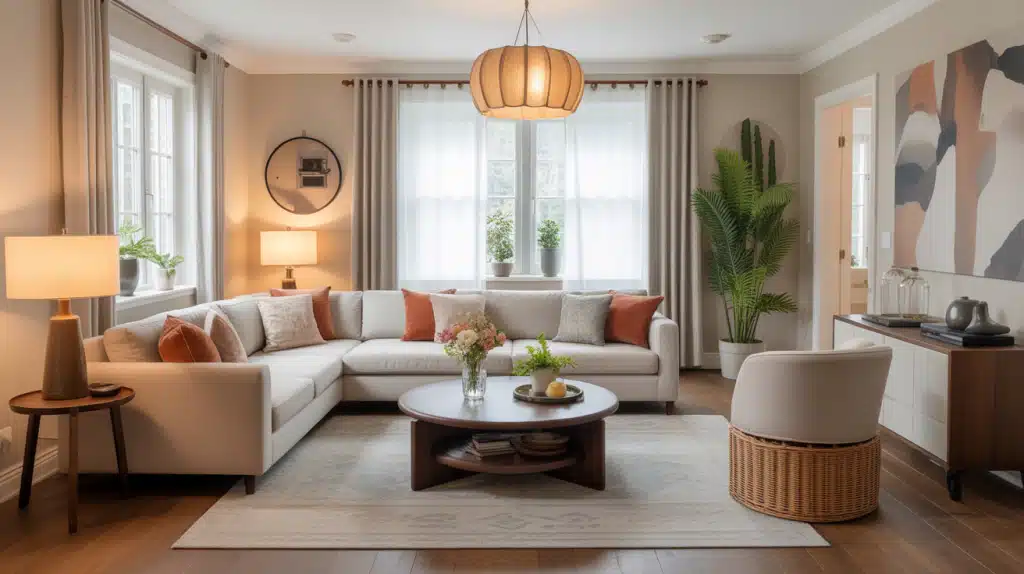
A family-centered layout supports connection and comfort. Modular seating brings flexibility, corner lighting softens the mood, and open walkways keep the room easy to navigate. This style is warm, welcoming, and perfect for gatherings.
4. Small Space Feng Shui
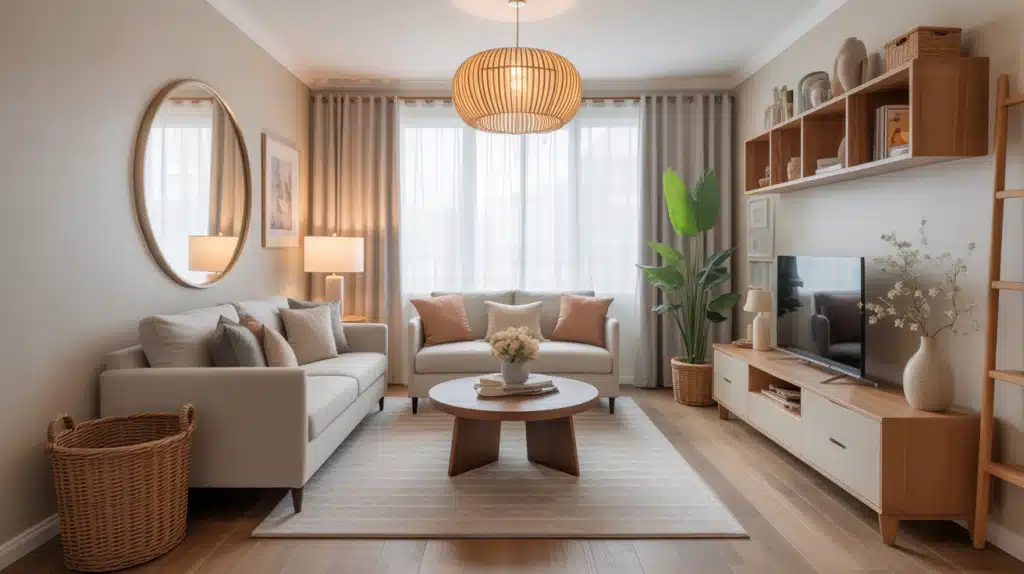
Small rooms can feel spacious with the correct elements.
Mirrors help brighten the area, vertical storage keeps things tidy without crowding the floor, and light colors with simple shapes open up the room visually. The goal is a space that feels airy, not limited.
5. Cozy Comfort Living Room
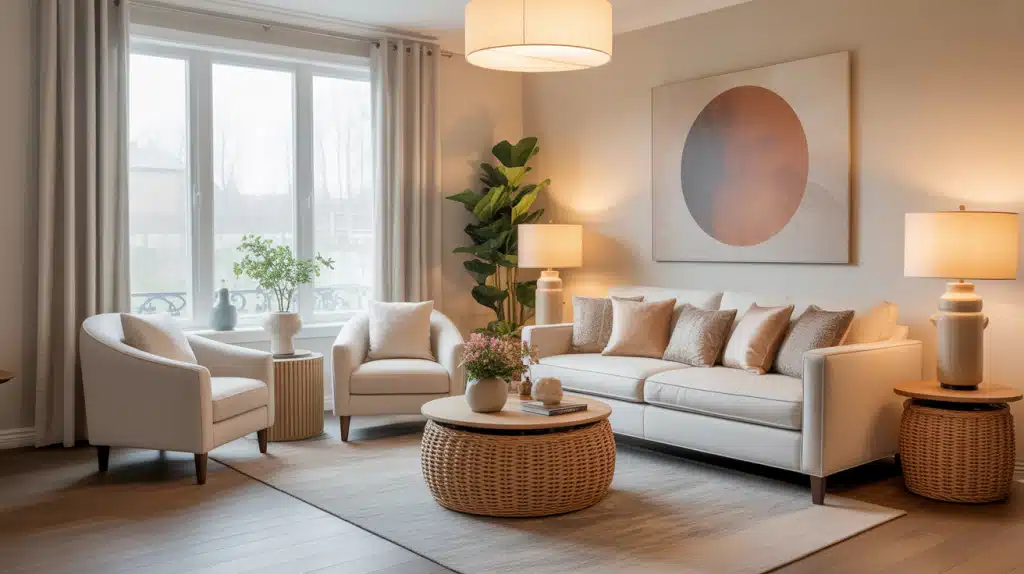
This style focuses on softness and warmth. Plush seating, gentle lighting, and layered textiles create a space that feels restful and inviting.
It is perfect for unwinding after a long day while keeping the energy smooth and balanced.
6. Modern Balanced Living Room
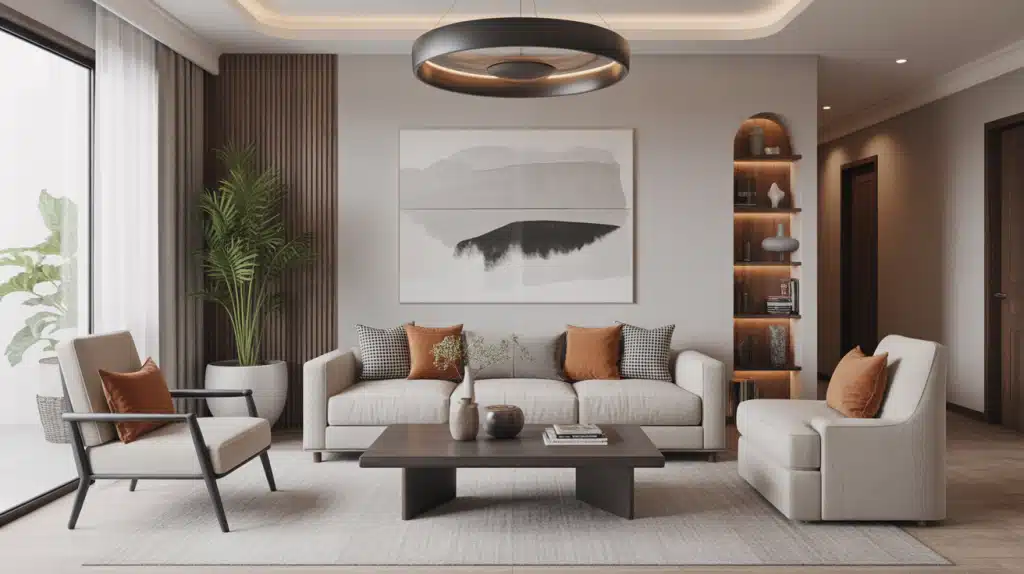
A modern layout blends clean lines with gentle accents, and sleek furniture pairs well with warm textures to soften the look.
The mix of contrast and comfort keeps the room stylish without creating harsh energy.
7. Artistic and Expressive Living Room
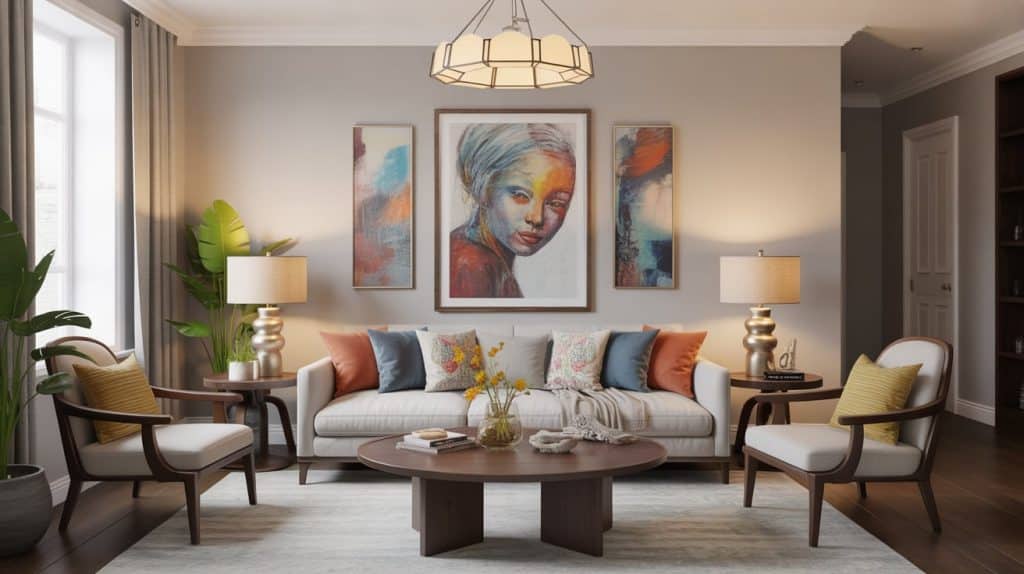
This idea works well if you enjoy creativity and color. A few meaningful art pieces add personality, while balanced tones and soft lighting prevent sensory overload.
The result is a living room that feels vibrant but still grounded.
Benefits of a Feng Shui Living Room
A well-arranged living room does more than look inviting. When Feng Shui principles come together, the entire space begins to support your mood, comfort, and daily ease.
- Calm, peaceful energy: A balanced layout softens tension and helps the room feel soothing the moment you enter.
- Better sleep and relaxation: A calm environment supports restful evenings and improves how you unwind.
- Improved focus and clarity: A tidy, well-arranged room clears mental space and makes it easier to think.
- Stronger social interactions: Comfortable seating and open flow encourage conversation and connection.
- A cleaner, lighter feeling space: Removing clutter and adding balance make the room feel open and refreshing.
- A sense of balance between rest and activity: The space adapts easily to both quiet moments and lively gatherings without feeling overwhelming.
Mistakes That Disrupt Feng Shui Balance
Even small choices can shift the feel of a living room more than you expect. Noticing these common missteps helps you keep the space balanced and supportive.
| Mistake | Why It Disrupts the Space |
|---|---|
| Furniture was pushed flat against the walls | It limits movement and creates stiff, boxed-in energy. |
| Overusing one element | Too much of one tone or texture throws the room out of balance. |
| Harsh overhead lighting with no soft layers | Strong light feels intense and takes away from comfort. |
| Piles of items on surfaces | Visual clutter makes the room feel heavy and unfocused. |
| Choosing decor only for aesthetics and not energy | Pieces without intention can disrupt the mood of the space. |
| Letting electronics dominate the room | Screens add active energy that can overpower calmness. |
Correcting these areas helps the room feel refreshed and balanced again.
Quick Feng Shui Living Room Refresh
Sometimes the room only needs a quick reset to feel balanced again. These simple actions help lift the energy and refresh the space in just a few moments.
- Open the windows: Fresh air lifts the mood of the room and clears stagnant energy.
- Clear one surface: Tidying a single spot quickly lightens the overall feel of the space.
- Turn on warm lighting: Soft lamp light creates an instant sense of comfort and calm.
- Straighten pillows and throws: A small reset adds visual order and helps the room feel cared for.
- Add natural elements: A simple plant or natural piece brings grounding energy right away.
- Realign the pathway: Keeping the entry clear allows movement and energy to flow with ease.
Final Thoughts
A Feng Shui living room does not require a complete redesign. Small, intentional changes can shift how the entire space feels and works for you.
By adjusting the layout, choosing supportive decor, and keeping energy pathways open, you create a room that feels calm, connected, and easy to enjoy.
Over time, these simple habits make your living area a place that genuinely supports your day.
If you are ready to bring more balance into your home, start with one or two ideas from this blog and see how the room responds.
Let your space guide you toward the next step.