
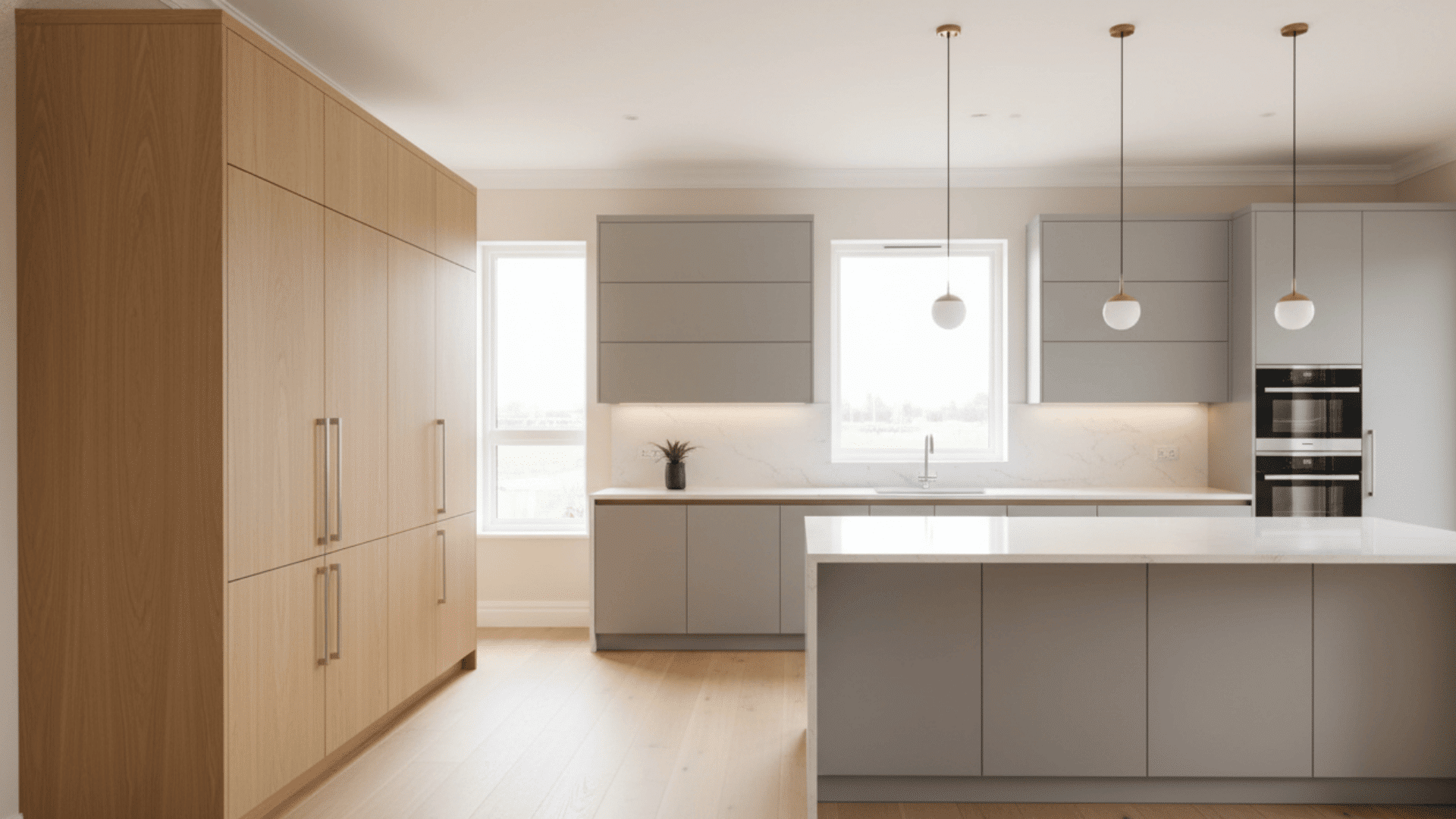

When planning a kitchen remodel or new build, the depth of your cabinets is a key factor that can impact both style and function.
Choosing the right depth ensures your cabinets not only fit the space but also meet your storage needs.
Whether you’re aiming to maximize storage, improve accessibility, or create a balanced kitchen layout, understanding the various cabinet depths available is essential.
In this blog, we’ll explore standard cabinet depths, factors to consider when selecting the right one, and how custom or variable depths can enhance your kitchen design.
Let’s dip into the considerations that will help you choose the perfect cabinet depth for your kitchen!
What Determines Kitchen Cabinet Depth?
The depth of kitchen cabinets depends on factors like cabinet type, kitchen layout, and storage needs.
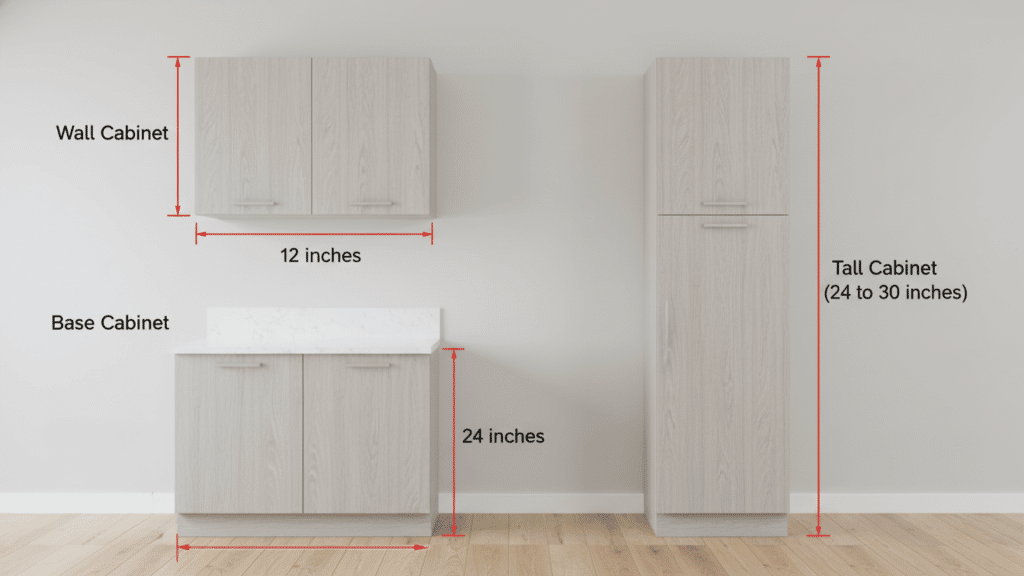
Base cabinets typically have a standard 24-inch depth for ample storage, while wall cabinets are usually 12 inches deep to balance accessibility and openness.
Tall cabinets range from 24 to 30 inches deep, offering more storage for bulkier items. Ultimately, the depth should suit your kitchen’s design, space, and storage requirements, ensuring both functionality and visual appeal.
Types of Cabinet Depths: Custom and Variable Options
Explore the flexibility of custom and variable cabinet depths to enhance both the functionality and design of your kitchen.
| Cabinet Type | Description | When to Consider |
|---|---|---|
| Custom Depth Cabinets | Cabinets are built to a specific depth, tailored to your kitchen’s layout. | Ideal for unique spaces or for fitting larger appliances and maximizing storage. |
| Variable Depth Cabinets | Cabinets with staggered depths for a dynamic, layered appearance. | Perfect for adding design interest and optimizing storage in style. |
Custom depth cabinets are perfect for unique spaces, while variable depth cabinets provide a flexible, creative solution for both aesthetics and storage needs.
Kitchen Cabinet Depths: Standard Measurements
Learn the essential measurements and how to choose the proper depth for your kitchen storage and design needs.
1. Base Cabinets Depth
The standard depth for base cabinets is 24 inches. This depth allows for ample storage under the countertop, making it ideal for storing essential kitchen items like pots, pans, and kitchen tools. It also ensures enough space between the countertop and the cabinet for ease of use.
- Why It Matters: Provides sufficient storage and counter space for daily kitchen tasks.
- Considerations: Shallower base cabinets may be needed for more counter space, while deeper cabinets can maximize storage in larger kitchens.
2. Wall Cabinets Depth
Wall cabinets are typically 12 inches deep. This depth is ideal for holding lighter items like plates, glasses, and dry goods while being shallow enough to avoid overwhelming the space.
- Why It Matters: Balances storage capacity and visual openness in the kitchen.
- Considerations: Shallower wall cabinets work well in smaller kitchens, while deeper options offer more storage for larger spaces.
3. Tall Cabinets Depth
Tall cabinets, such as pantry or utility cabinets, generally range from 24 to 30 inches deep. These cabinets are designed to provide extra storage for bulkier items, such as canned goods or small appliances.
- Why It Matters: Maximizes vertical storage, particularly in spacious kitchens.
- Considerations: Deeper tall cabinets are suitable for high ceilings, but ensure they don’t obstruct doorways or make the kitchen feel cramped.
Difference Between Kitchen Cabinet Depth & Planning Depth
When planning your kitchen, it’s important to understand the difference between kitchen cabinet depth and planning depth. Cabinet depth measures from front to back, while planning depth includes space for doors to open and drawers to extend fully, ensuring easy access to stored items.
| Aspect | Kitchen Cabinet Depth | Planning Depth |
|---|---|---|
| Definition | The actual dimension from the front to the back of the cabinet. | The clearance needed for doors to open and drawers to extend. |
| Purpose | Determines the physical size of the cabinet. | Ensures accessibility and ease of use within the kitchen. |
| Impact on Layout | Affects the amount of storage space available. | Affects the usability and functionality of the kitchen. |
| Measurement | Typically measured from the wall to the front edge of the cabinet. | Measured from the cabinet depth plus space for movement. |
In kitchen design, it’s crucial to account for both the cabinet depth and the planning depth.
Even if a cabinet has a standard 24-inch depth, you’ll need to ensure there’s enough room for doors and drawers to operate freely, which is where planning depth comes into play.
Measuring Kitchen Cabinets for Depth: Step-by-Step
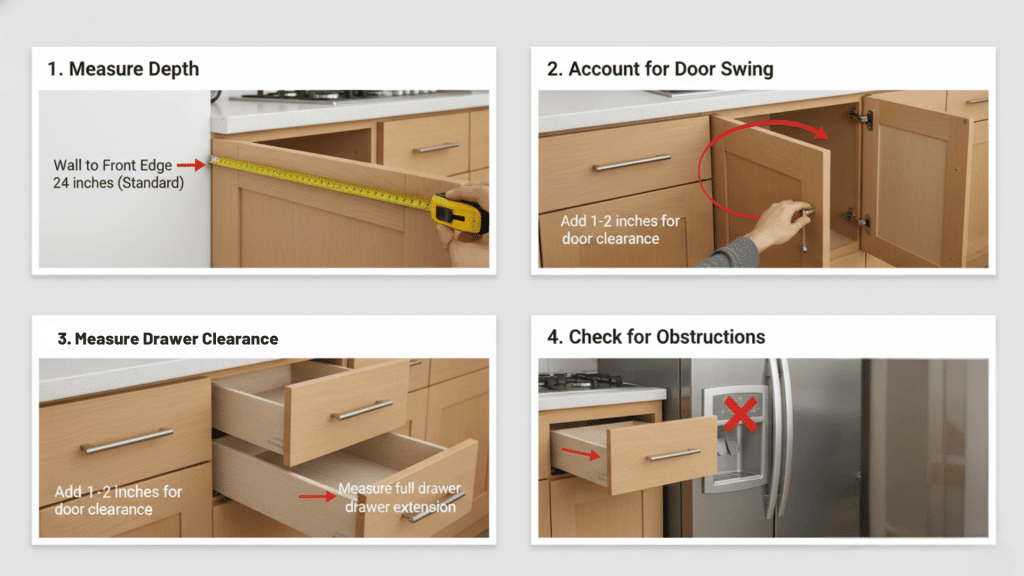
Follow this simple guide to ensure your cabinets fit perfectly and function efficiently in your kitchen layout. Accurate measurements help maximize storage and enhance accessibility.
1. Measure from the Wall
To begin, use a tape measure to measure from the wall outward to the front edge of the cabinet.
Start at the point where the cabinet will be installed, ensuring the measurement includes the entire depth from the wall to the outermost part of the cabinet.
This step is essential to determine how much space you have available for the cabinets and ensures the cabinet depth fits the designated space.
2. Account for Door Swing and Drawer Clearance
When measuring, it’s important to factor in the clearance required for doors and drawers. Open the cabinet doors and drawers to determine how far they need to extend.
If you’re working with deeper cabinets, additional clearance might be necessary to ensure they don’t obstruct walkways, appliances, or other cabinetry. Always leave enough space for easy operation and access.
3. Check for Obstructions
Before finalizing your measurements, check the surrounding area for potential obstructions.
Ensure that the depth of the cabinet won’t interfere with nearby appliances, plumbing, or other kitchen fixtures.
Consider how deep the cabinets will extend into the space and whether this could create any issues with accessibility or movement in the kitchen.
By following these steps carefully, you can measure your kitchen cabinets for depth accurately, ensuring they fit perfectly and function smoothly in your kitchen design.
How Cabinet Depth Affects Functionality
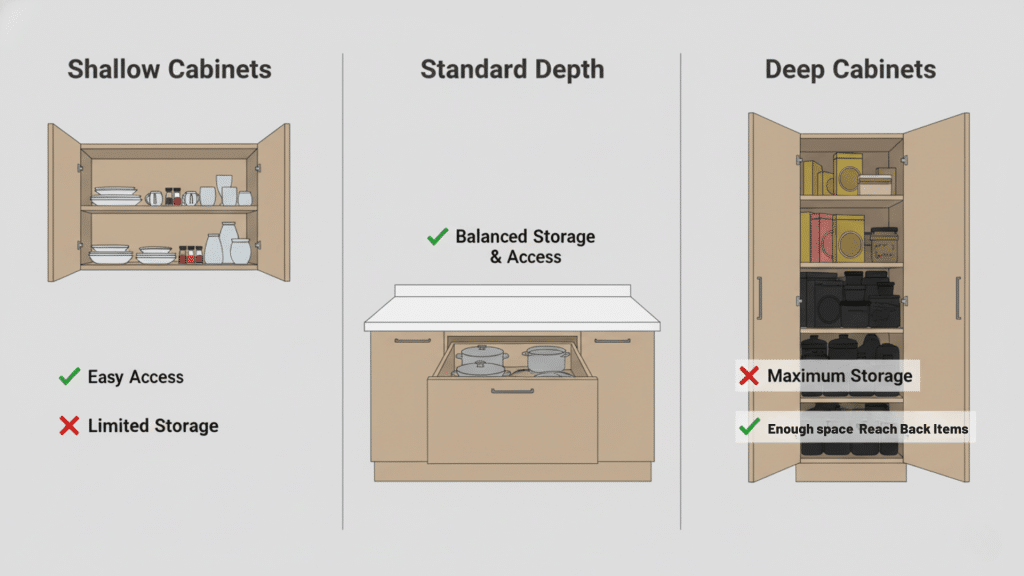
Explore how the right cabinet depth can enhance storage, accessibility, and overall kitchen efficiency for a more functional layout.
1. Storage Efficiency
Deeper cabinets provide more space for storing larger items like pots, pans, and small appliances, which is great for maximizing storage in your kitchen.
However, the challenge with deep cabinets is accessing items at the back. To make the most of the space, consider installing pull-out shelves or organizers.
2. Ergonomics and Accessibility
When choosing cabinet depth, it’s important to consider accessibility, especially for those with limited reach or mobility challenges.
Deeper cabinets can make it difficult to access items at the back, which can be frustrating, especially for shorter individuals.
Opting for shallower cabinets or adding pull-out shelves can improve ergonomics by ensuring all items are within easy reach, enhancing both usability and comfort in your kitchen.
3. Kitchen Workflow
The depth of your cabinets plays a crucial role in the overall workflow of your kitchen. Deeper cabinets may encroach on the available space, making it harder to move around, especially in smaller kitchens.
On the flip side, shallower cabinets might not offer enough storage, forcing you to compromise on storage capacity.
Pros and Cons of Deep Kitchen Cabinets
Learn the Pros and Cons of choosing deep cabinets to help you make an informed decision for your kitchen design and storage needs.
Pros
- Increased Storage: Allows more room for large items like pots, pans, and small appliances.
- Maximized Space: Efficiently utilizes space in larger kitchens, offering additional storage capacity.
- Better Organization: Deeper cabinets can accommodate more shelves, making organization easier.
- Enhanced Functionality: Provides enough space for bulkier kitchen tools and equipment.
Cons
- Limited Accessibility: It can be challenging to reach items at the back, especially without pull-out shelves.
- Cramped Feel: In smaller kitchens, deeper cabinets can overwhelm the space, making it feel cluttered.
- Harder to Navigate: Deeper cabinets may restrict movement and make the kitchen feel tighter.
- More Expensive: Custom or deeper cabinets typically come at a higher cost compared to standard options.
How to Choose the Right Cabinet Depth for Your Kitchen
Choosing the right cabinet depth for your kitchen requires careful consideration of your space, storage needs, and kitchen use.
Larger kitchens can accommodate deeper cabinets without crowding, while smaller kitchens may benefit from shallower cabinets to maintain an open feel.
If you have large pots, pans, or appliances, deeper cabinets are ideal for storage. For minimalist kitchens, shallower cabinets will suffice.
Accessibility is also important; if you or anyone in your household has mobility issues, shallower cabinets or those with pull-out shelves can improve reach.
By considering these factors, you’ll find the ideal cabinet depth that balances functionality and design.
Final Thoughts
Choosing the proper cabinet depth is essential for optimizing both the functionality and aesthetics of your kitchen.
Whether you opt for standard, custom, or variable-depth cabinets, understanding your space, storage needs, and accessibility requirements will ensure your cabinets work efficiently and complement your kitchen design.
By carefully considering these factors, you can create a kitchen that’s both practical and visually appealing.
Ready to get started? Take a closer look at your kitchen layout, assess your storage needs, and start planning your ideal cabinet depth today.
Your dream kitchen is just a few thoughtful decisions away!