

If you’ve ever admired a fiddle leaf fig and wondered how to grow more of them, propagation is your answer.
This rewarding yet straightforward process lets you create new plants from a single cutting, all while saving money and expanding your collection.
Whether you prefer water, soil, or air layering, each method offers unique benefits, and knowing when and how to do it right makes all the difference.
In this guide, we’ll cover everything from choosing the best method to providing post-propagation care.
By the end, you’ll know how to propagate and nurture your own thriving fiddle leaf figs successfully.
What Is Propagation and Why Propagate Fiddle Leaf Fig?
Propagation is the process of creating new plants from an existing one, whether by cutting, dividing, or other methods.
In the case of fiddle leaf figs, this involves taking a healthy stem cutting and encouraging it to grow into a new plant.
So, why should you consider propagating your fiddle leaf fig? Let’s explore the benefits:
- Save Money: Propagating your own plants is a cost-effective alternative to buying new ones, especially when you already have a healthy parent plant.
- Expand Your Plant Collection: Propagation lets you grow your collection without spending a dime, while experimenting with different methods and techniques.
- Support Sustainability: By propagating plants, you’re helping reduce the demand for mass-produced plants that may come with a hefty environmental footprint. Plus, it’s a rewarding way to recycle your existing plant.
Now that we’ve covered the “why,” it’s time to get into the best ways to propagate your fiddle leaf fig!
Different Methods to Propagate Fiddle Leaf Fig
There are three primary methods for propagating fiddle leaf figs: water propagation, soil propagation, and air layering. Each technique comes with its own set of benefits. Let’s explore each method in detail.
1. Water Propagation for Fiddle Leaf Fig
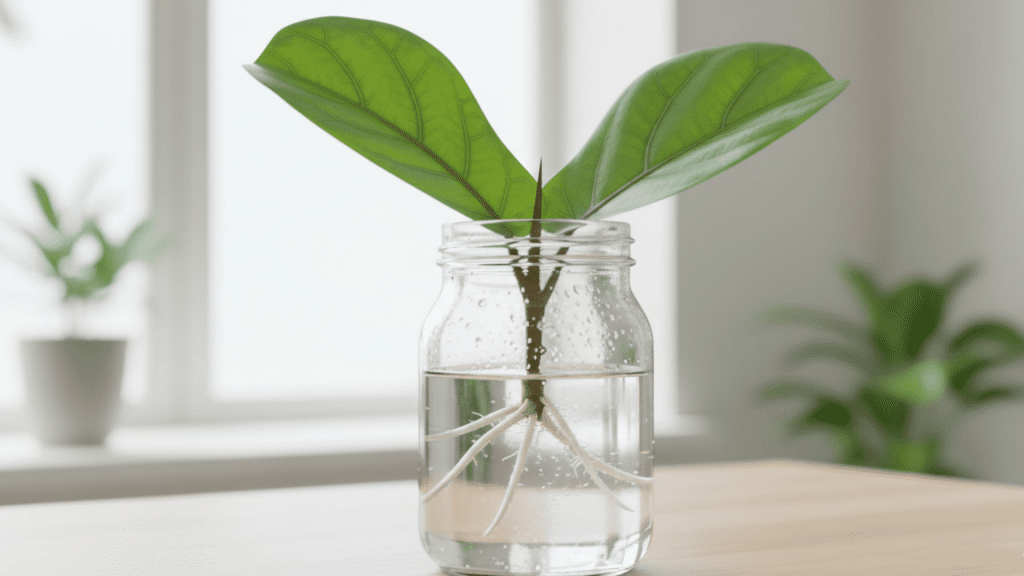
Water propagation is an easy and popular method for growing fiddle leaf figs. It allows you to visually track the growth of roots before transferring your cutting to the soil.
Materials Needed:
| Materials | Description |
|---|---|
| Sharp pruning shears or scissors | For making clean, precise cuts on the stem. |
| A clean glass jar or vase | To hold the water for propagation. |
| Filtered or room temperature water | To keep the cutting submerged and free from contaminants. |
Instructions:
- Select a Healthy Cutting: Look for a mature stem with a node, where new roots and leaves will grow. Cut a 6-inch section with sharp, clean shears.
- Prepare the Water Container: Fill a glass jar or vase with water, ensuring the node is submerged while the leaves remain above the waterline.
- Change the Water Regularly: Refresh the water every 2-3 days to keep it clean and prevent any bacteria buildup.
- Wait for Roots to Grow: Within 2-4 weeks, you should start to see roots developing from the node. Once they grow to about 1-2 inches long, your cutting is ready to be transferred to soil.
Care Tips:
- Keep the jar in a warm area with bright, indirect sunlight.
- Maintain a consistent water level so it doesn’t touch the leaves, which can cause rot.
2. Soil Propagation for Fiddle Leaf Fig
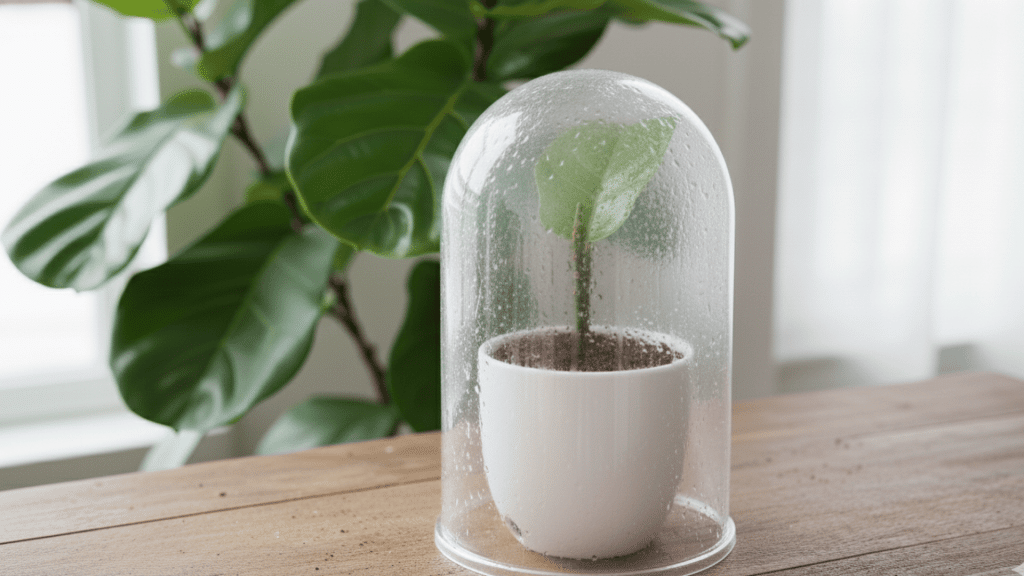
If you prefer to skip the water phase, soil propagation is a great alternative. It allows the cutting to root directly in a pot, where it can grow and establish itself faster.
Materials Needed:
| Materials | Description |
|---|---|
| Clean pruning shears or scissors | For making precise cuts on the stem. |
| A small pot with drainage holes | To ensure proper water drainage and root health. |
| Well-draining potting mix | Designed to promote root growth in houseplants. |
| A plastic bag or humidity dome (optional) | To create a humid environment to speed up rooting. |
Instructions:
- Prepare the Pot and Soil: Fill a small pot with a well-draining soil mix, then gently press the soil down to remove any air pockets.
- Cut and Plant the Cutting: Take a 6-inch cutting below a node and remove any leaves from the lower portion. Plant the cutting in the pot, burying it deep enough to stand upright.
- Water Lightly: Give the cutting a light watering, making sure the soil is moist but not soaked.
- Create a Humid Environment: Cover the pot with a plastic bag or humidity dome to trap moisture and create a greenhouse effect, which encourages rooting.
- Wait for Roots to Develop: Place the pot in a warm location with bright, indirect light. After 4-6 weeks, you should notice roots developing.
Care Tips:
- Keep the soil evenly moist, but avoid overwatering.
- Ensure high humidity around the cutting to boost root growth.
- Once the roots have formed, gradually allow the plant to adjust to normal conditions.
3. Air Layering for Fiddle Leaf Fig
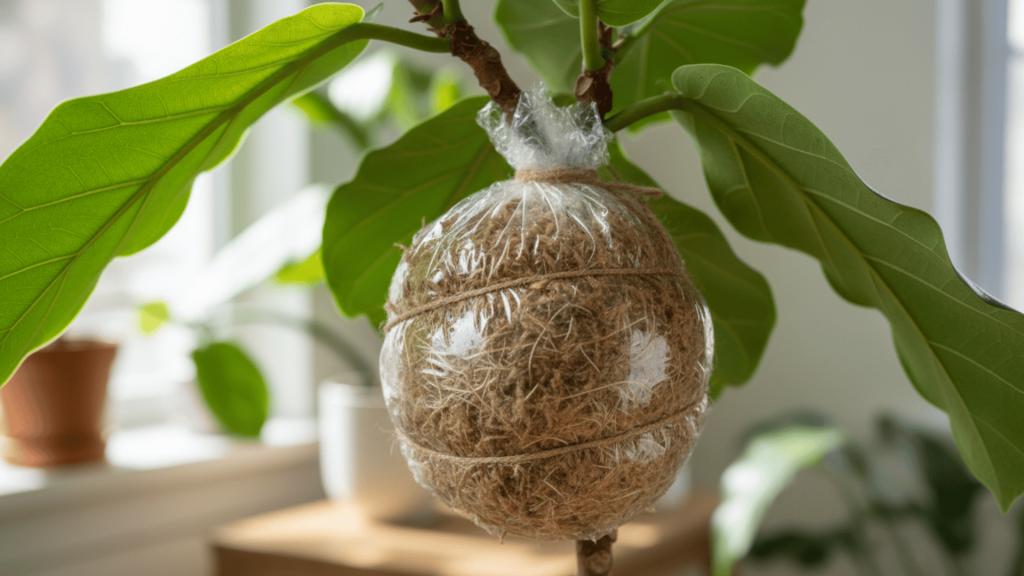
Air layering is a more advanced technique that encourages roots to grow while the cutting is still attached to the parent plant. This method is handy for larger fiddle leaf figs, where you want to propagate without initially cutting the stem off.
Materials Needed:
| Materials | Description |
|---|---|
| Sharp pruning shears | For making clean, precise cuts on the stem. |
| Plastic wrap or a plastic bag | To cover the moss and retain moisture for root growth. |
| Rooting hormone (optional) | To encourage quicker root development (optional). |
| Sphagnum moss | To wrap around the incision and promote root growth. |
| Twine or string | To secure the moss around the stem. |
Instructions:
- Choose a Healthy Stem: Select a stem that has a node and make a small incision just below it.
- Apply Rooting Hormone (optional): You can apply rooting hormone to the incision to promote faster root development.
- Wrap with Moss: Moisten sphagnum moss and wrap it around the incision. Secure it in place with twine or string.
- Cover with Plastic: Wrap the moss-covered stem with plastic wrap to maintain moisture and humidity.
- Wait for Roots to Grow: After 4-6 weeks, you should start to see roots developing within the moss. Once the roots are established, you can cut the stem below the rooted area and transplant it into a pot.
Care Tips:
- Ensure the plastic wrap remains moist, but not soaking wet.
- Avoid placing the cutting in direct sunlight to prevent stress on the plant.
- Regularly check for mold or rot, and remove any damaged moss.
Each of these propagation methods provides a unique set of advantages and challenges. Whether you choose water propagation, soil propagation, or air layering, all of them can result in healthy, thriving fiddle leaf fig plants with the right care.
When Is the Right Time to Propagate a Fiddle Leaf Fig?
The best time to propagate your fiddle leaf fig is during its active growing season, typically in spring and early summer. This ensures the plant is in its growth phase, making it easier for cuttings to root successfully.
- Spring and Early Summer: The ideal time to propagate your fiddle leaf fig is during its active growing season, typically in spring and early summer. The plant is focused on growth, making it more likely that your cutting will successfully root.
- Avoid Winter Dormancy: During colder months, the fiddle leaf fig enters dormancy, slowing down growth. Propagating during this time can result in slower root development and a lower success rate.
- Consistent Warm Temperatures: Propagate when the weather is consistently warm, as it helps the plant remain active and encourages faster rooting. Avoid doing so during extreme cold or heat.
Propagation Pitfalls for Fiddle Leaf Figs
Propagation can be an exciting and rewarding process, but it’s essential to avoid common mistakes along the way. Let’s explore some of the key pitfalls and how to prevent them to ensure your fiddle leaf fig thrives.
| Mistake | What to Avoid | How to Prevent It |
|---|---|---|
| Cutting Mistakes | Cutting the stem incorrectly or at the wrong place. | Ensure clean, sharp cuts just below a node with healthy stems. |
| Over or Underwatering | Overwatering or underwatering the cutting, leading to root rot or dehydration. | Water when the top inch of soil is dry; avoid soaking the soil. |
| Incorrect Lighting or Humidity | Too much direct sunlight or insufficient humidity can stress the plant. | Place in bright, indirect light and maintain humidity levels. |
| Lack of Patience and Troubleshooting | Expecting quick results or not addressing issues like mold or rot. | Be patient, check for issues regularly, and give time for rooting. |
Post-Propagation Care for Your Fiddle Leaf Fig
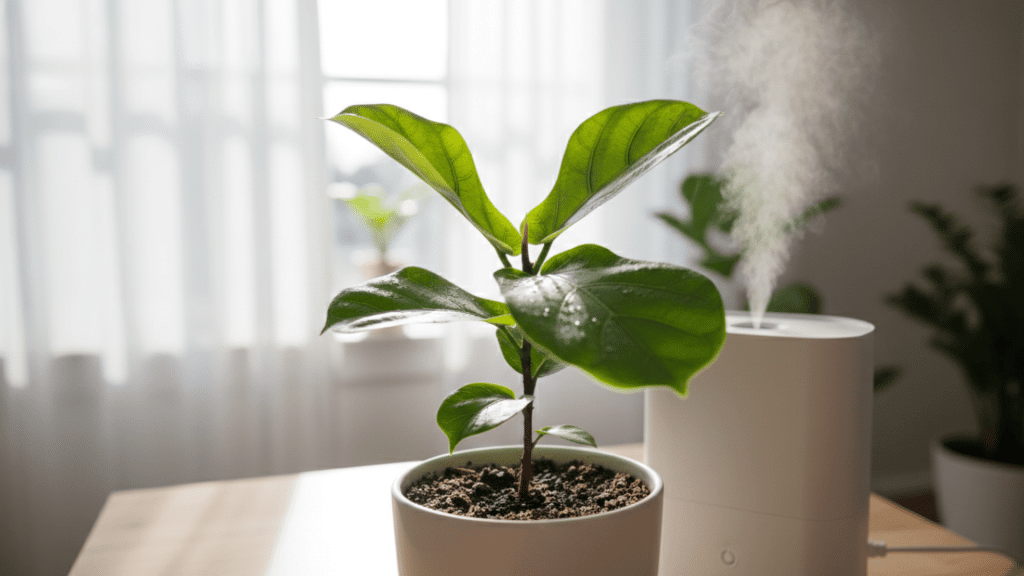
Once your fiddle leaf fig has rooted, it’s time to give it the proper care it needs to thrive. Here are a few essential tips to ensure your propagated plant stays healthy:
- Watering: After the cutting has rooted, water it consistently, but don’t let the soil become soggy. Let the top inch of soil dry out between waterings to avoid root rot.
- Lighting: Place your new fiddle leaf fig in a bright, indirect light spot. Avoid direct sunlight as it can burn the leaves of young plants.
- Humidity: Fiddle leaf figs thrive in humid environments. Keep the humidity level high, especially in the first few months after propagation, by misting the plant or using a humidifier.
- Fertilizing: Feed your new fiddle leaf fig with a balanced houseplant fertilizer every 4-6 weeks during the growing season to encourage healthy growth.
How Long Does It Take for Fiddle Leaf Figs to Root?
Fiddle leaf fig cuttings typically take 2-4 weeks to root, depending on the propagation method. In water propagation, you’ll see roots forming within 2-3 weeks.
Soil propagation may take a bit longer, around 4-6 weeks. For air layering, roots usually develop in 4-6 weeks.
To monitor progress, check for visible roots emerging from the node or moss, and observe any new growth, which indicates successful rooting.
If the cutting begins to show signs of new leaves or strong roots, it’s ready to be planted in soil.
Summing It Up
Propagating a fiddle leaf fig is a rewarding and cost-effective way to expand your plant collection.
Whether you choose water propagation, soil propagation, or air layering, each method offers unique advantages for creating healthy new plants.
By understanding the right time to propagate, avoiding common mistakes, and providing proper care after rooting, you can ensure your new fiddle leaf fig thrives.
Don’t forget, patience is key throughout the process! Ready to give it a try? Gather your materials, choose your method, and start propagating today.
Share your success stories and tips with us; we’d love to hear how your fiddle leaf fig journey unfolds!