
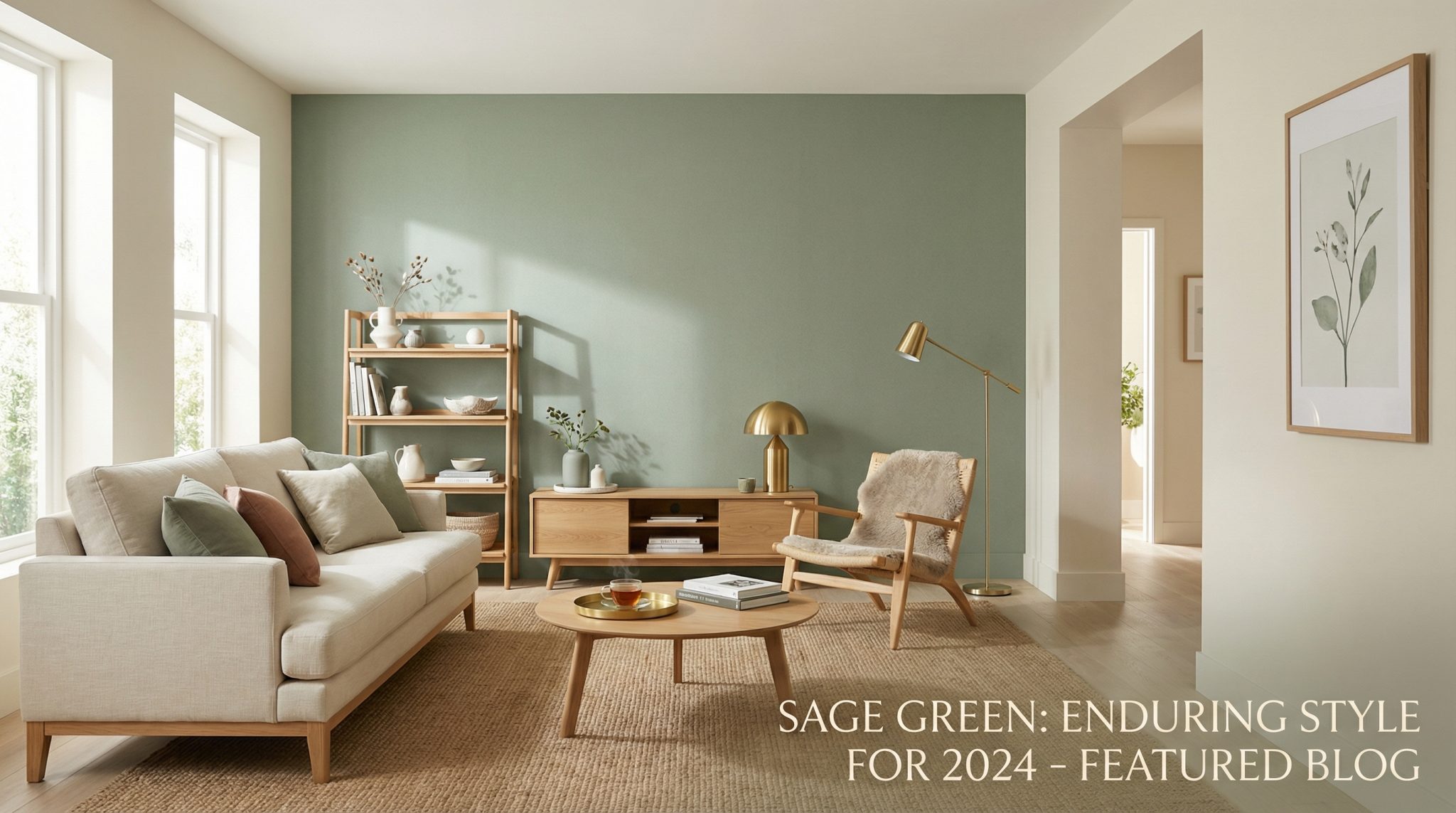

If you’re standing in the paint aisle holding a sage green swatch and whispering, “Is this going to age like my 2016 gallery wall?” — hi, welcome. You’re among friends.
Sage green has been everywhere for a few years now, which is exactly why people are getting nervous. Nobody wants to paint a whole room only to have it scream, “I peaked on Pinterest.” So let’s just say the quiet part out loud:
Sage green isn’t the hot new thing anymore. And that’s… kind of why it’s still a great idea.
Where Sage Green Actually Stands Right Now
Sage has officially graduated from “trend” to “default with personality.”
It’s like that pair of jeans you reach for when you “have nothing to wear” (even though your closet is full and you’re just emotionally overwhelmed). Designers aren’t clutching their pearls over sage. They’re just… using it. Real people are using it. In real homes. With real fingerprints on the cabinet doors.
So no, it’s not the star of the show in 2024. It’s the reliable supporting actor who makes every scene better.
Why Sage Refuses to Die (In a Good Way)
Sage is basically the Switzerland of paint colors:
green enough to feel natural, gray enough to behave like a neutral.
That’s the magic trick. It can look right at home in:
- a modern apartment with black window frames,
- a cozy cottage situation with all the baskets,
- a “my husband wanted gray but I wanted color” compromise (been there).
Also, green tones tend to feel restorative. Like your room put on a cozy hoodie and made you drink water. Compared to icy grays from the 2010s (why did we all want our homes to feel like corporate lobbies?), sage reads calm without being cold.
And honestly? After the great Millennial Gray Era, a lot of us wanted a color that felt alive without feeling loud. Sage understood the assignment.
But Is Sage “Out” in the Design World?
Designers, bless them, love a dramatic pivot. One minute everything is “quiet luxury,” the next minute it’s burgundy ceilings and lacquered walls and you’re like, “Cool cool cool… I just wanted to repaint the guest bath.”
What’s happening right now is greens are getting deeper and moodier olive, forest, moss, all the rich earthy stuff. But that doesn’t mean sage is getting kicked out. It just means sage isn’t the only green at the party anymore.
If anything, sage benefits from the shift because it already leans earthy. The bigger risk isn’t “sage is dated.” The risk is doing the most predictable sage combo on the planet and accidentally recreating a 2020 Pinterest board in your actual home.
(And listen, I love Pinterest. But I don’t want to live inside it.)
Will Sage Green Last… or Will You Regret It?
Both can be true, which is oddly comforting.
Here’s the pattern most trend colors follow:
- They show up.
- Everybody copies them.
- People get sick of seeing them everywhere.
- Either the color disappears… or it settles into the “solid classic options” category.
Sage is already past step three. That’s a good sign. It pairs easily, works with a million styles, and doesn’t demand attention every second of the day. It’s a “live with me” color, not a “look at me” color.
If you genuinely like sage, you’re fine. Trends come and go. Your eyeballs live in your house every day.
Where Sage Green Looks the Best (Aka: Where It Does the Most Work)
I’m not going to tell you sage works everywhere because technically neon green also “works” if you’re committed enough. But here’s where sage really shines:
1) Kitchens (Especially Cabinets)
Sage cabinets are still one of the best uses of this color. They feel grounded and grown up without screaming a specific year.
My favorite look is sage on lower cabinets with warm white or cream uppers. It’s classic, it’s cozy, and it hides real life better than bright white (because kitchens are for cooking, not museum tours).
2) Bedrooms
Sage in a bedroom is like hitting “exhale.”
It gives you color without the heaviness of deeper greens and without that “why does this feel like an office?” gray vibe. If your bedroom gets cooler light (north facing, lots of shade), sage can add a little warmth without going beige.
3) Bathrooms
Sage in a bathroom instantly reads “spa,” even if your reality is more “two kids, one towel, mild chaos.”
A sage vanity, some tile, even just paint + textiles can make it feel intentional instead of clinical.
If you’re nervous, start in a bedroom or bathroom. Lower stakes, high reward.
How to Pair Sage So It Doesn’t Look Like a Time Capsule
This is the part where sage can either look fresh and elevated… or like you copied the same mood board everyone used during quarantine.
Here are my go to pairings (aka: pick one and stop spiraling):
My easiest “bundles”
- Warm + classic: warm white trim + brass + light oak
- Modern contrast: crisp white trim + matte black + walnut
- Soft and airy: cream trim + brushed nickel + linen + light stone
What I’d avoid (gently, but firmly)
- Sage + blush pink can feel very “2019 brunch mural.”
- Sage + all gray everything can get flat fast.
- Sage + lots of white subway tile + white quartz + builder lighting can start to look like a showroom template instead of your house.
Sage loves texture. Wood, woven stuff, linen, stone give it friends. Don’t make it do all the personality work by itself.
Test It Like a Responsible Adult (Ugh, I Know)
Paint is a little like online dating. Looks incredible in the profile pic, then shows up at 7 p.m. under your warm bulbs and suddenly it’s giving… hospital scrubs.
Do this instead:
- Sample it and live with it for 48 hours. Check morning, afternoon, night.
- Put it next to your actual finishes. Countertops, flooring, tile, sofa don’t guess.
- If you’re unsure, start small. Towels, pillows, one wall, a vanity. You’ll know fast if you love it or if you’re just “fine with it.”
And listen: “Fine with it” is not what you want for a color you’re going to stare at daily while brushing your teeth and contemplating your life.
What’s Next for Green (If You Care About Future Proofing)
Greens are staying. The direction is just getting a little richer: olive, moss, deeper earthy tones.
Sage won’t look dated overnight, but it can feel tired if it’s done in the most cookie cutter way possible. If you want to keep it feeling current:
- choose a slightly more complex, dirtier sage (less minty),
- pair it with warm materials and texture,
- and don’t copy paste the same exact combo you’ve seen 800 times.
Sage isn’t doomed. It just needs intention.
Your Next Move (Do This This Week)
Go get a big sample not a tiny postage stamp swatch, a real “I can see it from across the room” sample and put it on the wall.
Then let your lighting snitch on it.
If you love it in your house, you’re good. That’s the only “trend report” that actually matters.