
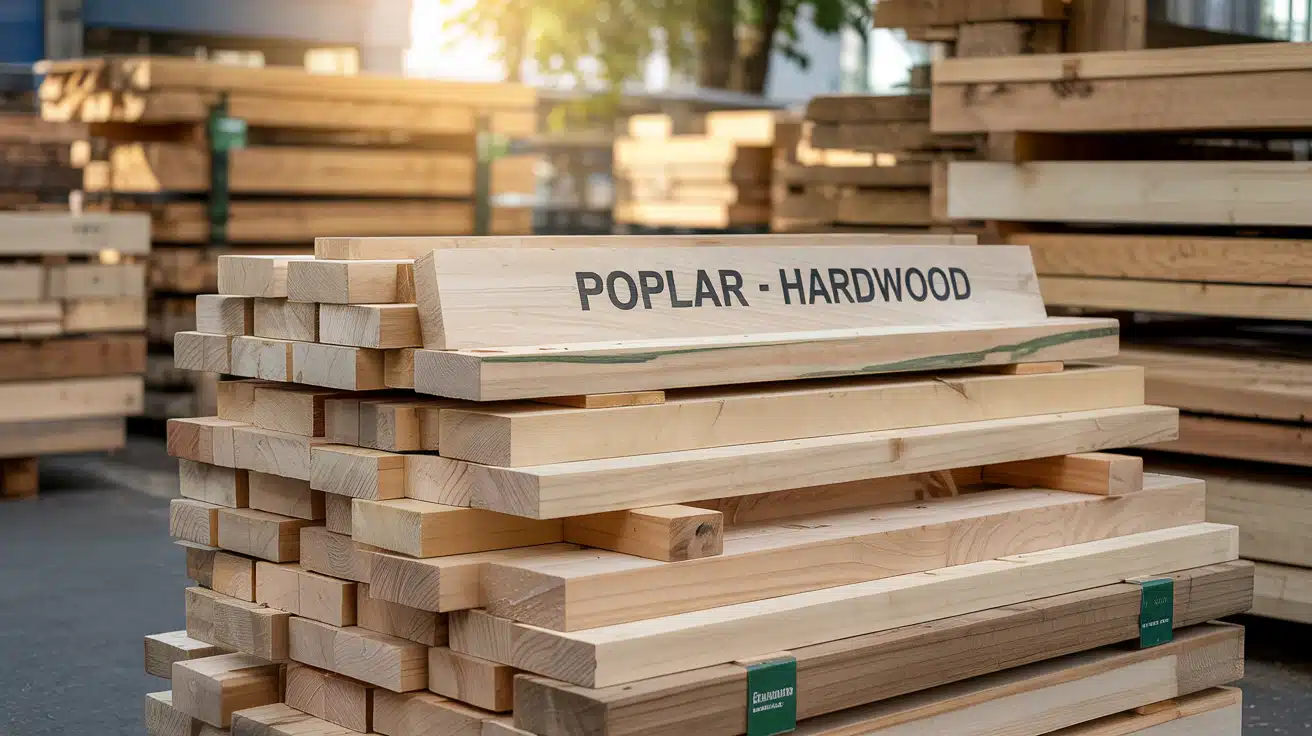
As a woodworker, I’ve noticed the confusion in people’s eyes when they pick up poplar at the lumberyard. “This is a hardwood?” they ask, feeling its surprisingly soft texture.
I get it – I was just as puzzled when I first started working with this contradictory wood. That’s why I’m breaking down everything you need to know about poplar: the soft hardwood that’s often misunderstood.
From its botanical classification to its best uses in projects, I’ll guide you through poplar’s unique personality.
By the time you finish reading, you’ll understand exactly when this budget-friendly wood shines and when you should reach for something tougher.
Ready to meet the underrated champion that’s been hiding in plain sight at your local lumber store?
Hardwood vs. Softwood: Not What You Think
The hardwood/softwood distinction has nothing to do with how hard the wood feels. Mind-blowing, right?
If trees had Tinder profiles, hardwoods would swipe right on flowering plants, not gym routines. The division is purely botanical—hardwoods come from angiosperms (flowering plants), while softwoods come from gymnosperms (mostly conifers).
Imagine a “family tree” with hardwoods on one side (fancy flowering plants with enclosed seeds) and softwoods on the other (ancient cone-bearing trees). Two completely different evolutionary paths, yet we mainly care about how they perform in our kitchen cabinets.
Poplar’s Scientific Classification: Identity Crisis Solved
Despite its confusing softness, poplar is botanically classified as a hardwood because it comes from deciduous, flowering trees in the genus Populus.
What’s even more interesting is that “tulip poplar” or “yellow poplar” (common in American lumberyards) isn’t actually a true poplar! It belongs to the magnolia family (Liriodendron tulipifera) but earned its nickname from similar wood characteristics.
True poplars include varieties like cottonwood, aspen, and balsam poplar—all members of the Populus genus with similar workable properties. What unites them all botanically is their angiosperm ancestry, which is the scientific way of saying “yes, poplar is legitimately a hardwood.”
Meet the Star: Poplar’s Secret Life
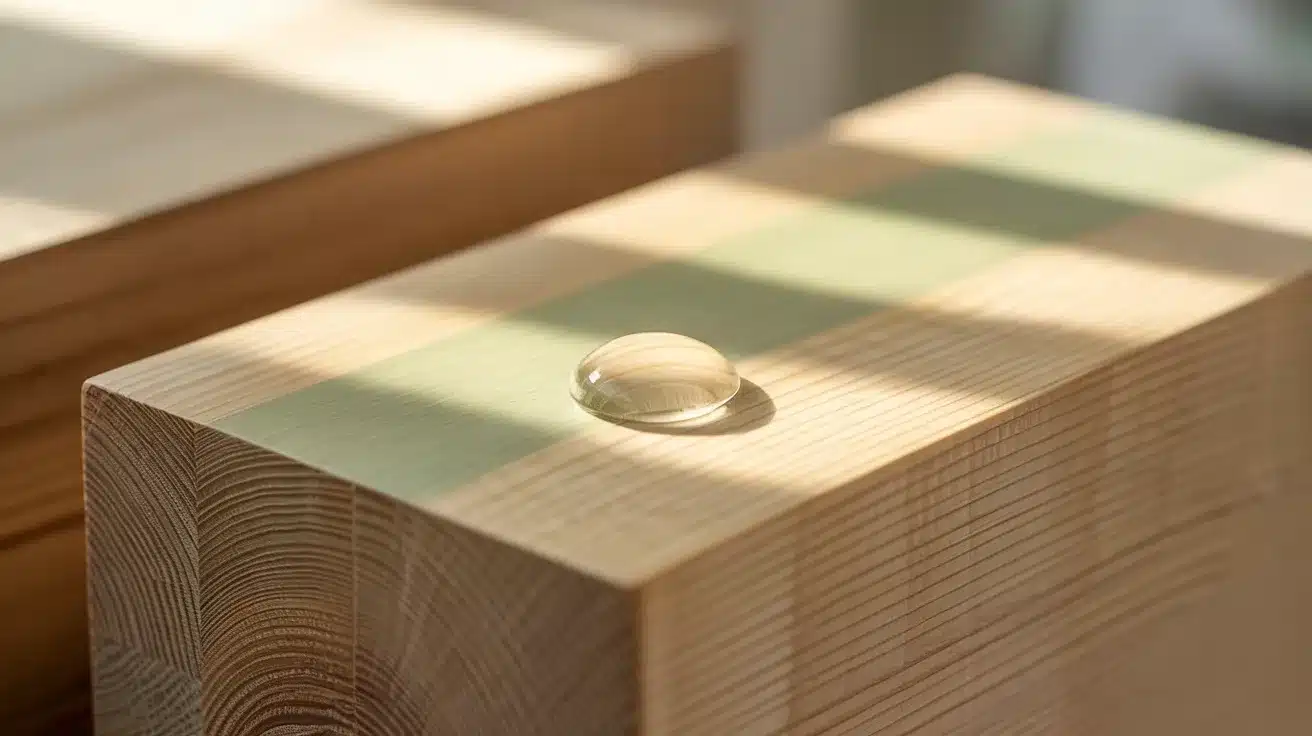
Here’s Poplar—lightweight, friendly, a little sensitive, but technically a hardwood.
Poplar trees grow incredibly fast compared to oak or maple, making them sustainable and affordable. The wood itself has a straight, uniform grain and ranges from creamy white to yellowish-brown, sometimes with streaks of gray or green.
While oak, walnut, and maple flaunt their dramatic grain patterns and impressive density, poplar is the approachable one that’s easy to work with and doesn’t cost half your paycheck.
Historical Uses of Poplar: Not Just a Modern Convenience
Poplar’s unique balance of lightness and stability has made it valuable throughout history. Renaissance artists prized it for painting panels—including, reportedly, the Mona Lisa’s backing. Its predictable grain made it ideal for intricate carvings in churches where weight matters.
In early American furniture, craftsmen often used poplar for secondary components—drawer sides, backs of cabinets, and interior structural elements. They recognized what modern woodworkers know: poplar provides structural integrity without excess weight or cost.
Medieval shield makers valued poplar for protection that warriors could carry all day without fatigue. This historical use perfectly illustrates poplar’s enduring appeal—practical performance without unnecessary heft.
The Poplar Personality Card
| Characteristic | Rating |
|---|---|
| Janka Hardness | 540 lbf (Soft for a hardwood) |
| Weight | 30-40 lbs/cubic ft (Lightweight) |
| Color Options | Pale white, yellow-green, gray-green |
| Workability | Excellent |
| Price | $ (Budget-friendly) |
| Sustainability | High (Fast-growing) |
Poplar’s Personality Profile
Strengths
- Cuts, planes, and sands like a dream
- Often half the price of oak or maple
- Takes paint beautifully with its smooth surface
- Stays dimensionally stable without warping
- Lightweight yet reasonably strong
Weaknesses
- Dents easily if you look at it wrong
- Fails quickly outdoors unless heavily protected
- Has a rather plain grain pattern
- Sometimes shows greenish streaks that complicate finishing
Where Poplar Shines (and Where It Doesn’t)
Great for
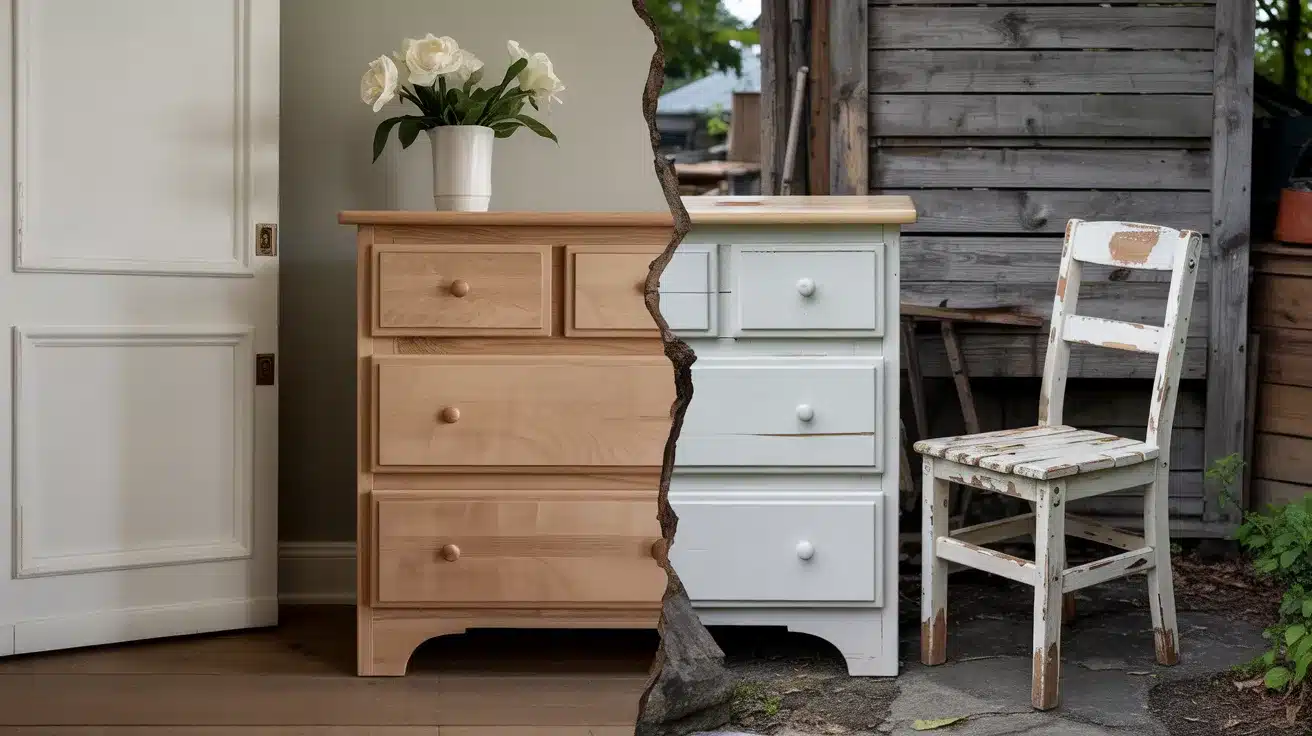
- Painted furniture (it’s the perfect canvas)
- Interior trim and molding
- Cabinet sides and drawer components
- Weekend DIY projects
- Utility builds that stay indoors
Not Great for
- High-end heirlooms are meant to show natural wood
- Cutting boards or butcher blocks
- Outdoor anything (unless you enjoy rebuilding)
- Flooring in high-traffic areas
- Projects that might take heavy impacts
Poplar in Modern Manufacturing: The Industry’s Secret Weapon

Walk through any furniture showroom and you’ll find poplar hiding everywhere—you just can’t see it. Major manufacturers like IKEA and other budget-friendly brands rely heavily on poplar for internal structures and painted surfaces.
Mass-produced furniture often features poplar as a core material beneath veneers, providing stability without driving up costs. Manufacturers appreciate its consistent machining properties and lack of surprises during production runs.
The painted furniture industry particularly loves poplar. Its smooth grain creates the perfect foundation for finishes, while its stability prevents the seasonal cracking that ruins painted surfaces on less stable woods. Next time you see a crisp white bookcase or painted cabinet, there’s a good chance poplar is working behind the scenes.
The “Poplar vs. Real Tough Guys” Faceoff
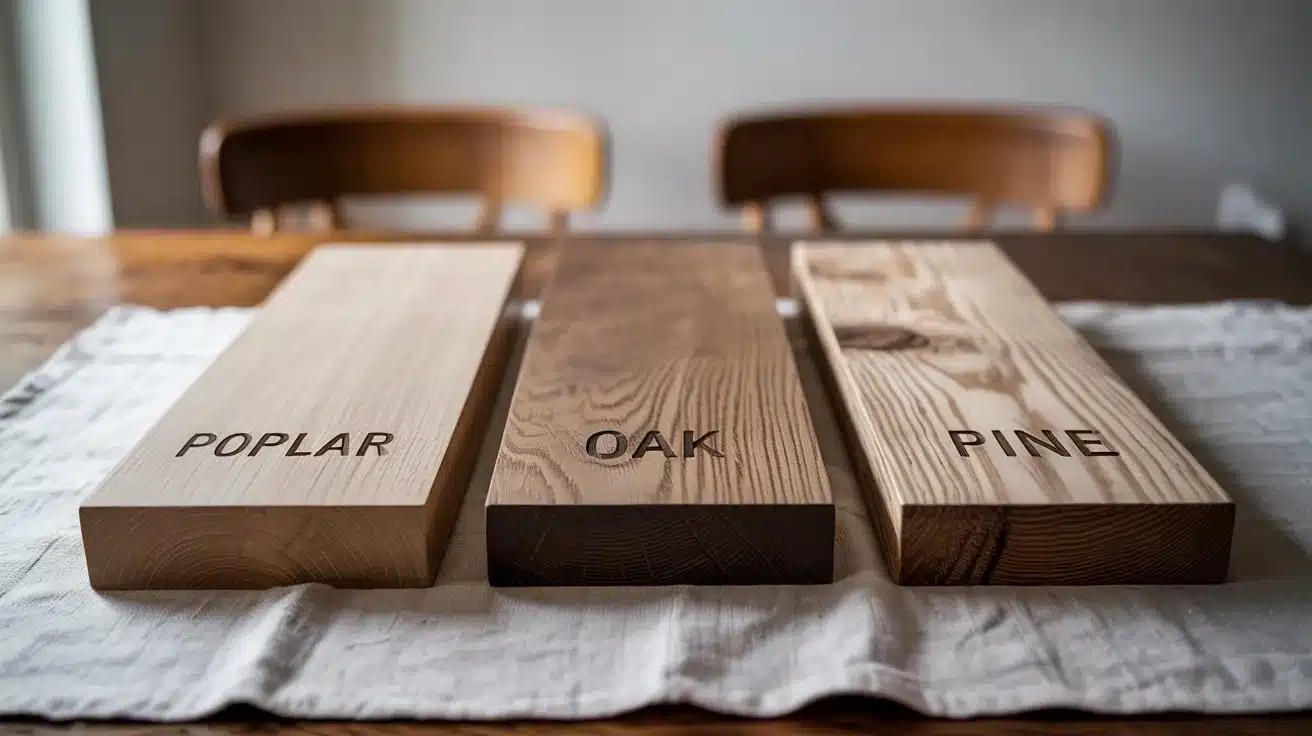
Poplar vs. Oak
| Feature | Poplar | Oak |
|---|---|---|
| Weight & Cost | Half the weight and cost | Heavier and more expensive |
| Tool Wear | Easier on tools | Harder, more tool wear |
| Finish | Can achieve a silky-smooth finish | Natural beauty, but grainier |
| Durability | Not as tough | Extremely durable – “zombie apocalypse” tough |
| Aesthetics | Plain, ideal for paint | Rich character and beautiful grain |
| Best For | Painted projects, budget builds, when weight matters | High-use furniture, natural finishes |
Poplar vs. Pine
| Feature | Poplar | Pine |
|---|---|---|
| Stability | More stable, less prone to warping | Can warp more easily over time |
| Surface Quality | Clean, knot-free surfaces | Rustic look with natural knots |
| Paint Finish | Takes paint more evenly and smoothly | Paint may blotch due to knots |
| Cost | Typically more expensive | Usually cheaper |
| Aesthetic Appeal | Refined, clean look | Warm, rustic charm |
| Scent | Neutral | Pleasant, resinous aroma in the workshop |
| Best For | Clean professional finishes, refined furniture | Budget builds, rustic or farmhouse-style pieces |
Should You Choose Poplar? Real Talk

Poplar is the Toyota Corolla of woods—not exciting, but incredibly practical and reliable for the right uses.
Is Poplar Right for You? Quick Check
If you answer “yes” to 3+ of these questions, you’ve found your match:
- Planning to paint your project?
- Working with a limited budget?
- Need something lightweight but still durable?
- Staying indoors with your creation?
- Looking for a forgiving wood as a beginner?
“Poplar Myths Busted” Mini-Section
Myth: “Poplar is just trash wood.”
Fact: Some of the most beautiful painted furniture comes from this “trash.” Design matters more than wood species.
Myth: “You can’t stain poplar.”
Fact: Use pre-stain conditioner and gel stains for excellent results. Those green streaks need the right approach!
Myth: “It’s too soft for anything structural.”
Fact: It’s been used in construction for centuries. Not as strong as oak, but perfect for many interior applications.
Myth: “All poplar has ugly green streaks.”
Fact: Wood from the tree’s center tends to be whiter and cleaner.
Conclusion
Looking back at the humble poplar board, it’s clear this wood deserves more respect than it often receives.
While it may not have oak’s strength or walnut’s luxury appeal, poplar excels in its own niche – practical, paintable projects that won’t drain your wallet.
Its botanical status as a hardwood might seem contradictory when you feel its soft surface, but this quirky contradiction makes it the perfect middle-ground option for countless woodworking applications.
From painted furniture to interior trim, poplar quietly performs where others might be overkill. I’ve found that understanding each wood’s strengths leads to better project outcomes, and poplar certainly has plenty to offer.
This unsung hero of the lumber aisle proves that sometimes, the most practical choice makes the most beautiful finished piece.