
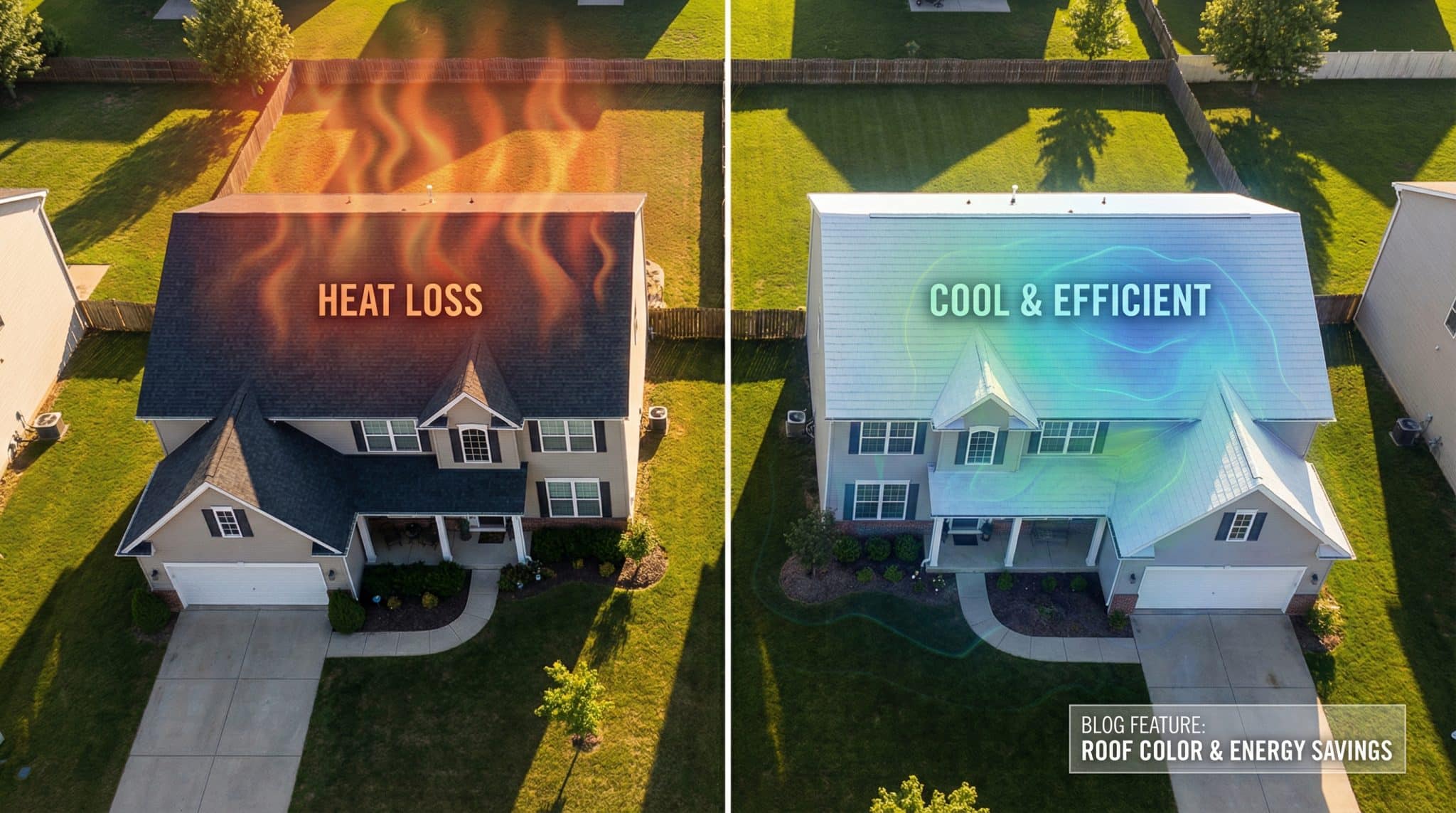

Roof Color Myths: What Actually Keeps Your House Cool?
Let’s talk about the roof color myth that refuses to die: “Just pick a light color and your AC bill will basically pay for itself.”
I mean… I wish. That would be the easiest home upgrade on the planet. Pick “Arctic White,” sip lemonade, watch your energy costs melt away. The reality is a little more annoying (because of course it is): roof color matters, but it’s not the main character. Not even close.
What really keeps you cool is the whole roof system doing its job material + ventilation + insulation and color is more like the supporting actor who gets a few good lines.
So if you’re staring at shingle samples like they’re going to reveal the meaning of life, here’s what actually matters (and when color is worth obsessing over).
The simple truth: light roofs get less hot… but your attic decides what happens next
Roof color affects solar reflectance, which is just a fancy way of saying: how much sunlight gets bounced back instead of soaked up like a black T shirt in July.
- Light/white roofs reflect a lot (roughly 0.60-0.90)
- Medium colors are… medium (roughly 0.30-0.60)
- Dark colors are heat sponges (roughly 0.05-0.20)
- Black is basically saying, “Yes, sun, I accept your full wrath” (around 0.05)
And yes, the surface temperature difference is real. On a hot day, you can see something like:
- White roof: ~126°F
- Black roof: ~168°F
That sounds like a major crisis until you remember: you don’t live on the roof. You live under the roof, and if your attic is insulated well, that dramatic roof temperature swing often turns into a much smaller indoor difference (sometimes just a couple degrees).
So if you’ve got solid insulation up there, your roof color isn’t going to magically transform your house into a refrigerated cupcake.
When roof color is a big deal (AKA: asphalt shingles and hot sun)
If you’re in a hot climate and you’re choosing asphalt shingles, color matters the most. Asphalt doesn’t have the same advantages as metal or tile, so a dark, basic asphalt shingle really will pull in heat.
If you’re already fighting a too hot second floor (hello, upstairs bedrooms that feel like a crockpot), choosing a lighter or “cool” shingle can actually help.
But—and this is a big but—there’s a plot twist.
You don’t have to choose “blinding white” to get a cooler roof
If your HOA would rather perish than approve anything lighter than “Historic Charcoal Gloom,” or you just genuinely love a darker roof (no judgment—I get it), look for cool pigment / reflective granule options.
This is where roofing gets slightly sci-fi: some darker shingles and coatings are made to reflect more infrared heat even though they still look dark. Same vibe with certain metal roofs that have infrared reflective coatings—dark color, better performance than you’d expect.
Here’s the thing, though: you have to ask for it. A contractor may default to the standard version unless you specify you want the reflective/cool rated product.
If you’re shopping, look for:
- ENERGY STAR labeling (easy shortcut)
- Ratings/listings through CRRC (Cool Roof Rating Council)
- A listed SRI (Solar Reflectance Index) value if available
(And yes, you will feel like you’re buying a spaceship part. Roofing is weird.)
When color barely matters (and you can stop spiraling)
You can make this decision a whole lot easier if any of these are true:
- Your attic insulation is excellent (think R-49-ish or better)
At that point, the heat has a harder time bullying its way into your living space. - Your roof is heavily shaded
If big trees shade a huge portion of the roof for most of the day, your roof color is not the main issue. The sun can’t roast what it can’t reach. - Your real problem is ventilation or HVAC
A light roof with terrible attic airflow is like wearing breathable linen and then wrapping yourself in a plastic bag. Fix the airflow first.
If you’re nodding along to any of those, pick the color you like and put your energy (and money) into the things that actually move the needle.
Material often beats color (yes, really)
This is the part most internet articles skip because it’s less dramatic than “WHITE ROOF SAVES THE PLANET”:
Metal often performs well—even in darker colors
A good metal roof can be highly reflective, and with the right coating it can shed heat efficiently. I’ve seen situations where a “darker” metal roof still outperformed a lighter asphalt roof because the material itself is doing heavy lifting.
Asphalt is where color has the biggest impact
If you’re sticking with shingles, then yes—light vs. dark is a more meaningful choice, especially in sunny climates.
Tile has its own thing going on
Tile has thermal mass and often allows airflow underneath, so it can perform better than you’d assume just based on color. It’s not magic, it’s physics (the boring kind that saves money).
Climate reality check (because your zip code matters)
- Hot climates (TX/AZ/FL/NV-style heat): roof reflectance can make a noticeable difference, especially if you’re moving from dark asphalt to lighter/cool rated products.
- Cold climates: the “dark roof helps you heat your home in winter” idea sounds logical… but snow cover and low sun angles ruin that fantasy. Pick dark if you love the look. Don’t do it expecting free heat.
- Mixed climates: middle of the road colors can be a sane compromise, and cool rated darker products can keep you from having to choose between “pretty” and “practical.”
Want the biggest payoff? Don’t start with color. Start under the roof.
If you want to stay cooler without throwing money into a bonfire, here’s what I’d look at first:
1) Insulation: unsexy, undefeated
If your attic insulation is thin, uneven, or missing in spots (very common), fixing that often gives you more comfort than a color change ever will.
2) Ventilation: make sure air can actually move
You want a clear path from soffit vents to ridge vents (or whatever your setup is). Good airflow can help a dark roof behave better than you’d expect.
3) Radiant barriers (in the right situations)
A radiant barrier can reflect heat away before it radiates into your attic space. It’s not always necessary, but in hot climates it can be a nice assist.
4) Coatings (only if it makes sense for your roof’s age)
Cool roof coatings can be a lower cost option in some cases, but they’re not forever—they typically need reapplication after several years. If your roof is near end of life, I’d rather put that money toward the replacement you’re going to need anyway.
Also: check local rules/HOA requirements before you get emotionally attached to “Bright White Dream Roof.” Paperwork can humble you real fast.
My no drama action plan (steal this)
If you’re replacing a roof or choosing a color with a metal roof preview tool and want real results:
- Check insulation and ventilation first.
If those are a mess, fix them before you spend extra on “cool” anything. - Pick your material with your climate in mind.
Metal and tile can outperform expectations. Asphalt is more color sensitive. - If you want performance, shop by product—not by color name.
“Pewter Gray” means nothing without specs. - Verify the claims.
Ask for the manufacturer spec sheet and look for listings like ENERGY STAR/CRRC where applicable. (If someone gets weird about providing info, that’s… not a great sign.)
Bottom line: roof color can help, but it’s not a miracle cure. If you want a cooler house, your best friend is usually a well built roof system and a properly insulated, well vented attic—not just a lighter shingle.
And yes, you can still choose a roof that looks good with silver metal roof pairings. Practical doesn’t have to mean “it resembles a yogurt lid.”