


Storms can strike without warning, leaving your roof vulnerable to serious damage. From missing shingles to hidden leaks, roof storm damage often goes unnoticed until it becomes a costly problem.
Understanding how to identify and address storm-related roof issues protects your home and saves you money.
Many homeowners don’t realize that even mild weather events can compromise their roof’s integrity. Acting quickly after a storm makes all the difference between a simple repair and an expensive replacement.
You’ll learn everything: how to spot, document, and fix roof storm damage to keep your family safe.
Why Checking Your Roof After a Storm Matters?
Even mild storms can create serious problems for your roof that aren’t always visible from the ground.
Wind can loosen or tear off shingles, while rain may find its way into small cracks and cause moisture seepage. If you ignore minor roof damage from storms, you could face bigger issues down the road.
Small leaks often lead to water damage inside your home, ruined insulation, and weakened structural supports. Over time, these problems become more expensive to fix.
That’s why it’s crucial to inspect your roof promptly after any storm and document any roof damage with photos. Early detection helps you catch problems before they worsen and makes filing insurance claims much easier.
Common Types of Roof Storm Damage You Should Know
Storms can harm your roof in many different ways. Understanding the various types of roof storm damage helps you know what to look for during inspections.
1. Wind Damage
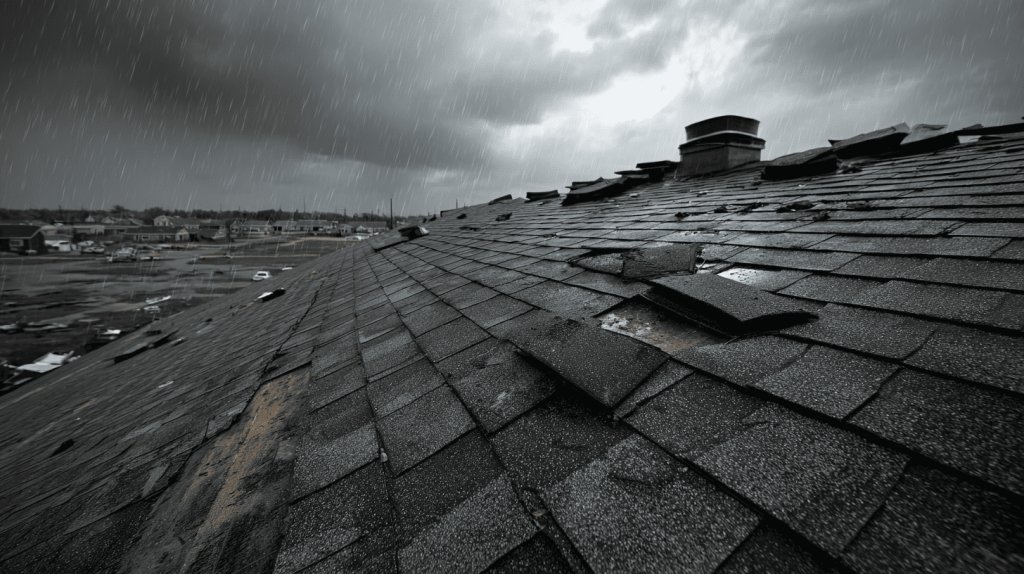
Strong winds can lift shingles right off your roof or cause them to curl and crack. Even moderate wind speeds may loosen the adhesive that holds shingles in place.
Flying debris can strike your roof, causing dents or punctures. Missing or damaged shingles leave your roof deck exposed to rain and moisture, which can quickly lead to leaks and water damage inside your home.
2. Hail Damage
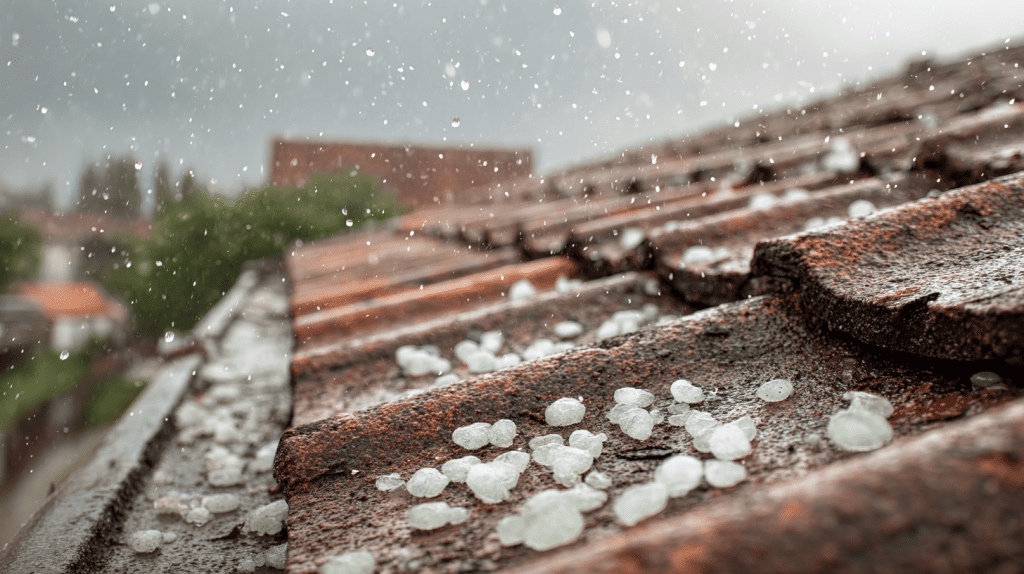
Hailstones hitting your roof can create dents and cracks that compromise your shingles’ protective abilities. One of the most common signs of hail damage is missing granules – the rough, sand-like coating on shingles.
These granules protect your roof from UV rays and water. When they’re knocked off by hail, your shingles age faster and become more vulnerable to leaks. Check your gutters for excessive granule buildup after hailstorms.
3. Water Damage

Water damage occurs when rain finds its way through compromised areas of your roof. You might notice ceiling stains, dripping water, or damp spots in your attic after heavy rainfall.
If water damage isn’t addressed promptly, it can lead to mold growth, posing health risks and weakening your home’s structure. Regular roof inspections help catch leaks before they become major problems.
4. Ice Damage
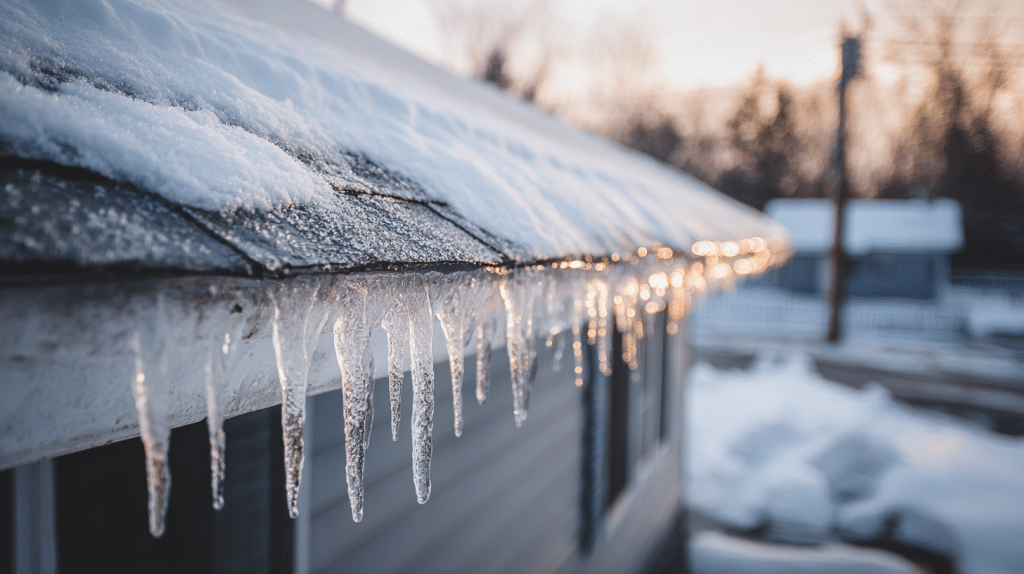
In cold climates, ice dams form when snow melts and refreezes at the edge of your roof. These ice barriers prevent proper drainage, causing water to back up under your shingles.
The trapped water can seep into your home, damaging walls, ceilings, and insulation. Ice dams also add extra weight to your roof and gutters, potentially causing structural stress or gutter detachment during winter months.
5. Debris Damage
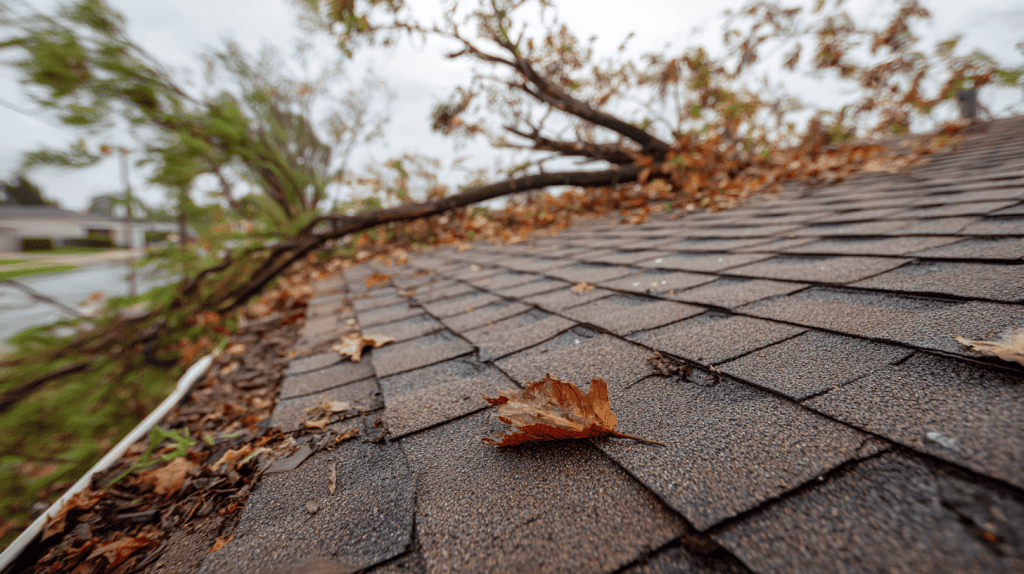
Falling tree branches, loose outdoor furniture, or other objects can puncture or crack your roofing materials during storms. Even small punctures can let water into your roof’s underlayment and decking.
Large branches may cause significant structural damage, requiring immediate professional repair. After any storm with high winds, check your roof and property for debris impact and remove any objects sitting on your roof.
Recognizing Roof Damage from Storms: What to Look For?
Identifying roof damage from storms requires knowing the warning signs to check after bad weather passes. Start by looking for missing or lifted shingles, which indicate wind damage.
Inspect your roof for dents or dark spots that suggest hail impact. Check your gutters – if they’re clogged with granules or hanging loose, your roof may have sustained damage.
Inside your home, look for water stains on ceilings or in your attic, as these are clear signs of leaks. Don’t forget to scan your roof surface for branches or debris that could have caused punctures.
Taking photos of any damage you find will help with insurance claims and repair estimates.
How to Do a Storm Damage Roof Inspection Safely?
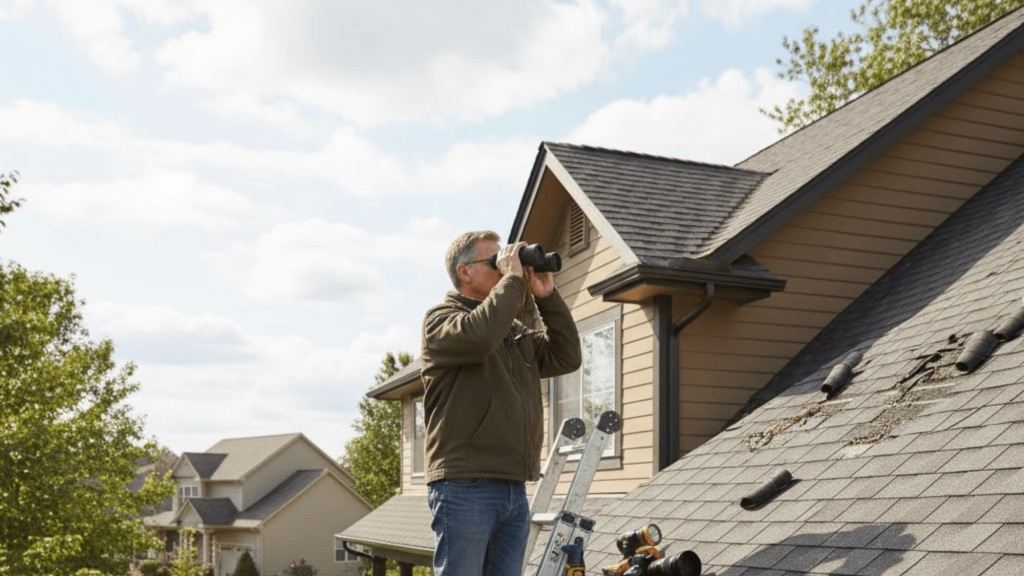
Conducting a storm damage roof inspection helps you spot problems early and prevent costly repairs. While professional inspectors are always recommended, you can perform a basic safety check yourself.
- Gather Your Inspection Tools: Get binoculars, a camera for photos, a flashlight, and a sturdy ladder.
- Start with a Ground-Level Visual Inspection: Walk around your property and use binoculars to check for missing shingles, dents, or holes.
- Check Gutters and Downspouts Carefully: Look for excessive granules, dents, or detachment. Make sure water flows freely.
- Inspect Your Attic for Interior Signs: Use a flashlight to find water stains, damp insulation, or light coming through the roof.
- Document Everything You Find: Take clear photos and write down dates and locations of all damage for insurance claims.
After completing your storm damage roof inspection, contact a licensed roofing professional if you find any concerning issues. They can provide a detailed assessment and recommend the best repair solutions for your roof.
Actions to Take After Discovering Roof Damage from a Storm
When you find roof damage from storm events, acting quickly can prevent small problems from becoming major disasters. Water can spread rapidly through your home, causing mold growth and structural issues within days.
- Cover Exposed Areas with Tarps: Stop water from entering your home.
- Move Belongings Away from Leaks: Relocate furniture and valuables from wet areas immediately.
- Place Buckets Under Active Leaks: Catch dripping water to minimize floor and ceiling damage.
- Contact Your Insurance Company Immediately: Report the damage and start the claims process.
- Schedule a Professional Roof Inspection: Hire a licensed contractor to assess all damage.
Quick action after discovering damage saves you money and protects your home from additional harm. The faster you respond, the better your chances of full recovery. Don’t wait – address roof problems immediately.
Contact Your Insurance Company and File a Claim
Notifying your insurance company quickly after finding roof storm damage is critical for a successful claim.
Call your insurer as soon as possible and provide details about when the storm occurred and what damage you found. Share all the photos and videos you took during your inspection – visual proof makes your claim stronger.
Keep receipts for any temporary fixes, such as tarps or emergency repairs, as most policies reimburse these costs.
Ask your insurance representative about the next steps, including when an adjuster will inspect your roof and how long it typically takes to receive claim approval.
Being organized and responsive speeds up the entire process and helps you get the coverage you deserve.
Storm Damage: Repair or Replace Your Roof?
Deciding between repairing and replacing your roof after storm damage depends on several important factors. If the damage affects less than 30% of your roof and your shingles are relatively new, repairs usually make sense.
However, a full replacement becomes necessary when damage is widespread, your roof is older than 20 years, or multiple areas show significant wear.
Extensive hail damage, large sections of missing shingles, or structural issues often require complete replacement rather than patches.
Your roofing contractor can assess the damage and help you understand which option provides better long-term value. Sometimes replacing your entire roof costs less than repeated repairs and gives you better protection.
Final Thoughts
Protect your home from roof storm damage by knowing what to look for and acting quickly when issues happen. Regular post-storm inspections catch problems early, avoiding water damage and expensive repairs.
Remember to document all damage with photos, contact your insurance company promptly, and hire qualified professionals for repairs or replacements.
Your roof is your home’s first line of defense against the elements – don’t wait until small problems become big headaches. Have you experienced storm damage recently?
Share your questions or concerns in the comments below, and get advice on keeping your roof in top condition!