

Paint shopping should be simple, right? You pick a color, you grab a can, you transform into the kind of person who owns matching throw pillows and says things like “It’s just more cohesive now.”
And yet… somehow paint shopping turns into a whole emotional journey. You’ll spend two hours debating between “Dove Wing” and “Cloud Whisper” and then if you buy from the wrong place you still end up with a wall that looks perfect at noon and vaguely haunted by 7 p.m. (Ask me how I know. Actually don’t. I’m still healing.)
Here’s the thing I wish someone had yelled at me from across the paint aisle years ago:
Where you buy paint matters more than which paint brand you buy. Not because brands don’t matter—they do—but because the experience (the color match, the advice, the “please help, my paint is peeling like a sunburn” diagnosis) lives and dies at the counter.
So let’s talk about the best paint retailers, what they’re actually good at, and which one you should pick based on what you’re painting without turning this into a paint themed scavenger hunt across town.
Before You Go: Pick Your “Paint Store Personality”
Do this first. It’ll save you from wandering around with six paint chips and a thousand yard stare.
1) What are you painting?
- One basic room (bedroom, office, etc.)
- High traffic chaos zones (hallways, kids’ rooms, living rooms)
- Kitchen/bath (steam, grease, moisture… joy)
- Trim/cabinets (aka “I would like to suffer, but stylishly”)
- Exterior
- Color match (touch ups, older paint, mystery colors)
2) How much help do you need?
Be honest. If you want someone to ask smart questions and stop you from using flat paint in a steamy bathroom… you need a better store.
3) Are you married to a brand?
Because some paint brands are exclusive little divas and only sell in certain places.
Also: take a photo of the wall in natural light before you go. Not under a lamp. Not at midnight. Natural light. Your phone will become your emotional support paint consultant.
The Retailers, Ranked (AKA: Who Actually Helps When Things Get Weird)
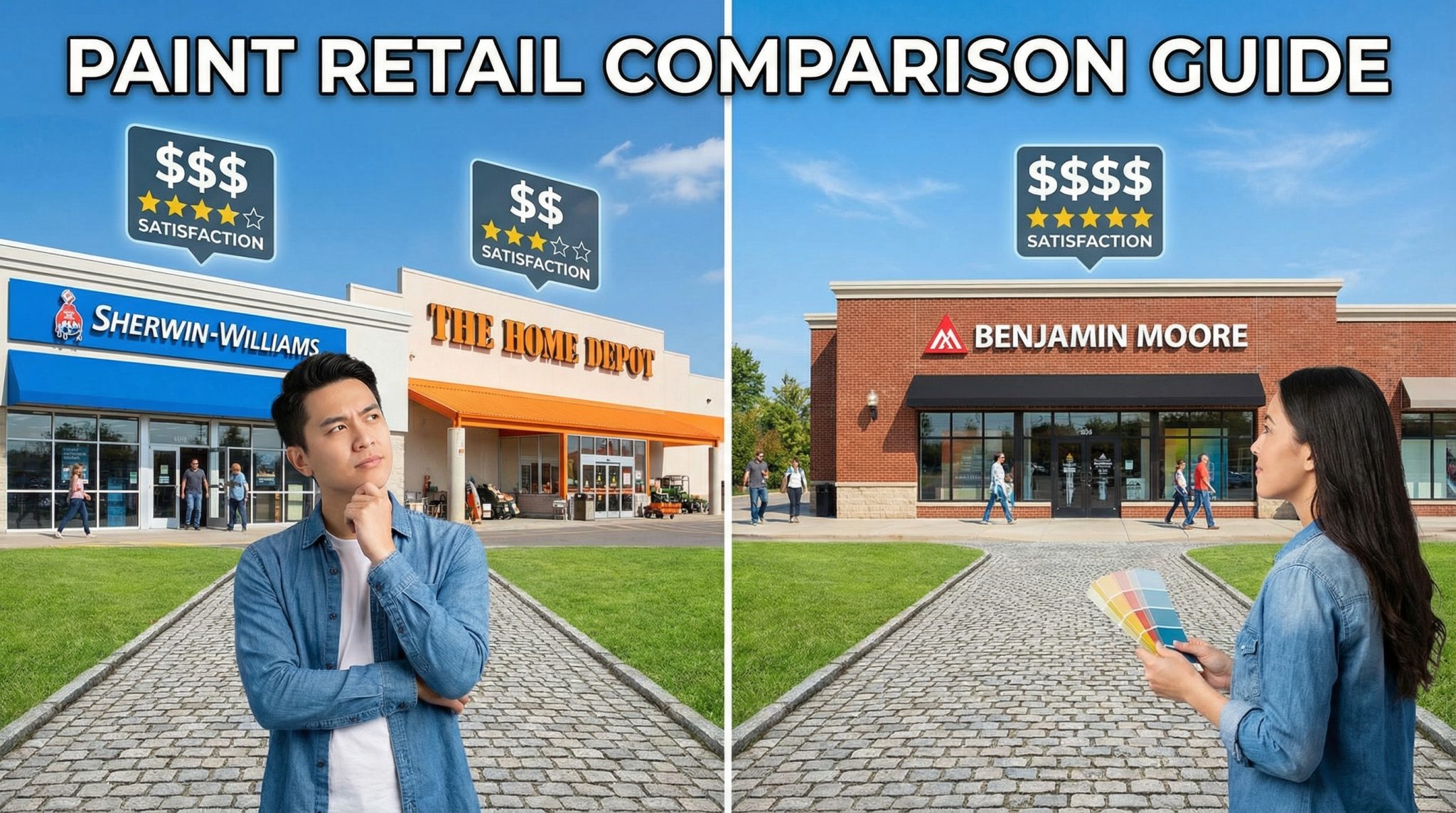
Customer satisfaction scores (like J.D. Power’s) consistently show something wild: the gap between the best and worst paint retailers is huge, while the difference between major paint brands is relatively small.
Translation: the store experience can make or break your project.
Here’s the “who’s good for what” version:
- Sherwin-Williams paint stores: best for color sensitive projects, tricky jobs, “I want this to last” painting
- Benjamin Moore dealers: fantastic finishes and color matching, usually higher end vibes
- Home Depot: solid for budget DIY + convenience (paint and a plant and a new drill in one trip… oops)
- Ace Hardware: local helpful energy, and some carry Benjamin Moore
- Lowe’s: great if you’re a Valspar person, decent for bigger straightforward projects
- Walmart: emergency touch ups only (like “company’s coming in 45 minutes” energy)
The biggest difference is usually the humans behind the counter. Paint stores employ people who talk about paint all day. Big box stores often have generalists who might be in lighting tomorrow. Sometimes you get a unicorn employee who knows everything sometimes you get “Huh. That’s weird.” and a shrug.
And you deserve better than a shrug when you’re about to spend your entire weekend rolling paint like a pioneer.
Where You Can Actually Buy Each Paint Brand (So You Don’t Rage Drive Across Town)
Paint brands are picky. Here’s the cheat sheet:
- Benjamin Moore: not at big box stores. Found at independent dealers and some Ace Hardware locations.
- Behr: Home Depot only. If someone tells you to get Behr, congratulations you’re going to Home Depot.
- Valspar: primarily Lowe’s.
- Sherwin-Williams: full lineup is at Sherwin-Williams stores. Lowe’s carries a more limited/cheaper Sherwin-Williams selection (not the full candy store).
So yes sometimes your brand preference basically chooses your retailer for you. That’s normal. Annoying, but normal.
Match the Store to the Project (Because Not Every Wall Needs a Paint Therapist)
Here’s how I’d pick, in real life, with my real money, and my real limited patience.
If you’re painting one simple room
Home Depot or Lowe’s is usually fine. If it’s a guest room you’ll repaint in five years anyway, you don’t need to act like you’re coating the Sistine Chapel.
If you’re painting multiple rooms or high traffic areas
Go to a Sherwin-Williams store or a Benjamin Moore dealer. Better product recommendations, better durability options, and you can actually ask, “Would a deep navy paint shade hold up in a hallway that gets body slammed by backpacks daily?”
If you need a color match
A dedicated paint store is your best bet. They typically have better equipment and more importantly staff who can help troubleshoot if the match is slightly off. Big box stores can match too, but if it’s wrong you may get a lot of “That’s strange…” which is not the calming energy you need while holding a half painted roller.
If it’s a kitchen or bathroom
You want someone who asks about ventilation and moisture, and points you to the right product and sheen. Paint store employees tend to do this automatically. (If someone recommends the exact same paint for a bathroom and a bedroom without a single follow up question, back away slowly with your paint chips.)
If you’re painting cabinets or trim
This is where I strongly prefer a Benjamin Moore dealer or Sherwin-Williams store because cabinets are not a “vibes” project. They’re a process project.
Also: certain cabinet paints have longer recoat windows. If you’re the type to say, “I’ll just do a second coat after lunch,” you need someone to warn you before you glue dust and regret into your finish.
My Favorite “Are You Actually a Paint Expert?” Questions
You don’t have to interrogate anyone like you’re in a crime drama. Just ask one or two things and see if they respond like a human who’s seen paint disasters before.
Try:
- “What’s on the wall now paint type or finish does it change what I should use?”
- “Do I need primer here? What happens if I skip it?”
- “What sheen would you put in this room if you were living with it?”
Good paint people will ask follow ups. They’ll want to know if the wall is stained, glossy, peeling, damp, brand new drywall, etc. If they don’t ask anything and just point to whatever’s on sale… that’s your cue.
Paint Specs That Actually Matter (Without the Science Fair)
Sheen: the “why do my walls look like a ring light?” factor
My simple rule: the shinier it is, the more it shows. If your walls are less than perfect (most are), don’t pick a super shiny finish and then act betrayed when it highlights every bump and roller mark.
What I use most often:
- Ceilings: flat
- Most walls: eggshell
- Hallways/kids’ rooms: satin
- Kitchen/bath walls: satin (sometimes semi gloss, but only if the walls are smooth and you like a little shine)
- Trim/doors: semi gloss
Primer: “paint and primer in one” is not a magical spell
I don’t care what the label says. If you’re dealing with:
- bare wood
- new drywall
- glossy surfaces
- stains
- metal/masonry
- big color changes
…use real primer. Paint and primer combos can be fine on previously painted walls in good shape, but they’re not stain blockers and they’re not miracle workers.
How much paint to buy (so you don’t run out mid wall)
A rough, real life estimate:
- 350-400 sq ft per gallon on smooth walls
- add 10-15% for texture
- plan on two coats (yes, still)
- buy a little extra for touch ups so you’re not trying to remix “almost the same” color later (been there, hated that)
Low VOC / low odor options
Most major brands have low or zero VOC lines now, which is great if you don’t want your house smelling like a chemistry lab.
Even with low VOC paint: open windows, run fans, ventilate. Some products can still off gas. If you’re sensitive, look for stricter certifications like Greenguard Gold.
What Paint “Really” Costs (AKA: The Cheap Paint Trap)
Sticker price lies. Cheap paint can be fine in the right place.
Here’s the trap: budget paint often needs more coats and doesn’t wear as well. So you “save” up front, then pay later in time, frustration, and repainting sooner than you wanted.
Where I think budget paint is totally fine:
- closets
- garage
- utility rooms
- basements (depending on moisture don’t get cute with damp walls)
Where I personally don’t cheap out:
- main living areas
- hallways
- kitchens/baths
- exteriors (because repainting an exterior is not something I want to do twice in one decade)
Also: watch for sales. Sherwin-Williams runs pretty predictable promos (often 30-40% off on a paint promo schedule). Benjamin Moore depends on the dealer, but many do loyalty deals or seasonal discounts. If you can wait even a week or two, it can be worth it.
My No Drama Action Plan for You
- Decide what you’re painting (basic room vs. high traffic vs. cabinets/bath/exterior).
- Let the project choose the store.
- Easy room? Big box convenience is fine.
- Anything fussy? Go to a real paint store or dealer.
- Take a wall photo in natural light and bring notes (peeling? stains? glossy? humidity?).
- Ask one smart question to make sure the person helping you actually knows paint.
- Check for sales before you buy 8 gallons at full price like a sucker (I say lovingly).
That’s it. No paint aisle suffering required.
Now go get your paint and pick the store that actually has your back.