
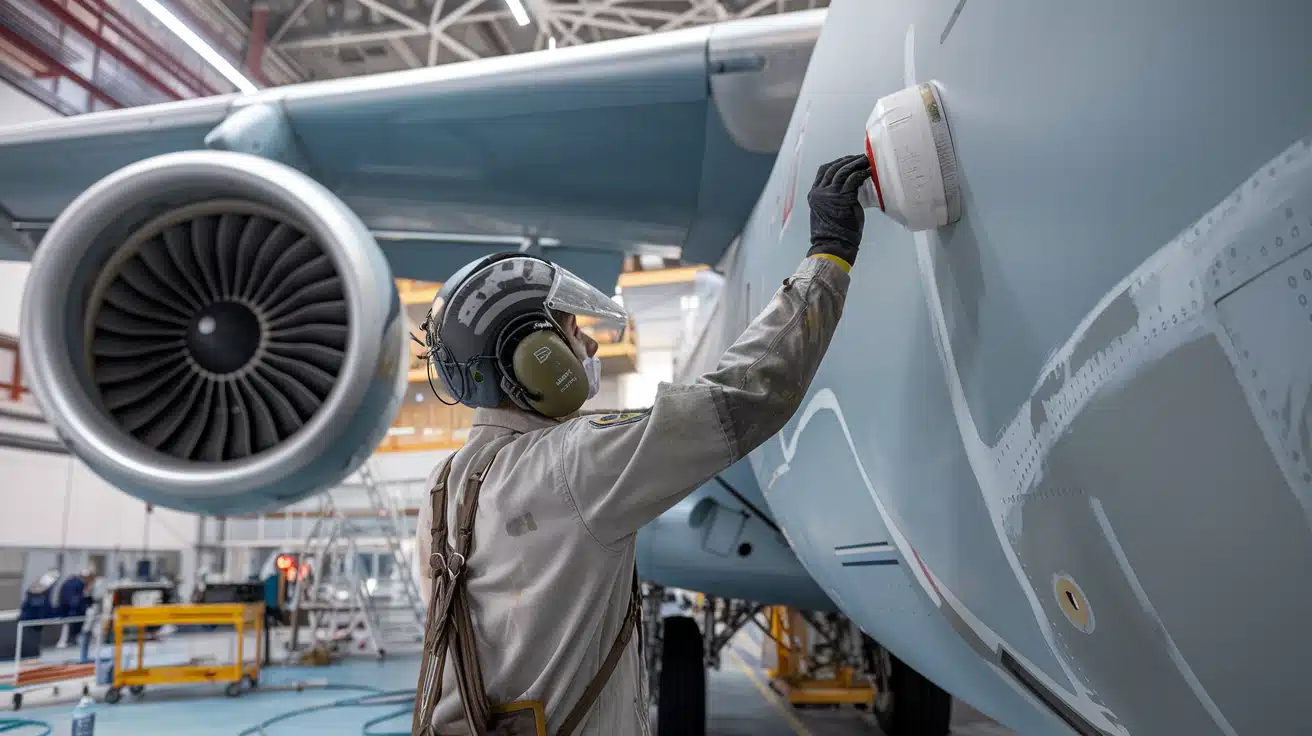
Aircraft protection requires top-notch primers that meet stringent military standards while prioritizing chemical resistance and corrosion prevention.
Finding primers that meet these criteria without compromising on quality can be challenging for many in the aerospace industry.
I’m here to simplify your search for the perfect epoxy primer that meets MIL-PRF-23377 specifications.
In this guide, I’ll explain everything you need to know about this military standard, from understanding the different types and classes to selecting the right product for your specific needs.
This post will break down the key components, benefits, and practical applications of MIL-PRF-23377 primers to help you make informed decisions for your aircraft protection needs.
What is MIL-PRF-23377?
MIL-PRF-23377 is a military performance specification that sets standards for high-solids epoxy primer coatings.
These primers offer exceptional protection against corrosion, chemicals, and solvents while maintaining strict environmental compliance with volatile organic compound (VOC) limits of 340 grams per liter (2.8 pounds per gallon).
These two-component primer systems consist of:
- Component A: A base component with epoxy resin and solvents
- Component B: A curing agent with polyamide or amine resin and solvents
- Component C (optional): A thinning component
When mixed properly, these components create a coating that forms a powerful protective barrier on metal surfaces.
Historical Origins
Before the G revision, earlier versions were designated MIL-P-23377 without the performance specification (PRF) indicator.
These original standards established the basic requirements for epoxy primers but contained fewer specific performance metrics and environmental considerations than modern versions.
Each revision has built upon previous knowledge, creating increasingly effective coating systems that balance performance requirements with environmental responsibility and practical application needs for aircraft protection.
Types and Classes of MIL-PRF-23377
This specification categorizes primers into distinct types and classes to meet various application needs. Each category serves specific purposes in aircraft protection.
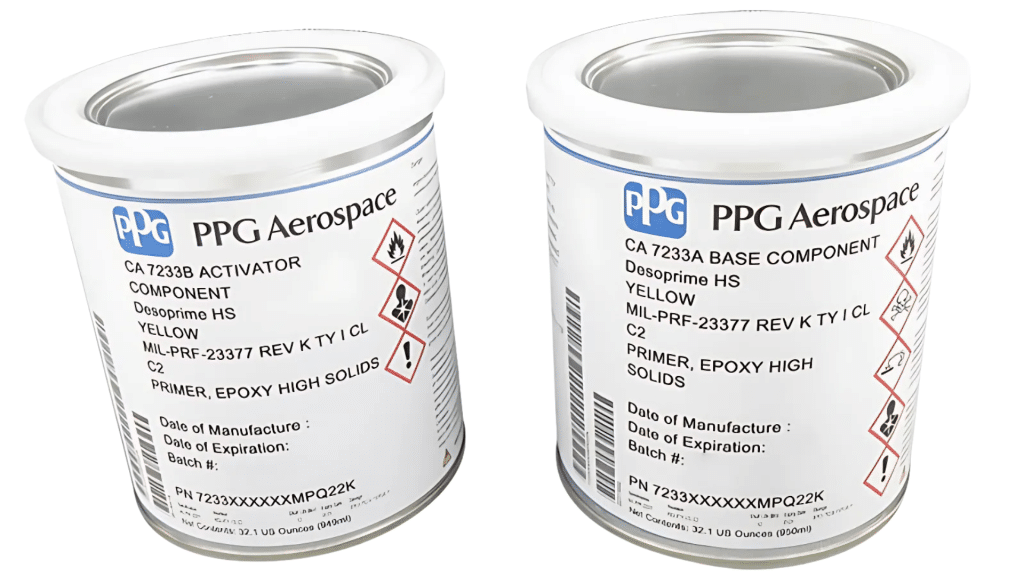
Type I Primers
Type I primers contain standard pigments suited for general applications. They come in the natural color of their corrosion inhibitors and provide reliable protection for most aircraft surfaces without special requirements.
Type II Primers
Type II primers feature low infrared reflective pigments. These specialized primers help reduce heat signatures, making them ideal for military applications where thermal detection is a concern. They typically come in dark green, black, or gray colors.
Class C1 Primers
Class C1 primers use barium chromate as their main corrosion inhibitor. These formulations offer strong protection against oxidation and rust. They create a stable barrier that prevents moisture from reaching metal surfaces.
Class C2 Primers
Class C2 primers contain strontium chromate corrosion inhibitors. Unless otherwise specified, this class represents the default choice for most applications. These primers provide excellent adhesion to aluminum surfaces and superior salt spray resistance.
Class N Primers
Class N primers utilize non-chromate corrosion inhibitors. These environmentally conscious options comply with strict regulations limiting chromium compounds. They require specific authorization from engineering authorities before use on military equipment.
Key Benefits of MIL-PRF-23377 Primers
Aircraft primers meeting this specification offer significant advantages that make them essential for aerospace and defense applications.
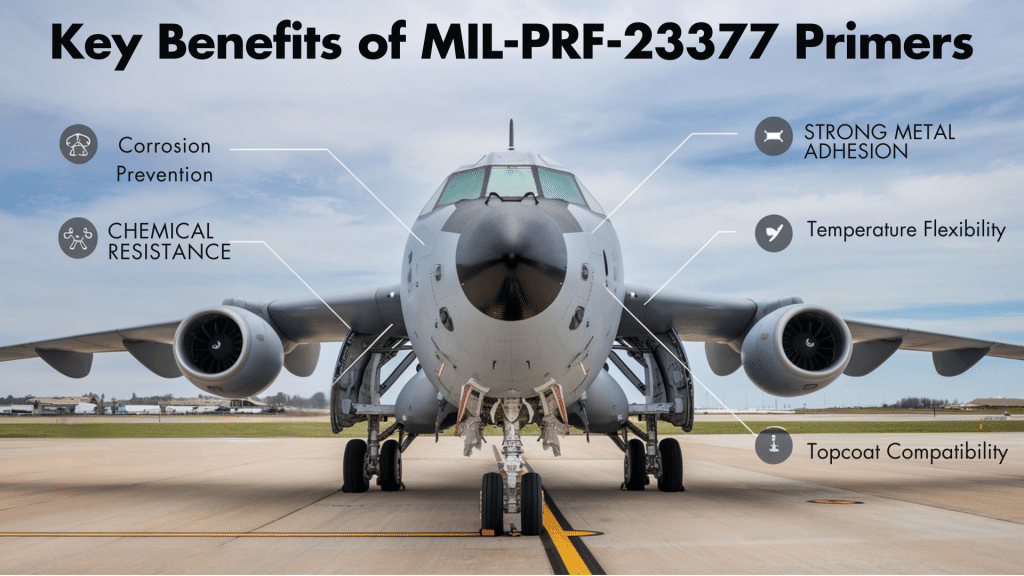
1. Corrosion Prevention
These primers create a strong barrier against corrosion in harsh environments. They withstand salt spray for up to 2,000 hours without showing signs of blistering or substrate pitting.
This protection extends aircraft lifespan significantly in marine settings and high-humidity conditions.
2. Chemical Resistance
MIL-PRF-23377 primers resist damage from a wide range of chemicals. They maintain their protective properties when exposed to hydraulic fluids, lubricating oils, and phosphate-ester-based hydraulic fluids.
This resistance prevents coating breakdown even during long-term exposure to harsh substances.
3. Strong Metal Adhesion
These primers bond exceptionally well with various metals and composites. The adhesion rating meets or exceeds 4A when tested according to industry standards. This strong bond creates a foundation that stays intact even under demanding conditions.
4. Temperature Flexibility
The primers remain flexible during temperature changes, showing elongation of at least 10 percent during testing. This flexibility prevents cracking when aircraft components expand and contract. The coating moves with the substrate rather than breaking apart.
5. Topcoat Compatibility
MIL-PRF-23377 primers work perfectly with polyurethane topcoats like those meeting MIL-PRF-85285 specifications. This compatibility creates complete coating systems with excellent appearance and protection.
The primers prevent lifting or irregular film formation during topcoat application.
MIL-PRF-23377: How the Spec Has Evolved
The MIL-PRF-23377 specification has undergone significant changes over the decades to meet changing needs in aerospace protection. These updates reflect advances in coating technology and increasing environmental concerns.
1. Current Standard: MIL-PRF-23377K
Established in 2012, the K revision represents today’s standard for high-solids epoxy primers. This version maintains the 340 grams per liter VOC limit while refining performance requirements.
The K revision includes more precise testing protocols for adhesion and corrosion resistance to ensure consistent results across different manufacturers.
2. Previous Major Update: MIL-PRF-23377J
The J revision came into effect in 2005 and received two important amendments before being replaced. This version introduced more specific requirements for salt spray testing and added detailed guidelines for primer application.
The amendments addressed issues discovered during field use and clarified certain technical parameters.
3. Foundational Revision: MIL-PRF-23377H
Released in 2002, the H revision marked an important transition in the specification’s history. This version established the current classification system of types and classes.
It also formalized testing procedures that became the foundation for future revisions.
4. Early Modern Standard: MIL-PRF-23377G
The G revision, dating back to 1994 with a 1999 amendment, began the shift toward modern environmental compliance. This version started addressing VOC content limitations more seriously than previous iterations.
The performance focus remained on corrosion protection while beginning to incorporate environmental considerations.
Conclusion
MIL-PRF-23377 epoxy primers deliver essential protection for military and aerospace equipment, ensuring longevity and safety in demanding environments.
Understanding the types, classes, and application best practices outlined in this specification can help you select the right primer system for your needs.
Whether you’re working on aircraft, military vehicles, or other critical equipment, these high-performance primers provide the foundation for a coating system that can withstand the toughest conditions.
Remember that while this guide provides general information, always refer to the full specification and consult with coating experts when working on mission-critical applications.