

Knowing the standard door sizes for homes helps you plan better when replacing, remodeling, or building new spaces.
It saves time, reduces costs, and ensures doors fit properly for smooth installation. Standard dimensions also make it easier to choose doors that meet accessibility needs, especially for wide entryways or wheelchair access.
While most modern homes follow common sizes, older houses and custom designs may have different measurements.
This means checking and understanding these standards is always useful.
Both interior and exterior doors follow specific size ranges, and knowing these can help you make practical and stylish choices for any home project.
Why Door Size Standards Exist?
Standard door sizes exist mainly to create consistency and efficiency in construction.
When manufacturers adhere to standard dimensions, it becomes easier and more affordable to produce, install, and replace doors without requiring custom adjustments.
Builders benefit because these fixed measurements simplify framing and finishing work.
Standard sizes also play an important role in meeting accessibility rules, as building codes require a minimum doorway width that allows easy movement for everyone, including those using mobility aids.
To fit these common door slabs, wall openings, known as rough openings, are built slightly larger. This extra space makes room for frames, shims, and finishing trim during installation.
Key Door Measurements Simplified
Knowing the right measurements helps ensure every door fits perfectly and functions smoothly in any space.
- Door Width: Measures the horizontal span of the slab, affecting clearance and usability.
- Door Height: Vertical measurement from top to bottom, usually uniform across most standard doors.
- Door Thickness: The depth between the faces determines hinge size and lock compatibility.
- Rough Opening: Wall space needed for installation, about two inches wider and taller than the door.
- Frame Size: Includes jambs and trim, ensuring a snug fit between wall and door.
- Proportion Check: Widths vary by function, but height typically remains constant for design balance.
Accurate measurements simplify installation, improve alignment, and ensure doors fit beautifully within every frame and layout.
Standard Door Sizes for Every Part of Your Home
Knowing common door dimensions helps you choose the right fit for comfort, design, and accessibility in any home.
1. Interior Door Sizes
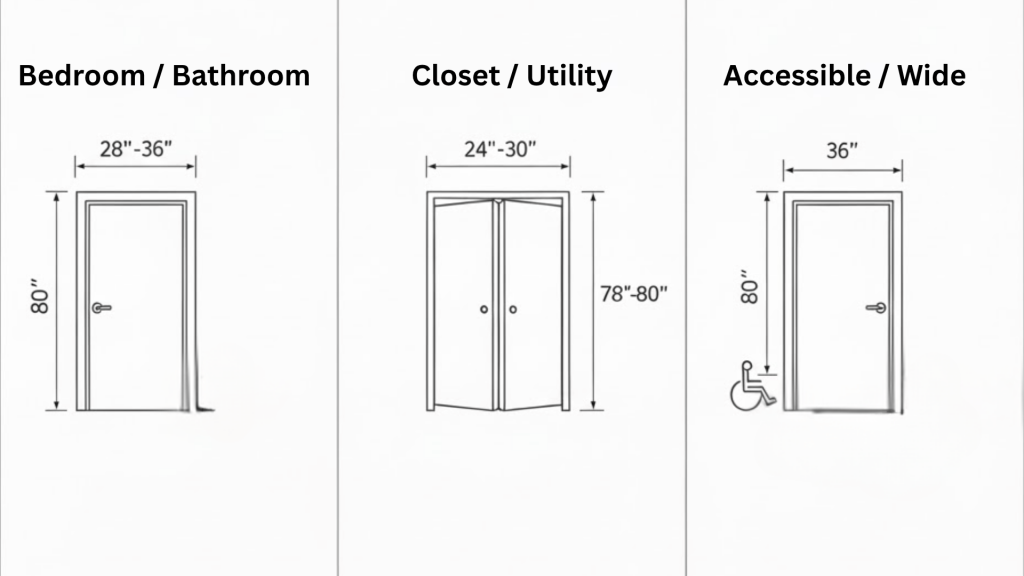
Interior doors come in consistent sizes that make installation simple and fit most rooms perfectly while maintaining comfort and accessibility standards.
| Door Type | Width (in) | Height (in) | Thickness (in) | Use |
|---|---|---|---|---|
| Bedroom / Bathroom | 28–36 | 80 | 1⅜ | Interior passage doors |
| Closet / Utility | 24–30 | 78–80 | 1⅜ | Storage, pantry spaces |
| Accessible / Wide | 36 | 80 | 1⅜–1¾ | Wheelchair-friendly |
Standard interior doors keep your home consistent, functional, and easy to update while maintaining a balance between space, style, and accessibility.
2. Exterior Door Sizes
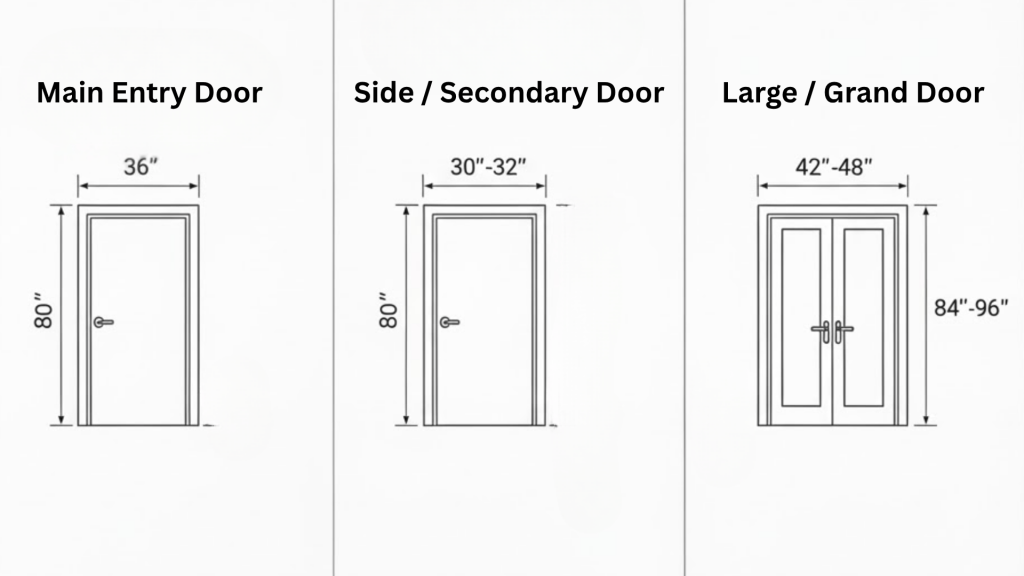
Exterior doors are built for durability, insulation, and curb appeal, with standard dimensions that ensure security and easy replacement for most homes.
| Door Type | Width (in) | Height (in) | Thickness (in) | Use |
|---|---|---|---|---|
| Main Entry Door | 36 | 80 | 1¾ | Front or back entry |
| Side / Secondary Door | 30–32 | 80 | 1¾ | Garage, side entrances |
| Large / Grand Door | 42–48 | 84–96 | 1¾ | Modern, wide entrances |
Choosing standard exterior doors ensures durability, safety, and unique appeal while keeping replacement and installation costs simple and affordable.
How to Measure for a Replacement Door
Proper measurement ensures a perfect fit, smooth function, and hassle-free installation for any replacement door.
- Measure Width: Take the width at the top, middle, and bottom; use the smallest for best accuracy.
- Measure Height: Measure from floor to top on both sides; note the shorter dimension.
- Measure Thickness: Check door edge; standard is 1⅜” for interior, 1¾” for exterior doors.
- Measure Rough Opening: Frame space should be about 2″ wider and 2½” taller than the door slab.
- Check Frame Shape: Ensure corners are square; older frames may need adjustments.
- Allow for Hardware: Leave space for hinges, locks, and weather-stripping.
- Plan for Custom Fit: If sizes vary, consider trimming or ordering a custom door.
Accurate measurements prevent fitting issues, reduce installation time, and ensure your door looks and works perfectly.
Choosing Non-Standard Door Sizes

Non-standard door sizes are often used when homes or designs call for measurements beyond the usual.
Older houses may have unique openings that don’t fit today’s standard doors, requiring custom dimensions for proper installation.
Modern homes with higher ceilings often feature taller doors around eight or nine feet to enrich proportion and style.
Wider doors are practical for spaces like home theaters or when moving large furniture.
Some homeowners also prefer custom widths or pivot styles for a more striking and deft entrance.
Implications for Homeowners and Builders
Standard door sizes simplify construction, reduce costs, and make replacement or remodeling easier while maintaining design and code compliance.
- Easy Compatibility: Standard sizes fit common pre-hung units, jambs, and hardware without custom modifications.
- Higher Costs for Custom: Non-standard doors often require specialized framing or cutting, increasing overall project costs.
- Accessibility Benefits: Standard widths support mobility, meeting accessibility requirements for safer, user-friendly entryways.
- Remodeling Adjustments: Switching from non-standard to standard sizes may need framing or wall modifications.
- Resale Value: Homes with standard doors appeal more to buyers and meet building code expectations.
Using standard door dimensions ensures convenience, compliance, and long-term value while keeping both installation and maintenance straightforward.
Making The Decision
A carefully chosen door adds harmony, comfort, and function to any home while reflecting personal taste and purpose.
Each doorway shapes how spaces connect and flow, creating a balance between design and practicality.
Paying attention to fit, proportion, and finish ensures lasting quality and smooth operation for years.
Every door you select becomes part of your home’s personality, guiding light, movement, and privacy.
Ready to upgrade your living space? Take precise measurements, explore trusted options, and pick designs that suit your needs.
Start today by visiting local stores or consulting a professional to find the right match for your home.
Frequently Asked Questions
Can Doors Be Repaired Instead Of Replaced?
Yes, minor dents, scratches, or loose hinges can be fixed without needing full replacement.
What Paint Finish Works Best For Doors?
Semi-gloss or satin finishes resist dirt and moisture while being easy to clean and maintain.
Are Hollow-Core Doors Durable Enough For Bedrooms?
Yes, they’re affordable, lightweight, and suitable for most interior spaces with moderate sound requirements.