Your leather couch probably sees more action than you realize. Snack nights, pet naps, dusty hands, and the occasional coffee spill all leave something behind.
And if you don’t know how to clean a leather couch the right way, you could be making the damage worse without even knowing it.
Leather is not like any other fabric. It needs specific products, a specific method, and a little patience.
Get it right, and your couch stays soft, clean, and sharp-looking for years. Get it wrong, and you are left with cracks, stains, and a couch that looks older than it is.
What Type of Leather Is Your Couch Made Of?
Before you grab any cleaner, you need to know what type of leather your couch is made of. Not all leather is the same, and using the wrong method on the wrong type can cause real damage.
- Aniline Leather: Soft and natural-looking but very sensitive to moisture and stains.
- Semi-Aniline Leather: Has a light protective coating, so it handles spills a bit better.
- Pigmented Leather: The most durable type and the easiest to clean and maintain.
- Bonded Leather: Made from leather scraps and tends to peel over time with heavy use.
- Faux Leather: Not real leather but still needs gentle care to avoid cracking.
Knowing your leather type saves you from costly mistakes. Check the tag under your cushions or look up your couch model before you start cleaning.
What You Need to Clean a Leather Couch
|
How to Clean a Leather Couch Step by Step
Cleaning a leather couch is not complicated, but the order in which you do things matters. Follow these steps, and you will get a proper clean without risking any damage to the surface.
Step 1: Vacuum the Entire Couch

Start by vacuuming every part of your couch, including the cushions, armrests, and all the creases. Use a soft brush attachment so you do not scratch the leather.
This removes loose dirt and debris before any liquid touches the surface, and that step alone prevents much unnecessary scratching.
Step 2: Wipe Down With a Damp Cloth

Dampen a microfiber cloth with distilled water and wipe the leather down in gentle circular motions. Do not soak the cloth, as too much water can damage the leather. This step lifts surface dust and light grime before you move on to deeper cleaning.
Step 3: Clean With a Leather Cleaner

Apply a small amount of leather cleaner to a soft cloth and work it into the surface in slow, circular motions. Do not spray it directly onto the couch. Work in small sections and wipe away any excess as you go, so the cleaner does not sit on the leather for too long.
Step 4: Condition the Leather

Once the couch is clean and fully dry, apply a leather conditioner with a clean cloth. This step keeps the leather soft and stops it from drying out and cracking over time. A lot of people skip this part, but it is honestly what keeps your couch looking good long-term.
These four steps cover everything you need for a solid routine clean. Do this every few months, and your leather couch will stay in great shape without much effort.
How to Remove Common Stains From a Leather Couch
Stains on leather can feel like a disaster, but most are fixable if you act fast and use the right method. The key is knowing what kind of stain you are dealing with before you start treating it.
1. Water-Based Stains (Coffee, Tea, Juice)

Water-based stains are some of the most common ones you will deal with, and they respond well to quick action. The faster you treat them, the easier they come out.
- Tools and Materials Needed: Microfiber cloth, distilled water, mild dish soap, leather conditioner
- Steps to Follow: Blot the stain immediately without rubbing, mix a small drop of dish soap with distilled water, dab the solution onto the stain, wipe clean with a damp cloth, and apply conditioner once dry
- Time Needed: 10 to 15 minutes
2. Grease and Oil Stains
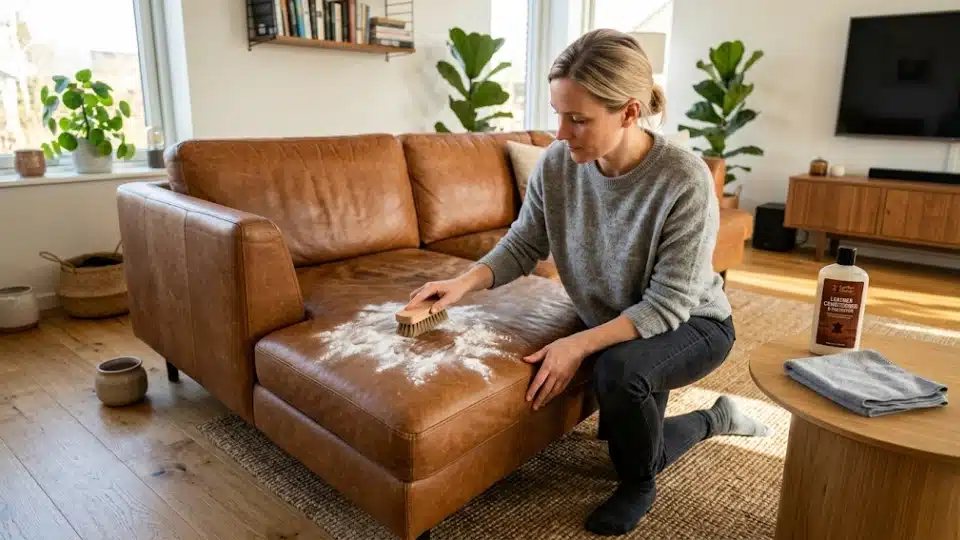
Grease stains need a different approach because water alone will not lift them. Baking soda works well here since it absorbs the oil without damaging the leather underneath.
- Tools and Materials Needed: Baking soda, soft brush, microfiber cloth, leather conditioner
- Steps to Follow: Sprinkle baking soda directly onto the stain, let it sit for a few hours to absorb the grease, brush off the powder gently, wipe clean with a dry microfiber cloth, and finish with conditioner
- Time Needed: 2 to 4 hours, including sitting time
3. Ink Stains

Ink is one of the trickier stains to remove from leather. You need to act quickly, or the ink can set permanently into the surface.
- Tools and Materials Needed: Rubbing alcohol, cotton swabs, microfiber cloth, leather conditioner
- Steps to Follow: Dip a cotton swab in rubbing alcohol, dab it gently onto the stain, working from the outside inward, wipe the area with a clean damp cloth, let it dry fully, and apply conditioner
- Time Needed: 15 to 20 minutes
4. Dye Transfer (From Jeans or Dark Clothing)

Dye transfer from dark clothing builds up slowly and gets harder to remove the longer it sits. A dedicated leather cleaner handles this better than any home remedy.
- Tools and Materials Needed: Leather cleaner or leather degreaser, microfiber cloth, soft brush, leather conditioner
- Steps to Follow: Apply leather cleaner to a microfiber cloth, rub gently onto the stained area in circular motions, repeat if the stain is deep, wipe clean with a damp cloth, and finish with conditioner
- Time Needed: 20 to 30 minutes
5. Red Wine and Colored Drinks

Red wine can stain leather fast, so speed is everything here. Blotting right away pulls out most of the liquid before it has a chance to soak in deep.
- Tools and Materials Needed: Clean dry cloth, mild dish soap, distilled water, leather conditioner
- Steps to Follow: Blot the spill immediately with a dry cloth, mix a small amount of dish soap with distilled water, apply the solution with light pressure, wipe clean, let it air dry completely, and apply conditioner
- Time Needed: 15 to 20 minutes
Every stain is different, but the approach is always the same. Act fast, use the right products, and finish with a conditioner to keep the leather in good shape after cleaning.
Tips from People Who Own Leather Couches
A lot of Reddit people say the easiest way to keep a leather couch clean is to use a commercial cleaner and conditioner like Lexol.
Some swear by a home mix of water, mild soap, and a little vegetable oil, sometimes with a few drops of essential oil for scent. If you have pets, many people wipe down the couch weekly and condition it a couple of times a year.
Others cover the couch with a blanket to stop wear from jeans or pets. A common tip is to avoid harsh chemicals, scrubbing, or excessive water; this helps protect the leather from damage.
Why You Should Condition a Leather Couch
Cleaning your leather couch removes dirt, but it also strips away some of the natural oils that keep the leather soft. That is where conditioning comes in.
It puts those oils back and stops the leather from drying out, cracking, or fading over time. Think of it like moisturizing your skin. Skip it too many times, and the surface starts to look dull and feel rough.
A good rule of thumb is to condition your couch every three to six months, depending on how much use it gets. Using a quality conditioning product goes a long way in keeping the leather from drying out between cleans.
How Often Should You Clean a Leather Couch?
Cleaning frequency depends on the type of leather you have and how much your couch gets used. A couch in a busy home with kids and pets needs more attention than one in a quiet spare room.
| Leather Type | Light Dusting | Deep Cleaning | Conditioning |
|---|---|---|---|
| Aniline Leather | Weekly | Every 2 to 3 months | Every 2 to 3 months |
| Semi-Aniline Leather | Weekly | Every 3 months | Every 3 to 4 months |
| Pigmented Leather | Weekly | Every 3 to 4 months | Every 4 to 6 months |
| Bonded Leather | Weekly | Every 2 months | Every 2 to 3 months |
| Faux Leather | Weekly | Every 2 to 3 months | Not required |
Sticking to a regular schedule is the easiest way to keep your couch in good shape. Small, consistent efforts save you from dealing with bigger problems down the line.
When to Call a Professional to Clean Your Leather Couch
Some stains and damage are just beyond what home cleaning can fix. If you have deep-seated stains that have been sitting for months, visible cracking across large areas, or discoloration that keeps coming back no matter what you try, it is time to call a professional.
Professionals have access to tools and products not available in regular stores. They can also re-dye faded leather and repair surface damage without making things worse.
DIY cleaning works great for maintenance, but knowing when to stop and get expert help saves you from turning a fixable problem into a permanent one.
Common Mistakes to Avoid When Cleaning a Leather Couch
Much of the damage to leather couches does not come from neglect. It comes from cleaning it the wrong way. Avoiding these mistakes is just as important as knowing the right steps.
- Using harsh chemical cleaners: Products like bleach, ammonia, or all-purpose sprays break down the leather surface over time. Even using disinfecting wipes on leather can cause more harm than most people expect, so it is worth knowing what is actually safe to use.
- Rubbing stains instead of blotting: Rubbing spreads the stain deeper into the leather, making it harder to remove.
- Using too much water: Soaking the leather causes it to warp, stiffen, and crack as it dries.
- Skipping the conditioner: Cleaning without conditioning leaves the leather dry and more prone to cracking.
- Using paper towels or rough cloths: These scratch the surface and leave marks behind.
- Ignoring the care label: Every couch has specific care instructions, and skipping them leads to avoidable damage.
Small mistakes add up fast with leather. Keep these in mind every time you clean, and your couch will stay in much better shape for longer.
The Bottom Line
Keeping your leather couch clean does not have to be complicated. With the right products and a simple routine, you can maintain it well without stressing over every spill or smudge.
Knowing how to clean a leather couch properly means you are not just reacting to damage. You are staying ahead of it. Regular cleaning, smart stain removal, and consistent conditioning all add up to a couch that looks good for years.
Your leather couch is worth taking care of. Start with one small step today and build from there. Got questions or a stain you are not sure how to handle? Drop it in the comments below.
Frequently Asked Questions
Can I Use Household Cleaners On Leather?
No, most household cleaners can damage leather and strip its natural oils.
What Should You Not Use to Clean Leather?
Avoid bleach, ammonia, rough sponges, and all-purpose sprays on leather.
Can You Use Dish Soap to Clean a Leather Couch?
Yes, a small amount of mild dish soap with water is safe for light cleaning.