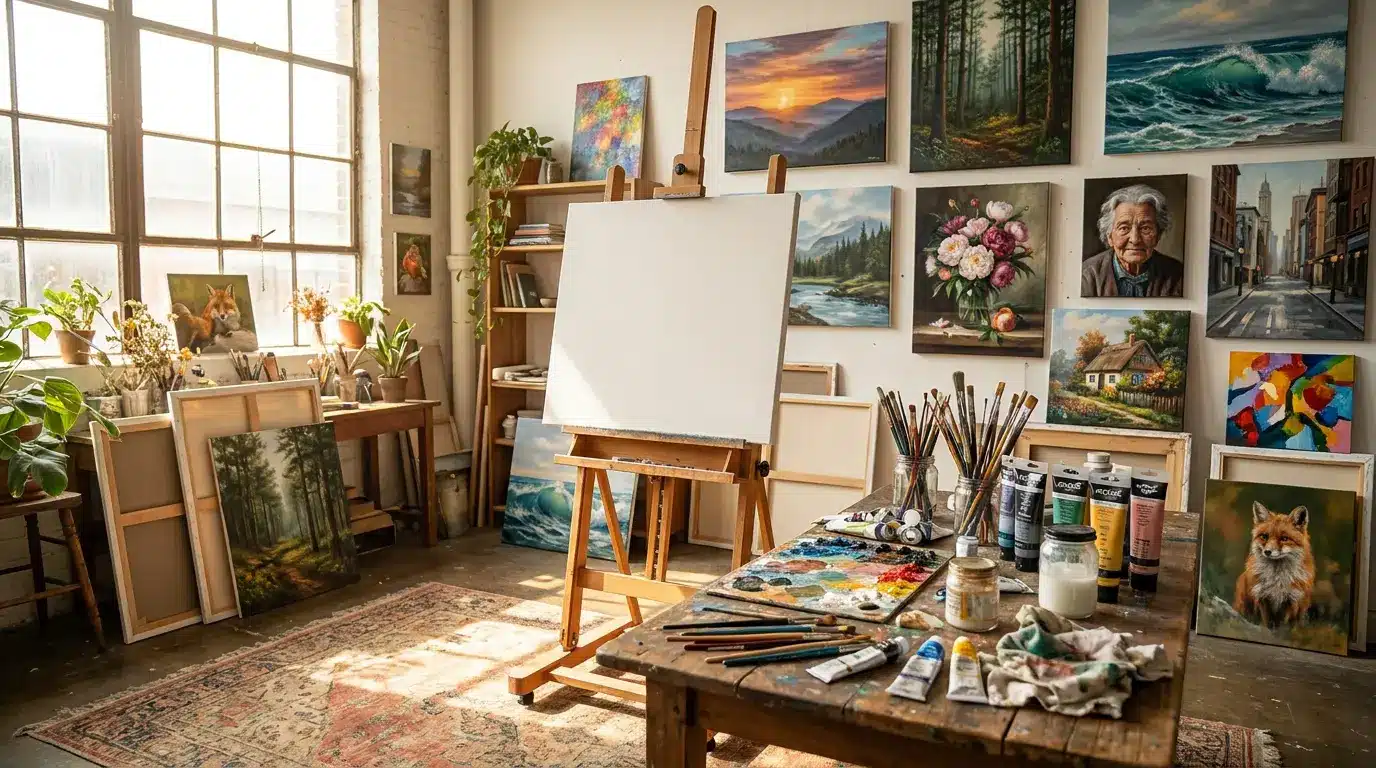
You sit down to paint. The canvas is ready. Your brushes are clean. But your mind goes completely blank.
It happens to every artist, beginner or not. Finding the right subject can feel harder than the actual painting. That is exactly why this list exists.
From simple everyday objects to wild fantasy scenes, you will find fresh painting ideas organized by theme, mood, and skill level. Pick one that excites you, grab your brush, and start creating something today.
Why It Can Be Hard to Decide What to Paint
Before we get into the ideas, it helps to understand why choosing a subject feels so difficult sometimes.
Creative burnout is real. If you have been painting a lot, your brain gets tired and stops generating new ideas on its own. It does not mean you lost your talent. It just means you need a little outside help.
Sometimes the problem is the opposite. You have too many ideas swirling around and cannot pick just one. That mental noise makes it hard to commit to anything.
Fear also plays a role. You worry the painting will not turn out the way you imagine, so you keep searching for a better idea instead of beginning. Comparing your work to other artists online can make that hesitation even worse.
The good news is that you do not need the perfect idea. Pick one that interests you, start painting, and let the process take it from there.
Supplies You’ll Need
You do not need a professional art studio to try these painting ideas. A few basic supplies are enough to get started.
- Paints: Acrylics are beginner-friendly, affordable, and dry quickly. Watercolors and oils work too if you already prefer those mediums.
- Brushes: Keep a mix of small, medium, and large brushes so you can handle both details and larger areas.
- Painting Surface: Use a canvas, canvas board, watercolor paper, or sketchbook depending on your chosen medium.
- Palette: Any palette or flat surface will help you mix colors more easily.
- Water Container: Essential for cleaning brushes and thinning paint when needed.
- Paper Towels or Cloth: Useful for wiping brushes, cleaning up spills, and controlling moisture.
- Pencil and Eraser: Helpful for sketching a basic outline before you begin painting.
- Reference Photos (Optional): Photos can make it easier to understand shapes, colors, lighting, and composition.
Do not worry about having perfect supplies. Many great paintings start with a limited set of materials. What matters most is choosing a subject and getting started.
Nature Painting Ideas Inspired by the Outdoors
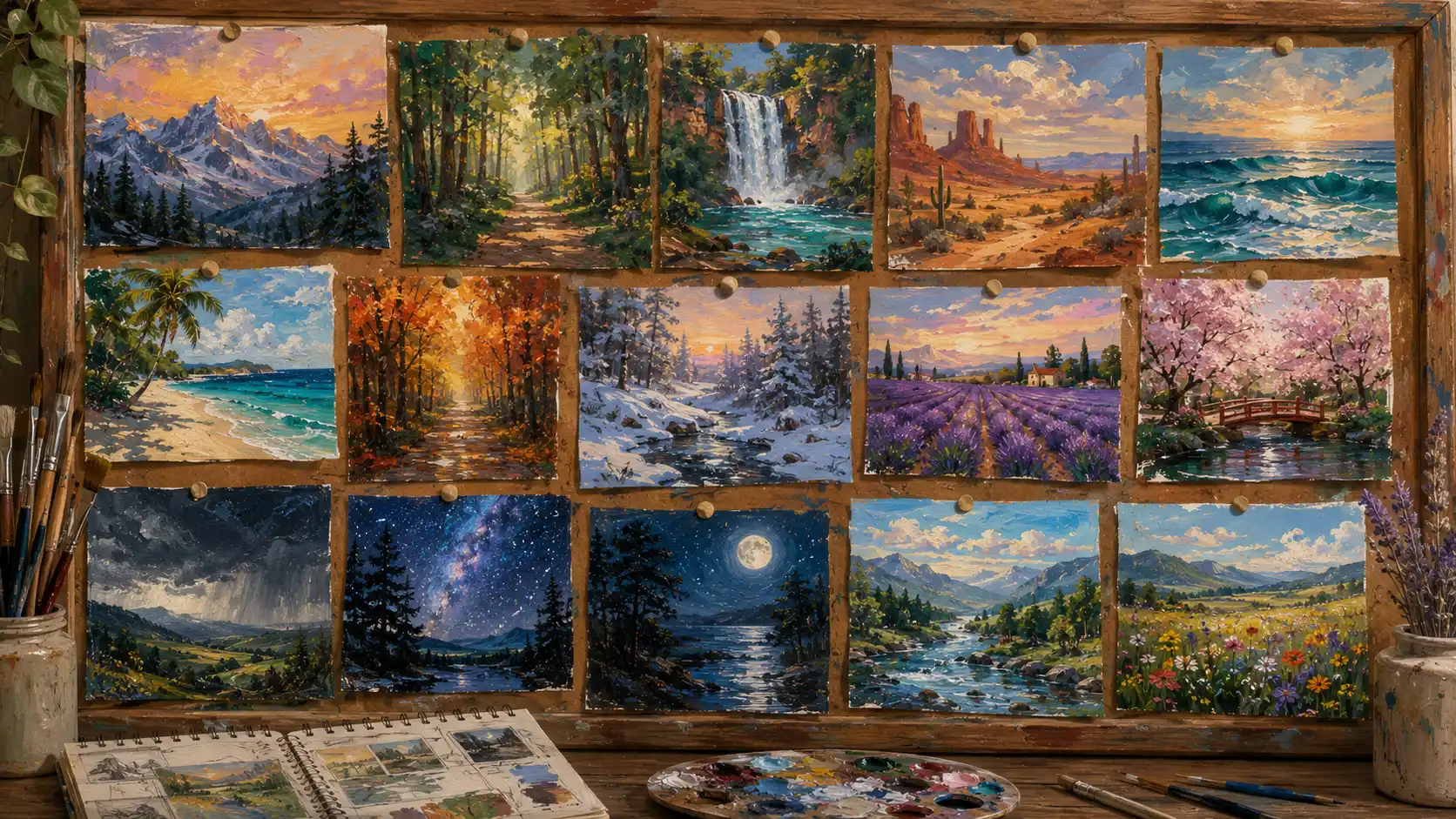
Nature gives you an endless supply of subjects. Every season, every time of day, and every kind of weather creates something worth painting. Start with whatever you find most beautiful right now.
1. Mountain Sunrise: A glowing sky behind tall peaks. Great for practicing warm-color blending and dramatic lighting effects.
2. Forest Path: A winding trail through tall trees. Perfect for practicing depth, shadow, and soft green tones.
3. Waterfall: Rushing water over rocks and moss. Good practice for painting movement and white water highlights.
4. Desert Landscape: Warm sandy dunes under a big sky. Great for practicing subtle color shifts and dry textures.
5. Ocean Waves: Rolling blue waves hitting the shore. Helps you practice water movement and foamy white edges.
6. Tropical Beach: Bright water, white sand, and palm trees. Perfect for bold colors and warm, sunny lighting.
7. Autumn Trees: Trees full of red, orange, and yellow leaves. Great for practicing warm palettes and loose brushwork.
8. Snow-Covered Forest: White snow resting on dark tree branches. Good for practicing cool tones and quiet, still scenes.
9. Lavender Field: Rows of purple lavender under an open sky. Perfect for soft color repetition and peaceful compositions.
10. Cherry Blossom Garden: Pink blooms on delicate branches with soft light. Great for loose, gentle brushstrokes and pastel tones.
11. Rainstorm Over Hills: Dark clouds rolling over green hills with rain. Good for moody color palettes and atmospheric depth.
12. Night Sky With Stars: A deep blue sky filled with tiny glowing stars. Perfect for color layering and soft light effects.
13. Full Moon Landscape: A bright moon lights up a quiet, dark scene. Great for contrast between light and shadow.
14. River Through a Valley: A calm river winding between green hills. Good for practicing reflections and soft, natural colors.
15. Wildflower Meadow: A field full of colorful wildflowers in open sunlight. Perfect for loose, expressive brushwork and vibrant color mixing.
Flower and Plant Painting Ideas Full of Colors
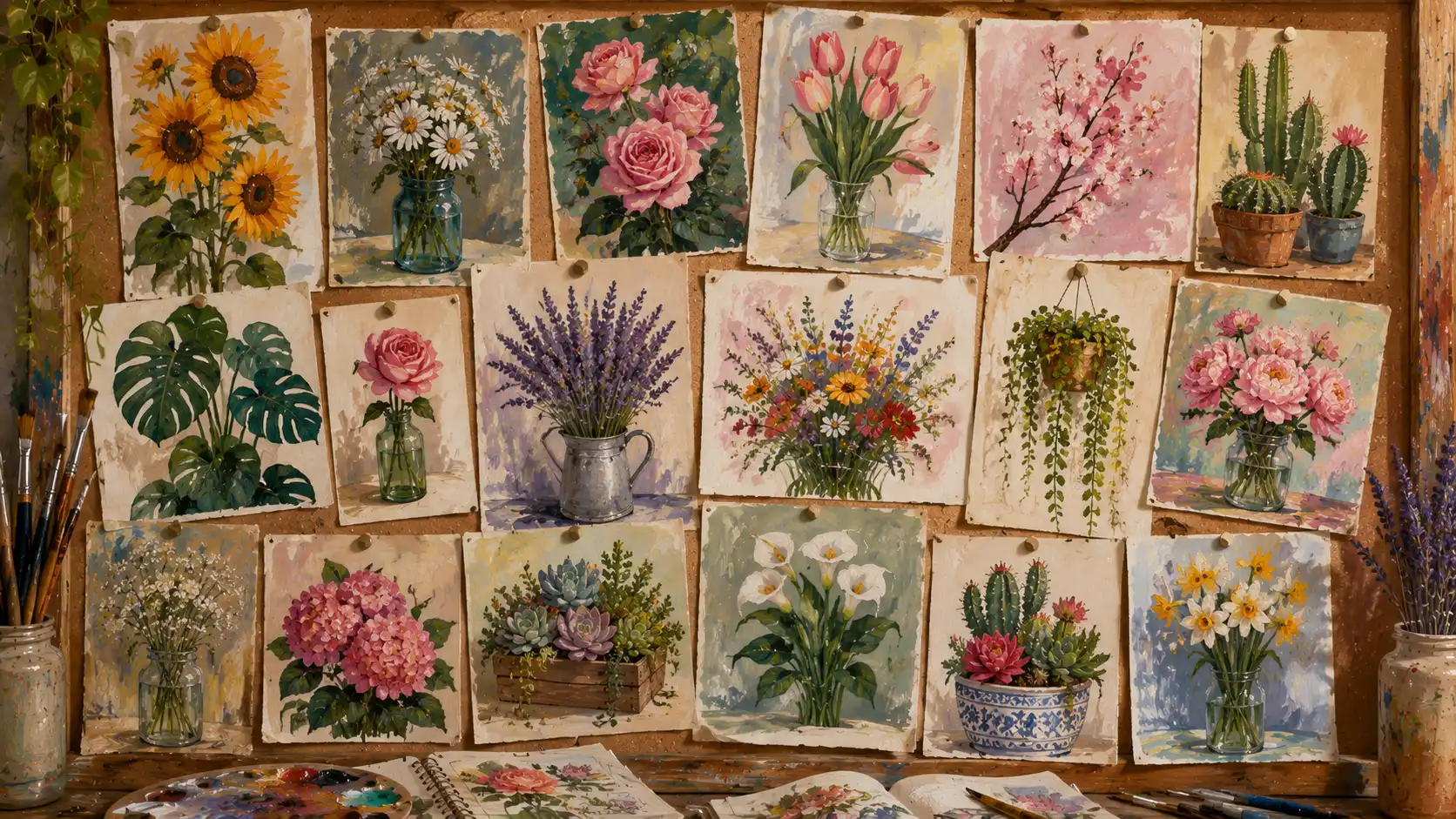
Flowers and plants are some of the most painted subjects in art history and remain some of the most popular watercolor ideas because their soft shapes and colors are naturally forgiving.
They are colorful and forgiving, and they look beautiful even when painted loosely. Pick one flower or plant and focus on getting the colors right before adding detail.
-
Sunflowers: Tall yellow flowers with dark centers and green stems. Great for bold, warm colors and simple shapes.
-
Roses: Layered petals in red, pink, or white tones. Good practice for soft blending and petal detail.
-
Tulips: Simple cup-shaped flowers in bright, clean colors. Perfect for beginners learning basic flower shapes.
-
Cherry Blossoms: Small pink blooms on thin, delicate branches. Great for soft, loose brushwork and pale palettes.
-
Cactus Collection: A group of small cacti in different shapes and sizes. Fun for practicing texture and bold green tones.
-
Monstera Leaves: Large tropical leaves with natural splits and patterns. Good for practicing bold shapes and deep greens.
-
Lavender Bouquet: A bundle of soft purple flowers tied together simply. Perfect for practicing gentle color and loose detail.
-
Succulent Arrangement: Plump, layered plants grouped together in earthy tones. Great for practicing tight detail and green color mixing.
-
Hanging Plants: Trailing vines and leaves cascading downward. Good for practicing curved lines and varied leaf shapes.
-
Wildflower Bouquet: A loose mix of colorful small flowers together. Perfect for expressive brushwork and bright, cheerful color.
Animal Painting Ideas That Bring Your Canvas to Life
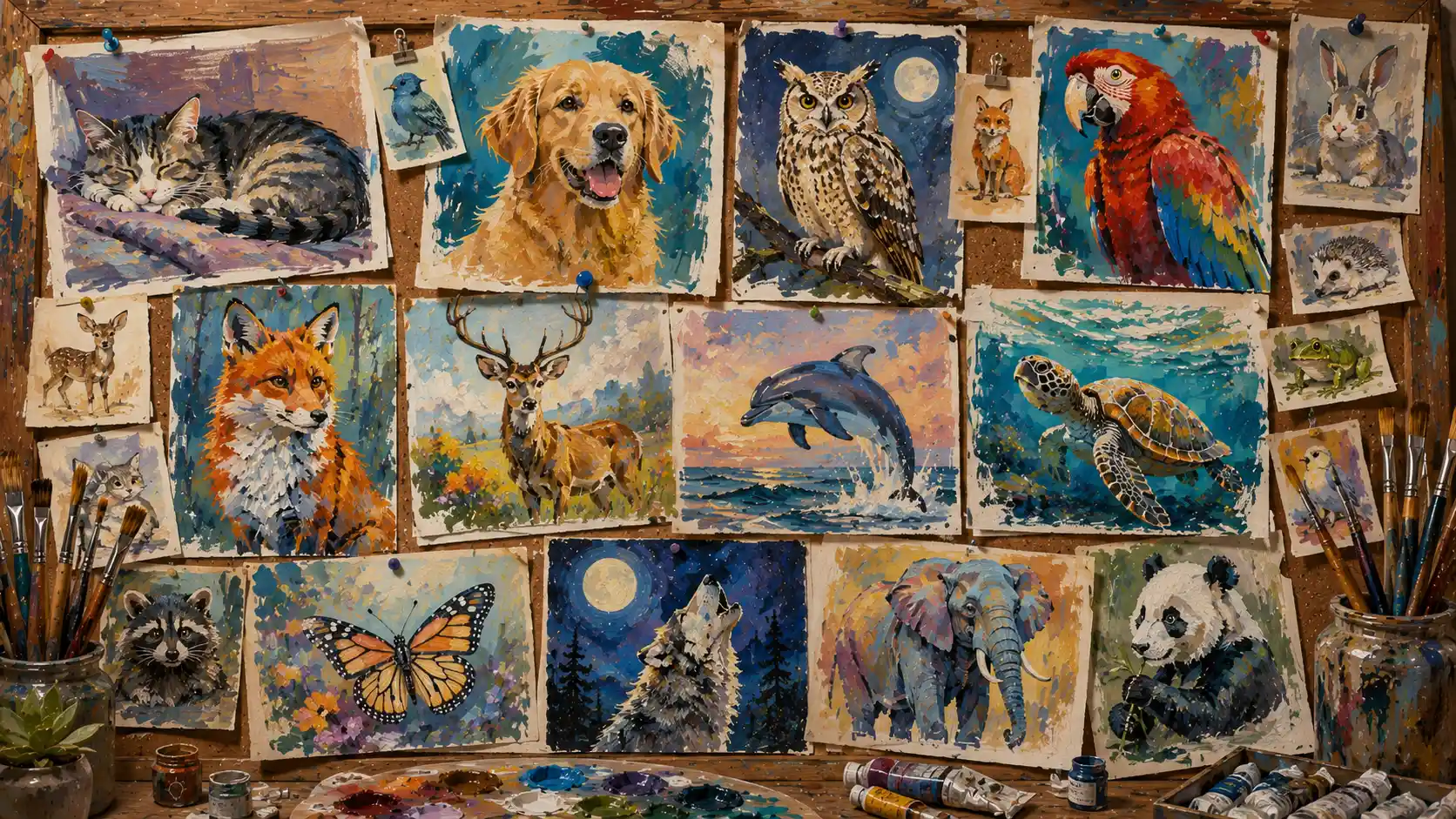
Animals bring life and personality to your canvas. You can paint them realistically, in a stylized way, or even in a fun cartoon style. Choose an animal you already love, and it will show in your work.
26. Sleeping Cat: A curled-up cat in a cozy, relaxed pose. Great for soft shapes, fur texture, and warm tones.
27. Golden Retriever Portrait: A happy dog with fluffy golden fur and kind eyes. Good practice for detail work and warm lighting.
28. Owl on a Branch: A round owl perched quietly on a dark branch. Great for feather texture and intense, focused eyes.
29. Colorful Parrot: A bright tropical bird with vivid, bold feathers. Perfect for practicing vibrant colors and sharp detail.
30. Fox in the Forest: An orange fox surrounded by trees and soft light. Good for warm tones, fur texture, and forest backgrounds.
31. Deer in a Meadow: A gentle deer standing in soft, golden grass. Great for delicate proportions and peaceful natural scenes.
32. Dolphin Jumping: A sleek dolphin leaping above sparkling ocean water. Good for smooth shapes, highlights, and blue tones.
33. Sea Turtle: A slow-moving turtle gliding through blue-green water. Great for shell texture and soft underwater lighting.
34. Butterfly Close-Up: A colorful butterfly with detailed, patterned wings. Perfect for symmetry practice and bright color combinations.
35. Wolf Under the Moon: A strong wolf silhouetted against a glowing night sky. Great for dramatic contrast and moody lighting.
Easy Things to Paint for Beginners
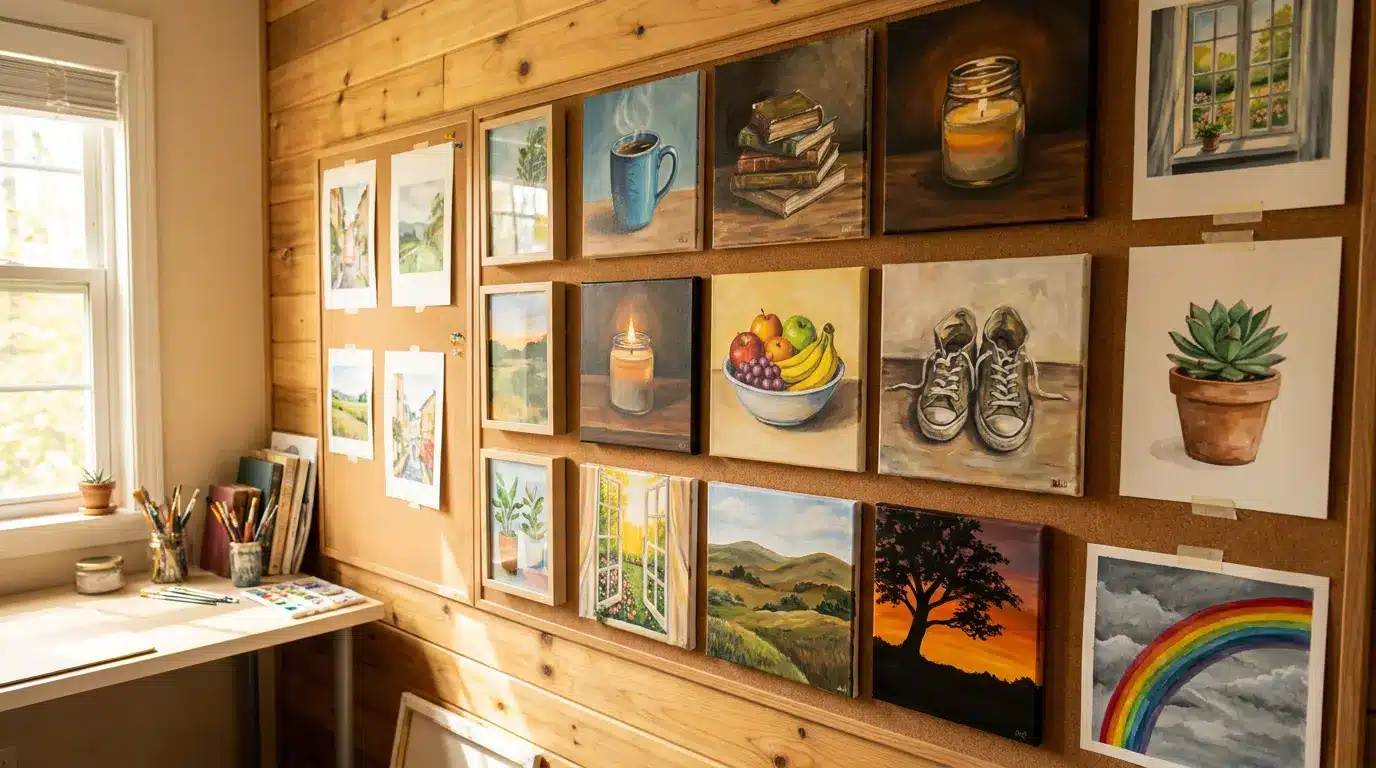
If you are new to painting, the most important thing is to start simple. Everyday objects are perfect because you already know what they look like.
36. Coffee Mug: A simple round mug sitting on a flat surface. Great for practicing basic shapes, highlights, and shadows.
37. Stack of Books: A few books piled on top of each other. Good for practicing straight edges and simple color blocking.
38. Candle: A single candle with a small glowing flame. Perfect for practicing warm light, glow effects, and soft backgrounds.
39. Bowl of Fruit: A few pieces of colorful fruit in a simple bowl. Great for shape control, color mixing, and light observation.
40. Pair of Sneakers: Two casual shoes side by side with simple details. Good for practicing proportion and observing everyday objects.
41. Houseplant: A small green plant in a simple pot. Perfect for beginners learning leaf shapes and natural green tones.
42. Window View: A simple view through a window with natural light. Good for practicing framing, lighting, and basic outdoor scenes.
43. Simple Landscape: A basic scene with sky, ground, and one focal point. Great for learning composition without too much complexity.
44. Sunset Silhouette: A dark shape against a colorful evening sky. Perfect for bold color blending and high-contrast composition.
45. Rainbow Sky: A bright arc of colors across a simple cloudy sky. Great for smooth color blending and light background work.
Fun Painting Ideas When You Are Bored
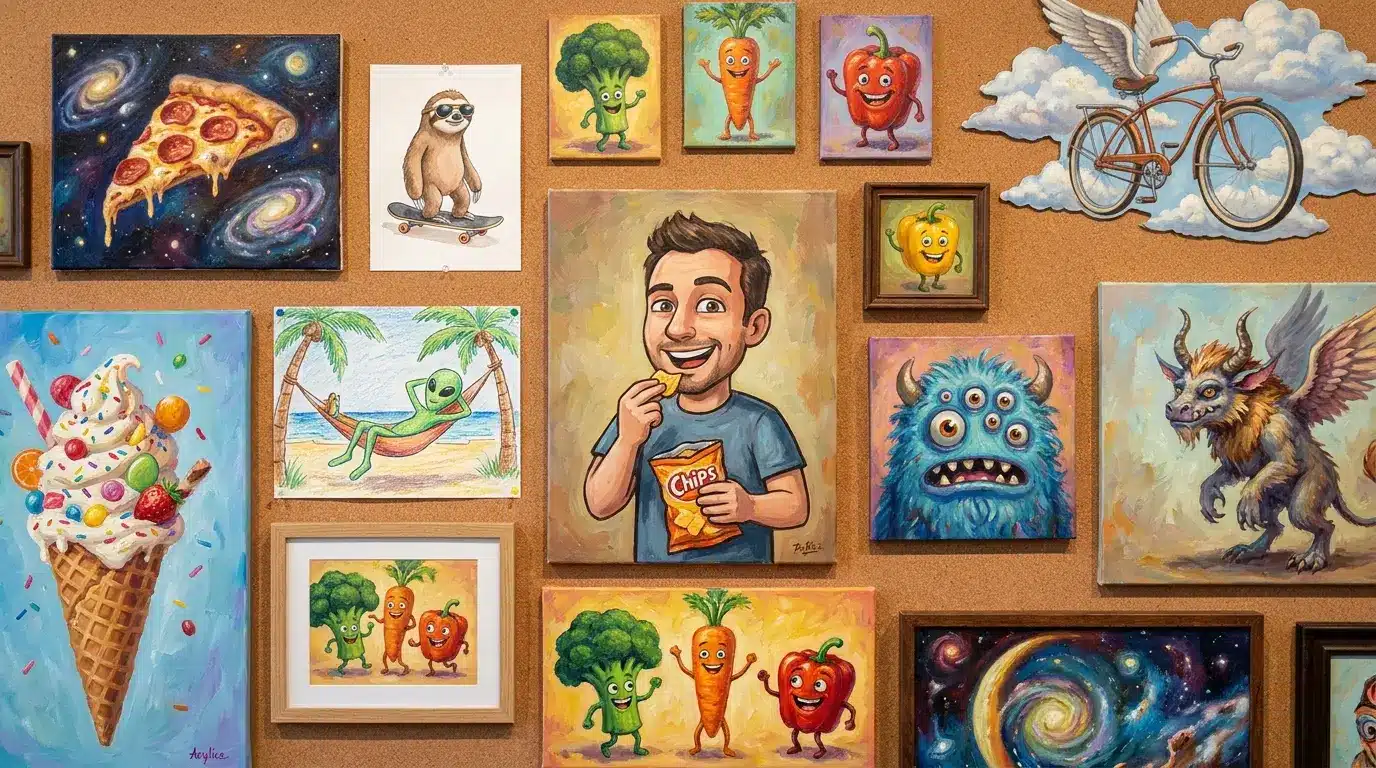
Sometimes you do not want to paint something serious. You just want to have fun and see what happens. These ideas have no rules and no pressure attached to them at all.
46. Your Favorite Snack: A fun painting of whatever food you love most. Great for bright colors and playful, loose brushwork.
47. Cartoon Version of Yourself: A simplified, exaggerated self-portrait in cartoon style. Perfect for playing with proportion and expressive faces.
48. Floating Pizza in Space: A pizza slice drifting through a starry galaxy. Fun for mixing detailed food with a cosmic background.
49. Animal Wearing Sunglasses: Any animal looking cool with a pair of shades. Great for humor, personality, and bold color choices.
50. Alien on Vacation: A friendly alien enjoying a beach or tourist spot. Perfect for creative storytelling and imaginative scene building.
51. Giant Ice Cream Cone: An oversized, colorful ice cream tower with toppings. Fun for bold shapes, bright colors, and whimsical detail.
52. Dancing Vegetables: Vegetables with legs and arms moving together happily. Great for loose, expressive lines and playful character design.
53. Funny Monster: A silly creature with odd shapes and a big smile. Perfect for imagination, bright color, and creative freedom.
54. Imaginary Pet: A made-up animal that does not exist anywhere. Great for combining real animal features in creative, unexpected ways.
55. Flying Bicycle: A bicycle soaring through the sky with clouds around it. Fun for combining everyday objects with magical, impossible settings.
Aesthetic Painting Ideas for Cozy Artwork
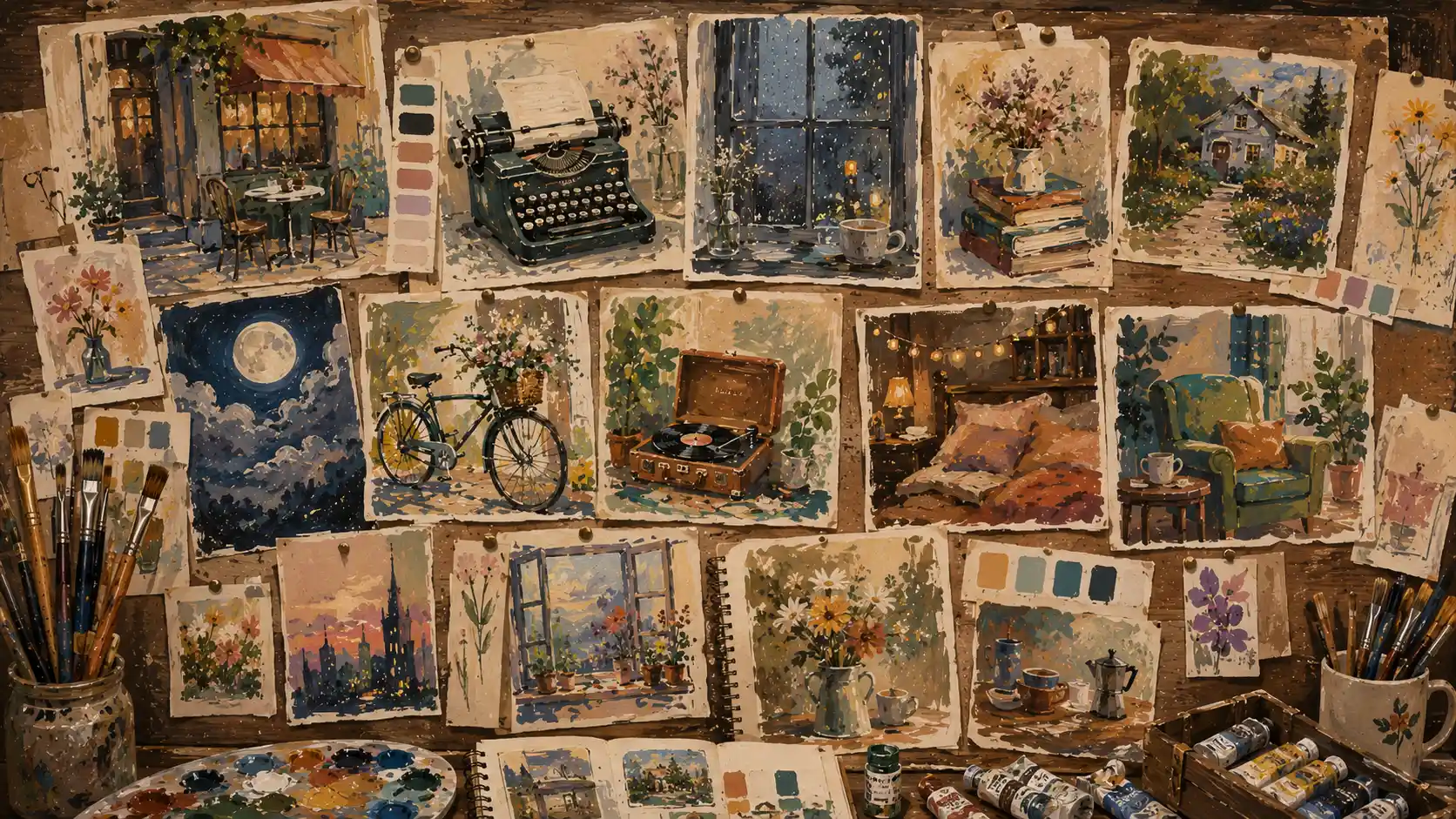
Aesthetic paintings focus on mood, warmth, and a cozy visual feeling. They are popular because they look beautiful on walls and feel calming to paint. Soft lighting and warm color palettes work really well for all of these subjects.
Many of these subjects are also popular canvas painting ideas because they make effective wall art and decorative pieces for bedrooms, offices, and living spaces.
56. Cozy Cafe Corner: A small table with a warm drink and soft light. Great for warm tones, interior detail, and cozy atmosphere.
57. Vintage Typewriter: An old typewriter sitting on a simple wooden desk. Good for practicing texture, metal detail, and retro tones.
58. Window With Rain: Raindrops running down glass with blurred outdoor scenery. Perfect for soft focus, wet texture, and moody light.
59. Books and Flowers: A stack of books beside a small floral arrangement. Great for combining soft colors with simple everyday objects.
60. Cottage in the Woods: A small, charming house tucked between tall green trees. Perfect for cozy scenes, soft light, and nature detail.
61. Moon and Clouds: A glowing moon partially hidden behind soft, drifting clouds. Great for contrast, soft blending, and nighttime atmosphere.
62. Vintage Bicycle: An old-fashioned bike leaning against a wall or fence. Good for line detail, texture, and nostalgic color tones.
63. Record Player: A classic turntable with a spinning vinyl record. Great for warm tones, circular shapes, and retro still life.
64. Candlelit Room: A softly lit room glowing from a single candle. Perfect for dramatic shadows, warm light, and an intimate atmosphere.
65. Cozy Reading Nook: A comfortable corner with books, blankets, and soft light. Great for interior composition, warm colors, and cozy detail.
Abstract Painting Ideas for Creative Freedom
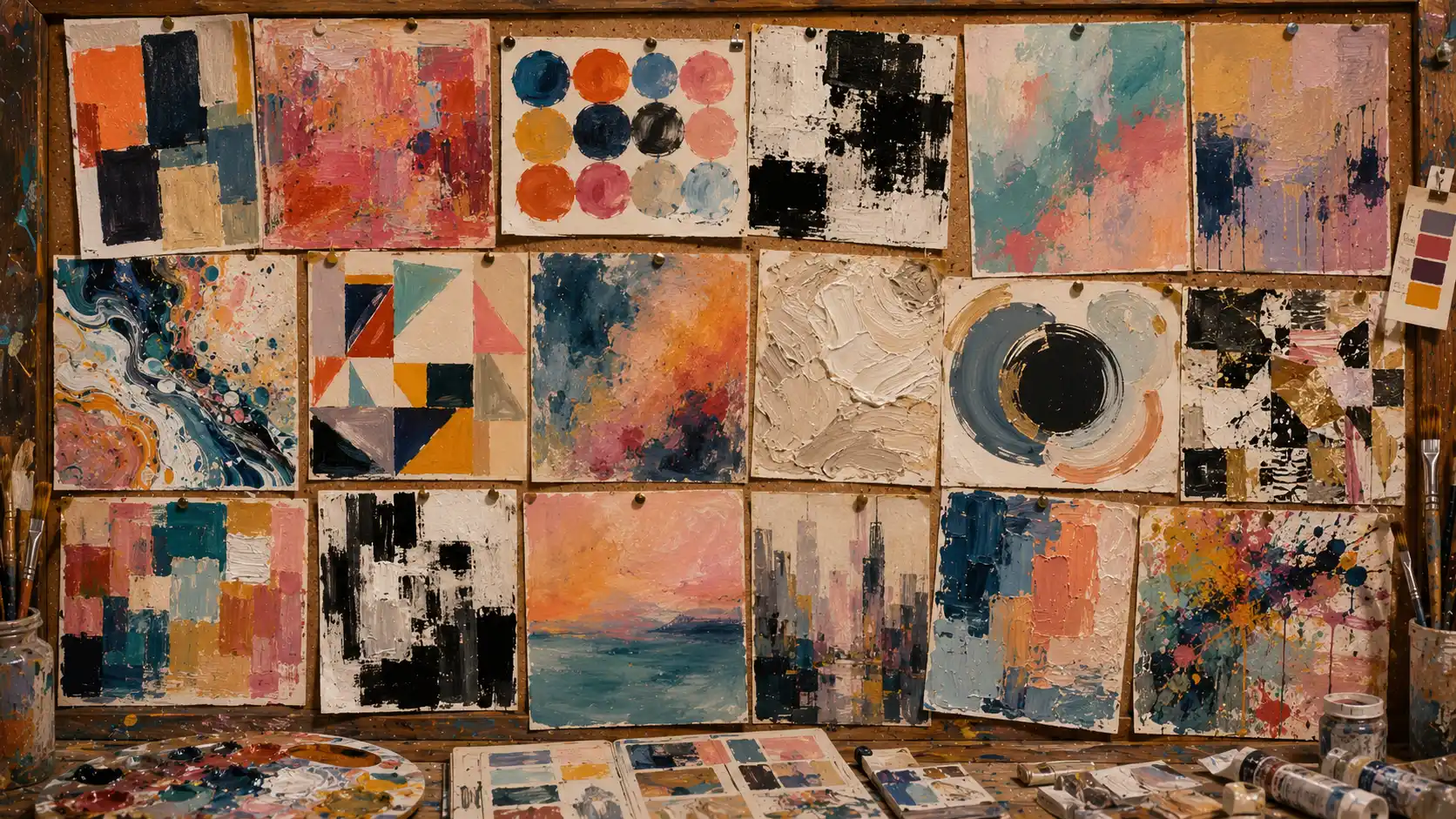
Abstract painting gives you the most creative freedom of any style. There are no rules about what it should look like or what it needs to represent. Pick two or three colors that match your mood and just start.
66. Color-Block Composition: Bold sections of flat color divided by clean, simple lines. Great for practicing color relationships and strong visual balance.
67. Geometric Shapes: Triangles, circles, and squares arranged in a bold pattern. Perfect for clean lines, sharp edges, and balanced design.
68. Fluid Paint Pour: Liquid paint poured and tilted to create organic patterns. Great for experimenting with color mixing and unexpected results.
69. Emotional Color Study: Colors chosen purely to express a specific mood or feeling. Perfect for expressive painting without worrying about subject matter.
70. Circular Patterns: Repeating rings and curved shapes building outward from the center. Good for rhythm, precision, and meditative brushwork practice.
71. Textured Abstract Canvas: Thick paint applied with a palette knife for bold texture. Great for exploring material, depth, and tactile surface quality.
72. Black-and-White Contrast: A strong abstract piece using only black, white, and grey. Perfect for focusing on shape, value, and visual contrast.
73. Gradient Color Blend: Colors slowly shifting from one tone into another across the canvas. Great for smooth blending and understanding color transitions.
74. Abstract Cityscape: A loose, expressive impression of buildings and city energy. Good for bold shapes, vertical lines, and urban color palettes.
75. Mixed-Media Abstract Art: A painting that combines paint with paper, texture, or collage. Perfect for experimenting with different materials and creative layering.
Seasonal Painting Ideas for Every Time of Year
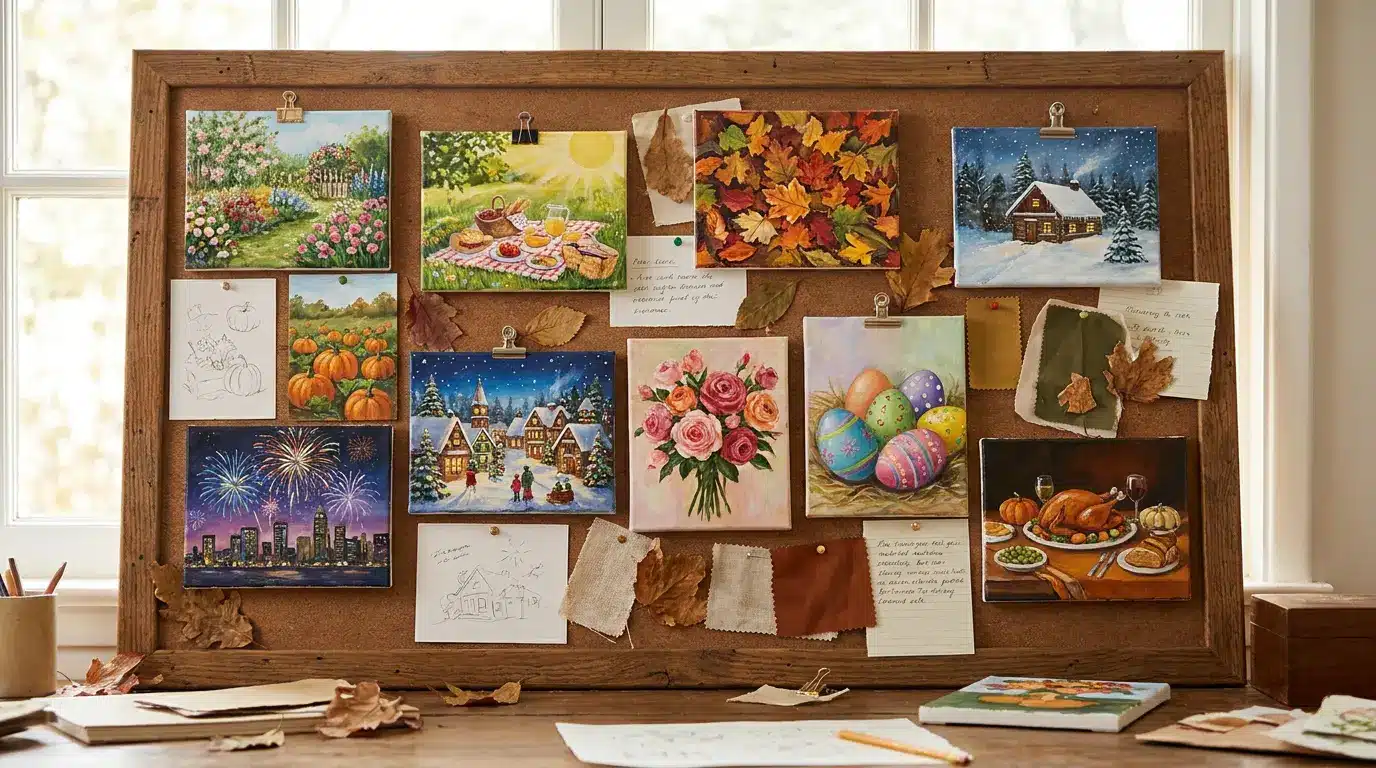
Painting with the seasons keeps your work feeling current and fresh. Each season brings its own colors, textures, and mood to work with. These ideas also make wonderful personal gifts for people you care about.
76. Spring Garden: Fresh flowers blooming in a bright, green outdoor garden. Perfect for soft pastels, new growth, and cheerful light.
77. Summer Picnic: A sunny outdoor scene with food, blankets, and warmth. Great for bright light, warm colors, and relaxed composition.
78. Fall Leaves: Colorful leaves scattered across the ground or on trees. Perfect for warm reds, oranges, and rich earthy tones.
79. Winter Cabin: A small cabin covered in snow under a cold sky. Great for cool blue tones, soft light, and quiet atmosphere.
80. Halloween Pumpkin Patch: Bright orange pumpkins in a dark, moody autumn field. Perfect for bold orange, dramatic shadows, and seasonal detail.
81. Christmas Village: A snowy town glowing with warm festive window lights. Great for small-scale detail, snow texture, and warm contrast.
82. New Year’s Fireworks: Bright, colorful bursts lighting up a dark night sky. Perfect for bold color, radial light patterns, and energy.
83. Valentine’s Roses: Deep red roses arranged with soft, romantic lighting. Great for rich red tones, petal detail, and warm atmosphere.
84. Easter Eggs: Colorfully decorated eggs arranged in a simple, cheerful scene. Good for pattern practice, bright color, and clean shapes.
85. Thanksgiving Table: A warm table scene with seasonal food and soft light. Perfect for warm tones, still-life arrangements, and cozy details.
Food and Drink Painting Ideas That Look Good Enough to Eat
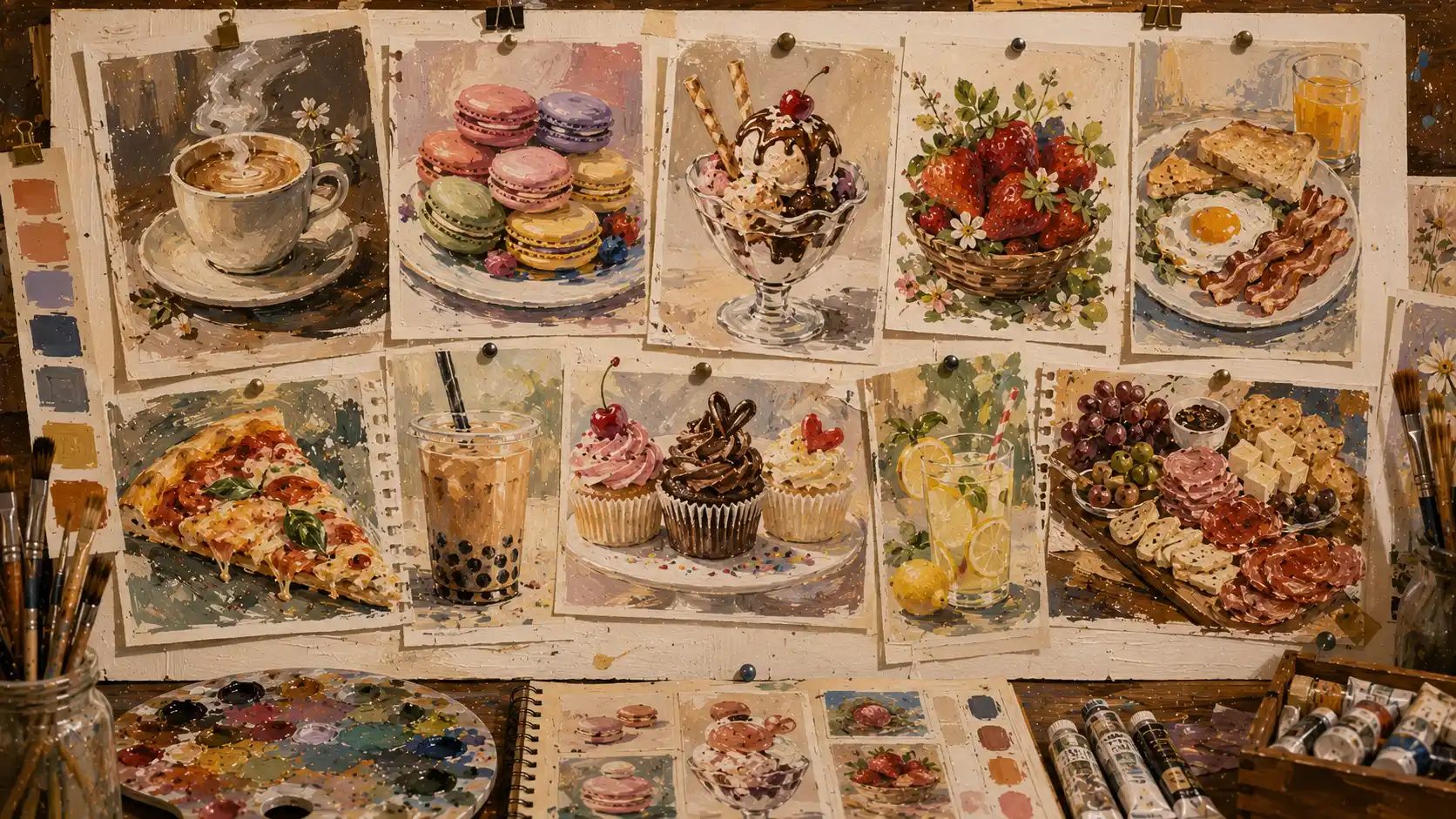
Food is colorful, familiar, and surprisingly fun to paint. It makes great wall art, especially in kitchens and dining spaces. Try painting food items against a simple, plain background so all the color stays on the subject.
86. Cup of Coffee: A warm mug with steam rising gently above it. Great for cozy still life, warm tones, and simple composition.
87. Colorful Macarons: Pastel-colored French cookies stacked in a neat row. Perfect for soft palettes, smooth shapes, and delicate detail.
88. Ice Cream Sundae: A tall glass of ice cream with toppings and color. Great for layered shapes, bright colors, and playful composition.
89. Fresh Strawberries: Bright red strawberries with green leaves and white seeds. Perfect for bold red color, seed texture, and soft shadow.
90. Breakfast Spread: A flat lay of morning food items on a table. Good for composition practice, warm light, and varied food shapes.
91. Pizza Slice: A cheesy triangular slice topped with colorful toppings. Great for texture, bold color, and relaxed still life painting.
92. Bubble Tea: A colorful drink in a clear cup with round pearls. Perfect for transparency practice, bright color, and playful detail.
93. Cupcake Collection: A group of small decorated cupcakes with frosting and sprinkles. Great for color variety, texture, and sweet visual detail.
94. Lemonade Glass: A tall, clear glass of yellow lemonade with ice. Good for practicing glass transparency, light, and fresh color.
95. Charcuterie Board: A flat board covered in colorful food items and textures. Perfect for varied shapes, rich color, and detailed still life.
How to Choose What to Paint Next
Having 105 ideas is great. But sometimes a long list still leaves you unsure. Here are a few ways to narrow it down.
Pick a Skill You Want to Improve: If you want to get better at painting water, choose something with water in it. If you want to practice soft blending, pick a sky or a flower. Let your goals guide your subject choice.
Paint Something From Daily Life: Look around your room right now. Your coffee cup, a plant on the windowsill, and the view outside your window. Daily life is full of painting subjects that are already right in front of you.
Use a Random Painting Prompt: Close your eyes, scroll through this list, and stop at a random point. Whatever you land on, that is your next subject. Removing the choice entirely is one of the fastest ways to get started.
Combine Two Ideas From Different Categories: Take one subject from nature and one from the fantasy list. A forest path with a fairy village hidden inside. A mountain sunrise over a crystal cave. Combining ideas creates something original without starting from scratch.
Create a Personal Art Challenge: Give yourself a small challenge, like painting one subject from each category on this list over the next two months. Having a goal keeps you moving forward even on days when motivation is low.
How Professional Artists Find New Painting Ideas
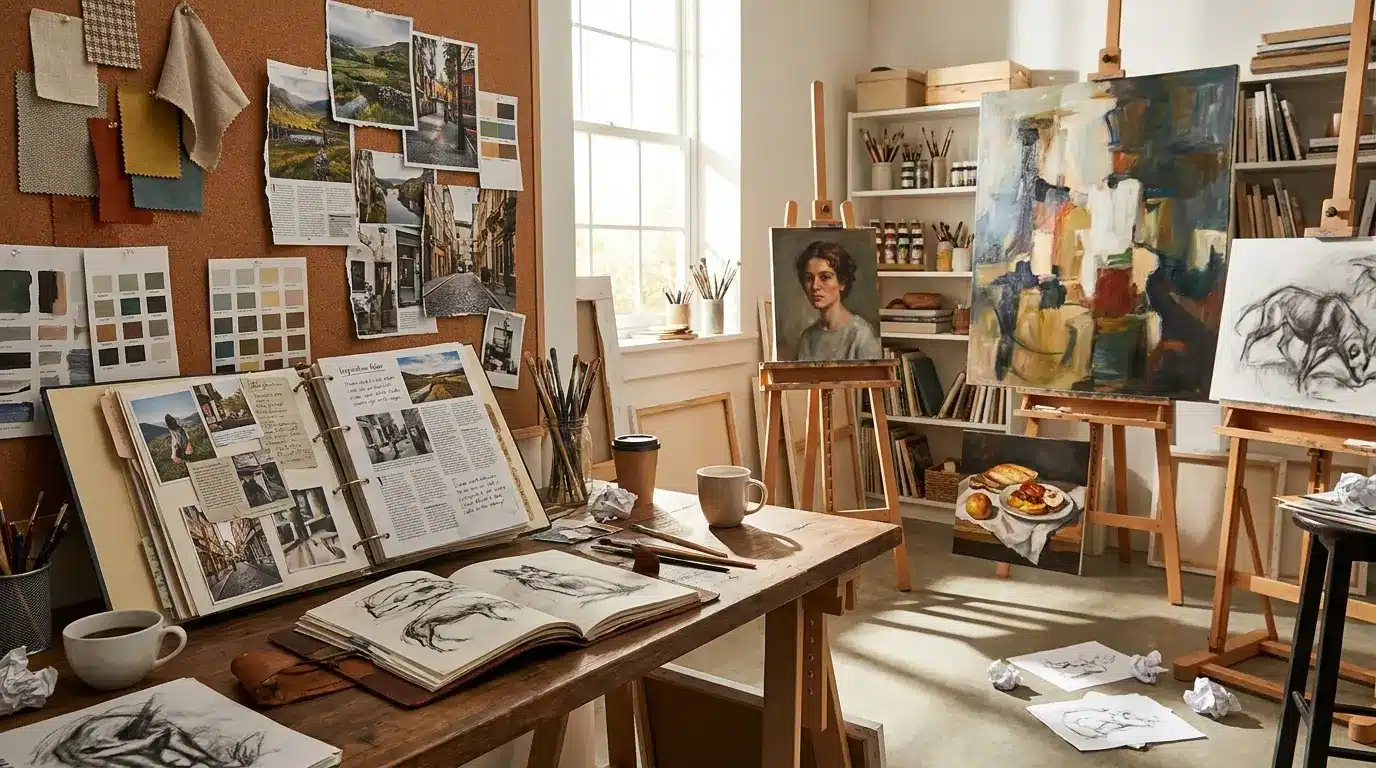
If you’re constantly asking yourself what to paint next, it helps to look at how professional artists approach the problem.
Most don’t wait for inspiration to appear. Instead, they build habits and systems that keep new ideas flowing.
- Keep an inspiration folder: Save photos, screenshots, artwork, and images that catch your attention. Over time, this collection becomes a personal library of visual references you can revisit whenever you need inspiration.
- Create mood boards: Gather colors, textures, compositions, and reference images that match the feeling or atmosphere you want to capture. Mood boards help give a painting direction before you even touch a brush.
- Observe everyday life: Inspiration is often hidden in ordinary moments. A dramatic shadow, a colorful storefront, or morning light hitting a coffee cup can become the starting point for an interesting painting.
- Experiment with new themes: Many artists deliberately step outside their comfort zone. If you usually paint landscapes, try food, animals, portraits, or abstract subjects to spark fresh ideas.
- Work in a series: Instead of choosing a completely new subject for every painting, focus on a single theme for several pieces. Creating a series reduces decision fatigue and helps you explore an idea more deeply.
For example, many famous paintings started with ordinary observations rather than sudden bursts of inspiration.
Vincent van Gogh’s The Starry Night was inspired by the view outside his asylum room window, while Water Liliesgrew out of years spent observing the garden at his home.
Great painting ideas often come from paying close attention to the world around you rather than waiting for a completely original concept.
Mistakes That Make Choosing What to Paint Harder
A few simple habits can make the process much harder than it needs to be.
Waiting for motivation is one of them. Motivation rarely shows up before you start. It usually comes after. Sit down, pick something from this list, and begin. The inspiration follows the action.
Searching for the perfect idea is another trap. There is no perfect subject. Every idea has been painted thousands of times before. What matters is that you paint it and that you learn something in the process.
Overplanning every painting kills momentum. You do not need a detailed sketch, a color plan, and a reference photo before you touch a brush. Sometimes the best paintings come from just starting.
Ignoring subjects you genuinely enjoy is the biggest mistake of all. If you love cats, paint cats. If you love rainy windows, paint rainy windows. Paint what makes you happy. That enjoyment shows in the final result.
Conclusion
Running out of painting ideas does not mean you have lost your creativity. It just means you need a starting point.
This list covers nature, animals, food, abstract art, seasonal scenes, and more. There is something here for every mood and every skill level. No subject is too simple or too silly.
The best painting you will ever make is the one you actually start. Bookmark this page, come back whenever inspiration runs dry, and remember that picking up the brush is always the hardest and most important step.
Frequently Asked Questions
What are the Most Popular Subjects to Paint?
Landscapes, flowers, animals, portraits, and still-life objects remain some of the most popular painting subjects. They offer endless variety and can be adapted to any skill level or artistic style.
How Do I Make My Painting Ideas More Original?
Try combining two unrelated subjects, such as a sea turtle in space or a cottage inside a crystal cave. Mixing ideas often leads to more unique artwork than starting with a completely new concept.
Should I Paint from Imagination or Use References?
Most artists use references, even when creating highly creative or stylized work. References help with accuracy, while imagination helps you add your own personal interpretation.