
Staring at a blank canvas with no idea what to paint is something every artist goes through. The good thing is that picking the right idea can make painting feel exciting rather than stressful.
From simple beginner scenes to modern home decor art, there are so many directions you can take your next project.
This list covers canvas painting ideas across different styles, skill levels, and sizes, so you always have something fresh to work with. Keep reading and find the one that makes you want to grab a brush right now.
Tips for Choosing Your Next Canvas Painting Idea
Choosing what to paint is often the hardest part because too many options can leave you stuck and unsure where to start.
A few simple guidelines can make the decision process easier and help you begin with more confidence.
- Pick a Subject That Matches Your Skill Level: Start simple. A beginner who tries to paint a detailed portrait will get frustrated fast. Pick something with basic shapes and fewer details. As you get better, move on to harder subjects.
- Consider the Size of Your Canvas: Small canvases are great for practicing and trying new things. Large canvases take more time, more paint, and more planning. If you are starting, an 8×10 or 11×14 canvas is a good size to work with.
- Choose a Color Palette Before You Start: Pick 3 to 5 colors. This keeps your painting looking clean and put together. You do not need every color on your palette for one painting.
- Paint for Enjoyment, Not Perfection: No painting is perfect. Even professional artists make mistakes. The goal is to have fun and keep going. The more you paint, the better you get.
These tips will help you narrow down your choices and pick an idea that actually fits your current skill level and mindset. The goal is to make the process easier so you spend less time thinking and more time actually painting.
Easy Canvas Painting Ideas for Beginners
These ideas are perfect if you are just getting started with canvas painting. Each one uses simple shapes and basic techniques so you can focus on having fun rather than stressing over the details.
1. Simple Sunset Sky
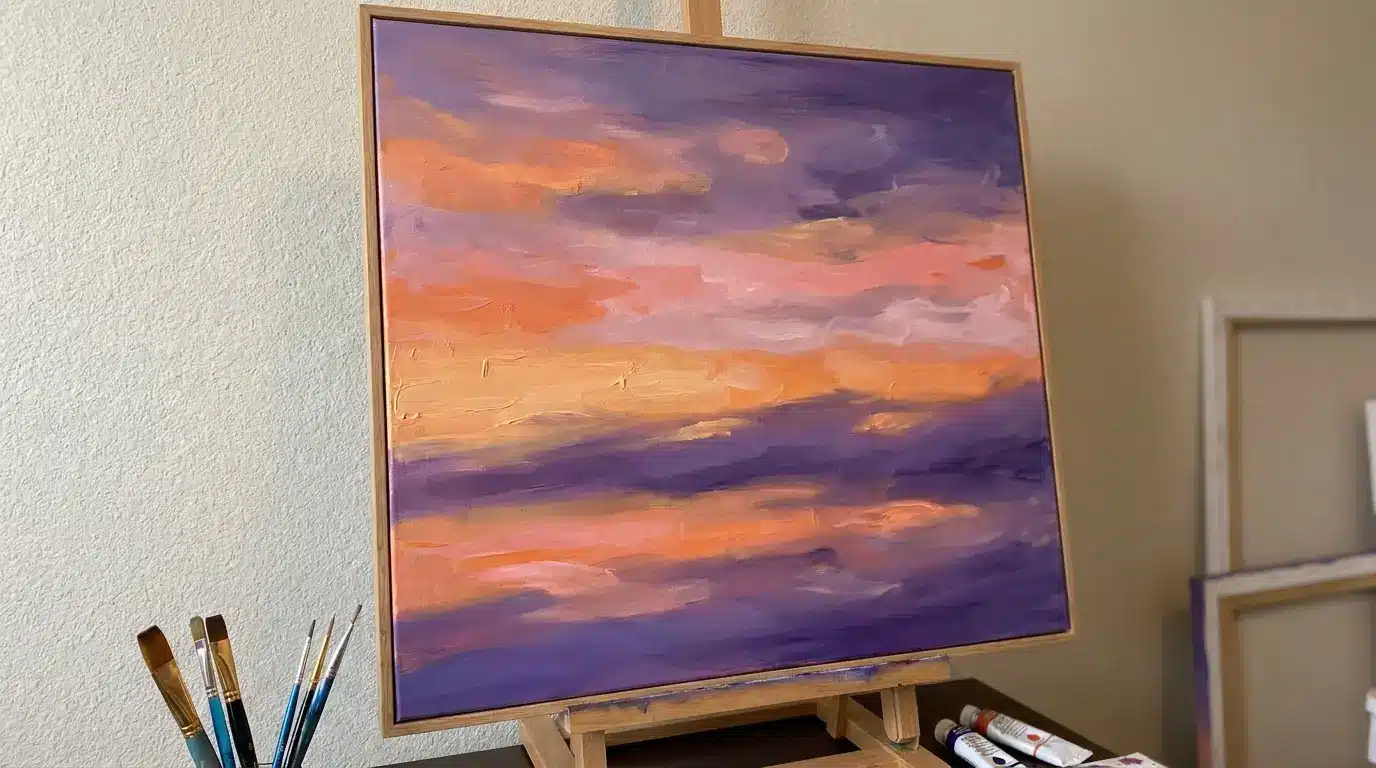
Paint a sky with layers of orange, pink, and purple that blend into one another from bottom to top. It is one of the most forgiving beginner paintings because small mistakes look like clouds.
Pro tip: Use a wide flat brush and blend while the paint is still wet for a smooth gradient effect.
2. Mountain Silhouette Landscape
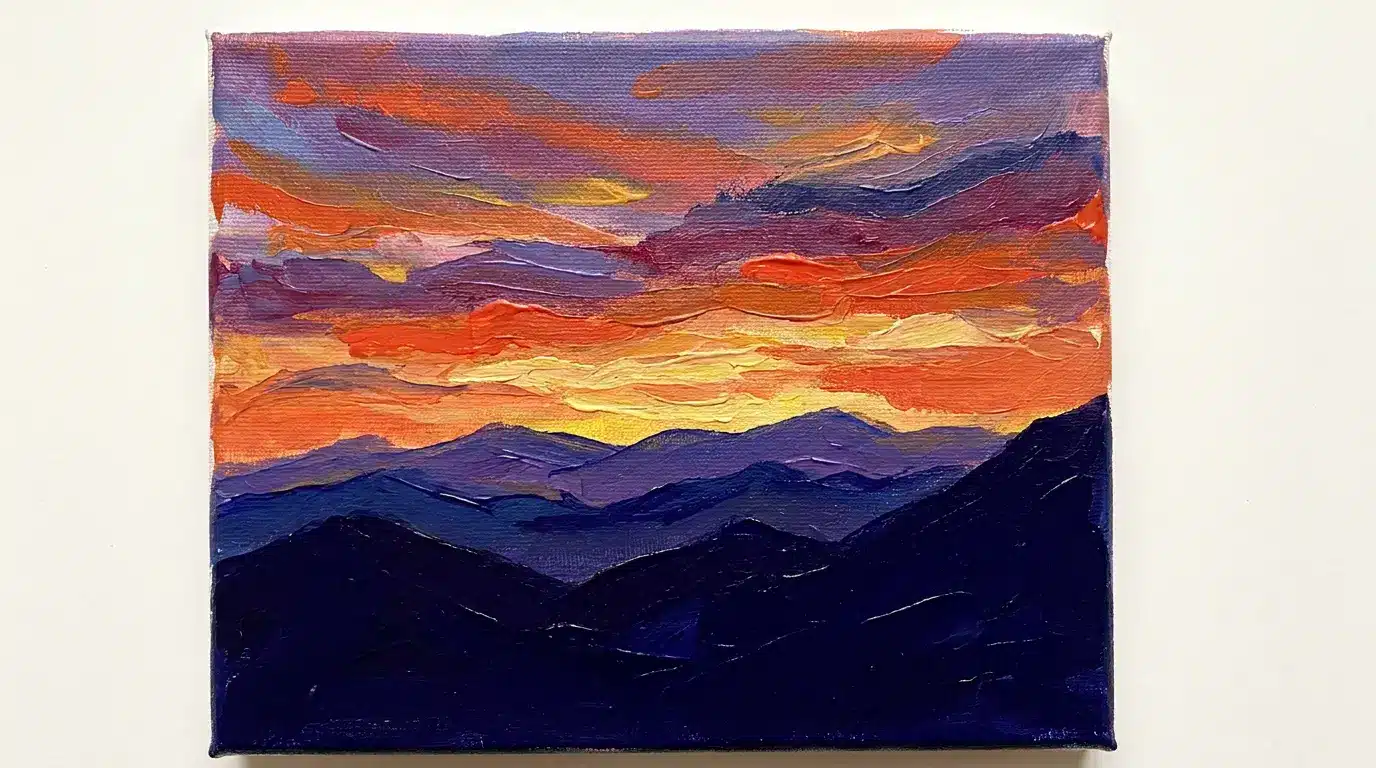
Paint a soft, colorful sky first, then add dark mountain shapes along the bottom of the canvas. The silhouette style means no detail is needed, just clear and bold shapes.
Pro tip: Layer two or three mountain ranges in different shades of dark blue or black to add depth.
3. Daisy Flower Painting
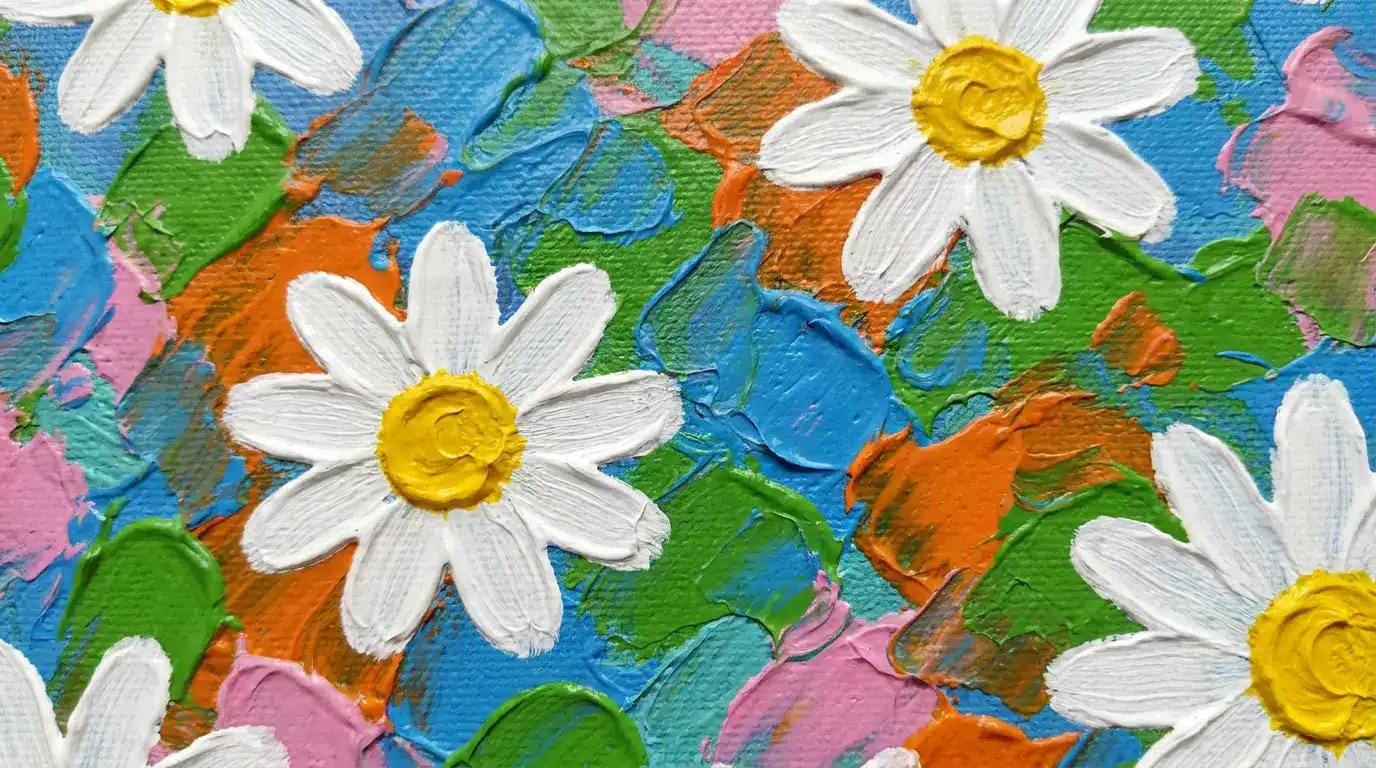
Paint a solid color background and add simple white petals around a yellow center. Daisies are one of the easiest flowers to paint because their shape is very straightforward.
Pro tip: Paint the center circle first, then build the petals around it to keep them evenly spaced.
4. Palm Tree Beach Scene
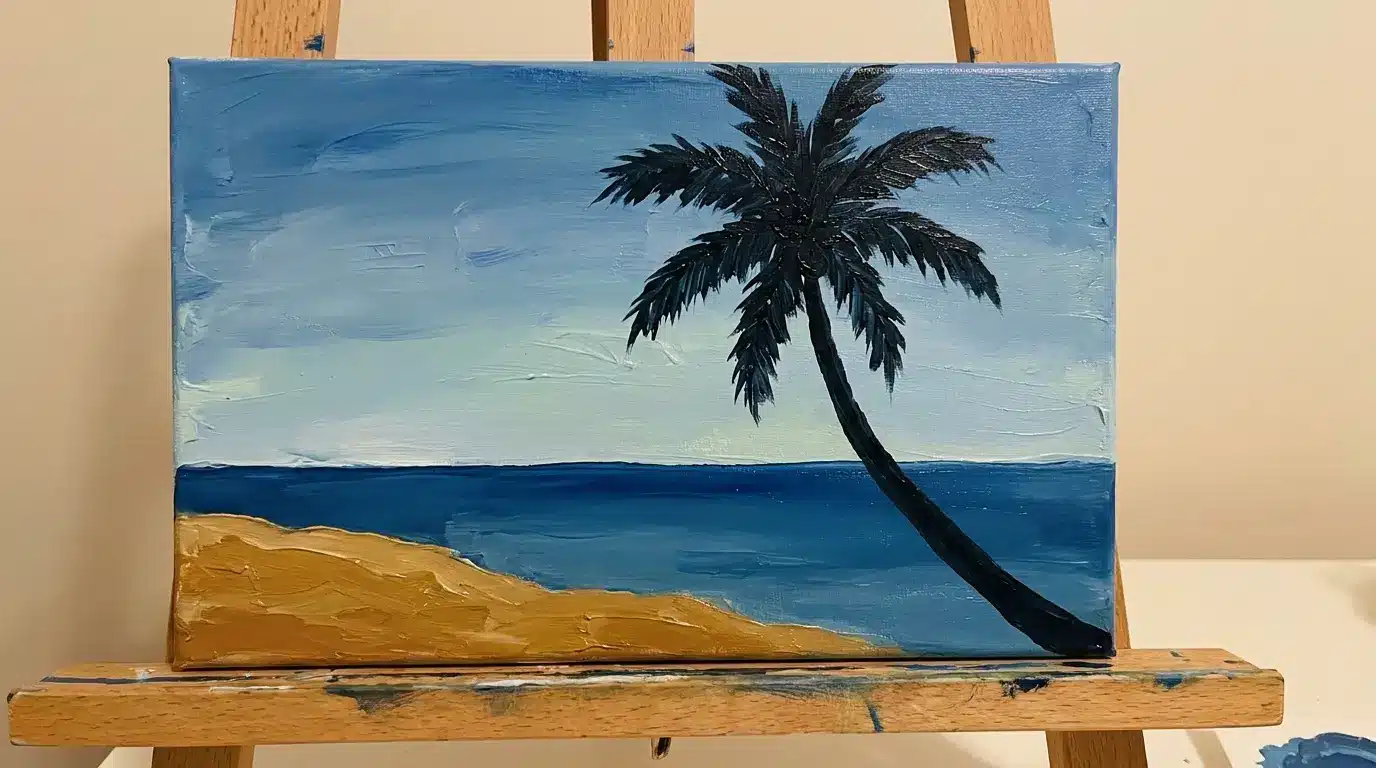
Paint a blue sky and sandy ground, then add a simple brown trunk with green palm leaves at the top. This painting looks impressive, but only takes basic brushwork to pull off.
Pro tip: Add a tiny orange sun near the horizon and a few horizontal lines for water to make it feel complete.
5. Lavender Field
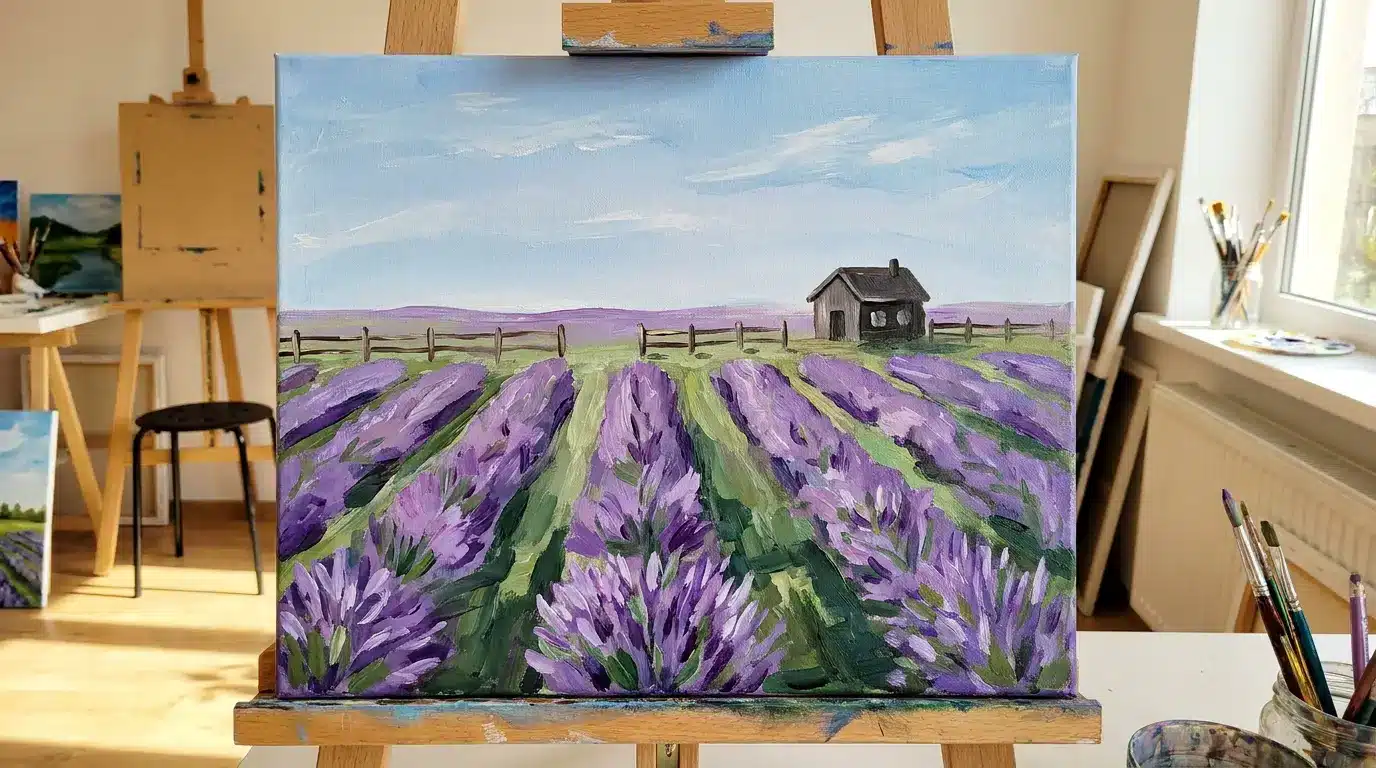
Use short vertical purple and green strokes to suggest how rows of lavender plants stretch into the distance. A soft sky above ties the whole scene together beautifully.
Pro tip: Make the strokes smaller and lighter as they go toward the top of the field to create a natural sense of distance.
6. Moon and Stars Night Sky
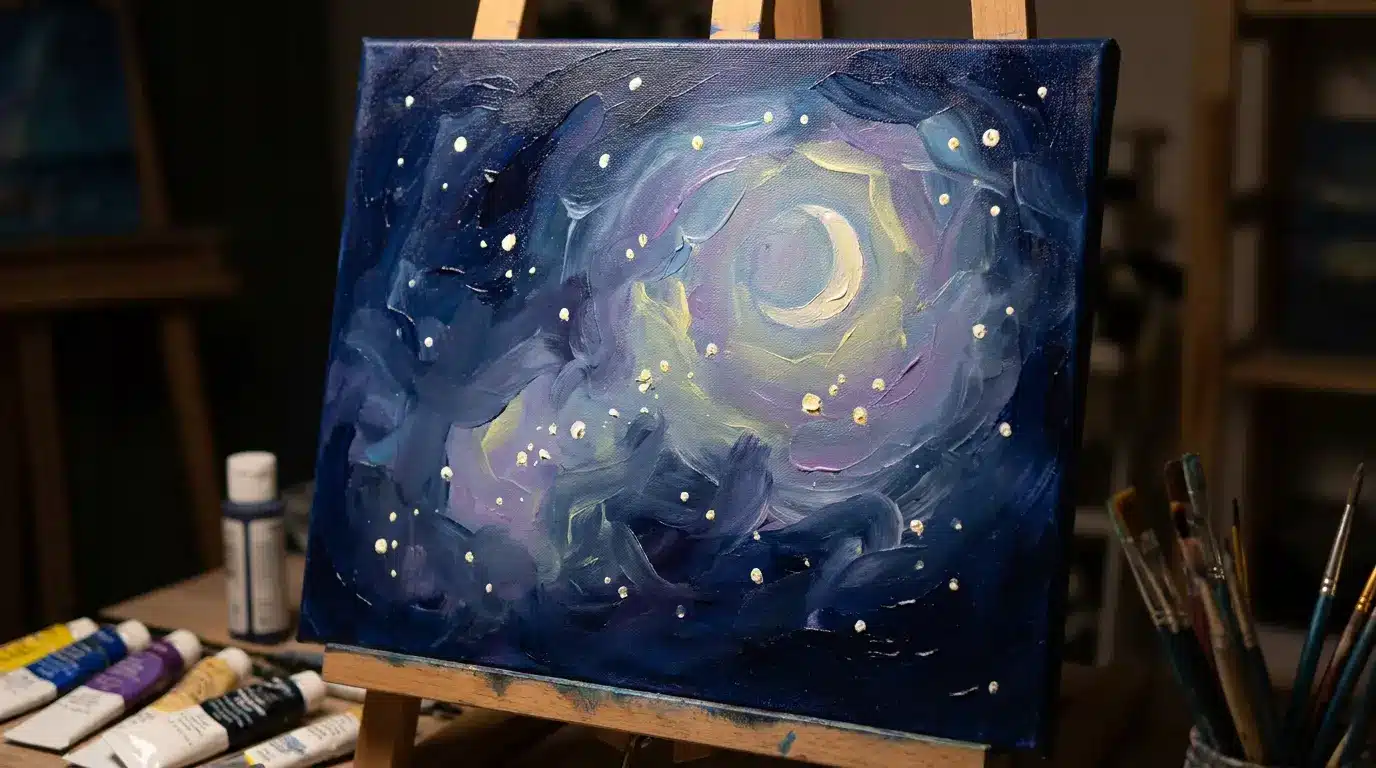
Paint the canvas dark blue or black and add a round glowing moon in white or pale yellow. Scatter small stars with the tip of your brush or by using a toothbrush splatter technique.
Pro tip: Add a soft halo of lighter blue around the moon using a dry brush to make it glow.
7. Color Block Abstract Art
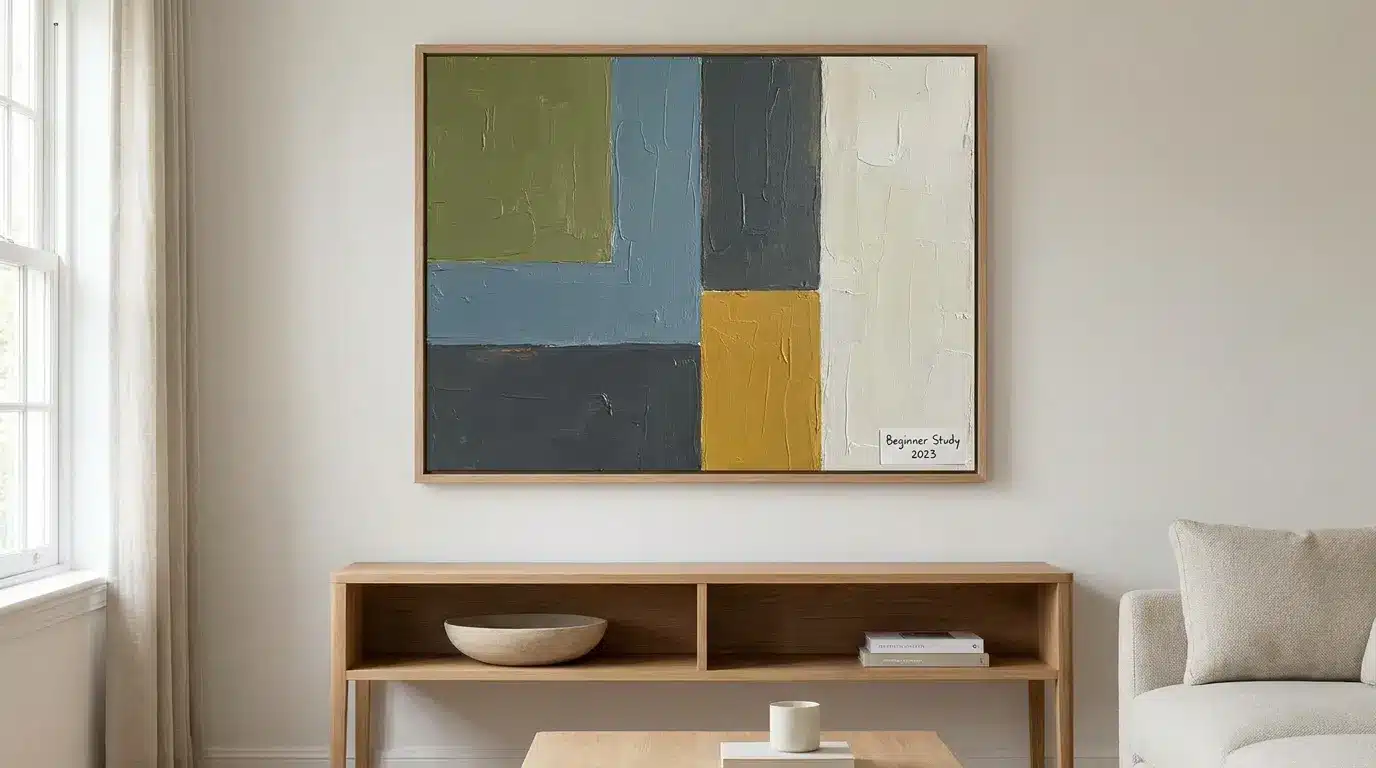
Divide the canvas into sections using painter’s tape and fill each section with a different solid color. Remove the tape when dry, and you are left with a sharp, modern piece.
Pro tip: Stick to a three- or four-color palette with one neutral tone to keep it looking intentional and stylish.
Nature Canvas Painting Ideas
Nature gives you endless subjects to paint, and you never run out of inspiration. These seven ideas pull from forests, fields, oceans, and mountains so you can bring the outside world onto your canvas.
8. Sunflower Field
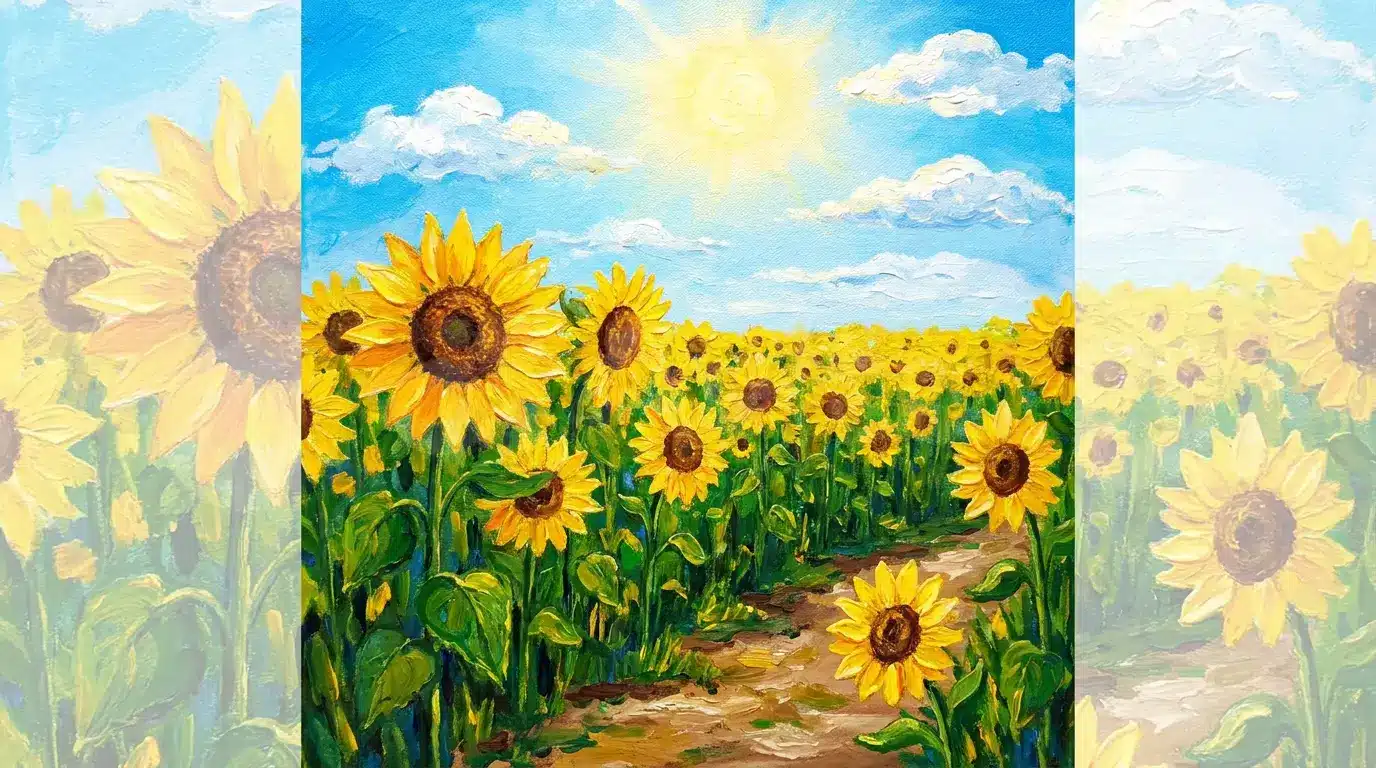
Paint a bright blue sky with a green ground and fill the middle with tall sunflowers using yellow petals and dark brown centers. Bold colors make this painting eye-catching even from across the room.
Pro tip: Paint the sunflowers at different heights and sizes so the field looks natural and not too uniform.
9. Cherry Blossom Branch
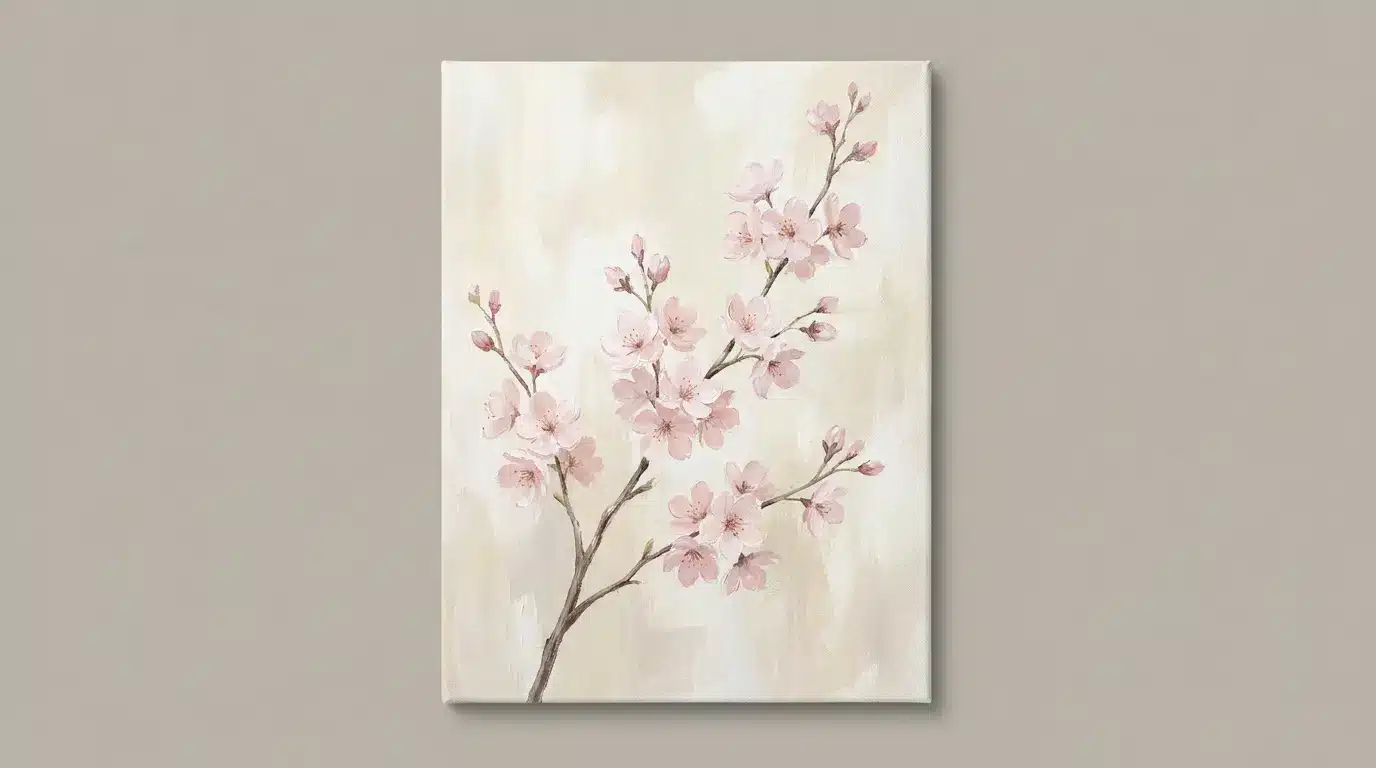
Start with a soft light background, add a dark brown branch stretching across the canvas, then dot soft pink blossoms along it. This painting looks elegant with very little effort.
Pro tip: Use your fingertip or a small sponge to dab the blossoms on for a soft, natural texture.
10. Forest Pathway
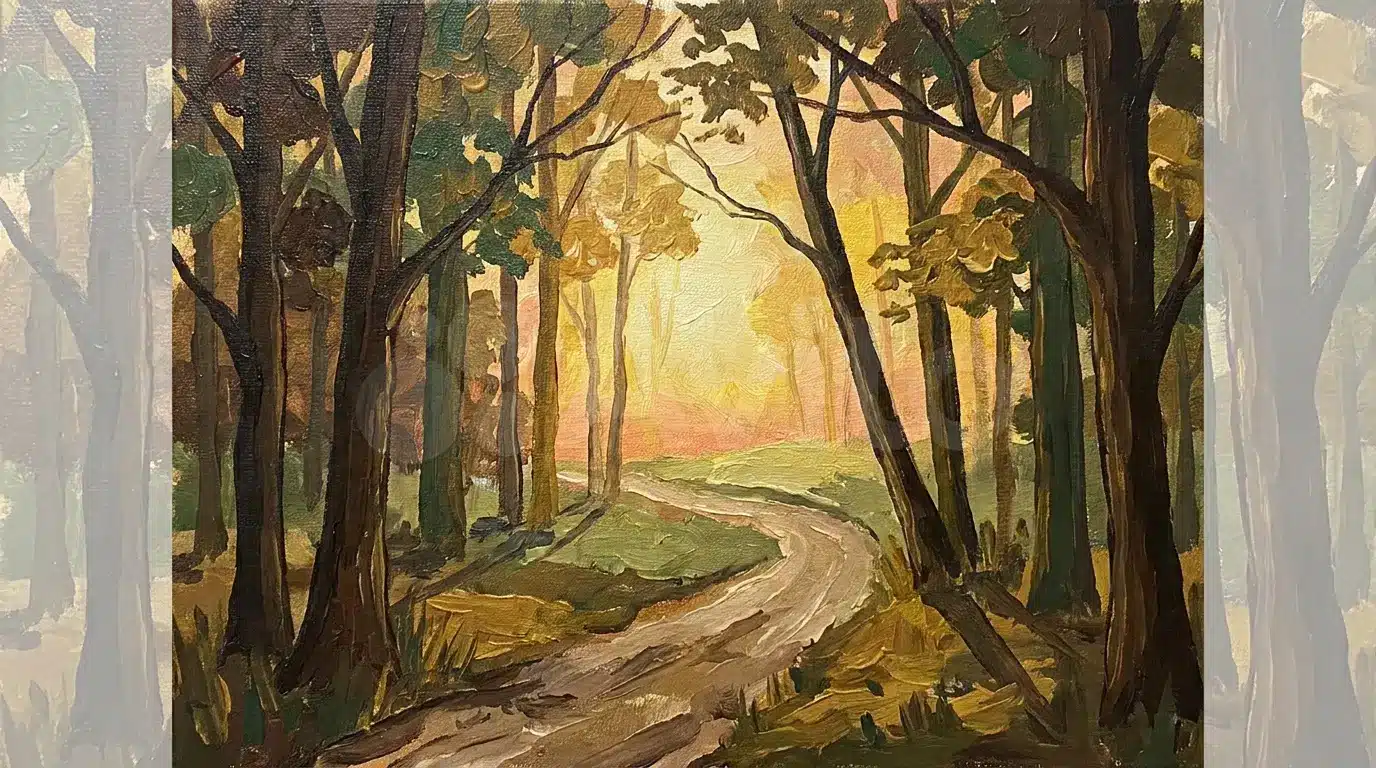
Paint tall, dark trees on both sides of the canvas, with a winding light path running through the center. The path naturally draws the viewer’s eye deep into the painting.
Pro tip: Add a soft glow of yellow or warm light at the end of the path to give the scene a peaceful, magical feeling.
11. Ocean Waves
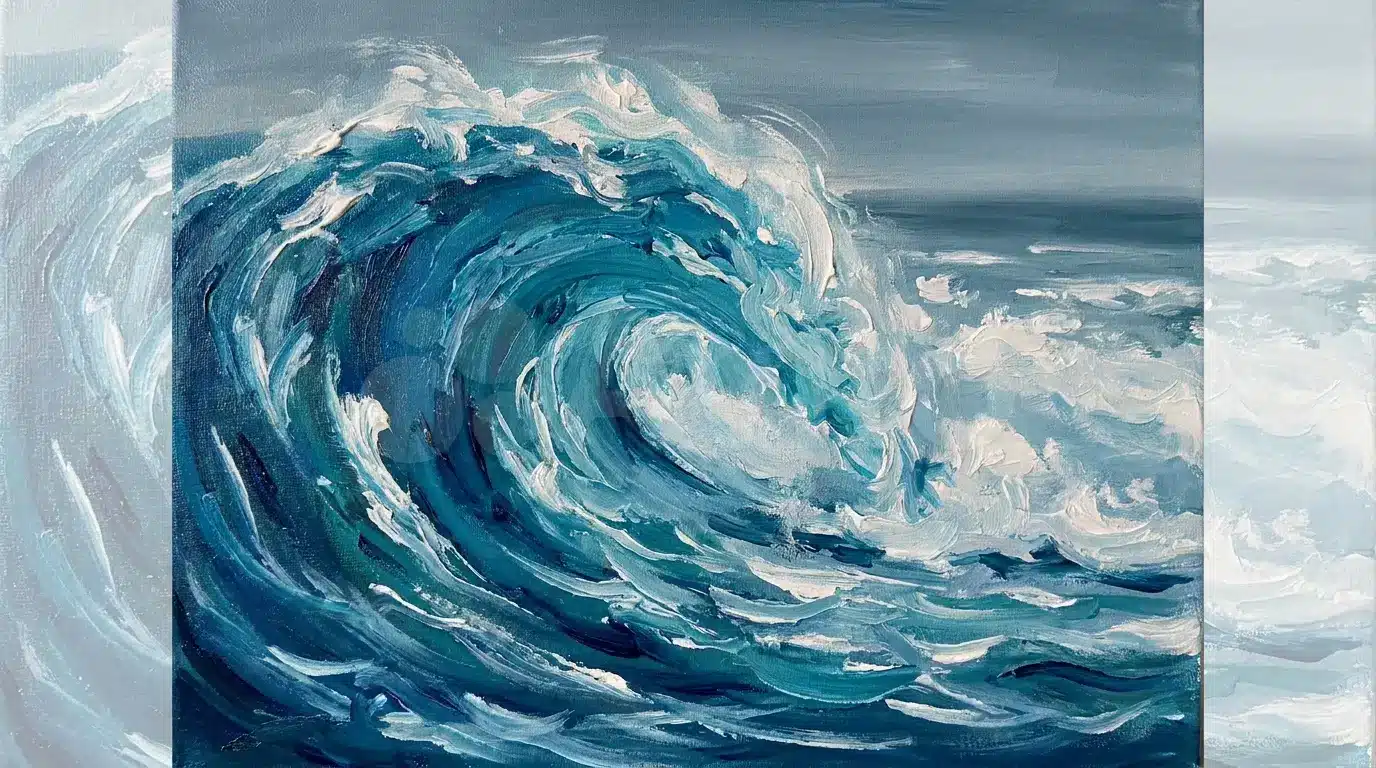
Use different shades of blue and green to build up a rolling wave, then add white foam at the crest and base. Focus on the curve and movement of the water rather than trying to make it look photographic.
Pro tip: Use a dry brush with white paint and light, quick strokes to create a realistic-looking sea foam.
12. Snowy Mountain Peaks
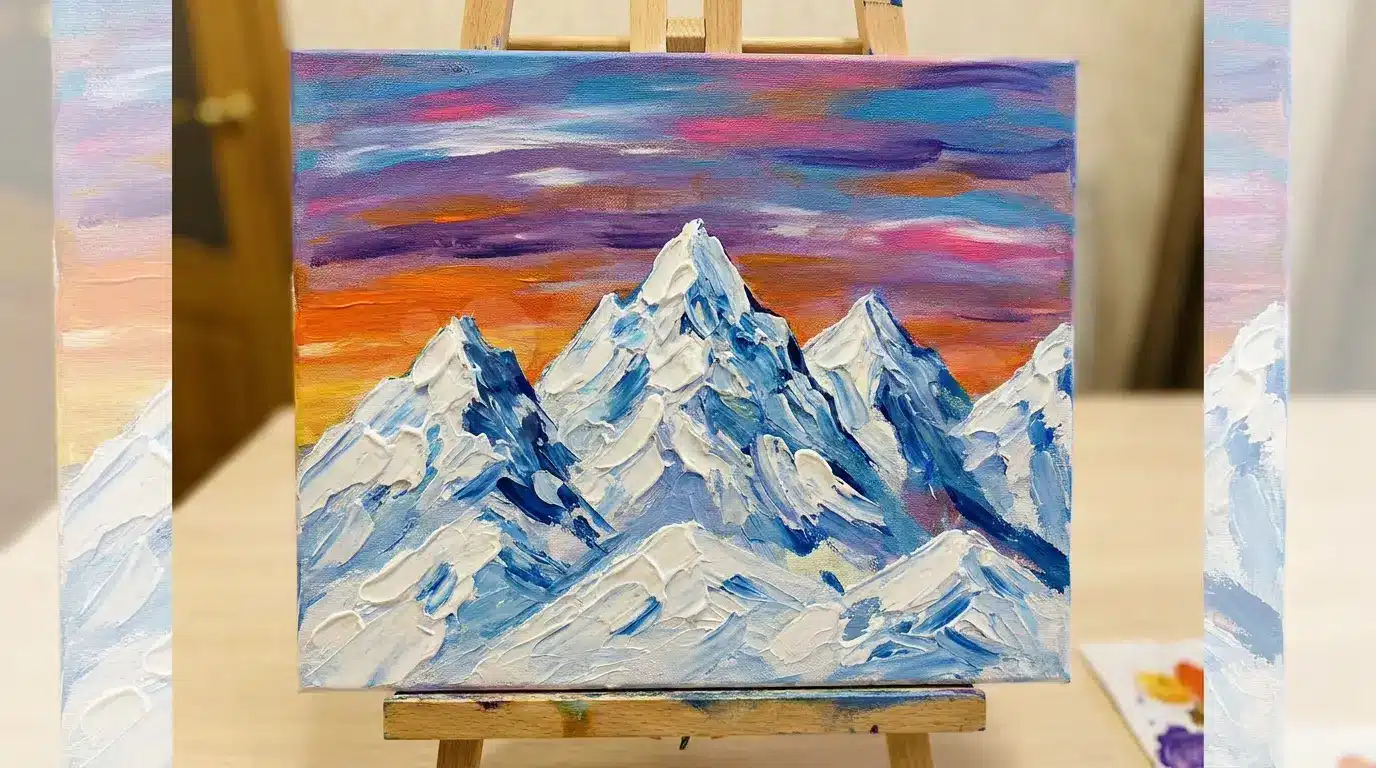
Paint a pink or blue sky and build up white and grey mountain shapes below it. A dry brush with white paint adds texture that looks just like snow on the peaks.
Pro tip: Add a thin line of warm orange or pink along the top edge of the mountains to show sunlight catching the snow.
13. Waterfall Landscape
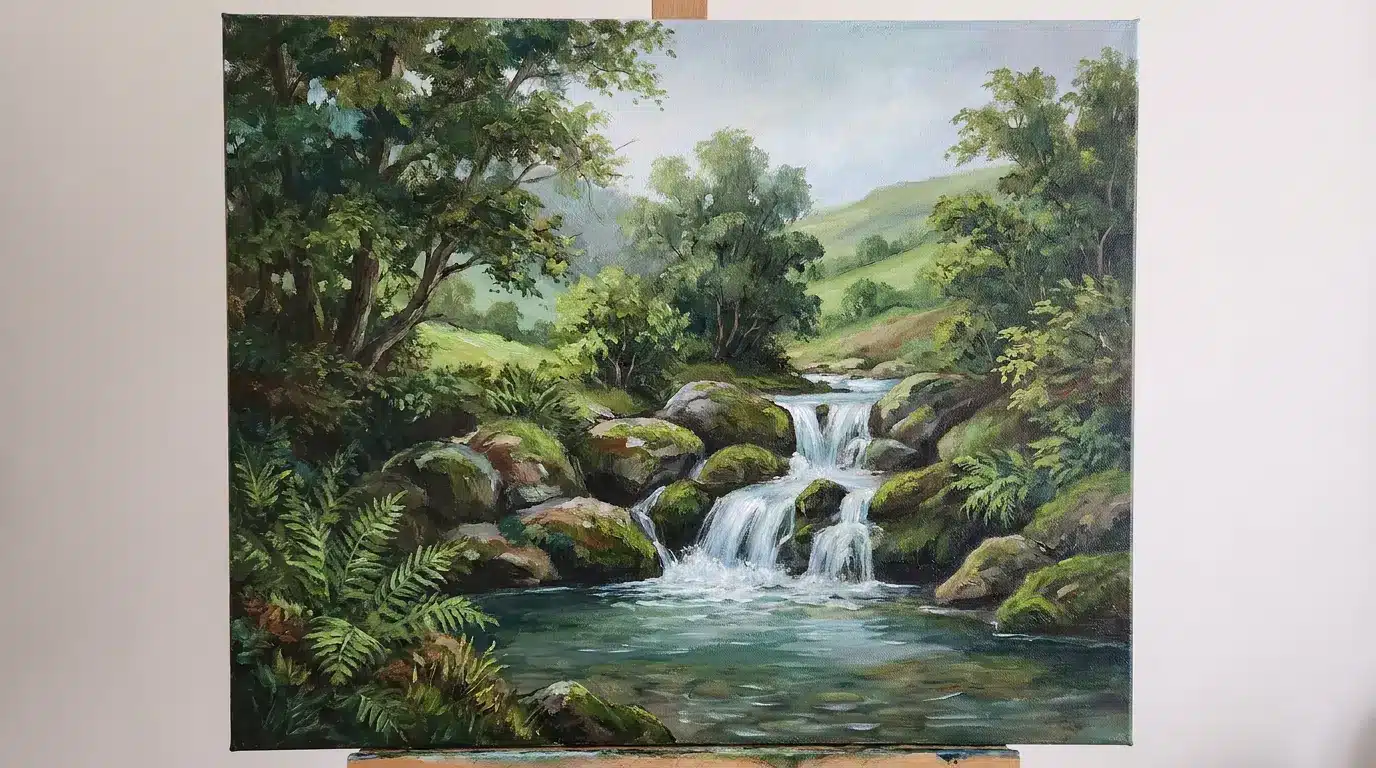
Paint a green landscape with rocks and trees, then use downward strokes in white and light blue to show water falling through the scene. The key is showing movement in the water.
Pro tip: Use long, thin vertical strokes and leave small gaps between them to make the water look like it is flowing fast.
14. Wildflower Meadow
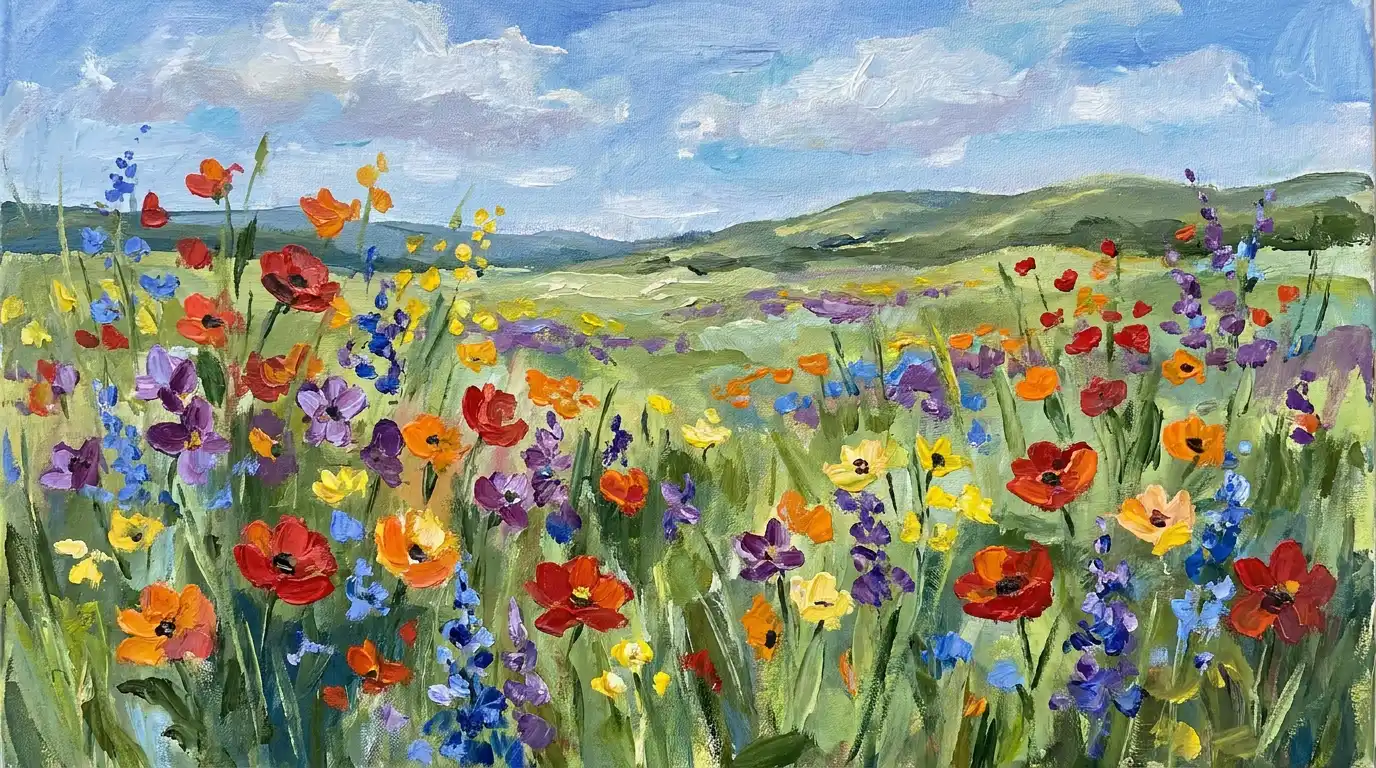
Use a green base, then add small, loose strokes of red, yellow, purple, and white scattered across the canvas to suggest a field full of wildflowers. The looser and more relaxed the brushwork, the more natural it looks.
Pro tip: Add a few grass strokes in front of the flower, using a thin brush to give the painting a layered, real-world feel.
From mountain views to flower fields, nature offers endless painting possibilities. You can also recreate many of these scenes using watercolor painting ideasfor a softer and more fluid look.
Abstract Canvas Painting Ideas
Abstract painting gives you total freedom because there are no rules to follow and no subject to get exactly right. These six ideas are great for anyone who wants to experiment with color, texture, and form.
15. Textured Neutral Abstract Art
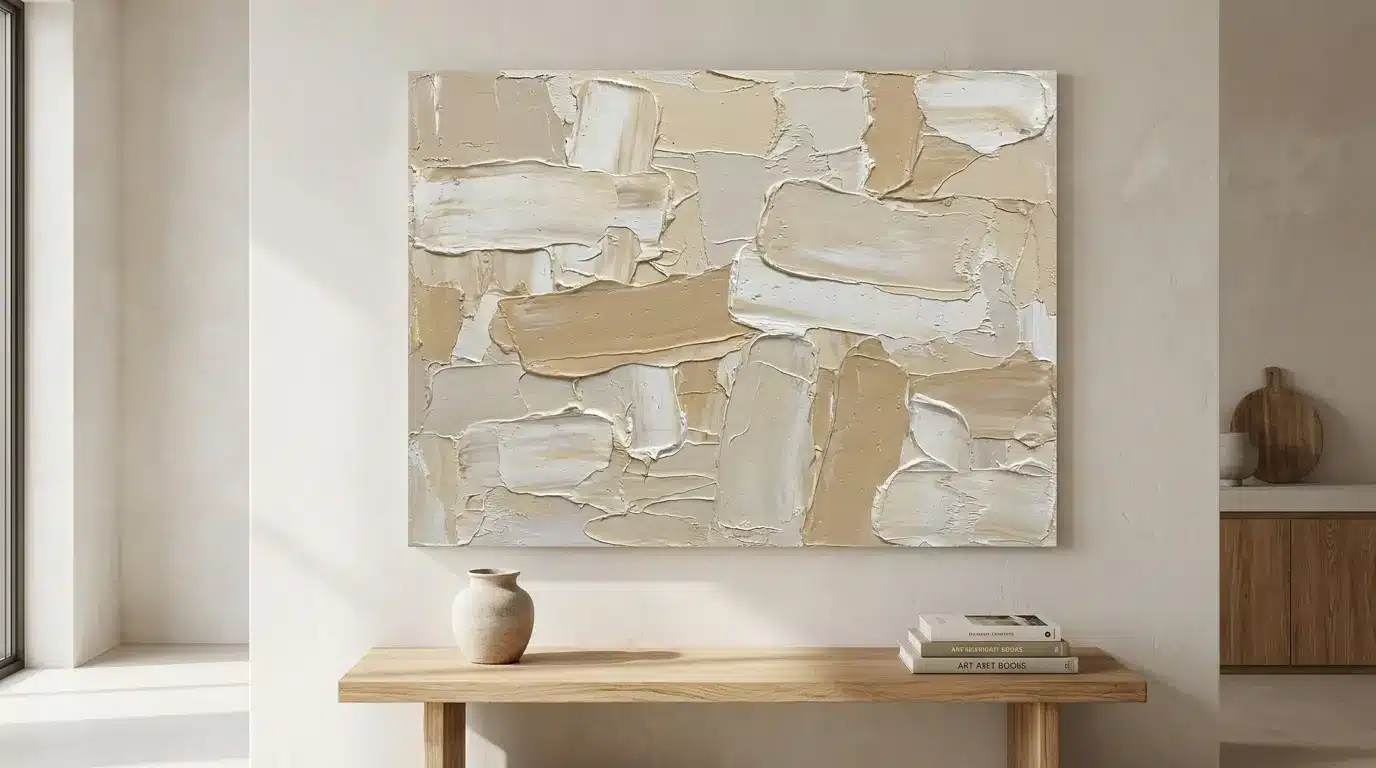
Use beige, white, cream, and tan, and apply thick paint with a palette knife to build up a rich surface texture. This style is hugely popular right now for modern, minimalist home interiors.
Pro tip: Let some layers dry before adding more on top so the texture builds up with visible depth rather than blending flat.
16. Acrylic Pour Painting
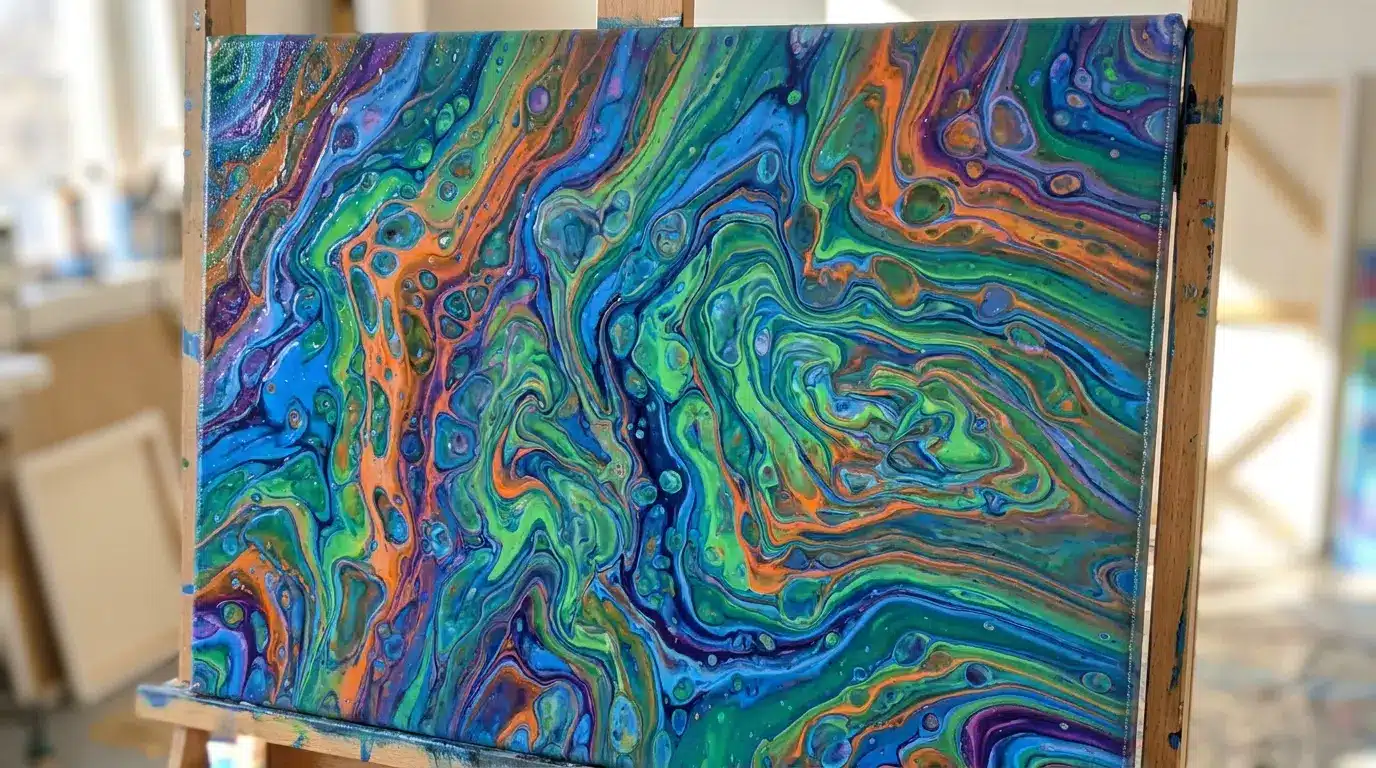
Mix acrylic paint with pouring medium, then pour the colors directly onto the canvas, then tilt the canvas in different directions to let the paint flow and blend. Every pour painting turns out unique.
Pro tip: Add a few drops of silicone oil to your paint before pouring to create beautiful cell patterns in the finished piece.
17. Geometric Shapes and Lines
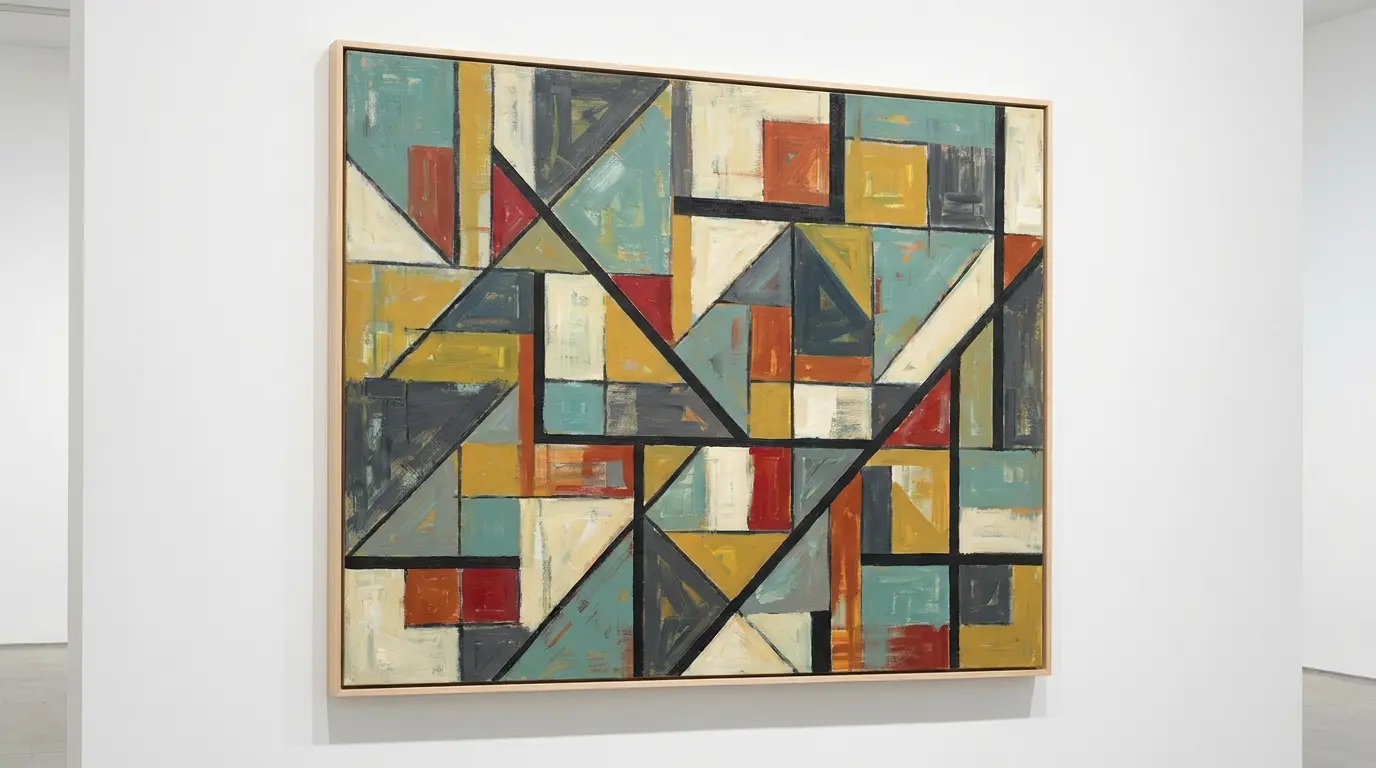
Use painter’s tape to map out triangles, squares, and lines across the canvas, paint each section a different color, then peel the tape off when dry for crisp, clean edges. The result looks sharp and very intentional.
Pro tip: Use two or three base colors plus one metallic-shaded color, such as gold or copper, to make certain sections stand out.
18. Monochromatic Abstract Design
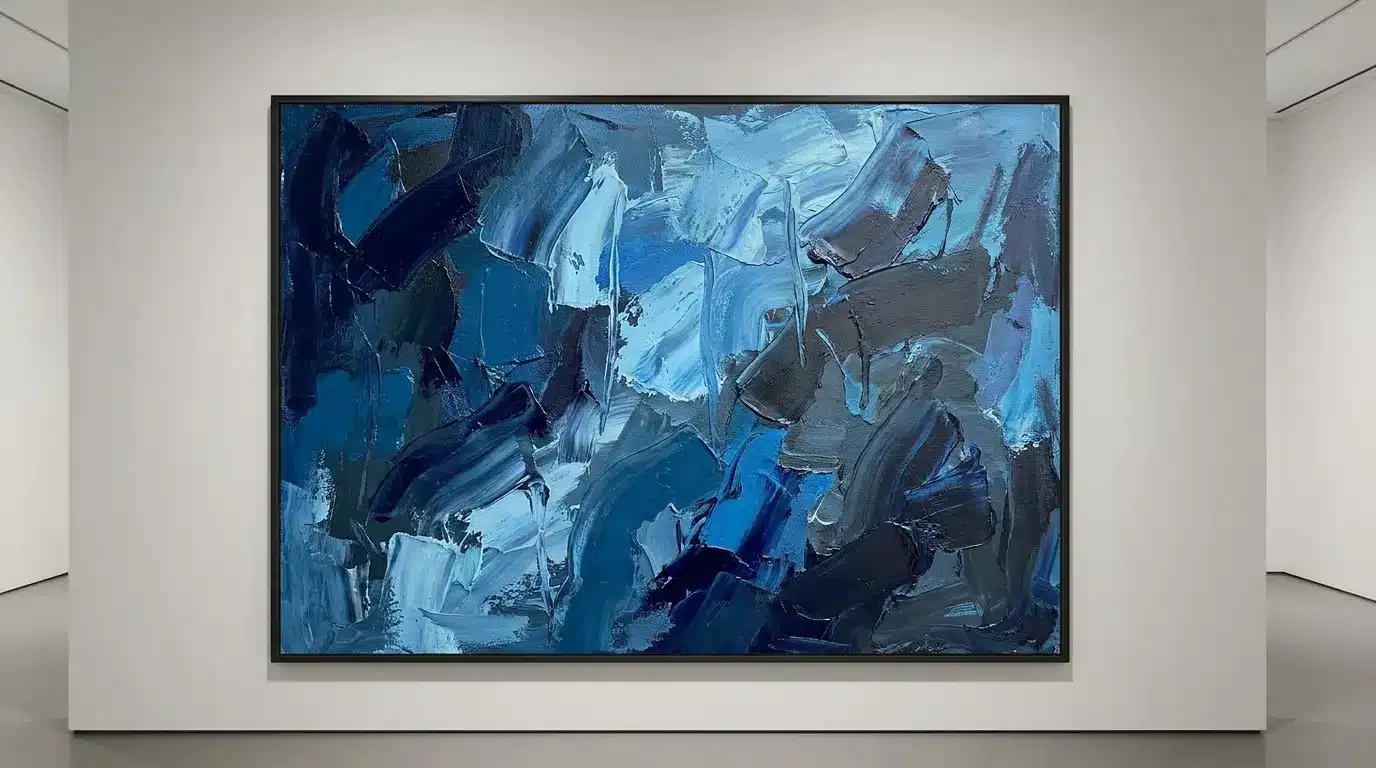
Pick a single color and paint the whole canvas using different shades and tones of just that one color. The result is calm, sophisticated, and surprisingly striking.
Pro tip: Add variety by mixing smooth areas with textured brush strokes so the painting has visual contrast even within a single color family.
19. Bold Brushstroke Composition
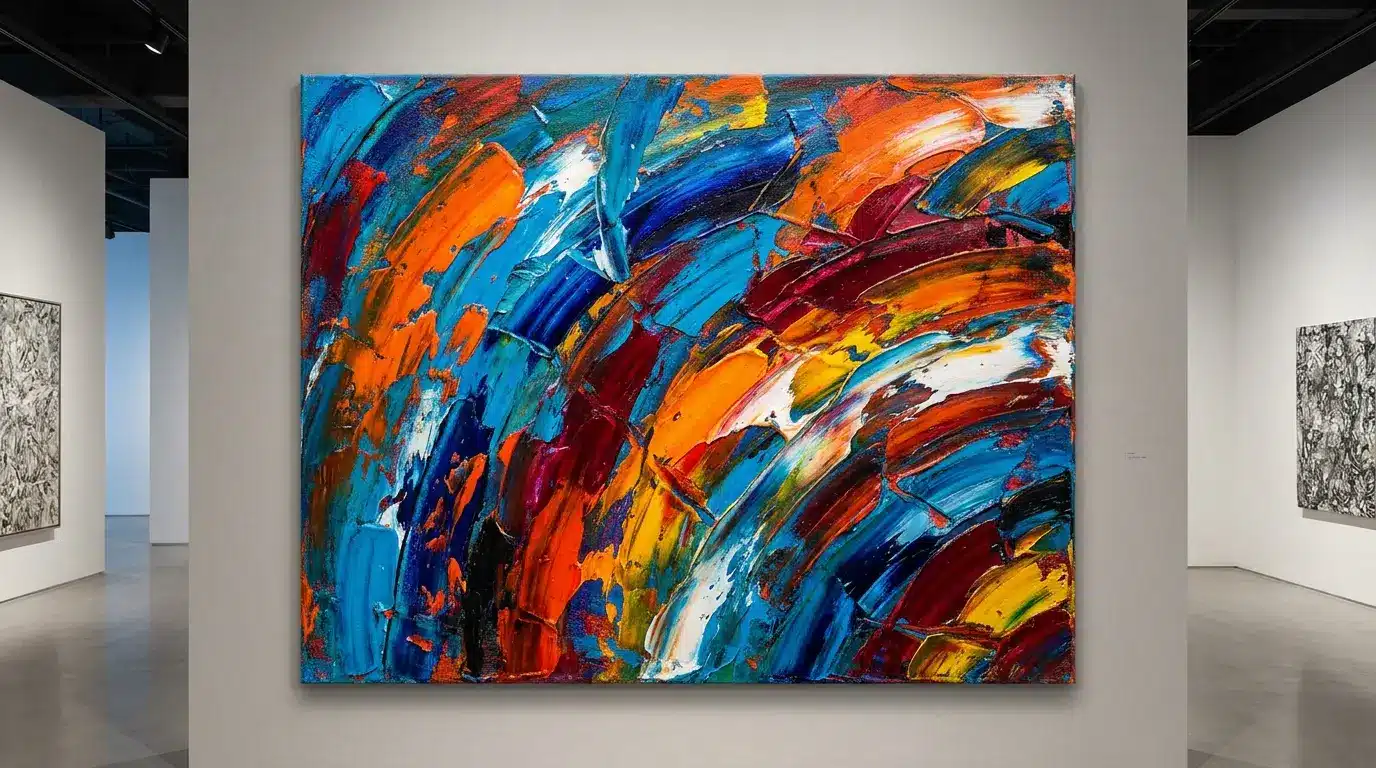
Use a large brush and make big, confident strokes across the canvas in two or three contrasting colors. This style is all about energy and movement, not neatness.
Pro tip: Do not overthink each stroke. Paint quickly and with your whole arm, rather than just your wrist, for looser, more expressive marks.
20. Modern Organic Shapes
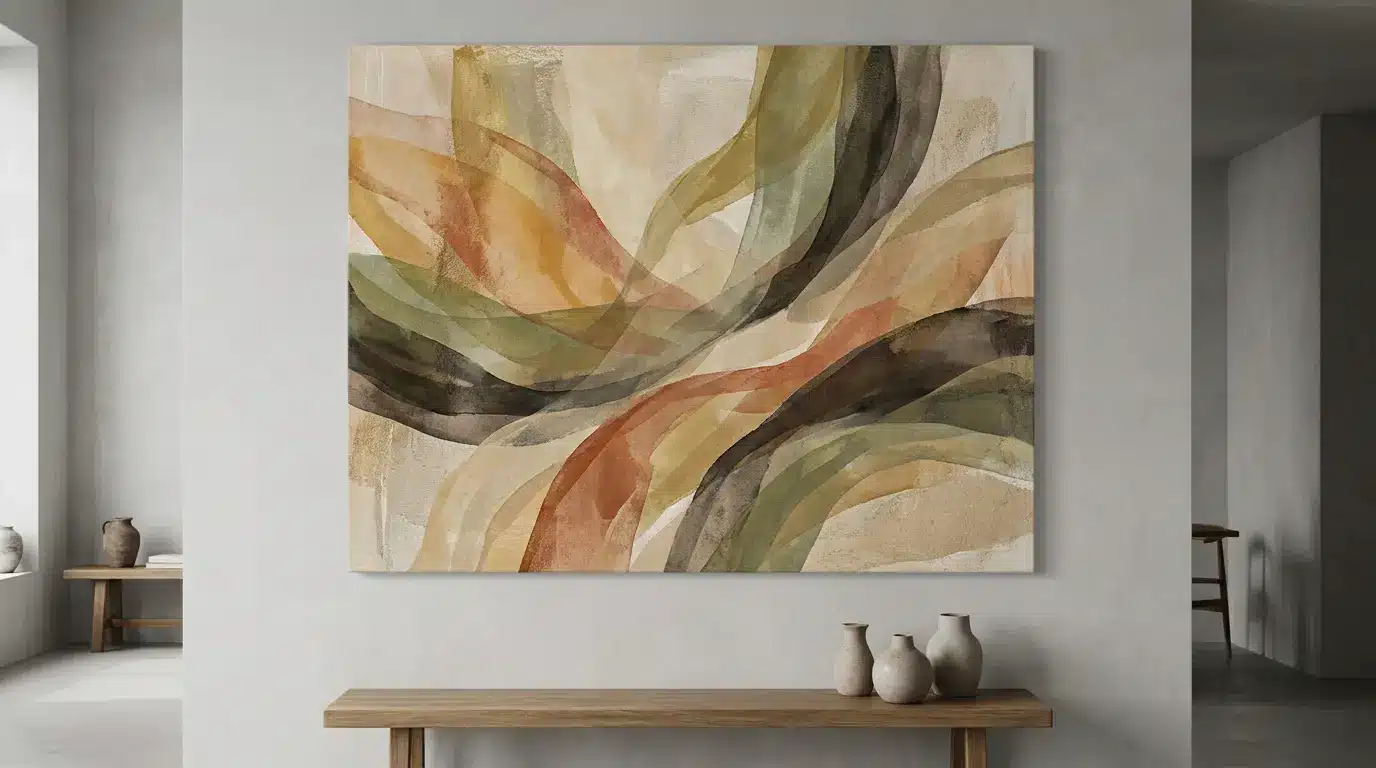
Paint flowing rounded shapes that look like leaves, blobs, or natural forms using a small and steady palette of colors. This style looks right at home in modern and contemporary spaces.
Pro tip: Outline the shapes with a thin line in a darker or contrasting color after filling them in to make each form feel bold and graphic.
Aesthetic Canvas Painting Ideas
Aesthetic paintings are all about mood, softness, and that dreamy feeling you want to hold onto. These six ideas are perfect for creating art that looks beautiful on a wall and feels personal at the same time.
21. Pink Sunset Clouds
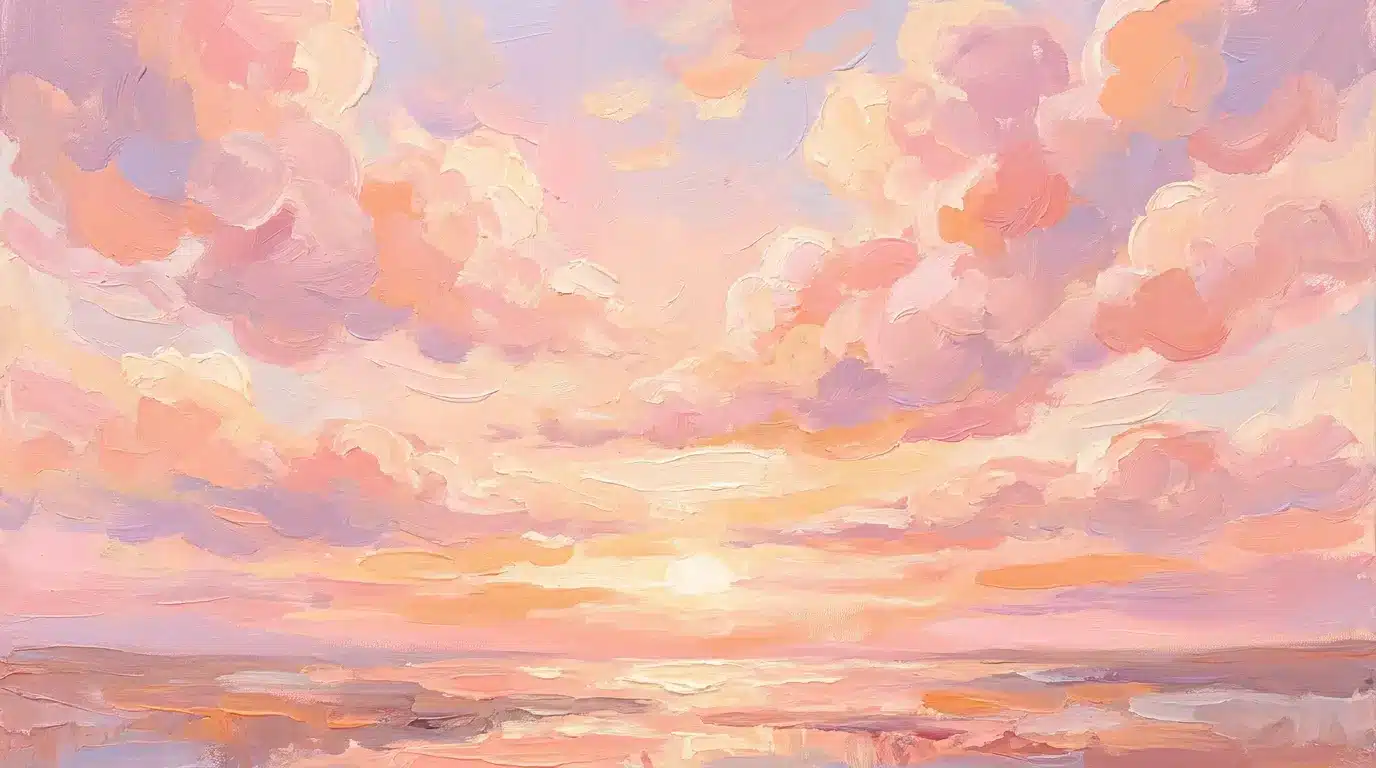
Paint a soft background in pink, peach, and orange, then add fluffy cloud shapes with light purple in the shadows. This painting has a warm and dreamy feel that works perfectly in a bedroom.
Pro tip: Use a dry, fluffy brush in circular motions to build the cloud shapes softly without hard edges.
22. Moon Phases Artwork
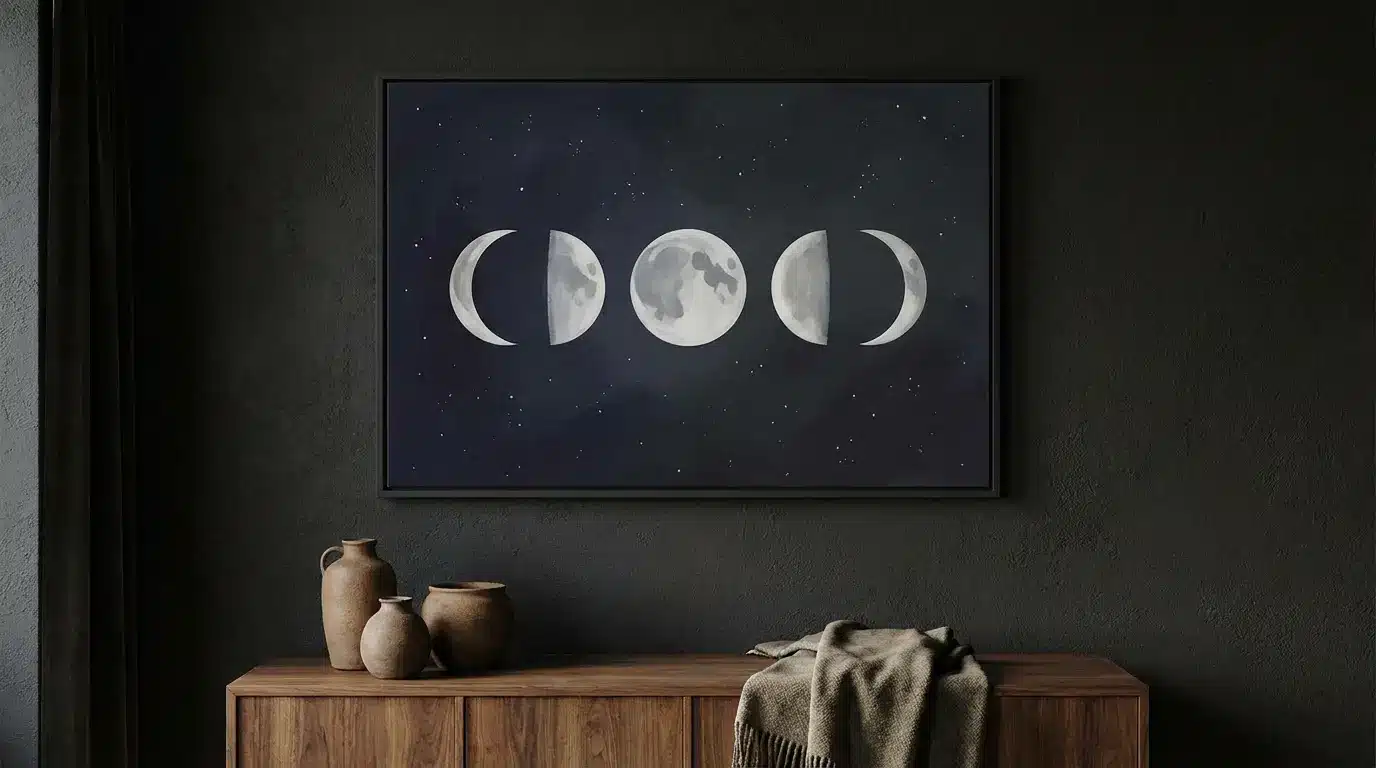
Paint a dark background and line up five to seven moon-phase circles across the canvas, from crescent to full and back again. Simple, minimal, and very popular for bedroom and living room walls.
Pro tip: Paint each moon slightly off-white rather than pure white, and add a very faint grey shadow on one side to make them look three-dimensional.
23. Butterfly Canvas Art
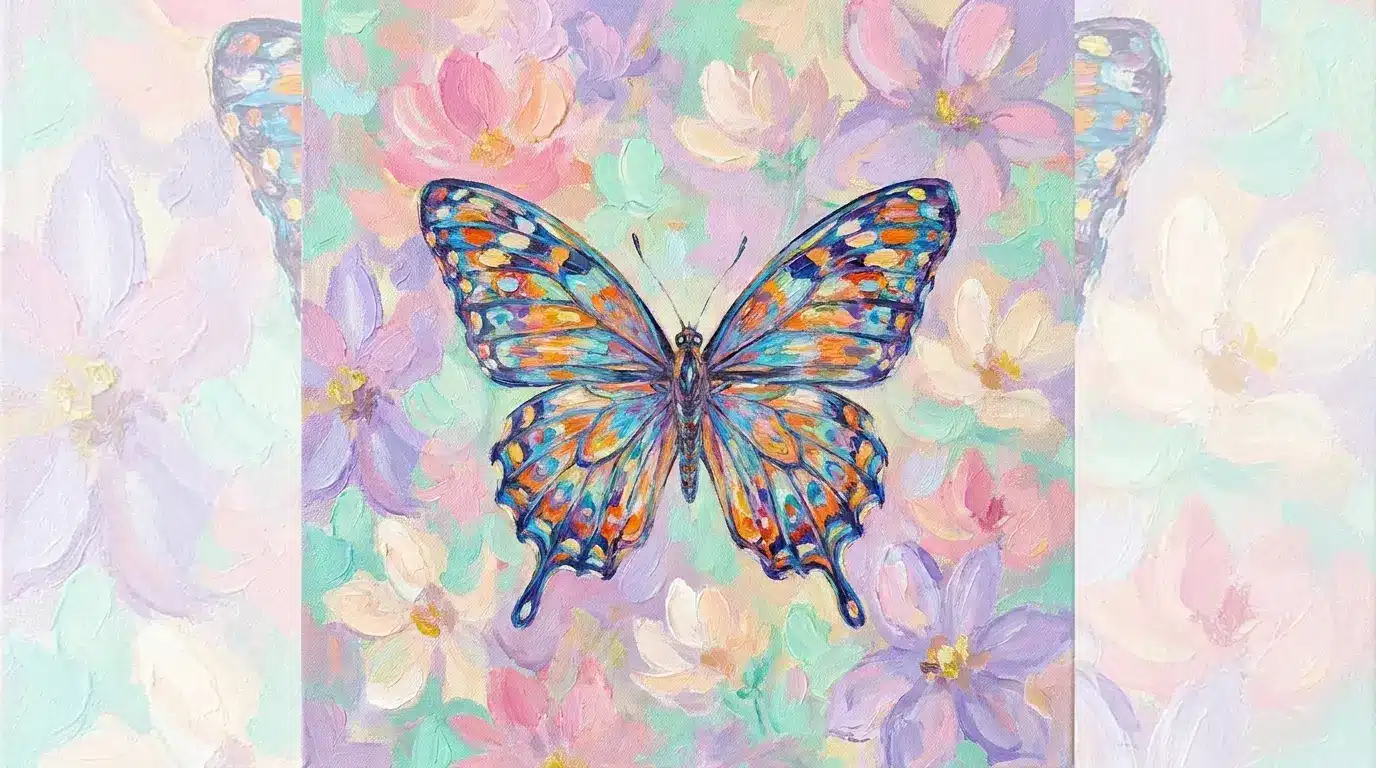
Paint a soft floral or plain pastel background and add a single large butterfly in the center with detailed, colorful wings. The contrast between a simple background and a detailed subject makes this one stand out.
Pro tip: Look at a reference photo of a real butterfly wing and copy just the basic pattern shapes rather than every tiny detail.
24. Cozy Coffee Cup Scene
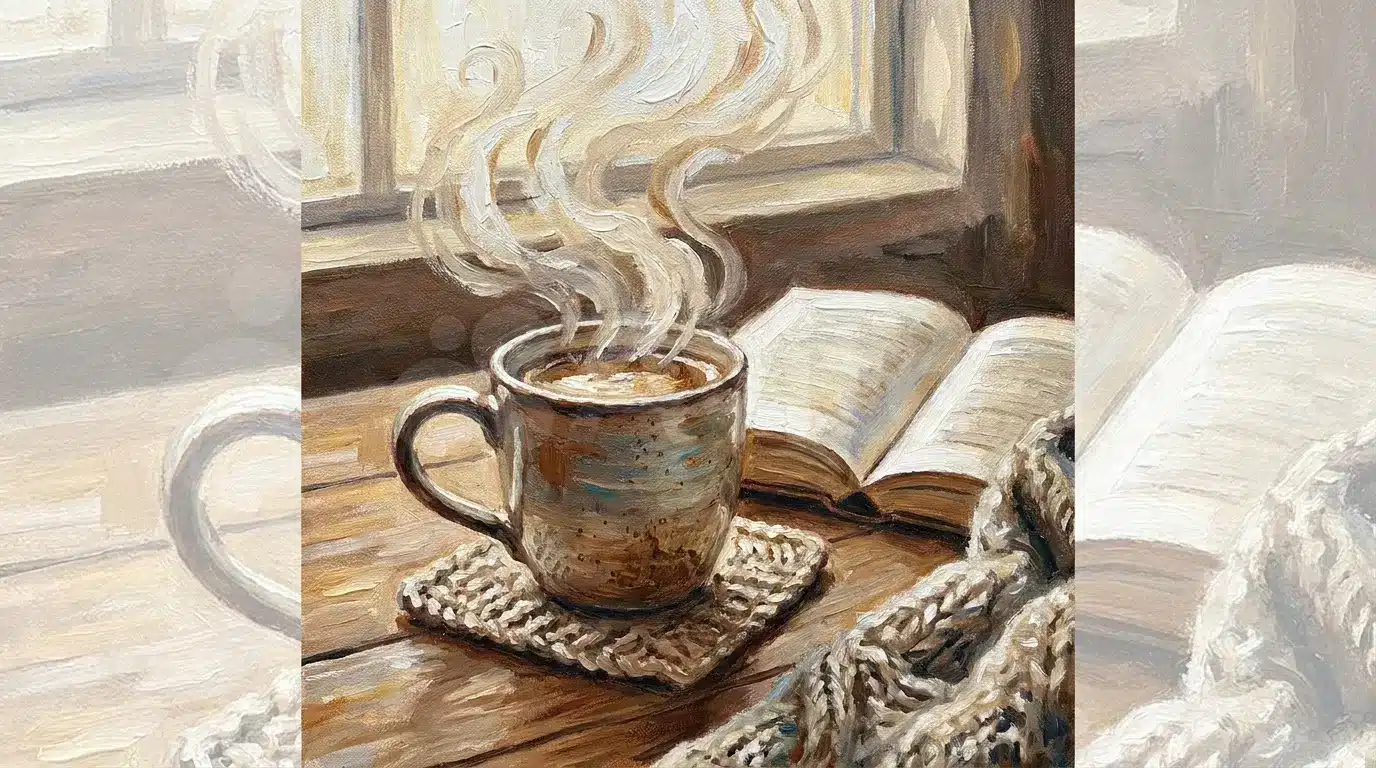
Paint a warm background, such as a wooden table or soft window light, and place a simple mug with rising steam in the center. This small and charming painting fits perfectly in a kitchen or dining area.
Pro tip: Add a thin, wavy line of white or light grey above the cup for steam, and it instantly makes the whole scene feel warm and inviting.
25. Cottagecore Flower Field
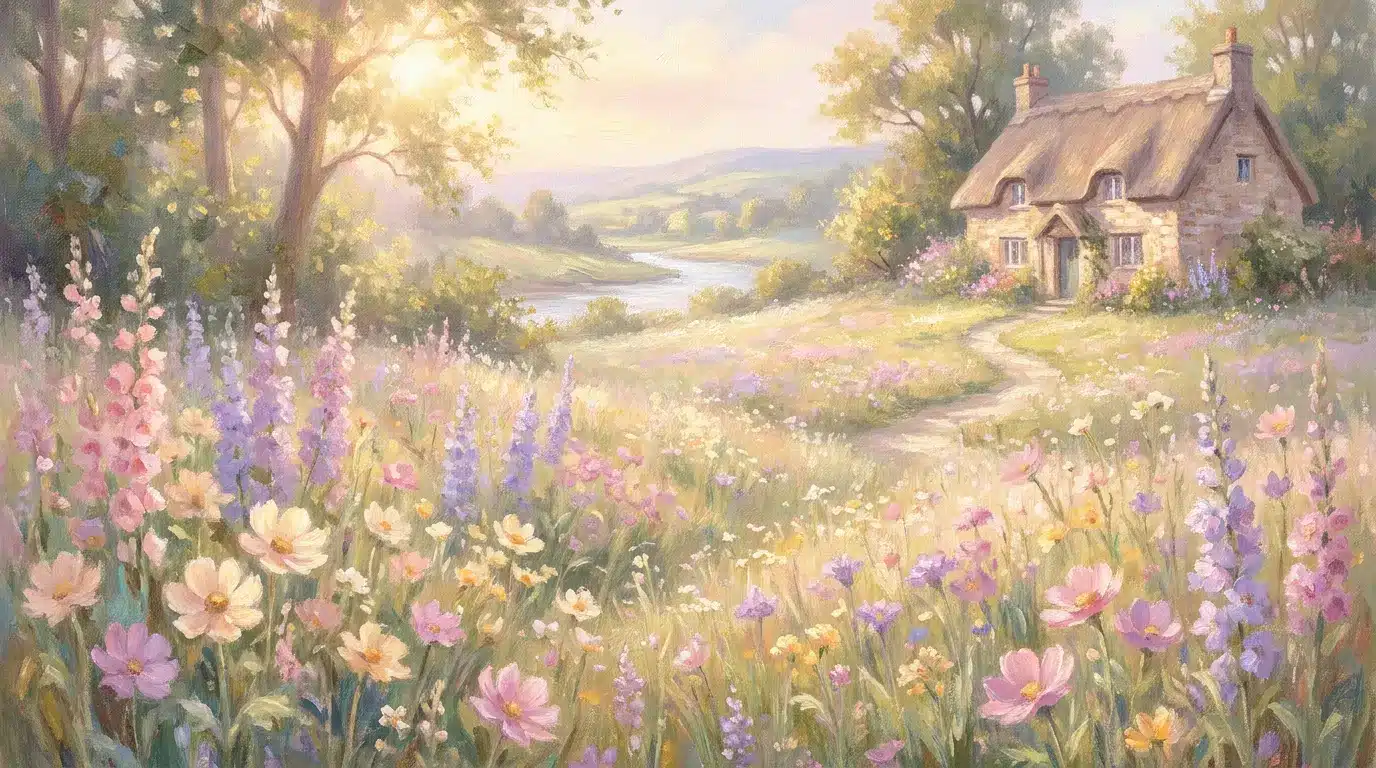
Use soft muted tones like blush pink, sage green, and cream to paint a gentle meadow full of loose flowers and soft golden light. The key to this style is keeping everything soft and not too sharp.
Pro tip: Add a faint warm yellow glaze over the whole painting at the end, using thinned paint to tie all the colors together and give it a golden-hour glow.
26. Vintage Window View
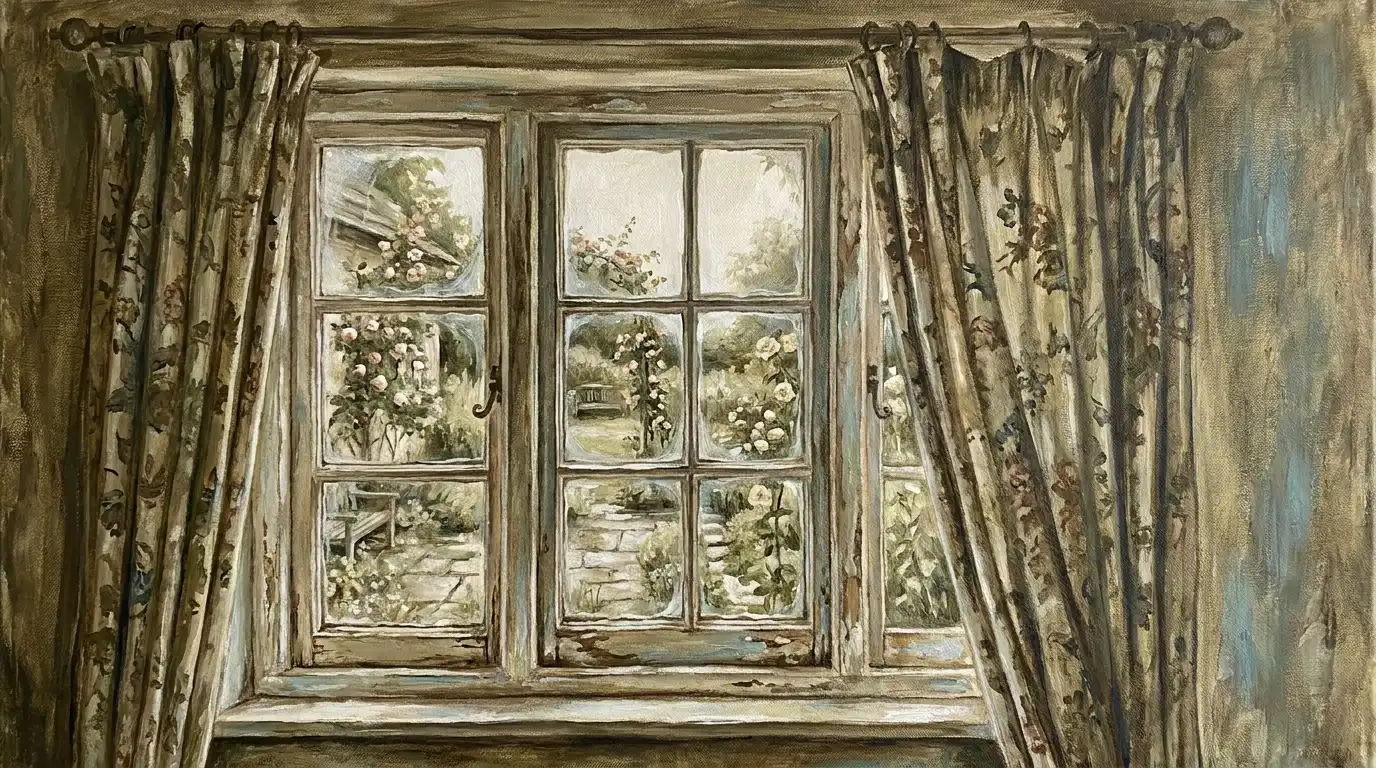
Paint a simple window frame looking out onto a soft landscape or garden scene using faded muted colors. Adding curtains on the sides gives it a cozy, framed quality that feels like a little story.
Pro tip: Use a slightly off-white or aged cream for the window frame instead of bright white to keep the vintage tone consistent throughout.
Small Canvas Painting Ideas
Small canvases are great for practicing new subjects without committing to a large piece. These five ideas are designed to look complete and charming even on a tiny surface.
27. Mini Cactus Art
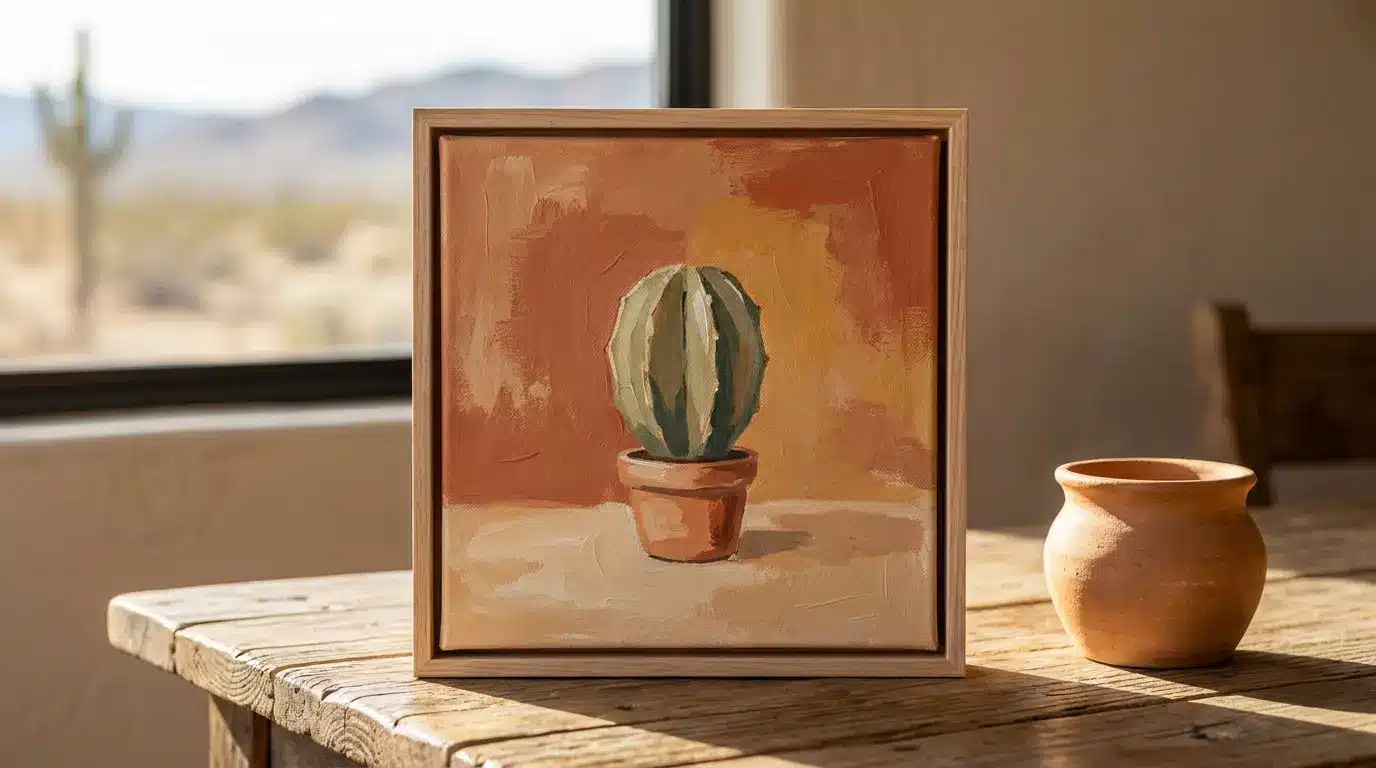
Paint a simple background in a warm desert tone and add one or two cactus shapes using green and brown. Small and easy, this painting looks great displayed on a shelf or as part of a gallery wall.
Pro tip: Add tiny white dot spines along the cactus arms using the very tip of a thin brush to give it a cute finished detail.
28. Tiny Ocean Wave
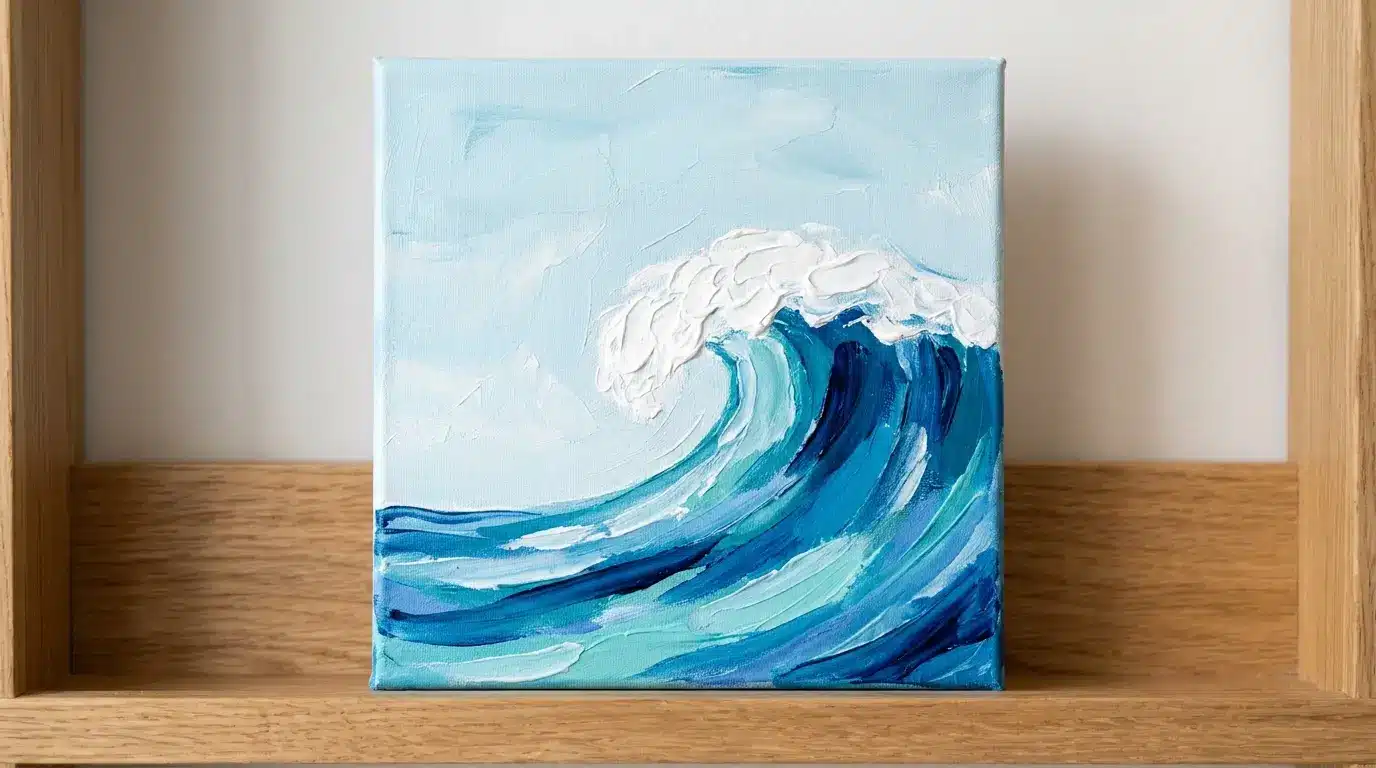
Paint a simple blue and white wave on a small canvas with just a hint of sky above it. Keep the whole thing minimal, and the wave becomes the full focus.
Pro tip: Use a small fan brush to drag white paint along the top of the wave for a natural foam texture.
29. Cute Mushroom Painting
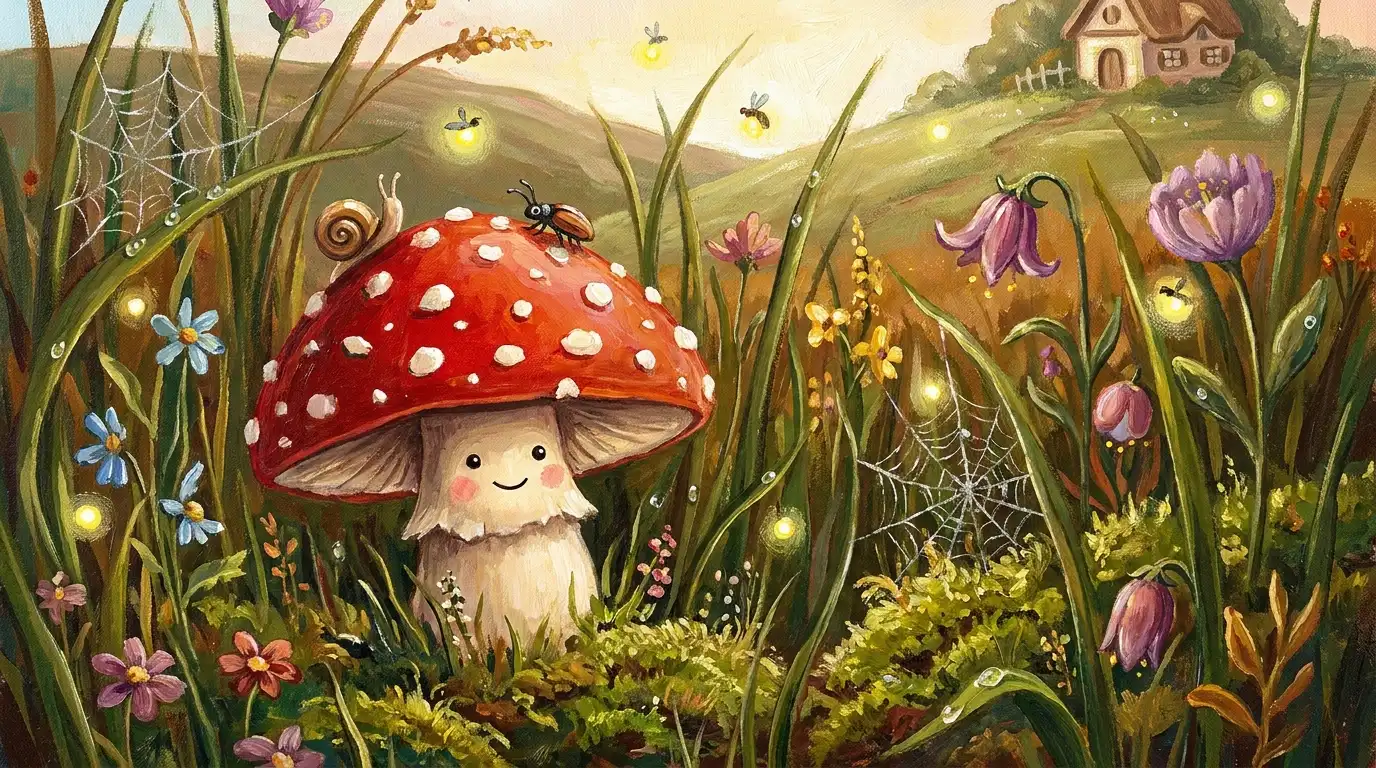
Paint a red or brown mushroom cap with white dots and a short white stem sitting on a patch of green grass. This fun and charming subject is great for kids’ rooms, shelves, or small wall displays.
Pro tip: Add a tiny ladybug or small flower near the base of the mushroom to give the painting a sweet storybook feeling.
30. Mini Mountain Range
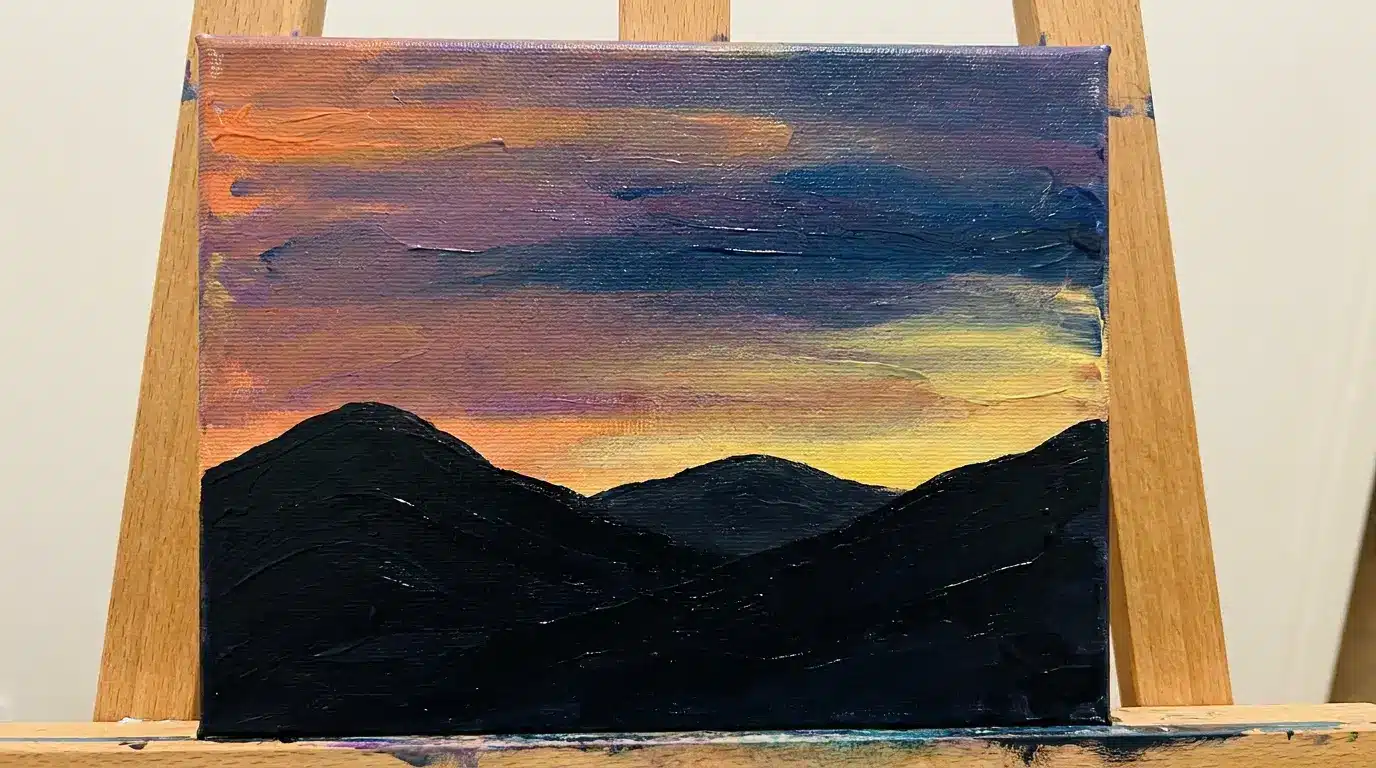
Paint a sunset or starry sky background and add two or three small mountain silhouettes along the bottom. Simple shapes fill a small canvas beautifully without needing any extra detail.
Pro tip: Use a dark navy or deep purple for the mountains rather than black, so the shapes feel rich rather than flat.
31. Tiny Galaxy Canvas
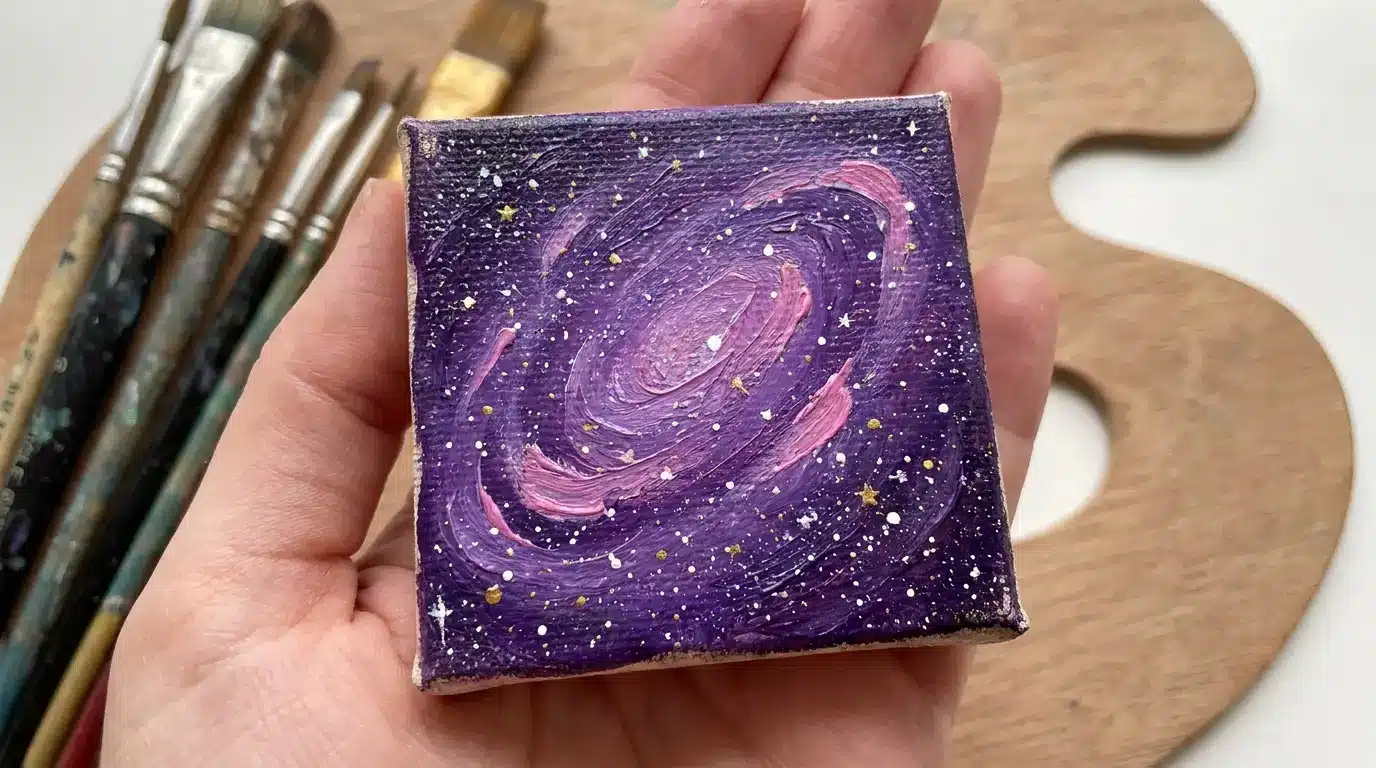
Use dark blue and black as the background, and blend in soft purple and pink circles in the center. Dot white and pale yellow stars across the whole thing to finish it off.
Pro tip: Flick a thin brush loaded with white paint toward the canvas from a short distance to create a natural-looking scatter of tiny stars.
Modern Canvas Painting Ideas for Home Decor
These painting ideas are designed to look right at home on a living room wall, in a hallway, or in a bedroom. Each one uses colors and styles that work well with current interior trends.
32. Neutral Textured Wall Art
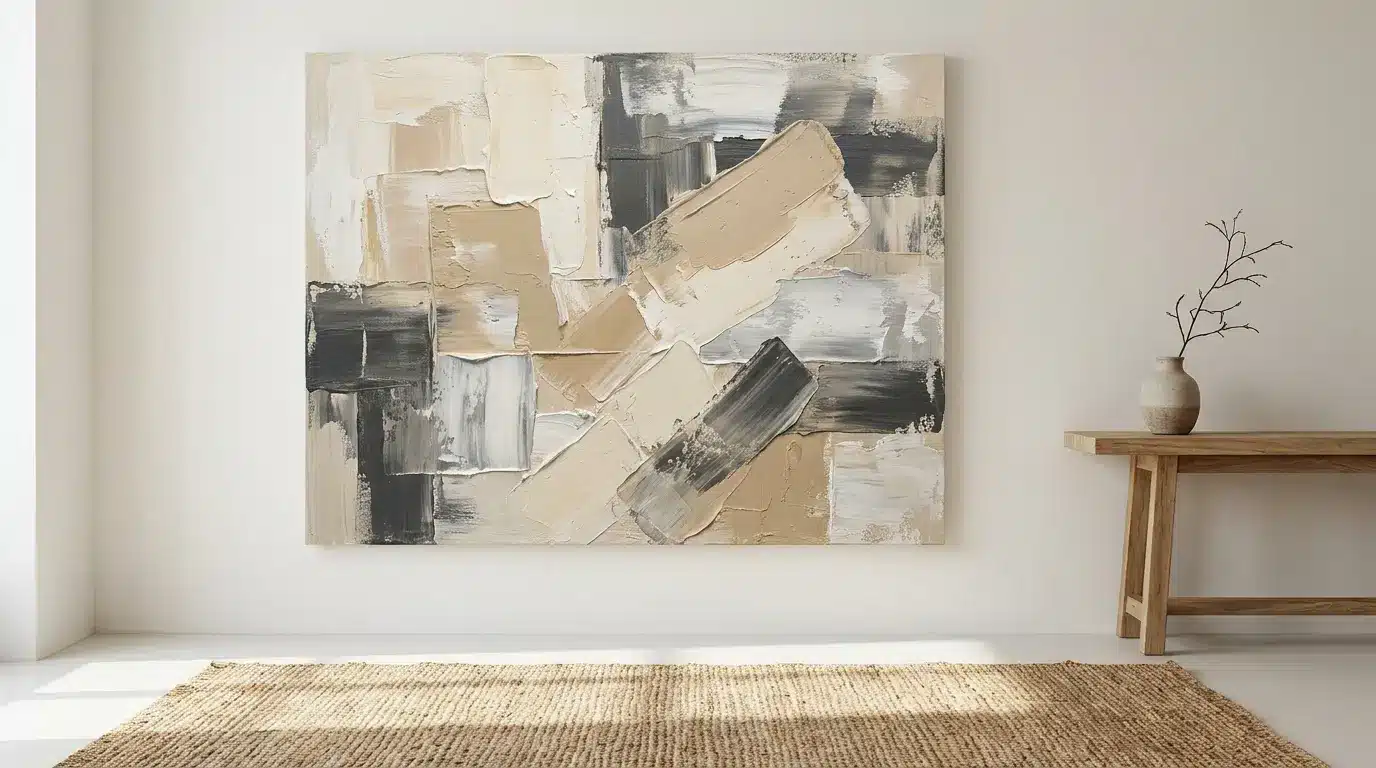
Use white, off-white, grey, and beige, and build up texture using a palette knife or layered brushstrokes. This type of painting fits almost any home style, from modern to farmhouse.
Pro tip: Press a piece of crumpled plastic wrap into wet paint, then lift it off to create a subtle, organic texture quickly and easily.
33. Scandinavian Minimalist Canvas
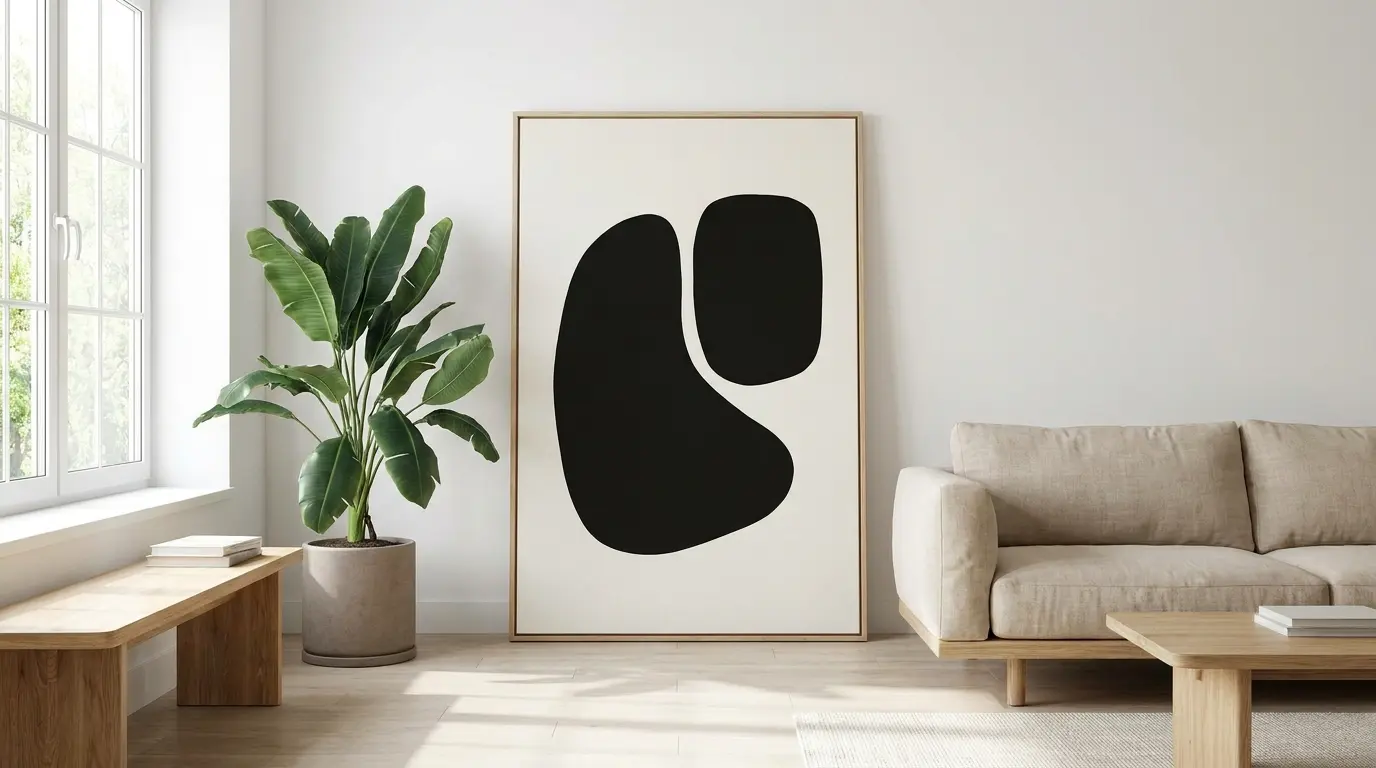
Paint a clean, light background, and add one simple shape or a single brush stroke in black or grey. Less is more with this style, and plenty of space is part of the design.
Pro tip: Leave a wide border of unpainted canvas around the edges rather than painting edge-to-edge, so the composition feels intentionally minimal.
34. Black and White Line Art
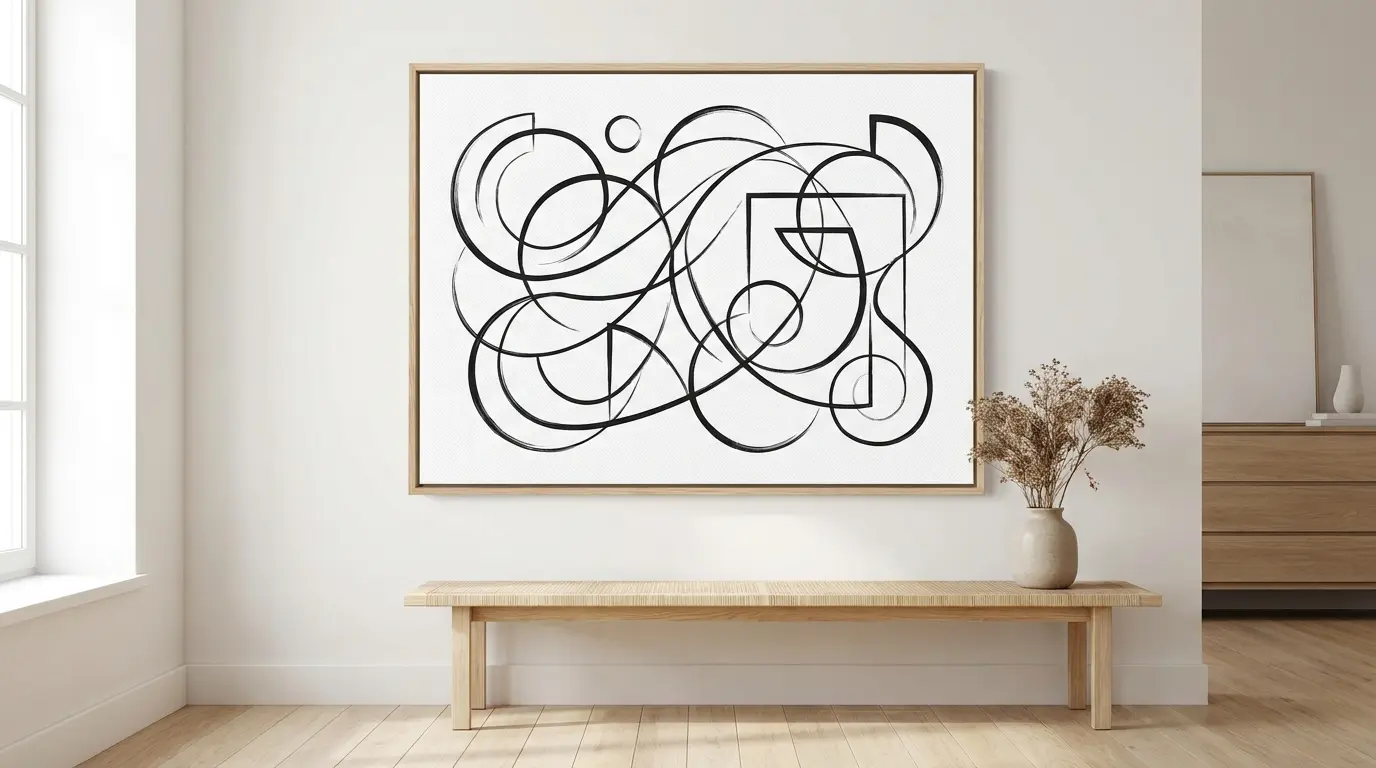
Use only black and white to paint simple lines, curves, or abstract shapes across the canvas. This style is timeless and bold, and it works in almost any room.
Pro tip: Use a fine liner brush and slow, steady strokes to keep your lines clean and confident-looking.
35. Earth-Tone Geometric Design
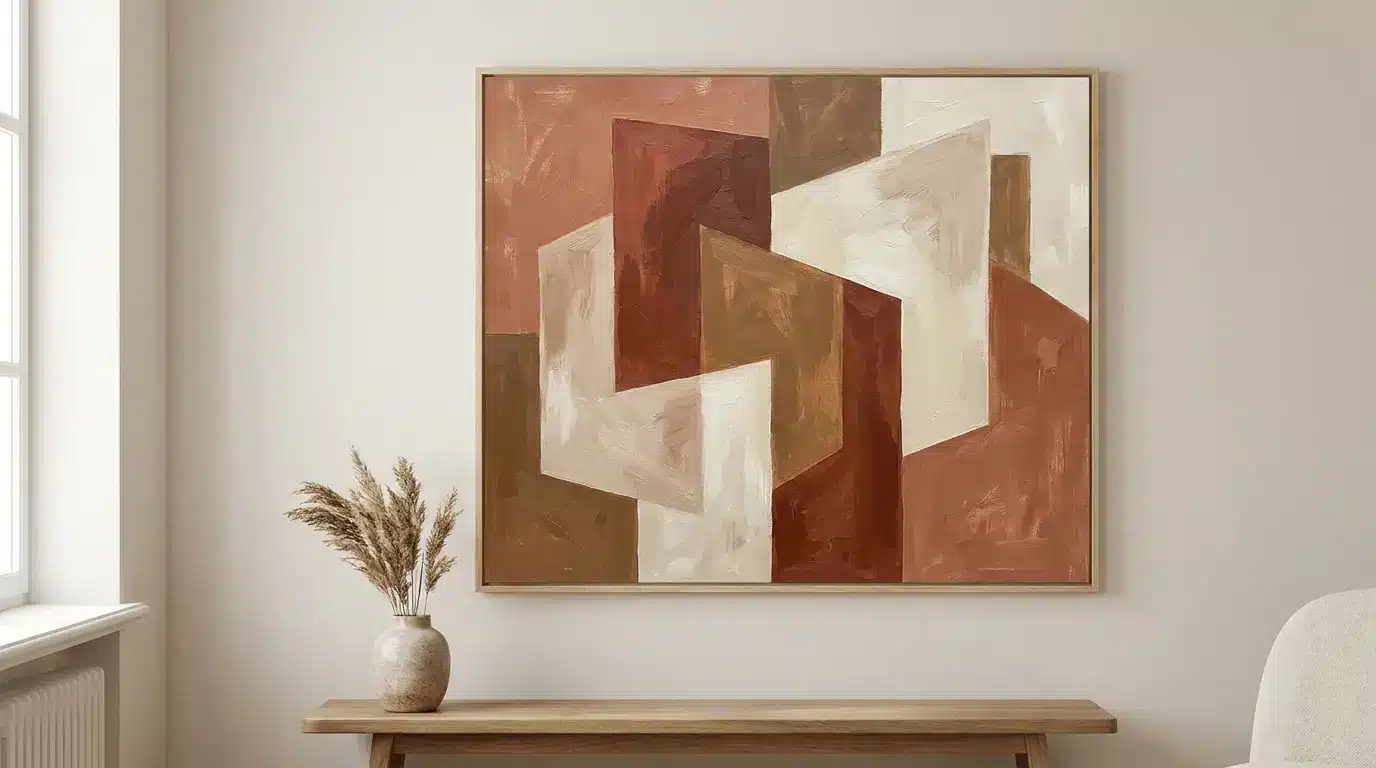
Use terracotta, rust, brown, and cream to paint angular geometric shapes across the canvas. This warm color palette is very popular in modern home decor right now.
Pro tip: Add a thin cream or white line between each shape to separate them cleanly and give the whole design a crisp, finished look.
36. Modern Botanical Art
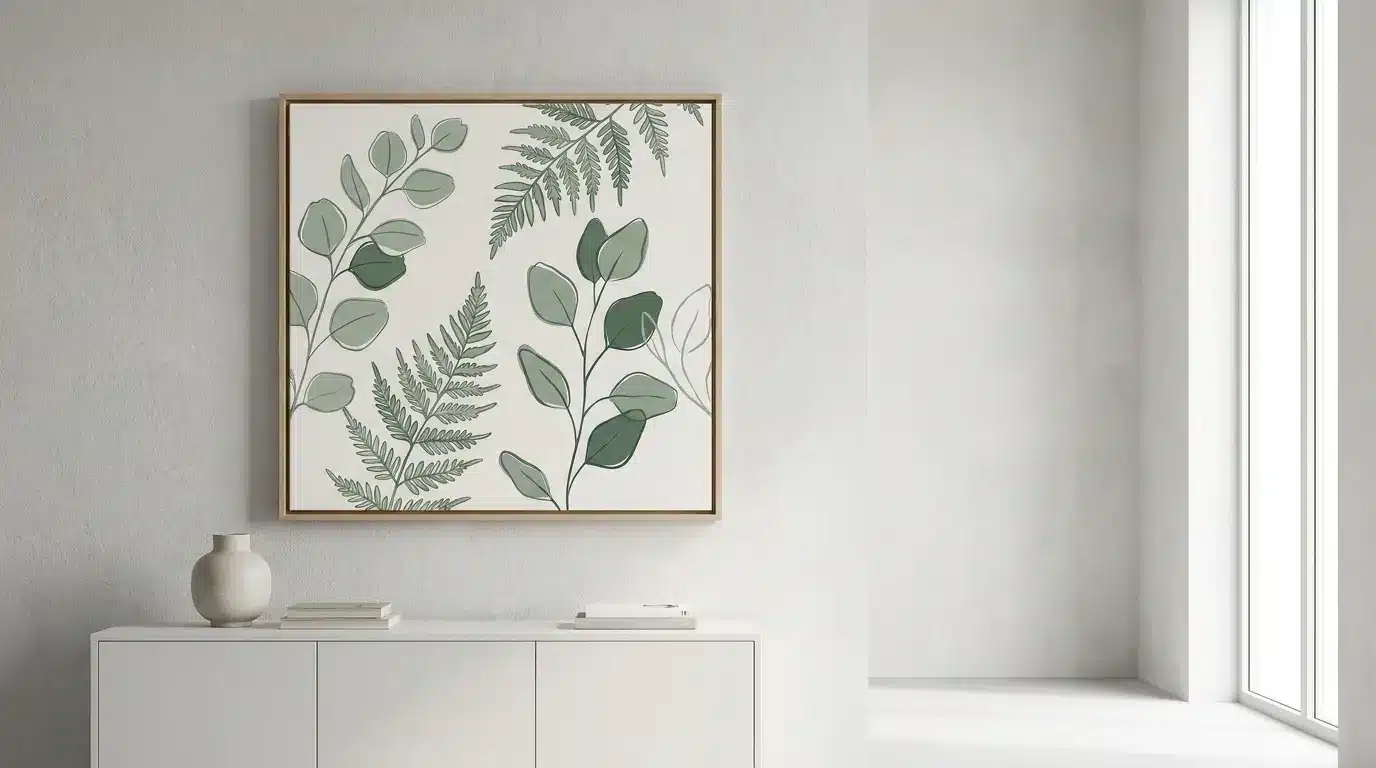
Paint simple leaves, branches, or plant stems using clean shapes and a limited palette of green, white, and black. Botanical art looks fresh and works in any room of the house.
Pro tip: Paint the leaves in solid color first, then add a single thin line down the center for the stem to keep it graphic and modern rather than overly detailed.
37. Luxury Gold Accent Canvas
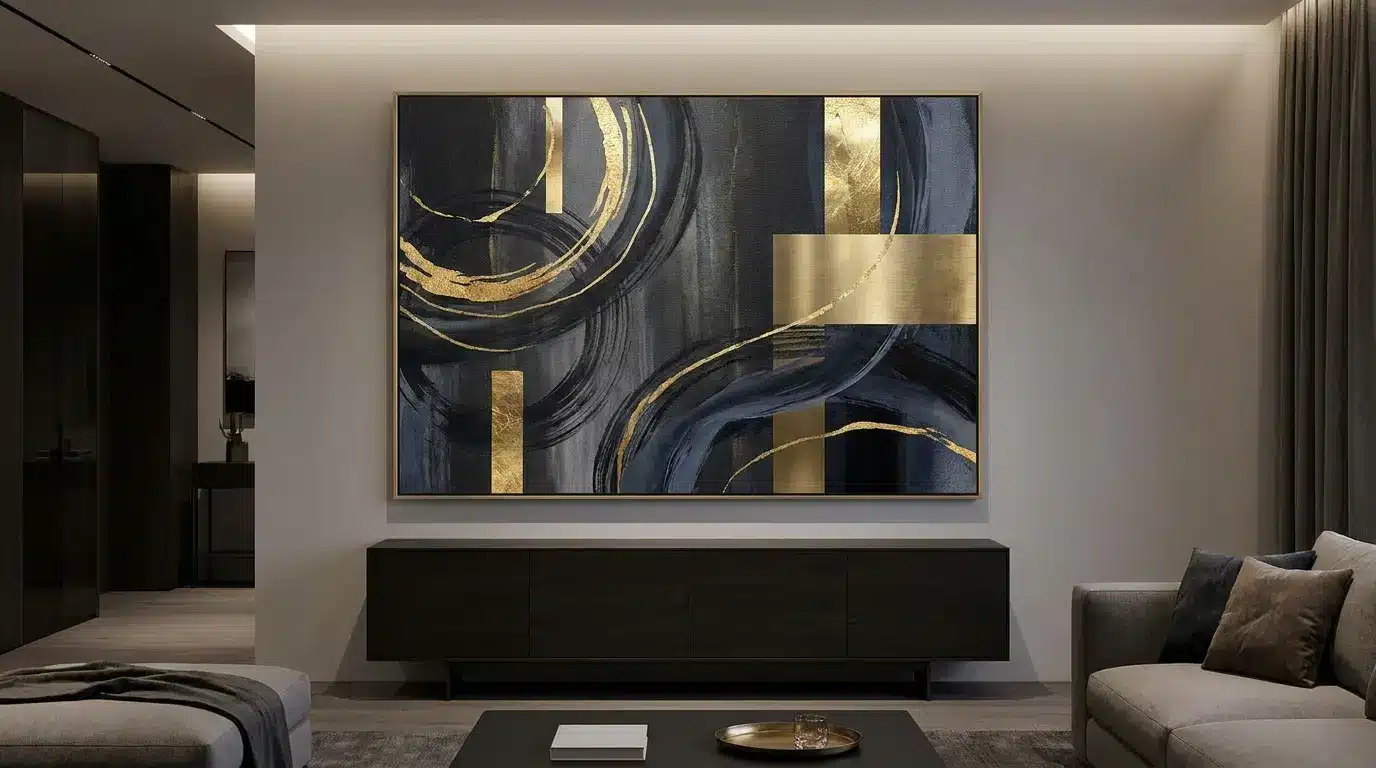
Paint a deep, dark background in black, navy, or forest green and add gold details using metallic acrylic paint. The gold makes even simple shapes look rich and high-end.
Pro tip: Use a fine brush to add thin gold lines or leaf shapes and keep the gold details sparse so they feel special rather than overdone.
Common Mistakes Beginners Make When Painting on Canvas
Beginners often run into a few simple but frustrating mistakes that can slow progress or ruin the final look of a painting. Understanding these early helps you avoid wasting time and improves your results much faster.
- Using Too Much Paint: Too much paint makes the canvas look muddy and takes forever to dry. Use small amounts at a time. You can always add more paint, but you cannot take it back once it is on the canvas.
- Skipping Background Planning: Jumping straight into the main subject without planning the background first can make the painting look unfinished. Always paint the background layer before adding detail on top.
- Choosing Complex Subjects Too Early: Starting with a detailed face or a complex city scene will make painting feel hard and discouraging. Start with simple subjects. Build your confidence first, then move to harder ones.
- Not Allowing Layers to Dry: Painting over a wet layer smears the colors together and creates a muddy look. Let each layer dry fully before adding the next one. Thin layers of acrylic dry to the touch in 10 to 20 minutes, but thicker applications can take an hour or more, so patience between layers still matters.
These are the most common issues new artists face on canvas, but none of them are permanent setbacks.
Once you recognize them, you can adjust your process and start creating cleaner, more confident artwork right away.
Conclusion
Canvas painting is one of the most rewarding hobbies you can pick up at any age. You do not need expensive supplies or years of practice to create something you are proud of.
Start with a simple idea, paint at your own pace, and do not worry about making it perfect. Every painting you finish teaches you something new.
Save the ideas that caught your eye and come back to them when you feel ready. The only thing standing between you and a great painting is a blank canvas and the decision to start.
Frequently Asked Questions
What Type of Paint Works Best on Canvas?
Acrylic paint is the most popular choice because it dries quickly, is easy to use, and works well for beginners. Oil paint is another option, but it takes longer to dry and requires more experience.
How Do I Know What to Paint on A Canvas?
Start with subjects that interest you, such as nature, abstract art, or simple everyday objects. Looking at reference photos, color palettes, or art collections can also help spark new ideas.
Can I Paint Over an Old Canvas?
Yes, you can reuse a canvas by painting over the existing artwork once it is completely dry. For the best results, apply a fresh coat of gesso first to create a clean surface.