Cardigans are one of those wardrobe pieces that never really go out of style. They work across seasons, dress up or down easily, and add a layer of comfort that few other garments can match.
Whether worn over a simple tee on a cool morning or layered under a coat in winter, a well-made cardigan earns its place in any wardrobe.
Knitting your own cardigan takes that appeal a step further. You get full control over the fit, the color, and the yarn weight, and the finished piece carries a satisfaction that no store-bought item can replicate.
1. Classic Button-Front Cardigan

The classic button-front cardigan is the most recognizable style in the category. It features a straight silhouette, a row of buttons running down the center front, and a simple neckline that sits comfortably at the collarbone.
This is the most beginner-friendly cardigan construction and a great starting point for new knitters, much like other simple crochet cardigan patterns that help build confidence with yarn crafts.”
2. Oversized Cardigan

The oversized cardigan prioritizes comfort and relaxed drape over structure. It features a wider body, dropped shoulders, and longer sleeves that create a cozy, enveloping fit.
Popular in loungewear and casual styling, it works best with softer yarn weights, such as chunky or bulky. The oversized silhouette suits most body types and is particularly flattering when worn with slim-fitting bottoms to balance the proportions.
3. Cropped Cardigan

A cropped cardigan hits at or just above the waist, making it a versatile layering piece for warmer months or indoor wear. It pairs well with high-waisted trousers, skirts, and jeans, adding a put-together finish to casual outfits.
Cropped constructions are relatively straightforward to knit, since the shorter length reduces overall yarn usage and working time, much like quick handmade yarn creations that can be finished over a few crafting sessions.
4. Longline Cardigan

The longline cardigan extends past the hips, often reaching mid-thigh or knee length. It functions almost like a lightweight coat and works well as an outer layer during transitional seasons.
The extra length adds elegance and coverage, making it a popular choice for both casual and dressed-up occasions.
Knitting a longline cardigan requires more yarn and time, but the construction follows the same basic principles as shorter styles.
5. Shawl Collar Cardigan

The shawl-collar cardigan features a wide, soft collar that folds over itself, framing the neckline with a gentle drape. It has a relaxed, vintage-inspired feel that works particularly well in heavier yarn weights.
It suits cooler weather styling and pairs naturally with casual trousers, jeans, and layered winter outfits.
6. Open Front Cardigan

An open-front cardigan has no buttons or closures, hanging loose from the shoulders and draping naturally around the body.
The open construction makes it one of the easiest cardigan styles to knit since there is no buttonband finishing or closure work required. It suits warm weather layering and relaxed everyday wear.
7. Zip-Up Cardigan

The zip-up cardigan replaces traditional buttons with a center front zipper for a sportier, more contemporary look.
It sits closer to the body than an open front style and provides a cleaner silhouette. Popular in casual and athleisure dressing, it suits men and women equally.
8. Cable Knit Cardigan

The cable-knit cardigan features twisted stitch patterns that create raised, rope-like designs across the fabric. These textural details add visual depth and warmth, making cable knit cardigans popular for autumn and winter wear.
They suit heavier yarn weights and are best suited to knitters with some experience reading charts or following cable instructions.
9. Colorblock Cardigan

A colorblock cardigan uses two or more contrasting or complementary colors divided into distinct sections across the body or sleeves. It is a bold, graphic approach to cardigan design that works in almost any construction style.
The result is a modern, eye-catching piece that stands out from solid color options.
10. Striped Cardigan

The striped cardigan alternates between two or more yarn colors in horizontal bands across the body. Stripes can be even or varied in width depending on the design, and the color combinations are entirely customizable.
Carrying yarn up the side of the work keeps things tidy between color changes. Striped cardigans are a practical and creative way for beginner and intermediate knitters to work with color without committing to complex colorwork techniques.
11. Fair Isle Cardigan
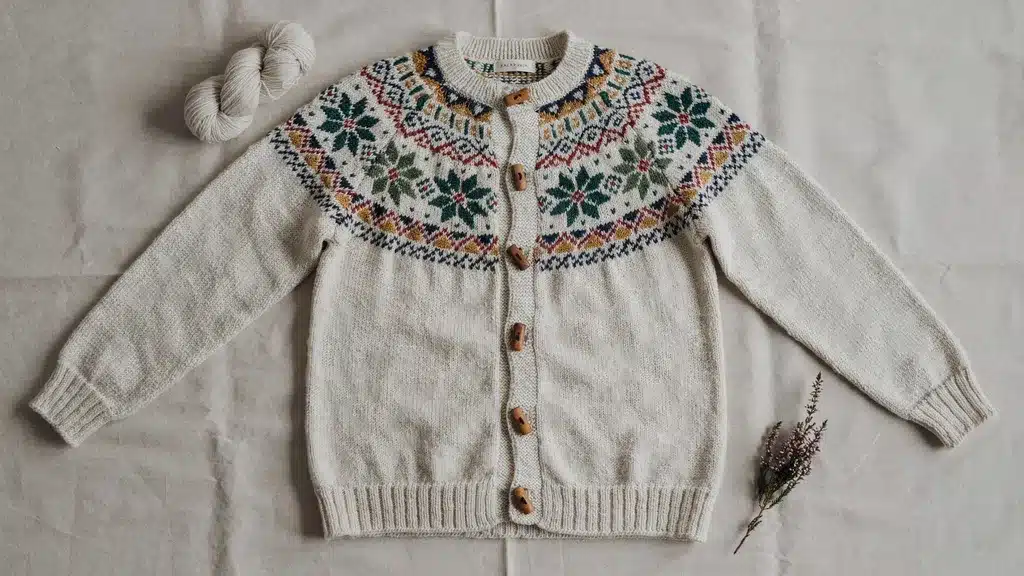
A Fair Isle cardigan features traditional stranded colorwork patterns worked in two colors per row, creating intricate, repeating motifs across the fabric.
Originally from the Shetland Islands, this style has remained popular for decades and is experiencing a strong revival in contemporary knitwear.
12. Lace Cardigan

A lace cardigan incorporates decorative openwork patterns created through yarn-over and decrease combinations that form delicate, airy designs in the fabric.
It is best suited to lightweight yarns like fingering- or lace-weight and works well as a warm-weather layer or an elegant cover-up for evenings.
Reading lace charts is an essential skill for this style, making it better suited to intermediate or experienced knitters who are comfortable working from pattern repeats.
13. Kimono Cardigan

The kimono cardigan takes inspiration from traditional Japanese garment construction, featuring wide sleeves, a loose open front, and a relaxed T-shaped silhouette.
It drapes beautifully in lightweight or drapey yarns and requires minimal shaping, making the construction simpler than many other cardigan styles.
14. Raglan Cardigan

A raglan cardigan is constructed with diagonal seam lines running from the underarm to the neckline, creating a smooth, comfortable shoulder fit without traditional set-in sleeve shaping.
It is often knitted in one piece from the top down, which reduces seaming and makes size adjustments more intuitive.
15. Wrap Cardigan

The wrap cardigan crosses over at the front and ties or pins at the waist, creating a fitted, flattering silhouette that suits a wide range of body types.
The wrap construction involves some shaping at the front panels, making it a rewarding project for intermediate knitters who want a polished, wearable finished piece.
Click here to grab your 50 Cardigan Ideas PDF
Step-by-Step Guide for Knitting Your Cardigan
Knitting a cardigan for the first time feels more manageable once you understand the basics. This section walks you through reading patterns, the stitches you will use most, and how to shape and finish your cardigan cleanly.
Reading Patterns: Key Terms and Abbreviations
Knitting patterns use shorthand to keep instructions compact. Before you cast on a single stitch, spend time reading through the full pattern and familiarising yourself with the abbreviations used.
Common ones include k for knit, p for purl, CO for cast on, BO or cast off for bind off, RS for right side, WS for wrong side, and rep for repeat.
Basic Stitches Used
Most cardigan patterns rely on three core stitches. Stockinette is the most common, created by knitting on the right side and purling on the wrong side, producing a smooth, flat fabric.
Ribbing alternates knit and purl stitches in the same row, usually in a k2p2 or k1p1 pattern, and is used for cuffs, hems, and button bands because it stretches and snaps back.
Tips for Shaping, Sizing, and Finishing
Shaping is achieved through increases and decreases placed at specific points in the pattern to create armholes, necklines, and sleeve tapers. Always check your gauge swatch before starting, as even a small difference in tension can significantly affect the finished size.
Troubleshooting and Tips: Even experienced knitters run into problems, and most issues are easier to fix than they look. Catching them early keeps your project on track.
Common Mistakes and How to Fix Them: Dropped stitches, uneven tension, and miscounted rows are the most frequent issues. Pick up dropped stitches immediately with a crochet hook before they unravel further.
Adjusting Size and Fit: Most fit issues trace back to an unchecked gauge swatch. Always measure your swatch before casting on. Mid-project adjustments are easiest made in the body length before armhole shaping begins, without disrupting the rest of the construction.
Blocking and Finishing Techniques: Blocking gives your cardigan a clean, professional finish. Wet blocking involves soaking, gently squeezing out water, and laying the piece flat to dry at the correct measurements.
Conclusion
Knit cardigan patterns bring together texture, comfort, and timeless style in one versatile piece. Whether it’s cable knit, ribbed, or a simple stockinette design, each pattern adds its own character to the garment.
The beauty of knit patterns lies in their flexibility, allowing both beginners and experienced knitters to create unique results.
With the right yarn and stitch choice, a knit cardigan becomes a wardrobe staple that feels cozy, practical, and effortlessly stylish for everyday wear.
Frequently Asked Questions
Can I Make a Cardigan Without Prior Knitting Experience?
It is possible, but not ideal as a first project. Learn basic knit and purl stitches on something smaller first, then start with a beginner-labeled pattern like a simple open-front or drop-shoulder style.
How Long Does It Take to Knit a Cardigan?
A chunky-yarn cardigan can be finished in 1 to 2 weeks. A standard worsted-weight cardigan takes most intermediate knitters four to eight weeks of regular knitting. Complex or lightweight designs can take longer.
What Are the Best Yarn Types for Cardigans?
Merino wool is the top choice for softness and stitch definition. Cotton and linen suit summer styles. Alpaca adds drape but has less stretch. For beginners, a smooth wool blend in medium weight is the easiest to work with.