A deck can be one of the most enjoyable parts of a backyard. Yet many homeowners avoid using it when the weather becomes too hot, rainy, or unpredictable.
Adding a cover can change that completely. The right covered deck ideas create a more comfortable outdoor area while helping protect furniture and outdoor décor from the elements.
Some solutions are simple and budget-friendly, while others offer long-term protection and a more finished appearance.
From quick shade solutions to fully covered structures, a well-planned deck cover can make your outdoor space more useful throughout the year.
These covered deck ideas can help turn an ordinary deck into a space that gets used far more often
Why a Covered Deck Is Worth the Investment
A covered deck does more than add shade. It changes how you use your outdoor space entirely. Here’s why it’s worth the investment.
- Extends your outdoor season: A covered deck keeps you outside through rain, harsh sun, and light snow. You gain months of usable space you’d otherwise lose.
- Protects your furniture: Sun and rain destroy outdoor furniture fast. A roof or canopy can double or triple the lifespan of your cushions, rugs, and wooden pieces.
- Adds real home value: According to the NAR Remodeling Impact Report, outdoor upgrades such as patios can recoup up to 95% of their cost at resale.
- Makes your backyard actually usable: Without shade or cover, most backyards sit empty on hot or rainy days. A covered deck turns it into a space you use daily.
- Strong ROI at resale: Quality covered decks return 50–75% of their cost when you sell. Few home upgrades offer that kind of payback.
You don’t need a big budget to get these benefits. The right cover makes all the difference.
How Much Does a Covered Deck Cost?
Before picking a style, know your budget. Covered deck costs vary widely depending on materials and complexity. Here’s a simple breakdown to guide your decision.
| Cover Type | Estimated Cost Range |
|---|---|
| Shade sails/fabric canopy | $100–$500 |
| Retractable awning | $300–$1,500 |
| DIY pergola kit | $500–$2,000 |
| Polycarbonate roof panels | $800–$2,500 |
| Full solid roof (professional) | $5,000–$15,000+ |
DIY options can save you 40–60% on labor. Before you start building, check if your project needs a permit; most covered structures do.
What Kind of Covered Deck Is Right for You?
Not every cover works for every space. Before jumping into ideas, figure out which type fits your lifestyle and budget.

Under $500: Quick Wins
These ideas prove you don’t need a big budget to transform your deck. Simple materials, easy installation, and results that actually look good.
1. Shade Sail Triangle

A shade sail is one of the simplest ways to cover a deck without spending much. Stretch a UV-resistant fabric triangle between posts, walls, or trees.
It takes under an hour to install, comes in dozens of colors, and can be taken down seasonally without any damage.
Pro tip: Always use stainless steel hardware. It resists rust and holds tension longer.
2. Outdoor Canopy Tent

A pop-up canopy tent requires no drilling, permits, or tools. A 10×10-ft option comfortably covers most small decks. It works great for weekend entertaining and folds away when not needed.
You can find solid options for $80 to $200 on Amazon or Walmart.
Pro tip: Go for a tent with reinforced corner joints. They last significantly longer outdoors.
3. Bamboo Reed Blinds

Bamboo blinds are inexpensive, easy to hang, and create a warm, filtered shade. Attach them to existing rafters or a simple wood frame overhead.
They work especially well in hot climates where you want shade without completely blocking airflow.
Pro tip: Spray with outdoor sealant once a year to slow down weathering.
4. String Lights and Outdoor Curtains

This combo does double duty. Soft shade during the day and cozy ambiance at night. Attach curtain rods to your deck posts and hang outdoor curtains to block the sun and add privacy.
IKEA outdoor curtains start under $30 per panel, making this one of the most affordable transformations on this list.
Pro tip: Use sheer white curtains. They diffuse light beautifully without making the space feel dark.
5. Wisteria or Climbing Vines on Wire

Run a simple wire grid across your deck frame and let climbing plants do the rest. It takes one to two seasons to fully fill in, but the result looks like a professional garden installation.
If you grow from cuttings, this idea costs almost nothing.
Pro tip: Wisteria grows fast. Trim it back every spring, or it will take over quickly.
$500 to $2,000: Mid-Range Magic
A little more budget opens up a lot more options. These ideas give you a properly covered structure without the cost of a full professional build.
6. DIY Pergola Kit

A DIY pergola kit is one of the most popular budget deck covers for good reason. Pre-cut kits from Home Depot, Lowe’s, or Wayfair come with everything you need.
Most can be attached to your deck in a single weekend with basic tools. No contractor needed.
Pro tip: Anchor the posts into the deck framing or footings, not just the deck boards. A pergola catches wind, and surface-mounted posts work loose over a season or two.
7. Corrugated Plastic Roofing on a Simple Wood Frame

This is one of the most practical low-cost covers you can build. Lay corrugated plastic panels over a basic 2×4 beam frame to create a lightweight, rainproof structure that still lets natural light through.
Panels typically cost $1 to $3 per square foot at any hardware store.
Pro tip: Use clear or light-tinted panels to keep the space bright even on cloudy days.
8. Polycarbonate Roof Panels

Polycarbonate panels look similar to corrugated plastic but are stronger, clearer, and UV-resistant. They hold up much better over time and work especially well on elevated decks that take the full force of the weather.
Worth the small extra cost over basic plastic.
Pro tip: Choose twin-wall polycarbonate. It insulates better and reduces heat buildup underneath.
9. Lattice Patio Cover: Light, Airy, and Stylish

A lattice cover gives you shade without making your deck feel closed in. Install a wooden or vinyl lattice panel overhead on a simple post frame.
It filters sunlight beautifully, and you can weave string lights through it for a warm evening setup.
Pro tip: Vinyl lattice costs more upfront but never rots, warps, or needs repainting.
10. Repurposed Wood Beam Pergola

Reclaimed wood from salvage yards, Facebook Marketplace, or Craigslist can be cut and stained into a custom pergola for a fraction of retail cost.
Barn beams in particular give a farmhouse look that is hard to replicate with new lumber. Budget builds here can come in under $400.
Pro tip: Sand and seal reclaimed wood before use. It extends the life significantly.
11. Aluminum Patio Cover Kit

Pre-fabricated aluminum kits are weather-resistant, lightweight, and require almost no upkeep. No painting, no staining, no rotting.
They are available at Costco, Lowe’s, and specialty outdoor stores. A solid choice if you want something that lasts without ongoing maintenance.
Pro tip: Look for powder-coated aluminum. It resists scratches and fading far better than plain aluminum.
12. Attached Lean-To Roof: Extends Your Home’s Roofline

A lean-to roof is built as a simple sloped extension from your house wall using basic lumber and metal roofing sheets. It blends in with your existing home and provides solid protection against rain and sun.
Best suited for decks that sit directly against the back of the house.
Pro tip: Match the roofing material to your existing roof. It looks intentional rather than added on.
13. Retractable Awning

A retractable awning gives you full control. Extend it for shade and pull it back to enjoy the open sky.
Manual crank options start around $300, and motorized versions from $700. One of the most flexible covered deck solutions on this list.
Pro tip: Choose a fabric with a UV 50+ rating. It blocks the most heat and protects outdoor furniture too.
14. Sail Shade Cluster
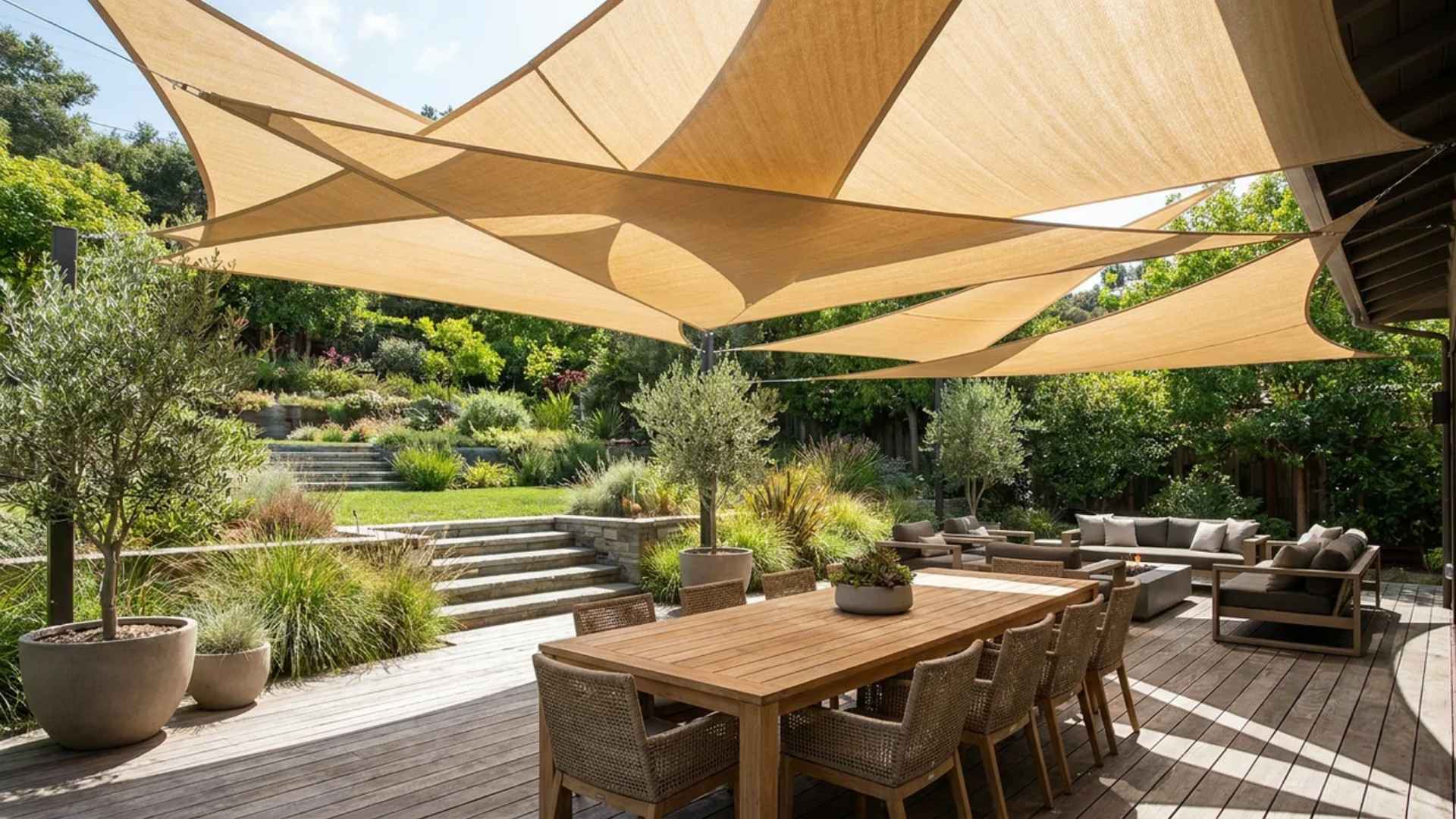
One shade sail covers part of your deck. Two or three overlapping triangles cover all of it. Stagger the heights slightly for a layered, architectural look that costs between $150 and $400 total.
Easy to rearrange each season based on where the sun hits.
Pro tip: Stagger attachment points at different heights. It creates depth and improves overall coverage.
$2,000 to $5,000: Elevated on a Budget
This range gets you a proper structure that looks and feels like a real outdoor room. Still budget-conscious, but noticeably more polished than the options above.
15. Screened-In Porch Conversion: Bug-Free Outdoor Living

Take an existing pergola or covered frame and add screen panels around the sides. It completely keeps insects out, making it ideal for evening dining and relaxing in warmer months.
The structure is already there. Screens are just the finishing touch.
Pro tip: Before starting, check your local permit requirements. Raleigh NC’s building department is a good example of what to expect.
16. Louvered Pergola

A louvered pergola has adjustable aluminum slats that you can open or close depending on the weather. Full sun, partial shade, or rain protection.
All from the same structure. DIY kits range from $2,000 to $4,000 and are worth every dollar if you live in an area with unpredictable weather.
Pro tip: Choose a manual louvered system over motorized if budget is tight. It works just as well at half the cost.
17. Fiberglass Pergola

Fiberglass does not rot, warp, crack, or fade the way wood does. It looks just as good but requires almost no maintenance over time.
The upfront cost is higher than wood, but you save on repairs and repainting for years. A smart long-term pick for humid or coastal climates.
Pro tip: Fiberglass pergola kits come pre-painted. Stick to neutral colors so they age well outdoors.
18. Covered Deck with a Metal Roof

Corrugated metal roofing laid over a solid wood or steel frame creates a durable, weather-proof cover with serious style. It handles heavy rain especially well and develops a natural patina over time.
Pair it with Edison bulbs and raw wood furniture for a rustic industrial look that feels intentional.
Pro tip: Add a slight roof pitch of at least 5 degrees. It prevents water from pooling on the panels.
19. Thatch Roof Deck: Tropical Retreat at Home

Synthetic thatch panels give you the resort look without the maintenance issues of real thatch. They are affordable, lightweight, and surprisingly durable.
Works best in warm and dry climates or as a cover over a hot tub area where you want that getaway feel at home.
Pro tip: Use synthetic thatch, not real. It resists mold, pests, and weather far better.
20. Pergola and Outdoor Curtains and Ceiling Fan Combo

A basic pergola becomes a full outdoor living room when you layer in curtains, a ceiling fan, and lights. The curtains add privacy and shade.
The fan keeps air moving on hot days. The lights make it usable at night. Outdoor ceiling fans start at $80, keeping the total cost of the transformation well under $1,500.
Pro tip: Install a weatherproof outdoor-rated ceiling fan. Standard indoor fans corrode quickly outside.
Bonus Ideas: Style on the Cheap
These last three ideas are for the creative ones. Low-cost, high-impact, and fully doable on a weekend.
21. DIY Living Roof: Green Canopy with Shade Cloth

Install a simple shade cloth frame over your deck and add hanging planters around the edges. Over time, it creates a lush, garden-ceiling effect that looks far more expensive than it is.
Shade cloth costs very little, and the plants do most of the decorative work naturally.
Pro tip: Use lightweight plastic planters overhead, not ceramic. Too much weight stresses the frame.
22. Solar-Powered LED Canopy Lighting and Shade Structure

Combine a basic shade sail or canopy frame with solar-powered string lights overhead. No wiring, no electricity cost, and the result looks stunning after dark.
The entire setup, including the shade structure and lights, can be done for under $200.
Pro tip: Choose warm white solar lights over cool white. They create a much cozier outdoor atmosphere.
23. Repurposed Pallet Wood Pergola

Pallets are free or nearly free from local businesses, warehouses, and Facebook Marketplace. Sand them down, stain them, and build your own pergola frame over a weekend.
The result looks completely custom. It does take some basic carpentry skills, but nothing that a few YouTube tutorials cannot prepare you for.
Pro tip: Always check pallet markings before using them. Look for HT stamped on the wood.
Which Covered Deck Idea Is Best Suited for You?
The right covered deck depends on your budget, climate, and how you use the space. Some covers work better for quick shade, while others suit long-term outdoor living.
- For tight budgets: Shade sails, canopy tents, and outdoor curtains give quick coverage without major tools, permits, or high material costs.
- For daily use: A pergola with polycarbonate panels or an aluminum cover gives better protection from sun, rain, and changing weather.
- For long-term value: Louvered pergolas, metal roofs, and screened deck conversions cost more but feel more permanent and practical.
For most homeowners, a DIY pergola with lightweight roof panels is the best middle-ground choice. It looks finished, protects the deck, and keeps the cost reasonable.
Conclusion
A covered deck can make your outdoor space more comfortable, practical, and enjoyable throughout the year.
From affordable shade sails and canopy tents to pergolas, metal roofs, and screened-in structures, there is an option for almost every budget and backyard.
The key is choosing a cover that matches your climate, maintenance preferences, and how you plan to use the space. Even a simple upgrade can provide better protection, increase usability, and add value to your home over time.
Which covered deck idea best fits your backyard? Save this page for future inspiration, and share it with someone planning their next outdoor project.
Frequently Asked Questions
Can I Add a Deck Cover to an Existing Deck?
Yes, most existing decks can support a cover, though some may require additional posts, footings, or structural reinforcement.
Which Deck Cover Requires the Least Maintenance?
Powder-coated aluminum and fiberglass covers require minimal upkeep because they resist moisture, insects, fading, and weather damage.
Do Covered Decks Help Reduce Indoor Cooling Costs?
A covered deck can block direct sunlight from nearby windows and doors, helping reduce heat gain during warmer months.