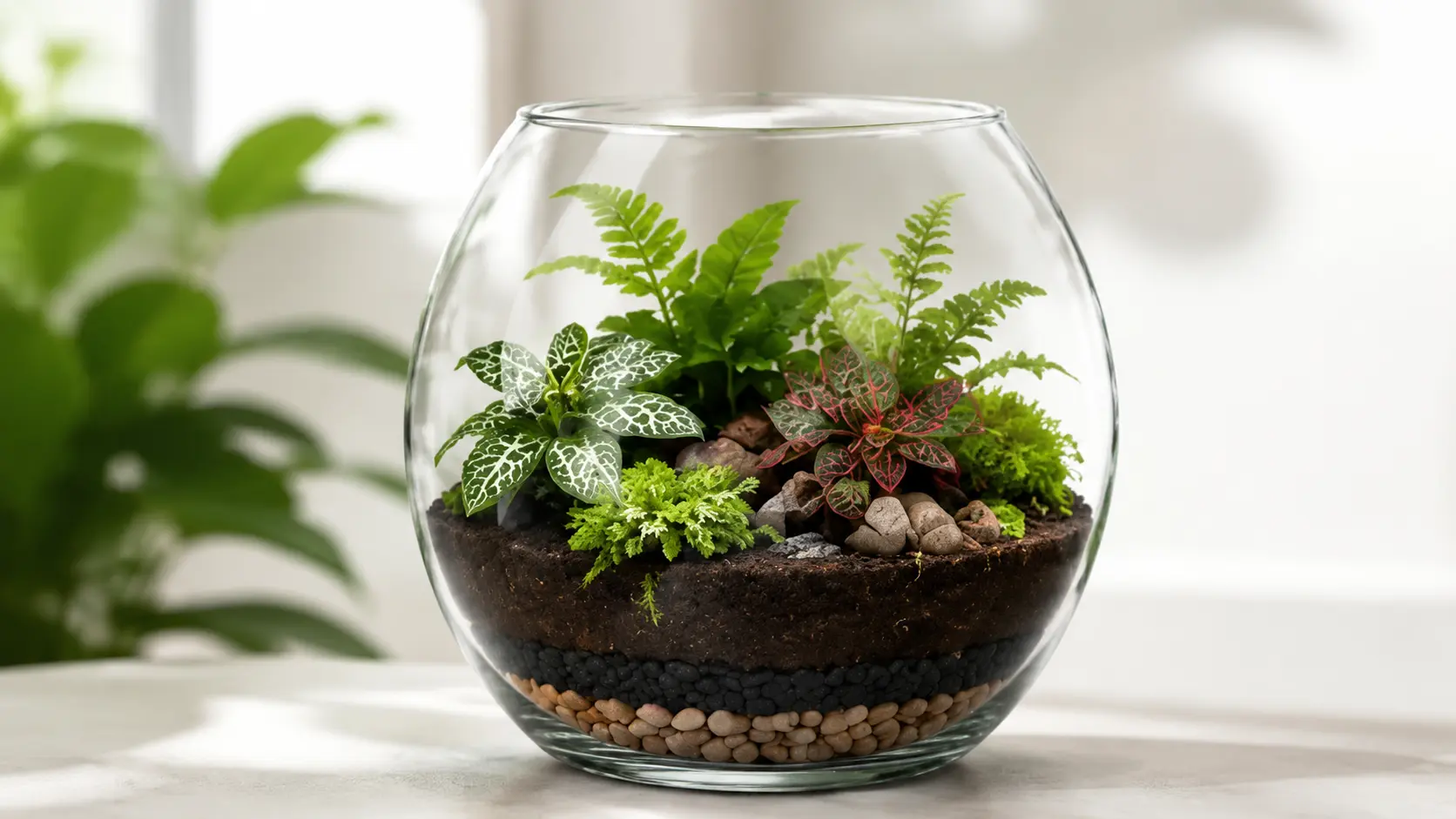
A terrarium is a miniature garden grown inside a glass container. Depending on the plants you choose, it can be a low-maintenance way to grow everything from tropical ferns and mosses to succulents and cacti indoors.
The best part is that you do not need much space or gardening experience to get started.
With the right container, a few basic materials, and the proper plants, you can create a terrarium that stays healthy and attractive for years.
This step-by-step process covers everything from choosing a container and building the layers to planting, decorating, and caring for your terrarium after it is finished.
What is a Terrarium and How Does a Terrarium Work?
A terrarium is a glass container filled with soil, plants, and decorative elements. It creates a miniature indoor garden that can sit on a shelf, desk, or windowsill.
Plants inside a terrarium absorb water through their roots. That moisture evaporates into the air and then condenses on the glass walls.
It drips back down into the soil, creating a small water cycle. This is why terrariums need very little watering compared to regular houseplants.
This natural recycling process is also what makes a self-sustaining terrarium possible under the right conditions.
Open vs Closed Terrariums
An open terrarium has no lid. It allows airflow and works best for plants that prefer dry conditions, like succulents and cacti.
A closed terrarium has a lid or cork stopper. It traps humidity inside and works well for moisture-loving plants like ferns and moss.
Choosing between an open and closed terrarium depends mainly on the types of plants you want to grow and the level of maintenance you prefer.
Choosing the Best Container for Your Terrarium
The container you choose affects everything from plant health to maintenance. While almost any clear glass container can work, the best option depends on whether you’re building an open or closed terrarium.
| Container Type | Best For | Pros | Cons |
|---|---|---|---|
| Mason Jar | Closed terrariums | Affordable, easy to find | Limited planting space |
| Glass Bowl | Open terrariums | Easy access and airflow | Moisture escapes quickly |
| Geometric Glass Container | Open or closed | Decorative and modern | Can be expensive |
| Fish Tank | Large terrariums | Plenty of planting room | Takes up more space |
| Bottle Terrarium | Closed terrariums | Creates a self-contained ecosystem | Difficult to plant and maintain |
Tips for Choosing a Container:
- Use clear glass for maximum light.
- Choose a wide opening if you’re a beginner.
- Match the container size to the mature size of your plants.
- Make sure closed terrariums have a lid that fits securely.
Materials You Need to Make a Terrarium
|
How to Make a Terrarium Step by Step
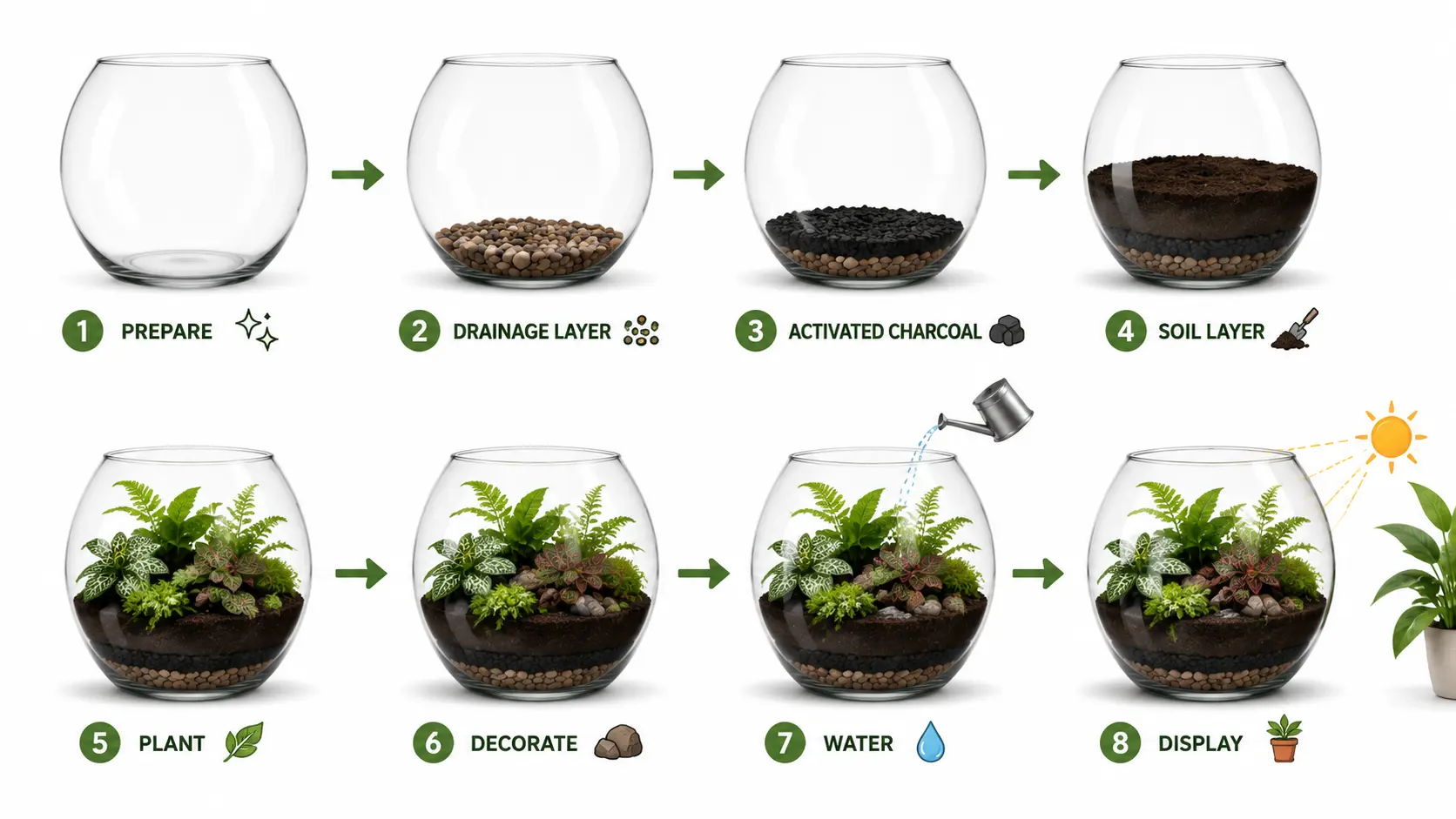
Once you have gathered your materials, follow these simple steps to build a healthy and attractive terrarium.
- Step 1: Clean the Container: Wash the glass container with warm water and mild soap, then let it dry completely. This helps prevent mold and bacteria.
- Step 2: Add the Drainage Layer: Add 1–2 inches of pebbles or gravel to the bottom. This prevents excess water from collecting around the roots.
- Step 3: Add Activated Charcoal: Spread a thin layer of activated charcoal over the gravel. It helps keep the terrarium fresh and odor-free.
- Step 4: Add Soil: Add 2–3 inches of potting mix and level it gently. Avoid packing the soil too tightly.
- Step 5: Arrange and Plant Your Plants: Remove plants from their pots, loosen the roots, and plant them in the soil. Place larger plants first, then fill in with smaller ones.
- Step 6: Add Moss and Decorations: Cover exposed soil with moss or pebbles and add decorative elements if desired. This gives the terrarium a finished look.
- Step 7: Water the Terrarium: Lightly mist a closed terrarium or water an open terrarium sparingly. The soil should be moist, not soggy.
- Step 8: Place It in the Right Location: Keep your terrarium in bright, indirect light. Avoid direct sunlight, which can overheat the plants.
How to Make a Closed Terrarium
Closed terrariums work best with tropical plants that thrive in humid conditions, such as ferns, moss, nerve plants, and miniature peperomia. These plants naturally grow in moisture-rich environments and adapt well to the enclosed ecosystem.
After sealing the terrarium, monitor the moisture levels by checking the glass walls. A light layer of condensation is normal and indicates a healthy water cycle.
However, if the glass remains heavily fogged for several days, remove the lid for a few hours to release excess moisture.
If the soil appears dry and there is little to no condensation, add a small amount of water to restore the balance.
How to Make an Open Terrarium
Open terrariums are ideal for plants that prefer dry conditions and plenty of airflow. Great choices include echeveria, small varieties of aloe vera, sedum, and haworthia, as they stay compact, tolerate low humidity, and are easy for beginners to care for.
Because open terrariums lose moisture more quickly than closed ones, they require more frequent watering.
In most cases, watering once every one to two weeks is sufficient, but always check the soil first. If it still feels damp, wait a few more days before watering to avoid overwatering and root rot.
Terrarium Plant Compatibility Guide
Choosing plants with similar moisture and light requirements is one of the easiest ways to build a healthy terrarium.
If you’re unsure which species to use, exploring the best terrarium plants for your setup can help you avoid common compatibility issues.
Matching plants with similar growing conditions not only makes maintenance easier but also improves the long-term health of your terrarium.
| Plant | Closed Terrarium | Open Terrarium | Beginner Friendly |
|---|---|---|---|
| Fittonia | ✓ | ✗ | ✓ |
| Moss | ✓ | ✗ | ✓ |
| Mini Ferns | ✓ | ✗ | ✓ |
| Peperomia | ✓ | ✓ | ✓ |
| Air Plants | ✗ | ✓ | ✓ |
| Haworthia | ✗ | ✓ | ✓ |
| Echeveria | ✗ | ✓ | ✓ |
| Cacti | ✗ | ✓ | ✓ |
| Pothos | ✓* | ✗ | ✓ |
| Mini Orchids | ✓ | ✗ | ✗ |
Common Terrarium Mistakes to Avoid
Many terrarium problems can be traced back to a few common mistakes. Too much water causes root rot, mold, and plant death. Poor overwatering and drainage habits are the top reasons most beginner terrariums fail.
Another mistake is combining plants with different care requirements, such as succulents and ferns, which need completely different moisture levels to thrive.
Placing a terrarium in direct sunlight is also risky because the glass can trap heat, quickly overheating the plants.
Finally, skipping the drainage layer can cause water to collect in the soil, creating waterlogged conditions that damage roots. Avoiding these mistakes will help keep your terrarium healthy and long-lasting.
How to Care for a Terrarium
Once your terrarium is set up, a little ongoing care is all it takes to keep the plants healthy and the container looking its best.
Watering Schedule: Closed terrariums usually need water every 2–4 weeks, while open terrariums need it every 1–2 weeks. Always check the soil before watering.
Pruning and Cleaning: Trim dead or overgrown growth as needed and remove any plant debris. Wipe the glass occasionally to keep the terrarium looking clear and neat.
Preventing Mold and Condensation Issues: Light condensation is normal, but excess moisture can lead to mold growth. Reduce watering and improve airflow if you notice mold or constantly foggy glass. Controlling indoor moisture is the most reliable way to prevent mold from spreading.
Terrarium Ideas for Different Spaces
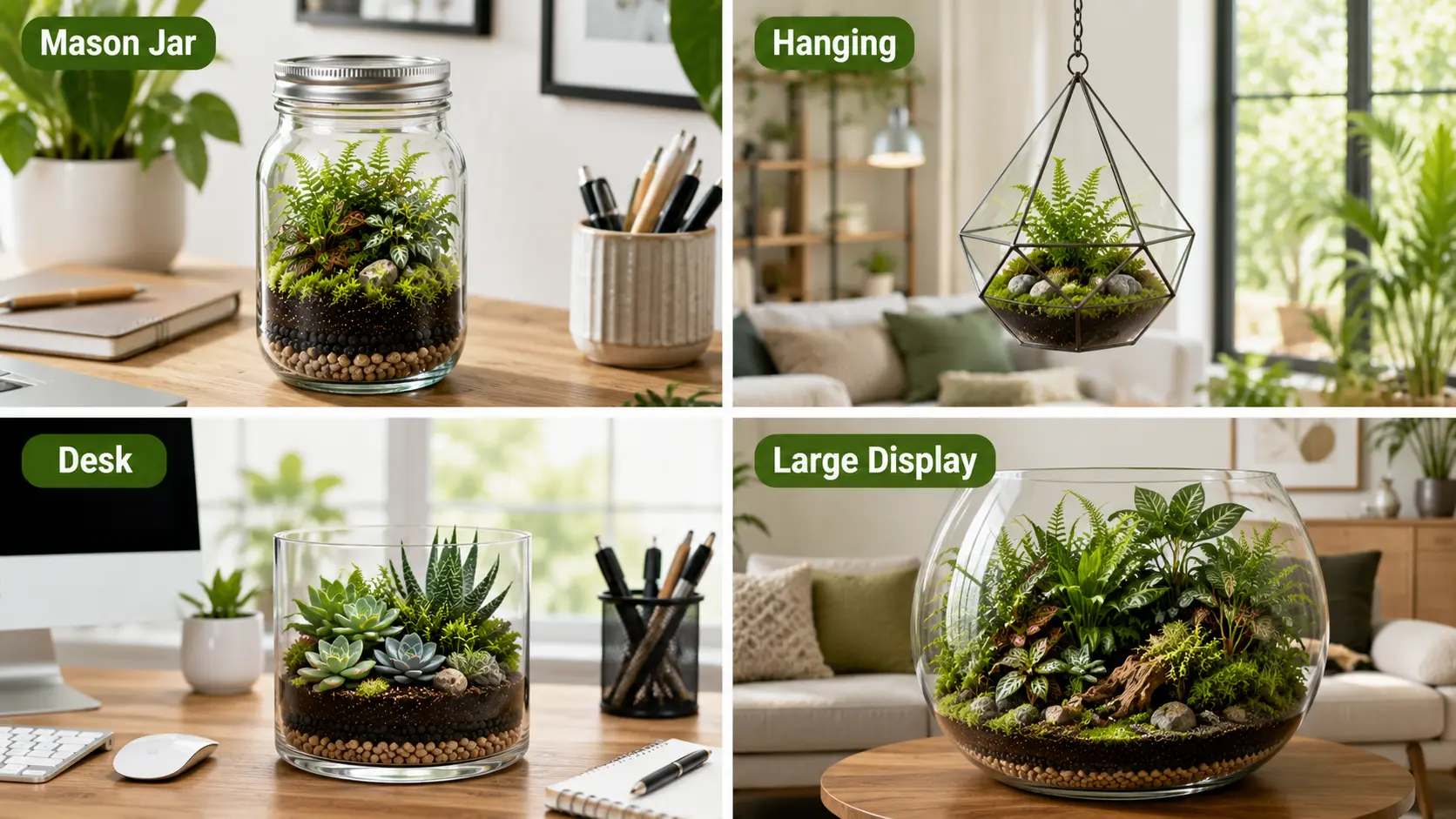
The great thing about terrariums is that they can be customized to fit almost any room, style, or available space.
- Mason Jar Terrarium: A wide-mouth mason jar works perfectly for a small desk terrarium. Add moss, one or two small ferns, and a few pebbles. It is simple, affordable, and looks great in any room.
- Hanging Terrarium: Geometric glass globe terrariums can hang from the ceiling or a wall hook. They work best with air plants or small succulents that do not need soil. These make a great visual statement in living rooms.
- Desk Terrarium: A small open terrarium with cacti or succulents is ideal for a desk. It takes up very little space and needs almost no maintenance during the workweek.
- Large Statement Terrarium: A large fish tank or oversized glass bowl can hold a whole miniature landscape. Add rocks, multiple plant varieties, moss, and decorative items. This type works well as a centerpiece in a living room or dining area.
No matter the size or style you choose, a well-designed terrarium can bring a touch of nature to any indoor space.
Conclusion
A terrarium starts as a few layers of soil, stone, and plants, but over time it becomes a living miniature landscape of its own.
Whether you place it on a desk, shelf, or coffee table, you’ll get to watch it change and grow in ways that make every terrarium unique.
Start with a simple design, learn what works, and make adjustments as you go. Before long, you’ll have a thriving glass garden that looks far more complicated than it actually was to create.
Frequently Asked Questions
Can a Terrarium Survive without Sunlight?
Terrariums still need light because the plants inside require it for photosynthesis. Bright, indirect light is usually the best option for most terrarium setups.
How Long Do Terrariums Last?
A well-maintained terrarium can last for many years, and some closed terrariums have survived for decades. Plant selection, proper moisture levels, and regular maintenance play the biggest role in longevity.
Do Terrariums Attract Bugs?
A properly maintained terrarium rarely attracts pests. Problems usually occur when plants are unhealthy or excess moisture creates favorable conditions for insects.
Can I Use Regular Garden Soil in A Terrarium?
Regular garden soil is often too dense and may contain pests, weed seeds, or harmful microorganisms. A quality potting mix designed for indoor plants is a much better choice for terrariums.