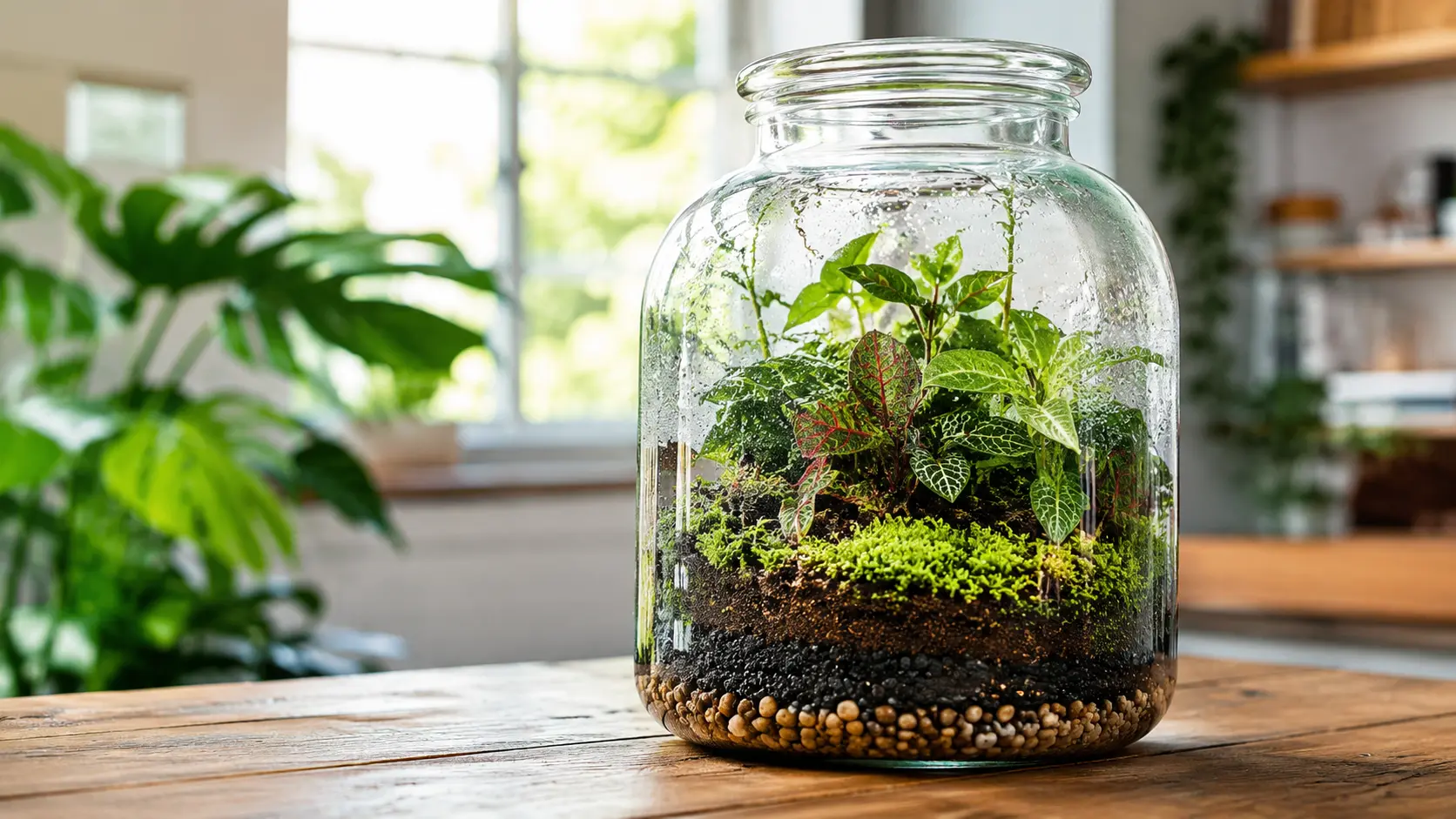
A self-sustaining terrarium is a tiny ecosystem that takes care of itself inside a sealed glass container.
The plants, soil, and water work together in a cycle that keeps everything alive with almost no effort from you. It looks beautiful, lasts for years, and needs very little attention once it is set up correctly.
If you want a low-maintenance indoor plant project that actually works, building a closed terrarium is one of the best places to start.
This step-by-step guide covers everything you need to know to build one from scratch.
What is a Self-Sustaining Terrarium?
A self-sustaining terrarium is a sealed glass container that holds a small ecosystem. The plants, soil, microbes, and moisture inside it work in a cycle that keeps everything alive without needing daily attention.
Once sealed, it runs on its own through a natural water and nutrient cycle, in which nothing really “leaves” or “enters” the system.
| Information | Details |
|---|---|
| Project Type | DIY Indoor Gardening |
| Difficulty Level | Beginner |
| Setup Time | 20–40 Minutes |
| Maintenance Time | 5–10 Minutes Per Month |
| Cost Range | $15–$50 (depending on container and plants) |
| Lifespan | Several months to many years |
| Best For | Beginners, plant lovers, and educational projects |
| Light Requirement | Bright indirect light |
How a Self-Sustaining Terrarium Works
Inside a sealed terrarium, water evaporates from the soil, rises as vapor, hits the glass, and drips back down.
This is the same water cycle that happens in nature. The plants absorb carbon dioxide and release oxygen through photosynthesis.
Microbes in the soil break down dead leaves and recycle nutrients back into the ground. Everything supports everything else.
Self-Sustaining Terrarium Material Checklist
Before you start building, it’s important to gather the right materials so the ecosystem can actually sustain itself properly.
| Material | Purpose |
|---|---|
| Clear glass container with lid | Creates the sealed ecosystem |
| Pebbles or LECA | Drainage layer |
| Activated charcoal | Controls odors and bacteria |
| Terrarium soil mix | Supports plant growth |
| Moss (live or dried) | Retains moisture and improves appearance |
| Small terrarium plants | Main living components |
| Decorative rocks or bark (optional) | Natural aesthetics |
| Spray bottle | Controlled watering |
| Long tweezers | Easier plant placement |
| Small scissors | Future pruning |
Pro Tip: Having all materials ready before assembly prevents disturbing the terrarium structure midway through the build.
Essential Terrarium Layers
Every self-sustaining terrarium needs these layers to maintain proper drainage, airflow, and nutrient balance inside the closed system.
- Drainage layer: Use small pebbles or LECA (lightweight expanded clay aggregate) at the bottom. This keeps water away from the roots.
- Activated charcoal: Add a thin layer on top of the drainage. It filters bacteria and prevents bad odors.
- Soil substrate: Use a mix made for tropical or moisture-loving plants. Regular potting soil works but can get too dense. A mix of potting soil, coco coir, and perlite is a good option.
- Moss and hardscape: Live or dried moss goes on top of the soil. Rocks, bark, or small pieces of wood add texture and make it look more natural.
How to Make a Self-Sustaining Terrarium (Step-by-Step)
Anyone who has tried to make a terrarium before will recognize most of these steps, with a few adjustments for a closed environment.
Step 1: Clean the Container
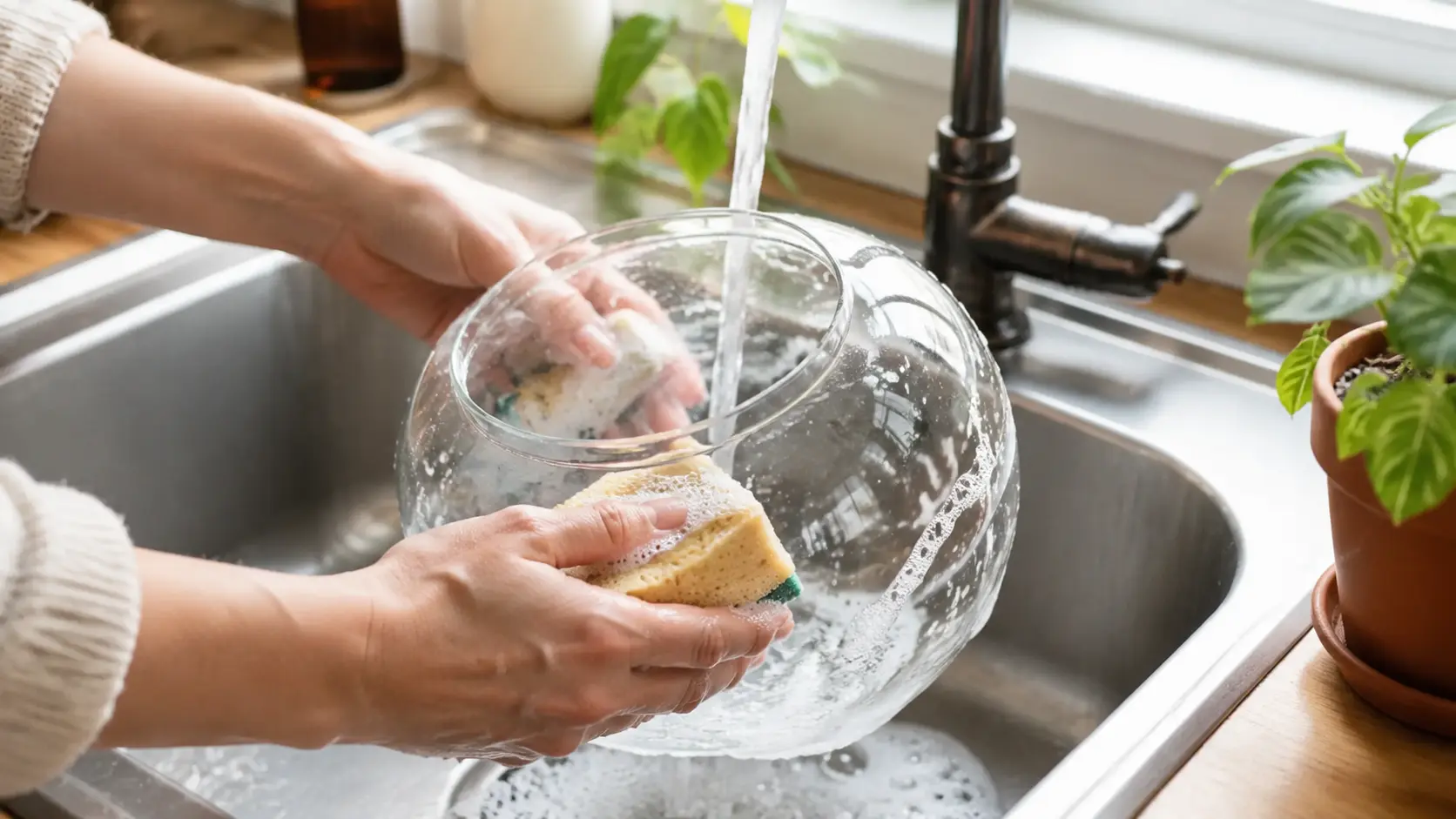
Begin by washing your glass container thoroughly with warm water and mild soap. Rinse it thoroughly to remove any residue, then allow it to dry completely before adding any materials.
Starting with a clean container helps prevent mold, bacteria, and other contaminants from affecting the health of your terrarium later on.
Step 2: Add Drainage + Charcoal
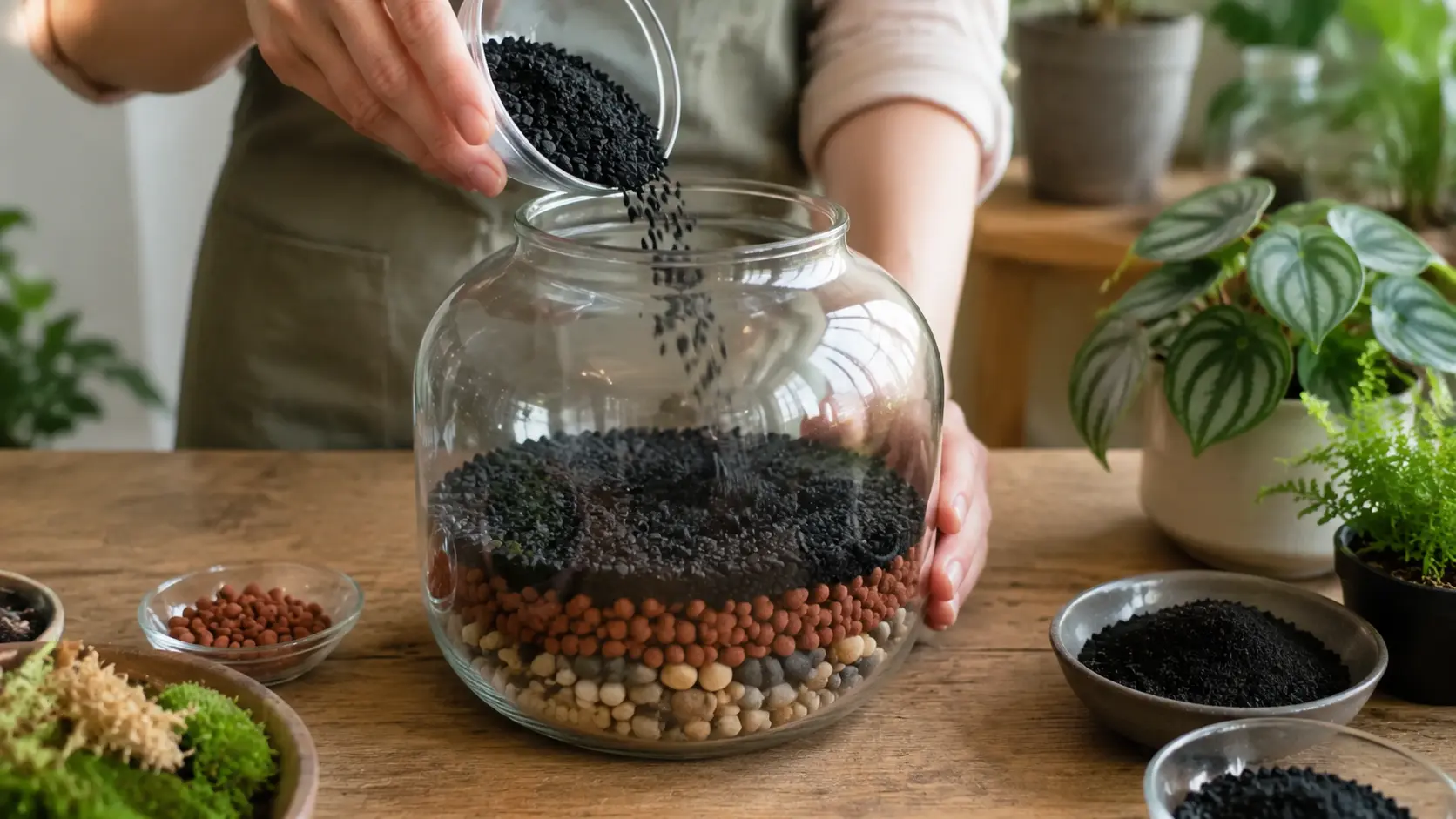
Place a 1–2 inch layer of pebbles or LECA at the bottom of the container to create a drainage reservoir for excess moisture.
Then add a thin layer of activated charcoal over the drainage material. Together, these layers help prevent water from accumulating around plant roots, keep the enclosed environment fresh, and reduce the risk of odors or harmful bacterial growth.
Step 3: Add the Soil Layer
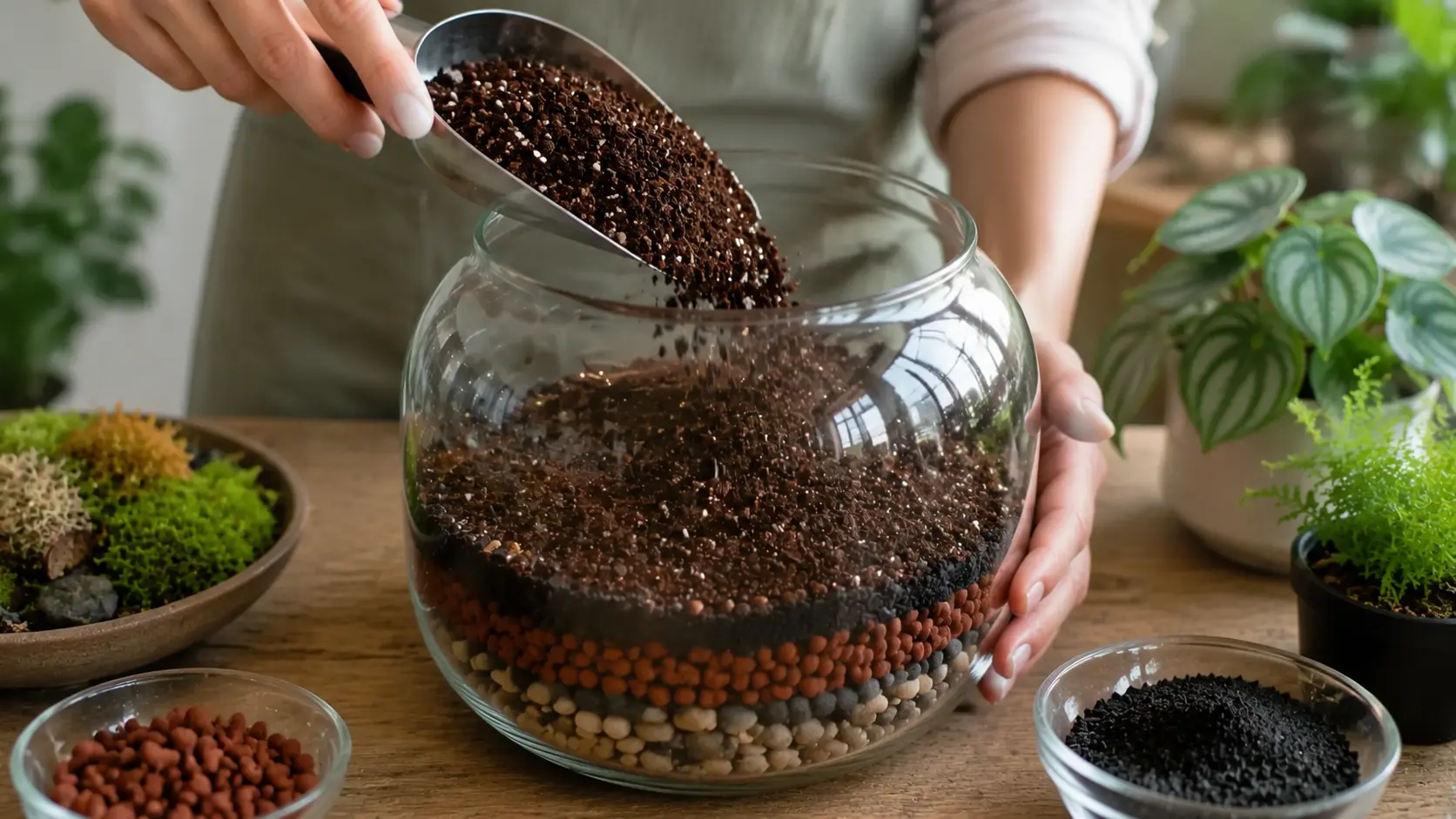
Carefully add 2–3 inches of terrarium soil mix on top of the charcoal layer, spreading it evenly across the container.
The soil should be deep enough to support root growth while remaining loose and well-aerated. Avoid pressing the soil down too firmly, as compacted soil can restrict root development and reduce airflow.
Step 4: Arrange Plants and Moss
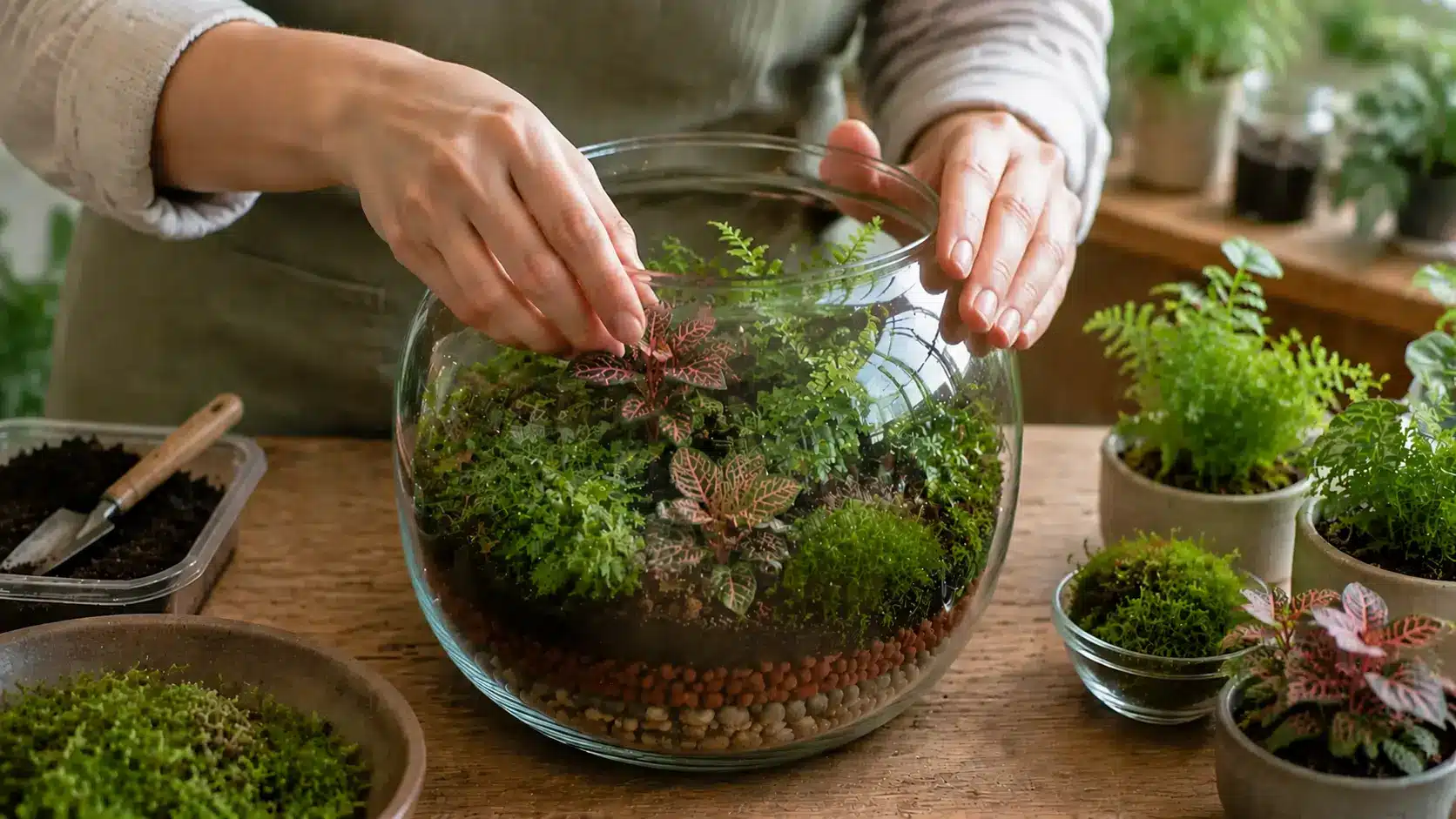
Start by positioning your largest plant, then arrange smaller plants around it to create a balanced, natural-looking layout.
Leave enough space between plants so they have room to grow without becoming overcrowded. Once the plants are in place, add moss around the soil surface to help retain moisture and give the terrarium a lush, forest-like appearance.
Step 5: Lightly Water the Setup
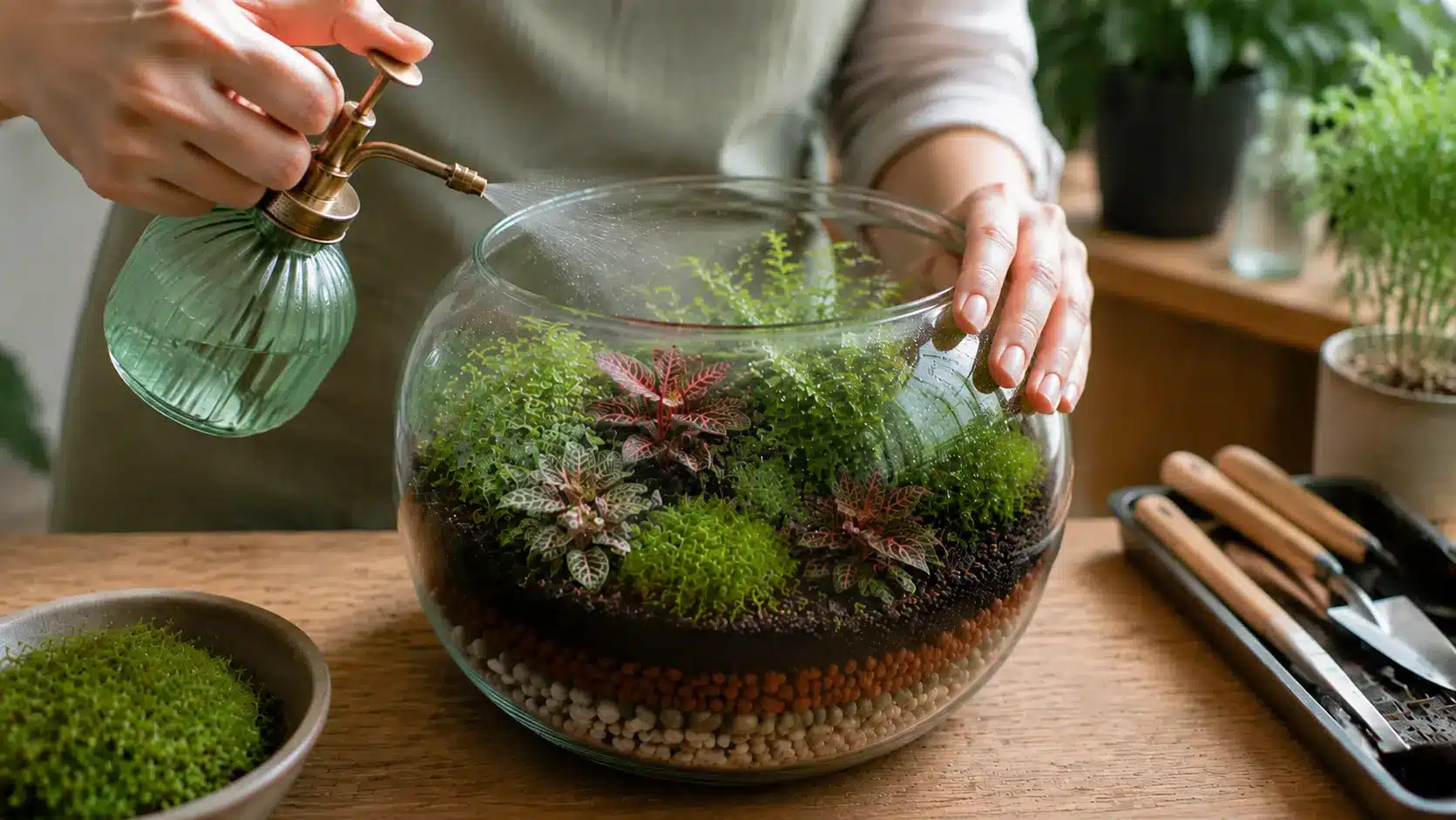
Using a spray bottle, lightly mist the soil, moss, and plants until they are evenly damp. The goal is to introduce enough moisture to start the terrarium’s water cycle without soaking the soil.
Overwatering at this stage can lead to excessive condensation, mold growth, and root problems, so it’s best to start with less water than you think you need.
Step 6: Seal and Place in Proper Light
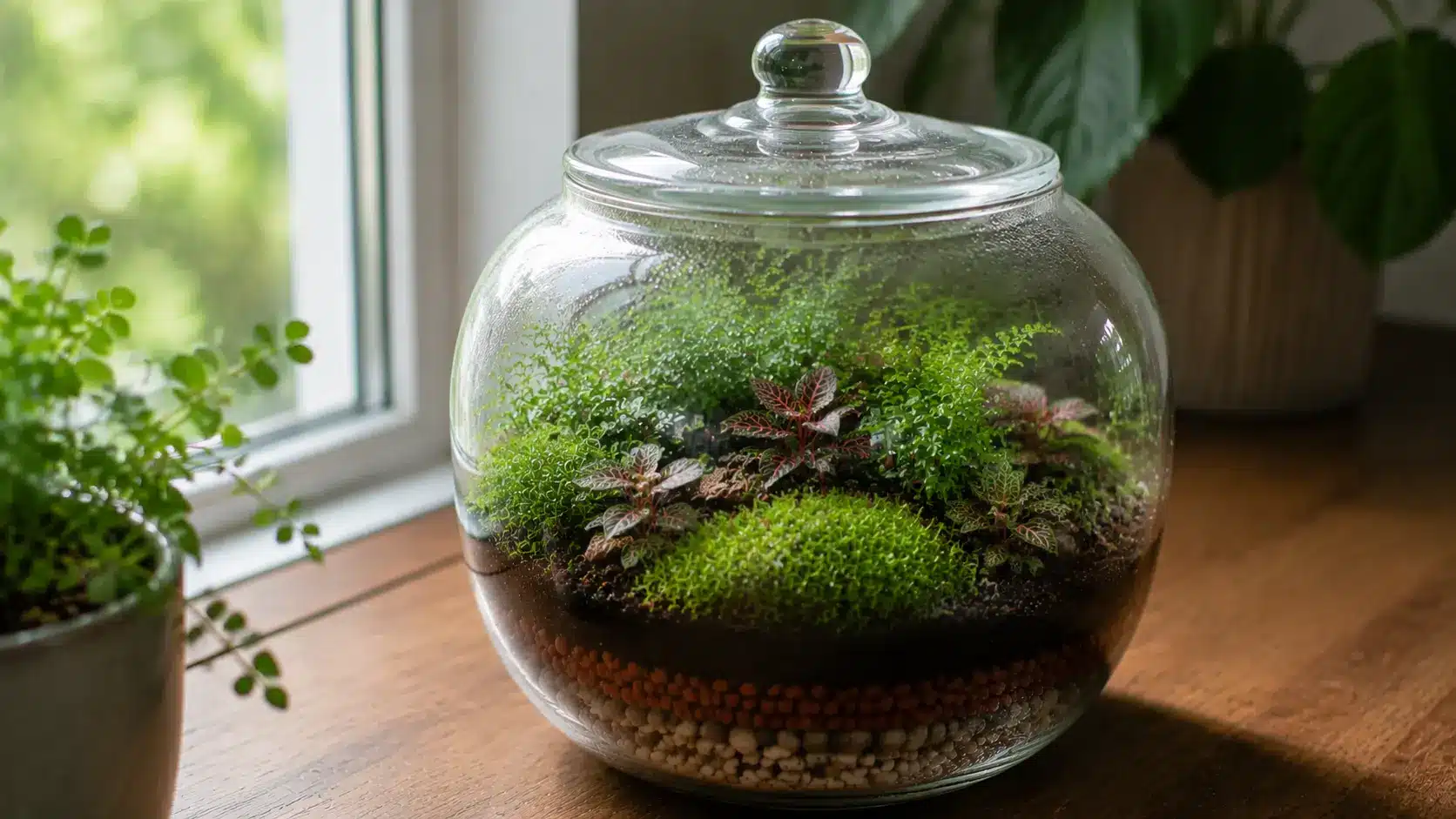
Close the container securely and place it in a location that receives bright, indirect light throughout the day.
Avoid direct sunlight, as the glass can trap heat and quickly raise the temperature inside the terrarium, potentially damaging the plants.
Over the next several days, monitor the condensation levels and allow the ecosystem to naturally stabilize as it establishes its own moisture cycle.
A properly built terrarium stabilizes within days and then runs mostly on its own with minimal intervention.
Best Plants for a Self-Sustaining Terrarium
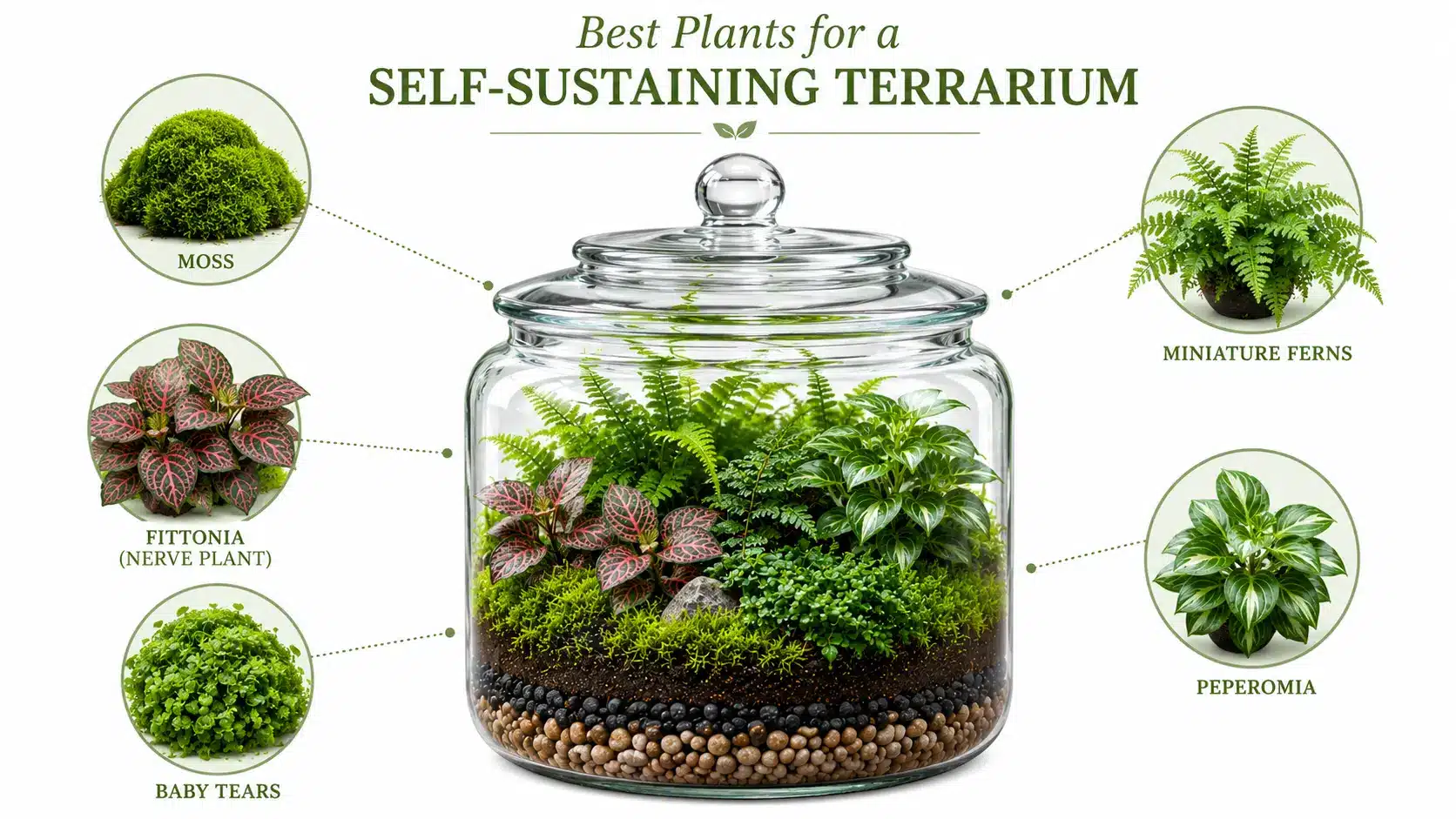
Choosing the right terrarium plants is what actually decides whether your terrarium thrives or turns into a rotting mess
- Mosses: Mosses are the most common plants in closed terrariums. It loves humidity, grows slowly, and covers the soil beautifully. Sheet moss and cushion moss are both great choices.
- Fittonia (Nerve Plant): Fittonia has colorful patterned leaves and stays small. It thrives in high humidity and low light, which makes it perfect for sealed terrariums.
- Mini Ferns: Small fern varieties like button ferns or maidenhair ferns do well in the moist environment of a closed terrarium. Avoid large ferns because they grow too fast.
- Peperomia Varieties: Peperomia plants are small, low-maintenance, and do well in humid enclosed spaces. They come in many leaf shapes and colors, adding variety to your terrarium.
- Baby Tears: Baby tears is a creeping plant that spreads along the soil surface. It fills gaps nicely and adds a lush, dense look to the terrarium floor.
Plants to Avoid
Stay away from fast-growing plants like pothos or vines, as they will quickly outgrow the space. They also tend to demand more airflow and pruning than a sealed ecosystem can realistically support.
Large tropical plants need too much room. Most succulents and cacti need dry conditions and will rot in a sealed, humid environment.
Benefits of Building a Self-Sustaining Terrarium
Building a self-sustaining terrarium comes with several real advantages. It needs very little maintenance once it is set up correctly.
It adds natural indoor-plant humidity to dry indoor spaces, benefiting both the plants and the surrounding air.
It is also a great educational project for kids or anyone curious about how ecosystems work. When built right, a sealed terrarium can last for months or even years without much effort.
On top of that, it helps you understand how natural cycles like water, air, and nutrients keep a tiny ecosystem alive without constant human intervention.
Understanding the Water Cycle Inside a Terrarium
A self-sustaining terrarium works through a closed water cycle. Water evaporates from the soil due to heat, rises as vapor, and then condenses on the cooler glass walls.
These droplets fall back into the soil, naturally recycling moisture inside the container.
If you see heavy condensation covering the entire glass, it means there is too much moisture, and the lid should be opened briefly to let it evaporate.
A healthy terrarium usually has light condensation, often visible in the morning.
Optional Additions for a More Natural Ecosystem
If you want your terrarium to behave more like a real ecosystem instead of just a plant display, these additions can help.
Springtails: Springtails are tiny insects that feed on mold and decaying matter. Their springtail decomposer role in breaking down organic material keeps the terrarium clean and balanced.
Isopods: Isopods are small crustaceans, sometimes called pill bugs. They break down dead plant material and add to the nutrient cycle inside the terrarium.
Leaf Litter: Adding a few dried leaves to the soil surface gives springtails and isopods something to feed on. It also makes the terrarium look more like a real forest floor.
Common Self-Sustaining Terrarium Mistakes to Avoid
Even a well-planned terrarium can fail if a few basic rules are ignored.
- Overwatering: Too much water causes root rot and mold. Add very little water at the start and let the ecosystem balance itself.
- Too Much Direct Sunlight: Direct sunlight turns a sealed terrarium into an oven. Bright indirect light is all you need.
- Choosing Fast-Growing Plants: Plants that grow quickly will take over the space and throw off the balance of the ecosystem.
- Skipping the Drainage Layer: Without a drainage layer, water pools at the bottom, suffocating the roots. Never skip this step.
- Overcrowding the Terrarium: Too many plants compete for nutrients and space. Keep it simple, especially when starting out.
A stable terrarium depends less on effort and more on avoiding these basic setup mistakes from the beginning.
How to Maintain a Self-Sustaining Terrarium
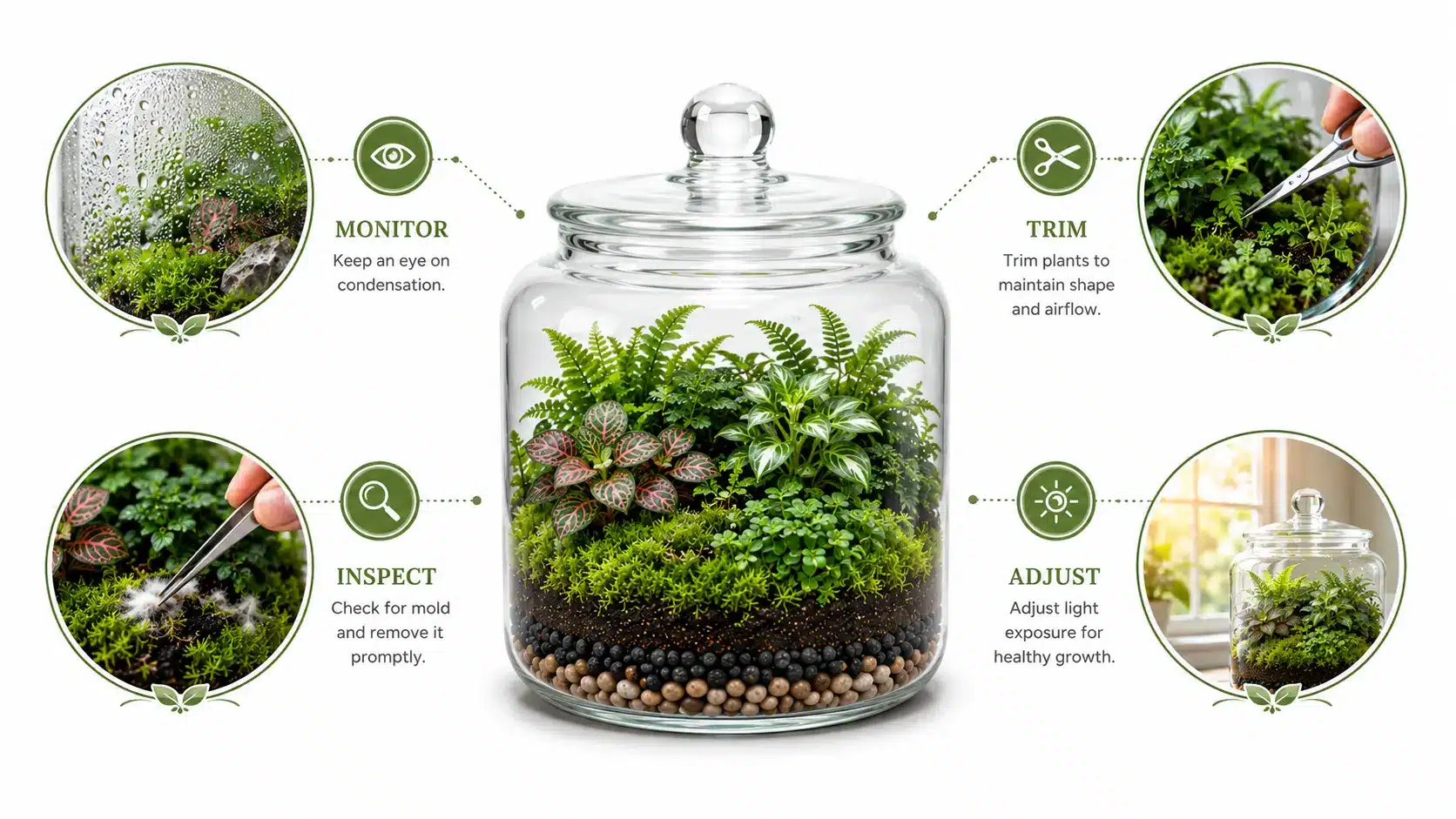
Maintenance is minimal, but small checks help keep the ecosystem stable over time.
- Monitoring Condensation: Check the glass daily at first. Light condensation on one side is a good sign. No condensation could mean it needs a small amount of water. Heavy fog on all sides means open the lid briefly.
- Occasional Pruning: Trim back any plants that are growing into the glass or crowding others. This keeps the terrarium balanced and prevents any one plant from dominating.
- Managing Mold Growth: Small amounts of white mold in a new terrarium are normal and usually disappear on their own. If mold spreads, open the lid, remove the affected material, and let it air out for a day.
- Adjusting Light Exposure: If plants are stretching toward the light or turning yellow, move the terrarium to a brighter spot. If leaves are burning or fading, move them back from the light source.
Self-Sustaining Terrarium Problems and Solutions
Even healthy terrariums can occasionally develop issues. Most problems are easy to fix if caught early.
| Problem | Likely Cause | Solution |
|---|---|---|
| Heavy condensation covering all glass | Too much moisture | Open the lid for a few hours and allow excess water to evaporate |
| No condensation at all | Environment too dry | Add a small amount of water and monitor for several days |
| White fuzzy mold | Excess moisture or decaying material | Remove affected material and improve airflow temporarily |
| Yellowing leaves | Too much light or overwatering | Move to indirect light and reduce moisture |
| Leggy, stretched plants | Insufficient light | Relocate to a brighter location with indirect sunlight |
| Root rot | Waterlogged soil | Remove affected plants and reduce watering |
| Bad smell | Excess organic decay or stagnant moisture | Remove dead material and air out the terrarium |
| Plants growing too large | Fast-growing species or lack of pruning |
Trim plants regularly or replace with slower-growing varieties |
Most terrarium problems are caused by excess moisture, poor lighting, or plant overcrowding and can usually be corrected with a few small adjustments before they affect the entire ecosystem.
|
How Long Can a Self-Sustaining Terrarium Last? A well-built self-sustaining terrarium can last anywhere from several months to many years. One of the most famous examples is a sealed terrarium built by David Latimer in 1960. He last opened and watered it in 1972, and it was still thriving decades later. The key to long life is balance. When the water cycle, plant growth, and soil nutrient recycling all work together, the terrarium can sustain itself for a very long time |
Self-Sustaining Terrarium Ideas for Different Spaces
Once you understand the basics, you can experiment with different styles based on space, budget, and the level of detail you want in the setup.
- Mason Jar Terrarium: A wide-mouth mason jar is a great beginner option. It is affordable, easy to find, and simple to seal. Add moss, a small fittonia, and a few pebbles for a clean and compact setup.
- Large Glass Bowl Terrarium: A large glass bowl with a fitted lid gives you more room to work with. You can include more plant varieties and create a more layered, detailed landscape.
- Moss-Only Terrarium: A terrarium filled entirely with various moss varieties is low-effort and visually striking. It is also one of the most stable ecosystems you can build.
- Tropical Rainforest Terrarium: Use fittonia, mini ferns, baby tears, and moss together to recreate a small rainforest floor. Add a few small rocks and a piece of bark for texture.
- Bioactive Terrarium: A bioactive terrarium includes springtails and isopods along with plants. This creates the most complete and self-sustaining ecosystem of all the options.
A strong terrarium idea is the one that matches your experience level and the amount of time you realistically want to spend adjusting it.
Final Thoughts
Building a self-sustaining terrarium is simpler than most people think. With the right container, proper layering, and the correct plants, you can create a living ecosystem that runs on its own.
The water recycles, the plants grow slowly, and the soil stays healthy without much input from you. Start small with a mason jar and some moss, then build your confidence from there.
Once you see a sealed terrarium thriving on its own for weeks without any care, you will want to keep building more. It is one of the most satisfying indoor plant projects you can try.
Frequently Asked Questions
Do Self-Sustaining Terrariums Really Work without Any Care?
Yes, they can work for long periods if the ecosystem is balanced correctly. However, they still need occasional observation to fix small issues before they become problems.
Why Does My Terrarium Smell Bad or Develop Mold?
This usually happens when there is too much moisture or not enough airflow during setup. Removing excess water and letting it breathe briefly usually fixes the issue.
Can a Self-Sustaining Terrarium Survive without Any Natural Light at All?
No, it still needs indirect natural light to support photosynthesis and keep the cycle running. Without light, the plants will eventually weaken, and the system will collapse.