
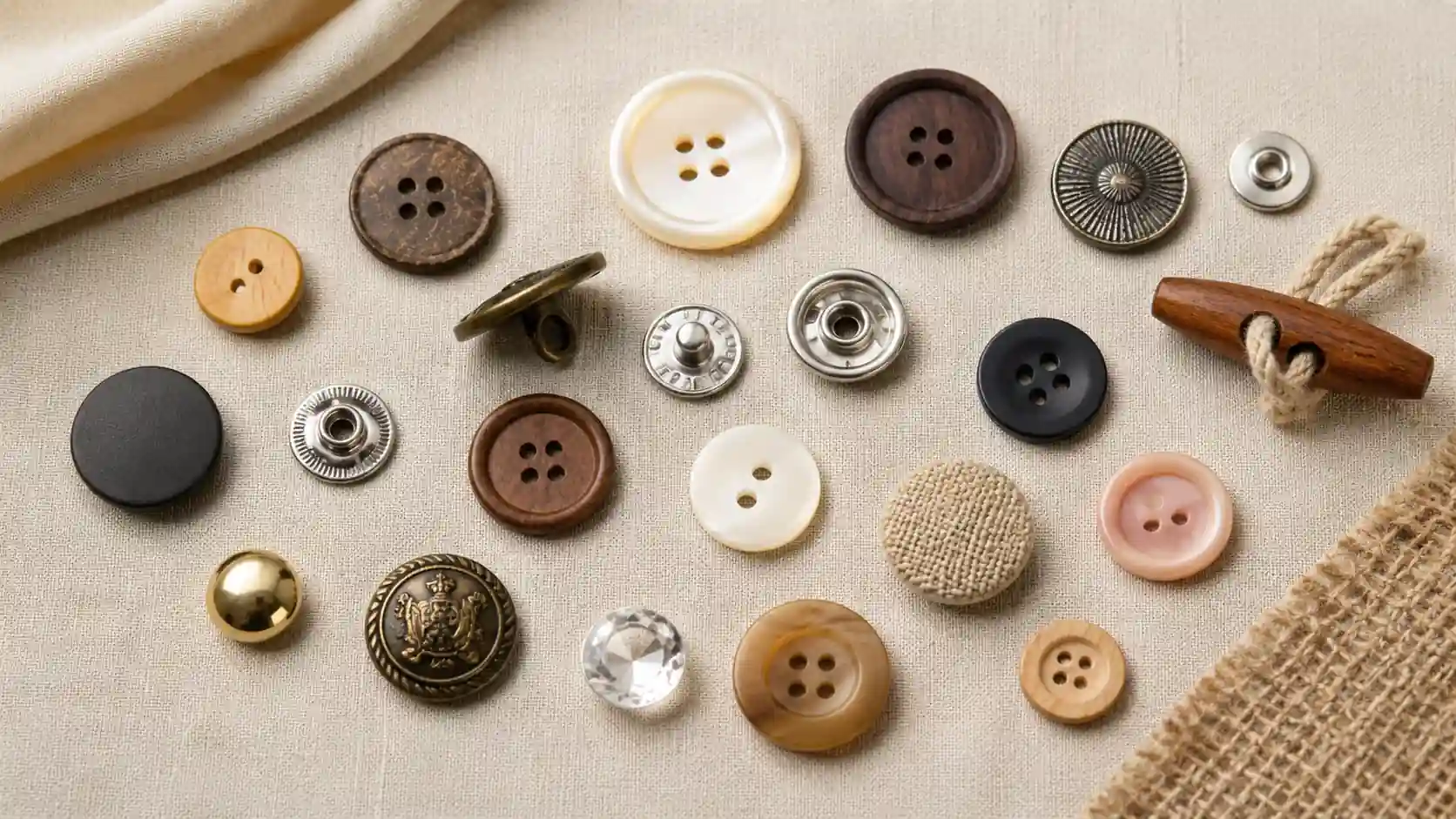
Buttons come in dozens of types, and picking the right one can make or break a garment. From simple two-hole shirt buttons to ornate Chinese frog closures, every style serves a specific purpose.
Button design affects how a garment closes, how long it lasts, and how it looks on the finished piece.
A flat plastic button works fine on a dress shirt, but falls short on a heavy wool coat. A toggle looks charming on a duffle coat, but would look out of place on formal wear.
The oldest known button dates back nearly 5,000 years, and the variety available today proves just how far this small fastener has come.
How to Identify a Button at a Glance
Buttons seem simple until you face a jar full of mystery fasteners. A few quick checks tell you almost everything you need to know. Once you can read these details, you will always pick the right button on the first try.
- Check the back of the button. Flat backs have holes through the face; shanks are loops on the underside; rivets punch through fabric; snaps interlock in two halves; and loops are specialty cord fasteners.
- Look at the hole style. Two-hole buttons suit light garments; four-hole buttons offer stronger attachment; hidden-hole designs keep the face smooth; and no-hole buttons attach by shank or rivet.
- Notice the material. Plastic is lightweight, wood adds texture, shell has an iridescent sheen, metal is durable, glass is decorative, leather suits rustic styles, and fabric-covered buttons blend into the garment.
- Match the button to its purpose. Everyday clothing needs easy-wash buttons; outerwear needs sturdy ones; denim needs rivet attachment; decorative garments suit shell or glass; and crafts offer the most creative freedom.
Once you understand these basics, you can identify any button and find the right pairing for any project.
Common Types of Buttons and Their Uses
Buttons fall into dozens of categories based on how they attach, what they are made from, and where they are used.
From ancient Greek tunics to modern garments, the history of buttons shows how this small fastener has adapted across centuries of clothing construction.
The list below covers the most common and useful types you will encounter in sewing, garment making, and crafting.
1. Flat Buttons
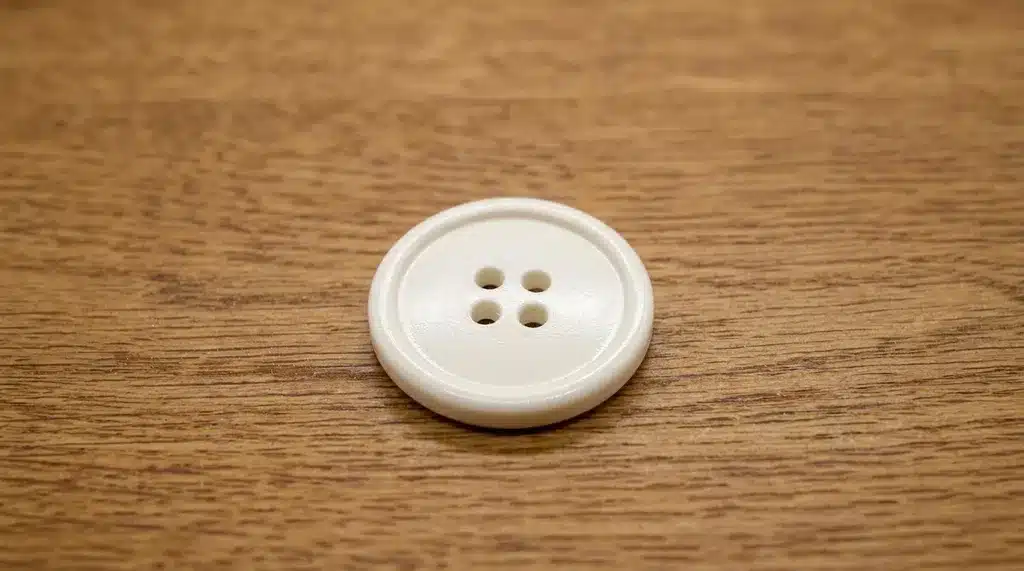
Flat buttons are the most common type found in sewing. They lie flush against the fabric and attach through two or four holes sewn with thread.
They work with both hand sewing and a sewing machine. Available in plastic, shell, wood, and metal, flat buttons suit a wide range of garments.
They are reliable, easy to replace, and straightforward to sew. Best for shirts, blouses, dresses, light jackets, and any project that requires a clean, low-profile fastener.
2. Two-Hole Buttons
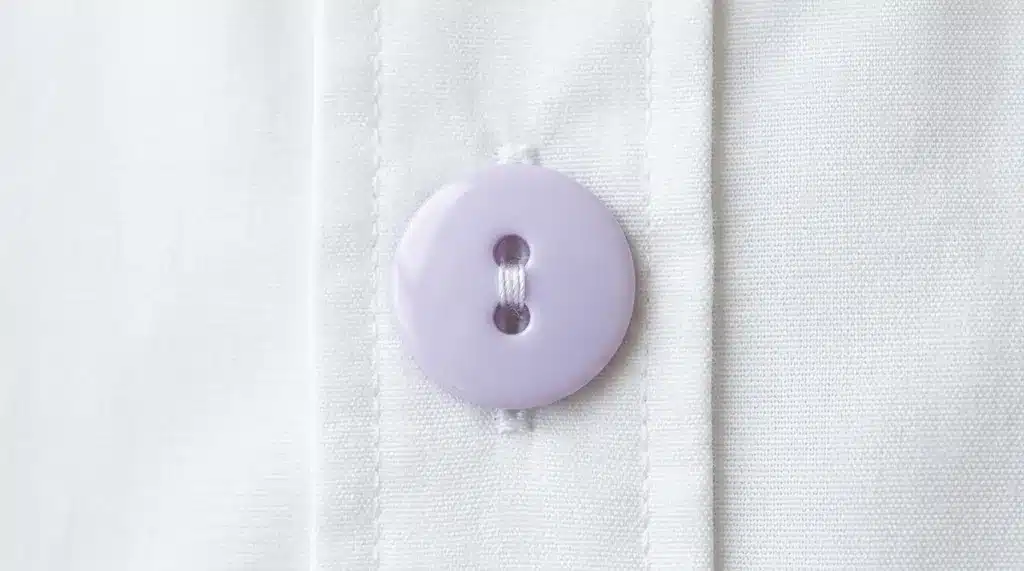
Two-hole buttons are flat buttons with two parallel holes through the center. The thread passes through both holes to anchor the button to the fabric.
They are simple to sew by hand or machine and work well on lightweight to medium fabrics. Because there are fewer stitch points, they suit smaller buttons better than heavier ones.
Common on dress shirts, blouses, pajamas, children’s clothing, and lightweight tops where speed and simplicity matter.
3. Four-Hole Buttons
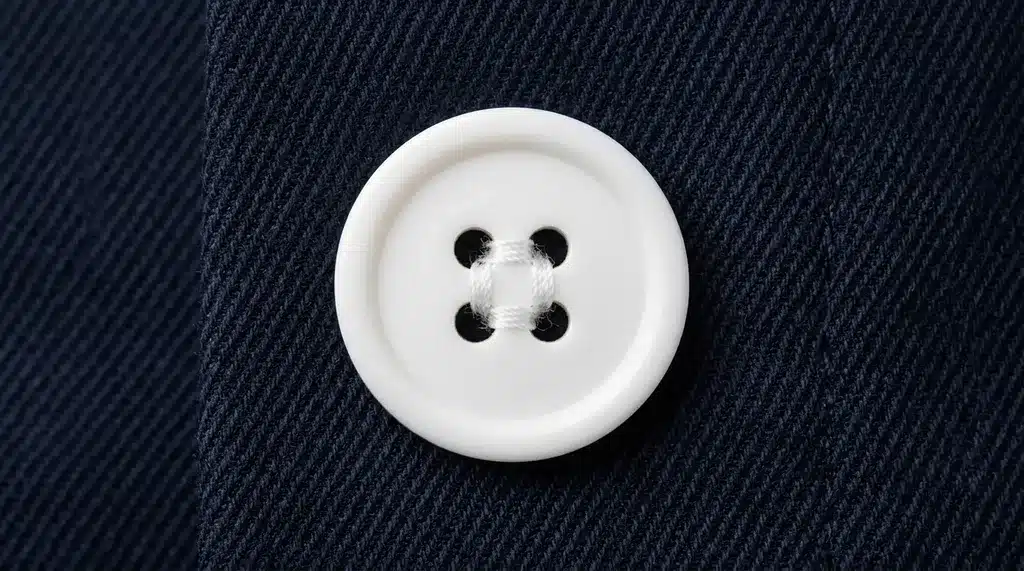
Four-hole buttons are flat buttons with two rows of two holes, forming a square pattern. The extra holes allow more thread passes, which makes the attachment stronger and longer-lasting.
Sewers often stitch them in an X pattern or two parallel lines. They handle heavier use and thicker fabrics better than two-hole versions.
Best used on pants, jackets, coats, and any garment that opens and closes frequently under stress.
4. Shank Buttons
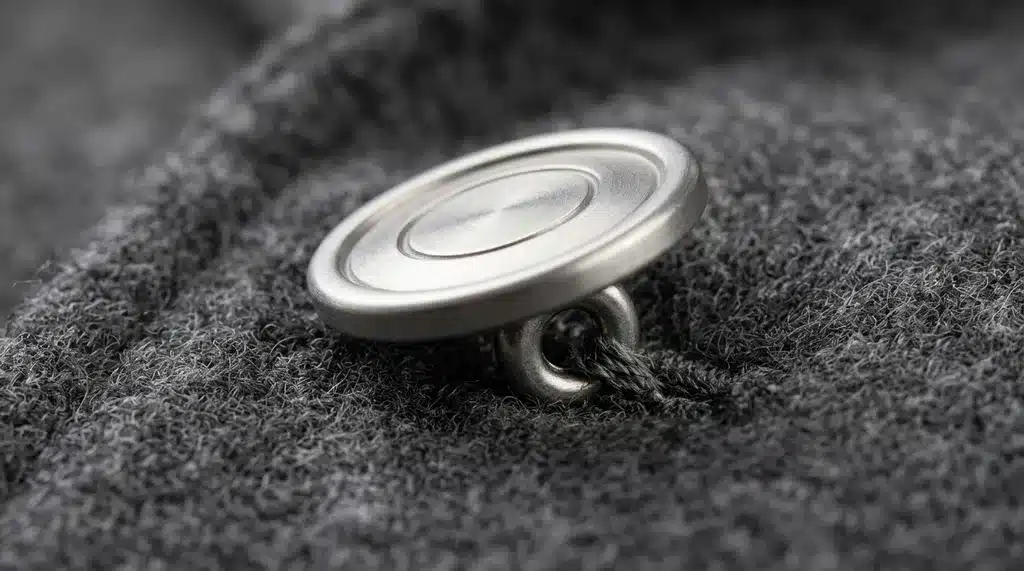
Shank buttons have no holes on the face. Instead, a small loop or bar on the back, called a shank, holds the sewing thread.
This design lifts the button slightly off the fabric surface, which gives room for the buttonhole layer to sit neatly underneath.
Shanks are especially useful on thick fabrics where flat buttons would pull or pucker. Common materials include metal, glass, and leather. Best for coats, suits, knitwear, and garments with heavy or layered fabric.
5. Snap Buttons
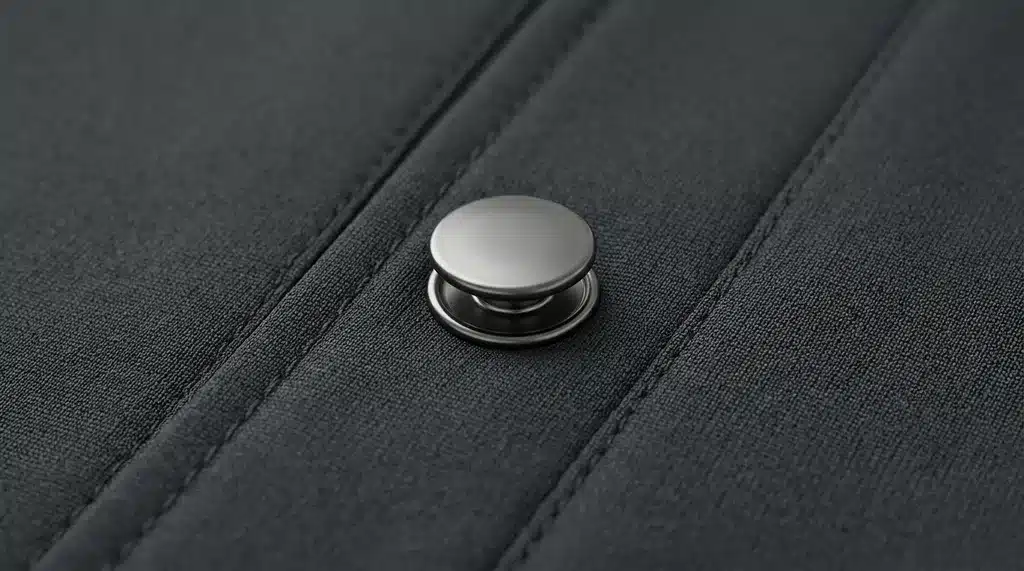
Snap buttons consist of two interlocking metal or plastic discs. One side has a raised ball, and the other has a socket. Pressing them together creates a firm closure that opens with a sharp pull or twist.
They are fast and convenient, making them popular for children’s wear, sportswear, and items that need quick access. Metal snaps are more durable than plastic.
Best used on baby clothing, athletic gear, casual jackets, and fabric items like pouches or bag closures.
6. Toggle Buttons
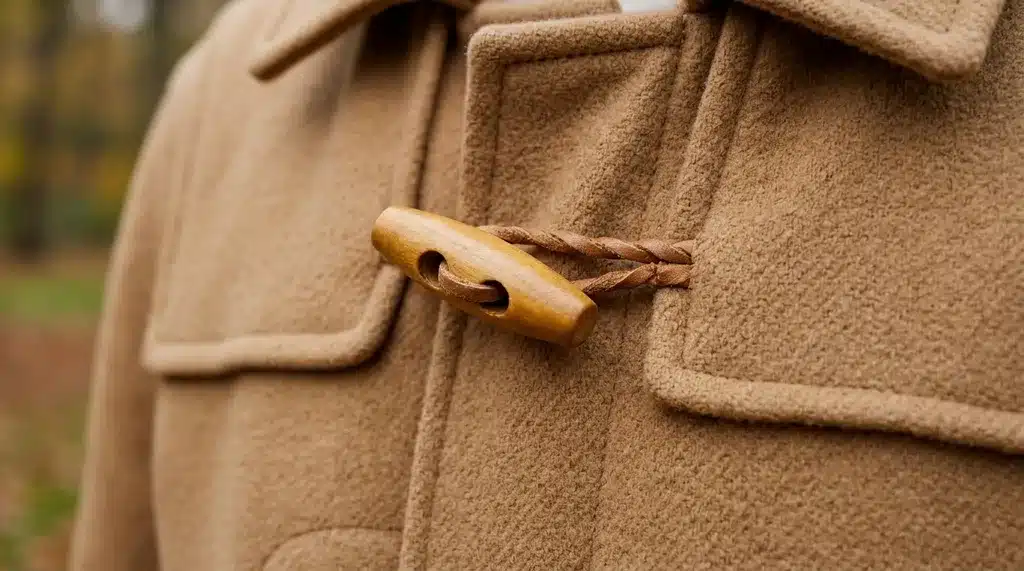
Toggle buttons are long, narrow, cylindrical fasteners with two holes through the middle. A cord or loop sewn to the garment passes through the holes to secure them.
Most toggles are made from wood, horn, or resin. Their elongated shape makes them easy to fasten with one hand and gives outerwear a distinctive, textured look.
The toggle-and-loop system also suits thick fabrics that make small buttonholes difficult to manage. Best suited to duffle coats, outdoor jackets, and chunky knitwear.
7. Stud Buttons
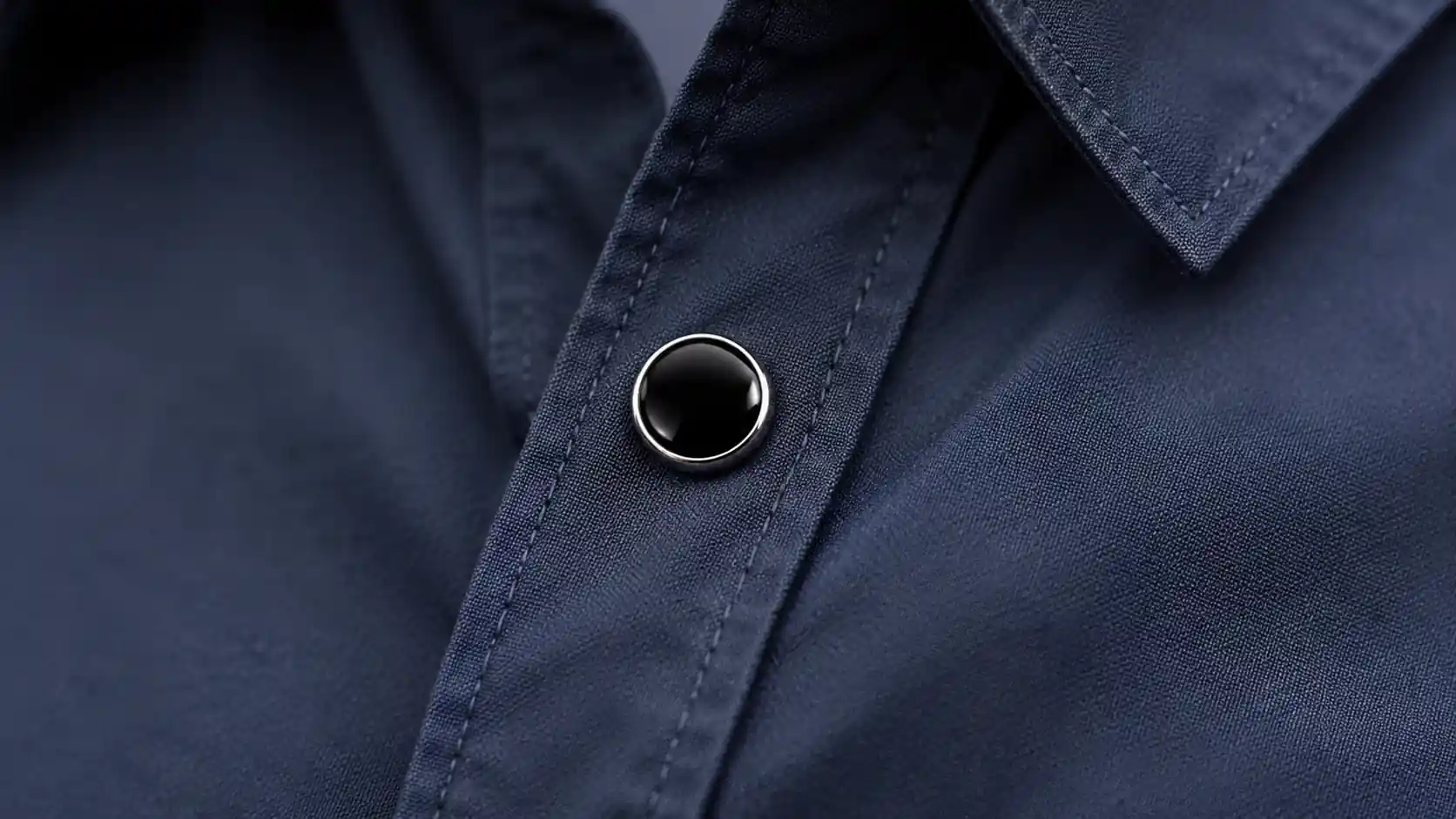
Stud buttons are not sewn on. They are applied by piercing through the fabric and crimping a metal backing from the reverse side, creating a permanent attachment.
They rely on a rivet mechanism, which makes them extremely strong and resistant to pulling. Most stud buttons are made from metal.
They are used where a button must withstand heavy, repeated stress without loosening or tearing the fabric. Standard on jeans waistbands, workwear, and heavy canvas bags.
8. Jeans Buttons
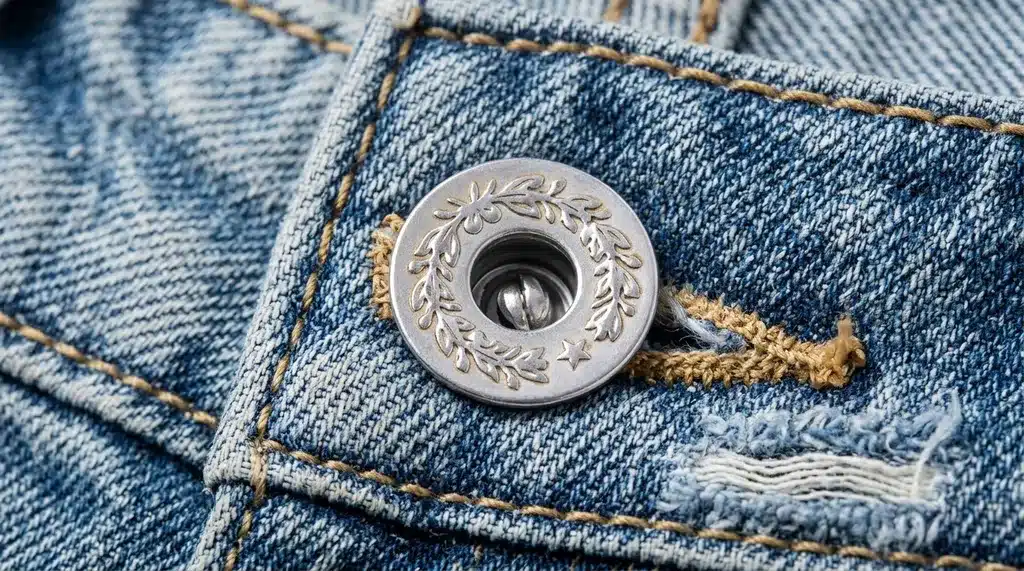
Jeans buttons are a specific type of stud button designed for denim. They feature a wide, flat face with a logo or decorative stamp and a tack on the back that drives through the fabric and clinches shut.
They are almost always metal, usually brass or nickel-plated. Jeans buttons require a press tool or hammer for application.
They cannot be sewn on. Best used on denim jeans, denim jackets, and heavy canvas workwear where the rivet system must handle constant tension.
9. Covered Buttons
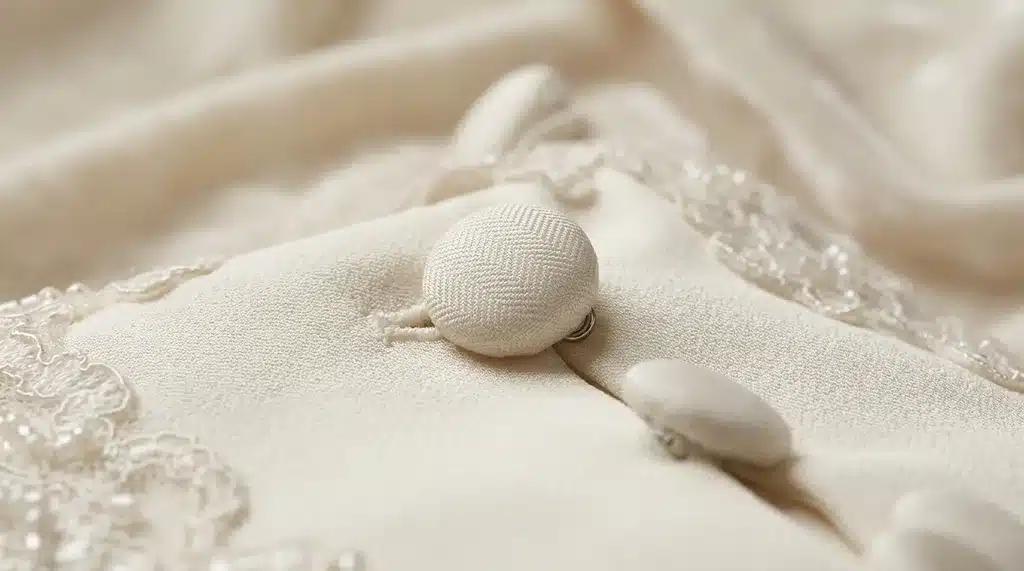
Covered buttons are shell-form buttons wrapped in fabric that matches or contrasts with the garment. The fabric is stretched over a plastic or metal base and snapped or crimped into a backing plate.
They blend seamlessly into the garment, making them a top choice for bridal wear, evening gowns, and formal pieces where buttons should accent rather than interrupt.
Kits for making them at home are widely available. Best for dresses, blouses, bridal gowns, and high-end tailored jackets.
10. Wooden Buttons
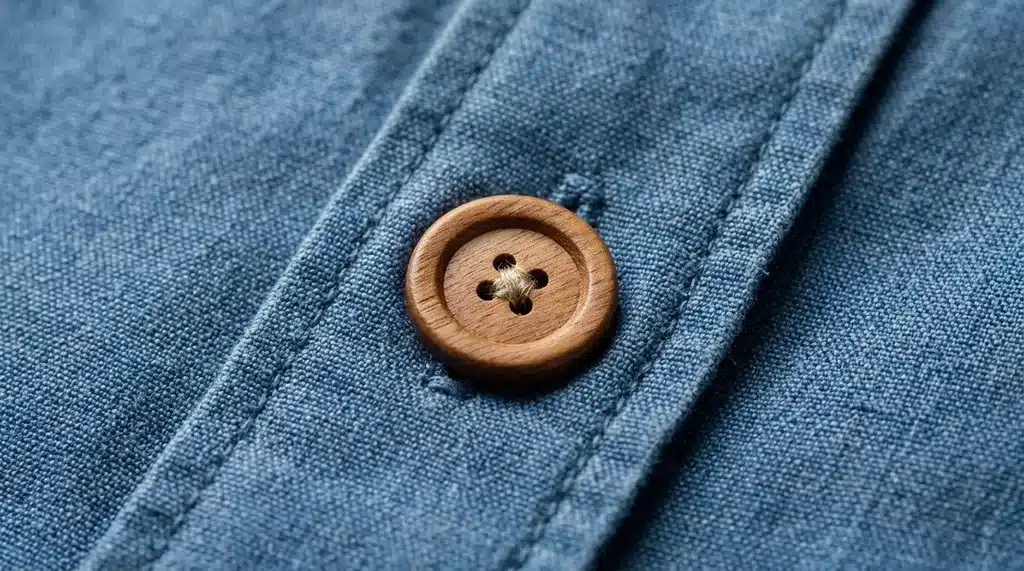
Wooden buttons are carved or turned from various types of wood, including bamboo, maple, and cherry. They can be left natural, stained, painted, or lacquered.
Each button has a slight variation in grain, giving handmade pieces a unique, artisan quality. They are lightweight and easy to sew.
Wood is not ideal for frequent washing unless sealed. Best used on cardigans, hand-knit sweaters, rustic jackets, tote bags, and craft projects where a natural, organic look is the goal.
11. Plastic Buttons
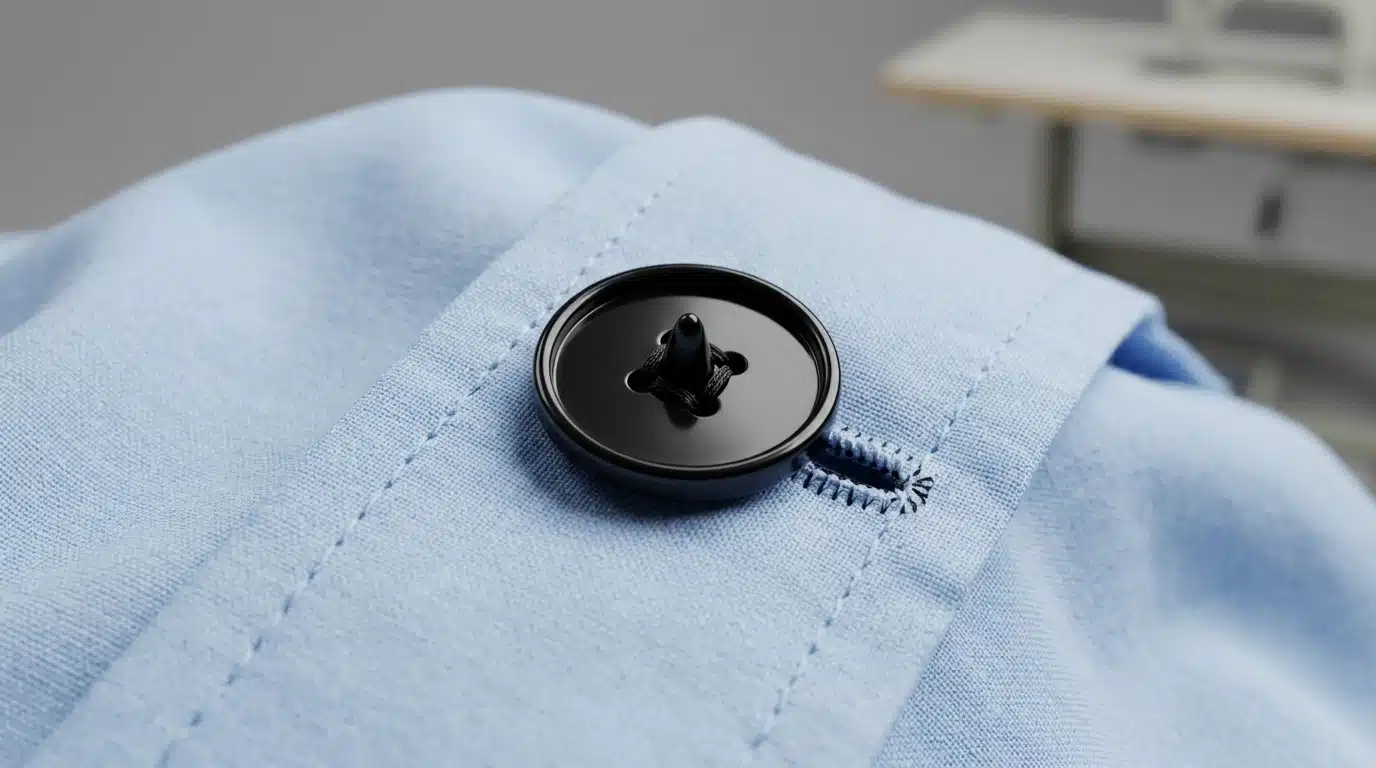
Plastic buttons are the most widely used button type in commercial garment production. They are lightweight, inexpensive, moldable into any shape, and available in every color.
Most are made from polyester resin, which handles machine washing well. Quality varies significantly. Higher-grade plastic buttons resist fading and cracking longer than cheap varieties.
They suit almost any garment but lack the visual richness of natural materials. Best for everyday shirts, casual dresses, uniform clothing, and budget-friendly sewing projects.
12. Metal Buttons
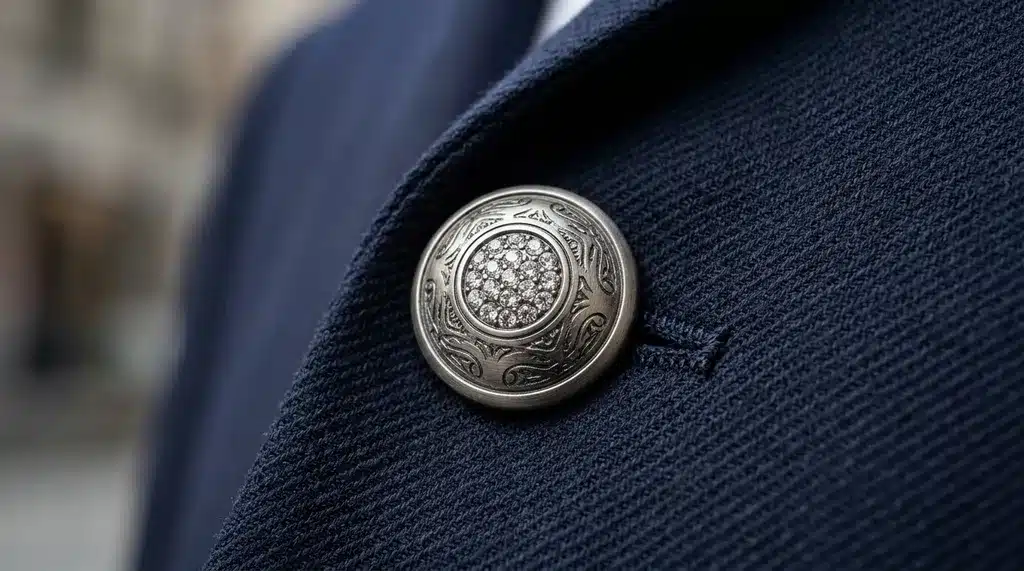
Metal buttons are made from brass, nickel, pewter, zinc alloy, or stainless steel. They are heavy, durable, and often decorated with stamped or engraved designs.
Some are flat sew-through types; others are shanked. Metal buttons resist wear, washing, and exposure to the elements better than most materials.
They do add weight to the garment. Standard on military uniforms, peacoats, blazers, denim jackets, and any garment where durability and a polished, structured look matter.
13. Shell Buttons
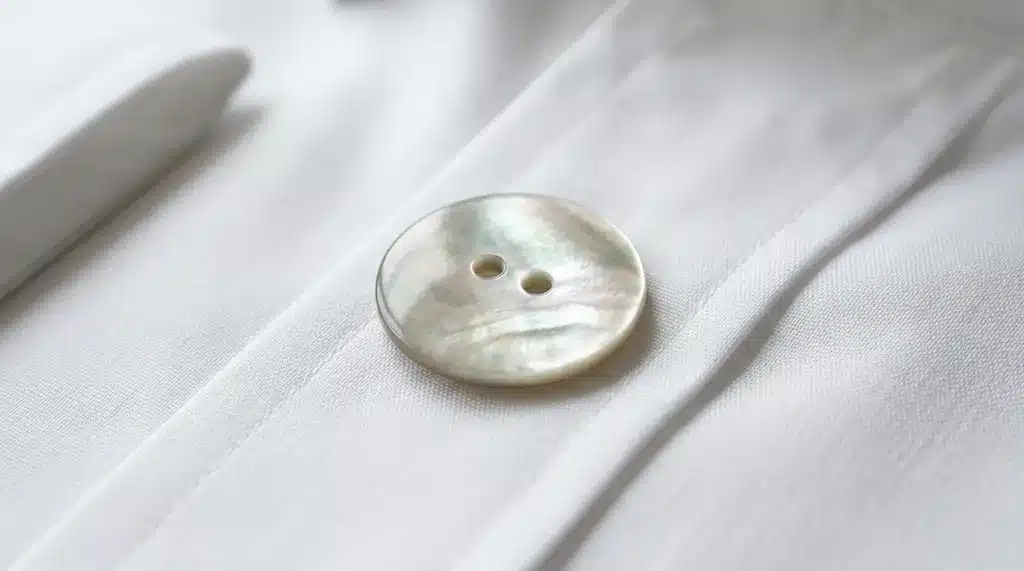
Shell buttons are cut from the shells of freshwater mussels, saltwater oysters, or other mollusks. The most prized variety is mother-of-pearl, known for its soft iridescence and smooth finish.
Shell is a natural material, so each button has unique patterning. It is polished for use and is quite durable. Shell buttons respond poorly to harsh bleaching detergents, which can dull their surface.
Best suited for dress shirts, women’s blouses, formal jackets, and high-end tailored garments where subtle shimmer elevates the look.
14. Horn Buttons
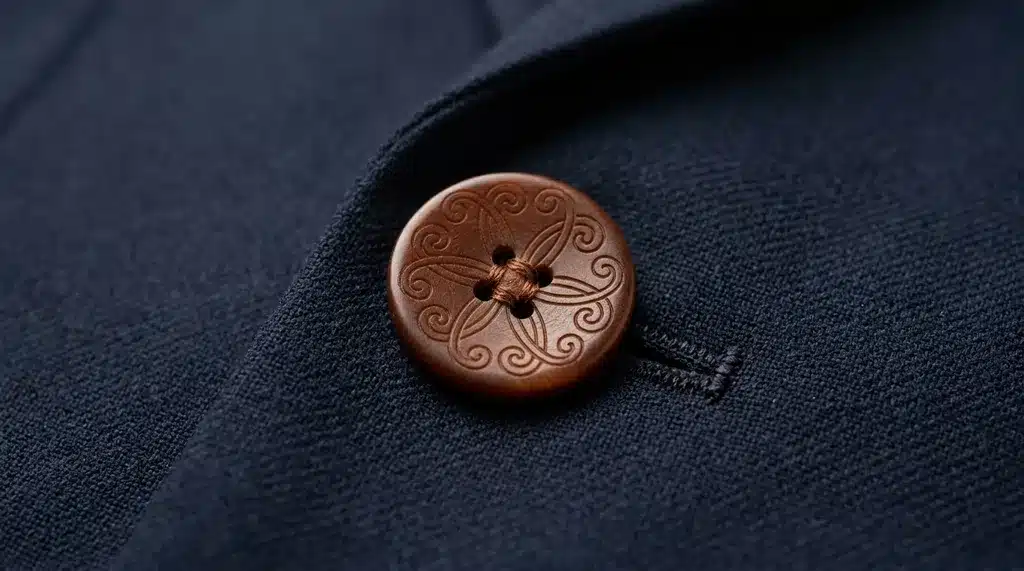
Horn buttons are made from animal horn, most commonly buffalo, ox, or deer. The horn is heated, pressed into discs, and cut, then polished.
Natural horn has mottled brown and cream tones that deepen with age and wear. Each button is unique because of the natural grain variation.
Horn buttons are used as byproducts of existing food industries, meaning no animals are specifically raised for button production.
They are favored in high-end tailoring. Best for men’s suits, dress coats, sports jackets, and formal trousers.
15. Corozo Buttons
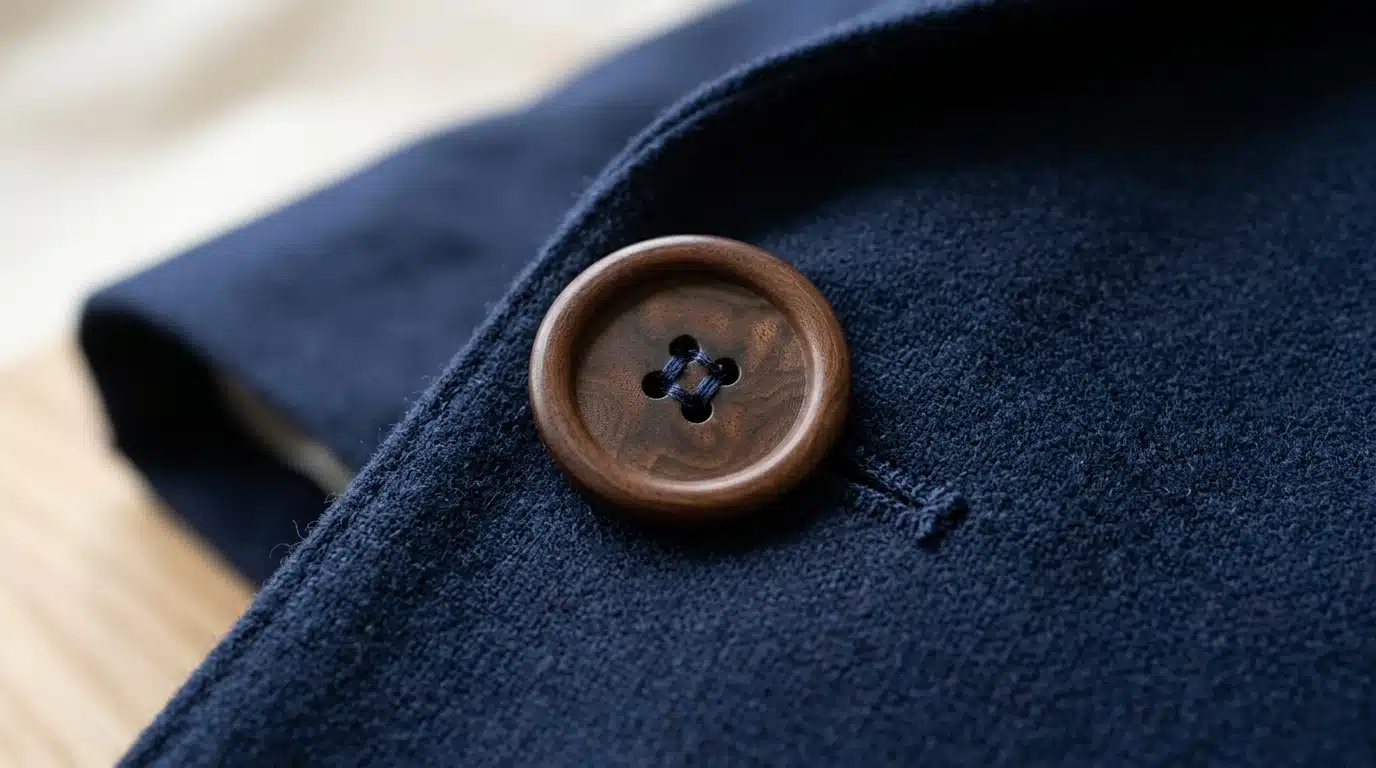
Corozo buttons are made from the seed of the tagua palm, a tree native to the rainforests of Ecuador, Colombia, and Panama.
The material is sometimes called vegetable ivory because its cellular structure closely resembles animal ivory.
Corozo is made up of very tightly wound organic fibers, which give it excellent durability and scratch resistance.
It accepts dye deeply, producing rich, saturated colors. Best for premium shirts, tailored blazers, and any sustainable fashion project calling for a high-quality natural button.
16. Coconut Buttons
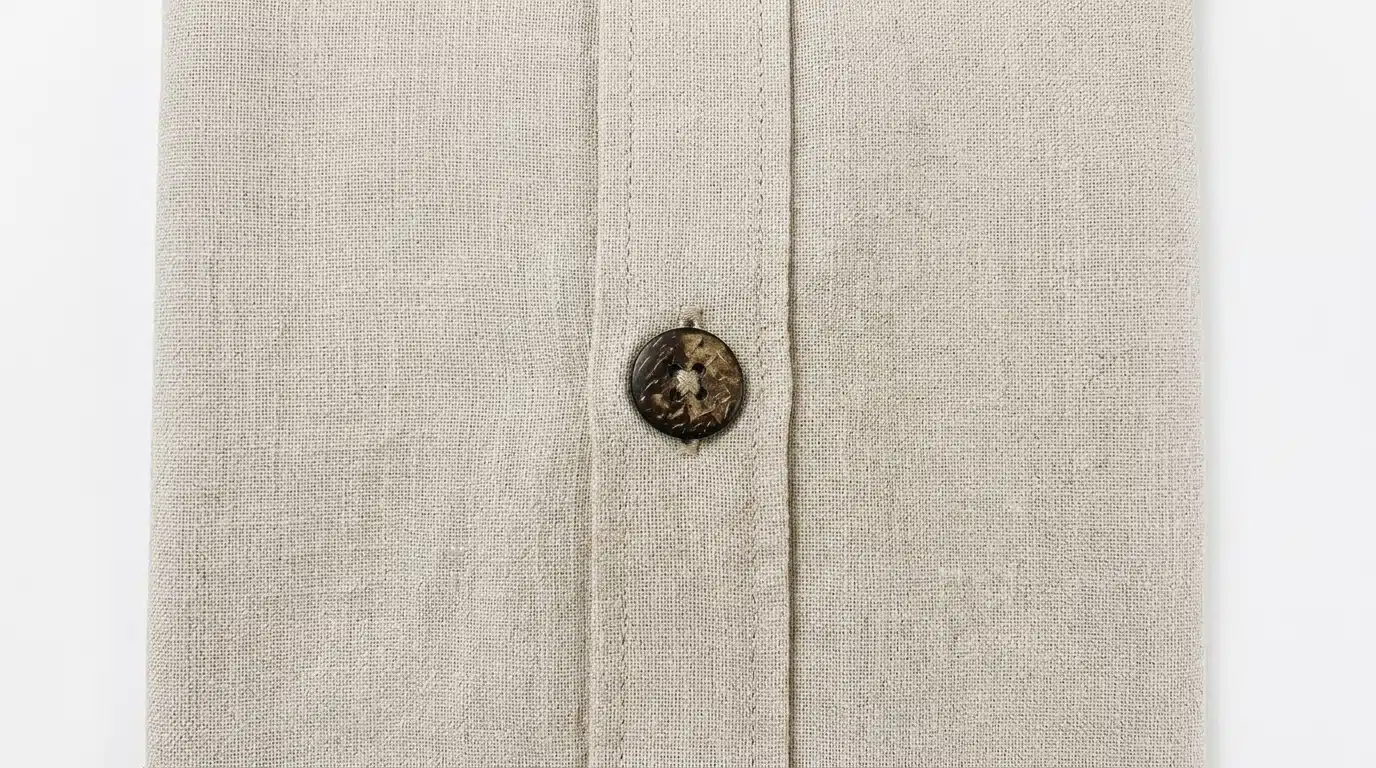
Coconut buttons are cut from a coconut shell, a hard agricultural byproduct. They are dark brown with a slightly textured surface and a natural matte finish.
Each button looks slightly different because of the shell’s natural grain. They are heavier than plastic but lighter than metal. Coconut buttons hold up well to washing and daily use.
They add a warm, tropical, handcrafted character to garments. Best for casual shirts, linen and cotton garments, beachwear, tote bags, and accessories with a natural or craft-inspired aesthetic.
17. Leather Buttons
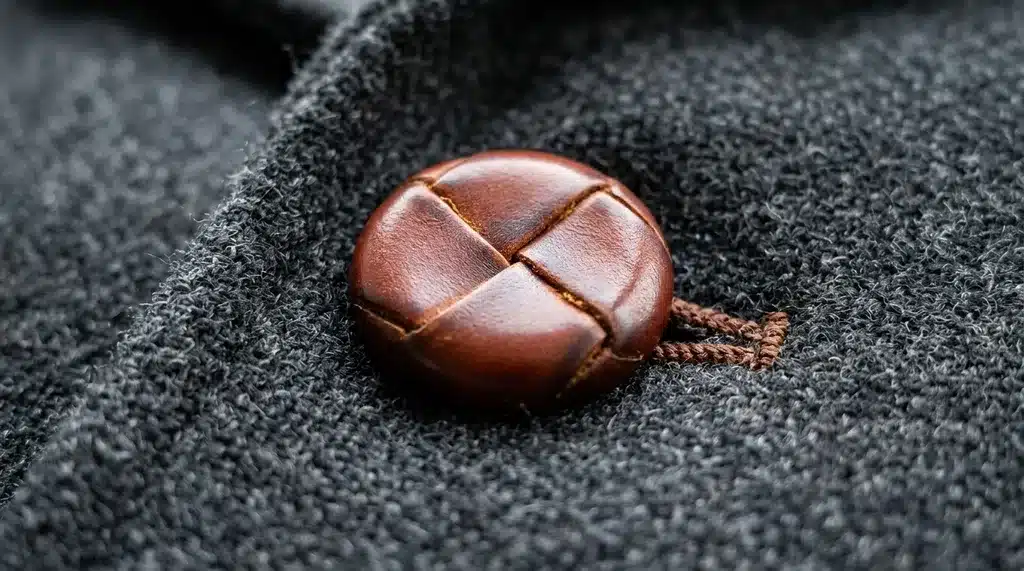
Leather buttons are usually made by wrapping or molding genuine leather over a shank or flat base. Some are cut as thick discs with a drilled hole.
They have a warm, tactile quality that suits rustic and outdoorsy styles well. Leather is not suitable for frequent machine washing but handles occasional cleaning.
Suede versions offer a softer texture. Best used on leather jackets, wool coats, peacoats, duffle bags, and garments with a heritage, equestrian, or outdoor aesthetic.
18. Ceramic Buttons
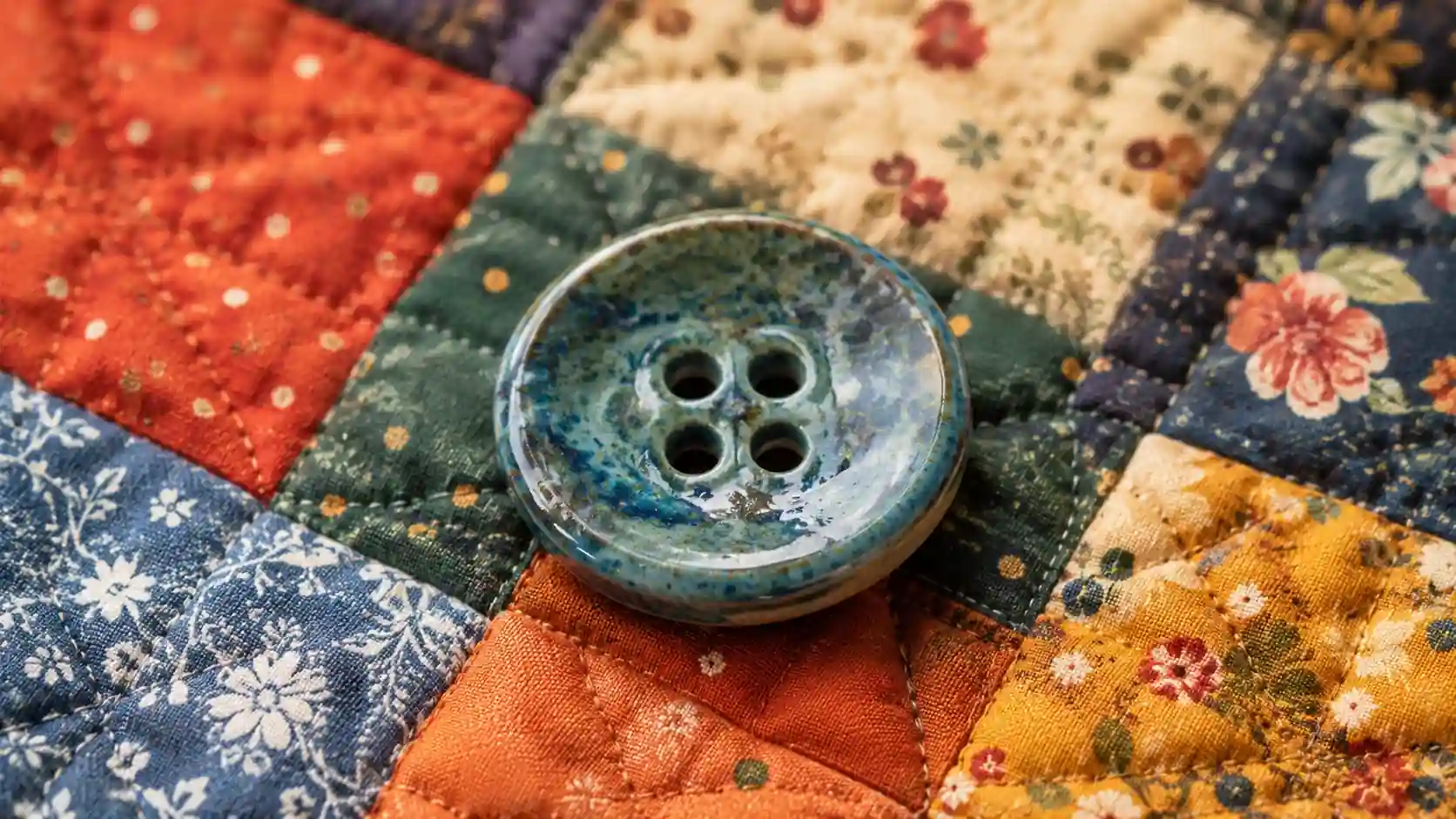
Ceramic buttons are molded from clay and fired, then glazed or left matte. They can carry hand-painted designs, patterns, or textures that cannot be replicated in plastic or metal.
Each button is unique because of the handmade process. They are heavier than plastic and can chip if dropped on a hard surface.
Ceramic buttons are rarely used in mass production. Best suited for handmade garments, art quilts, decorative pillows, wall art, and any craft project where the button is a visual focal point.
19. Glass Buttons
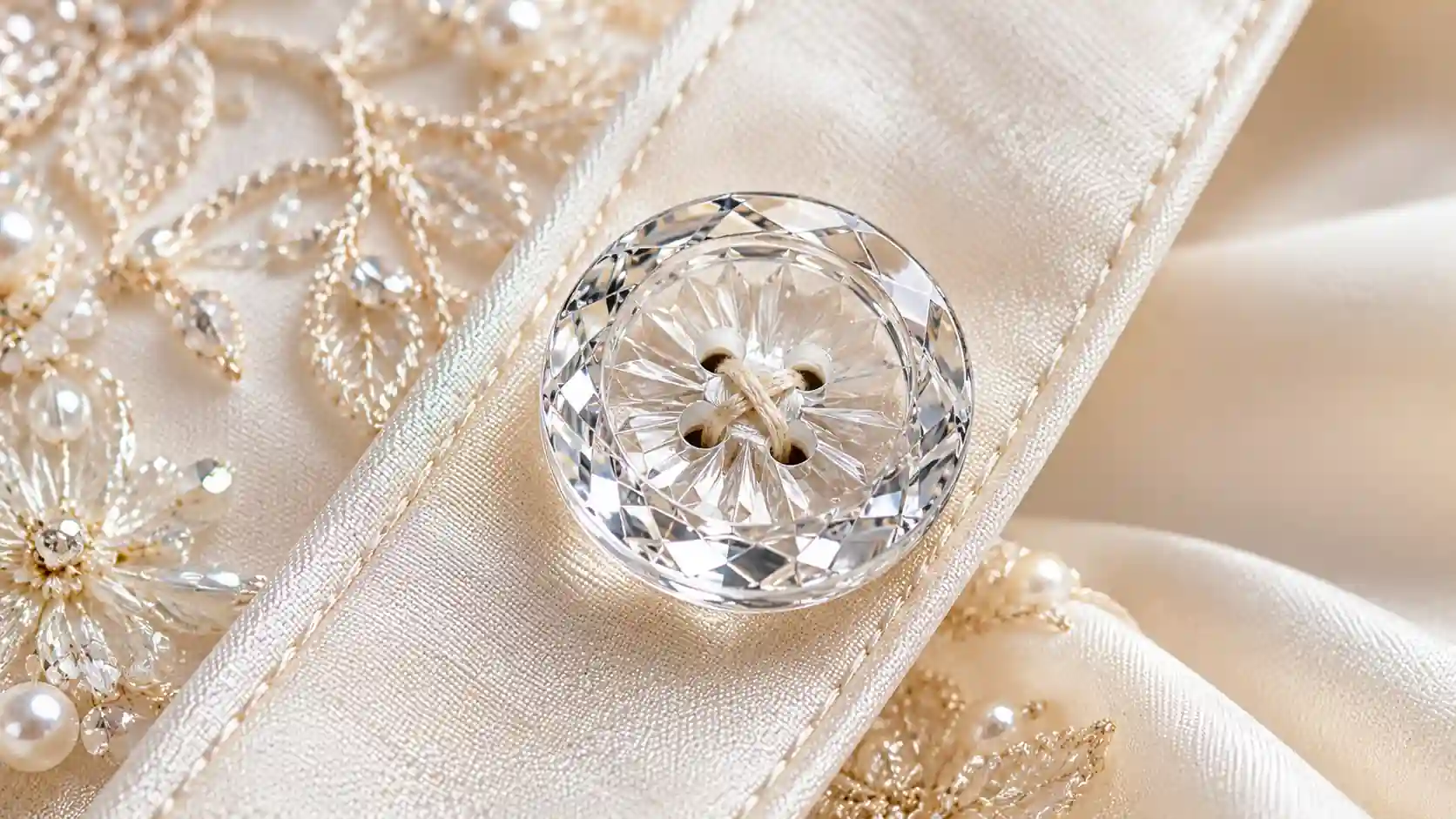
Glass buttons have a smooth, weighty feel and a subtle sheen that catches light differently from plastic. They come in both sew-through and shank styles.
Vintage glass buttons are highly collectible, particularly the pressed and painted varieties from the 19th and early 20th centuries.
Modern glass buttons are often used in high-end fashion and crafts. They are more fragile than metal or plastic and require careful handling and washing.
Best for decorative garments, bridal wear, vintage-inspired clothing, and craft projects where elegance is the priority.
20. Rhinestone Buttons
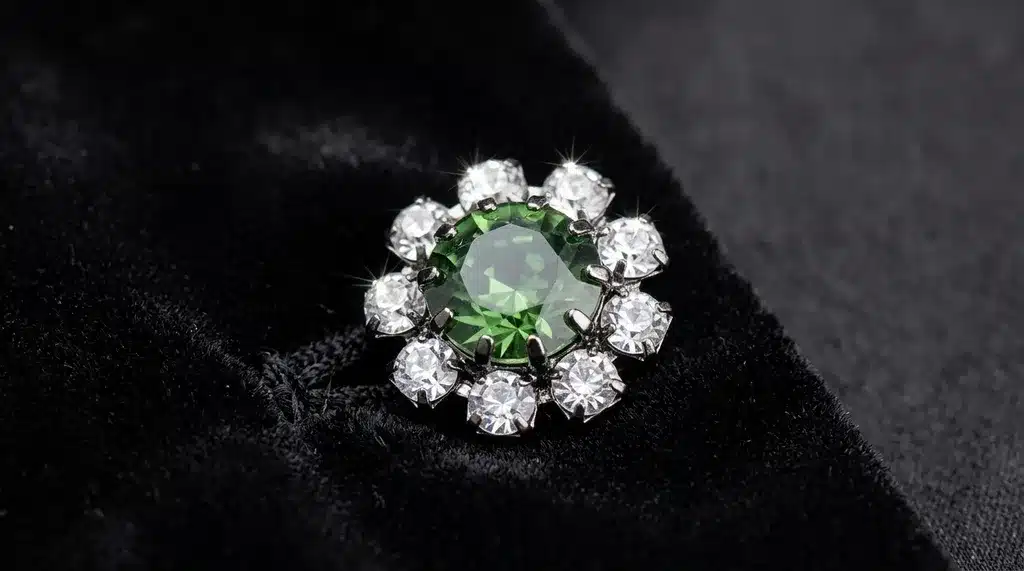
Rhinestone buttons feature glass or acrylic stones set into a metal or plastic base, creating a sparkling, jewel-like appearance.
They come in shank or flat back styles. The stones can be clear, colored, or multicolored. Most rhinestone buttons are used for decorative purposes rather than heavy-use closures.
They need careful washing since harsh detergents can loosen the stone settings over time. Best for evening wear, bridal gowns, performance costumes, formal blouses, and any garment where a bit of sparkle is the point.
21. Chinese Frog Buttons
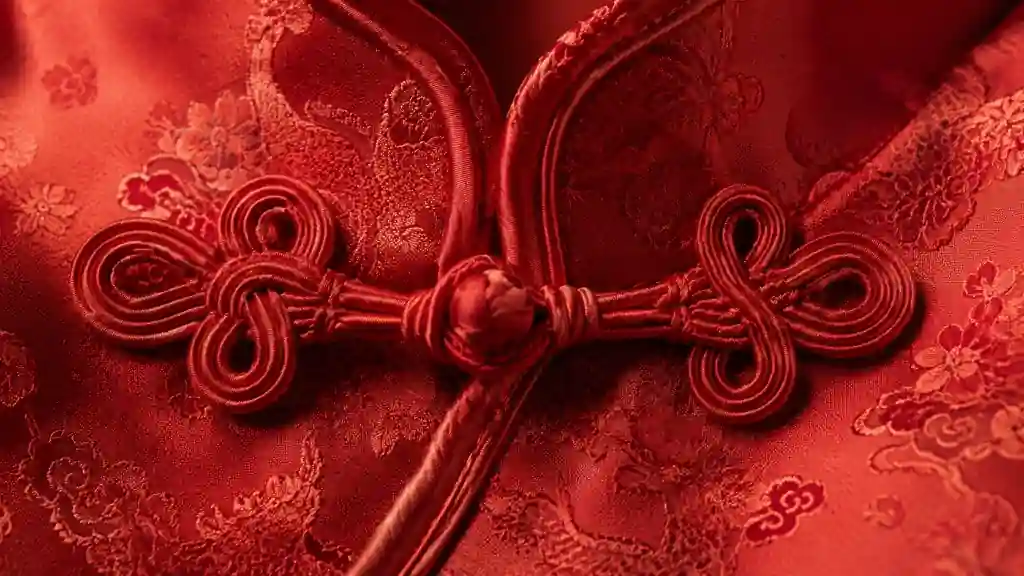
Frog buttons, known in Chinese as 盘扣, emerged as both a functional and decorative element in traditional dress, with early forms appearing during the Tang dynasty.
Unlike Western buttons, they are made from fabric cords knotted into symmetrical shapes that often resemble animals, flowers, or abstract symbols.
They are used on traditional Chinese garments such as qipaos, as well as on jackets, sweaters, and coats.
Best for cheongsam, hanfu, mandarin-collar jackets, and decorative fashion pieces drawing on Chinese textile tradition.
22. Novelty Buttons
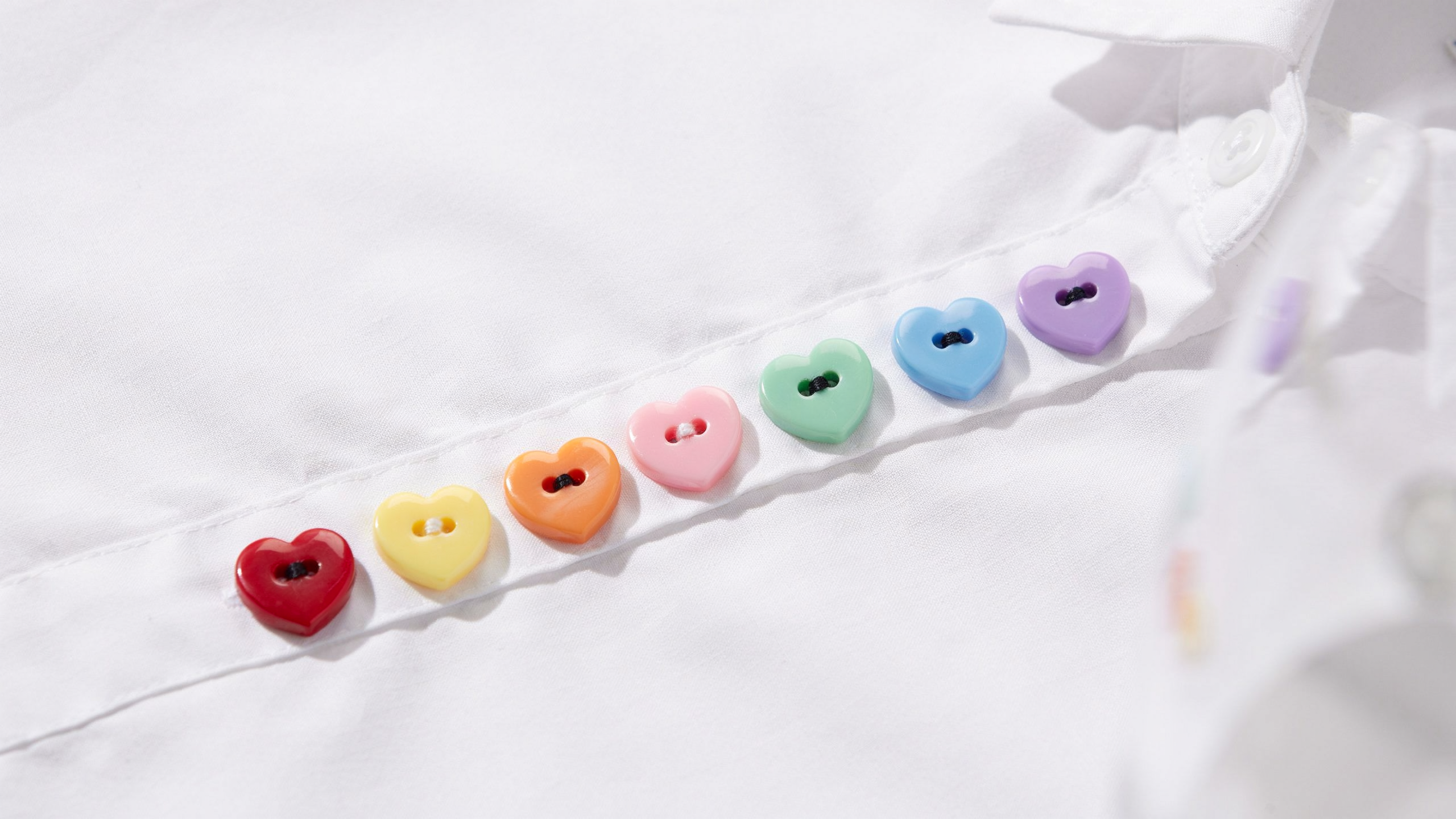
Novelty buttons are shaped, themed, or designed to look like objects rather than traditional circles.
Common shapes include animals, food, tools, letters, vehicles, and seasonal icons such as stars and hearts. They are almost always flat, sew-through types made from plastic or resin.
Novelty buttons are heavily decorative, making them a favorite in children’s clothing and costume sewing.
Quality varies widely across brands. Best for children’s garments, costumes, holiday projects, craft bags, and any piece where a playful or themed detail adds personality.
23. Bead Buttons
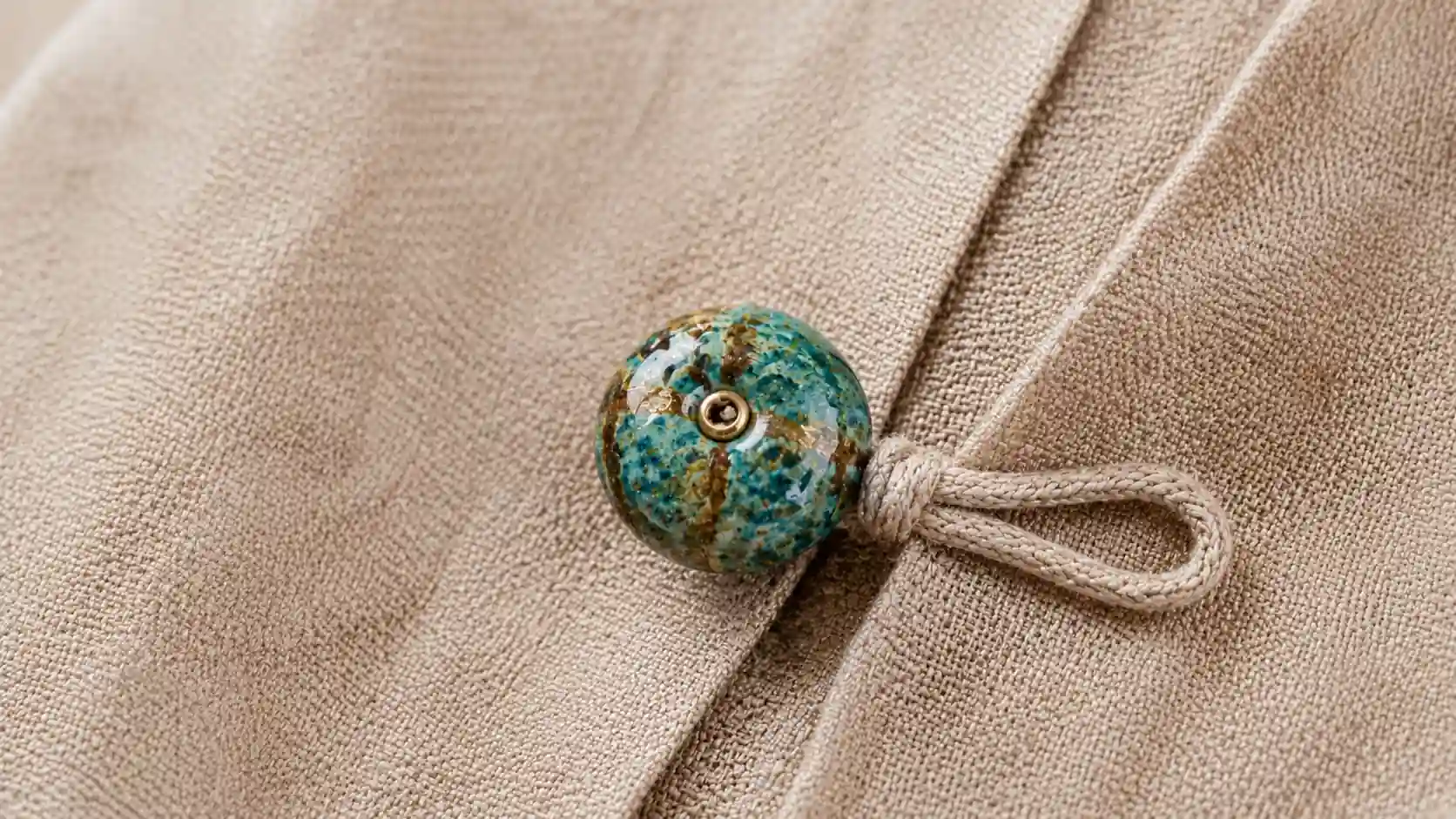
Bead buttons use a large decorative bead in place of a standard button form, sewn through a center hole or anchored with a thread bar.
They can be glass, wood, bone, acrylic, or natural stone. A cord or elastic loop on the opposite side acts as the buttonhole.
The look is artisanal and unique, often seen in handmade accessories and jewelry-inspired fashion.
Bead buttons are best for knitwear, macrame garments, bohemian-style jackets, handmade bags, and accessories where the button is meant to be noticed.
With 23 options covered, you can see just how much variety exists in the world of buttons. The right one will always depend on your fabric, your finish, and the purpose the button serves.
Understanding Your Button’s Essential Anatomy
Understanding how a button is built helps you sew it correctly and choose the right type for any fabric. Each construction method solves a specific problem, and knowing the difference keeps your garments looking professional and lasting longer.
- Sew-through buttons are flat with two or four holes. The thread passes through and forms visible stitches, best suited for light- to medium-weight fabrics, with a manual thread shank added for thickness.
- Shank buttons have a raised face and a loop on the back. The shank creates lift between button and fabric, giving the buttonhole layer room to close neatly on coats and knitwear.
- No-sew buttons attach without a needle or thread. Riveted types punch through and crimp shut using a press tool, while snap-on types use a pronged disc common in denim and children’s clothing.
- Decorative button construction prioritizes appearance over function. Rhinestone buttons set stones in metal claws; frog buttons use knotted cords; and ceramic or glass types feature handcrafted finishes for occasional wear.
Every button falls into one of these four categories, and identifying it quickly tells you how to attach it and care for it.
Comparing Different Button Materials
Not all buttons survive the same conditions. Material choice affects durability, weight, cost, and where a button works best. The table below compares the most common button materials to help you make a fast, informed decision.
| Material | Durability | Weight | Cost | Best Use |
|---|---|---|---|---|
| Plastic | High | Light | Low | Everyday shirts, casual wear |
| Metal | Very High | Heavy | Medium | Denim, outerwear, uniforms |
| Shell (MOP) | Medium | Light | Medium-High | Dress shirts, formal wear |
| Wood | Medium | Light | Low-Medium | Knitwear, casual, craft |
| Corozo | High | Medium | Medium-High | Premium shirts, blazers |
| Horn | High | Medium | High | Suits, formal coats |
| Coconut | Medium-High | Medium | Low-Medium | Casual, linen, beachwear |
| Leather | Medium | Medium | Medium | Coats, bags, rustic wear |
| Ceramic | Low-Medium | Heavy | Medium-High | Crafts, decorative pieces |
| Glass | Low-Medium | Heavy | Medium-High | Evening wear, vintage styles |
| Rhinestone | Low-Medium | Medium | Medium-High | Formal, bridal, costumes |
Choose based on how often the garment will be worn and washed. Practical everyday pieces need durable, washable materials. Decorative or special-occasion items can carry more delicate, high-impact options.
Common Button Sizes and Measurements
Button sizing follows a specific unit called ligne. The table below shows the most commonly used sizes across garment types so you can match buttons to projects without guessing.
| Garment / Use | Ligne (L) | Millimeters | Inches (approx.) |
|---|---|---|---|
| Shirt collar/button-down | 13-14L | 8-9mm | ~3/8 in |
| Shirt sleeve cuff | 15-16L | 10mm | ~3/8 in |
| Shirt front placket | 17-18L | 11mm | ~7/16 in |
| Sport shirt | 19-22L | 12-14mm | ~1/2 in |
| Trouser/pant | 27-28L | 17-18mm | ~11/16 in |
| Suit/blazer front | 29-32L | 18-20mm | ~3/4 in |
| Coat/overcoat | 40-45L | 25-28mm | 1 in+ |
| Sweater/cardigan | 18-24L | 11-15mm | ~1/2 in |
| Decorative accent | Any | Any | Designer choice |
Shirt buttons are typically 18L, jacket cuffs use 24L, trousers suit 28L, and single-breasted jacket fronts use 32L. Use this table as a starting point and adjust based on the visual weight of your fabric.
Ligne (L) is the standard unit for measuring button diameter. One ligne equals 0.635mm, and a 40L button measures one inch, or approximately 25.4mm in diameter. Larger ligne numbers mean larger buttons, and the system applies to all shapes, not just round ones.
Button Care and Maintenance
Caring for buttons helps garments last longer and keeps each fastener looking clean, secure, and suited to the fabric.
- Cleaning different button materials: Plastic, metal, corozo, and horn usually handle machine washing. Shell, glass, ceramic, and rhinestone need cool hand-washing with mild soap.
- Prevent loose buttons: Reinforce buttons with extra thread at the back before the first wash. Clear nail polish can help secure stitching and reduce fraying.
- Repairing damaged buttons: Replace cracked plastic buttons with close matches. Buy spare specialty buttons early, since shell, corozo, or decorative styles can be hard to match later.
- Storing spare and decorative buttons: Keep spare buttons in labeled bags with the garment. Wrap glass, ceramic, and delicate decorative buttons separately to prevent scratches or chips.
A little button care saves time, fabric damage, and replacement stress. Check loose stitching before washing, especially on daily-wear clothing. Store specialty buttons carefully so matching replacements are always within reach.
Conclusion
There are more types of buttons than most people realize, and each one is built for a specific purpose.
The right match between button and garment makes a real difference in how a piece looks, how long it lasts, and how easy it is to use.
Natural materials like corozo, horn, and shell offer beauty and character for premium projects. Plastic and metal keep everyday garments practical and durable.
Size, weight, and attachment method all play a role in achieving the right result. Start by identifying your fabric weight and garment type, then work through material and size.
Once you know what to look for, choosing the right button becomes a quick, confident decision.
Frequently Asked Questions
What are the Most Common Types of Buttons?
Flat sew-through buttons, including two-hole and four-hole styles, are the most common. Shank and snap buttons are also widely used in commercial garment production.
What is the Difference Between a Flat Button and a Shank Button?
A flat button is sewn through holes on its face. A shank button has a back loop that lifts it off the fabric, preventing puckering on thick materials.
Which Buttons are Best for Coats and Jackets?
Metal and horn shank buttons work best. They are durable, sit well on thick fabric, and typically measure between 1 and 1.5 inches in diameter.
What are Natural Buttons Made From?
Natural buttons come from shell, horn, bone, corozo nut, coconut shell, wood, and leather. Each material offers a distinct texture that synthetic options cannot fully replicate.
What Type of Button is Commonly Used on Jeans?
Jeans use a metal stud button riveted through the fabric. This permanent crimp attachment handles the constant tension on a denim waistband far better than sewn buttons.
How Can I Identify an Antique or Vintage Button?
Look for hand-finishing, uneven holes, and irregular shapes. Materials like Bakelite, celluloid, and glass signal age. Gently rubbing Bakelite produces a faint, distinctive chemical smell.