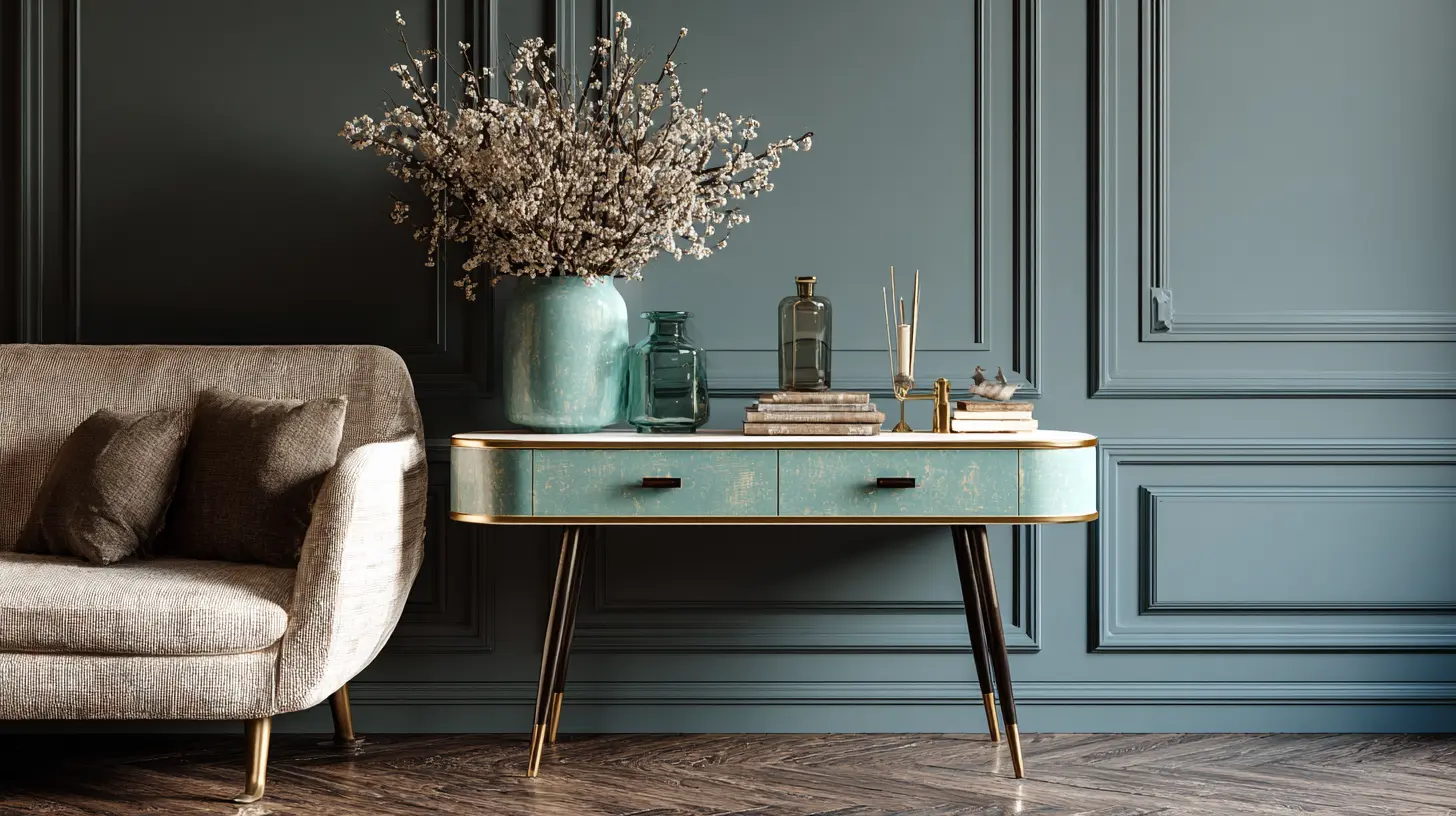
A console table is a long, narrow table designed to sit against a wall, behind a sofa, or along a hallway, taking up minimal floor space while adding instant style.
Whether you need a landing spot near your front door, a decorative layer behind your couch, or a simple display surface in a tight corridor, console table ideas are as flexible as the piece itself.
With the global console table market valued at around USD 6.8 billion in 2024 and projected to reach USD 10.5 billion by 2032, it is clear that more homeowners are recognizing just how much this one piece can do.
What is a Console Table?
A console table is a narrow, flat-surfaced table built to lean against a wall or sit behind a sofa. Its slim profile, typically 10 to 18 inches deep, keeps it out of the way while still delivering both form and function.
Originally wall-mounted furniture from 17th-century Europe, with early roots in Italy and popularized across France during the reign of Louis XIV, today’s versions are freestanding and available in every imaginable style, material, and finish.
Unlike a dining table or coffee table, a console table is not meant to be the center of activity. It holds things, displays things, and frames a space, quietly doing its job without demanding attention.
Key Features of a Console Table
|
Why is it called a Console Table?
The name has French roots. The word “console” comes from the French consolide, derived from the Latin consolidare, meaning “to strengthen” or “to reinforce.”
The earliest versions of these tables were not freestanding; they were attached to walls using curved S-shaped brackets called consoles.
Those brackets bore the weight of the tabletop, which is where the name stuck.
King Louis XIV of France is widely credited with popularising the console table in the late 17th century, when it became a fixture in aristocratic reception rooms, used to display mirrors, candelabras, and decorative objects.
What is the Purpose of a Console Table?
A console table serves more roles than most people expect. Here is what it can do:
Decoration: It gives you a surface to build a styled vignette: a tall vase, framed art, candles, or seasonal objects. An entryway console table makes an immediate impression the moment guests walk through the door.
Storage: Models with drawers, shelves, or baskets give you a practical place to store keys, mail, remotes, scarves, and everyday clutter. A hallway console table with storage keeps high-traffic areas tidy without sacrificing style.
Display Surface: Books, sculptures, trays, plants, and personal mementos all look at home on a console table surface.
Space Organization: In open-plan layouts, a table behind the couch creates a subtle visual boundary between the seating area and the space behind it, giving the room more definition.
Lighting Support: A table lamp placed on a console adds ambient, layered lighting, particularly useful in hallways and entryways that lack ceiling fixtures.
Where Can You Put a Console Table?
One of the best things about a console table is how many rooms it suits. Here are the most popular placements.
Entryway Console Table Ideas
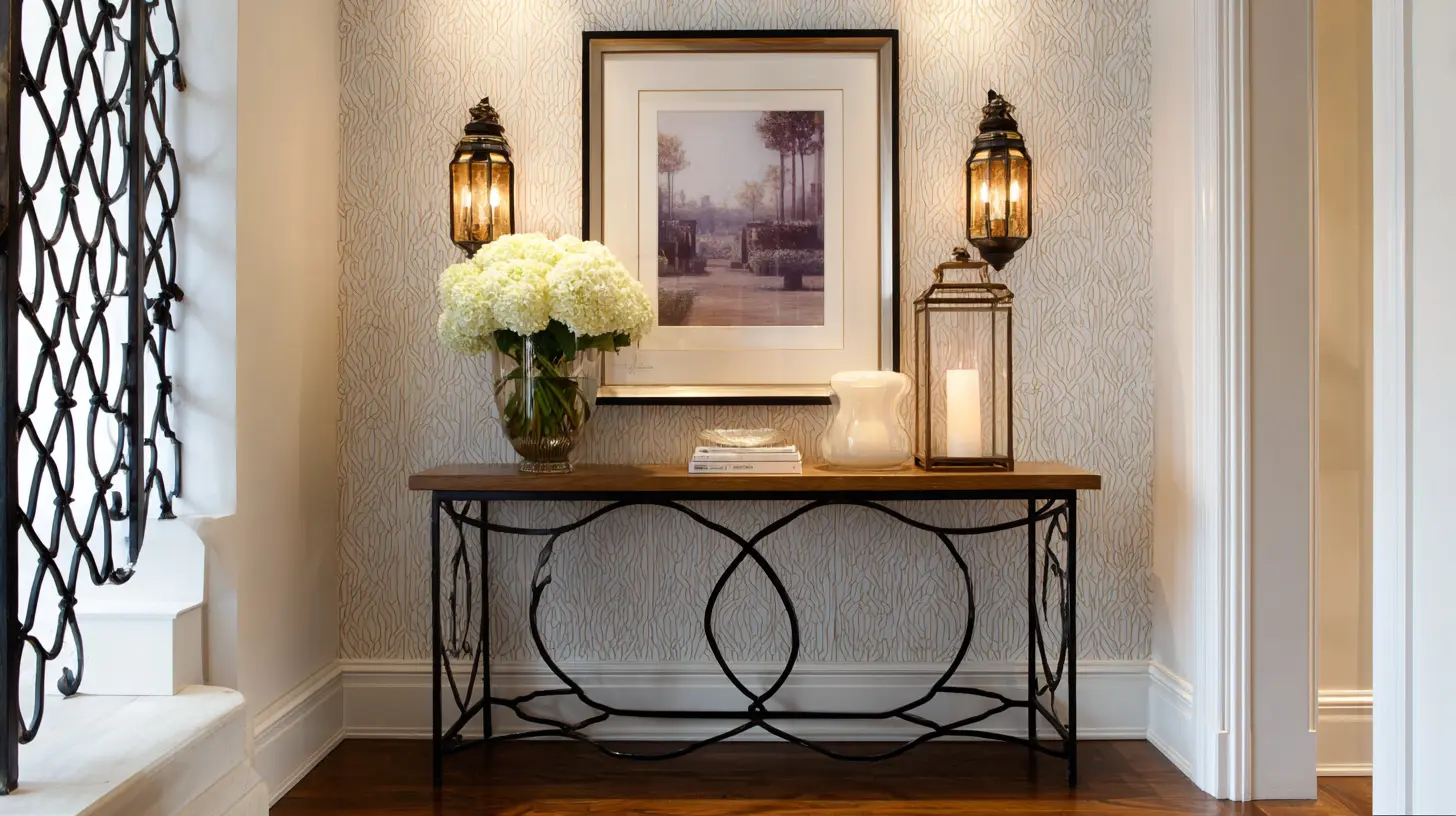
The entryway is the most classic spot. A console table here gives you a surface for keys, a bowl for loose change, and a lamp that welcomes you home.
Style it with a mirror above, a small tray to corral daily essentials, and one or two decorative objects.
Behind the Sofa
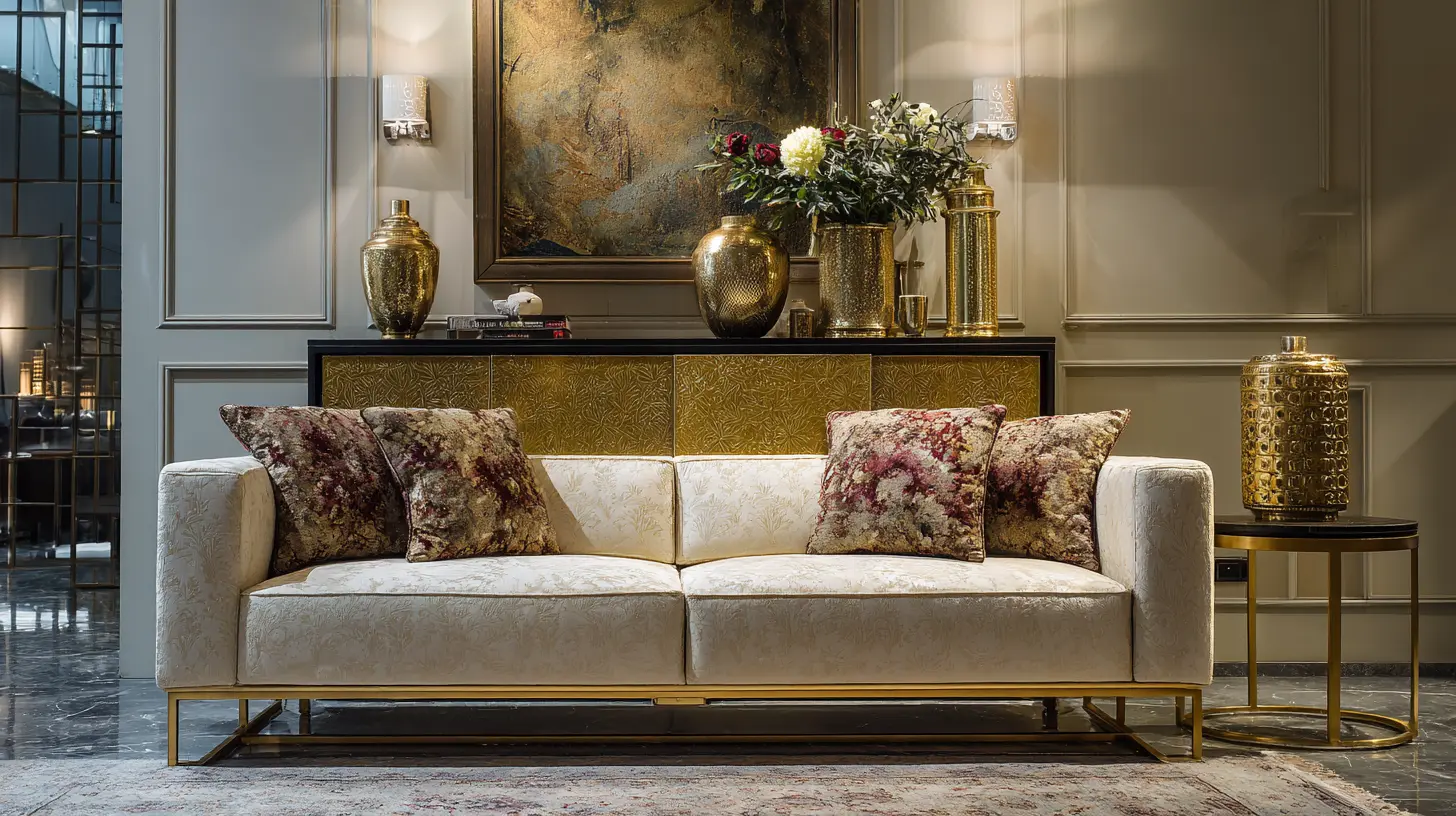
A table behind the couch fills the visual gap between the floating sofa and the wall. It works especially well in open-plan living rooms where the sofa sits away from the wall.
Keep the height at or just below the sofa back, no taller than the sofa backrest, so it looks intentional rather than awkward.
In a Hallway
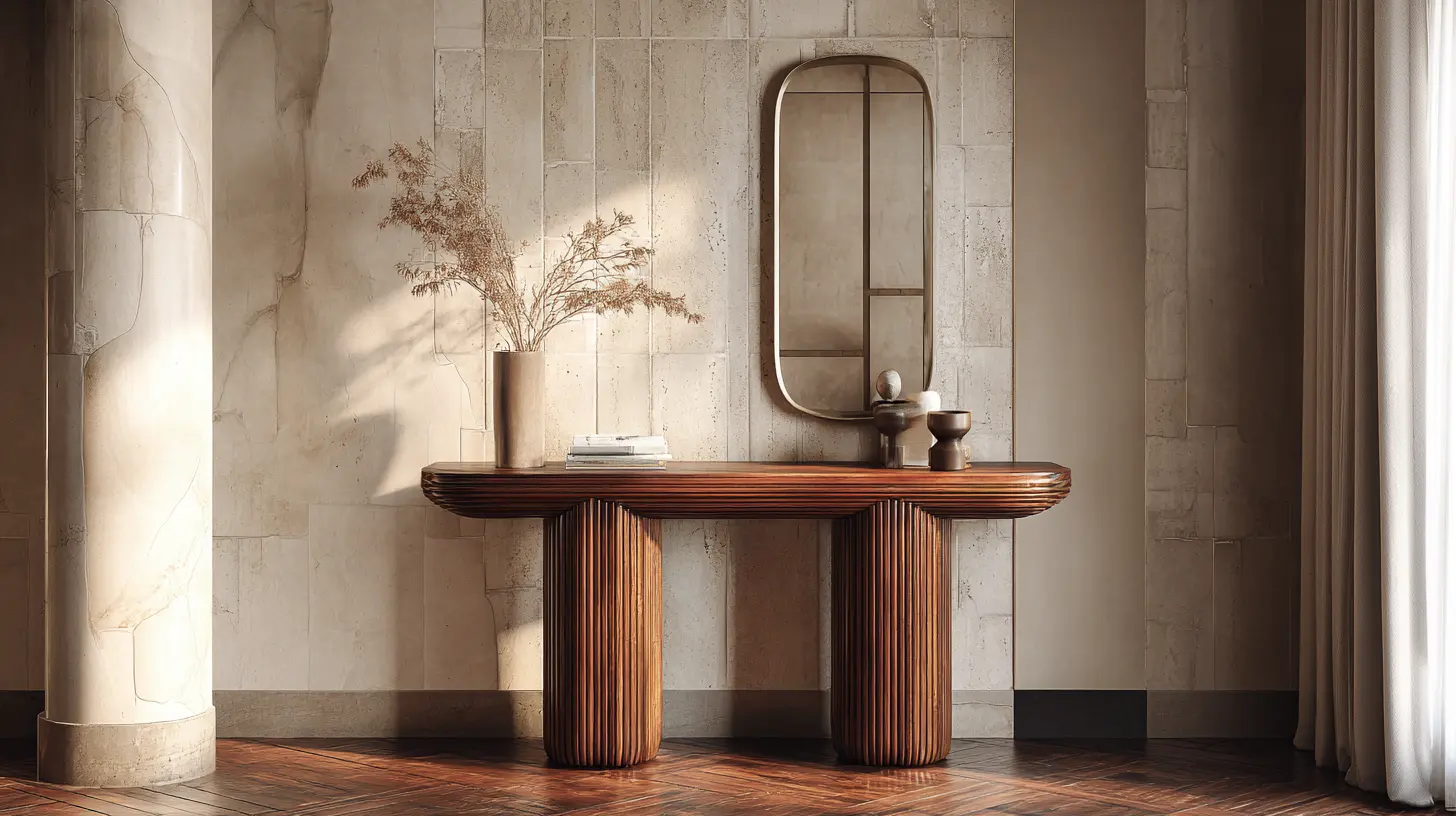
A hallway console table adds personality to what is often the most overlooked space in a home. Choose a narrow model, 10 to 12 inches deep, so it does not encroach on the walkway.
Leave at least 36 inches of clear passage alongside it. A mirror above it will also make the hallway feel wider and brighter.
Bedroom Console Table Styling
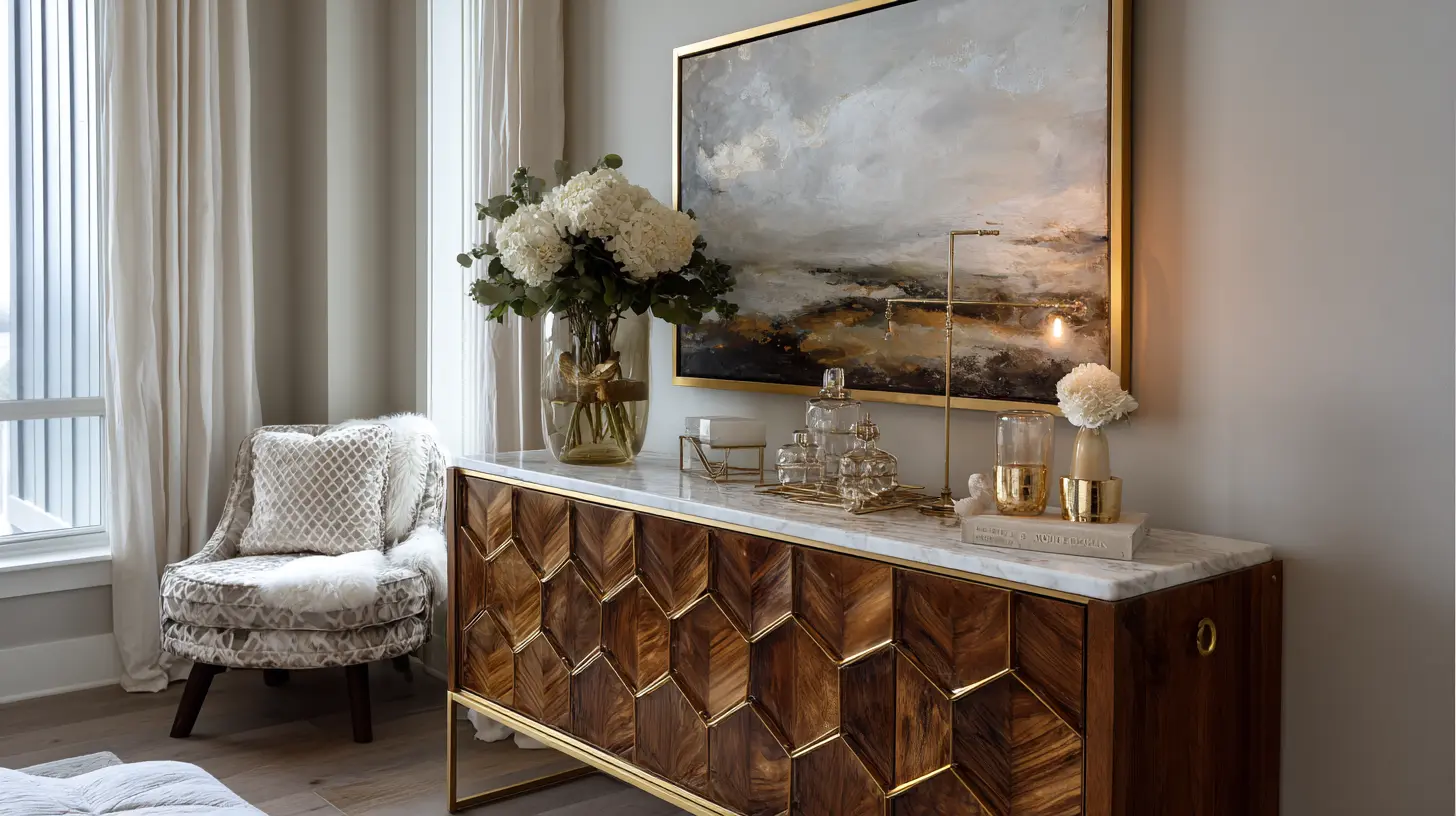
Placed along an empty wall or at the foot of the bed, a console table can serve as a mini vanity, a display shelf, or a nightstand alternative in a larger bedroom.
Pair it with a cushioned stool tucked underneath for a practical dressing area.
Dining Room or Empty Wall Spaces

In a dining room, a console table against the wall makes an elegant serving station or drinks area during gatherings.
Along any large blank wall, it prevents the space from feeling empty and gives you a styling opportunity without committing to a full cabinet or bookcase.
Most Popular Types of Console Tables
Not all console tables are built the same. The style, material, and shape you choose will shape how the piece feels in your room. Here are the most common types worth knowing.
Modern Console Tables

Clean lines, minimal ornamentation, and a mix of materials, such as glass, metal, and engineered wood, are common. Modern console tables work well in contemporary interiors where the goal is sleek and unfussy.
Recommended Products: Tribesigns 63-Inch Long Console Table, Huuger Modern Console Table, 41.3 Inch Sofa Table
Farmhouse Console Tables
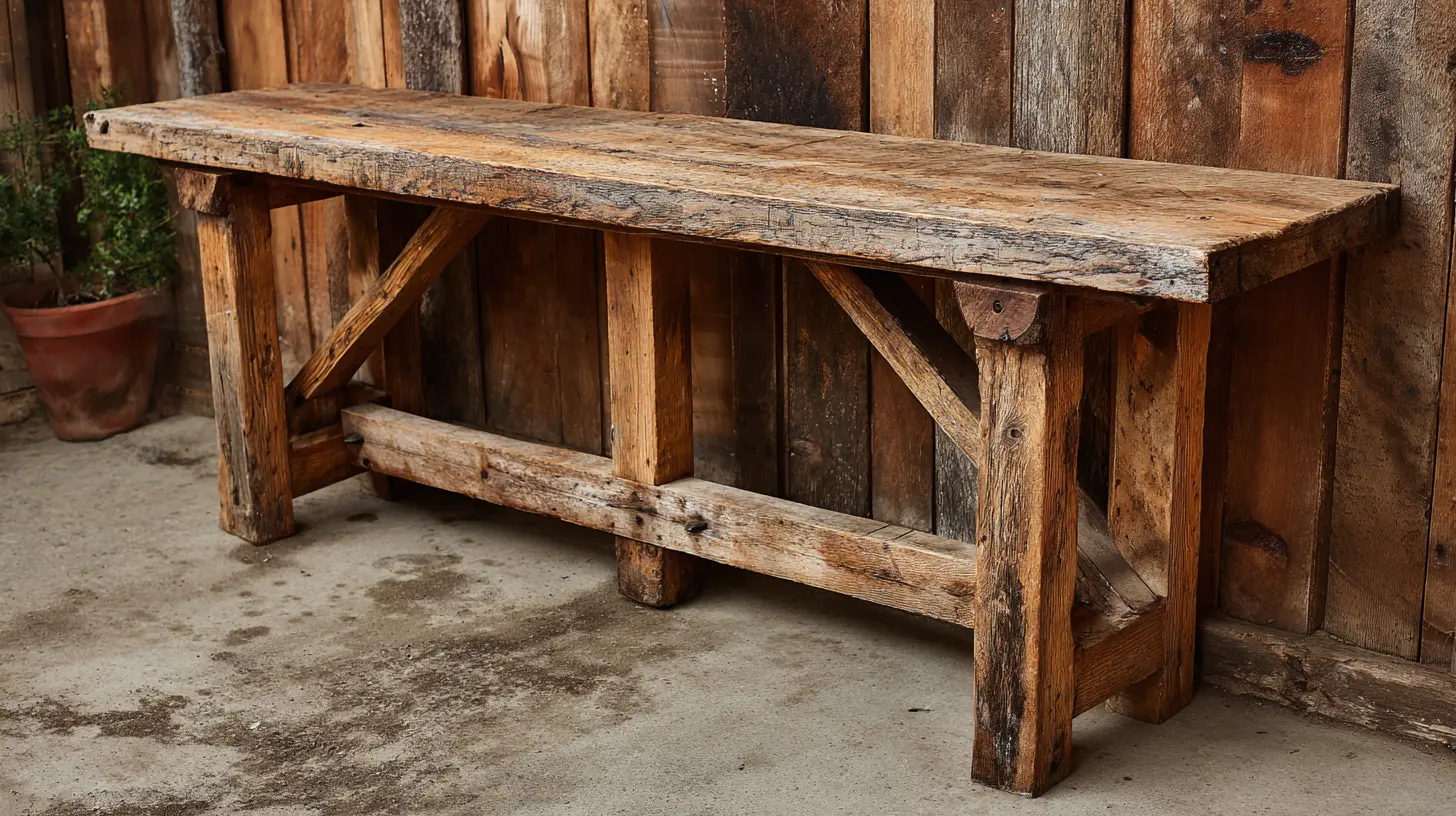
Typically built from solid or reclaimed wood with a natural, slightly worn finish. Farmhouse-style console tables add warmth and texture, and they pair well with linen, woven baskets, and greenery.
Recommended Products: VASAGLE LIRY Collection – Console Table, Homieasy Farmhouse Console Table with 3 Drawers
Industrial Console Tables
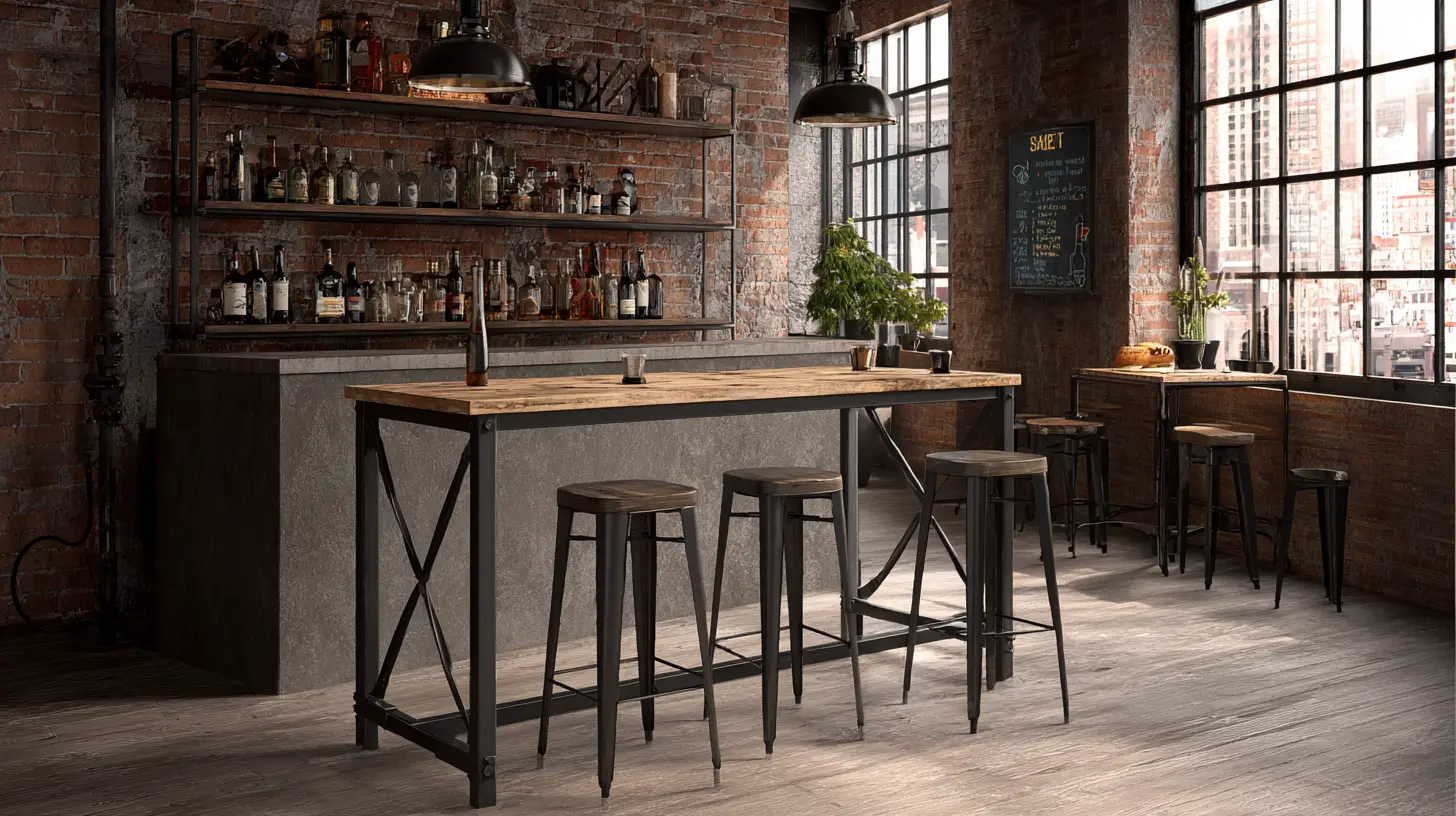
Combining metal frames with raw wood tops, industrial console tables have an urban, workshop feel. They work in loft-style spaces and modern homes that use exposed brick or concrete finishes.
Recommended Products: Hoctieon Industrial Console Table, MAHANCRIS 31.5″ Sofa Table, Industrial Console Table
Console Tables With Storage
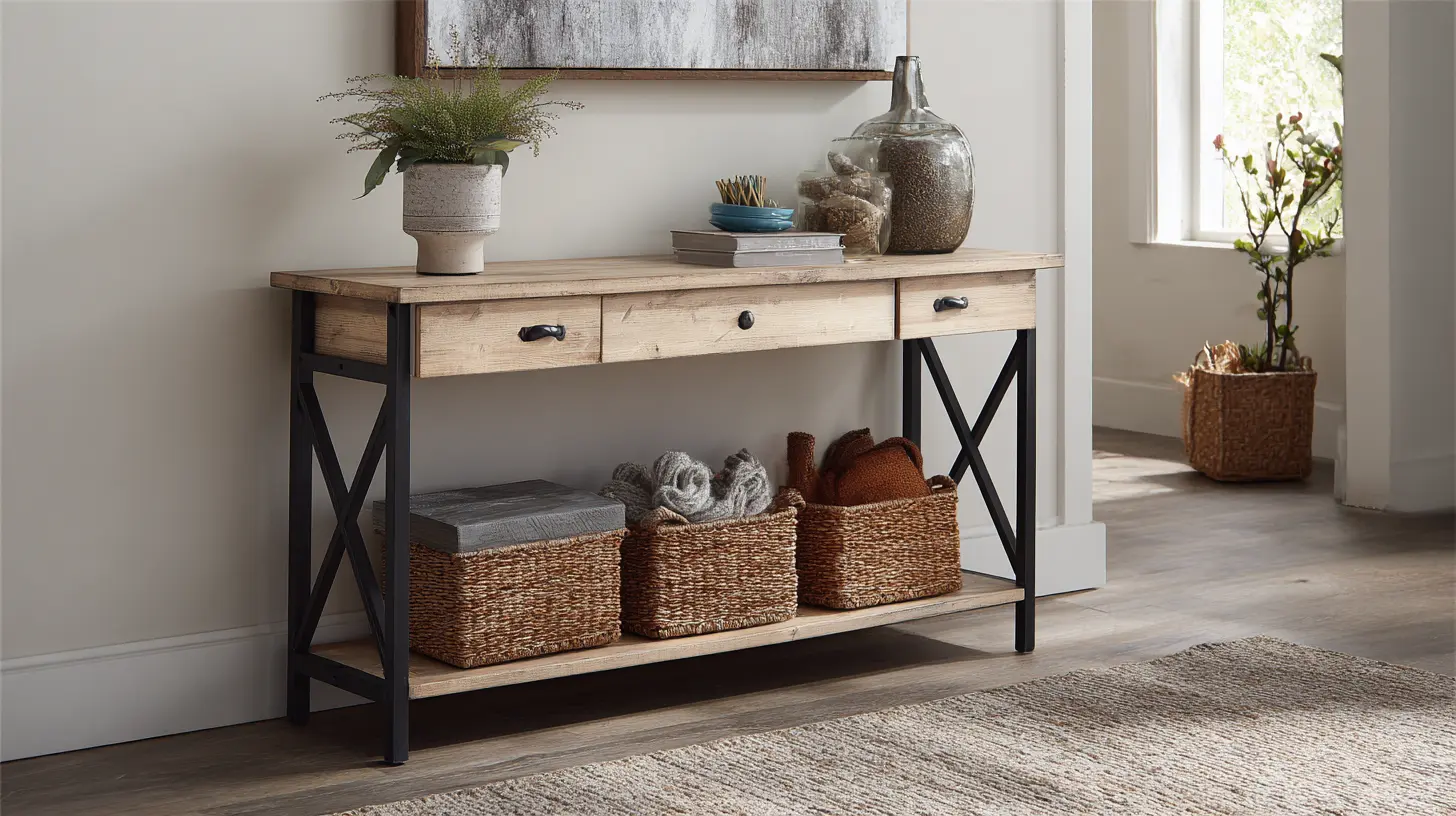
These include lower shelves, drawers, or cabinet doors for practical storage. A console table with storage is particularly useful in an entryway or hallway where you need to keep everyday items out of sight but within reach.
Recommended Products: Luoxiao Console Table for Entryway with 3 Rattan Drawers, Ecopriso 47” Entryway Table with Outlets and USB Ports
Narrow Console Tables for Small Spaces
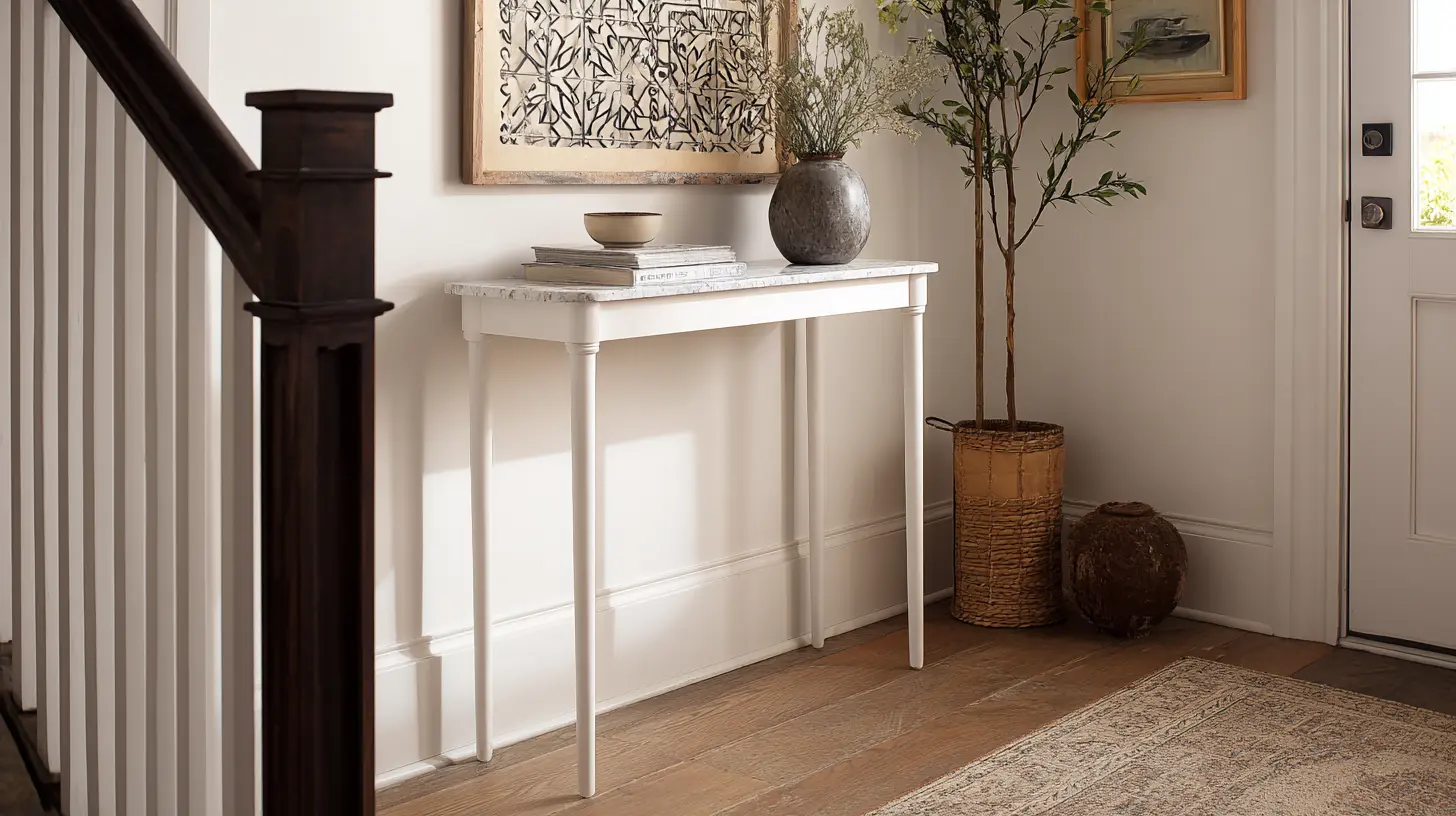
Built for tight spots, narrow console tables are often 10 to 12 inches deep and under 40 inches wide. They are ideal for small apartments, thin hallways, or any wall where space is genuinely limited.
Recommended Products: Plank+Beam Solid Wood Console Table, Narrow Entryway Console Table & Sofa Side Table
Console Table vs Side Table: What’s the Difference?

These two pieces are often confused, but they serve different purposes and live in different parts of a room.
| Feature | Console Table | Side Table |
|---|---|---|
| Shape | Long and narrow | Small; round, square, or rectangular |
| Typical size | 30–72 inches wide, 10–18 inches deep | 18–24 inches wide |
| Height | 28–36 inches | 22–30 inches (matches sofa arm height) |
| Placement | Against a wall, hallway, or behind a sofa | Beside a sofa, armchair, or bed |
| Main function | Display, decoration, space definition | Everyday utility (drinks, lamp, book) |
| Visual role | Focal point or room anchor | Background support piece |
A console table is wider, taller, and more of a statement. A side table is smaller and shorter, designed purely for convenience in a seating arrangement. Both are useful; they just do different jobs.
Common Console Table Sizes and Dimensions
Getting the size right makes the difference between a piece that looks intentional and one that feels out of place.
Standard Console Table Height
Most console tables stand between 28 and 36 inches tall. The most common contemporary height is 30 to 32 inches, which aligns with the average sofa backrest and feels natural when standing beside the table.
For behind-sofa placement, the tabletop should sit at or just below the back of the sofa, roughly 1 to 3 inches lower.
Ideal Width for Small Spaces
For tight hallways or small entryways, a console table 10 to 12 inches deep is the practical minimum.
Width-wise, aim for a table that fills roughly two-thirds of the wall space it sits against; this keeps the arrangement proportional without feeling crowded.
Check here: Standard height of a table
How to Style a Console Table
Good console table styling is all about balance, layering, and creating visual interest without overcrowding the space.
A few well-placed decorative pieces can make even a simple console table look polished and functional.
- Use the Rule of Three: Combine items of different heights, such as a lamp, a vase, and a tray, for a balanced look.
- Add Mirrors or Wall Art: A mirror or framed artwork above the table helps visually anchor the setup.
- Layer Decorative Objects: Mix textures such as wood, ceramic, metal, and glass to add depth and character.
- Include Storage Baskets or Books: Baskets and stacked books add texture while keeping the space practical.
- Add Lighting for Balance: A table lamp creates warmth and gives the arrangement a natural focal point.
With the right console table ideas, you can turn an empty wall, hallway, or entryway into a stylish and functional focal point.
Choose the Right Material for a Console Table
|
Conclusion
A console table is one of the few furniture pieces that earns its place in almost every room.
Slim enough for a narrow hallway, stylish enough for a living room wall, and practical enough for an entryway, it does more work than its size suggests.
The right piece works just as well in a small apartment as in a large family home, and with so many styles, materials, and sizes available, finding one that fits your space and aesthetic is genuinely straightforward.
Ready to find yours? Scroll above again and see our full range of console tables and bring your space together.
Frequently Asked Questions
What is the Difference Between a Console Table and a Sofa Table?
They are essentially the same piece of furniture used in different positions. A console table is the general term for a long, narrow table placed against a wall. When that same table is placed specifically behind a sofa, it is referred to as a sofa table.
What Size Should a Console Table Be?
Standard console tables are 28 to 36 inches tall, 10 to 18 inches deep, and 30 to 72 inches wide. For behind-sofa placement, match the height to the back of the sofa.
Are Console Tables Only for Entryways?
No. Console tables work in hallways, living rooms, bedrooms, dining rooms, and any space with an empty wall. They are especially popular in entryways because they suit that function.