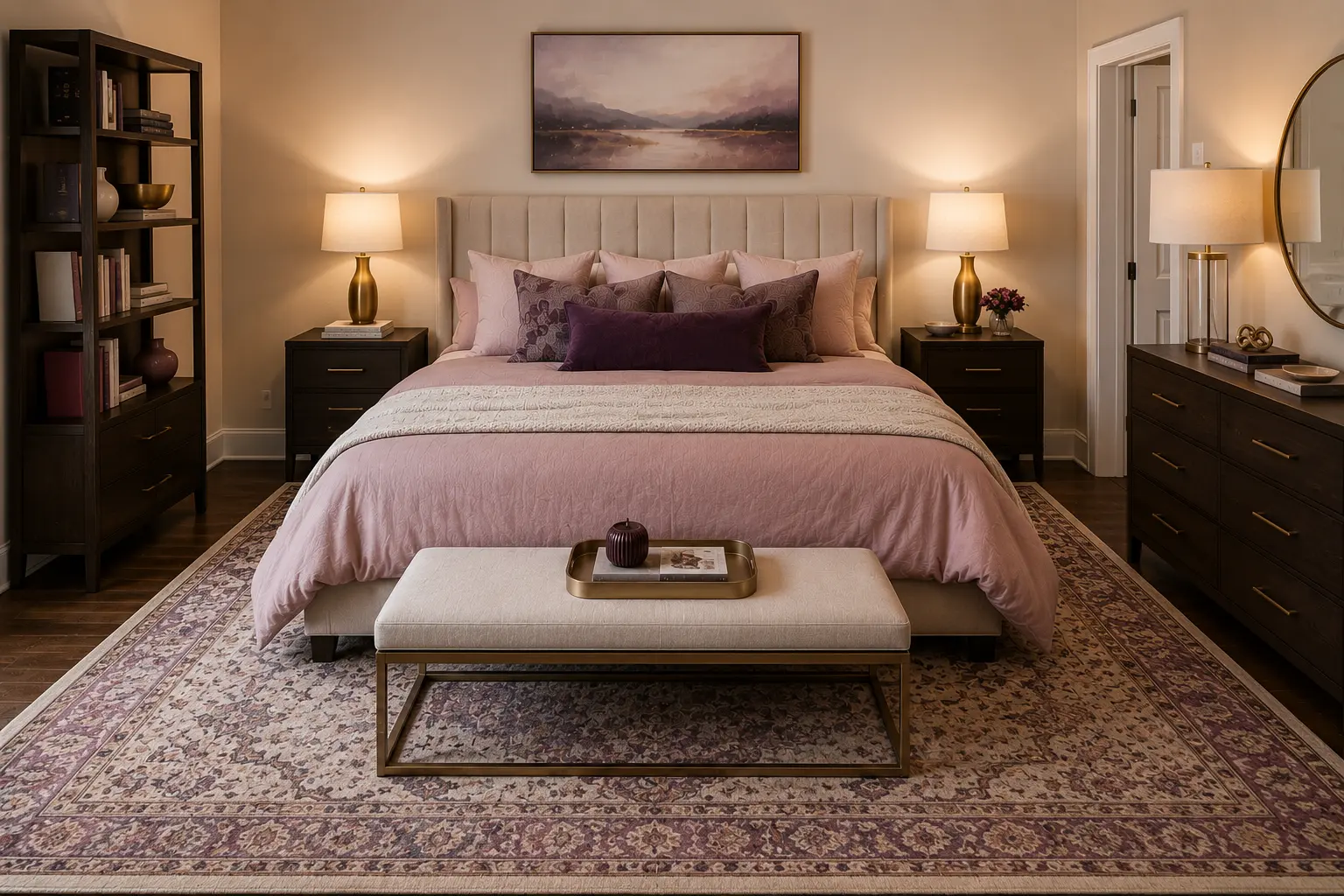
Figuring out what size rug for a king bed works best is one of those decisions that looks simple but trips up a lot of people.
I have seen well-decorated bedrooms fall flat simply because the rug was two sizes too small.
A 9×12 rug is the most recommended size for a king bed, but a queen bed rug size follows entirely different rules. Room dimensions, furniture layout, and placement style all change the answer.
Getting the size right comes down to three things: how big your room is, where your furniture sits, and how much floor space you want covered.
What Size Rug for a King Bed
A king bed measures 76×80 inches. The right rug size depends on your room size, furniture layout, and the amount of floor coverage you want. Here is a fast reference to get started.
| Rug Size | Best For | How It Looks Under a King Bed |
|---|---|---|
| 8×10 | Small bedrooms | Frames the lower two-thirds of the bed |
| 9×12 | Most king beds | Best overall balance, can reach nightstands |
| 10×14 | Large rooms | Wider soft landing space |
| 12×15 | Oversized bedrooms | Full room-anchor look |
| 2×8 runners | Tight spaces | One runner on each side |
| 5×8 or 6×9 | Budget or small accent | Foot-of-bed placement only |
The 9×12 is the most recommended option for most bedrooms. If your room is under 11 feet wide or you are working with a tight budget, an 8×10 is the next best choice.
How to Measure Your Room Before Buying a Rug
Measuring the room before ordering prevents the most common sizing mistakes.
Use a tape measure to get the length and width of your bedroom floor, the same way you’d measure your room before placing any large furniture.
Then subtract 18–24 inches from each wall to find your maximum rug size, since rugs should not run wall to wall.
A simple trick is to use painter’s tape on the floor to mark out the dimensions of the rug you are considering.
Walk around the marked area, check that doors can open freely, and confirm the rug clears any dressers or wardrobes before committing to a size. You can also use a rug size calculator.
Factors Affecting Rug Size for a King Bed
The right rug size is not determined by the bed alone. Room dimensions, furniture placement, walking space, and rug layout all play a role in how balanced the bedroom feels.
A rug that looks proportional in one room can feel too small or too large in another. Before choosing a size, consider how much floor you want covered and whether nightstands, benches, or other furniture will sit on the rug.
Bedrooms with limited space often benefit from a smaller rug, while larger primary suites can accommodate wider coverage.
Door clearance and dresser access also matter, since oversized rugs can interfere with daily use. Taking these factors into account helps create a layout that feels comfortable, practical, and visually balanced.
Best Rug Size for King Bed by Room Layout
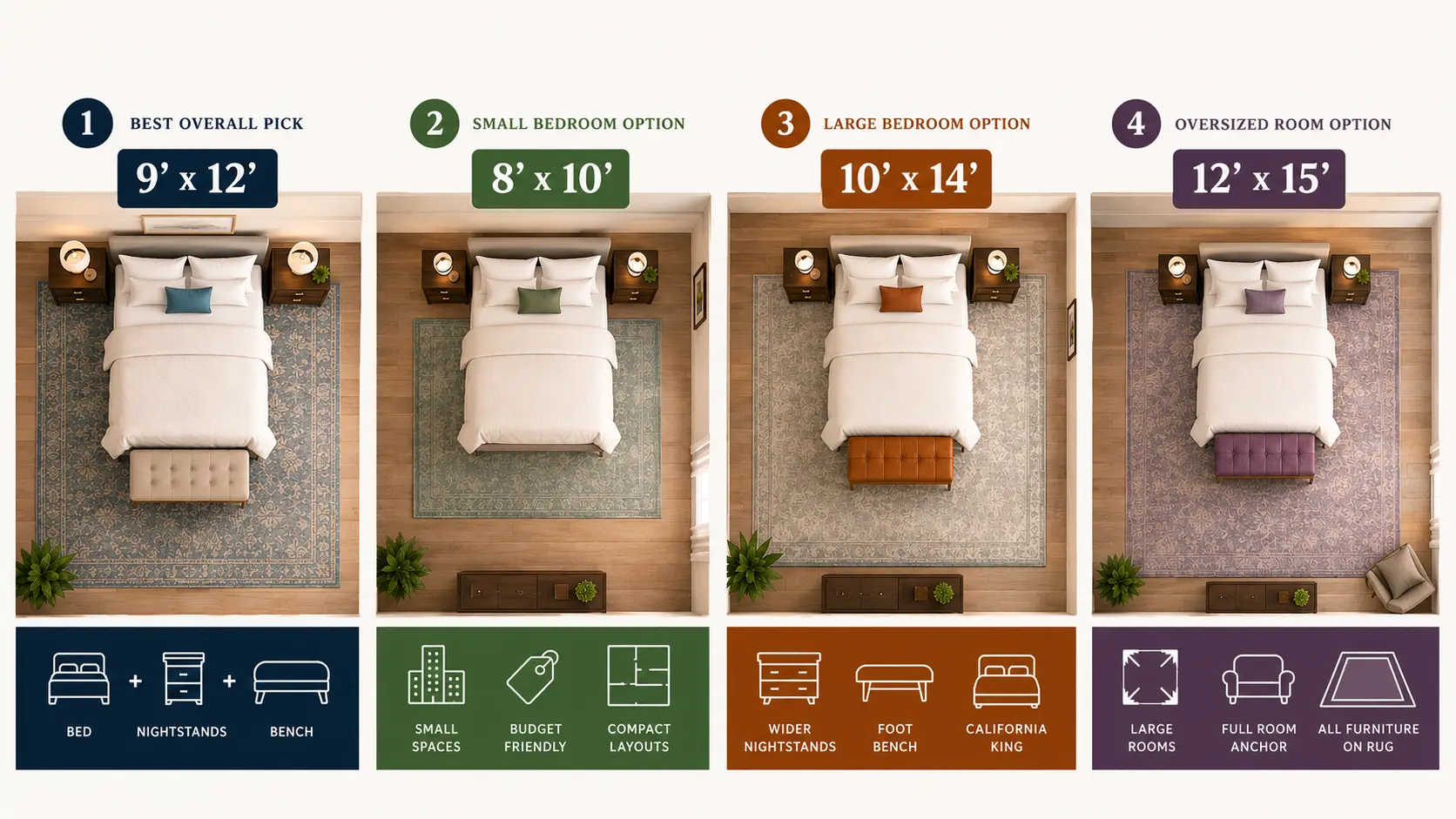
Room size and how you arrange furniture matter just as much as the bed itself.
The same rug can look off in one room and perfectly balanced in another.
These four options cover the most common bedroom setups, from compact apartments to large primary suites.
1. Best Overall Pick: 9×12
Wayfair recommends a 9×12 rug for king beds because it works in rooms around 11×14 feet or larger and can accommodate the bed frame, a foot bench, and nightstands, depending on the bed’s width.
A 9-foot-wide rug (108 inches) leaves approximately 16 inches of rug on each side of a standard 76-inch king bed so that nightstands can sit partially or fully on the rug, depending on their width.
It is the safest, most balanced choice for most standard king setups.
2. Small Bedroom Option: 8×10
The 8×10 is a compromise size for budget or small rooms, but the 9×12 is strongly preferred even in moderately sized spaces. It frames the lower two-thirds of the bed but leaves nightstands off the rug entirely.
This size works well in apartments, narrow bedrooms, or when staying within a tighter budget.
3. Large Bedroom Option: 10×14
A 10×14 works when your room has more open floor space, a foot bench, wider nightstands, or a California king.
Interior designers often specify a 10×14 for master suites where the bed, two nightstands, and a foot bench all need to sit on the rug with room to spare. It suits rooms that are 13×16 feet or larger.
4. Oversized Room Option: 12×15
For expansive master bedrooms the exceed 14×16 feet, a 12×15 rug covers the entire sleeping area and creates a more pulled-together feel.
This size works best when the goal is a full room-anchor look with all furniture sitting on one rug.
Visual Rug Placement Ideas Under a King Bed
Where you place the rug changes how the whole room feels. The same 9×12 rug can look completely different depending on where it starts relative to the headboard. These five layouts cover every common setup.
Layout 1: Lower Two-Thirds of the Bed
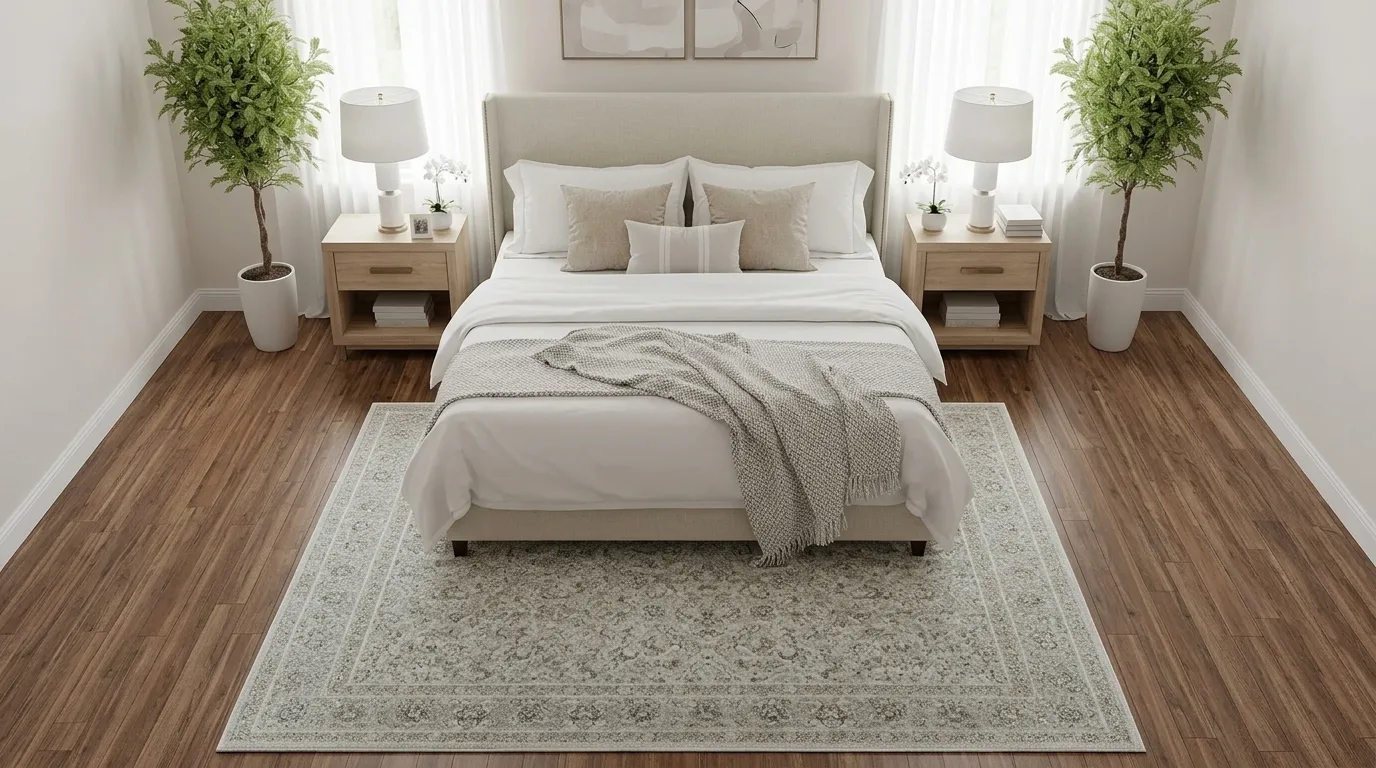
Best with an 8×10 or 9×12. The rug starts about one-third of the way down from the headboard and extends past the foot.
Nightstands stay off the rug entirely. This layout works well in smaller rooms and lets hardwood or tile floors show near the headboard.
Layout 2: Rug Starts Just Before the Nightstand
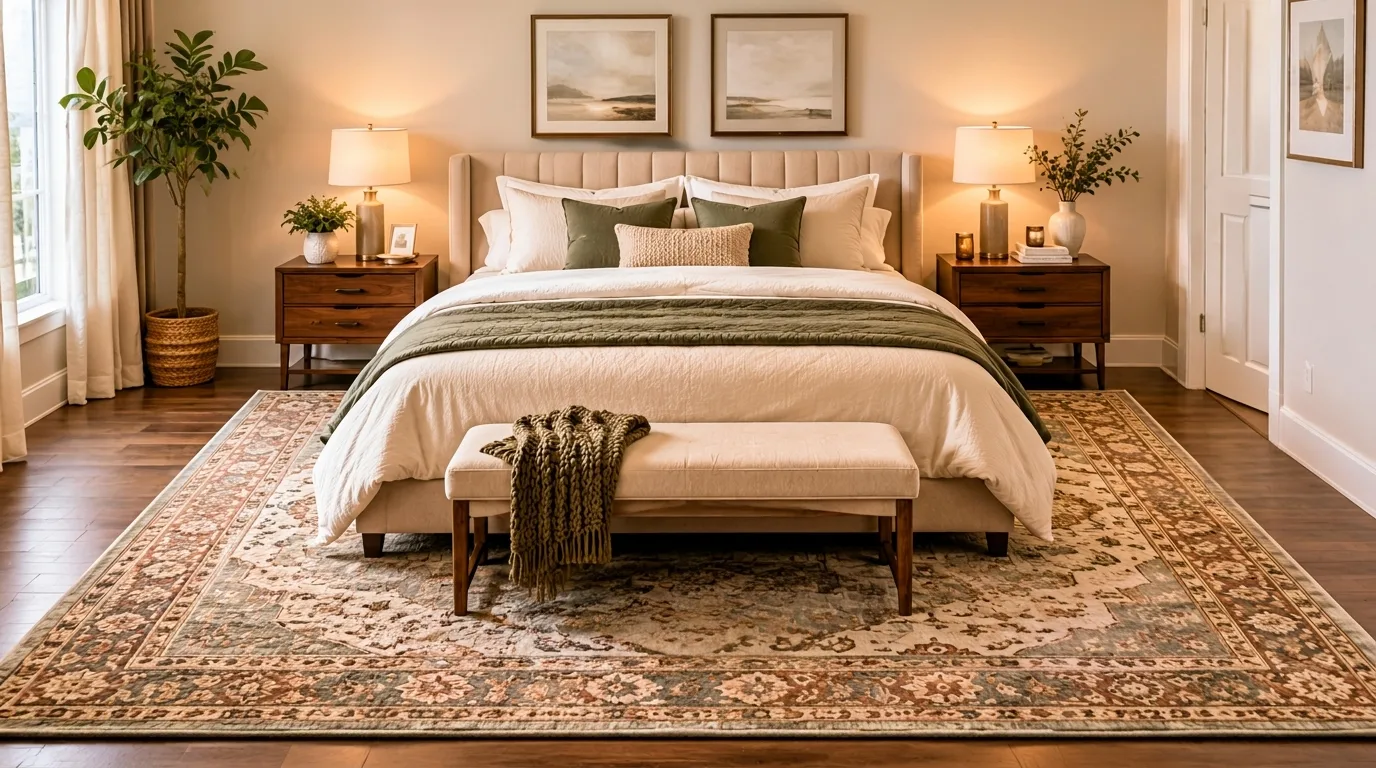
Best with a 9×12. Wayfair describes this as the most practical visual layout; the rug extends past both sides and the foot of the bed for a balanced, grounded look. Nightstands sit partially or fully on the rug, depending on their size.
Layout 3: Bed, Nightstands, and Bench All on the Rug
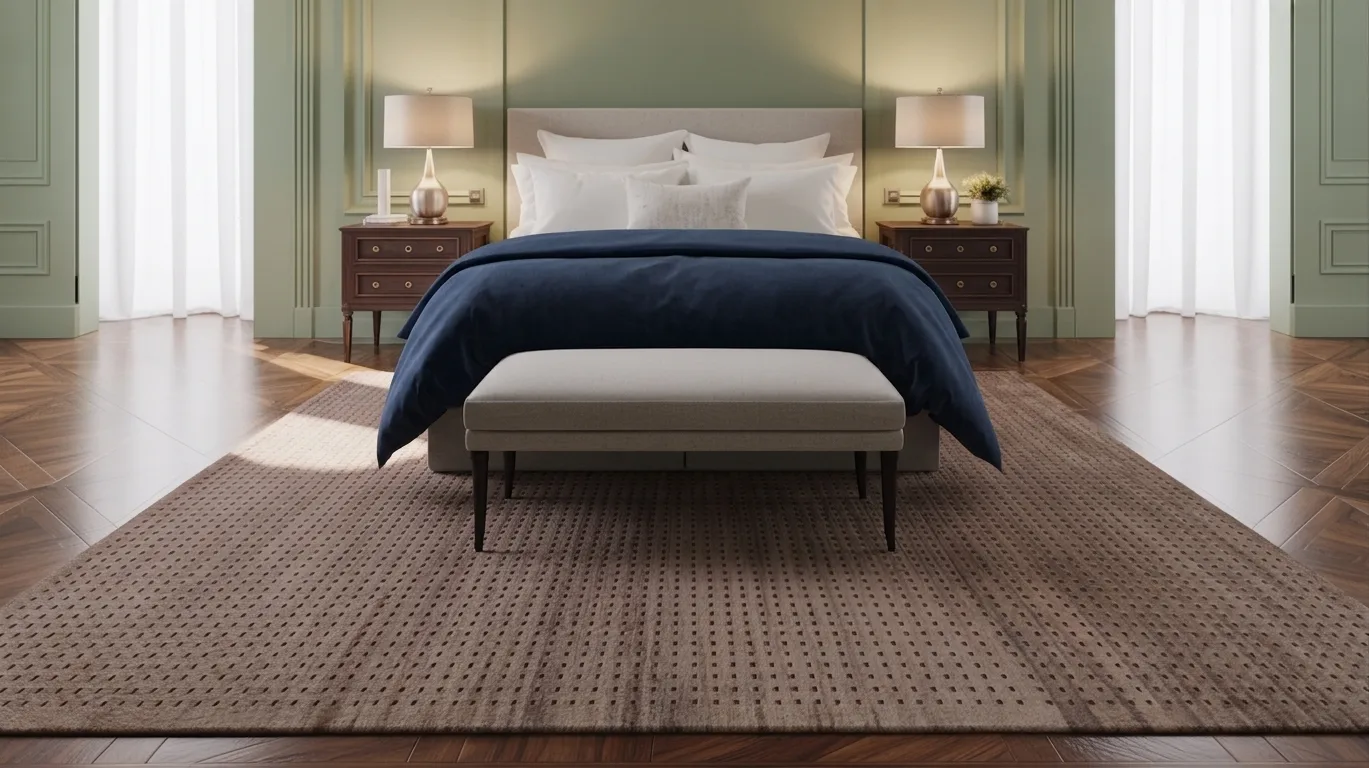
Best with a 10×14 or 12×15. All furniture sits fully on the rug, giving the sleeping zone a defined, hotel-style look. Good for larger primary bedrooms where the rug needs to hold multiple furniture pieces.
Layout 4: Two Runners on Each Side
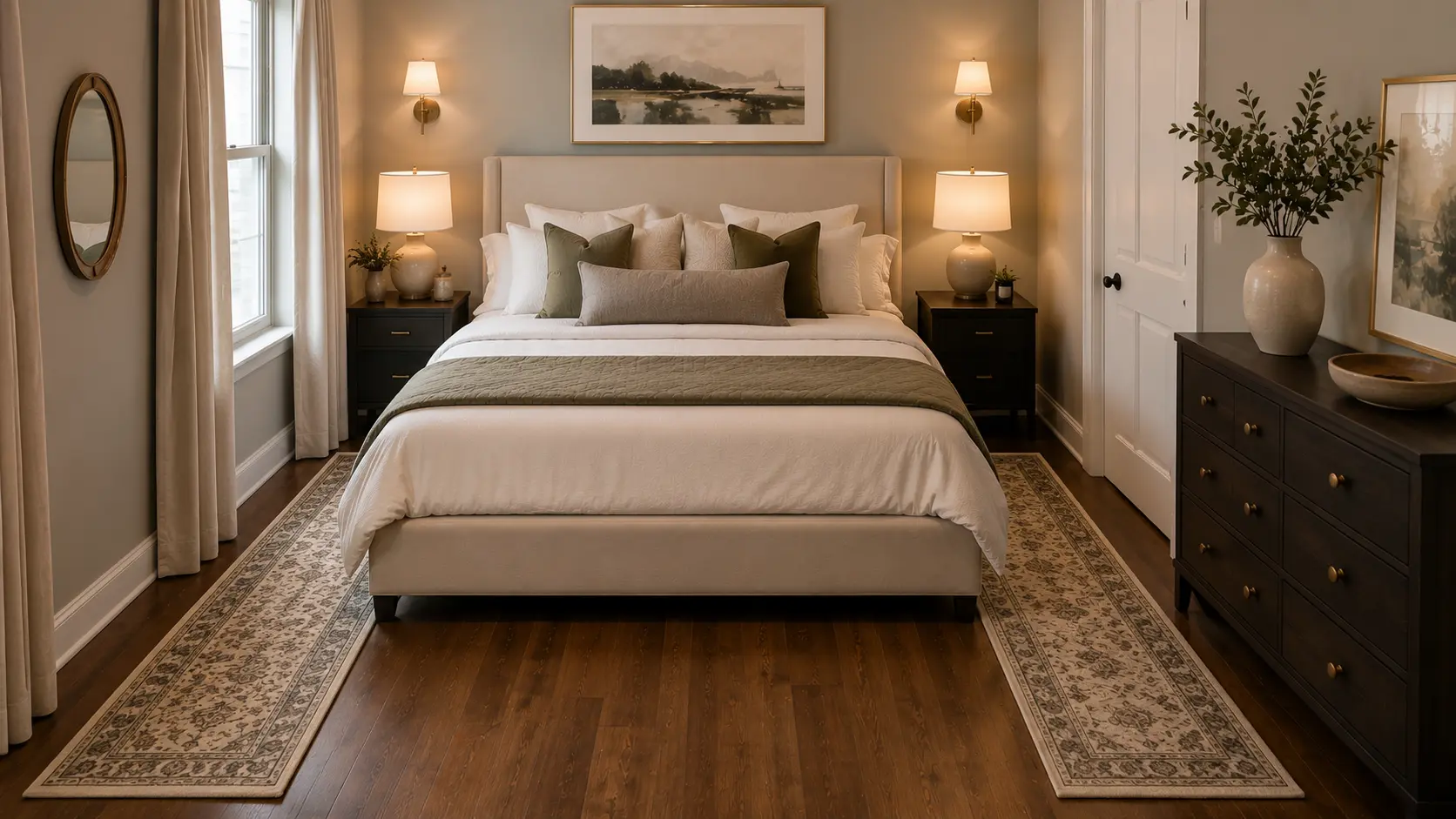
Best for tight rooms where a large rug would block a door or bump into a dresser. Place one runner on each side of the bed. Wayfair notes this works for spaces and beds of all sizes and is a good option when two sides of the bed sit against a wall.
Layout 5: Foot-of-Bed Rug
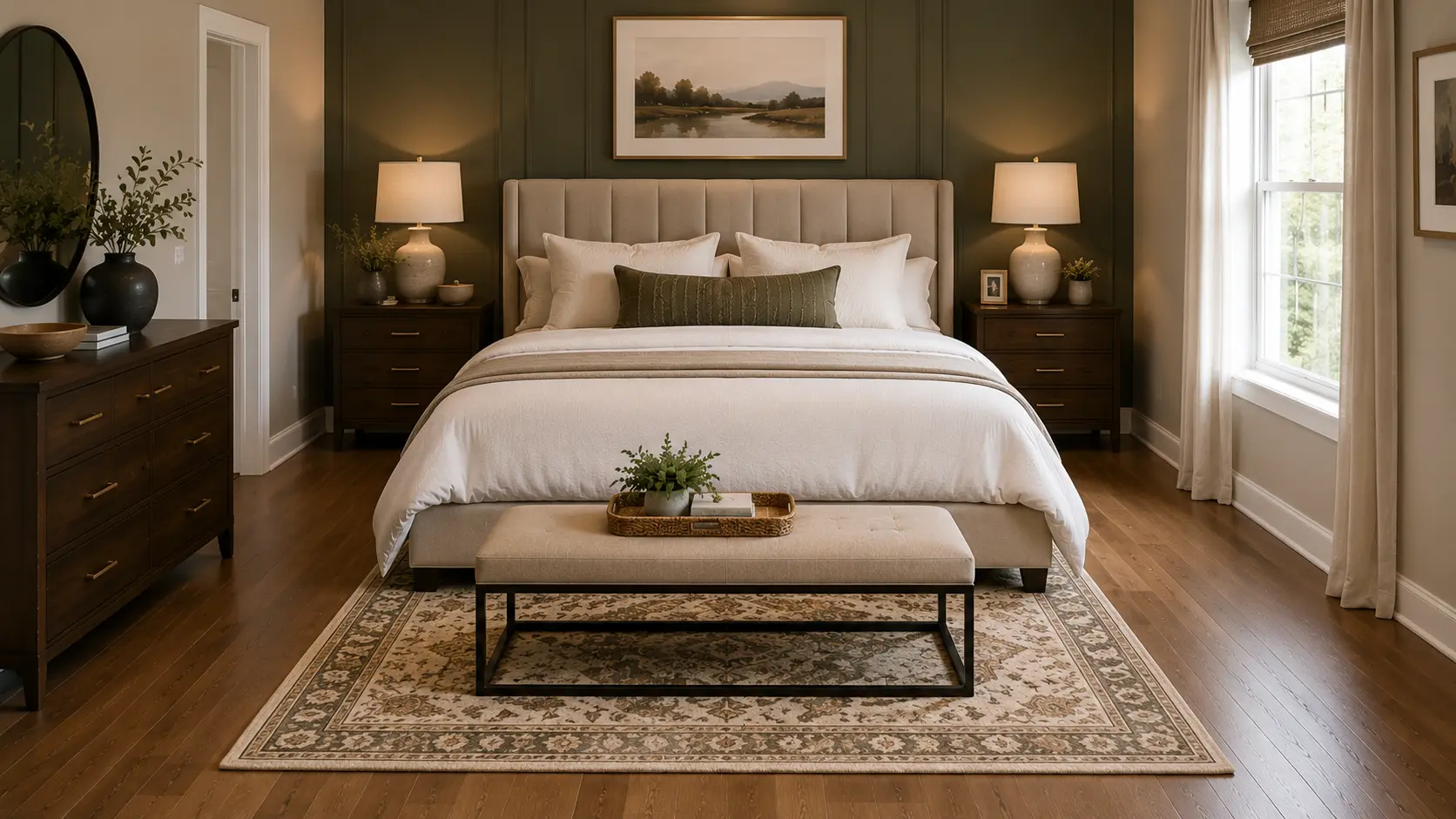
Best with a 5×8 or 6×9. The rug sits only at the foot of the bed as a decorative layer. It works well alongside a bench at the end of the bed, but it is not a full-coverage solution and does not provide side landing space.
Good rug placement makes the bed feel anchored without crowding the room. Choose a layout based on your floor space, furniture, and how much rug you want underfoot.
How Much Rug Should Show Around a King Bed
The standard rule is to aim for at least 18–24 inches of rug extending beyond the foot of the bed, with 14–16 inches on each side as a practical target for a 9×12.
A 9-foot-wide rug (108 inches), minus the 76-inch king bed width, leaves roughly 16 inches per side, slightly under the 18-inch ideal but still balanced and comfortable.
To hit 18–24 inches on all sides, including the sides, a 10×14 gives more room to work with. If nightstands need to sit fully on the rug, go with a 10×14 or larger.
Queen Bed Rug Size
A standard queen bed measures roughly 60 inches wide by 80 inches long, with rug choice depending largely on room size, clearance, and furniture placement.
For a queen bed (60×80 inches), the most recommended rug sizes are 8×10 for standard rooms and 9×12 for large bedrooms, with the rug extending at least 18–24 inches beyond the sides and foot of the bed for balance and comfort.
Wayfair recommends a 5×8 rug for queen beds as a size that provides visual balance, roughly 18 inches of exposure on each side, and pairs well with nightstands in smaller to standard-sized rooms measuring around 14×16 feet.
Sources: Rugs-direct, Jonathany,Wayfair
King Bed Rug Size Examples
The right rug size depends on the bed type, room size, and nearby furniture. A standard king usually works best with a 9×12 rug, while larger setups may need a 10×14. Use these measurements as a quick guide before buying.
| Bed Type | Bed Size | Minimum Rug | Recommended Rug | Notes |
|---|---|---|---|---|
| Standard king | 76×80 inches | 8×10 | 9×12 | Fits most rooms 11×14 or larger |
| California king | 72×84 inches | 9×12 | 10×14 | Narrower but longer than standard king; extra rug length needed at foot |
| King with a bench | 76×80 + bench | 9×12 | 10×14 | Bench needs to sit on the rug |
| King with large nightstands | 76×80 + nightstands | 9×12 | 10×14 | Nightstands sit fully on the rug at 10×14 |
| Queen bed | 60×80 inches | 6×9 | 8×10 | 8×10 is the standard queen rug size; 6×9 works in smaller rooms |
A rug should leave enough space around the bed without blocking doors, drawers, or walkways.
Measure the full bed setup, including benches and nightstands, before choosing the final size.
When in doubt, size up for a cleaner and more balanced layout.
Choosing the Right Rug Style
Choosing the right rug style comes down to pattern, material, color, and pile height. Smaller bedrooms often look better with solid rugs or small-scale patterns because they keep the space feeling open.
Larger rooms can handle bigger prints, darker shades, and stronger patterns without feeling crowded.
Cotton and washable rugs are easy to clean, while wool feels softer and lasts well under furniture. Jute adds natural texture, but it can feel firm under bare feet.
Light and neutral rugs can make a small bedroom feel brighter, while patterned rugs hide marks better over time.
For king beds, low-pile rugs are usually the most practical because furniture legs sit evenly and the rug stays easier to maintain.
Pro tip: Wool, cotton, and jute are the most common rug materials for bedrooms. Wool offers durability and softness, cotton is easy to maintain, and jute adds natural texture at a lower cost.
Mistakes to Avoid With Rugs
Getting the size right is only part of it. These four mistakes regularly make even well-priced rugs look wrong once they are on the floor.
- Choosing a rug that is too small: A 5×8 rug often disappears beneath a king bed and looks undersized. For better balance and coverage, choose at least an 8×10 rug.
- Placing nightstands half on and half off: Keeping one nightstand on the rug and the other off creates an uneven look. Place both fully on or fully off.
- Ignoring door swing and dresser clearance: Large rugs can block doors or restrict drawer movement in smaller bedrooms. Measure floor clearances before choosing your rug size.
- Forgetting rug pad thickness: Rug pads add height and improve grip on hard floors. Select a pad about 1–2 inches smaller on all sides than the rug.
A rug should fit the room, not just the bed. Measure first, then choose a size that lets the furniture, doors, and floor space work together naturally.
Conclusion
The right rug pulls a king bedroom together in a way that furniture alone cannot. It adds warmth underfoot, defines the sleeping zone, and makes the whole room feel more put together.
Getting the right size rug for a king bed does not require a designer budget or years of decorating experience.
It just takes the right measurements and a clear idea of how you want the space to feel.
Start with your floor measurements, mark the size out with tape before buying, and trust what looks balanced in your actual space.
Frequently Asked Questions
Can a Rug Be Too Big For a King Bed?
Yes. A rug that runs too close to all four walls looks like wall-to-wall carpet. Leave at least 18 inches of bare floor between the rug edges and the walls.
Can You Layer Rugs Under a King Bed?
Yes. Layer a smaller rug at least two sizes down over a larger base rug. For example, a 6×9 works well layered over a 9×12.
Should a Rug Go Under a Bed on Carpet?
Yes. Placing a rug over the carpet still visually defines the sleeping zone and adds texture, even without the contrast with the hardwood floor.