French country interior design isn’t about filling a room with things. It’s about letting space breathe and tell a story.
Every choice, from flooring to furniture, shapes how lived-in a home feels.
The style blends muted colors, natural textures, and a few statement pieces to build warmth without clutter.
Light and small details carry most of the character. Swap in linen curtains or brass hardware, and the whole mood shifts.
It’s a style that feels effortless but intentional. Comfortable, refined, and never in a rush to impress.
What is French Country Interior Design?
French country design comes from farmhouses in Provence, in the south of France.
Those old homes had stone floors, wood beams, worn linen, and faded walls. This style borrows that same feeling for modern homes.
It’s not about looking polished. It’s about a room feeling like someone actually lives there.
The best French country rooms look calm and settled, like they came together slowly. I’ve never seen one that looked styled in a weekend, and that’s the point.
What makes it work is mixing rustic materials with a few timeless pieces. Think weathered wood, simple linen, mismatched chairs, one antique mirror over the fireplace.
Nothing here is trying too hard.
The modern version runs softer than the traditional one. Warm creams, soft whites, dusty blues, and muted greens replace the old bold reds.
French Country Interior Design Ideas for Every Space
Every room below leans on one main design move. Spot that move first, then see how everything else supports it.
1. The Sun-Washed Living Room with Exposed Ceiling Beams
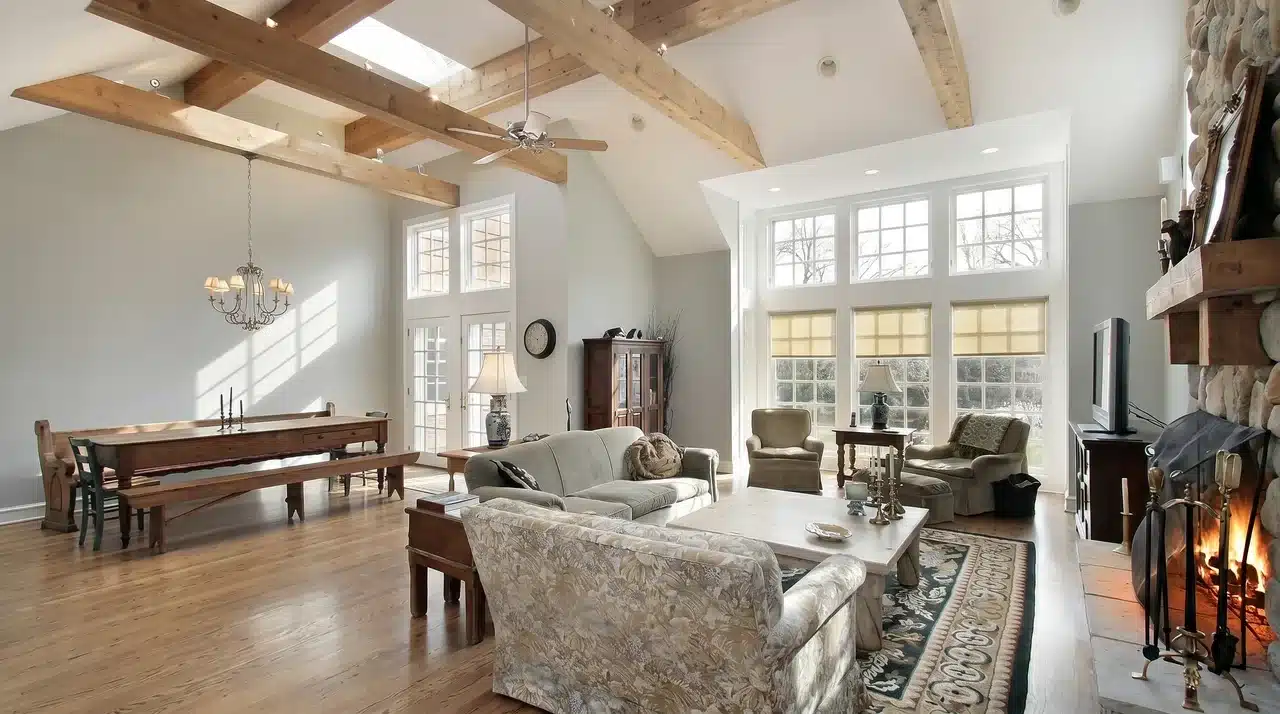
Exposed wood ceiling beams set the tone here before you add a single piece of furniture.
Pair them with a linen slipcovered sofa and a stone fireplace, and the room stays soft instead of heavy.
Paint the walls a gentle sage, and sunlight bounces around the space all day. The beams add texture while the furniture stays simple.
Even a brand-new build can look decades old with stained pine in a grey finish. Natural light and worn materials do most of the work, no extra decoration needed.
2. The All-White Kitchen with Open Shelving and Copper Pots
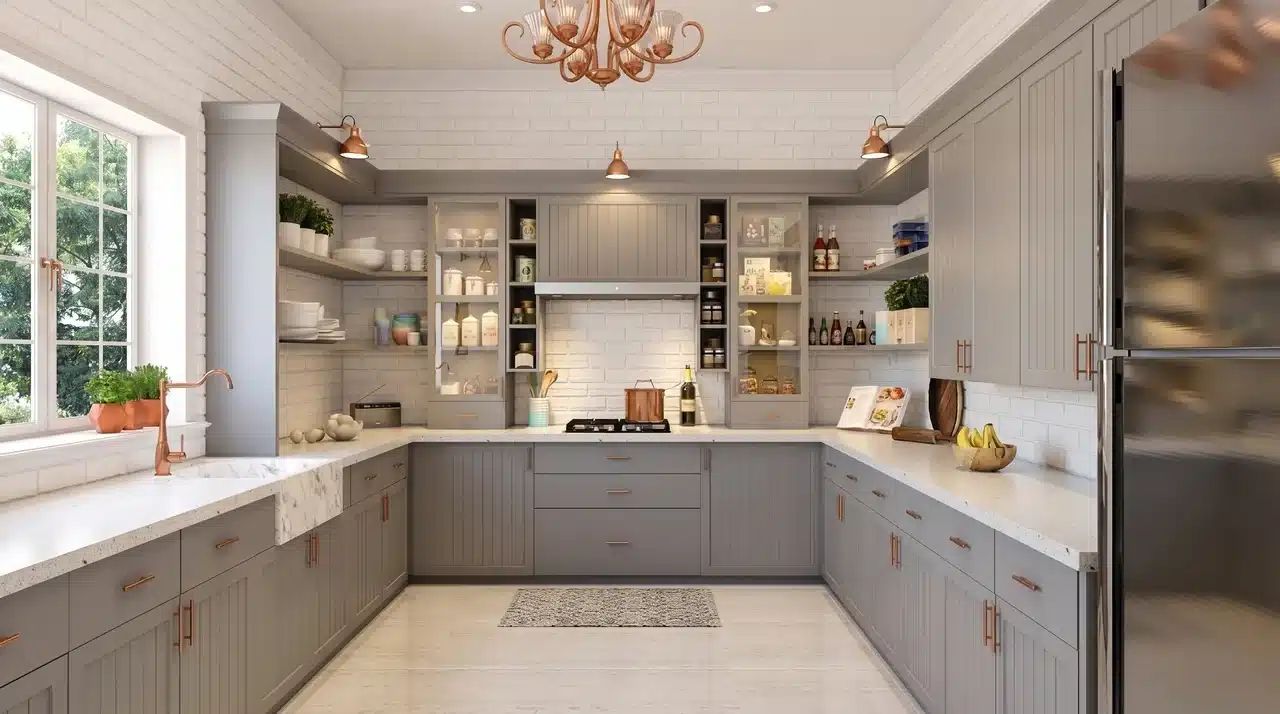
Swap the upper cabinets for open shelves, and this kitchen opens up right away.
Hang a few copper pots, and the space feels instantly lived-in and warm.
Whitewashed cabinets and a farmhouse sink bounce light from the window above. Two or three copper pieces are enough to add charm without clutter.
Mixing wood, metal, and stone keeps the space interesting without feeling busy. The open shelves show off cookware while staying tidy.
Soft sunlight makes the whole kitchen feel inviting. Swapping in open shelving and copper alone can shift a kitchen from clinical to lived-in, no cabinets replaced.
3. The Bedroom Centered on a Weathered Wood Bed Frame
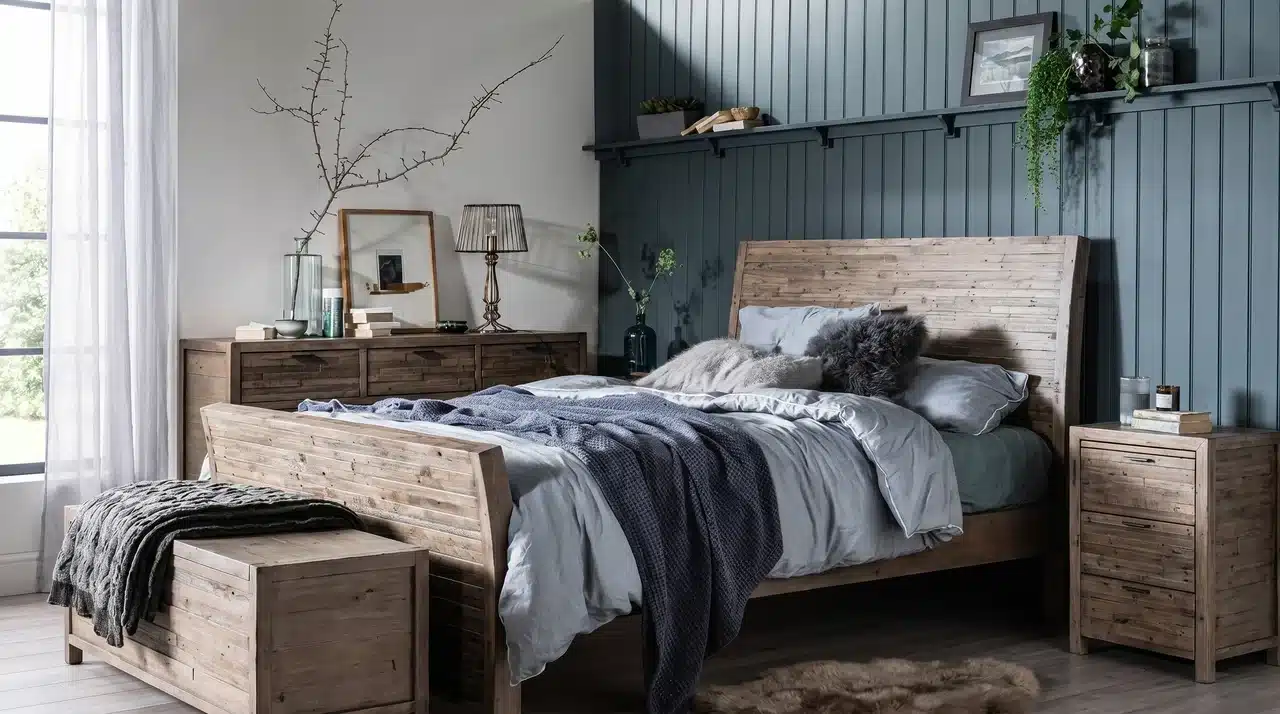
A weathered wood bed frame anchors this room, and its worn texture carries most of the warmth.
Linen bedding in soft, neutral tones keeps the whole look light and airy.
Simple bedside tables and a few accessories let the bed stay the star. Natural light catches the wood grain and makes it feel lived-in.
The room stays uncluttered on purpose, with texture doing the work instead of decoration.
4. The Dining Room with a Long Farmhouse Table and Mismatched Chairs
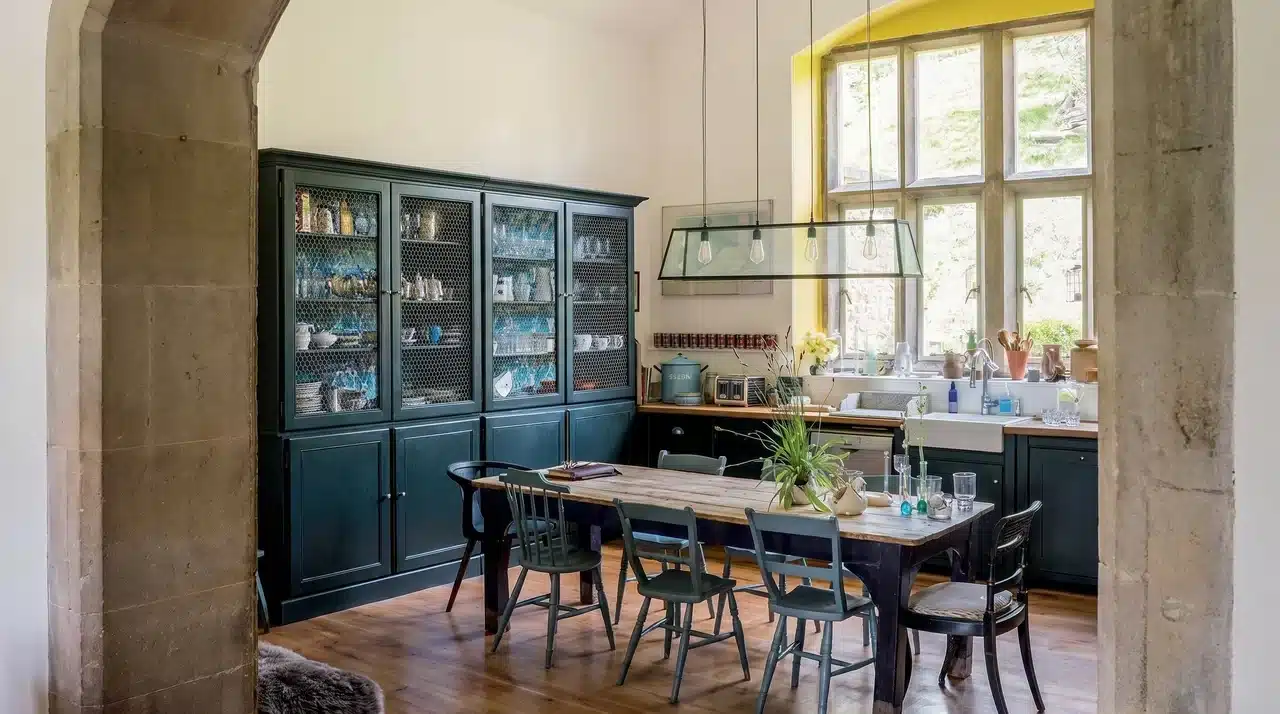
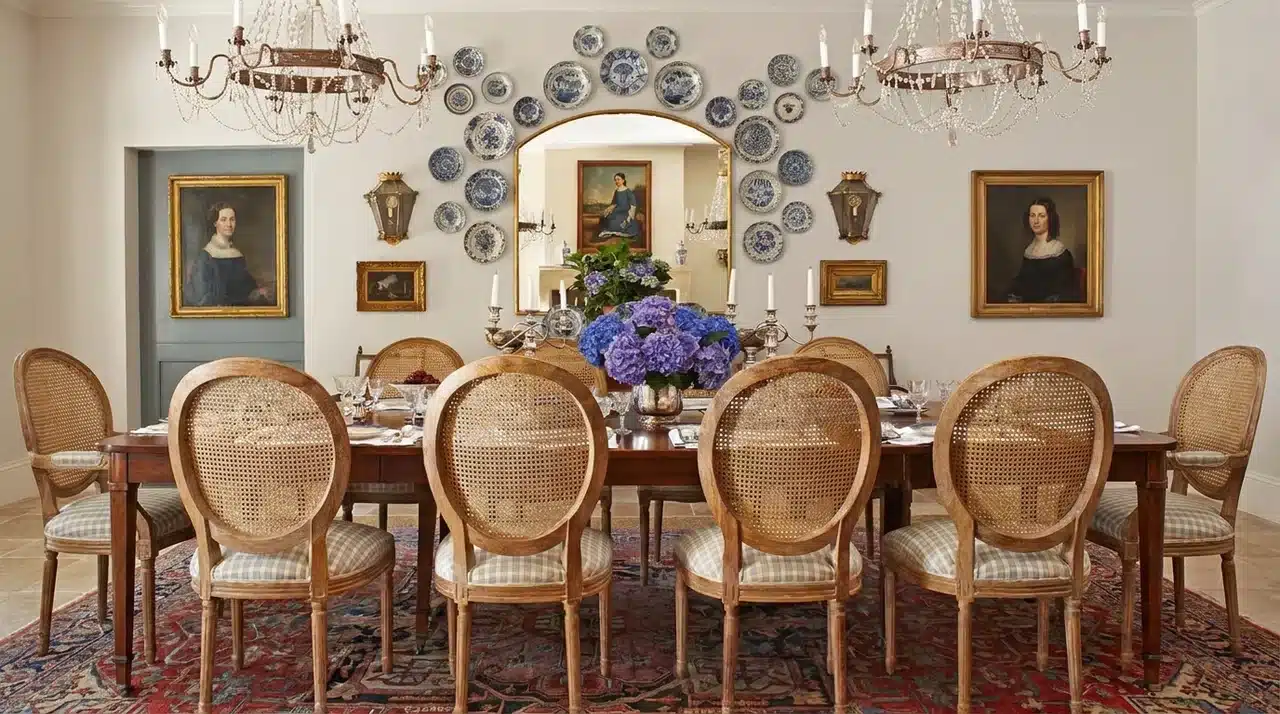
A long farmhouse table with mismatched chairs anchors this dining room. Each chair has its own shape, which keeps the room relaxed instead of matchy.
A wrought-iron chandelier hangs above for height and detail. Linen placemats and a ceramic pitcher of wildflowers add texture without clutter.
Let the table show scratches and marks. That wear tells the story of actual use.
Natural light and soft tones do the rest, and the mismatched contrasts make the room feel gathered instead of staged.
5. The Bathroom Built Around a Freestanding Clawfoot Tub
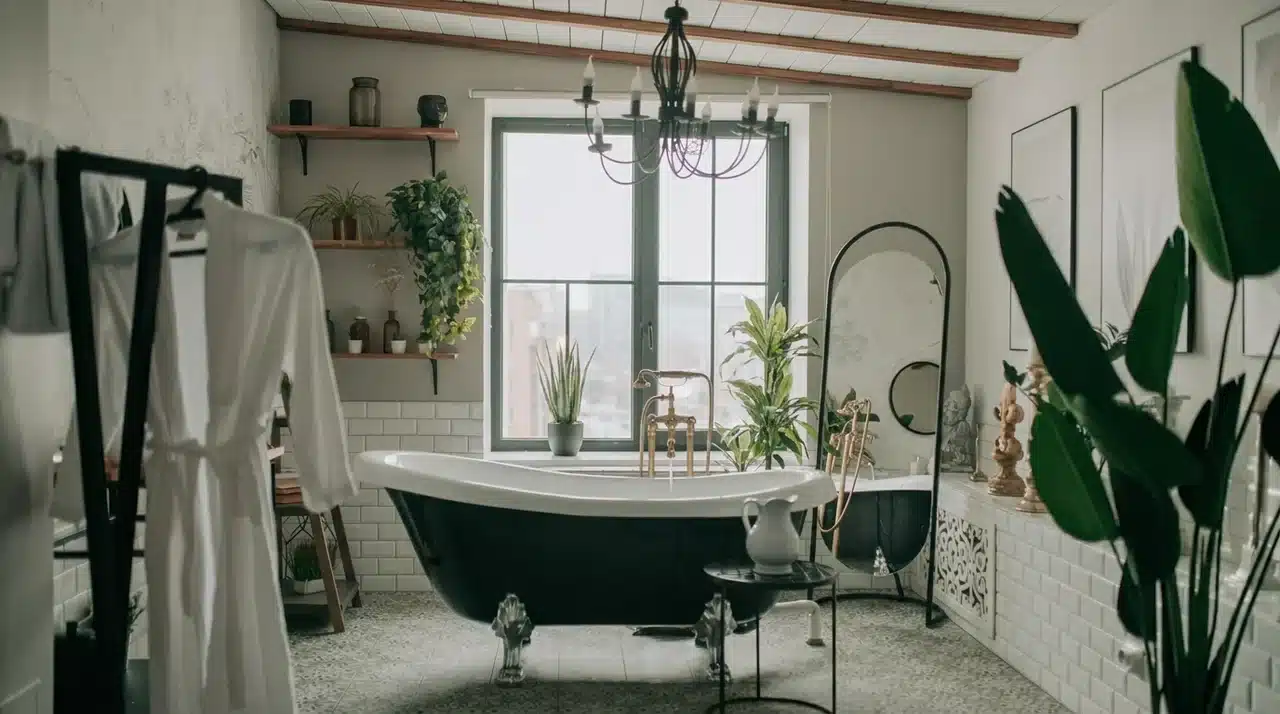
A freestanding clawfoot tub is the one feature this bathroom is built around. Everything else stays minimal so the tub can stand out.
Brass fixtures and natural stone tiles support the look without adding visual noise.
Folded linen towels on a simple wooden rack keep things practical. Soft light off the tub and tiles brings out texture and depth.
Swap standard taps for brass, and the whole room shifts toward this style.
6. The Living Room that Uses a Gilded Mirror as its Only Art
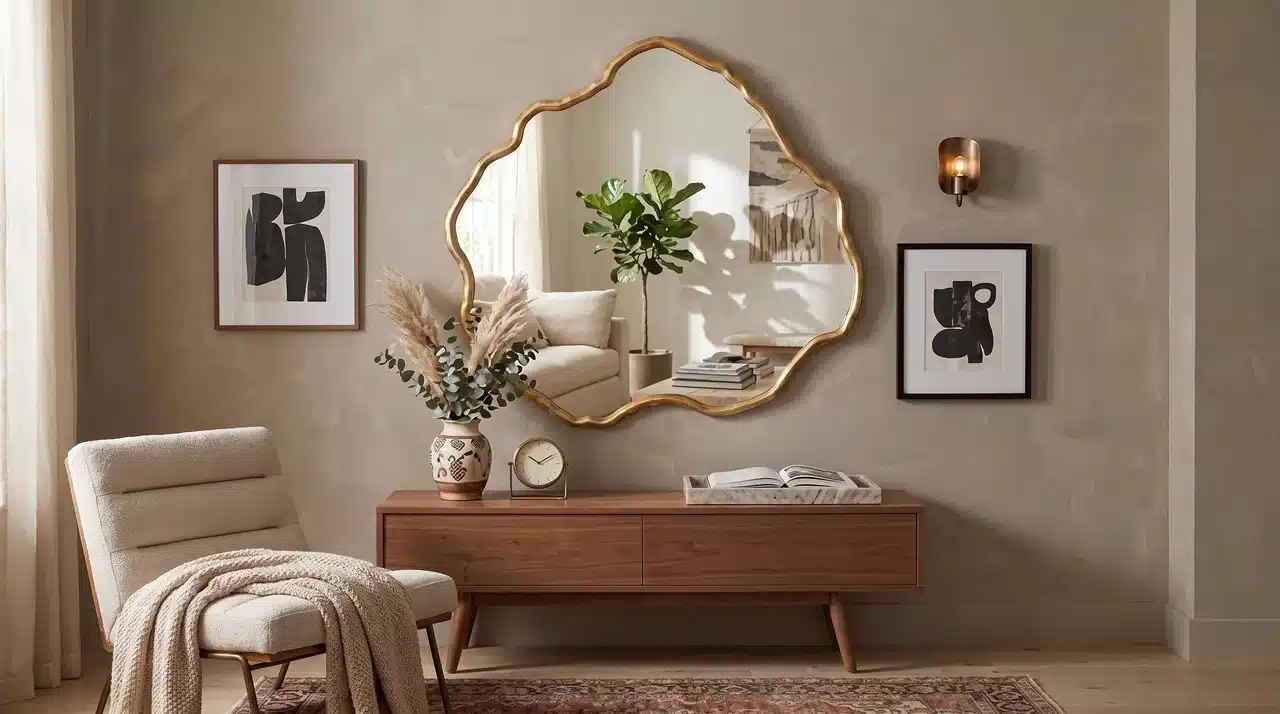
A large gold-framed mirror becomes this room’s single focal point. Hung above a fireplace or sofa, it reflects light and adds depth.
Keep the surrounding walls bare so nothing competes with the mirror.
Soft, neutral colors let the frame’s detail show without distraction. Furniture stays low and simple so the mirror can dominate.
The mirror’s size matters more than how ornate it is. That scale is what keeps the room feeling airy instead of empty.
7. The Kitchen With a Farmhouse Table as the Island
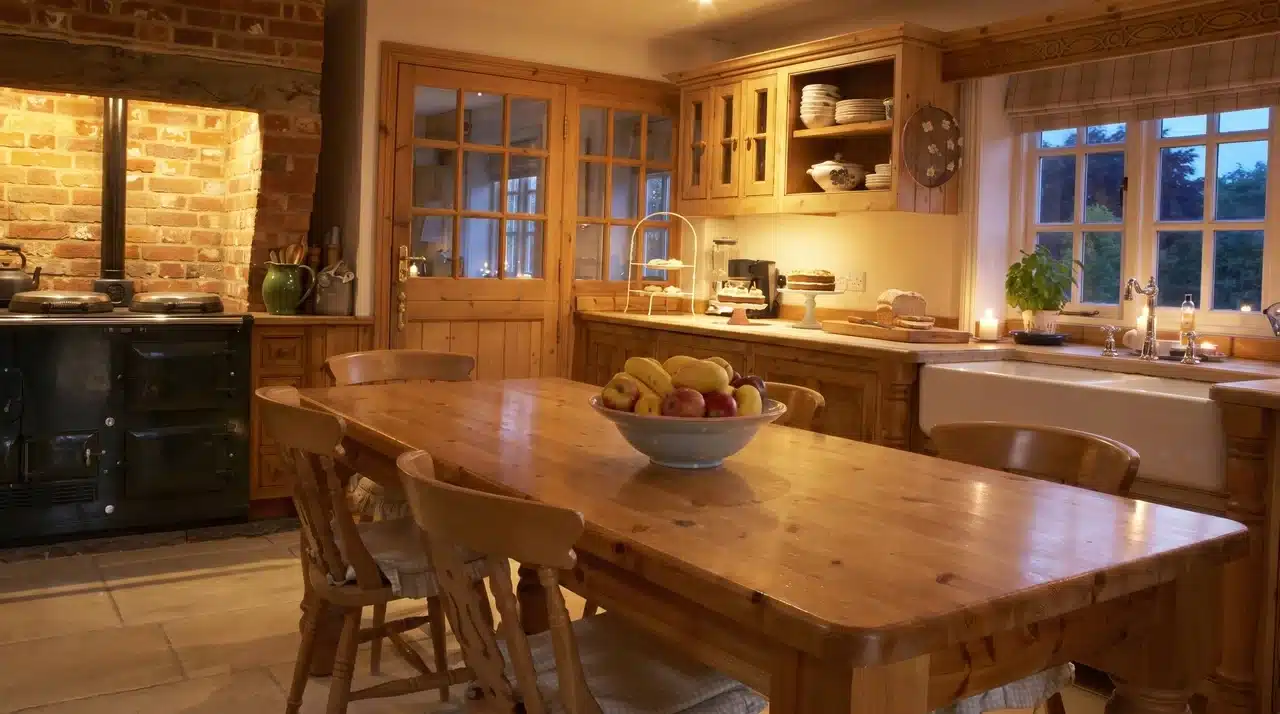
Swap the island for a worn farmhouse table, and the whole kitchen softens.
The table contrasts with whitewashed cabinets, adding depth and intention. Open shelving above holds a few dishes, so surfaces stay clear.
Natural light picks up the textures in wood, stone, and metal.
Mismatched chairs or simple brass hardware add character without crowding the room.
8. The Bedroom that Uses Toile Wallpaper on a Single Wall
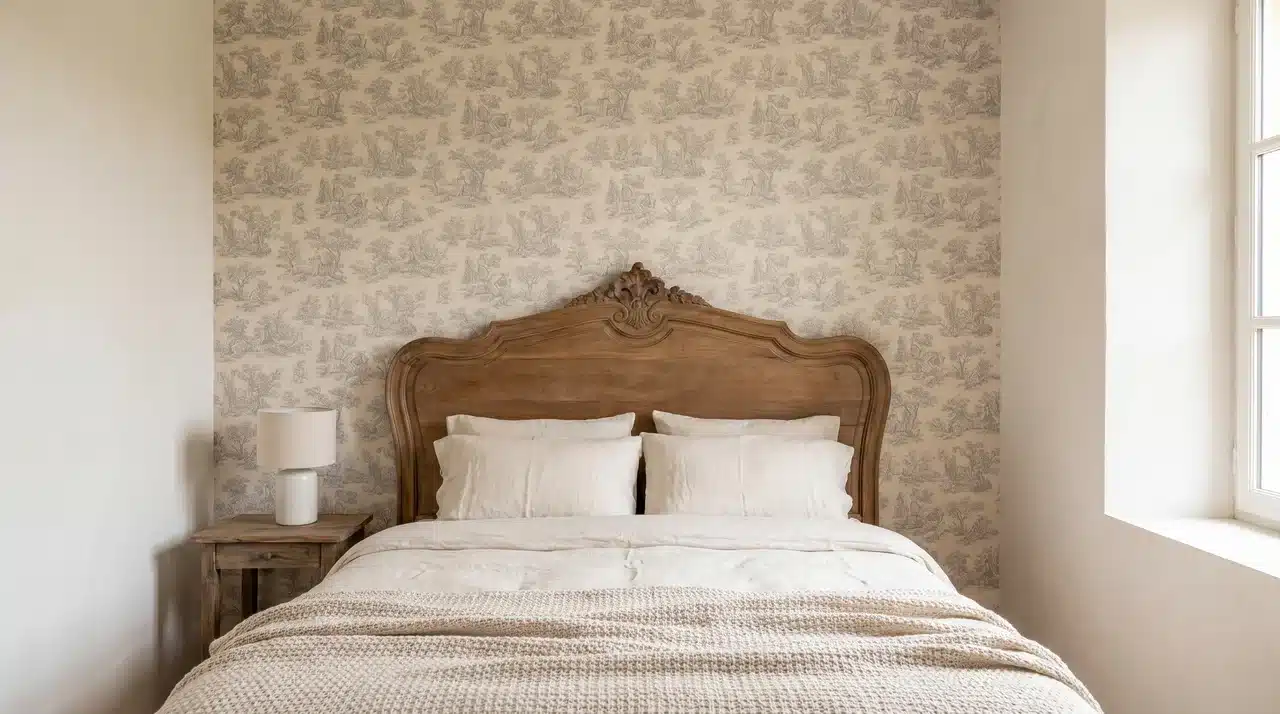
One wall covered in muted toile wallpaper gives this bedroom its focal point, without overwhelming the space.
Neutral bedding and a carved wood headboard keep the room balanced.
A plain bedside lamp adds function, not attention. The remaining walls stay soft so the feature wall can define the room.
One wallpapered wall does the job of a dozen accessories. Linen and wood textures support it without adding clutter.
9. The Living Room Where the Fireplace Does All the Work
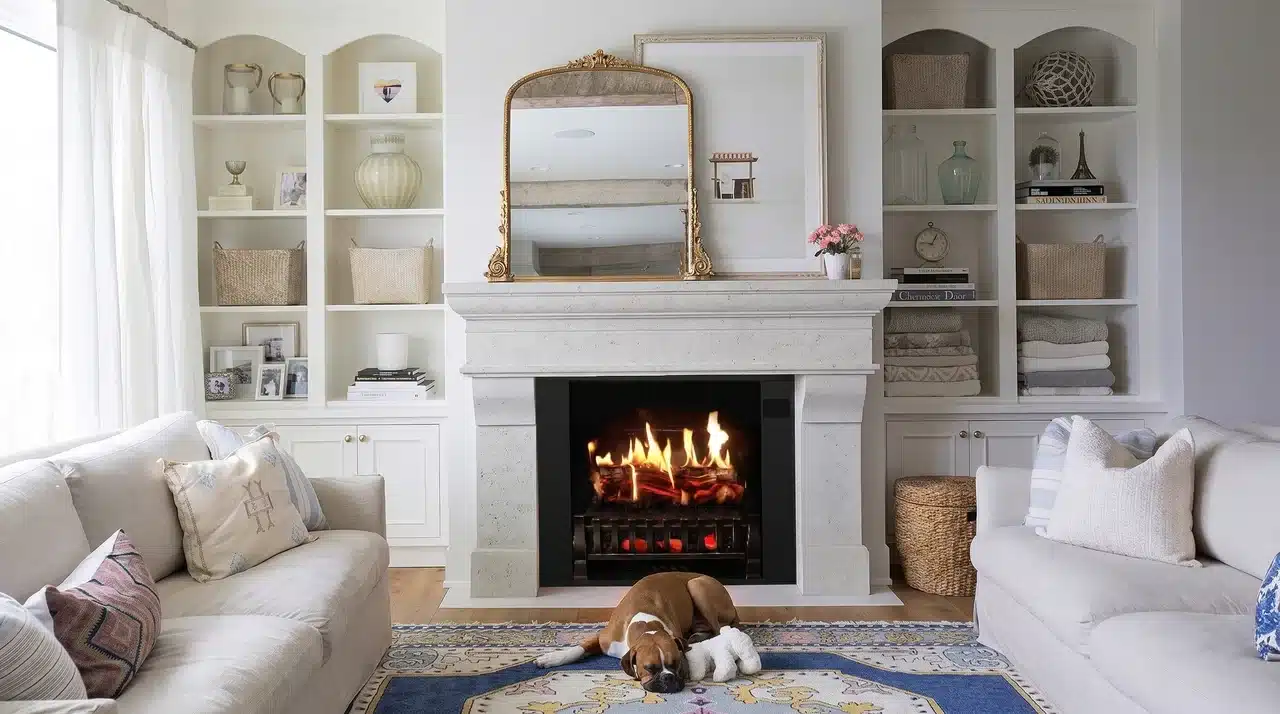
In this living room, the fireplace does what a television usually does. Furniture gets arranged around it instead.
A stone or plaster surround with a carved-wood mantel adds texture. A wrought-iron grate and dried florals finish the scene.
Low seating keeps the space cozy and close to the hearth.
Even a gas insert with a stone surround gets the same effect as a real fireplace. Warmth and structure carry the room.
10. The Entryway With a Vintage French Armoire and Stone Floor

A single vintage armoire anchors this entryway and creates an instant focal point.
Worn paint and aged brass handles add texture without looking forced.
Stone or terracotta tiles ground the space, and a simple mirror above the armoire bounces light around.
A small pot of fresh lavender adds a natural touch, no clutter needed. Mismatched finishes and a little wear make the entry feel welcoming.
11. Reading Nook Built Into a Window Alcove with Linen Curtains
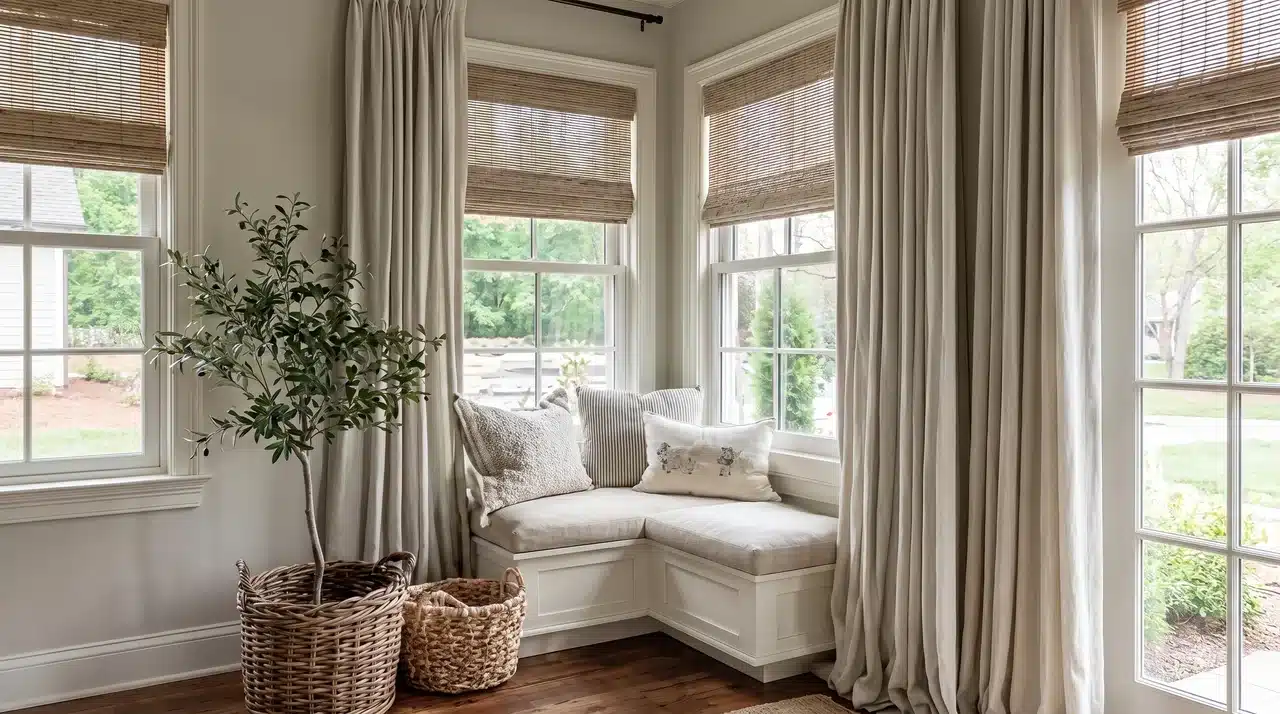
Floor-to-ceiling linen curtains frame the window alcove this reading nook is built around.
The curtains filter light softly, which keeps the whole corner calm. A tufted armchair fits snugly inside, with a small side table for books or a cup.
A stack of worn hardback books invites quiet reading. Linen and wood carry the warmth here instead of extra decoration.
12. The Kitchen Where Brass Hardware Carries the Whole Look
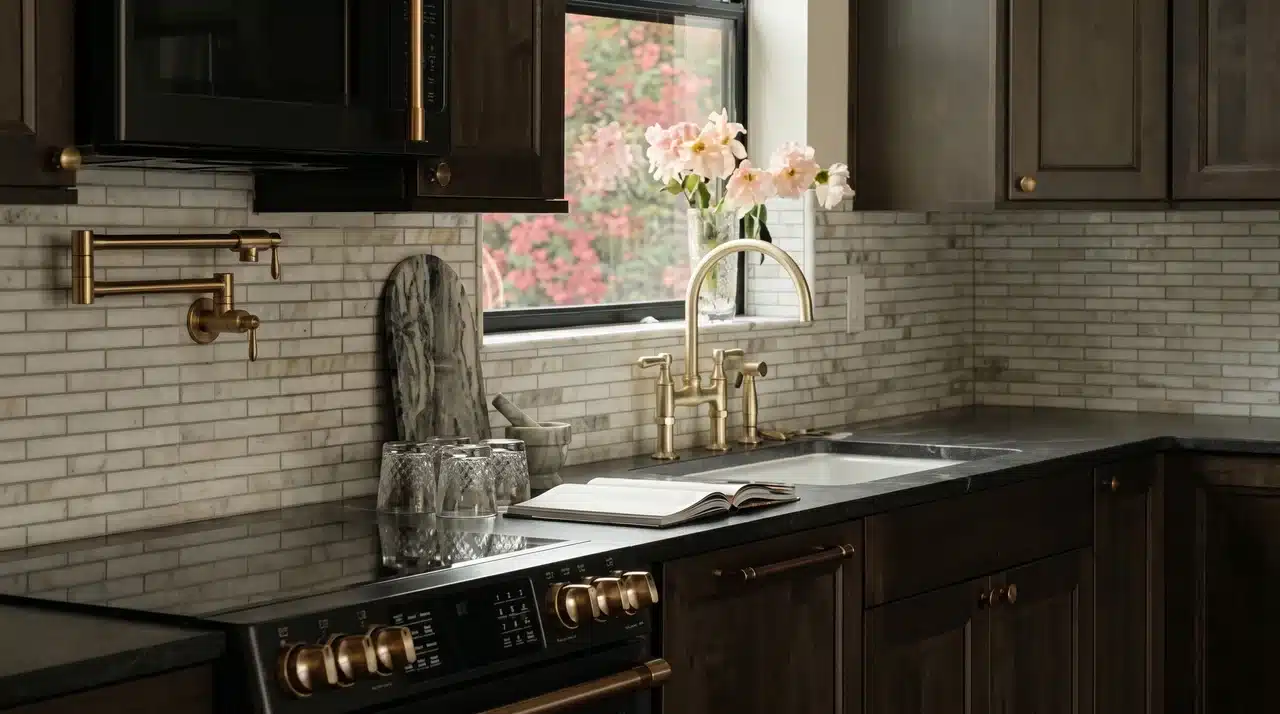
Swap standard cabinet hardware for unlacquered brass, and the kitchen’s whole feel changes.
White or cream cabinetry and stone surfaces let the brass stand out. Over time, the metal develops a natural patina.
This single change does the work of a full renovation. Warm brass reads as French country even against builder-grade white cabinets.
The look stays simple and cohesive, with materials and light carrying the mood.
13. The Bedroom With Dried Florals and Organic Textures as the Only Decor
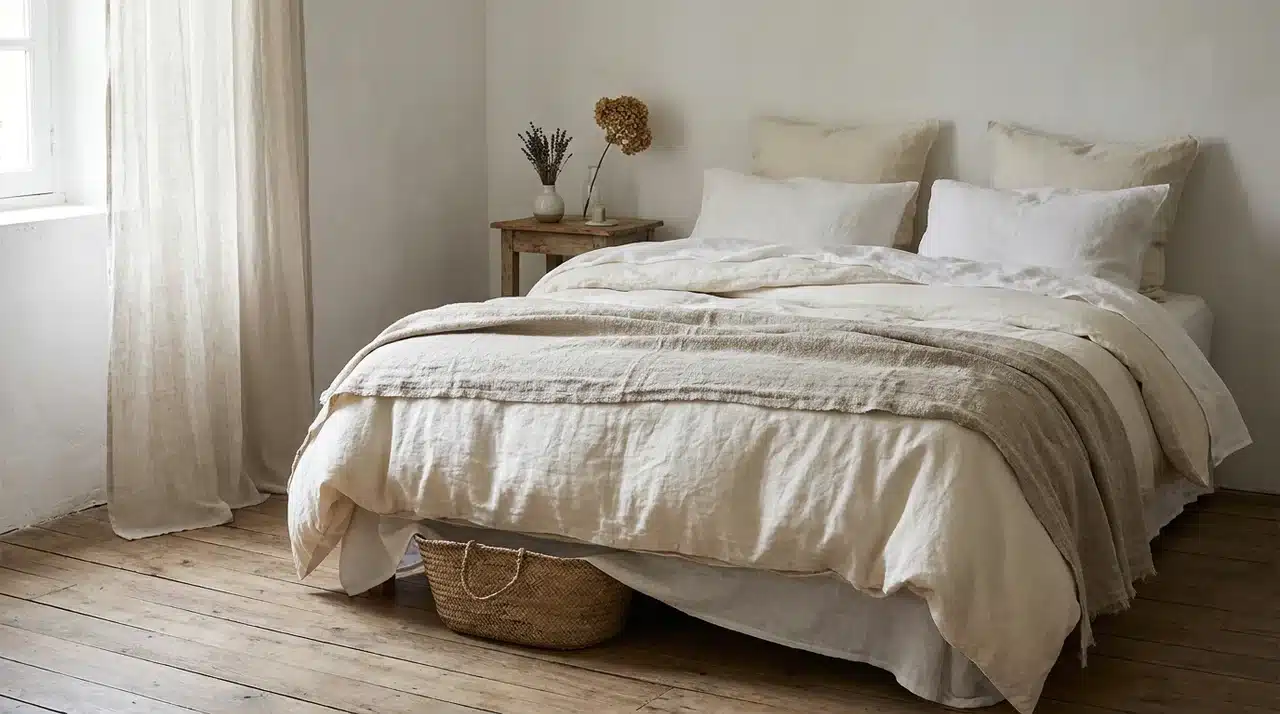
Dried florals, like lavender or pampas grass, are this room’s only decoration. They add texture without adding clutter.
Linen bedding and whitewashed walls keep the space calm.
A woven basket under the bed and a rough linen throw add function. No framed prints compete for attention.
Even placement and bundle size matter here. Small choices like these keep the room cohesive and lived-in.
14. Open-Plan Living and Dining Room Unified by Stone Flooring

Stone flooring runs across both the living and dining areas, unifying the open space. Rugs aren’t needed because the floor already connects the zones.
A linen sofa and a low distressed-wood coffee table define the living side, and the dining side holds a long farmhouse table with mismatched chairs.
Large-format porcelain in limestone or travertine tones gets the same look for less. Natural light keeps the whole space feeling airy and balanced.
15. The Modern French Country Bathroom With Minimal Decor and Maximum Texture
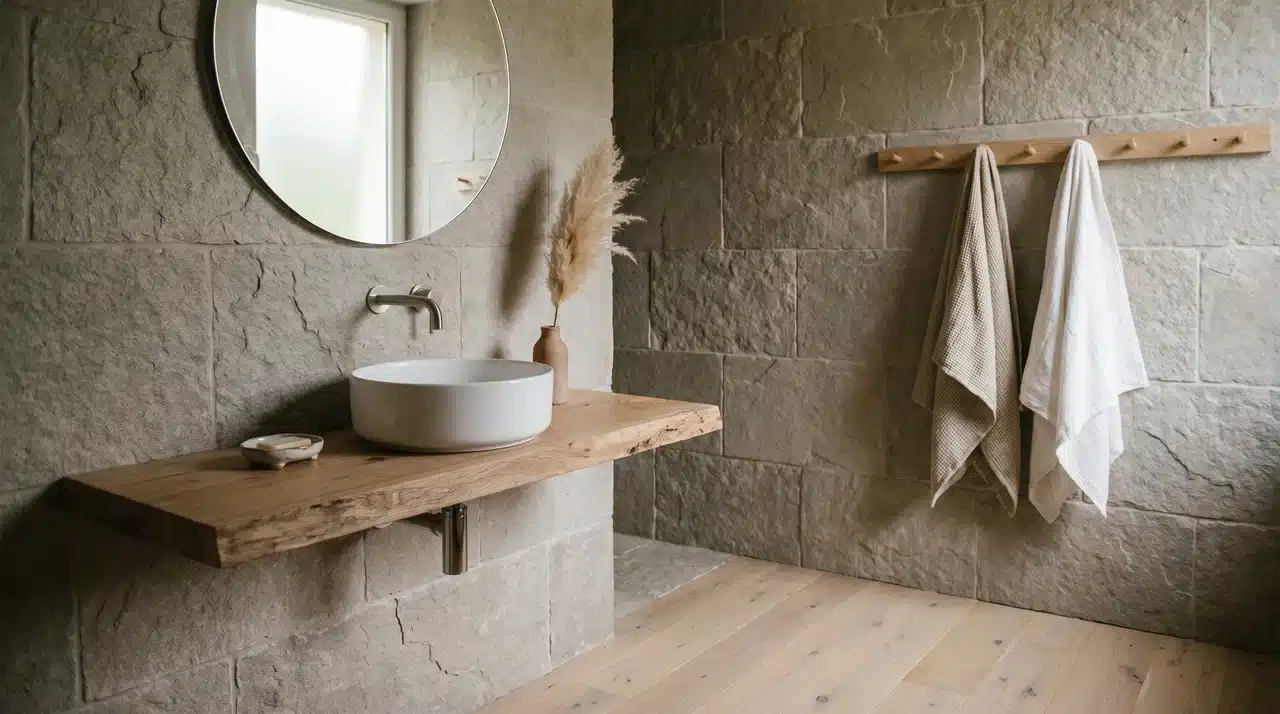
Texture, not decoration, carries this bathroom. Rough-hewn stone tiles cover the walls for a natural, tactile feel.
Woven linen towels hang on a simple wooden peg rail, adding softness without clutter. A raw-edge wooden shelf holds just a few essentials, keeping the space open. A round mirror and a single dried stem finish the room. Every object here earns its place.
Essential Features Found in Every French Country Interior
Different rooms, one recurring shortlist. Strip away the specifics, and three ingredients keep showing up. Borrow a few of them, and the style reads.
Color Palette: Muted, Sun-Washed, and Warm
The palette sticks to muted, sun-washed shades that feel settled. Creams, soft whites, faded sage, dusty blue, and stone tones do most of the work.
Skip bright, sharp colors. They make a room feel new instead of lived-in.
The goal is a look that feels sun-faded, like it’s been sitting in the same room for years.
Farrow & Ball’s Old White or Sherwin-Williams’ Sea Salt are common starting points for this exact look.
Natural Textures Over Decoration
Surfaces do most of the work in French country spaces. Exposed beams, stone floors, and plastered walls create interest before you add a single accessory.
Linen and cotton bring softness without clutter. Woven baskets store things while adding texture at the same time.
Every material should look used, not brand new.
I’ve seen rooms with all the right materials still feel flat, because everything was new and shiny instead of a little worn.
That’s what makes a room feel layered and real, not staged for a photo.
One or Two Antique or Vintage Statement Pieces
Cost here depends on your choices, not the style itself. Vintage finds run cheap, while reproductions and true antiques cost more.
Simple swaps, like hardware or linens, shift the room’s feel on a low budget. One strong piece per room, like a mirror or armoire, adds real character.
Flooring, tubs, and tables range from basic to high-end, depending on the material.
Even small, thoughtful purchases give a home personality. You don’t need to spend on things you don’t need.
How Much Does French Country Interior Design Cost?
These are realistic price ranges for the pieces that shape this style most, from budget to high-end.
| Element | Budget Option | Mid-Range | High-End Option |
|---|---|---|---|
| Statement Wall Mirror | $25–$90 | $90–$190 | $190+ |
| Vintage Armoire | $100–$250 | $250–$750 | $750+ |
| Linen Curtains (per panel) | $4–$10 | $10–$25 | $25+ |
| Farmhouse Dining Table | $75–$190 | $190–$750 | $750+ |
| Brass Cabinet Hardware (per piece) | $3–$10 | $10–$25 | $25+ |
| Freestanding Clawfoot Tub | $380–$880 | $880–$2,500 | $2,500+ |
| Dried Floral Arrangement | $6–$19 | $19–$50 | $50+ |
| Stone-Look Floor Tile (per sq ft) | $0.50–$2 | $2–$4 | $4+ |
Modern French Country Decor Mistakes to Avoid
Every style has a wrong version of itself. French country goes wrong in a few predictable ways.
Here’s what derails it fastest:
- Too many antiques crowd a room fast, even good ones.
- Bright yellows and deep reds fight the muted palette instead of joining it.
- Heavy drapes block the natural light this whole style depends on.
- When every piece matches, the room loses its collected-over-time feel.
- Small decorative items add up to clutter faster than they add up to character.
Most of these mistakes come from adding too much, not too little. When in doubt, take something out instead of putting something in.
Conclusion
French country design isn’t about buying the right pieces. It’s about choosing fewer, better ones and letting texture and light do the rest.
Every room on this list works because someone stopped before it felt finished. That restraint is the style itself, not a limitation.
The moves are simple and the materials are accessible. The mistakes are easy to avoid once you know what to watch for.
Start with one room. Swap the hardware, hang a gilded mirror, and add a handful of dried lavender. The warmth shows up faster than you’d expect.
Frequently Asked Questions
What Colors Work Best in French Country Interior Design?
Warm creams, soft whites, faded sage, dusty blue, and stone tones work best. The palette should read sun-aged, not freshly painted.
How Do I Start Decorating in The French Country Style?
Start with one strong vintage piece and layer in natural textures like linen and stone. Swap chrome hardware for unlacquered brass and keep surfaces uncluttered.
What Is the Difference Between French Country and Modern French Country?
Traditional French country uses bold patterns and saturated tones. The modern version simplifies the palette, cuts accessories down to one or two pieces, and keeps silhouettes lighter.