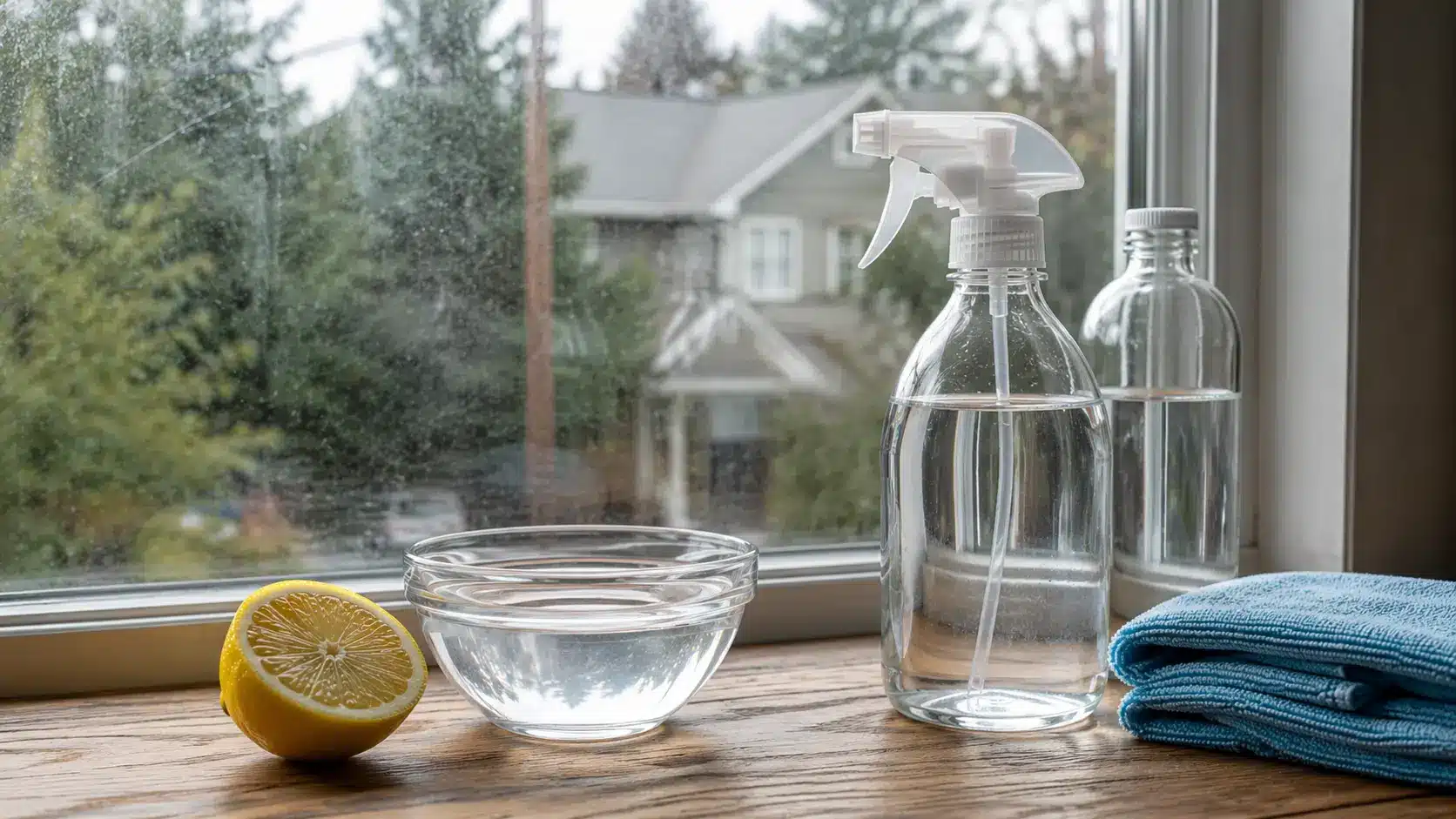
A good DIY window cleaner has three ingredients: distilled water, white vinegar, and rubbing alcohol.
When combined in a spray bottle, they cut through mineral deposits, dissolve grease, and dry quickly without leaving streaks.
White vinegar supplies the acetic acid that breaks down hard water residue, rubbing alcohol speeds up drying, and distilled water keeps mineral spots from forming in the first place.
No ammonia, no mystery chemicals, and at around $0.30 per bottle, it costs a fraction of what you’d spend on store-bought glass cleaner.
Here you go with the best recipes, step-by-step instructions for washing windows with vinegar, and a few things that can quietly ruin the results.
What is the Best DIY Window Cleaner Recipe?
Best DIY Window Cleaner Recipe: Quick Answer
Mix in a spray bottle and shake gently before use. |
This is the recipe that covers the most ground: everyday dust, light grime, and hard water spots. White vinegar contains approximately 5% acetic acid, which reacts with and dissolves the calcium carbonate in mineral deposits left by tap water.
The rubbing alcohol isn’t just filler; it evaporates faster than water, which helps prevent streaks as the glass dries.
One practical note: Always use distilled water. Tap water, especially in areas with hard water, contains dissolved calcium and magnesium ions that are left behind as the glass dries.
According to the U.S. Geological Survey, approximately 85% of water across the United States is hard water, meaning mineral buildup on glass is the default, not the exception. Distilled water eliminates that entirely.
How Do You Make Homemade Glass Cleaner?
| Ingredient | Purpose |
|---|---|
| White vinegar | Cuts mineral buildup and dissolves greasy residue |
| Distilled water | Prevents spotting from tap water minerals |
| Rubbing alcohol (70% isopropyl) | Speeds drying and reduces streaks |
| Spray bottle (16–32 oz) | Even application across the glass surface |
Note on alcohol strength: 70% isopropyl is preferred over 90% for window cleaning. The higher water content in 70% gives you slightly more working time to spot and wipe streaks before the solution dries.
Mixing Instructions
- Pour 2 cups of distilled water into a clean spray bottle using a funnel.
- Add 1 cup of white vinegar.
- Add 1 tablespoon of rubbing alcohol.
- Close the bottle and shake gently to combine.
- Label the bottle with the date and contents.
- Shake briefly before each use; the ingredients can separate slightly over time.
What Makes Vinegar Effective for Cleaning Windows?
Vinegar works on windows because of acetic acid, thus it is the prime reason behind counting it among one of the best ways while cleaning windows. Standard white distilled vinegar is about 5% acetic acid, which is strong enough to dissolve mineral deposits without scratching or damaging glass.
When hard water dries on a window, it leaves behind calcium and magnesium compounds, the white haze you see on glass after rain or a wet cloth.
Acetic acid reacts with those compounds, breaking them down so they wipe away cleanly.
Vinegar also has mild antimicrobial properties, so it does more than just clean the visible surface. That said, it isn’t a disinfectant in the clinical sense.
If you need to sanitize glass (bathroom mirrors, for example), adding a small amount of rubbing alcohol to the recipe adds an extra layer of cleanliness without changing how the cleaner works on the glass.
How Do You Use a DIY Window Cleaner for Streak-Free Results?
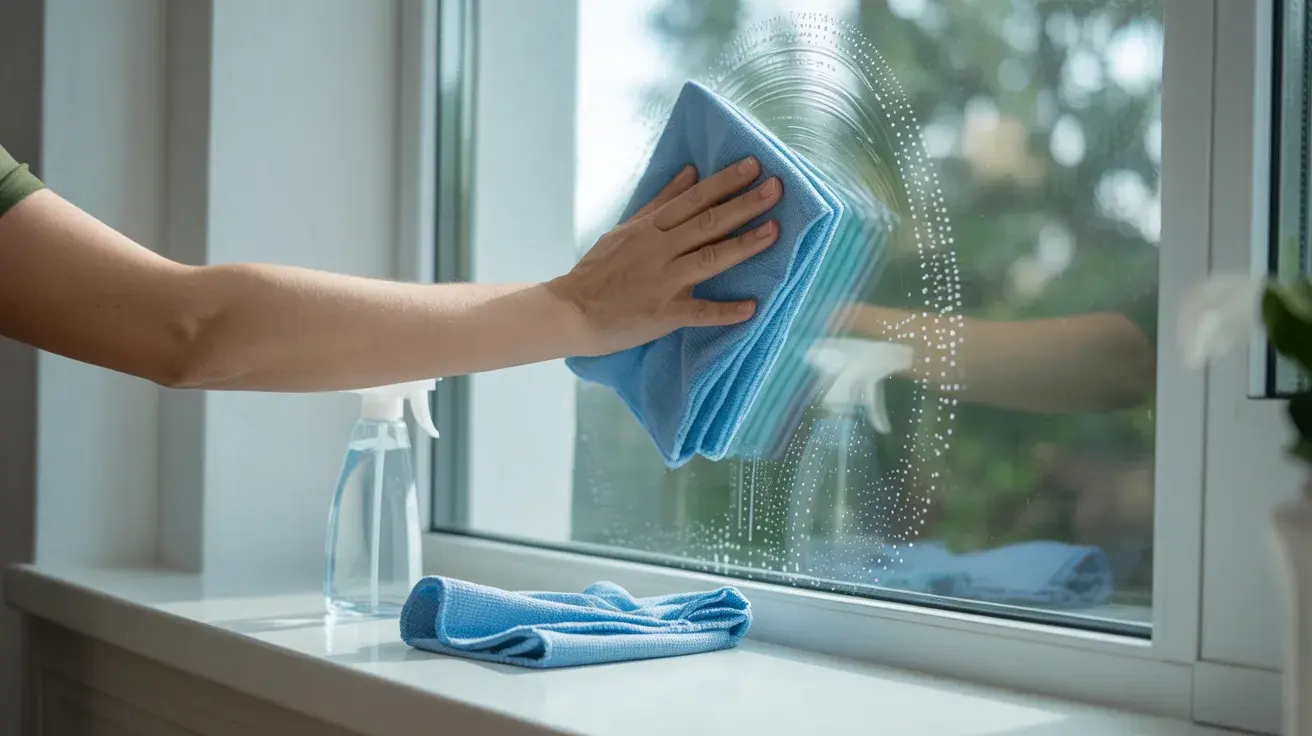
- Remove loose dust first. Wipe or brush off any dry dust, cobwebs, or debris before spraying. Spraying directly onto a dusty window turns dry particles into muddy streaks.
- Spray lightly. A fine, even mist is enough. Soaking the glass takes longer to dry and increases the chance of drips and streaks.
- Wipe with a microfiber cloth. Use overlapping strokes, horizontal on one side, vertical on the other, so you can tell which side any remaining streaks are on.
- Finish with a dry microfiber cloth. A quick second pass with a dry cloth picks up any remaining moisture before it dries into a film.
- Clean on an overcast day if possible. Direct sunlight dries the solution too quickly, making streaks harder to avoid.
Why Microfiber Works Better
The difference between a microfiber cloth and a regular cotton cloth on glass is significant. According to ISSA (the Association for Cleaning and Facility Solutions), microfiber is typically 1.0 denier or thinner, meaning the individual fibers are fine enough to reach into surface textures and trap dirt and moisture that cotton fibers simply push around.
A University of Washington study, cited by ISSA, found that microfiber cloths removed bacteria from surfaces more effectively than traditional cotton cloths. On glass, that translates to fewer passes and cleaner results.
Washing Windows With Vinegar Step by Step
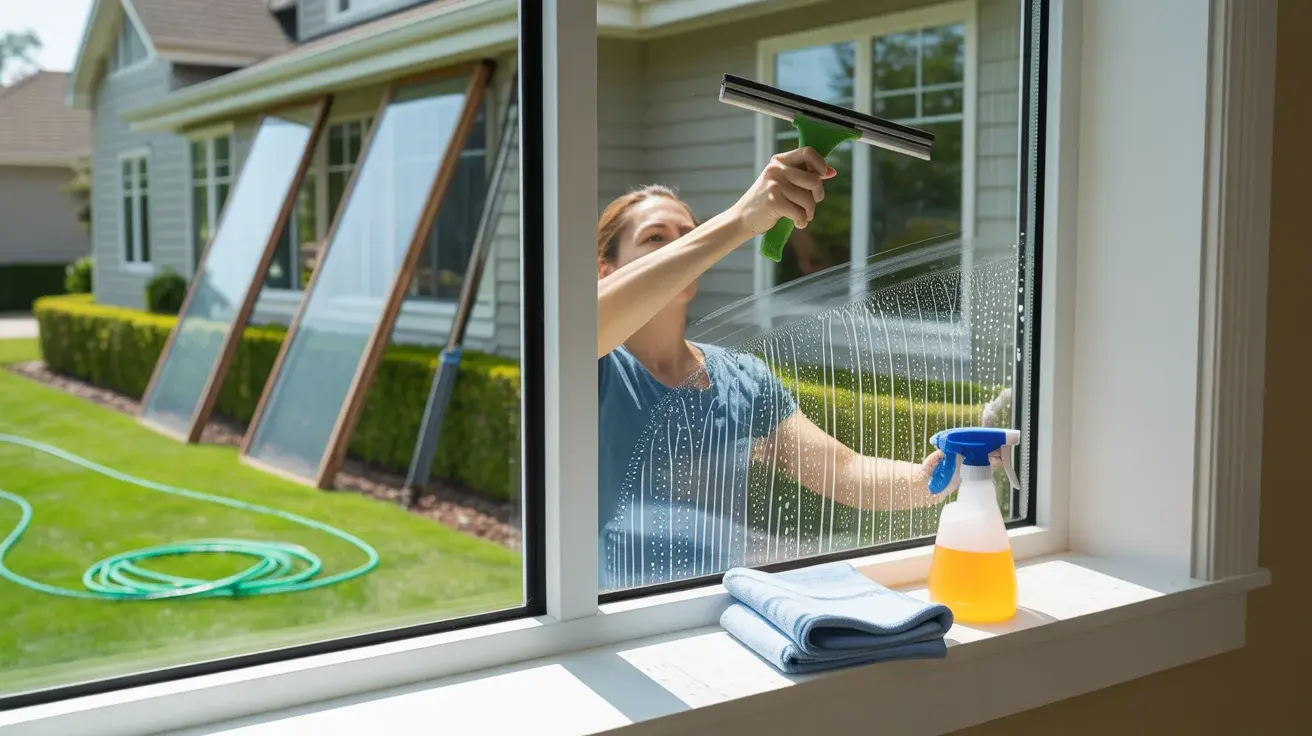
Vinegar is one of the most effective ingredients for cleaning glass, and you don’t need much technique to get it right. These steps work for indoor panes, outdoor glass, and everything in between.
Indoor Windows
Indoor windows collect dust, fingerprints, and cooking grease near kitchen areas. Spray a light coat of your vinegar cleaner onto the glass and wipe with a microfiber cloth in an S-pattern from top to bottom.
Follow with a dry cloth immediately. For kitchen windows with grease buildup, add 2–3 drops of dish soap to your spray bottle; just keep it minimal, as too much soap leaves a film that’s harder to remove than the grease itself.
Outdoor Windows
Outdoor windows face a heavier load: pollen, dirt, bird droppings, and weather-related staining. To clean outside windows, start by rinsing the glass with plain water from a garden hose to knock off loose debris.
Then apply the vinegar cleaner, working in sections with a clean microfiber cloth or a squeegee.
For stubborn outdoor grime, the vinegar + dish soap recipe in the comparison table below is worth trying before you reach for anything stronger.
Window Screens and Frames
Don’t skip screens and frames; dirty screens filter grime back onto clean glass every time it rains.
Remove screens and rinse them with a hose, then scrub gently with a soft brush and a diluted vinegar solution (equal parts vinegar and water).
For frames, wipe down with the same solution using a cloth, paying attention to corners where dirt accumulates. Let both dry fully before reinstalling.
Which Homemade Glass Cleaner Recipe Works Best?
Different messes call for different recipes. Here’s what each combination does best, and what it’s not designed for:
| Recipe | Best For | Key Notes |
|---|---|---|
| Vinegar + distilled water (1:2 ratio) | Every day cleaning, light dust, and film | Simple, low-cost recipe that removes light buildup and mineral spots. The vinegar scent usually fades after drying. |
| Vinegar + rubbing alcohol + distilled water | Streak-free finish on interior glass | Dries quickly and leaves minimal residue. A reliable option for windows, mirrors, and glass doors. |
| Vinegar + 2–3 drops dish soap + distilled water | Outdoor grime, greasy windows, fingerprint-heavy glass | Helps break down grease and stubborn dirt. Use only a few drops of soap to avoid streaks. |
| Rubbing alcohol + distilled water (1:1 ratio) | Cold weather cleaning below 32°F | Suitable for winter cleaning because the higher alcohol content helps prevent freezing during application. |
| Vinegar + cornstarch + rubbing alcohol + distilled water | Heavily soiled outdoor windows | Works well on stubborn grime. Cornstarch adds gentle scrubbing power but should be wiped thoroughly to prevent residue. |
What Should You Avoid When Making DIY Window Cleaner?
Getting the recipe right is only half of it. A few common mistakes can turn a good cleaner into a streaky mess, or worse, a safety hazard.
Never Mix Vinegar and Bleach
If you’re switching from a bleach-based surface cleaner to a vinegar window cleaner, rinse the surface with plain water first and let it dry before applying the vinegar solution. Residual bleach on a surface can still react with acetic acid.
| Safety Warning: Mixing vinegar and bleach releases chlorine gas. The CDC warns that household chlorine bleach can release chlorine gas when mixed with acidic products like vinegar. Exposure, even at low concentrations, irritates the eyes, nose, throat, and lungs. In 2021, U.S. poison control centers received 4,800 calls from people who had mixed vinegar and bleach, according to the National Capital Poison Center. Never combine them, even briefly. |
Avoid Too Much Dish Soap
Two or three drops are the limit. Dish soap is a useful add-in for greasy windows, but it creates suds that are difficult to fully rinse off the glass.
What’s left behind dries into a hazy film that’s harder to clean than the original grime. If your windows look smeared after cleaning, excess soap is usually the reason.
Skip Abrasive Scrubbers
Steel wool, rough scrubbing pads, and even some sponges can permanently scratch glass. Microfiber cloths and soft cotton rags are the right tools.
For stuck-on deposits that won’t respond to the vinegar solution, try soaking the area for a few minutes before wiping rather than scrubbing harder.
When Should You Not Use Vinegar on Windows?
Vinegar works well on glass, but the surfaces around your windows are a different matter. There are three situations where you should leave it out entirely.
Natural stone window sills. Marble, travertine, and limestone are calcium-based stones that react with acidic cleaners. The Natural Stone Institute advises against using products containing vinegar or other acids on these surfaces, as they can etch and dull the finish, a physical alteration to the stone, not just a stain, and one that requires professional polishing to reverse.
Coated or treated glass. Some windows have low-emissivity (low-E) coatings applied to improve energy efficiency. Check with your window manufacturer before using vinegar on these; some coatings can be affected by repeated exposure to acidic cleaners.
Damaged or failing window seals. If the seal on a double-pane window is already compromised, moisture from any liquid cleaner, vinegar included, can work its way between the panes and cause fogging that can’t be wiped away. A failing seal needs replacement, not cleaning.
How Long Does Homemade Glass Cleaner Last?
| Quick Answer A vinegar-based DIY window cleaner stays effective for several months when stored in a sealed spray bottle away from direct sunlight and heat. |
The acetic acid in white vinegar is stable and doesn’t break down quickly in storage. Rubbing alcohol also has a long shelf life when sealed.
The factor that shortens the lifespan of a homemade cleaner is using tap water instead of distilled water.
A few storage habits worth keeping: label the bottle with the date you mixed it, store it in a cool cabinet out of direct sunlight, and give it a gentle shake before each use.
If the solution ever smells off or looks cloudy, mix a fresh batch; the ingredients are inexpensive enough that it’s not worth risking a streaky result.
DIY Window Cleaner vs Store-Bought Glass Cleaner
A 32 oz bottle of Windex starts at $3.97 at Walmart. A homemade batch of the same volume comes out to roughly $0.30 per bottle, about 13 times cheaper per use. Here’s how the two compare across the factors that actually matter:
| Feature | DIY Cleaner | Store-Bought (e.g., Windex) |
|---|---|---|
| Cost per bottle | ~$0.30 | $3.97–$5.00 |
| Ingredients | Known, 3–4 items | Varies; often includes ammonia, dyes, and fragrance |
| Ammonia-free | Yes | Not always (original Windex contains ammonia) |
| Fragrance | Optional (essential oils) | Often added |
| Streak-free performance | Yes, with alcohol added | Yes |
| Convenience | Requires mixing once | Ready to use off the shelf |
| Safe for coated glass | Check the manufacturer’s guidance | Check the manufacturer’s guidance |
The one real advantage store-bought has is convenience; it’s ready the moment you need it. But given that mixing the DIY version takes about two minutes and costs a fraction of the price, it’s hard to argue the convenience premium is worth it for regular use.
Summing Up!
Now you know exactly what goes into the best DIY window cleaner, and why each ingredient earns its place.
The recipe is simple: 2 cups distilled water, 1 cup white vinegar, and 1 tablespoon of rubbing alcohol.
The most common mistake is using tap water; it’s the main reason homemade cleaners leave spots.
The one thing to keep in mind: vinegar is safe on glass, but keep it off natural stone sills and check with your window manufacturer if you have coated panes.
Frequently Asked Questions
Can You Clean Windows With Vinegar and Water Only?
Yes. A 1:2 ratio of white vinegar to distilled water effectively cleans everyday dust and light mineral film. Adding rubbing alcohol improves streak-free drying, but the two-ingredient version works well for regular maintenance.
What is the Ratio of Vinegar to Water for Window Cleaning?
The standard ratio is 1 part white vinegar to 2 parts distilled water. For heavier buildup or outdoor grime, a 1:1 ratio gives stronger cleaning power.
Why do Homemade Window Cleaners Leave Streaks?
Usually, tap water minerals, too much dish soap, or wiping on a dusty surface. Switching to distilled water and a clean microfiber cloth eliminates streaks in most cases.
Is Rubbing Alcohol Necessary in Homemade Glass Cleaner?
Not strictly necessary, but it makes a real difference. Rubbing alcohol evaporates faster than water, which reduces drying time and the chance of streaks forming before you can wipe them away.