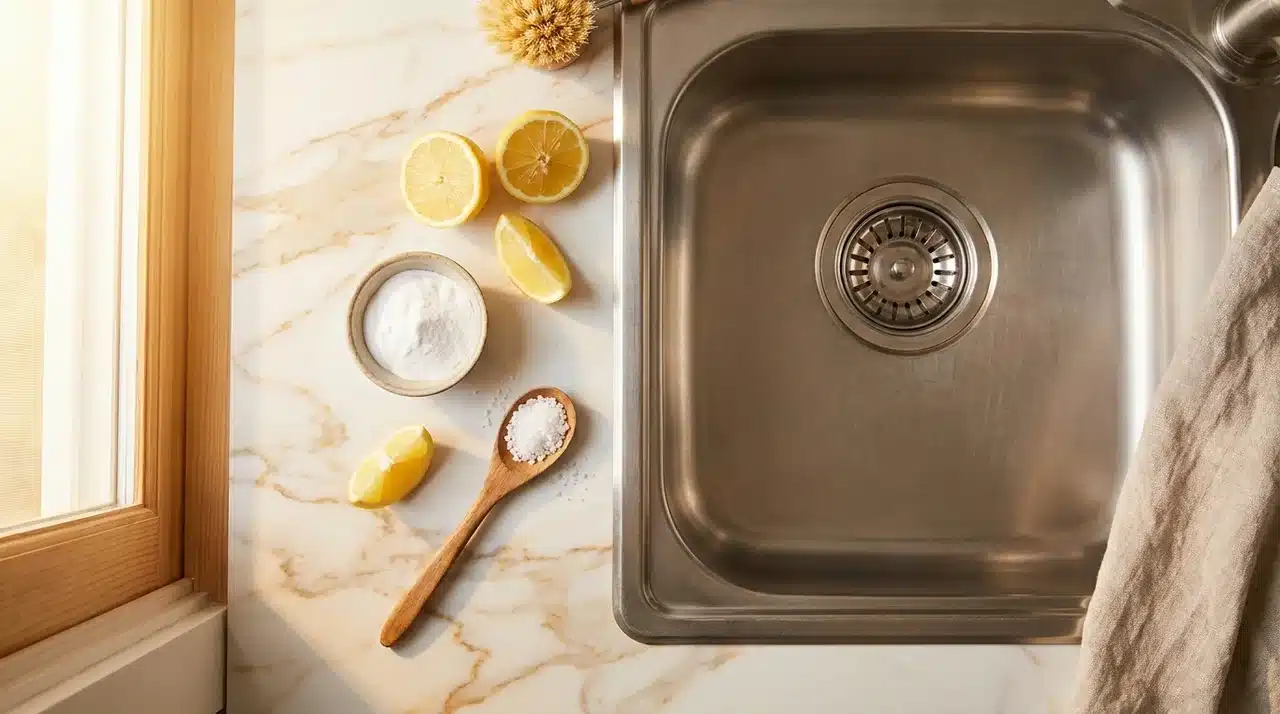
A slow drain never picks a convenient time. It always shows up right before guests arrive or during the morning rush.
The good news is you do not need a shelf full of chemical products to fix it. Most clogged drains respond well to simple ingredients already sitting in your kitchen.
A good DIY drain cleaner costs almost nothing, takes minutes to put together, and is safe for your pipes, your family, and the environment.
Here you will find the best natural methods for every type of clog, tips to keep drains clear long-term, and when it is time to call a pro.
Why Skip the Chemical Drain Cleaners?
Most people reach for a bottle of commercial drain cleaner without thinking twice, but those products come with a cost that goes beyond the price tag.
They contain sulfuric acid or sodium hydroxide, which corrode your pipes over time, release harmful fumes in enclosed spaces, and eventually reach local waterways where they damage ecosystems.
If you have kids or pets at home, the health risk is even harder to ignore. Natural alternatives protect your plumbing, your household, and the environment all at once.
What Types of Clogs Can a DIY Drain Cleaner Actually Fix?
Natural methods work best when the problem is caught early. Here is what a homemade solution handles well.
- Grease and cooking oil buildup
- Soap scum in bathroom drains
- Light hair tangles near the drain opening
- General organic buildup is causing slow drainage
For anything on the list above, a natural DIY drain cleaner will almost always get the job done without spending a cent on store-bought products.
When a Homemade Solution Will Not Cut It
Some clogs go beyond what any natural ingredient can fix. If water is pooling and not moving at all, pouring a liquid cleaner into it is pointless since it never reaches the actual blockage.
Knowing how to clear a clogged drain with standing water is a completely different process and needs its own approach.
Solid obstructions, collapsed pipes, or slow drains showing up in multiple fixtures at the same time are all signs the problem runs deeper than a kitchen remedy can reach. In those cases, calling a plumber is the faster and safer option.
6 Natural DIY Drain Cleaner Methods That Work
These methods use ingredients most people already have at home. Pick the one that matches your clog type rather than starting from the top.
1. Baking Soda and Vinegar
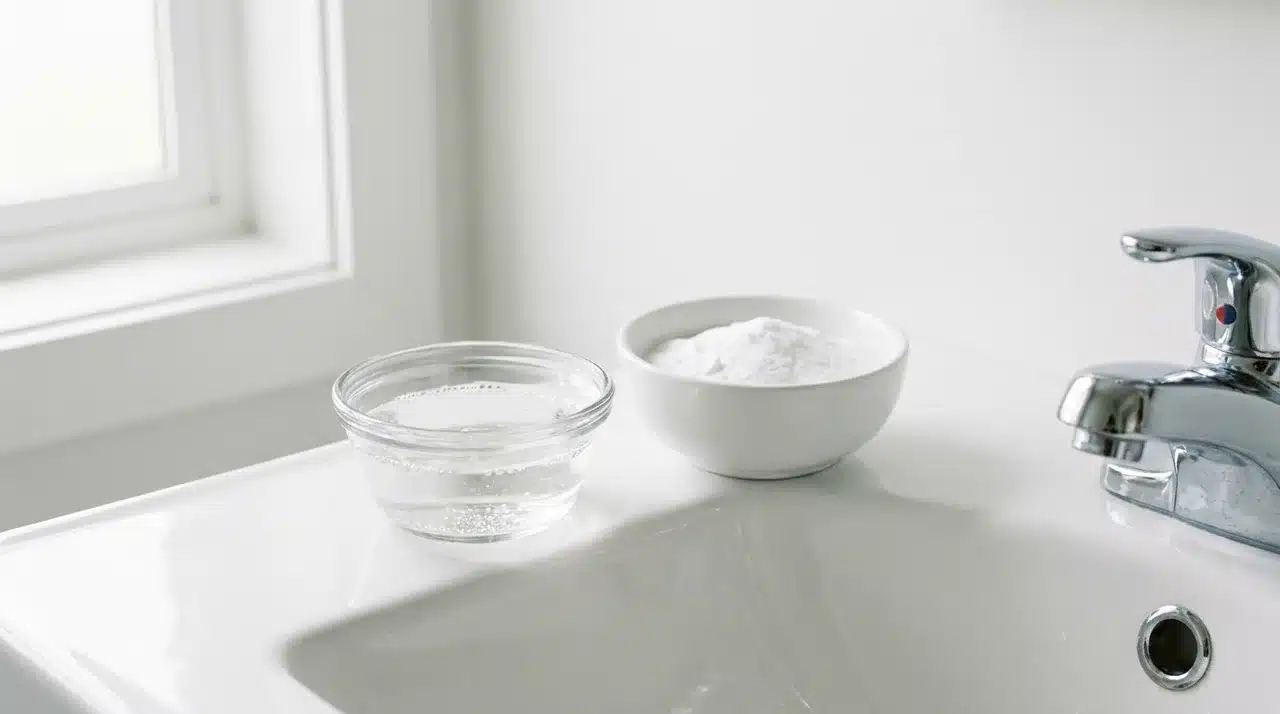
This one works best on soap scum and light grease buildup. Pour half a cup of baking soda down the drain, follow with half a cup of white vinegar, and cover the drain immediately.
The fizzing reaction builds pressure that loosens debris clinging to pipe walls. Leave it for 30 minutes, then flush with a full pot of boiling water.
It works well as a monthly maintenance cleaner, but has real limits on stubborn blockages.
Many homeowners are surprised to learn that baking soda and vinegar may not be the fix they expect for a serious clog.
2. Salt and Baking Soda Overnight Soak
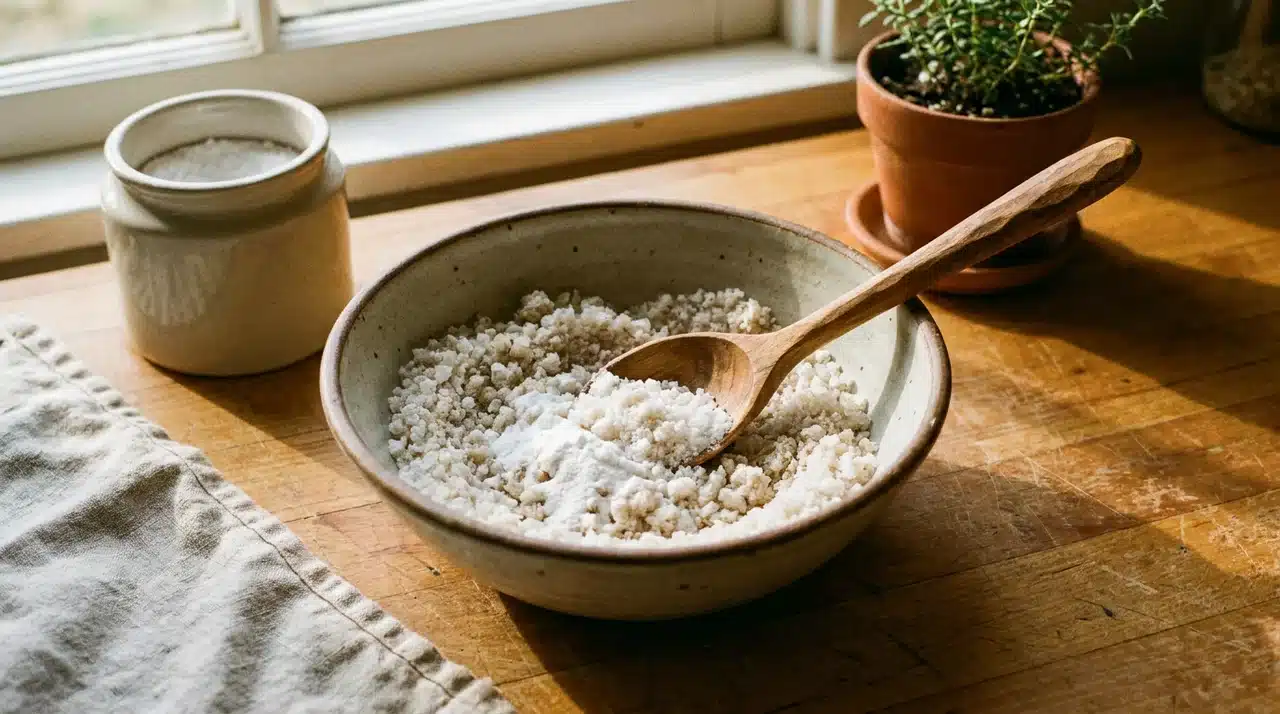
This combination works well on moderate grease and tougher buildup that a single ingredient cannot shift.
Mix half a cup of baking soda with half a cup of table salt and pour both down the drain dry. Do not add water yet.
Leave it overnight for best results, then flush with a full pot of boiling water in the morning. The longer it sits, the better it works.
3. Dish Soap and Boiling Water
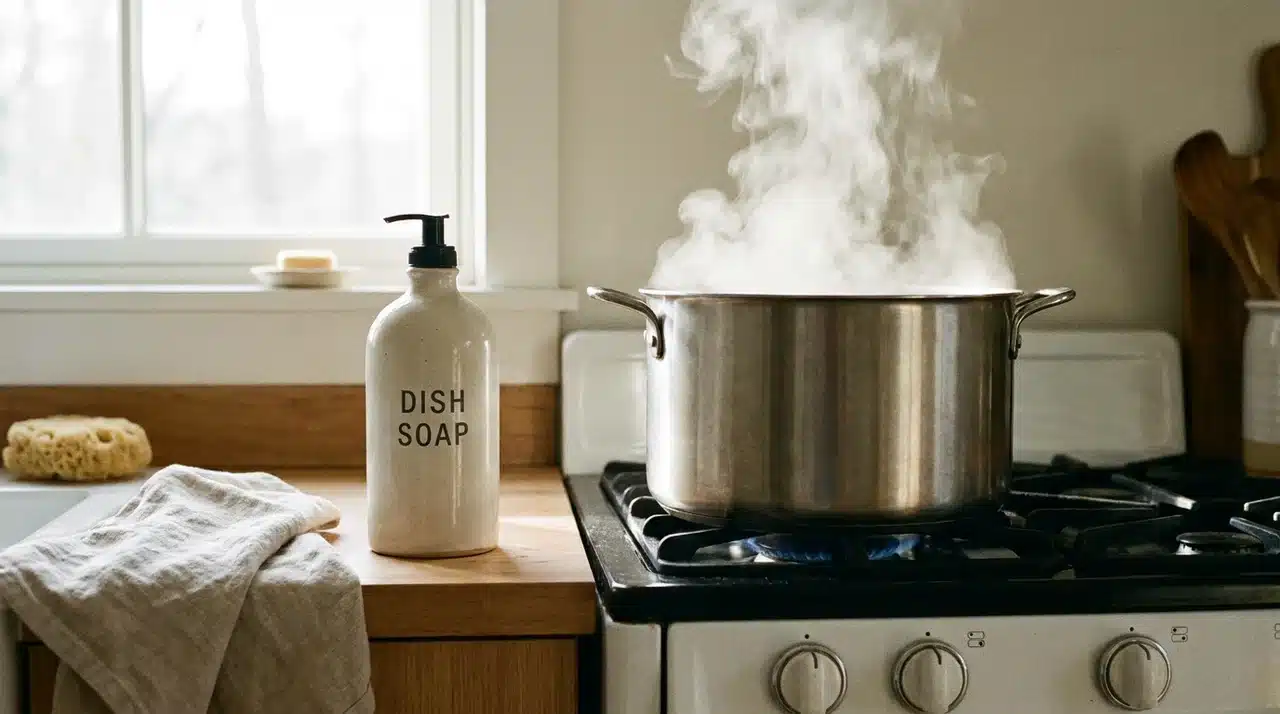
This method is the most effective option when grease is the main culprit. Dissolve three to five tablespoons of liquid dish soap in half a gallon of boiling water, then pour it slowly down the drain.
The soap breaks apart fatty molecules while the heat keeps the grease in liquid form, so it moves through the pipe cleanly.
If you have PVC pipes, use very hot tap water instead of boiling water to avoid softening the plastic.
4. Lemon Juice and Baking Soda
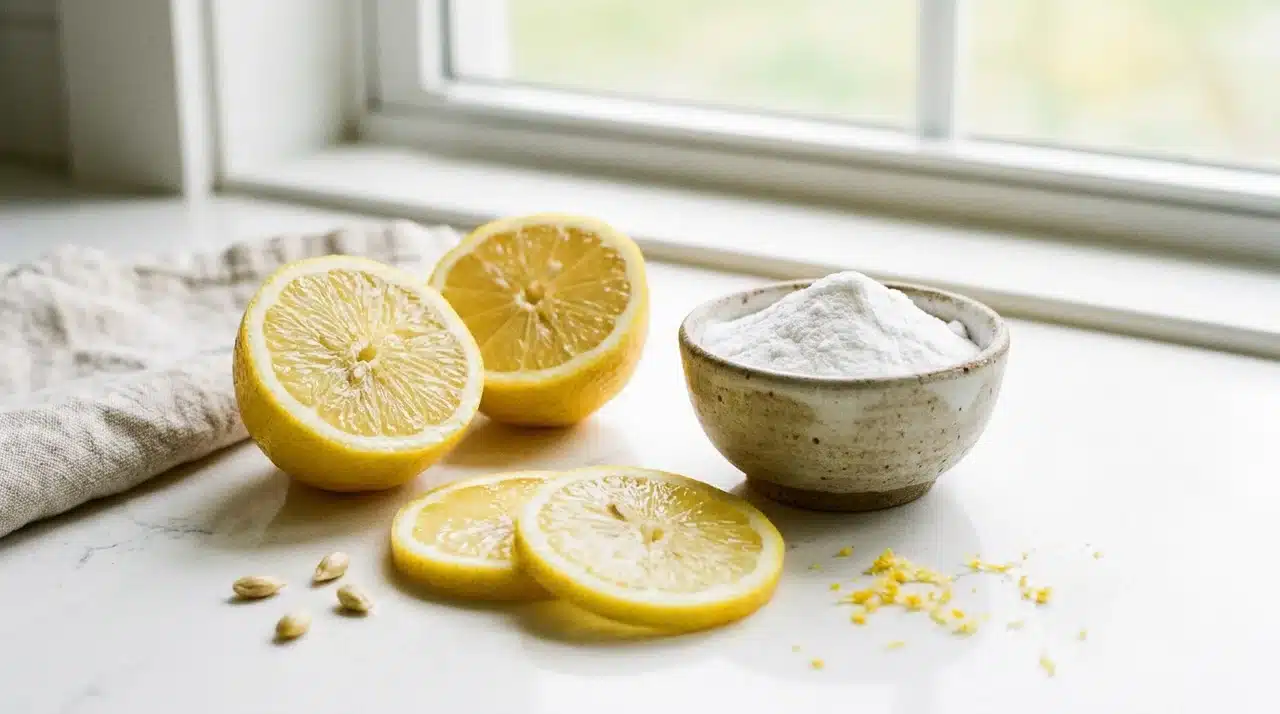
This combination is ideal for light buildup and drains that have started to smell.
Pour half a cup of baking soda down the drain and let it settle for a minute. Follow with half a cup of fresh lemon juice and cover the drain right away.
Leave the mixture for 30 to 60 minutes. The citric acid breaks down buildup and kills odor-causing bacteria at the same time. Flush with boiling water to finish.
5. Salt, Borax, and Vinegar
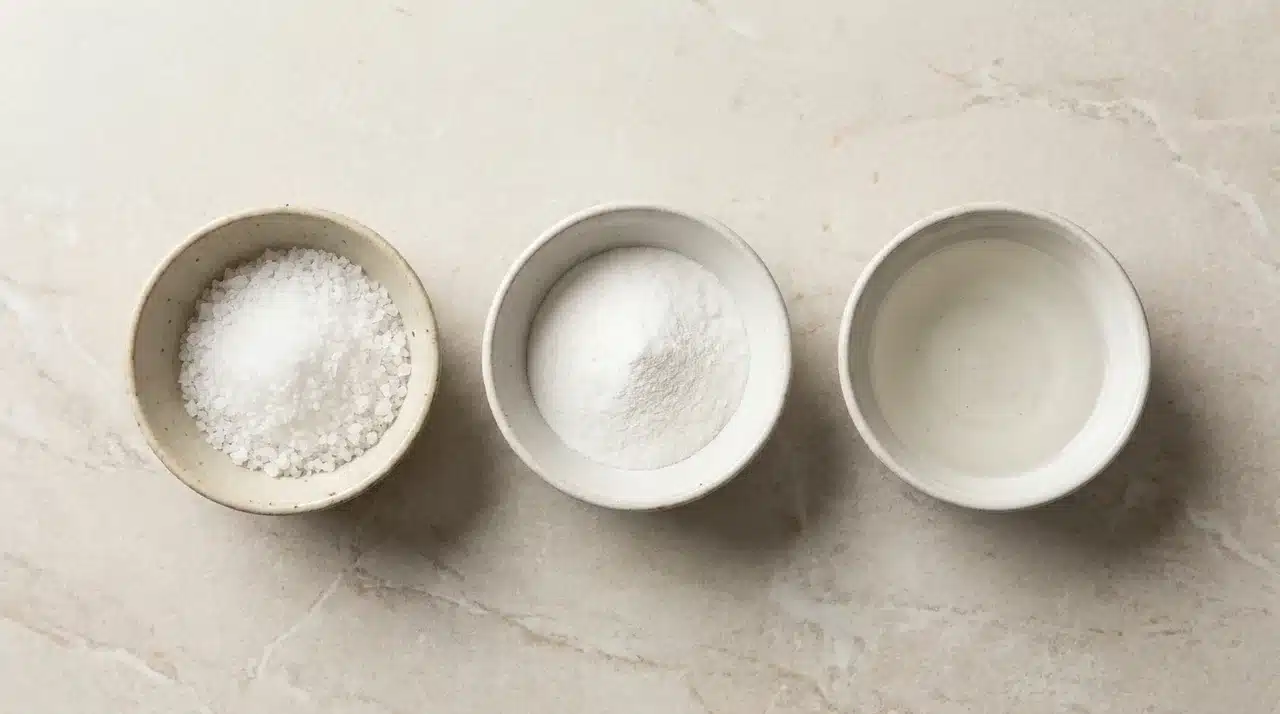
This three-ingredient mix works well on hardened buildup that other methods have not shifted.
Pour a quarter cup of salt and a quarter cup of borax down the drain together. Follow with half a cup of vinegar and a full pot of boiling water.
Leave everything undisturbed for at least an hour, then rinse thoroughly with hot tap water.
6. Wire Hanger or Drain Snake
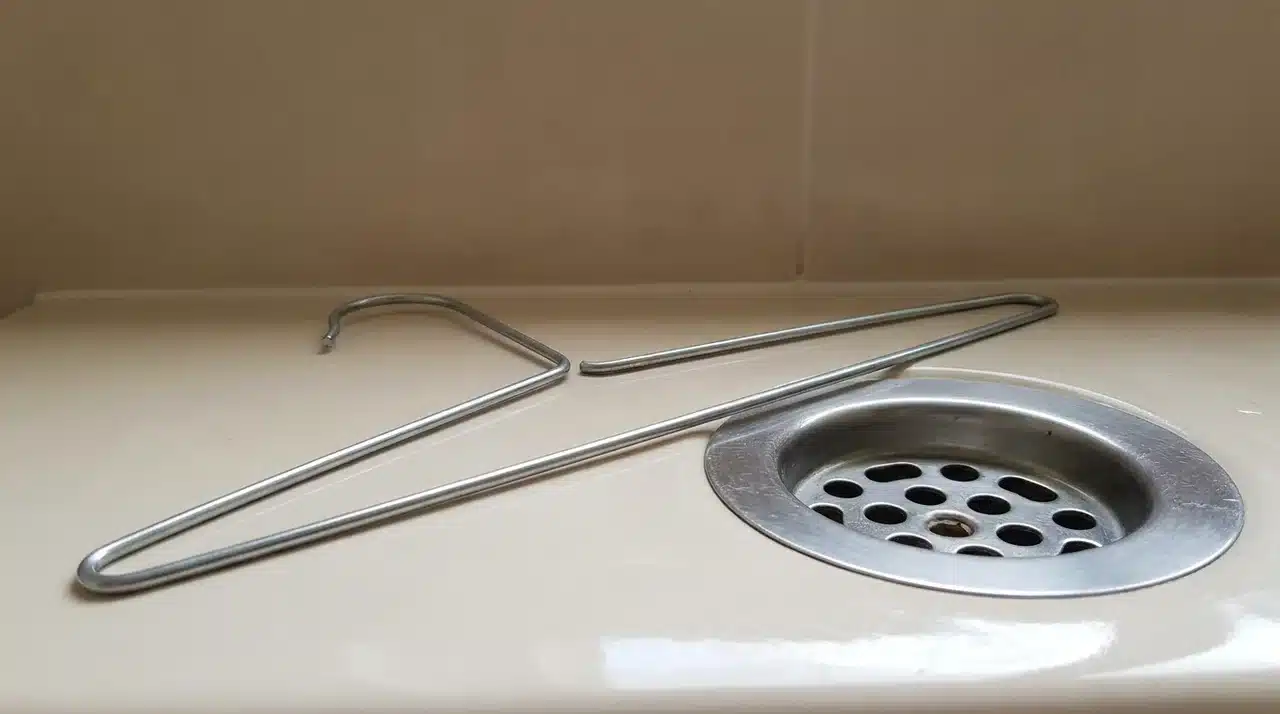
This approach works best when the problem is hair near the drain opening, not buildup inside the pipe. Straighten a wire coat hanger and use pliers to bend a small hook at one end.
Feed it slowly into the drain and rotate it gently to catch hair and debris, then pull everything out and dispose of it in a bag.
Run hot water for a few minutes after to clear anything left behind. A plastic drain snake tool grips stringy debris even better than a hanger if you have one available.
One quick note before moving on: if you are not sure whether your pipes are PVC, the safest rule across all six methods is to use very hot tap water instead of boiling water for the flush step. Most homes built after the 1970s have PVC pipes under sinks and in bathroom drains, and repeated boiling water exposure can soften them over time. Hot tap water gets the job done without the risk.
DIY Drain Cleaner for a Kitchen Sink Clogged with Grease
Kitchen drains deal with cooking grease, food particles, and oil that cool and solidify inside the pipe long after you have washed them down.
Start with the dish soap and boiling water method since it targets grease directly. Follow up with the salt and baking soda overnight soak if the drain is still running slowly.
Always run cold water while the garbage disposal is on, and never pour cooking oil or bacon fat down the drain, no matter how liquid it looks in the moment.
If nothing is shifting, the grease has likely moved past the trap. At that stage, a clogged kitchen sink needs a completely different approach.
Simple Habits to Stop a Clogged Drain Before It Starts
Small, consistent habits will save you from dealing with a blocked drain altogether.
- Place a mesh strainer in every shower and kitchen sink to catch hair and food particles before they enter the pipe.
- Pour hot water down every drain at least once a week to keep grease and soap scum from building up.
- Run a salt-and-baking-soda soak once a month for a deeper maintenance clean.
- Never put grease, oil, coffee grounds, potato peels, eggshells, or banana peels down the drain. They all belong in the trash.
- Always run cold water while the garbage disposal is on to push waste further down the line.
A few minutes of upkeep each week is all it takes to keep your drains running without any trouble.
Conclusion
A clogged drain does not always require a plumber or a harsh chemical to fix. The right DIY drain cleaner, made with ingredients already in your kitchen, quickly and safely handles most everyday blockages.
Your pipes last longer, your home stays free of toxic fumes, and you spend almost nothing in the process.
Start with the method that matches your clog type, make the simple preventive habits part of your routine, and most drain problems will never get the chance to grow into bigger ones.
If the problem keeps coming back no matter what you try, a professional drain cleaning service will get to the root of it for good.
Frequently Asked Questions
Can I Use These Natural Methods in a Bathroom with Older Pipes?
Yes, natural drain cleaners are gentler than chemical ones and are safe for older metal and PVC pipes alike.
Will a Diy Drain Cleaner Work in a Slow Bathtub Drain?
The wire hanger or drain snake method works best for bathtub drains since hair near the stopper is usually the cause.
How Do I Know if My Drain Clog is in the Trap or Deeper in the Pipe?
If plunging and natural cleaners both fail after multiple tries, the clog is likely past the trap and needs professional clearing.