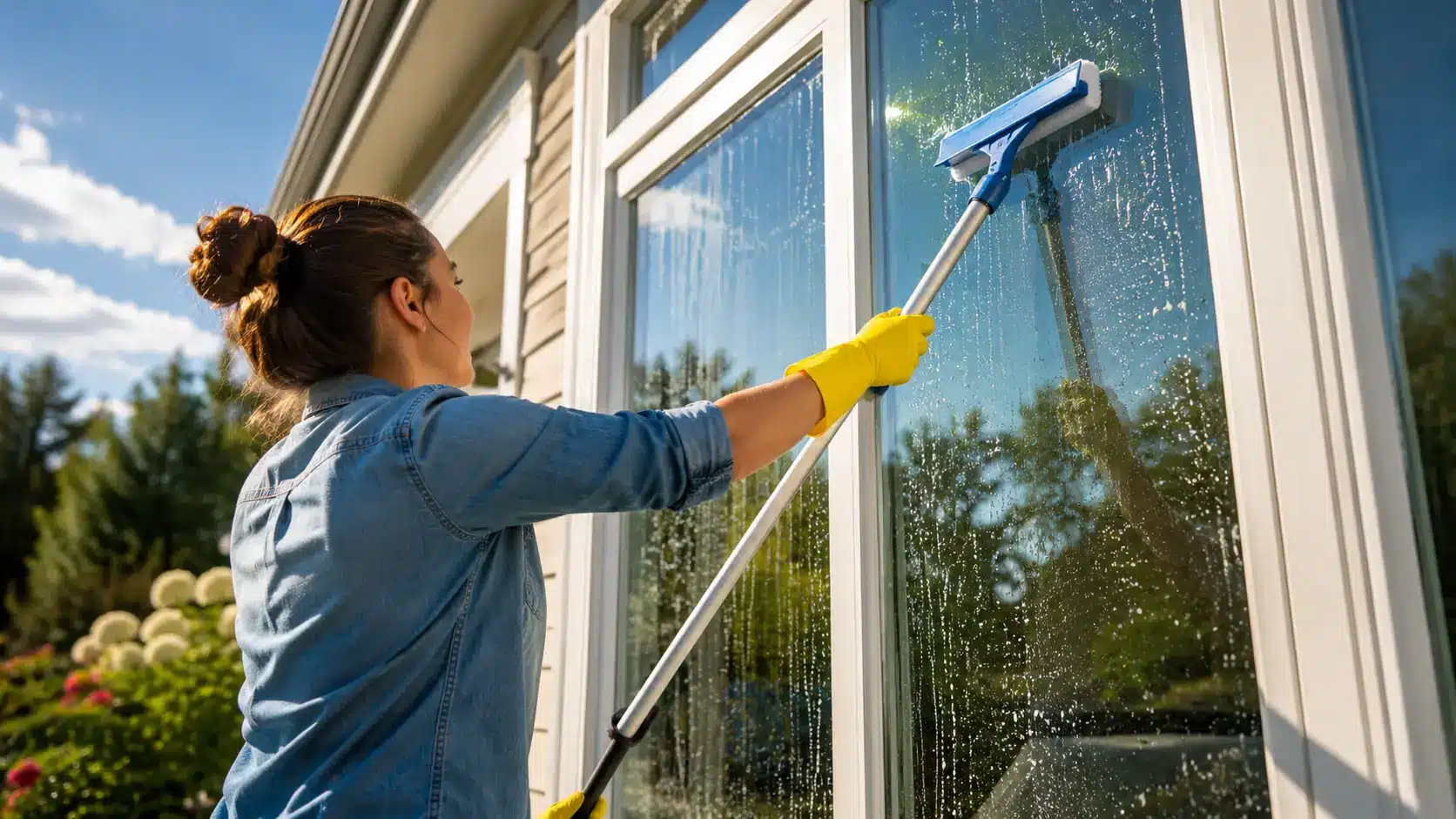
Outside windows work against you in ways indoor glass never does. Rain doesn’t clean them; it deposits dirt, pollen, and mineral residue that dries into a hazy film.
Sprinkler overspray leaves hard water stains. Bird droppings etch glass within 24–48 hours if left untreated.
And the screens sitting in front of the glass filter the same dust and exhaust particles back onto the pane every time the wind picks up.
It’s not that your windows are difficult to clean. It’s that they’re up against constant exposure that indoor glass simply doesn’t face.
The method matters more than the product. Get the sequence right, rinse, wash, squeegee, dry edges, and you’ll get the clear, streak-free results that most homeowners struggle to achieve.
What You’ll Need Before You Start
|
How to Clean Outside Windows Step by Step
An effective way to clean windows is to start with a clean finish before the first wipe. Work from top to bottom, rinse often, and keep your tools clean as you move across each pane.
Step 1: Remove Loose Dirt First

Brush the frame, sill, and glass with a dry microfiber cloth or soft brush before adding water. Then rinse the window with a garden hose so dust, pollen, cobwebs, and grit do not smear across the glass.
Remove screens before cleaning the glass. Rinse them separately and let them dry fully before putting them back.
Step 2: Wash the Glass Without Scratching It

Apply a thin, even layer of cleaning solution with a microfiber sleeve or soft applicator. For heavier grime, let it sit for 30–60 seconds before wiping.
Avoid steel wool, rough pads, or abrasive tools. For bird droppings or tree sap, first soak the spot with warm soapy water for 5–10 minutes.
Step 3: Use a Squeegee for a Clear Finish

Start at the top corner and pull the squeegee smoothly across the glass, working from top to bottom. Wipe the blade with a clean microfiber cloth after every pass.
For narrow panes, use straight downward strokes instead of an S-pattern. A clean, smooth rubber blade gives the best result.
Step 4: Dry the Edges to Prevent Streaks

After squeegeeing each panel, run a folded dry microfiber cloth around all four edges. This removes the thin line of water that often dries into visible streaks. Do this right away before the water sets on the glass or frame.
Clean outside windows are mostly about order, not effort. Rinse first, wash gently, squeegee cleanly, and dry the edges before moving to the next window.
How to Clean Outside Windows You Can’t Reach
Upper-floor and hard-to-reach exterior windows are the most common sources of frustration for homeowners. Here are the four approaches that work, from simplest to most specialized.
- Extension pole: Fits a squeegee and a microfiber applicator sleeve, extending to 12 to 24 feet. Covers most two-story homes from the ground. Use the same method as any window: wet, squeegee top to bottom, dry edges.
- Magnetic window cleaner: Two magnetic pads, one on each side of the glass, connected through the pane. Move the interior pad, and the exterior follows. According to a 2026 guide from Top Rated House, most models work with glass 3 mm to 28 mm thick. Check your window measurements before buying. Always use the wrist safety cord on upper floors.
- Hose spray attachment: Best used as a prep step, not for cleaning. A hose rinse knocks off loose pollen and debris before you apply solution, preventing abrasive particles from scratching the glass during washing.
- Tilt-in windows: Many modern double-hung and casement windows tilt inward so the exterior face can be cleaned from inside. Press inward at the top of the lower sash to release it. Clean the exterior glass, then tilt it back into position.
Getting to the second-floor exterior glass is easier than most homeowners think. These four approaches cover every common window type; no ladder is required for most.
Common Mistakes That Leave Outside Windows Streaky
|
How Often Should You Clean Outside Windows
How quickly exterior windows get dirty depends more on your environment than your cleaning routine. Here’s a realistic schedule based on location.
| Environment | Suggested Cleaning Schedule |
|---|---|
| Urban or high-traffic areas | Every 2–3 months |
| Near trees with sap, pollen, or debris | Every 2–3 months |
| Coastal areas with salt air and humidity | Every 1–2 months |
| Average suburban home | Twice a year, in spring and fall |
| Near agricultural land with dust or spray | Every 2–3 months |
If you notice a visible film building up before your scheduled clean, a quick hose rinse without a full wash buys time without the full setup.
Community Advice and Shared Experience on Cleaning Outside Windows

Across Reddit discussions and homeowner forums, the most repeated advice is surprisingly simple: rinse the window first, clean on a cloudy day, and switch to a squeegee instead of wiping with towels.
Many homeowners also mention that distilled water makes a noticeable difference in areas with hard water, helping reduce white spots after cleaning.
On YouTube, cleaning demonstrations often reinforce the same points, especially the importance of working from top to bottom and drying the edges immediately to prevent streaks.
While cleaning methods vary, the strongest consensus is that technique matters more than expensive products when it comes to getting clear outside windows.
Summing It Up
Outside windows get dirty faster, deal with harder grime, and are often harder to reach, but the fix is simpler than most people expect.
Rinse first, apply solution sparingly, squeegee from top to bottom with a clean blade, and dry the edges before they set.
Skip the paper towels, skip direct sunlight, and clean the screens before the glass. Those habits, done consistently, are what separate the homeowners who get clear results from the ones who keep getting streaks.
For easy day-to-day cleaning, you can also make diy window cleaner by yourself with simple ingredients, and save a lot of your time.
Frequently Asked Questions
How Do You Clean Outside Windows Without a Ladder?
Use an extension pole with a squeegee and applicator sleeve, or a magnetic window cleaner for fixed upper-floor windows. Both methods work from the ground.
What Is the Best Thing to Wash Outside Windows With?
A few drops of dish soap in warm water handle most exterior grime. For hard water spots and mineral buildup, a 1:2 white vinegar-to-distilled water solution works better.
Why Do My Outside Windows Still Look Streaky?
Usually, direct sunlight dries the solution too fast, a dirty squeegee blade, or minerals left behind in tap water. Switch to distilled water and clean on an overcast day.
Can You Clean Outside Windows With Vinegar?
Yes, a 1:2 ratio of white vinegar to distilled water effectively cuts through mineral deposits and hard water film. It’s one of the most widely recommended solutions for exterior glass.