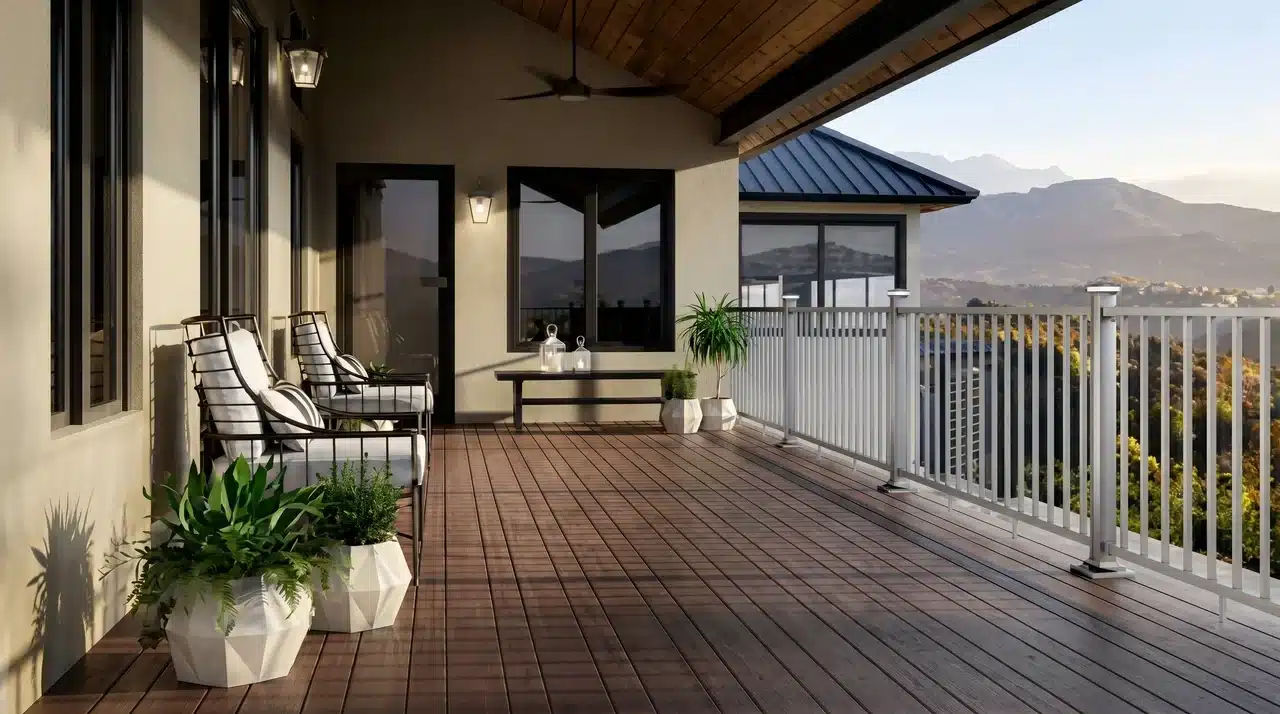
Choosing the right deck color shapes how your entire outdoor space feels and functions. It connects your home’s exterior to the living area just outside it.
The color you land on determines more than aesthetics. It affects heat retention, maintenance frequency, and how the space holds up through seasons.
Material, light conditions, and house style all pull the final decision in different directions. Knowing how they work together makes the right choice far easier to find.
How to Choose a Deck Color that Fits Your Space?
Picking a deck color is not just about what looks good in a photo. The right color depends on three things working together: your house exterior, how much sun your deck gets, and what your deck is made of.
Get those three right and the color choice becomes obvious. Get them wrong, and even a beautiful stain can look off once it dries.
1. Match Your Deck to Your House Color First
Your house exterior sets the undertone for everything outside it.
Cool-toned siding, such as gray or blue-green, pairs best with deck stains in the same family. Charcoal, weathered gray, and greige all sit in that range.
Warm exteriors work the opposite way. Brick, beige, and tan siding call for honey, chestnut, or warm brown deck tones. A cool gray deck against warm brick creates visual tension most homeowners notice but cannot name.
White houses offer the most flexibility. Warm browns are the classic pairing. Soft grays also work as long as the railing color bridges the two.
2. How Does Sunlight Change What a Color Looks Like on a Deck?
A stain on a sample card looks nothing like that same color across 400 square feet of sun-baked wood. Test any serious contender at two times of the day before making a call.
Here is what to check and when:
- Check it at midday when sun exposure is at its peak
- Check it again in late afternoon light before making a final call
If the color holds across both, it is a safe choice. Shaded and north-facing decks suit lighter tones and soft neutrals without the risk of fading. Full-sun decks need mid-range or darker tones to stay consistent over time.
3. Wood vs. Composite: Why Does Material Affect Your Color Options?
Material defines your color range before you open a single swatch. Each option either limits or expands what is available to you.
Here is how each one works:
- Natural wood with semi-transparent stain limits you to natural tones only
- Natural wood with solid stain or paint opens the full color spectrum
- Composite decking has color built into the board at the manufacturing stage
Brands like Trex, TimberTech, and CALI Floors do not get stained after installation. The color you order is permanent. Nail down your material before committing to a color direction.
Popular Deck Colors and Where They Work Best
Not every color works on every deck. The best ones do two things well: they complement the home next to them, and they age without looking worn. Here are the color families that consistently deliver both.
1. Gray Deck Colors
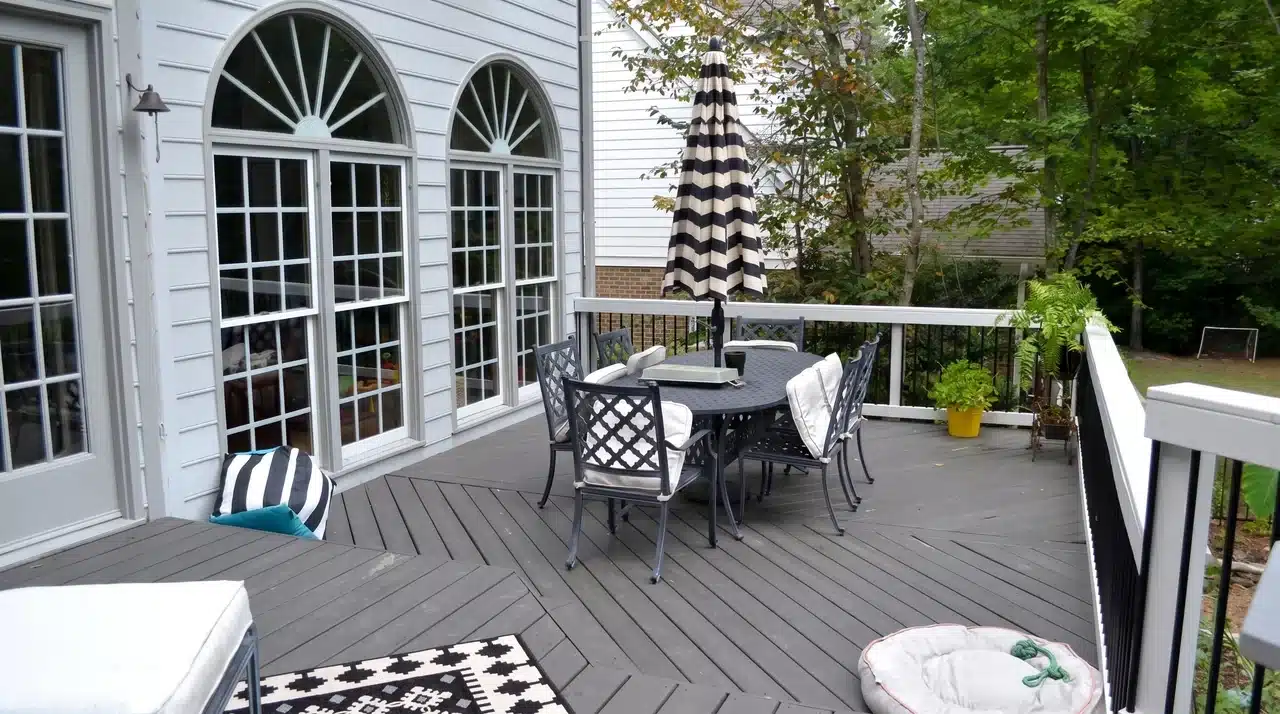
Gray goes with more house colors than anything else, which is why so many people pick it.
The most popular shades are Charcoal Gray, Gull Wing Gray, and Whale Gray.
Darker grays look great with white trim and black railings. Lighter grays are smarter for sunny spots where you want to keep things cooler and less heavy-looking.
2. Brown and Natural Wood Tones
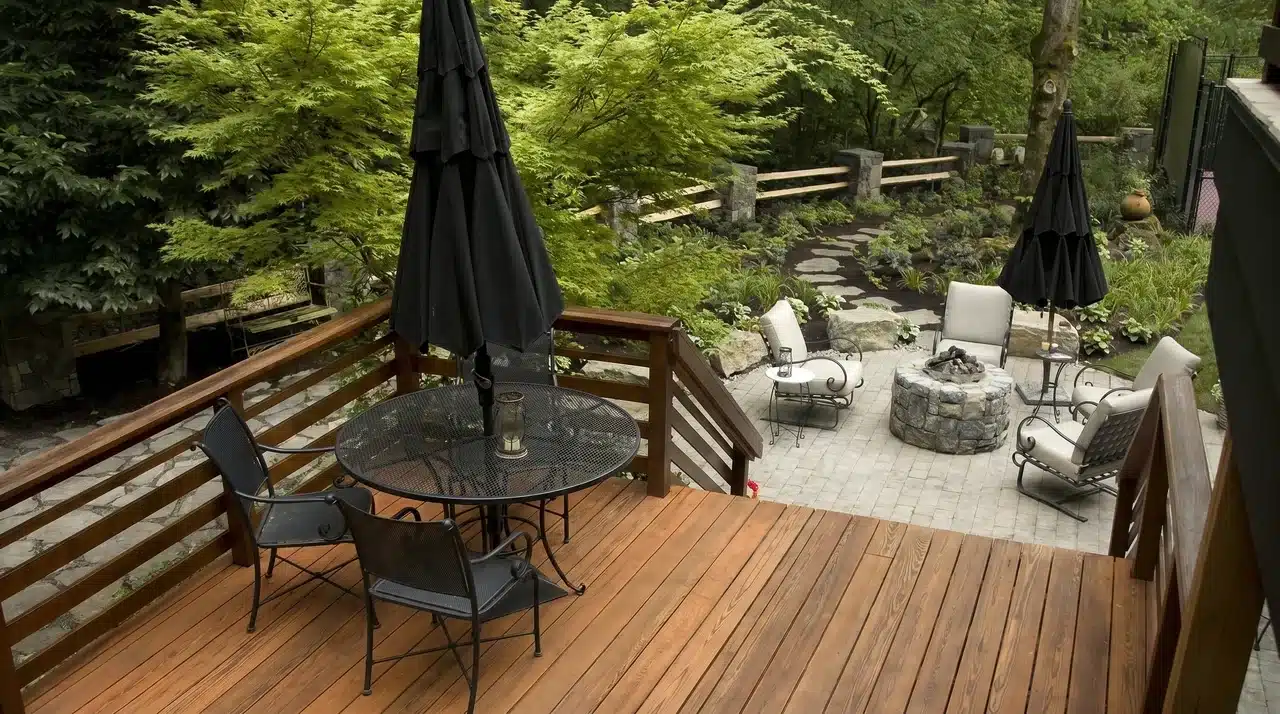
Chestnut, Mahogany, Malted Barley, and English Walnut are the best picks if your house has warm colors like brick, beige siding, or tan-and-cream paint.
Here is a simple rule to remember: a little contrast between your deck and your siding looks like you planned it that way.
When they match too closely, the deck basically disappears.
3. Bold and Moody Deck Colors
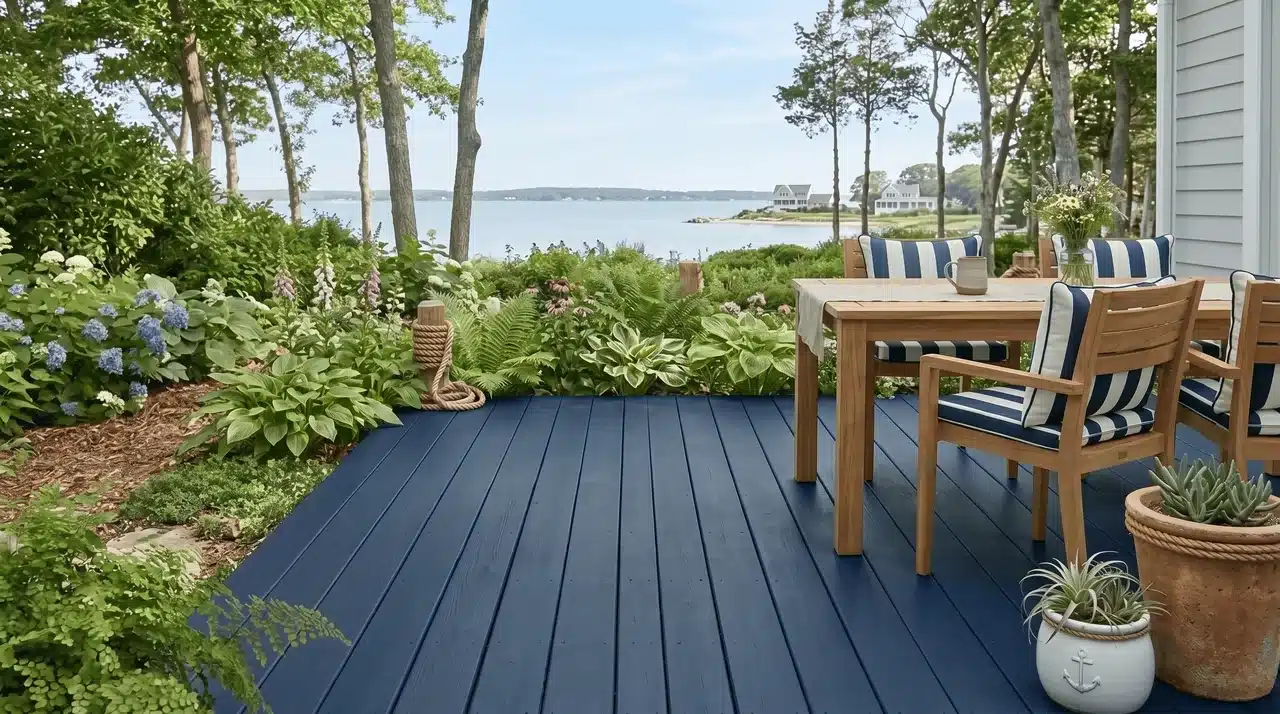
Near-black and dark gray-brown shades like Millstone look best on smaller decks, covered patios, and homes with strong, clean lines.
Scale really matters here more than with any other color family. A big open deck in a near-black color can start to feel heavy and closed-in instead of cool and dramatic.
It works much better when the space feels contained. A pergola or an overhead covered structure helps a lot. Without something to frame it, go with a dark gray-brown instead of full near-black.
4. Neutral and Light Deck Colors
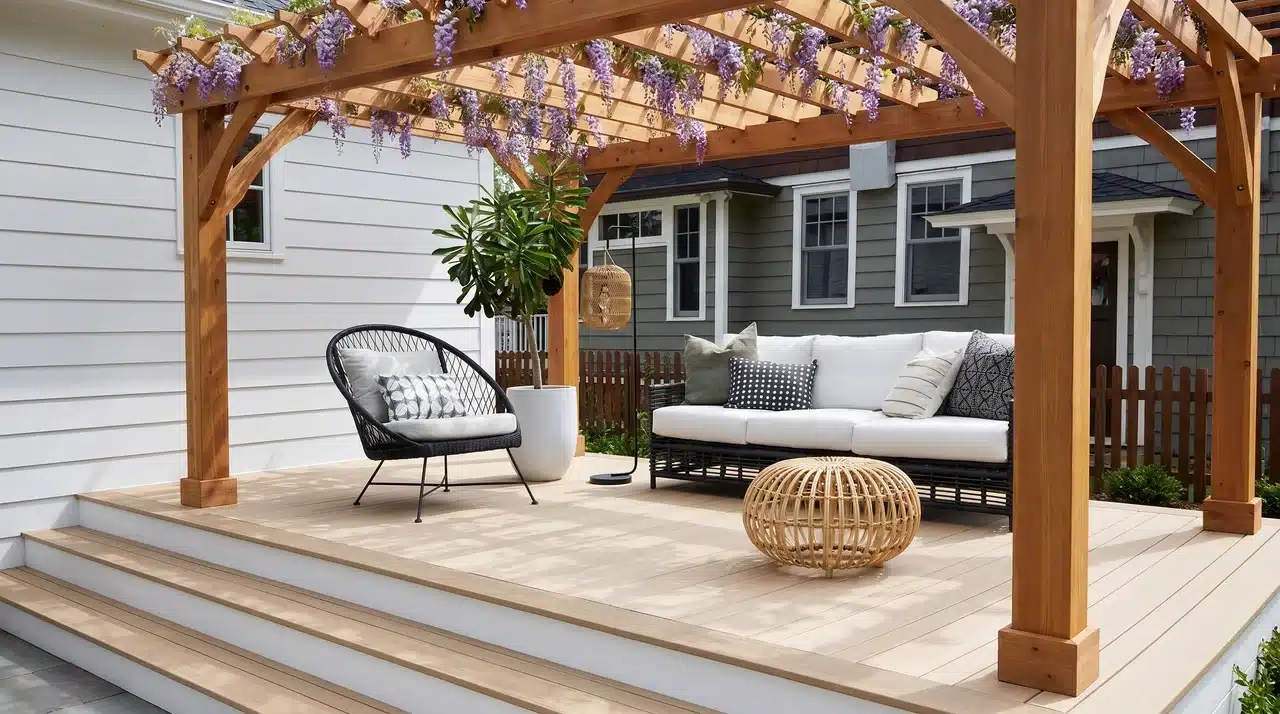
Salt Flat, Hatteras, and greige tones are smart picks for smaller decks or spots that get a lot of direct sun. They keep things feeling open and airy.
The one thing to know going in is that lighter decks show dirt and mildew faster than darker ones, so you will need to clean them more often.
Two-Color Deck Combinations Worth Considering
Two-color decks add structure that a single flat finish cannot. You are working with two elements: a field color covering the main surface and a border that frames it. Keep the border one to two shades darker than the field, within the same undertone family.
5. Field and Border Combinations
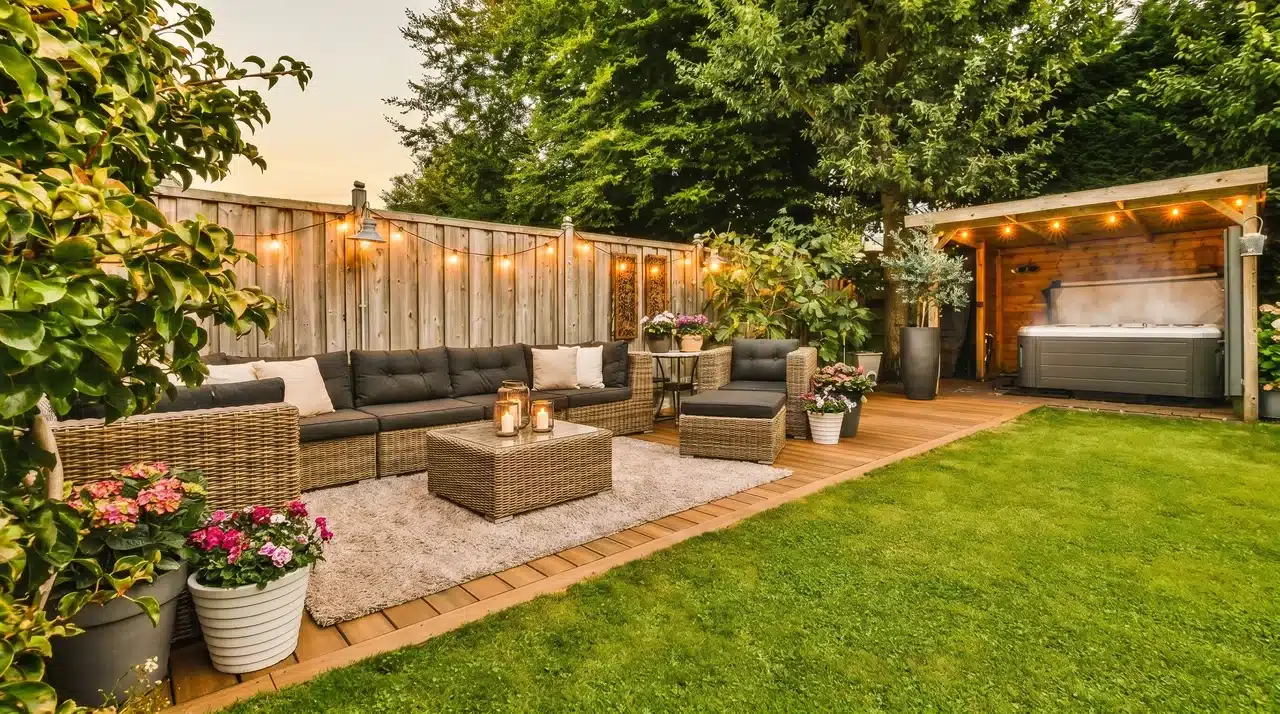
Coastline with a Dark Hickory border is the top composite pairing for a coastal feel. English Walnut with Mahogany trim is the warmer option for brick or tan homes.
Never mix cool and warm undertones between field and border. Stay in the same undertone family and let the shade difference do the work.
6. Deck and Railing Color Pairings
A gray deck with a white railing is the most searched combo for good reason. It looks clean and sharp without being too much.
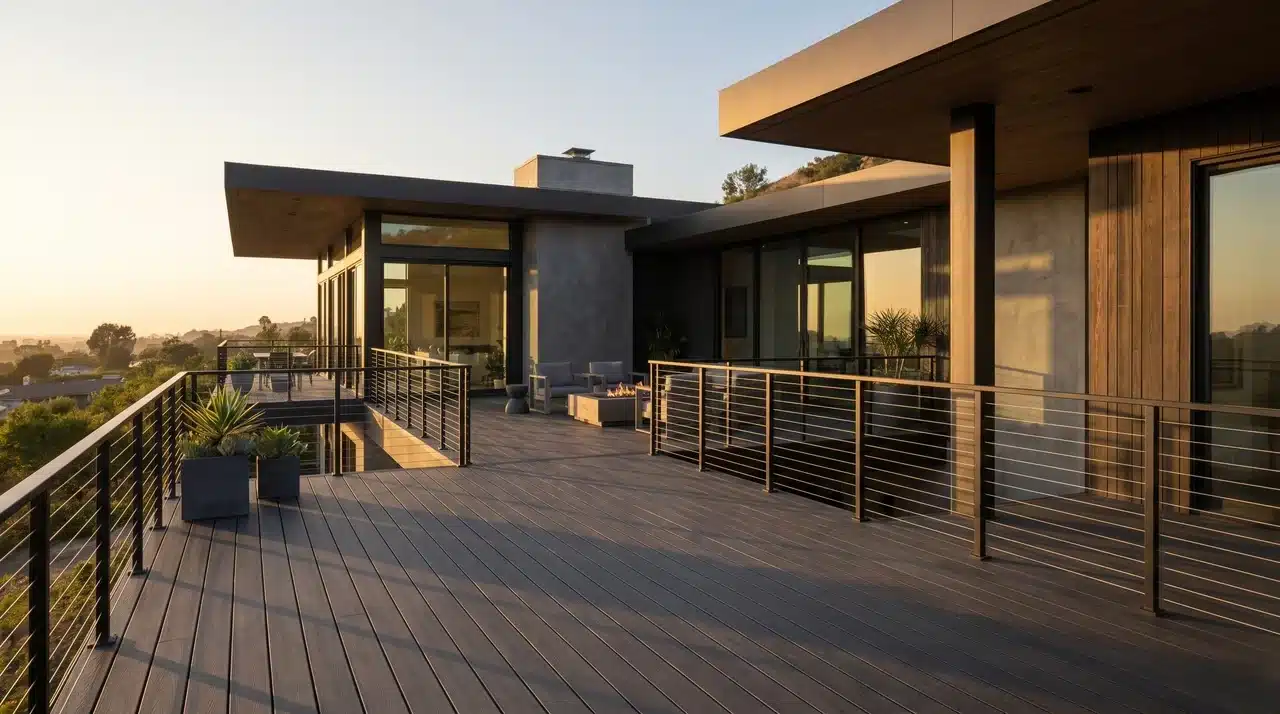
A dark deck with black metal railing works great on modern homes. For all-wood pairings, make sure there is a real texture difference, or it will look flat.
Deck Color Ideas by House Style
Architecture is the starting point most people skip. The same charcoal that looks sharp on a modern home can feel disconnected on a craftsman bungalow.
7. Modern and Contemporary Homes
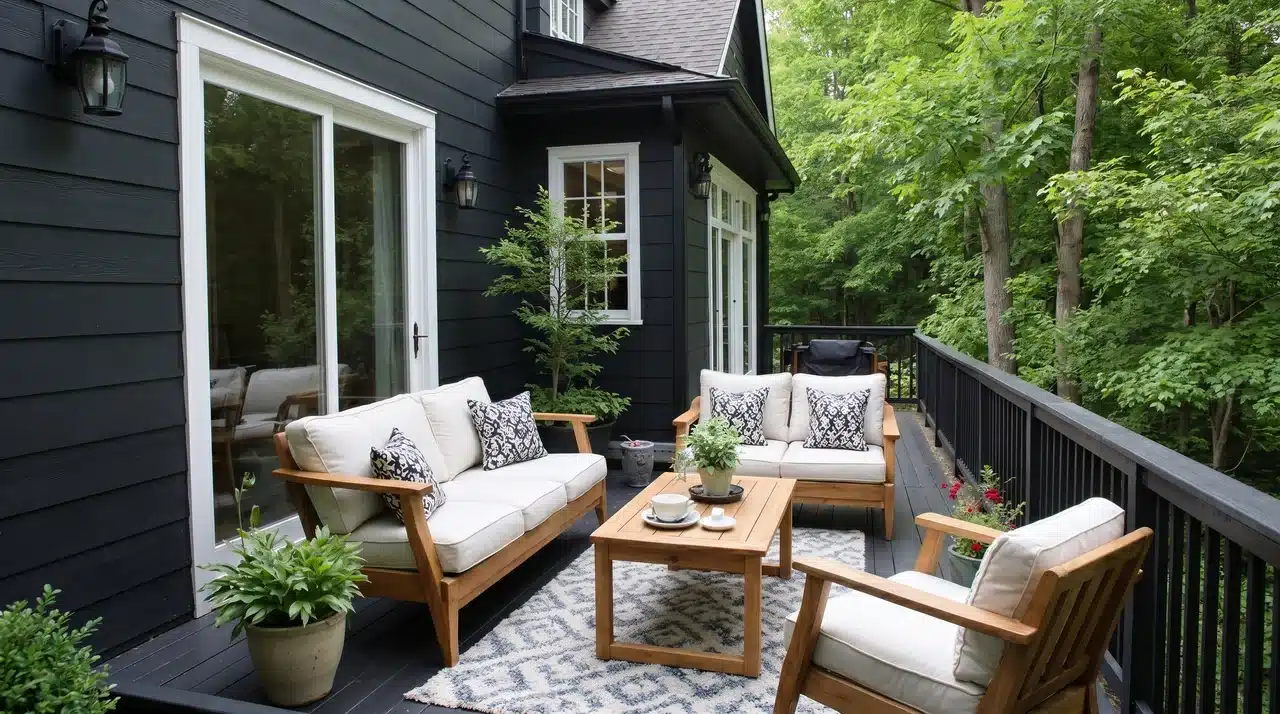
Charcoal, dark gray-brown, and near-black shades like Millstone are a natural fit for modern homes.
Keep the color difference between the deck and fascia small so everything flows together cleanly. Black metal cable or rod railings are the finishing touch that pulls the whole look together.
8. Traditional and Craftsman Homes
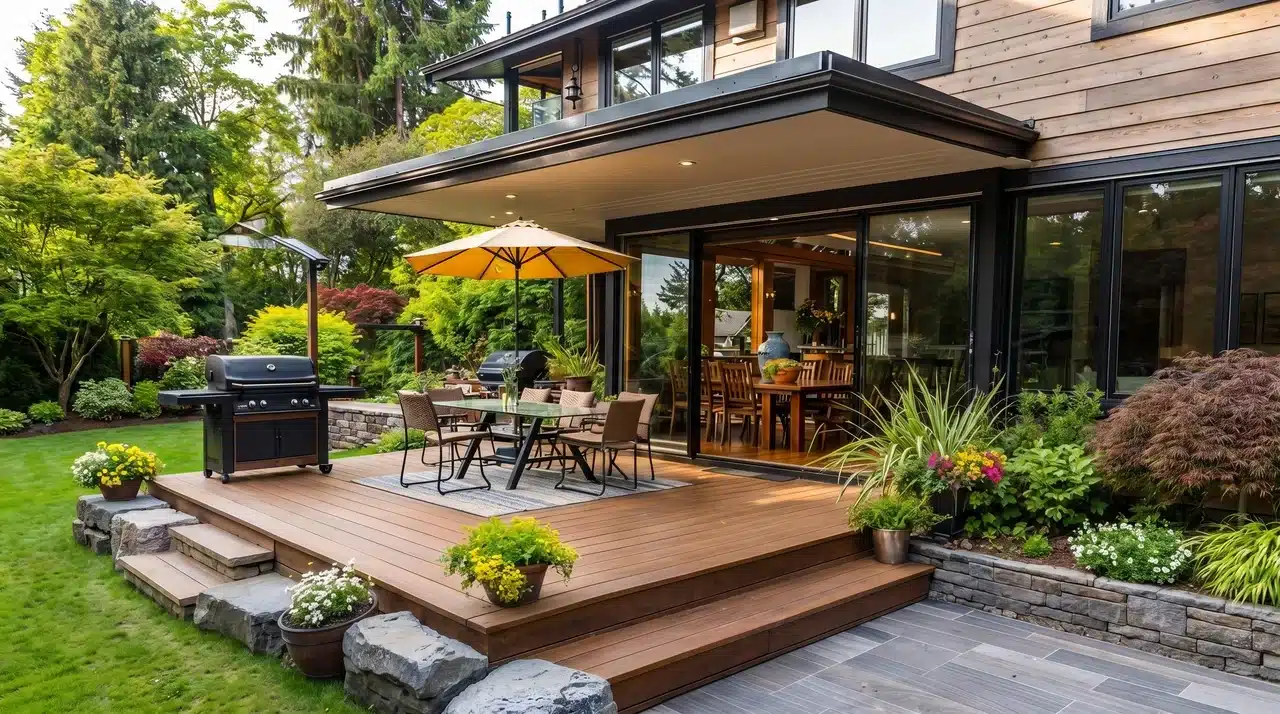
Warm browns, chestnut, mahogany, and cedar tones feel right at home on craftsman and traditional builds.
A warm brown deck with a darker mahogany border mirrors the layered wood details these homes are known for. Finish with white or cream railing and skip the black metal entirely.
9. Coastal and Farmhouse Homes
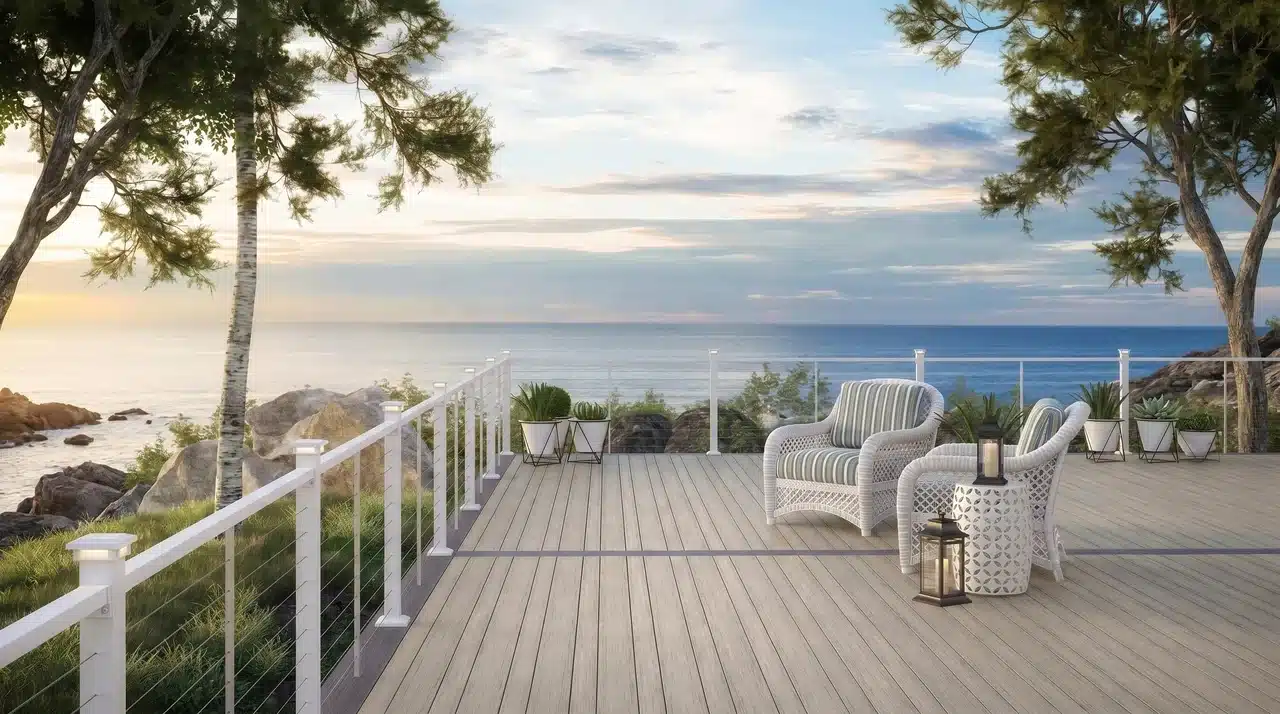
Greige, weathered gray, and light naturals like Hatteras fit coastal and farmhouse styles without trying too hard.
Honey Grove and Salt Flat are especially good on decks that face water or open sky. White railing is basically a must for these builds and almost always looks right.
Deck Paint vs. Stain: Does Color Choice Change?
Finish type defines your palette before you open a single swatch. Resolve this decision first.
1. Semi-Transparent Stain
- Keeps wood grain visible; blends the wood’s natural tone with a thin color layer
- Restricted to soft, natural hues only, no bold or saturated shades
- Requires reapplication every 2–3 years
2. Solid Stain and Deck Paint
- Fully covers the surface; unlocks the complete color spectrum from dark charcoal to vibrant greens and blues
- Proven performers: Brierwood, Annapolis Gray, Marblehead Gold, Tree Branch
- Recoat every 4–7 years depending on prep quality and sun exposure
Heat and Color: One Factor Most People Overlook
- Dark colors absorb more heat; surfaces run noticeably hotter under direct sun
- Light and natural tones reflect heat, keeping the deck cooler underfoot
- Cool Field formulations reduce surface temperature by up to 20°F
- On full-sun dark decks, evaluate both color and product type together; one decision affects the other
Deck Materials and How They Affect Color Over Time
Two decks finished in the same color can look completely different after three years. The material beneath controls how color holds up, fades, and ages.
Pressure-Treated Wood
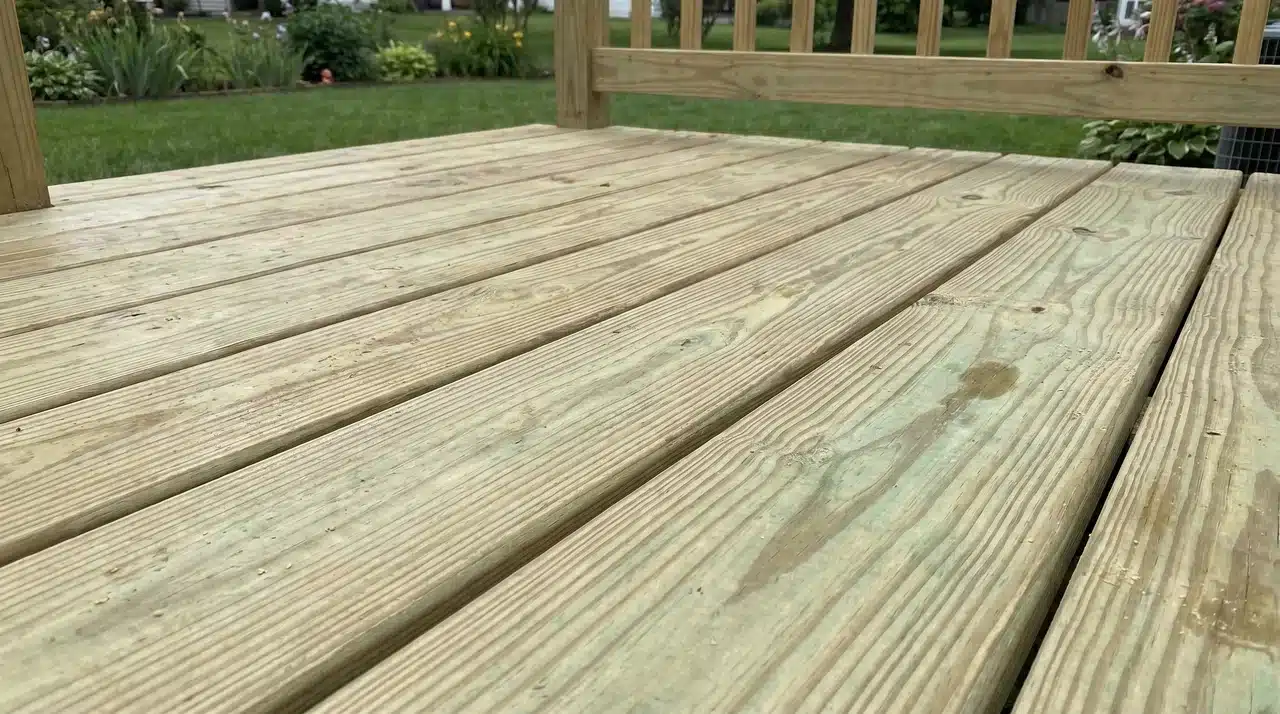
The most affordable starting point and takes stain or paint well across the full color range. A few things to keep in mind:
- Needs refinishing every 2–3 years
- Dark colors fade faster due to limited UV protection
- New boards must dry 30–90 days before finishing, or the stain will peel
Skip the drying window, and you will be redoing the job before the first winter. If a contractor wants to stain the same week the deck goes in, push back.
Cedar and Redwood
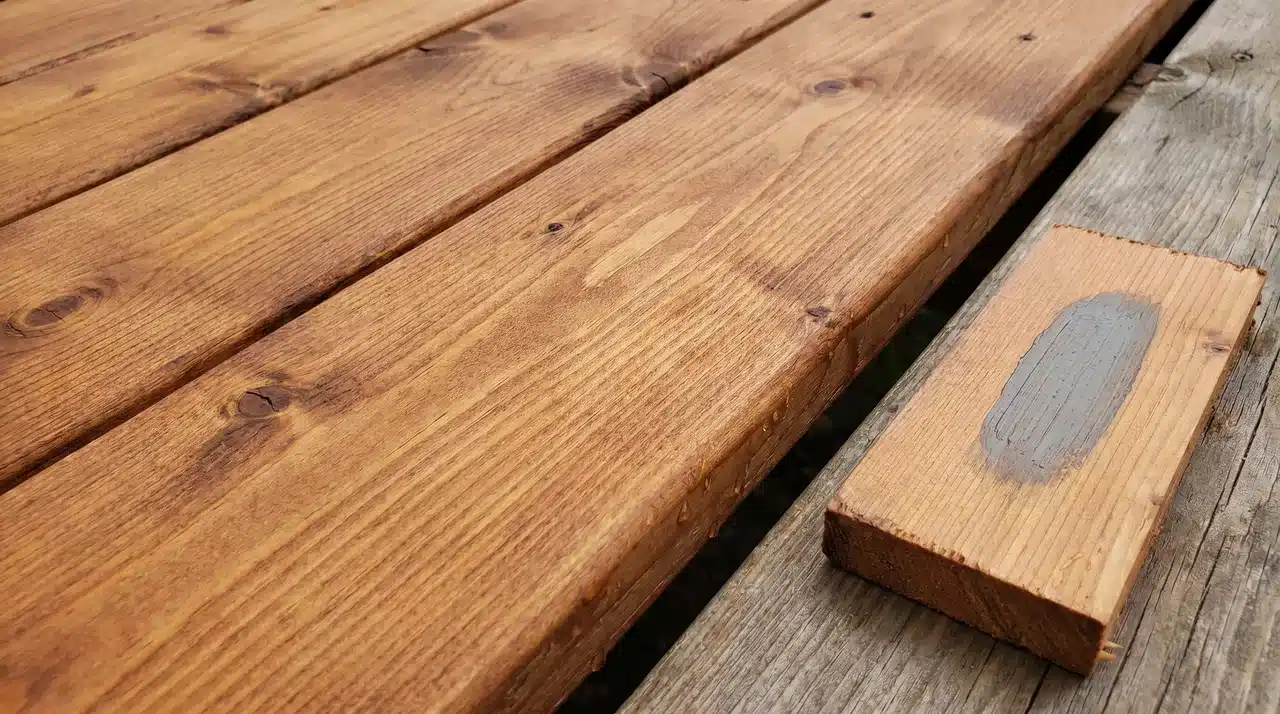
Naturally rot-resistant but picky about finishes. Semi-transparent stains work best.
Solid paint traps moisture in the dense grain and peels faster than it would on treated lumber. Cedar’s warm reddish base shifts how colors read once dry.
A cool gray can turn muddy taupe on the finished surface. Always test on an offcut board from the same batch before committing.
Composite Decking
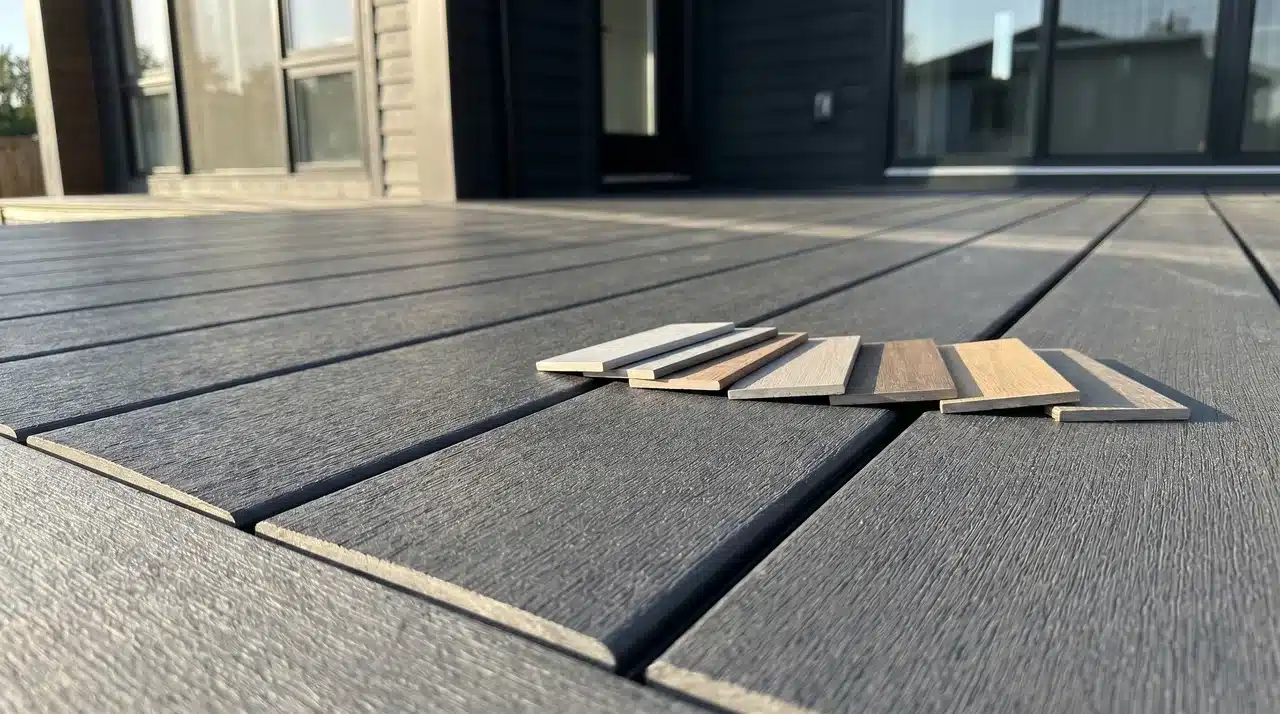
Trex, TimberTech, and CALI Floors work on completely different logic. Color is built into the board at the factory; no staining or sealing needed.
Premium lines include UV inhibitors that slow heat absorption even in darker shades, with fade resistance running 25 years or more.
The tradeoff: the color choice is permanent.
Order physical samples before placing any board order. Screen photos and brochures do not show how natural light hits the material in your specific yard.
Hardwood Decking
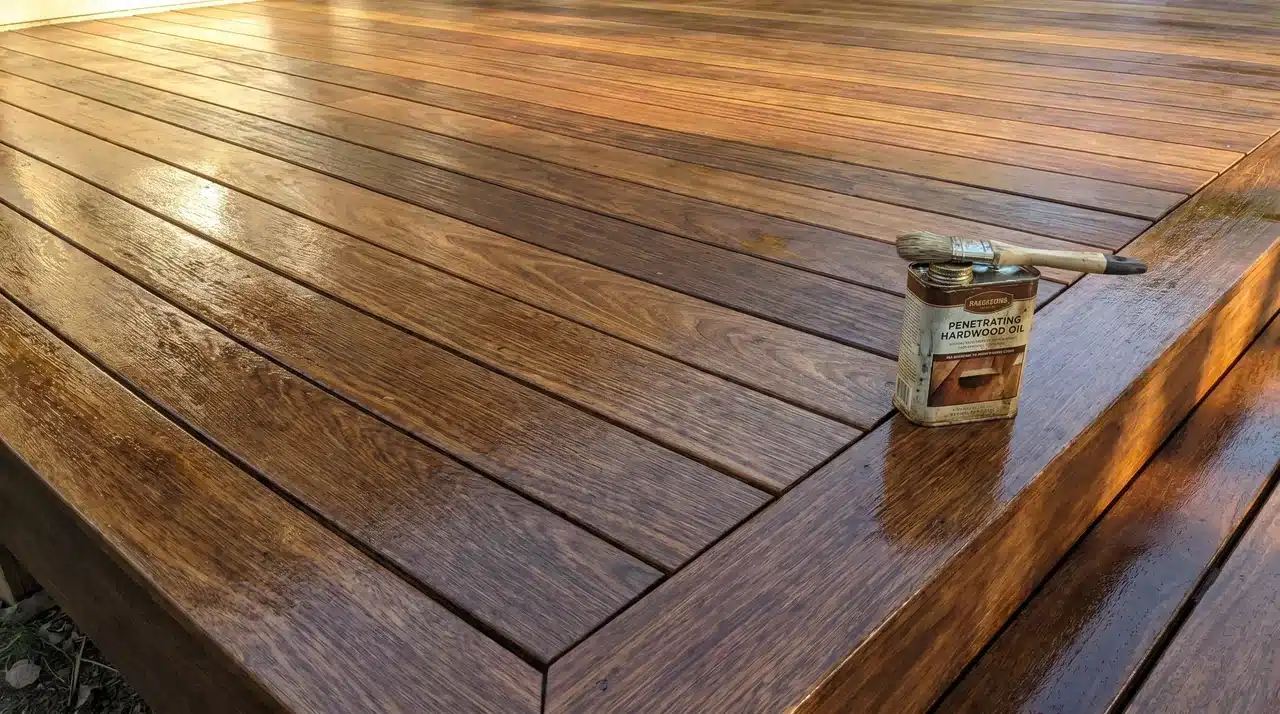
Ipe, Teak, and Mahogany are selected for their natural beauty. Covering them with solid paint defeats the purpose entirely. What actually works:
- Penetrating hardwood oils to enhance natural tone
- Annual oiling to prevent gray weathering
- Deep conditioning treatment every 3–5 years for long-term color integrity
Hardwood that has already gone gray can often be restored with a wood brightener before oiling. The earlier you catch it, the easier the recovery.
How Much Does Deck Color Treatment Cost?
Color choice and material are only part of the equation. Finish type, deck size, surface condition, and whether you hire out or DIY all move the final number significantly.
DIY Material Costs
| Product | Cost Range | Coverage | Notes |
|---|---|---|---|
| Semi-Transparent Stain | $20–$50/gal | 200–300 sq ft | Best for natural wood grain |
| Solid Stain | $30–$55/gal | 150–250 sq ft | Full color range |
| Hardwood Tinted Oil | $40–$80/gal | 150–200 sq ft | Ipe, Teak, Mahogany only |
| Exterior Deck Paint | $35–$70/gal | 150–250 sq ft | Requires primer on raw wood |
| Primer | $20–$40/gal | Required on finish transitions |
Estimated DIY total for a 300 sq ft deck: $150–$550
- Budget the lower end for a single recoat in good condition
- Double materials for bare, stripped, or heavily weathered wood
- Paint jobs require primer plus two finish coats. Factor that into the gallon count
Professional Labor Costs
| Service | Cost Per Sq Ft | 300 Sq Ft Total |
|---|---|---|
| Stain Application | $1.50–$4.00 | $450–$1,200 |
| Paint Application | $3.00–$7.00 | $900–$2,100 |
| Strip and Sand | $1.00–$3.00 | $300–$900 extra |
| Full Service (prep + finish) | $4.00–$10.00 | $1,200–$3,000 |
Get your surface condition and deck size confirmed before requesting any quotes. Those two variables move the final number more than anything else.
Conclusion
The right deck color does not exist in isolation. It works because it fits your house exterior, suits your material, and holds up under real weather conditions.
Light, finish type, and architecture all shape what reads as cohesive versus what looks forced. Getting those aligned early saves you from costly corrections later.
Looking back at everything covered, the clearest takeaway is this: color is the last decision, not the first. Material and undertone set the range before you open a swatch.
Pull physical samples, test them in your actual outdoor light, and start with your house exterior. The right deck color is closer than you think.
Frequently Asked Questions
What is the most popular deck color right now?
Gray is the top choice, with charcoal and weathered gray leading across both stain and composite product lines. It pairs with the widest range of house exteriors and holds its look longer than most other tones.
What deck color makes a small deck look bigger?
Light neutrals like greige, Hatteras, or Salt Flat reflect more light and visually open up a small deck. Dark solid colors do the opposite.
Should my deck match my house or contrast with it?
Match the undertone, not the exact shade. Cool siding calls for cool deck tones. Warm siding pairs with warm browns and honey stains.
How do I test deck color ideas before committing?
Apply samples to the actual surface and check them at midday and late afternoon. Light conditions significantly affect how a color reads across a full deck.