Figuring out the best way to arrange furniture in a living room can feel overwhelming, especially when nothing seems to sit right, no matter how many times you rearrange.
The good news is that a great layout does not require a designer. It just requires knowing a few key principles.
Whether you are working with a small apartment or a spacious family room, the right furniture placement tips can make any space feel comfortable, balanced, and easy to live in.
How to Plan Your Living Room Layout Before Arranging Furniture
Before anything else, getting the foundation right is what separates a well-planned space from one that feels off. These steps will show you the best way to arrange furniture from the ground up.
Understand How the Room Is Used Every Day
- Think about how your family uses the living room daily, whether it is for watching TV, conversations, or both.
- Understanding the purpose of the space is the first step in figuring out the best way to arrange living room furniture that works for real life, not just looks.
Identify the Main Focal Point in the Space
- Every living room has one feature that naturally draws the eye, like a fireplace, a large window, or a television.
- Good furniture placement tips start by identifying this feature first, then arranging seating around it to give the room structure and make the layout feel intentional.
Measure the Room and Note Fixed Features
- Measuring your room before moving anything is one of the most practical living room layout ideas you can follow.
- If you have never done it before, knowing the right way to measure your space will make the whole process much easier.
- Note where the doors, windows, and outlets are, as these fixed features will shape your options and ensure everything actually fits the space.
Living Room Layout Ideas Based on Room Shape
The shape of your room plays a big role in how you place your furniture. These living room layout ideas are grouped by room shape to make it easier to find the best fit for your space.
1. Small Space Seating Plan

Keep only the essential pieces and float them slightly away from the walls.
The best way to arrange furniture in a small living room is to pull seating inward toward the center, which opens up floor space along the edges and makes the entire room feel more open and less crowded.
2. Spacious Living Room Setup

Use furniture groupings to define areas within a large living room and give each section a clear purpose.
This helps the space feel structured and connected, rather than empty or scattered across a wide floor plan. A mix of seating, rugs, and side tables can naturally divide the room while keeping it open and easy to move through.
3. Long Narrow Room Arrangement

Place furniture in balanced groupings to guide movement and make a narrow room feel more usable and structured.
Breaking the layout into smaller zones helps avoid a cramped walkway while keeping the space visually connected. Position sofas and chairs along walls or in pairs to improve flow and create a more comfortable, well-proportioned setup.
4. Square Room Furniture Idea
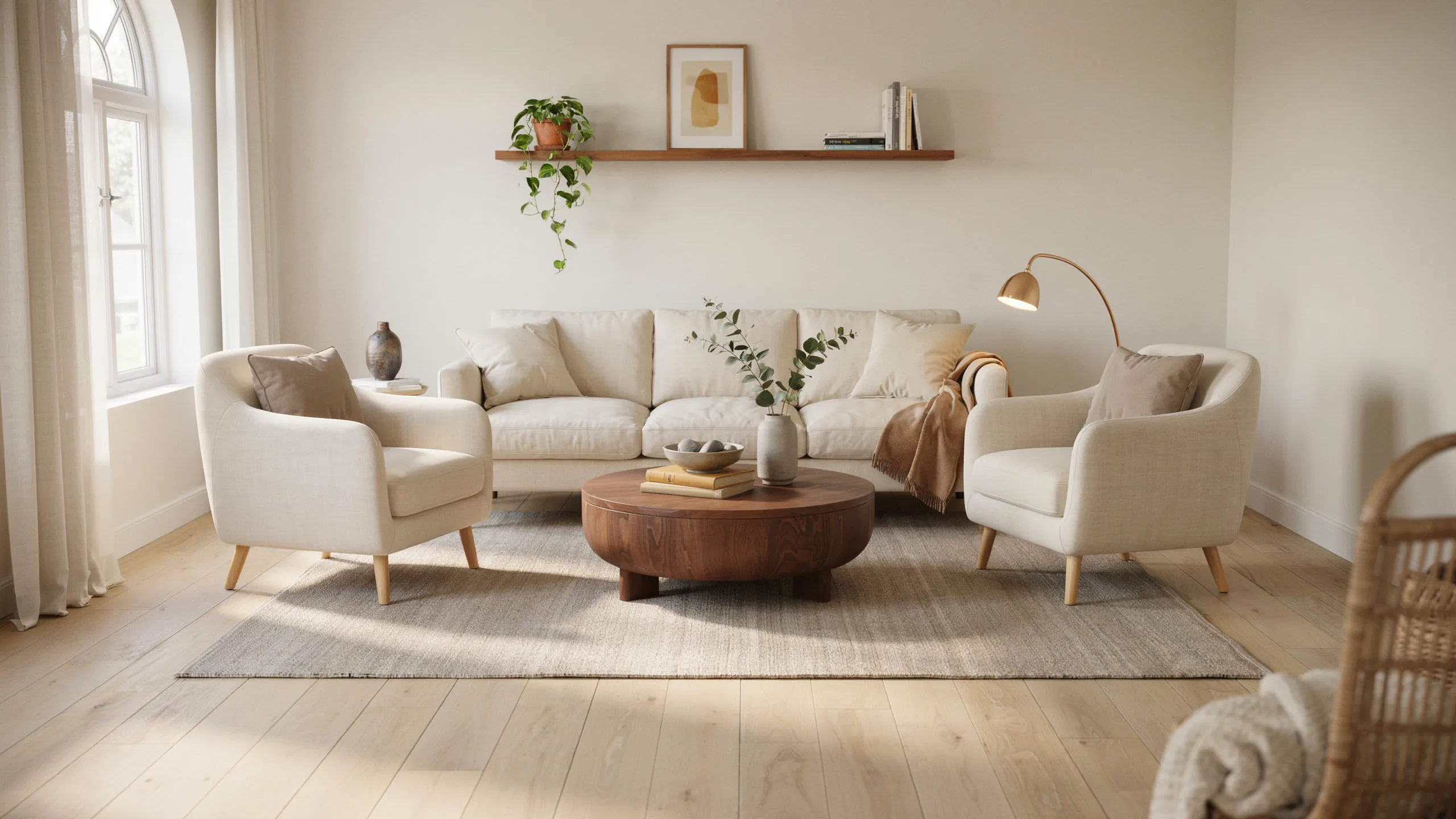
Center your seating group and keep the layout symmetrical when working with a square room. A round coffee table softens the hard angles and ties the overall arrangement together.
This living room layout idea creates a balanced, visually calm space that feels well-planned and grounded without requiring too much effort or expense.
5. Open Concept Furniture Flow

Use rugs and floating furniture to define the living area within a larger, shared floor plan.
Knowing how to organize furniture into clear, distinct zones keeps an open-concept room feeling structured and intentional, giving each area a recognizable purpose without the need for physical walls or permanent room dividers to do the work.
6. Apartment Friendly Setup

Choose multipurpose pieces to make the most of a small apartment living room.
Storage ottomans, slim-profile sofas, nesting tables, and wall-mounted shelves are among the smartest furniture arrangement ideas for tight spaces where every square foot needs to serve multiple functions without making the room feel cluttered or overly busy.
Furniture Layouts Built Around Your Room’s Focal Point
The focal point of your room shapes everything around it.
These furniture placement tips are designed around the main feature in your space so your layout always feels purposeful and well thought out.
7. TV-Centered Seating

Arrange your sofa and chairs in a slight curve or a straight line facing the screen.
Keeping a comfortable viewing distance between seating and the TV is one of the best ways to arrange furniture around a television without straining the layout or forcing anyone to sit at an uncomfortable angle during use.
8. Fireplace First Arrangement

Pull the seating toward the fireplace and make it the room’s natural anchor.
Positioning furniture around the hearth is a classic living room layout idea that instantly adds warmth and gives the space a clear sense of balance and focus, making every other design decision easier to work out from there.
9. Corner Fireplace Solution

Angle your main sofa or accent chairs toward a corner fireplace so everyone in the room has a clear, comfortable view.
This furniture arrangement idea works especially well in square and mid-sized rooms where a straight, wall-hugging layout would feel too rigid and leave awkward gaps in the corners.
10. Room With Two Focal Points

When a room has both a TV and a fireplace, position seating so it can comfortably face either one.
Swivel chairs and angled sofas are smart furniture placement tips for handling two focal points without compromising comfort or making one feature feel less important in the room.
11. Window Facing Furniture Plan

Placing seating to face a large window brings in natural light and makes the outdoor view part of the room’s overall feel.
This is one of the most refreshing living room layout ideas, especially when the scenery outside adds depth and character that no piece of furniture or wall art could replicate on its own.
12. Built-In Shelving Placement

Treat built-in shelving as a focal point by centering a sofa or accent chair directly in front of it.
Knowing how to organize furniture around built-ins helps frame the wall and gives the room a structured, intentional look that feels curated rather than arranged by default or left without a clear design direction.
Living Room Seating Arrangements That Improve Comfort
The way you arrange your seating sets the tone for how the entire room feels and functions.
These furniture arrangement ideas are grouped by seating style to help you find the best way to arrange living room furniture for your needs.
13. Conversation-Focused Seating

Face sofas and chairs toward each other to create a setup that encourages connection and easy conversation.
For the best results, keep seating within eight feet of each other so talking feels natural and comfortable.
This is one of the most important furniture placement tips for creating a social, welcoming living room that people enjoy spending time in.
14. Two Sofa Arrangement

Place two sofas directly facing each other with a coffee table centered between them for a clean, balanced look.
This is one of the most timeless living room layout ideas, and it works well in both small and large spaces, giving the room a structured, symmetrical feel that is easy to style around.
15. Sofa With Accent Chairs

Pair your main sofa with two accent chairs angled slightly inward to create a welcoming and complete seating group.
This furniture arrangement idea adds visual variety while keeping the layout grounded, easy to move around in, and open enough to feel comfortable for both everyday use and occasional gatherings with family or guests.
16. L-Shaped Furniture Setup

An L-shaped setup works well for defining a seating zone in an open or larger room.
It is one of the best ways to arrange furniture when you want to naturally separate the living area from a dining space or an entryway without using a room divider or disrupting the overall flow of the floor plan.
17. U-Shaped Seating Idea

A U-shaped arrangement wraps seating around a central coffee table for a cozy and inclusive feel.
This living room layout idea works especially well in large rooms where you want everyone seated to feel connected and part of the same space, rather than spread out across a wide floor with no clear gathering point.
18. Corner Sofa Placement

Tuck a corner sofa into the room to free up floor space while keeping seating generous and comfortable.
This is a practical furniture placement tip for rooms where you want maximum seating capacity without making the space feel overcrowded, closed off, or too heavy on one side of the room layout.
19. Large Sectional Arrangement

A large sectional needs plenty of space to breathe, so always measure carefully before placing it.
Floating it away from the walls and anchoring it with a well-sized area rug is one of the smartest furniture arrangement ideas for making a sectional feel intentional and well-placed rather than oversized and out of proportion with the room.
Furniture Layout Ideas for Everyday Living
How you use your living room every day should shape the way you arrange it. These furniture arrangement ideas are built around real-life needs, so your space works as well as it looks.
20. Family Friendly Room Setup

A family living room needs to be practical first and stylish second. Keep walkways clear and choose a layout that gives every person enough room to sit comfortably.
This is the best way to arrange living room furniture when the space sees heavy daily use from both kids and adults throughout the week.
21. Guest Ready Seating Plan

When hosting guests, having enough flexible seating makes all the difference in how the room functions.
Arrange chairs and sofas so everyone can see and talk to each other without straining.
These simple furniture placement tips help your living room shift from everyday use to guest-ready without requiring you to move everything around each time.
22. Movie Night Furniture Idea

For a great movie night setup, direct all seating toward the screen at a comfortable and consistent viewing distance.
Soft seating, good cushioning, and a clear line of sight are the most important living room layout ideas when the space doubles as a home theater for regular family movie nights or group viewing sessions.
23. Reading Corner Placement

A reading corner works best when placed near a window for natural light and positioned away from the main traffic flow through the room.
This furniture arrangement idea gives you a quiet, dedicated spot for reading without taking over the whole room or disrupting the rest of the living space and its primary layout.
24. Work and Relax Room Plan

When a living room also serves as a workspace, zoning is everything. Use a rug or a deliberate shift in furniture angle to clearly separate the work area from the relaxing seating zone.
Knowing how to arrange furniture in a small living room for dual purposes helps keep both areas distinct, functional, and visually clear.
25. Pet-Friendly Furniture Flow

Pets need open floor space and easy access to their favorite spots just as much as people do.
Keep fragile or hard-to-clean pieces away from high-traffic pet areas and choose a layout with wide, clear paths between furniture.
These furniture placement tips make the room comfortable and safe for every member of the household.
Living Room Layout Tips for Better Flow and Movement
The way people move through a room matters just as much as how it looks.
These furniture placement tips focus on space and flow so your living room feels easy to navigate and comfortable to spend time in.
26. Floating Furniture Arrangement

Floating furniture means pulling pieces away from the walls and toward the center of the room.
This is one of the most effective furniture arrangement ideas for making a space feel larger and more intentional without changing anything else about the room.
It follows the same thinking behind keeping rooms simple and open.
27. Open Walkway Setup

Always plan your layout around clear and comfortable walking paths before placing any furniture in the room.
Keeping at least two to three feet of open space between pieces is one of the best ways to arrange furniture so the layout feels natural, easy to move through, and never blocked, cramped, or difficult to navigate daily.
Furniture Spacing Guidelines for a More Comfortable Living Room
Even the best furniture arrangement can feel off if pieces are placed too close or too far apart. These spacing recommendations help create a room that feels comfortable, functional, and easy to move through.
| Area to measure | Recommended space | Why it matters |
|---|---|---|
| Sofa to coffee table | 12 to 18 inches | Easy reach and leg room. |
| Main walkways | 24 to 36 inches | Smooth movement through the room. |
| Seating in front of the TV | 1.5 to 2.5 times the screen size | More comfortable viewing. |
| Around doors | At least 36 inches | Doors open without blockage. |
| Furniture near windows | Avoid tall pieces directly in front | Keeps natural light open. |
Easy Tips to Make Any Living Room Feel More Balanced
Small changes can make a big difference in how a room feels. These quick furniture placement tips help bring balance and order to any living room layout.
-
Use Rugs to Define Seating Areas
A well-placed rug anchors your seating group and gives the living room layout a clear sense of zone and structure. -
Create Visual Balance With Different Furniture Heights
Mix tall and low pieces to keep the eye moving. This simple furniture arrangement idea stops any one area from feeling too heavy or flat. -
Add Side Tables Where They Are Actually Needed
Place side tables only where someone is actually sitting. This keeps the layout practical and avoids unnecessary clutter in the living room space. - Use Lighting to Support the Furniture Layout
Position floor and table lamps near seating areas to complement the layout. Good lighting reinforces the best way to arrange furniture by naturally highlighting each zone.
Conclusion
A well-arranged living room does not happen by chance. It comes from understanding your space, working with what you have, and making smart decisions about placement, scale, and flow.
From identifying your focal point to keeping walkways clear, every step and tip in this post is designed to help you create a layout that works in real life.
Use these living room layout ideas as your starting point and adjust as you go until the space feels exactly right for you and your home.
Frequently Asked Questions
What is the Best Way to Arrange Furniture in a Small Living Room?
Float furniture away from walls, keep only essential pieces, and use a rug to define the seating zone.
How do I Know if my Furniture Arrangement is Balanced?
Step back and check if one side of the room feels heavier or emptier than the other.
Should All Furniture Face the Same Direction?
Not always. Angling a chair or two adds visual interest and makes conversation feel more natural.
How Often Should You Rearrange Your Living Room Furniture?
Rearranging Once or Twice a Year Helps Refresh the Space and Lets You Find a Layout That Works Better.
Can a Large Sofa Work in a Small Living Room?
Yes, if it is the only large piece. Balance it with slim accent chairs and a small coffee table.