Saging a house is not a new concept, but it is having a real moment right now. And for good reason.
I have seen more and more people turn to it after a move, a rough patch, or simply when a space starts to feel stagnant.
Knowing how to sage a house the right way makes all the difference.
It is an old practice rooted in clearing energy, and it works best when you actually know what you are doing.
Small details matter more than most people think, and getting them right is exactly what turns a simple ritual into something that genuinely shifts a space.
What Does “Saging a House” Mean?
Saging a house means burning dried sage and intentionally moving the smoke through your space. It comes from Indigenous smudging traditions, where smoke was used to cleanse energy and mark new beginnings.
I think of it as a reset button for a room. The smoke is believed to clear out stale, heavy, or negative energy and replace it with something cleaner and calmer.
It is not just symbolic either. Many people notice a genuine shift in how a space feels afterward. Simple practice, but the intention behind it is what gives it real meaning.
The Cultural Meaning Behind Smudging
Smudging is a sacred Indigenous practice passed down through generations, not a trend, so it deserves real respect.
A small language note helps: “smudging” is the ceremonial term, while “smoke cleansing” is often used for the everyday, secular version.
Sourcing matters just as much. As a horticulturist, I pay attention to where a plant comes from, and white sage (Salvia apiana) grows wild in only one place on earth, Southern California and northern Baja, Mexico.
Wellness demand has made it heavily overharvested and poached,and many Native communities have asked non-Natives to avoid wild white sage. You can still practice respectfully: choose cultivated or homegrown sage, or use cedar or garden sage instead. Appreciation and appropriation come down to awareness, sourcing, and intention
Benefits of Burning Sage
The benefits of burning sage go beyond just making a space smell earthy and warm. It works on multiple levels, and once you understand that, it starts to make a lot more sense.
- Clears negative energy: Smoke from sage is believed to break up and remove stagnant or heavy energy from a space.
- Improves mood: The act of saging is grounding and intentional, and that alone can lift your mood.
- Freshens the air: The strong, earthy smoke can cover stale or lingering household odors while you work through the space.
- Purifies the air: Burning sage has natural antimicrobial properties that can reduce airborne bacteria.
- Promotes mental clarity: It helps create a calmer environment, making it easier to focus and think clearly.
- Marks a fresh start: Moving into a new home, ending a chapter, starting something new. Sage fits all of it.
The benefits of burning sage I listed are not just spiritual, either. Some of them are practical, and that is what makes this practice worth understanding properly before jumping in.
Quick note: These benefits are mostly spiritual and wellness-based. Saging is a personal practice and is not a replacement for medical or mental health treatment. If you are dealing with something serious, please speak to a professional.
What You Need to Sage Your House
|
Note: Always choose cultivated or homegrown sage rather than wild-harvested white sage. Wild white sage is being stripped from public land faster than it can recover, and cultivated bundles do the same job without that cost. The intention behind how it was grown carries just as much weight as the intention you bring to the ritual.
How to Sage a House
Knowing how to sage a house properly comes down to a few simple steps done with care and intention. I always say the process matters just as much as the outcome. Get these steps right and the whole experience shifts.
Step 1: Prepare Your Space

Start by opening windows and doors. This gives the smoke somewhere to go and allows the cleared energy to actually leave. Tidy up the space a little too.
Clutter can block the flow of the practice. Find a clean, open space to make the whole ritual feel more intentional and grounded before you even light the sage.
Step 2: Light the Sage Bundle

Hold your sage bundle at a slight angle and light the tip. Let it catch for a few seconds, then gently blow out the flame so it smolders and produces smoke.
Do not rush this part. The smoke should be steady and calm. I usually let it settle for a moment before I start moving through the space.
Step 3: Move Through Each Room With Intention

Start at the front door and work your way through each room slowly. Move the smoke into corners, along walls, and around doorframes. These spots tend to hold the most stagnant energy.
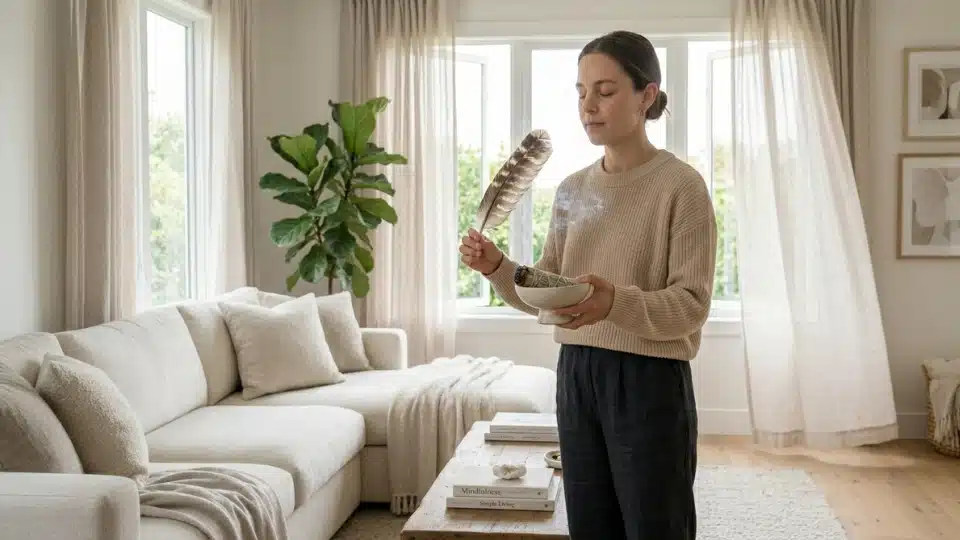
I like to keep my movements slow and deliberate. Use your hand or a feather to guide the smoke and stay present throughout the process.
Step 4: Close the Ritual

Once you have moved through the whole space, return to where you started. Let the sage bundle burn out naturally in your fireproof bowl.
Take a moment to set an intention for the space, something simple and clear. This closing step is what most people rush or skip entirely, but it is honestly what seals the whole practice.
The steps are simple, but the way you move through them is what makes the difference. Take your time, stay present, and trust the process. Saging is not something to rush.
Types of Sage for Smudging
Not all sage is the same, and picking the right one can make a real difference in your experience. Each type carries its own energy and scent, so it is worth knowing what is out there before you choose.
| Type of Sage | Best For | Scent Profile |
|---|---|---|
| White Sage | Deep energy clearing, removing negativity | Strong, sharp, earthy |
| Blue Sage | Lighter cleansing, everyday use | Soft, slightly floral |
| Desert Sage | Purification and grounding | Fresh, herbal, mild |
| Black Sage | Dream work, intuition, inner journeys | Deep, woody, intense |
| Lavender Sage | Calming energy, emotional balance | Light, floral, soothing |
Each type works differently, and the choice comes down to what feels right for the space and the moment.
If you are new to this, blue sage and desert sage are easy to find from cultivated sources and gentle to work with. And if you want a steady, low-impact supply, white sage grows happily in a sunny pot.
I keep a few plants going and dry the cuttings in small bundles, which also gives you a quiet moment to set your intention while you tend them.
When Should You Sage Your House?
Timing matters more than most people think. There is no strict rule, but certain moments genuinely call for a reset. Saging at the right time makes the practice feel purposeful rather than routine.
- After moving into a new home: Fresh start, new energy. Clear out whatever the previous occupants left behind, energetically speaking. A thorough house cleaning before you sage helps the ritual land even more effectively.
- After an argument or conflict: Heavy conversations leave a residue. Saging helps shift that lingering tension out of the space.
- After illness: Both the physical and energetic weight of sickness can linger. A good cleanse helps restore balance.
- During seasonal changes: Each new season is a natural transition point and a good opportunity to reset the energy at home.
- After guests leave: Not every visitor brings light energy. Saging afterward keeps the space feeling like yours.
- Whenever something feels off: Trust that feeling. Sometimes a space just needs a reset, and there does not have to be a big reason behind it.
These are just starting points. Over time, the right moments tend to make themselves known naturally. The practice becomes intuitive, and that is when it really starts to work.
How Often Should You Sage Your House?
There is no fixed schedule for this. Some people sage monthly, others do it seasonally, and some only reach for it when something feels off. All of that is valid.
My approach has always been to let the space set the timing rather than follow a calendar. A home that sees heavy foot traffic or emotional activity may need it more often.
A quieter space, less so. The key is staying attuned to how your home feels. When the energy starts to feel heavy or stagnant, that is usually the clearest sign that it is time.
Sage Alternatives for Smoke-Sensitive Homes
Not everyone can burn sage at home. Allergies, pets, small children, or just a sensitive smoke detector can make it tricky. The good news is that there are solid alternatives that carry the same intention without the smoke.
| Alternative | How to Use | Best For |
|---|---|---|
| Sage spray | Mist around the room and corners | Apartments, smoke-sensitive spaces |
| Sage essential oil | Diffuse or apply to pulse points | Everyday energy clearing |
| Palo santo | Burn like sage, lighter smoke | Gentle cleansing, pleasant scent |
| Sound cleansing | Use bells, singing bowls, or clapping | Those sensitive to any smoke or scent |
| Crystal cleansing | Place selenite or black tourmaline in corners | Ongoing passive energy clearing |
These alternatives are just as intentional and meaningful when used with purpose. My personal take is that the method matters less than the mindset you bring to it. Pick what works for your space and situation.
Common Mistakes to Avoid When Burning Sage
Even a simple practice like this has a few pitfalls worth knowing about. Most mistakes come down to rushing or skipping the basics. Catching them early makes the whole experience cleaner and more effective.
- Keeping windows closed: Smoke and stagnant energy need a way out. Always open at least one window before starting.
- Burning too much sage: A little goes a long way. Thick, heavy smoke is unnecessary and can feel overwhelming.
- Skipping the intention: Going through the motions without purpose makes it just smoke. The intention is what drives the practice.
- Ignoring corners and doorways: These spots collect the most stagnant energy and are the most commonly skipped areas.
- Rushing through rooms: Move slowly and deliberately. A hurried pace defeats the whole purpose.
These are easy mistakes to make, especially the first time around. My best advice is to slow down, stay present, and treat each room with the same level of care and attention.
The Bottom Line
Saging a house is one of those practices that sounds simple but carries real depth when done with care and intention. Every step, every detail, and every choice matters.
From my experience, the biggest shift happens the moment you stop overthinking it and just start. Start small. Pick one room, gather your items, and just begin.
The experience teaches you more than any amount of reading can. And the more present you are, the more meaningful it becomes.
Ready to reset your space? Grab your sage bundle and start today. Drop a comment below sharing your experience.
Frequently Asked Questions
Can You Sage a House With Pets Inside?
Yes, but keep pets away from the smoke and make sure the room is well ventilated. Some animals can be sensitive to strong scents and smoke.
Should Windows Stay Open While Saging?
Yes, opening windows or doors helps the smoke move through the home and gives negative energy a way to leave the space.
Can You Sage Yourself Too?
Yes, many people lightly wave sage smoke around their bodies to feel refreshed, calm, and spiritually cleansed.