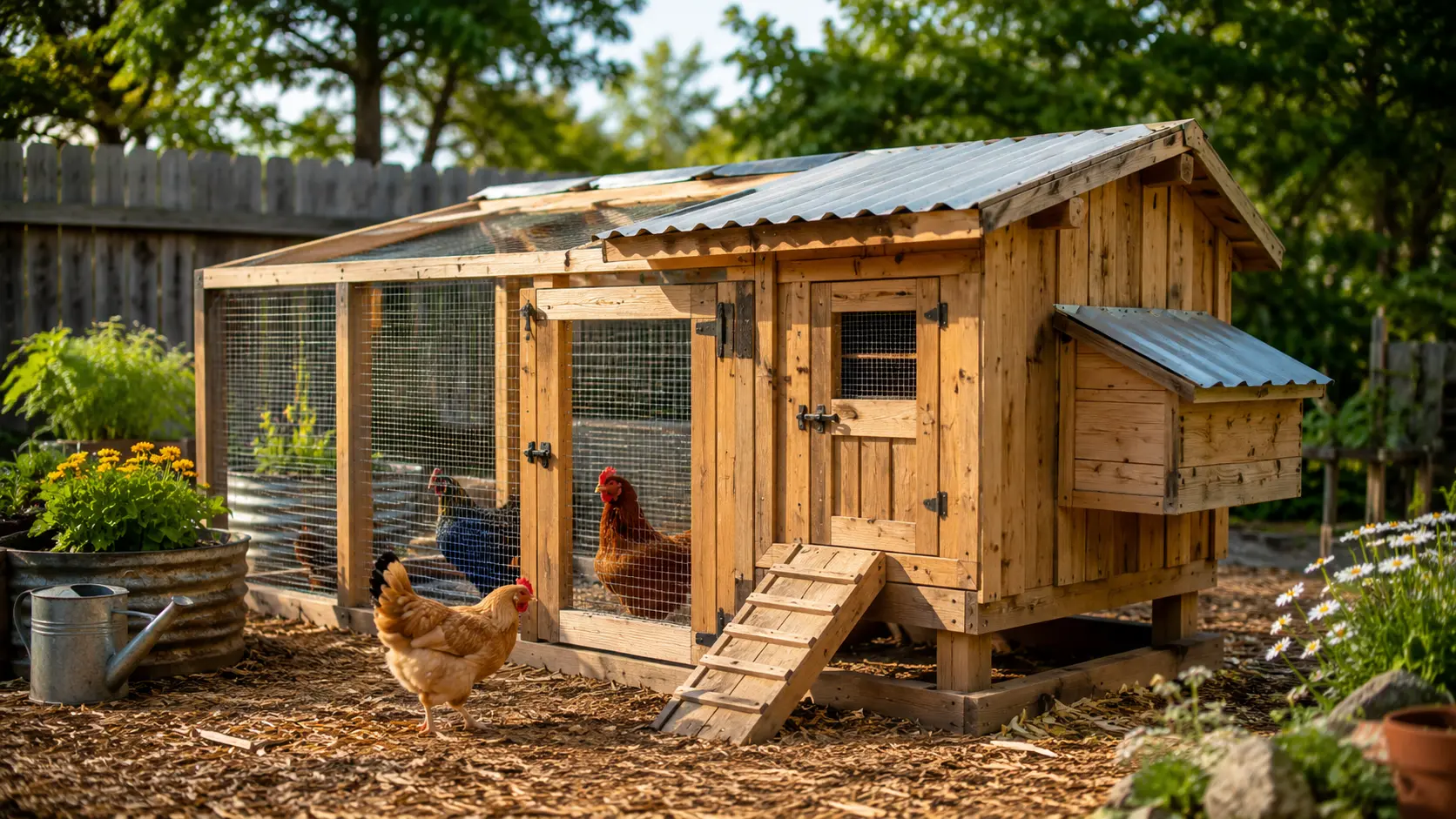
A few years ago, I helped a friend organize a backyard gathering at her small homestead. While setting up tables and decorations, I noticed her chicken coop tucked into the corner of the yard.
What caught my attention wasn’t the flock; it was the coop itself. She told me it cost less than a weekend shopping trip because most of it was built from leftover materials and a simple plan.
That conversation stuck with me. Throughout my career in event planning, I’ve learned that creating something functional doesn’t always require a large budget.
The same idea applies to chicken coops. With a little creativity, reclaimed materials, and a practical design, you can build a safe home for your chickens without spending hundreds of dollars.
Let’s get started and find some of the most amazing low-cost DIY chicken coop ideas, budget-friendly building options, and smart tips to help you keep expenses under control while creating a coop that works for your flock.
What Makes a Chicken Coop Low-Cost?
Building a chicken coop that costs less comes down to smart planning, not cutting every corner. The goal is to spend less while still keeping your chickens safe, dry, and comfortable.
- Use reclaimed materials: Pallets, fence boards, old shed siding, and salvaged plywood can lower the cost fast.
- Keep the design simple: Rectangular or A-frame coops use fewer materials and create less cutting waste.
- Build for your flock size: Avoid oversized coops by planning around the number of chickens you actually have.
The cheapest coop is not the weakest one. It is the one that uses safe materials, fits your flock, and skips anything unnecessary.
Curious about real-world costs? This Reddit discussion shares experiences from chicken owners who compared DIY coop builds with pre-made options and discussed whether building your own coop actually saves money. Read the discussion on Reddit
Budget-Friendly DIY Chicken Coop Ideas and Plans
Before you spend money on a prefab coop, consider what you can build yourself with a few basic materials and a simple plan. These low-cost DIY chicken coop ideas focus on keeping expenses down while still providing a safe and practical home for your flock.
1. Pallet Wood Chicken Coop
| Detail | Information |
|---|---|
| Estimated Cost | $0–$30 |
| Best For | Beginners with a small flock |
| Difficulty Level | Easy |
| Key Materials | Free pallets, screws, hardware cloth, basic roofing material |
| Main Benefit | Almost free to build if you can source pallets locally |
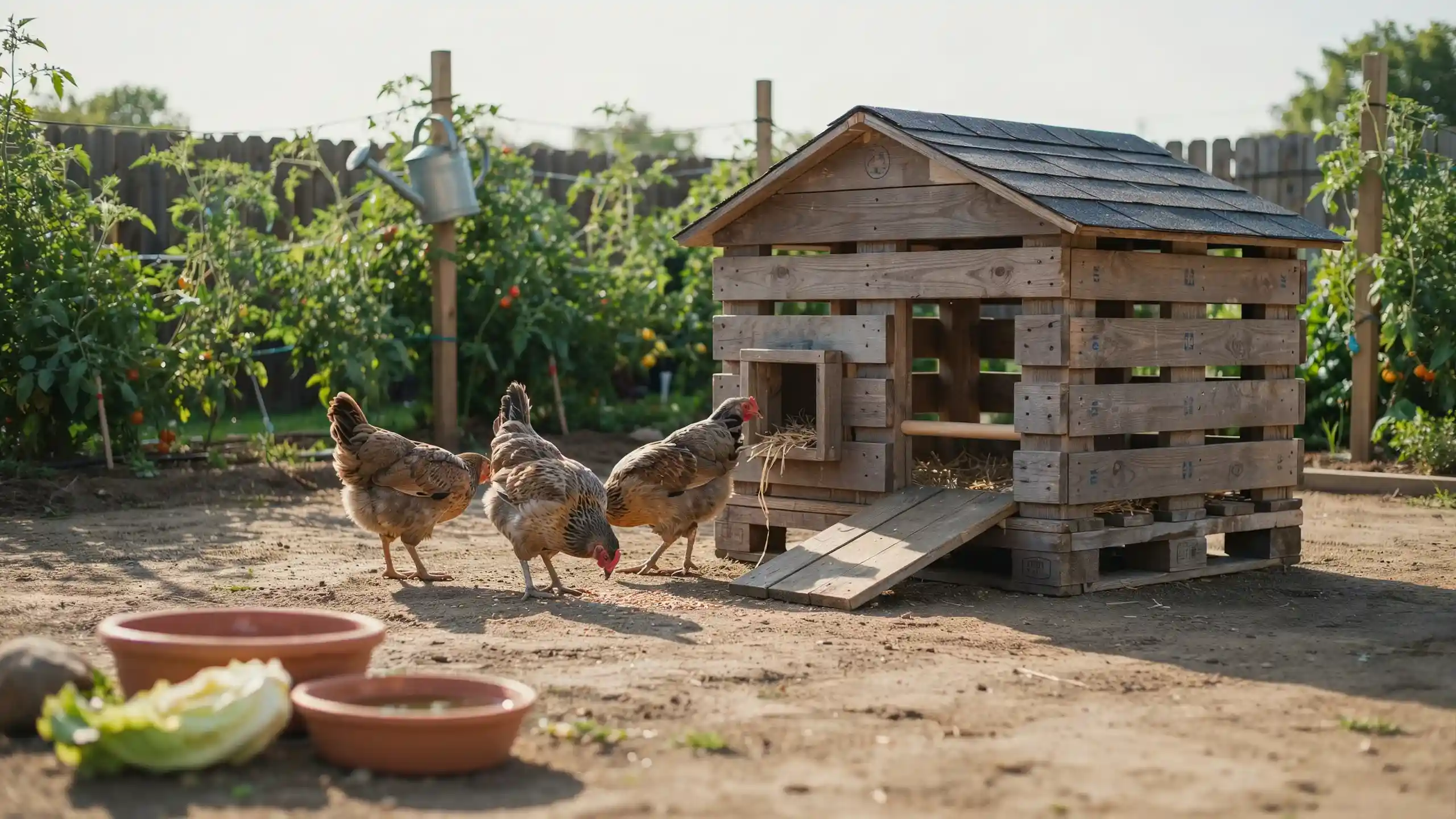
Pallets are stacked outside grocery stores, garden centers, and warehouses. Most businesses give them away.
Four to six pallets can form the walls of a basic coop for 2 to 4 chickens with minimal cutting. Before you use them, check the stamp on the pallet: “HT” (heat-treated) means they are safe. “MB” (methyl bromide) is not; avoid those.
2. A-Frame Chicken Coop
| Detail | Information |
|---|---|
| Estimated Cost | $40–$80 |
| Best For | Small flocks of 3–5 chickens |
| Difficulty Level | Easy to Moderate |
| Key Materials | Plywood, 2×4 lumber, roofing felt, hardware cloth |
| Main Benefit | Simple structure with minimal cuts that can be built over a weekend |
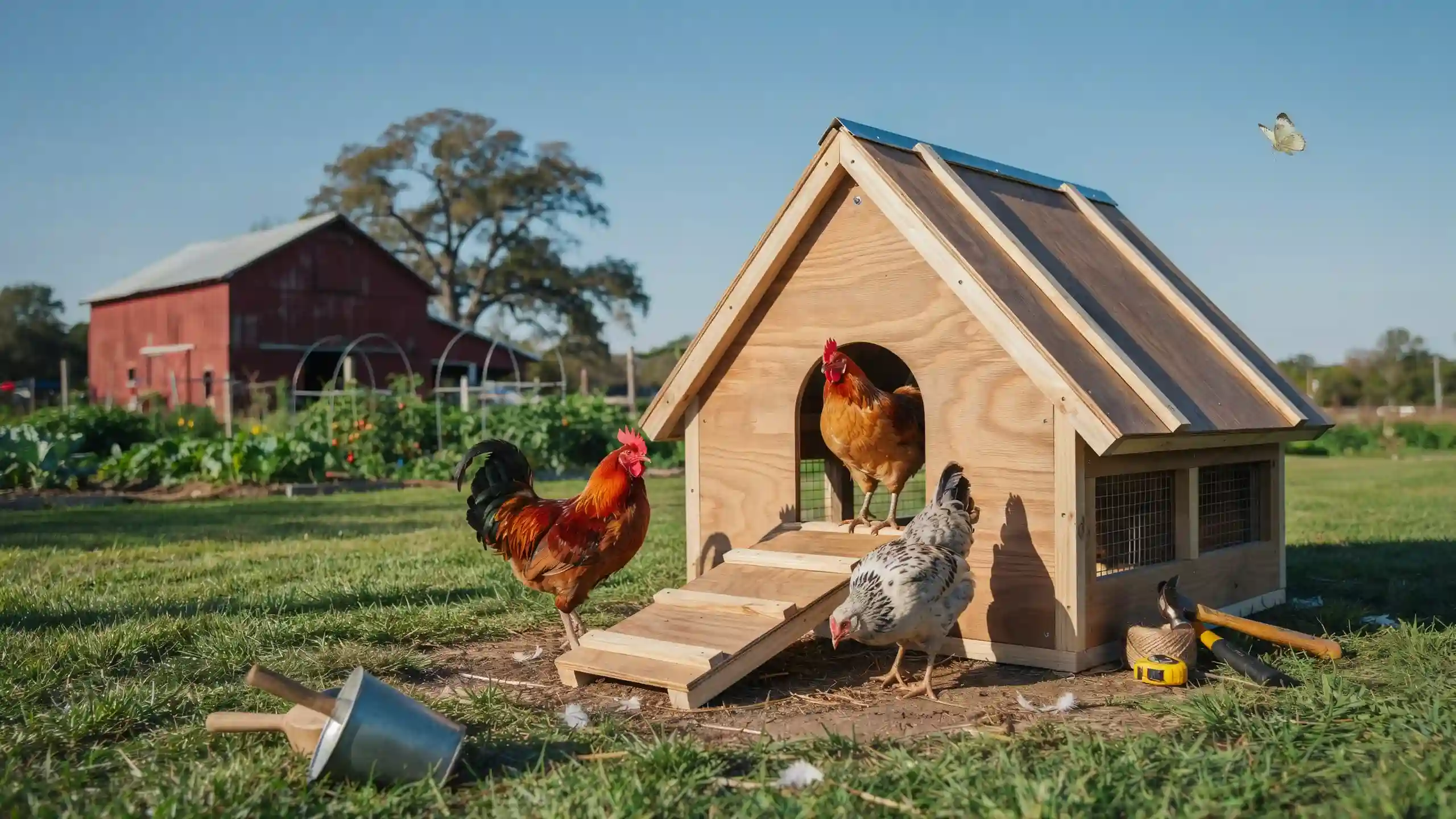
An A-frame coop is one of the cleanest designs for a first-time builder. Two angled plywood panels form both the walls and the roof, reducing the number of separate components.
The triangular ends are framed with 2x4s and covered with hardware cloth for airflow. Nesting boxes can be mounted on one end.
3. Chicken Tractor Coop
| Detail | Information |
|---|---|
| Estimated Cost | $50–$100 |
| Best For | Small flocks that rotate across pasture |
| Difficulty Level | Moderate |
| Key Materials | 2×4 lumber, hardware cloth, plywood, handles, or wheels |
| Main Benefit | Can be moved to fresh ground regularly, eliminating the need for a permanent run |
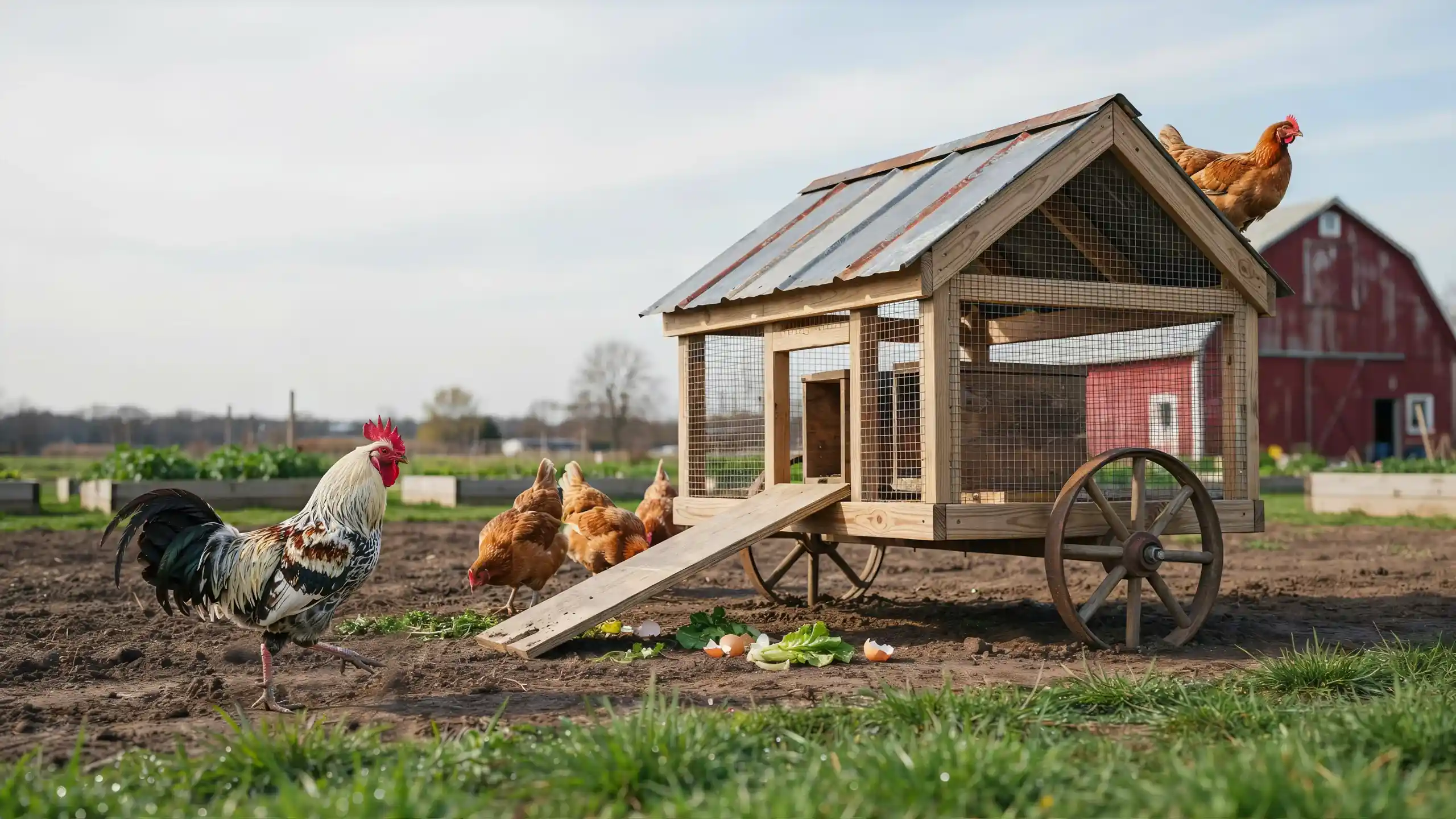
A chicken tractor is a bottomless coop-and-run combined, built to be moved around your yard. The chickens get fresh grass and bugs every few days, and manure gets spread naturally across the lawn.
Because it moves, you don’t need a permanent foundation or an attached run. Size it for 2 to 4 birds; a typical build is about 4 by 8 feet.
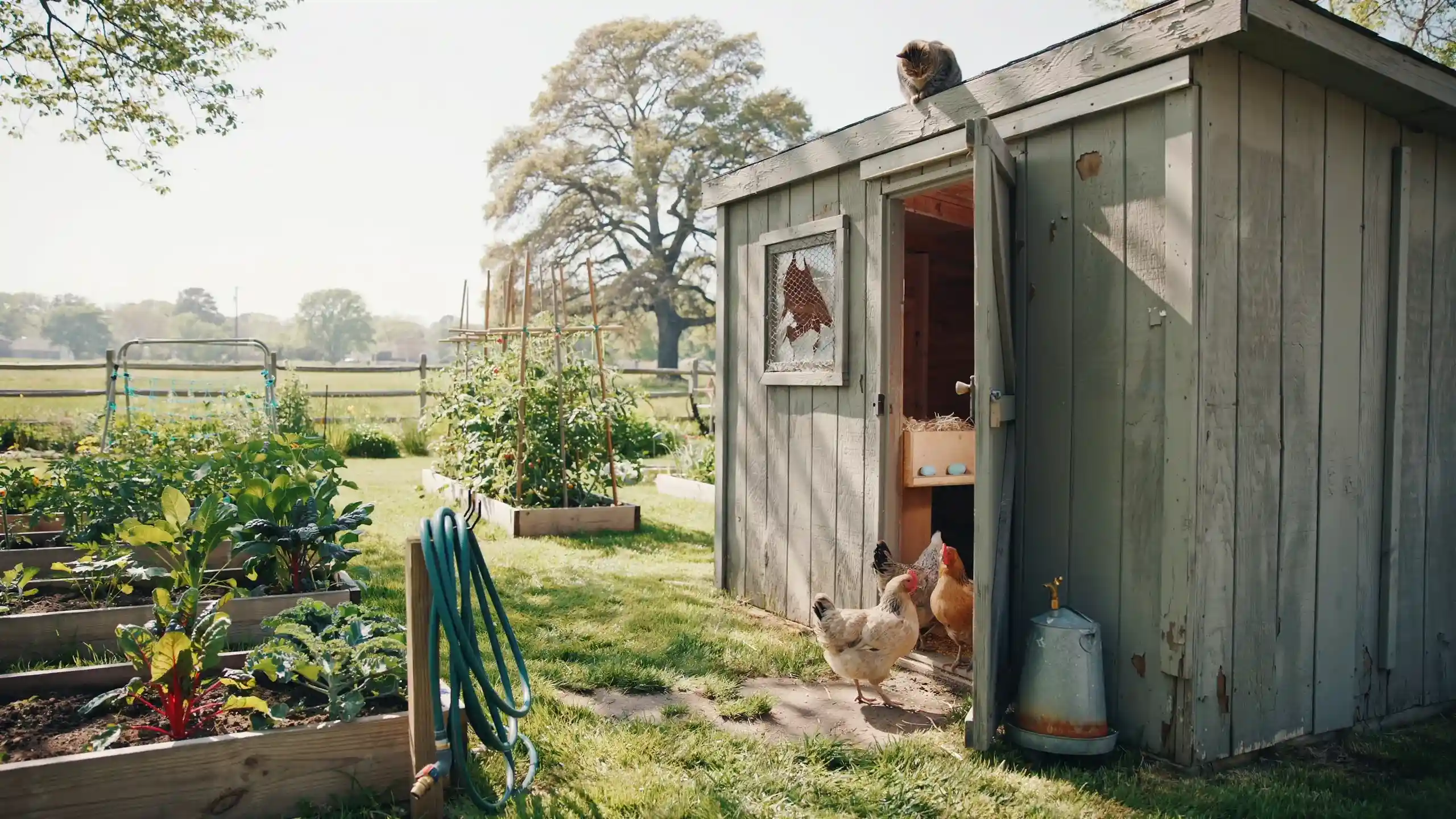
4. Repurposed Garden Shed Coop
| Detail | Information |
|---|---|
| Estimated Cost | $0–$60 (if you already have the shed) |
| Best For | Larger flocks of 6–12 chickens |
| Difficulty Level | Easy |
| Key Materials | Existing shed, hardware cloth, nesting box materials, roost bars |
| Main Benefit | Most of the structure is already built, saving both time and money |
If you have an unused or deteriorating garden shed, you already have a coop shell.
The conversion involves adding ventilation near the roofline, installing nesting boxes along one wall, mounting roost bars, and covering any windows or gaps with hardware cloth.
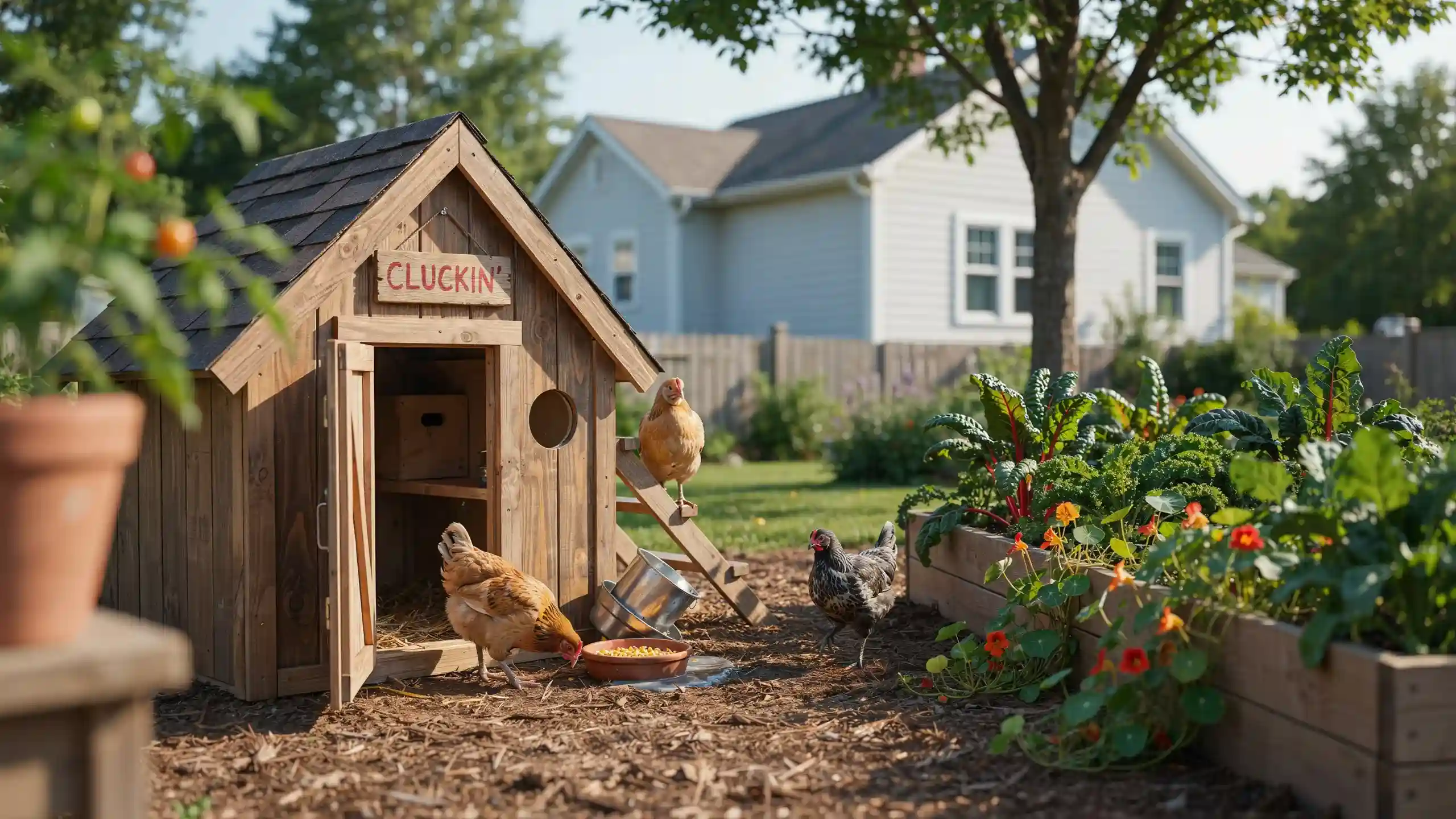
5. Small Backyard Coop Under $100
| Detail | Information |
|---|---|
| Estimated Cost | $60–$100 |
| Best For | Urban and suburban backyards with 4–6 chickens |
| Difficulty Level | Easy to Moderate |
| Key Materials | Plywood, 2×3 lumber, corrugated metal roofing, hardware cloth |
| Main Benefit | Clean, compact, and built new without spending too much |
This is the classic starter coop: a rectangular box roughly 4 by 6 feet with a sloped roof, an egg door on the side, and an attached small run.
Using a single sheet of 4-by-8 plywood for efficient cutting means very little waste. Paint the exterior with exterior latex paint to protect the wood from moisture.
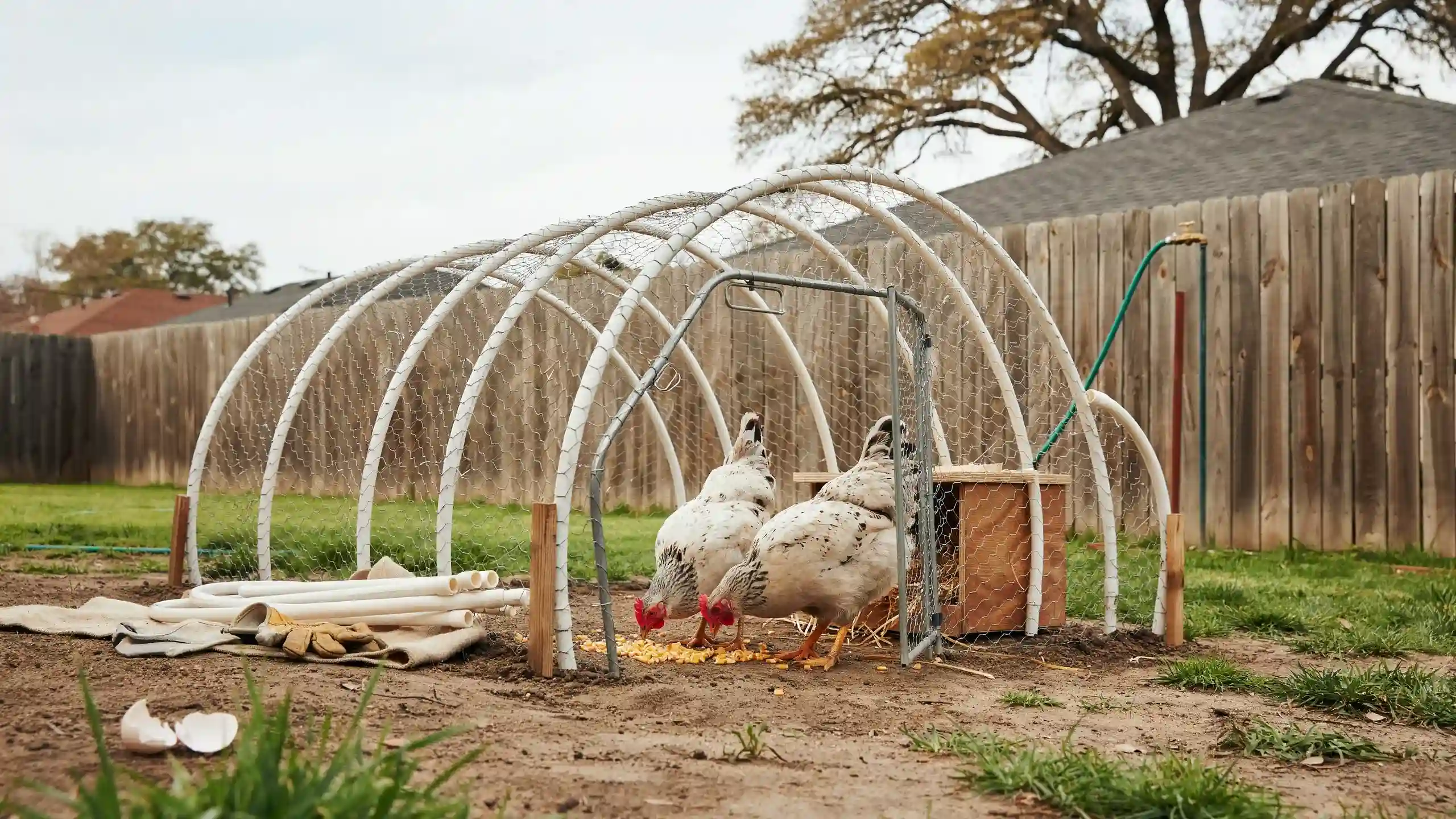
6. Hoop Coop with PVC Pipe
| Detail | Information |
|---|---|
| Estimated Cost | $50–$120 |
| Best For | Portable use, temporary flocks, and small yards |
| Difficulty Level | Easy |
| Key Materials | 1–1.5 inch PVC pipe, hardware cloth, zip ties, wood base frame |
| Main Benefit | No wood cutting needed; the PVC bends into shape quickly |
Hoop coops use bent PVC pipes arched over a rectangular wood base frame. The hardware cloth is zip-tied along the outside of the arches, and a tarp or a small wooden panel covers one end to provide shelter.
It won’t handle heavy snow loads, so it’s better for spring-through-fall use in most climates or as a run extension.
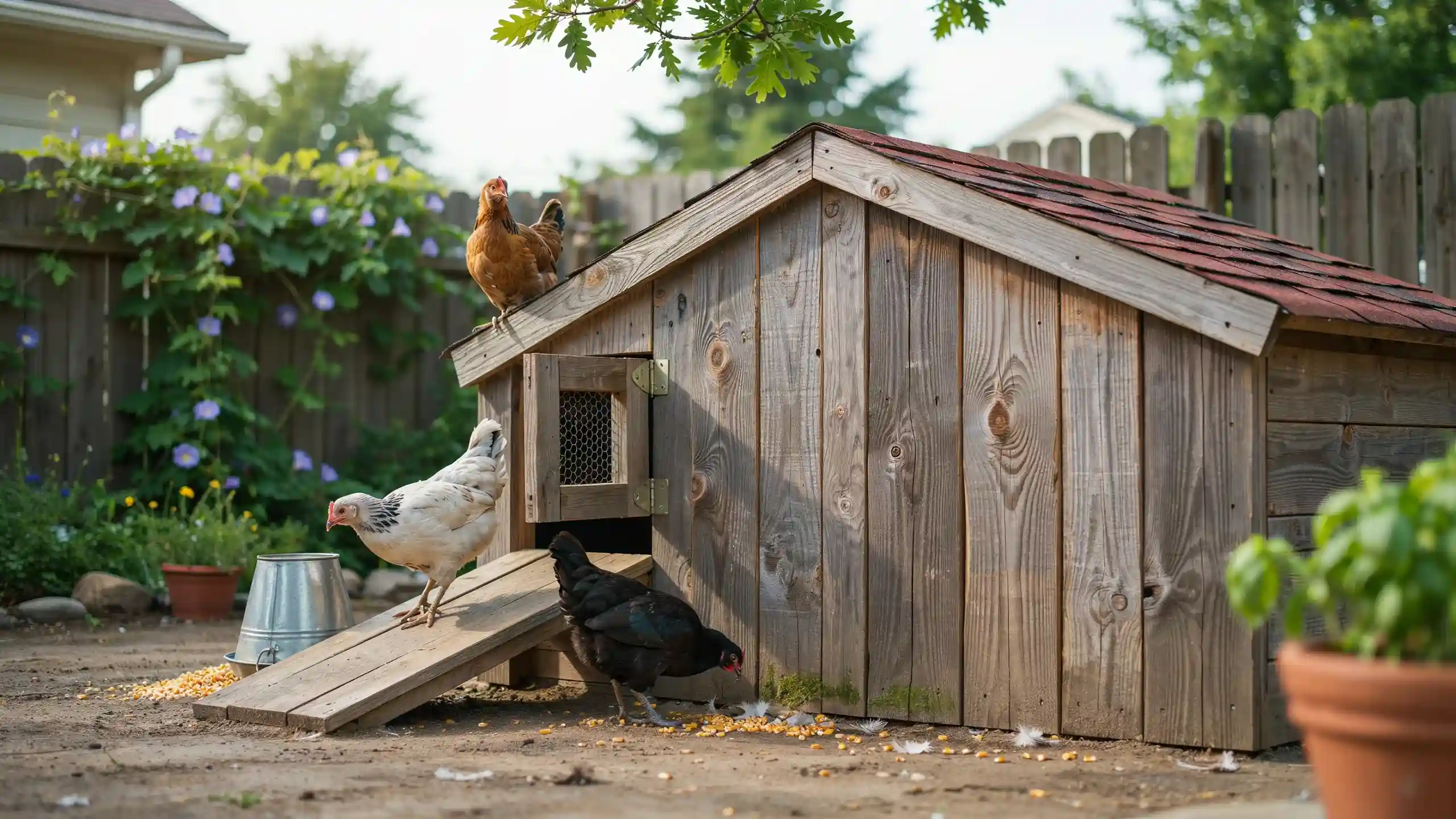
7. Reclaimed Fence Board Coop
| Detail | Information |
|---|---|
| Estimated Cost | $10–$40 |
| Best For | 2–4 chickens and small yards |
| Difficulty Level | Moderate |
| Key Materials | Old fence boards, 2×4 framing, roofing material, hardware cloth |
| Main Benefit | Reuses material that would otherwise be discarded |
Fence boards from demolished fencing are a common free or cheap find on Facebook Marketplace.
They vary in size, so the build requires a bit more measuring and fitting than new lumber, but the result is a solid, character-filled coop. The boards work well for siding over a basic 2×4 frame.
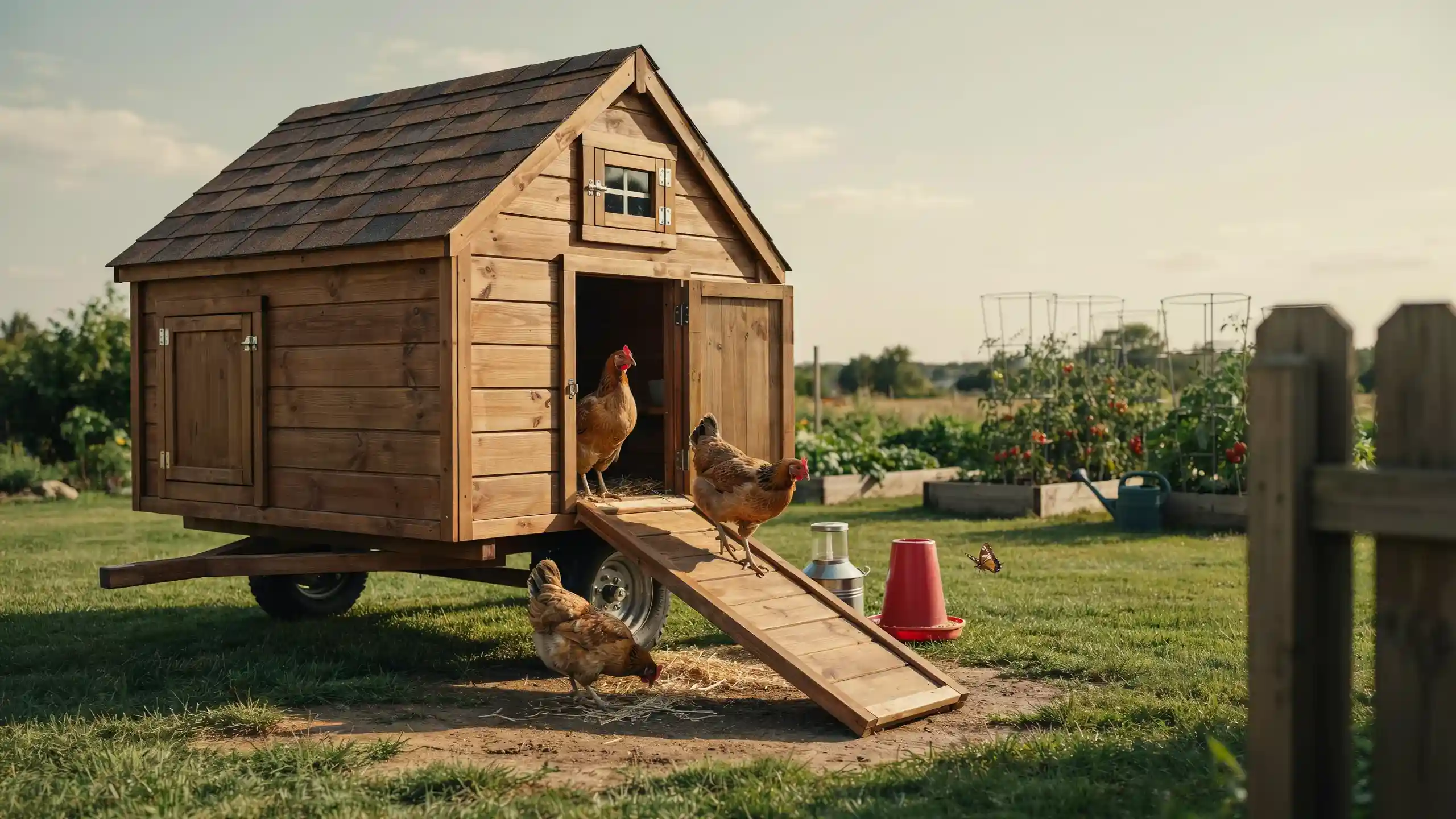
8. Portable Coop on Wheels
| Detail | Information |
|---|---|
| Estimated Cost | $80–$150 |
| Best For | Backyard chicken keepers who want mobility without building a full chicken tractor |
| Difficulty Level | Moderate |
| Key Materials | Plywood, 2×4 lumber, four outdoor-rated caster wheels, hardware cloth |
| Main Benefit | Easy to move and helps prevent the ground from becoming worn or muddy |
Similar to a chicken tractor, but slightly more enclosed and built to move less frequently. Four heavy-duty caster wheels, each rated for at least 100 lbs, are bolted to the base frame.
The coop can be rolled to a new spot weekly rather than daily. Good for 4 to 6 chickens.
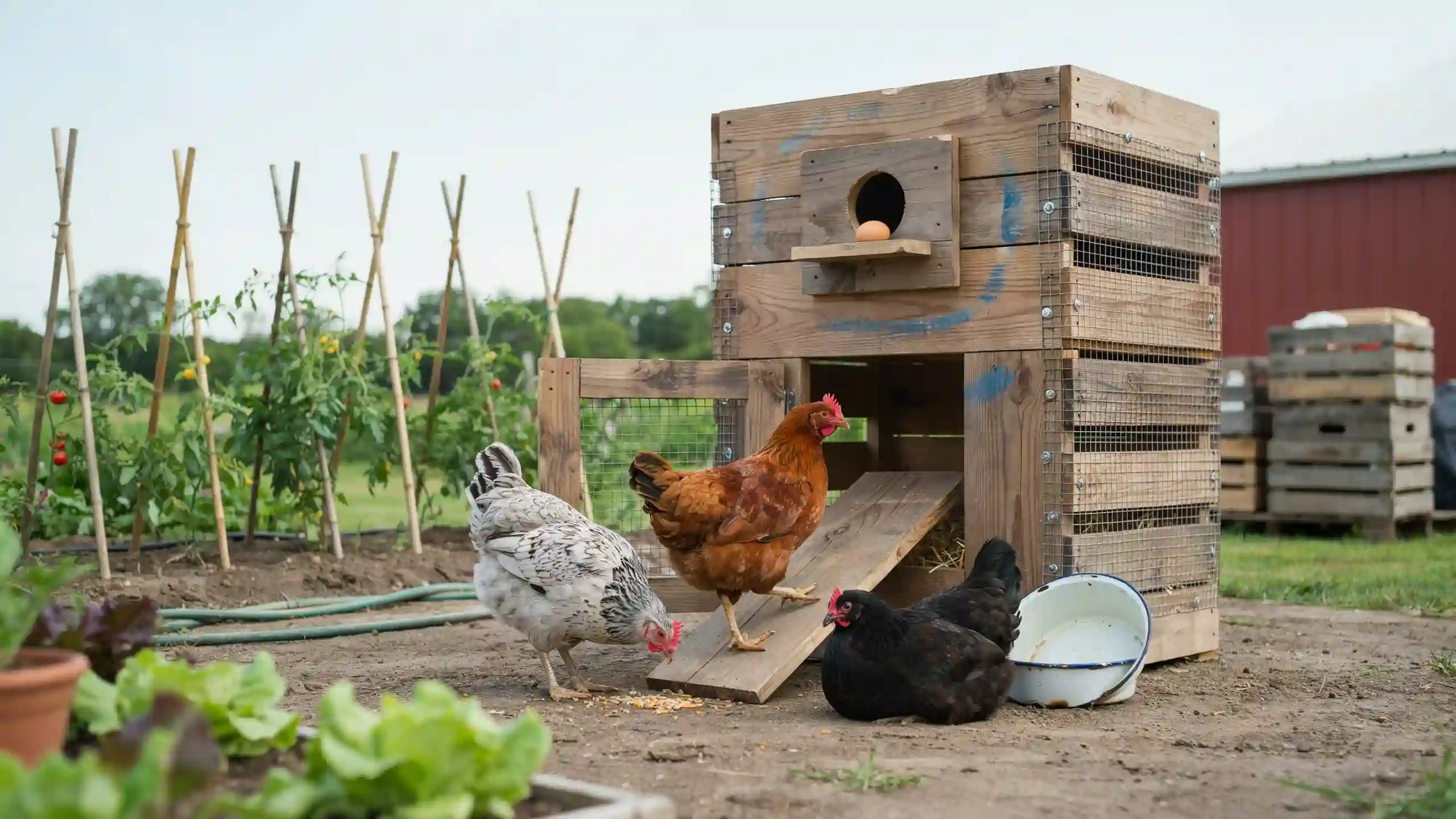
9. Wooden Crate Chicken Coop
| Detail | Information |
|---|---|
| Estimated Cost | $0–$30 |
| Best For | 1–2 chickens or testing the hobby before building a larger coop |
| Difficulty Level | Easy |
| Key Materials | Large wooden shipping crate, hardware cloth, basic hardware |
| Main Benefit | One of the fastest builds since the main structure is already in place |
Large wooden shipping crates, which are often available free from industrial suppliers or machine delivery companies, can be converted into a simple single-bird or pair shelter in a few hours.
Cut ventilation holes near the top and cover them with hardware cloth. Add a roost bar and a nesting box inside.
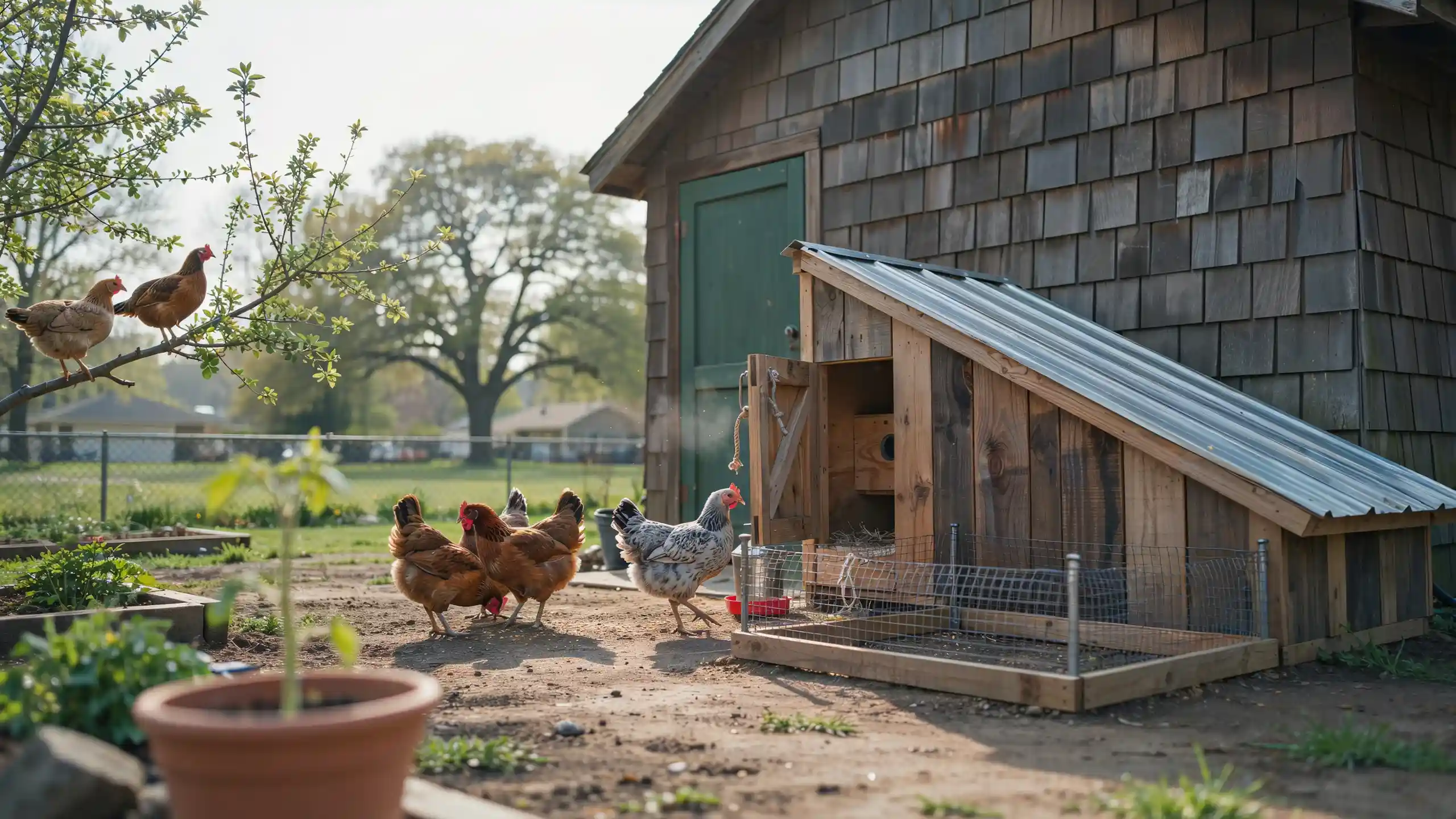
10. Lean-To Coop Attached to a Shed
| Detail | Information |
|---|---|
| Estimated Cost | $30–$80 |
| Best For | 4–8 chickens and existing shed owners |
| Difficulty Level | Moderate |
| Key Materials | 2×4 lumber, plywood or fence boards, corrugated roofing, hardware cloth |
| Main Benefit | Uses the shed’s existing wall as one side, which cuts material costs |
A lean-to coop is built against an existing shed or garage wall, using that wall as the back of the structure.
You only need to frame and close three sides and the roof, which noticeably lowers material costs. The shed wall also provides weather protection.
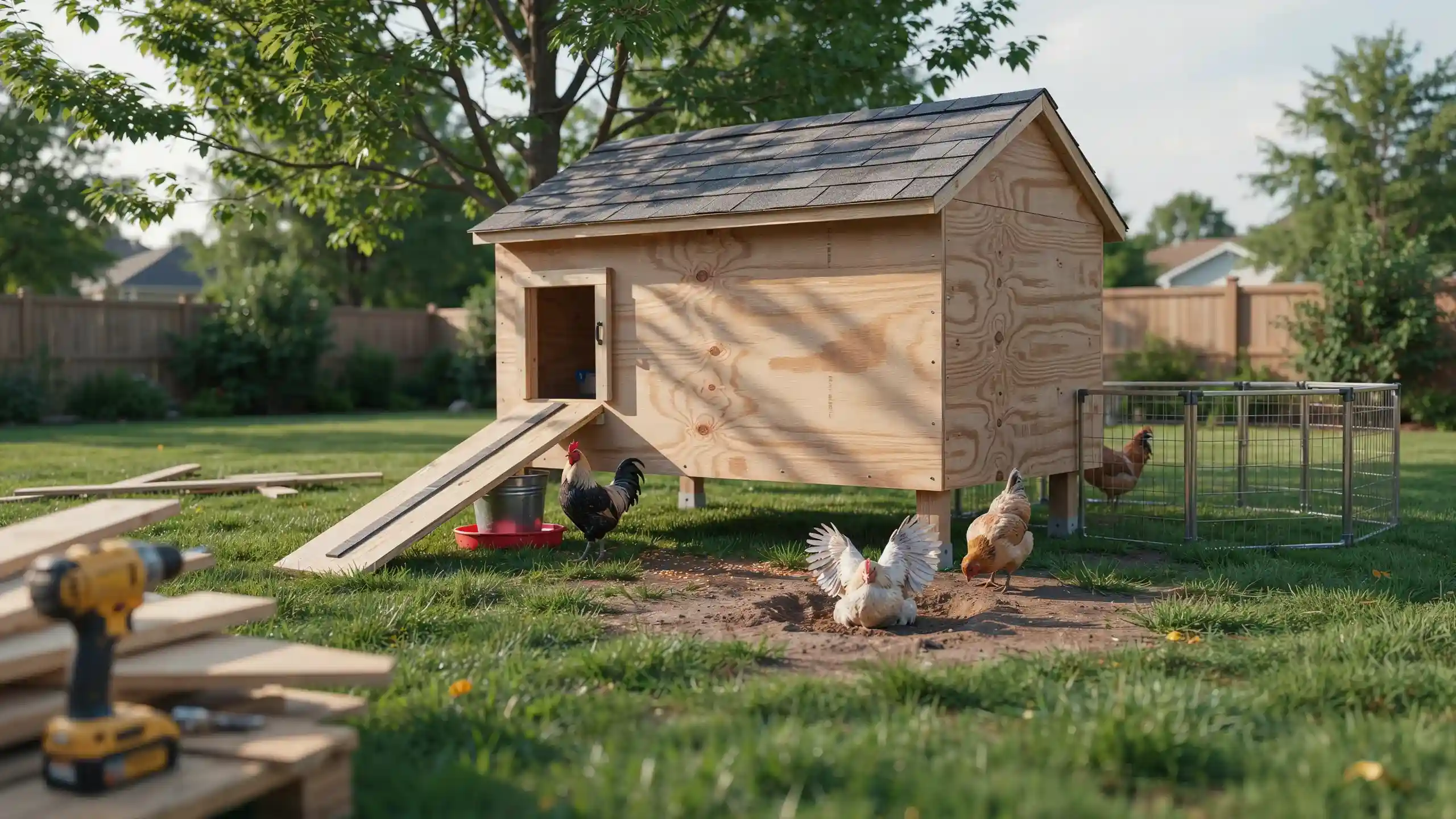
11. Plywood Budget Coop
| Detail | Information |
|---|---|
| Estimated Cost | $50–$90 |
| Best For | 4–6 chickens |
| Difficulty Level | Easy to Moderate |
| Key Materials | Two to three sheets of 3/4-inch plywood, 2×4 lumber, roofing felt, hardware cloth |
| Main Benefit | Simple, clean build using new materials with no need to source reclaimed supplies |
If reclaimed materials aren’t available to you, this is the most straightforward new-build option. Two sheets of 3/4-inch exterior-grade plywood, cut according to a simple plan, form all four walls and the floor.
A third sheet covers the roof. 2x4s frame the corners and support the structure. This coop goes from flat sheets to a standing structure in a weekend.
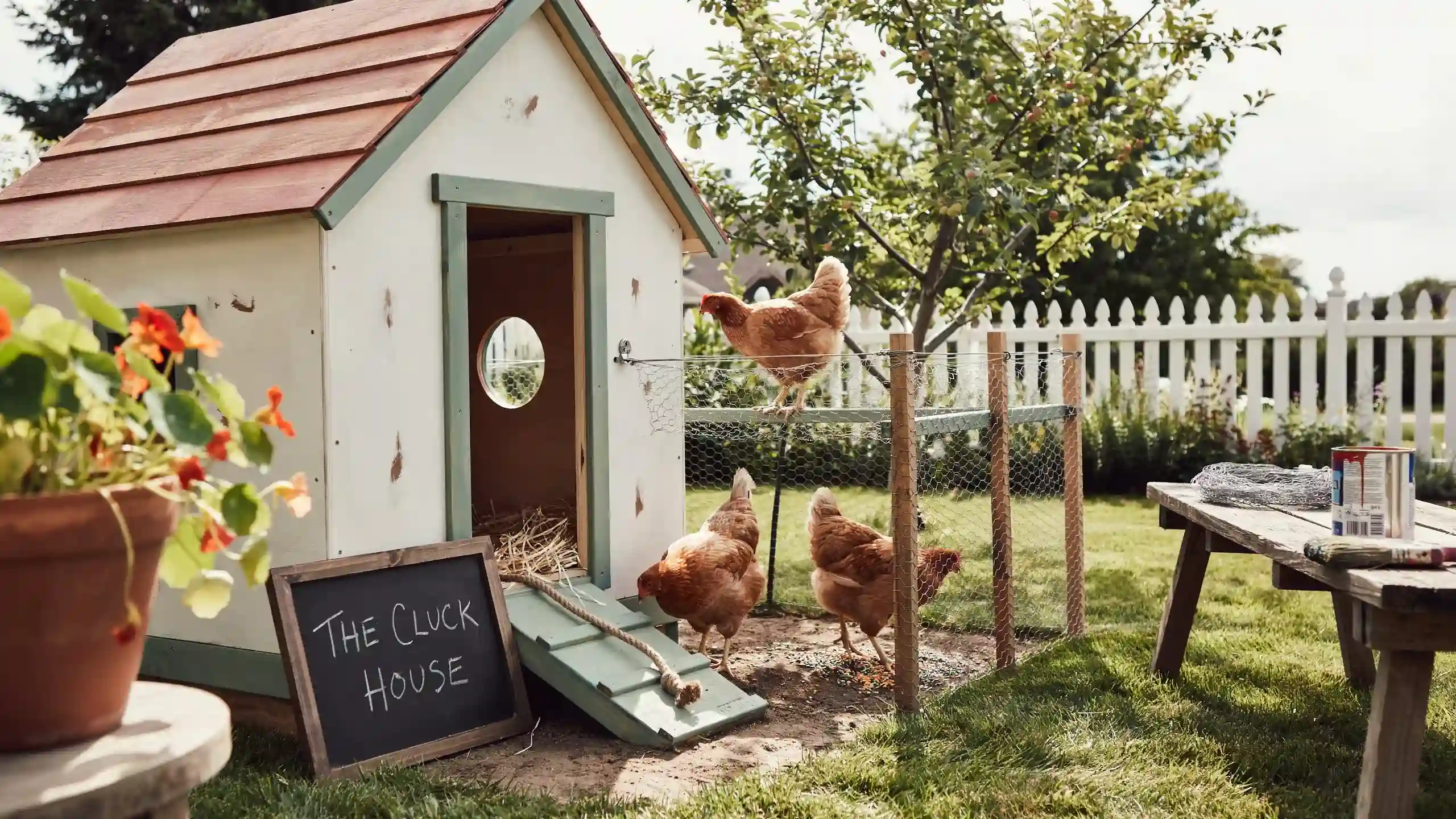
12. Recycled Playhouse Coop
| Detail | Information |
|---|---|
| Estimated Cost | $0–$50 |
| Best For | 4–8 chickens |
| Difficulty Level | Easy |
| Key Materials | Old children’s playhouse, hardware cloth, nesting box materials, roost bars |
| Main Benefit | Structure, roof, and walls already exist, and used playhouses are often free on Marketplace |
Wooden playhouses that families no longer need show up regularly on Facebook Marketplace for free or under $50.
Remove any plastic windows or mesh; replace with hardware cloth; add roost bars and nesting boxes; and the conversion is largely done.
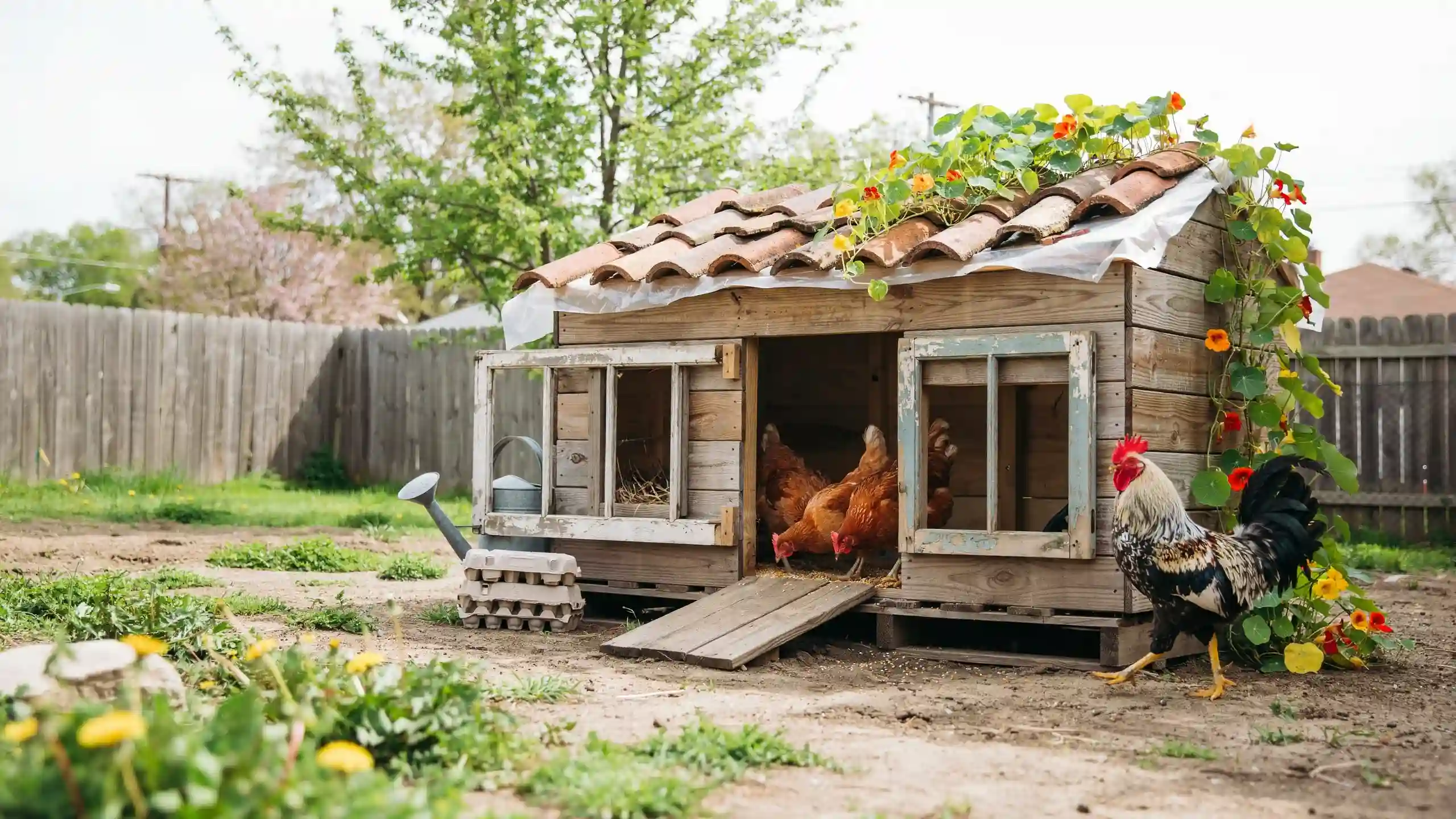
13. Upcycled Greenhouse Coop
| Detail | Information |
|---|---|
| Estimated Cost | $20–$60 |
| Best For | Mild climates and 4–6 chickens |
| Difficulty Level | Easy to Moderate |
| Key Materials | Old greenhouse frame, hardware cloth replacing glazing panels, plywood for one solid end |
| Main Benefit | Built-in ventilation, light, and airflow |
Old greenhouse frames are available cheaply at end-of-season garden sales or on Marketplace. Replace the plastic glazing panels with hardware cloth for full airflow and predator protection, and close one end with plywood to provide the chickens with a sheltered sleeping area.
Add a corrugated metal roof panel over the solid end to create a dry roosting zone. This design works well in warmer regions where extreme cold isn’t a factor.
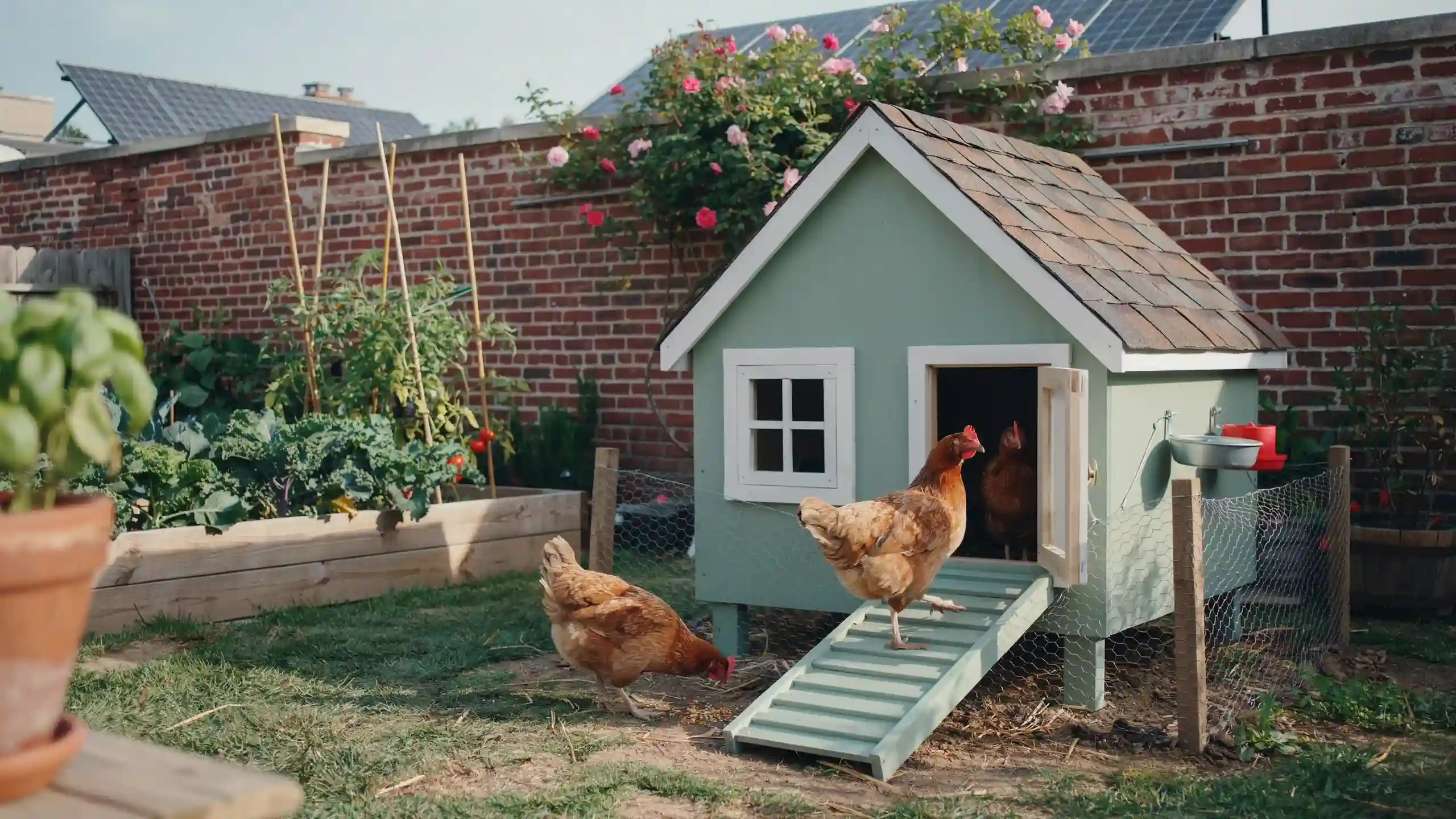
14. Compact Urban Chicken Coop
| Detail | Information |
|---|---|
| Estimated Cost | $60–$110 |
| Best For | City and suburban backyards with 2–4 chickens |
| Difficulty Level | Moderate |
| Key Materials | Cedar or pine boards, 2×3 framing, hardware cloth, exterior paint |
| Main Benefit | Clean appearance that blends well into a neighborhood setting |
In urban areas, chicken ordinances often cap flock sizes at 3 to 6 birds, and neighbor relations matter. A compact, tidy-looking coop is worth the slightly higher cost.
Using cedar for the exterior siding means it weathers well without painting, though paint adds color if you want the coop to match your yard.
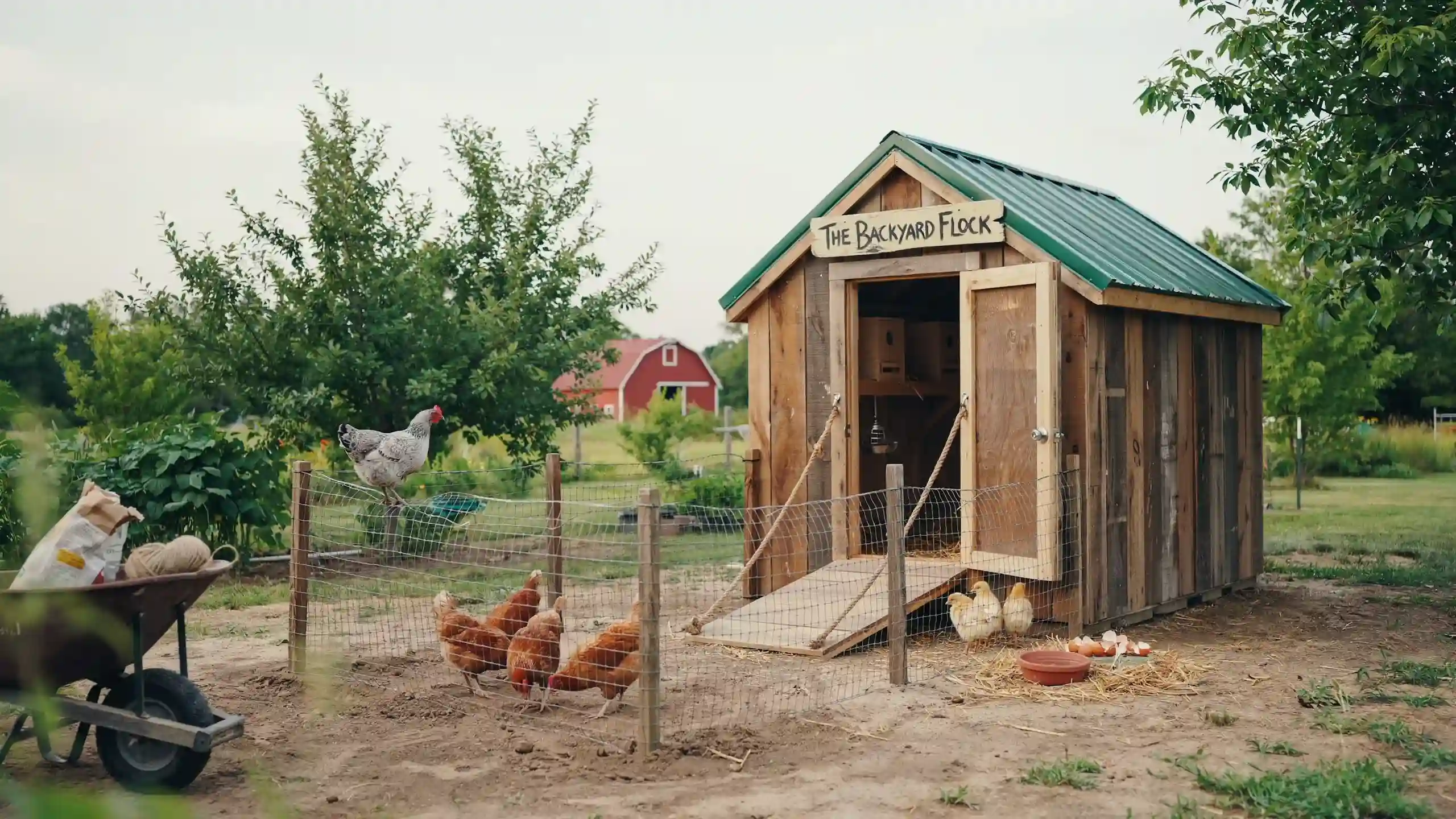
15. Walk-In Budget Chicken Coop
| Detail | Information |
|---|---|
| Estimated Cost | $100–$200 |
| Best For | 6–10 chickens and keepers who want easy access for cleaning |
| Difficulty Level | Moderate to Advanced |
| Key Materials | Reclaimed lumber or new 2x4s, plywood, corrugated metal roofing, hardware cloth, full-height door frame |
| Main Benefit | Full standing access makes cleaning, maintenance, and egg collection much easier |
Walk-in coops require more materials and take longer to build, but the convenience is worth it for larger flocks.
Using reclaimed lumber keeps costs in the $100-$200 range. A 5 by 8 foot walk-in coop comfortably houses 8 to 10 standard-size birds, with room for nesting boxes along one wall and roost bars across the back.
Cheapest Chicken Coop Ideas by Budget
Not every budget is the same. Here’s a quick overview of what’s realistic at each price point.
| Budget | Best Option | Capacity |
|---|---|---|
| Under $50 | Pallet coop | 2–4 chickens |
| Under $100 | A-frame coop | 4–6 chickens |
| Under $200 | Walk-in coop | 6–10 chickens |
Under $50
At this price, you’re building almost entirely with reclaimed or free materials. The pallet coop and wooden crate coop both land here comfortably. Expect to spend time sourcing materials in advance rather than at a hardware store. A pallet coop for 2 to 4 chickens is the most achievable build at this budget.
Under $100
The $50 to $100 range opens up more options: the A-frame coop, the small backyard coop, the hoop coop, and the lean-to build all fall within this range and use a mix of new and reclaimed materials. A 4 to 6-bird coop is very buildable here.
Under $200
With $100 to $200, you can build a proper walk-in coop or a well-finished portable coop on wheels. This budget allows for new hardware cloth across the full run, proper roofing materials, and a solid door. A coop for 6 to 10 birds with a covered run is achievable at this price point.
Where to Find Free or Cheap Building Materials
Finding affordable materials is often the easiest way to reduce the cost of a chicken coop. Many useful supplies are available for free or at a fraction of retail prices if you know where to look.
- Local construction sites: Ask the site manager for scrap lumber, plywood offcuts, or damaged boards before taking anything.
- Facebook Marketplace: Search terms like “free wood,” “free pallets,” “scrap lumber,” and “old fence boards.”
- Reclaimed lumber yards: Check salvage yards for cheaper boards, plywood, and odd-size wood pieces.
- Old sheds and fencing: Reuse cedar, pine, siding, or framing lumber, but discard anything soft or rotten.
- Community giveaway groups: Post in Buy Nothing, Nextdoor, or local Facebook groups asking for leftover wood or hardware.
A little time spent sourcing materials can save more money than changing your coop design. Always inspect reclaimed wood for rot, pests, or damage before using it in your build.
Common Mistakes That End Up Costing More Money
|
Conclusion
A low-cost DIY chicken coop is completely doable when you focus on what actually matters: solid predator protection, proper ventilation, weather-resistant roofing, and enough space for your flock.
Start with the flock size you have, gather your materials before finalizing your plans, and build only what you need.
A pallet coop for four chickens costs less than a dinner out. A proper walk-in coop for ten birds can be done under $200 with reclaimed lumber. The price is almost always lower than people expect before they start.
Pick the design that matches your budget and your flock, and build it right the first time.
Frequently Asked Questions
What is the Cheapest Way to Build a Chicken Coop?
The cheapest approach is to build with free reclaimed materials, pallets, salvaged fence boards, and scrap plywood sourced from Facebook Marketplace or local construction sites.
Can You Build a Chicken Coop for Under $100?
Yes. Several designs on this list come in well under $100, including the A-frame coop, the small backyard coop, and the hoop coop. The key is to source reclaimed wood for framing and siding, then allocate your budget.
Is Pallet Wood Safe for Chicken Coops?
Most pallets are safe, but you need to check the stamp. Pallets marked “HT” (heat treated) are fine to use. Pallets marked “MB” (methyl bromide) are treated with a chemical fumigant and should not be used around chickens or animals.
How Many Chickens Can a Small Diy Coop Hold?
A 4 by 4 foot coop (16 square feet) can house 4 standard-size chickens using the 4-square-feet-per-bird guideline. A 4 by 6 foot coop holds 6 birds. These numbers assume the chickens have regular access to an outdoor run.