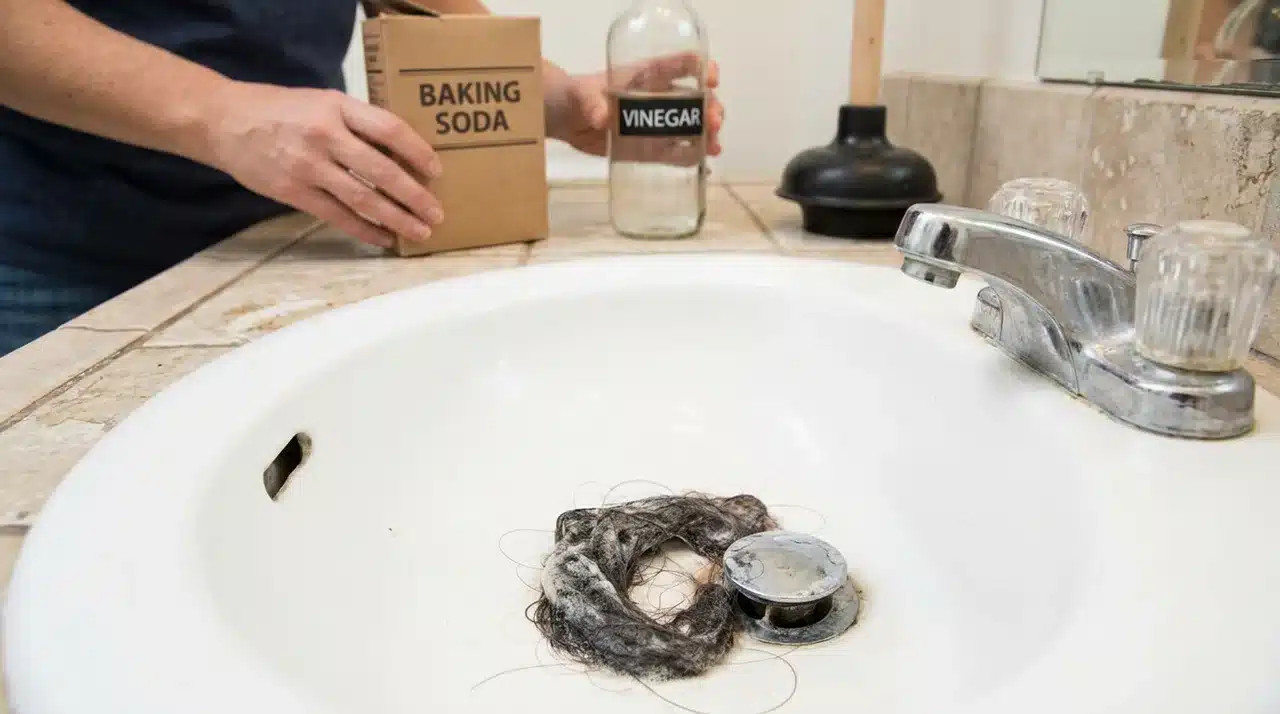
Your drain is slow, so you do what everyone does and search for a quick fix.
The same advice comes back every time: pour baking soda and vinegar down the drain and let the fizz handle it. After years of pulling apart clogged pipes during renovations, I can tell you that fizz is mostly for show.
It rarely touches the actual clog, and used often enough, it can quietly wear out your plumbing. That is the real reason you should never use baking soda and vinegar to unclog a drain.
It does not clear the blockage, it can shorten the life of older pipes, and it leaves the original problem sitting right where it started. Here is what actually happens inside the drain, the risks worth knowing, and the methods that do the job.
What Happens Inside Your Drain When You Mix the Two
When baking soda and vinegar meet inside a drain, they produce carbon dioxide gas, water, and sodium acetate. The fizzing and bubbling you hear is just the carbon dioxide escaping.
It looks powerful. It sounds like something is breaking down. The problem is that carbon dioxide gas has almost no ability to cut through grease, dissolve hair, or shift a solid blockage.
The reaction is over within seconds, and the drain walls are left exactly as they were. If you have standing water sitting on top of the clog, the mixture gets diluted before it even reaches the problem area, which makes the whole thing even less effective.
As an occasional rinse to freshen a smelly drain, it is harmless enough. As a way to clear a clog, it does almost nothing.
Why Baking Soda and Vinegar Do Not Actually Clear a Drain
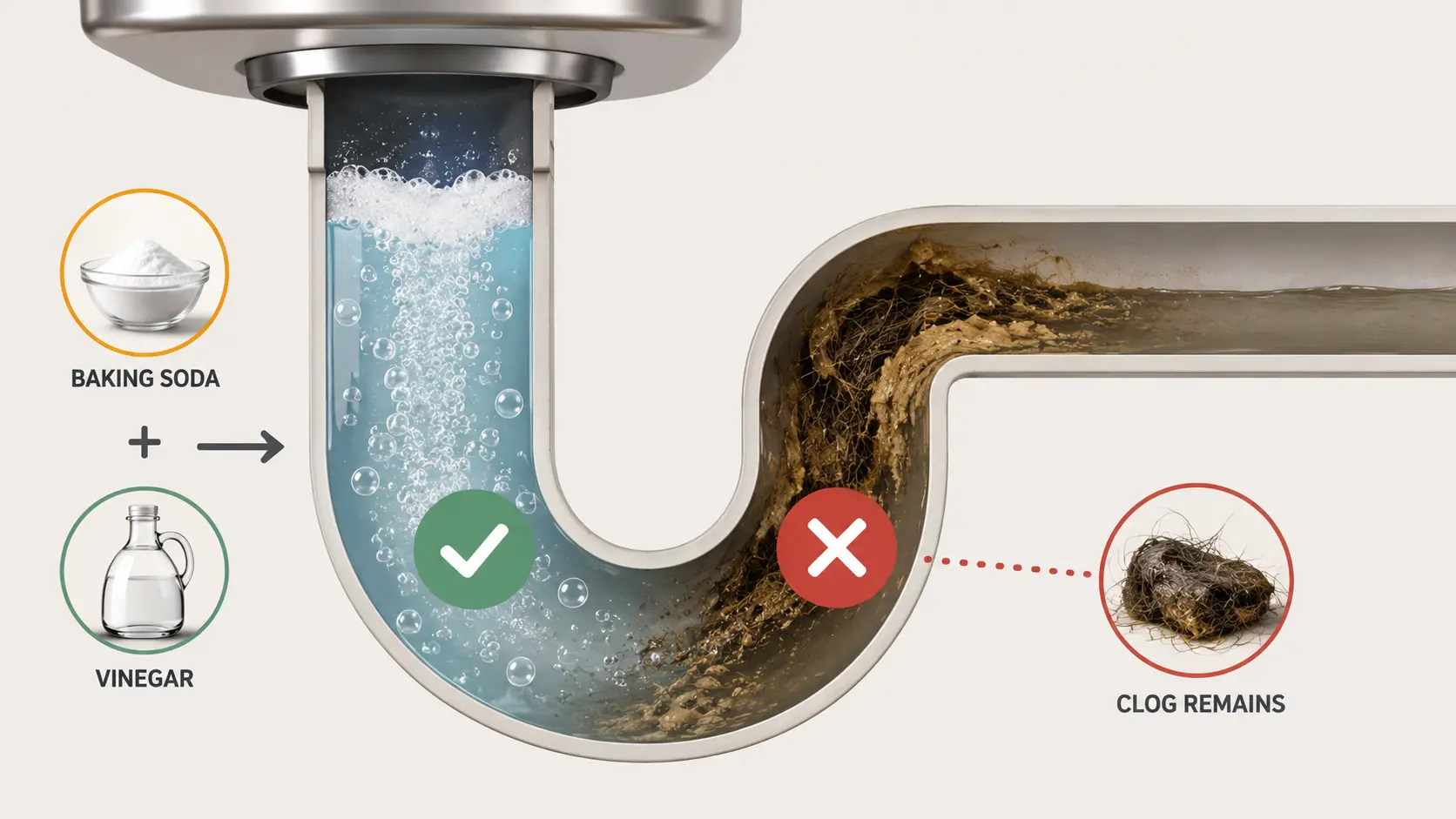
The fizz feels convincing, but the chemistry does not deliver. Here is what this method fails to handle.
- Grease buildup: Kitchen clogs are hardened fat and grease. Baking soda and vinegar produce neither heat nor sustained force. Fats stay right where they are.
- Hair and soap scum: Bathroom clogs are matted hair packed with soap residue. The fizzy reaction cannot dissolve or pull any of it out.
- Deep blockages: Most clogs sit several inches below the drain opening. The carbon dioxide disperses long before it gets there.
- Standing water: A drain with standing water needs an entirely different approach. The mixture is diluted before it ever reaches the clog, so it does even less than usual.
No matter the type of clog, baking soda and vinegar simply do not have what it takes to clear it.
The False Sense of Eco-Friendliness
Many homeowners choose baking soda and vinegar because they believe it is a greener alternative to commercial drain cleaners.
While the ingredients themselves are common household products, that does not automatically make the method effective or environmentally responsible. The problem is that the mixture often fails to remove the clog.
When the blockage persists, homeowners often repeat the treatment or eventually turn to stronger chemical products as the clog worsens. This can lead to more waste, more water usage, and additional plumbing repairs.
There is also a false sense of eco-friendliness surrounding this drain-cleaning hack. Tools such as drain snakes, plungers, and enzyme-based drain cleaners are often more sustainable because they address the clog without repeated treatments or unnecessary damage to plumbing systems.
The Risks Nobody Talks About
Ineffectiveness is just the start. Used as a one-off, baking soda and vinegar are fairly harmless. The trouble starts when it never works, so people repeat it for weeks or reach for something stronger.
- Pipe corrosion: With repeated use, vinegar’s mild acid can wear away older metal pipes like galvanized steel, copper, or cast iron, and over time, that shows up as weak spots near the joints. Modern PVC shrugs it off, but plenty of homes still run on metal.
- Rubber seal damage: Acid that lingers in the P-trap can slowly soften the rubber seals at pipe connections, and a worn seal turns into a slow leak behind a cabinet or wall. Repeated exposure is the risk here, not a single pour.
- The clog just hardens: When the fizz fails, the blockage usually sits and compacts right where it was. That is the moment people escalate to harsh chemical cleaners, and those are what actually eat at pipes and give off real fumes.
Used once in a while, none of this is likely. The damage tends to show up in homes where the fizzy fix became a weekly habit. On older renovations, the corroded traps and crusted seals I pulled out were almost always the result of years of buildup, rarely one bad decision.
What Plumbers Actually Recommend Instead
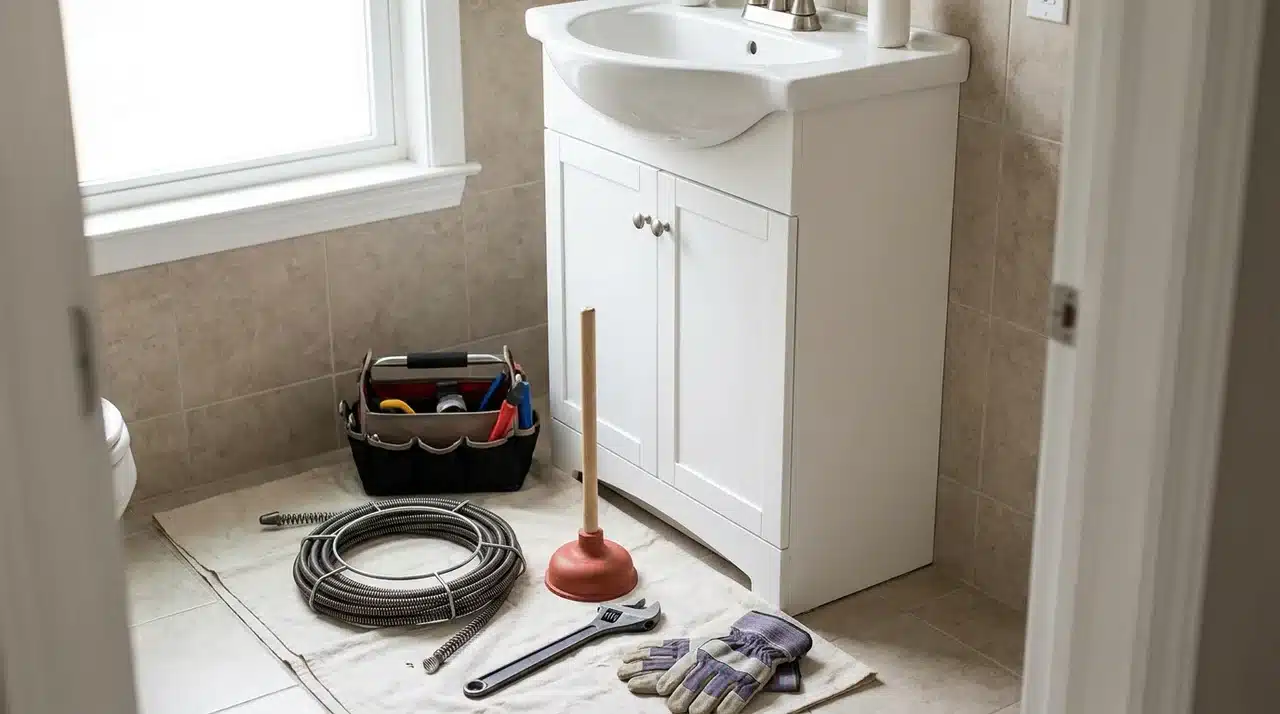
A plunger is the first thing to reach for. A cup plunger works on sinks and tubs, and a flange plunger works on toilets. Firm pressure clears most shallow clogs without any product.
For bathroom clogs, a drain snake grabs and pulls out hair and debris deep in the pipe. A basic handheld version costs under fifteen dollars.
Kitchen drains respond well to dish soap followed by near-boiling water. It cuts through fat and keeps things moving.
For slow drains, enzyme-based cleaners safely break down organic matter over a few hours. You can also try one of these easy drain recipes made from ingredients you already have.
For clogs that keep coming back, hydro jetting is what plumbers turn to. High-pressure water clears grease and debris at a level no household method can match.
Safe and Effective Chemical Alternatives
Some chemical cleaners can help when used carefully, but they should match the type of clog and be used exactly as directed.
1. Enzyme-Based Cleaners
These cleaners target organic buildup gradually and are often the safest option for routine drain care.
| Base | Details |
|---|---|
| Best for | Slow drains, organic buildup, soap residue, food particles, and light grease |
| How they work | Use enzymes or bacteria to break down organic matter over time |
| Pipe safety | Generally safer for most pipes and septic systems |
| Speed | Works slowly, often over several hours or overnight |
| Best use | Routine maintenance and preventing recurring buildup |
Enzyme cleaners are a safer first choice when the drain is slow but not fully blocked.
2. Caustic Cleaners (Sodium Hydroxide)
These products provide faster results by breaking down tough clogs with a strong chemical reaction.
| Base | Details |
|---|---|
| Best for | Tough grease, soap scum, and stubborn organic clogs |
| How they work | Create heat that helps break down the blockage inside the pipe |
| Pipe safety | Can damage some pipes if overused or used incorrectly |
| Speed | Works faster than enzyme-based cleaners |
| Safety note | Wear gloves, ventilate the area, and follow the label exactly |
Caustic cleaners can work well for stubborn clogs, but they should be used carefully and not repeated.
Signs You Should Call a Plumber Right Away
Some situations go beyond why you should never use baking soda and vinegar to unclog a drain. They point to a deeper problem that no DIY method can fix.
Call a professional if multiple drains are slowing at the same time, you hear gurgling from different fixtures, or foul smells keep coming back after cleaning.
A drain that blocks again within days of being cleared is another red flag. These are signs of a mainline issue that needs a camera inspection and professional tools to fix properly.
Simple Habits That Keep Your Drains Clear Year-Round
A few simple habits go further than any product. Here is what actually prevents clogs.
- Use a drain guard in every shower and tub to catch hair before it enters the pipe.
- Pour near-boiling water down your kitchen sink once a week to break up grease before it hardens.
- Never pour cooking oil or fat down the drain, even in small amounts.
- Get a professional clean once a year if you have an older home or a history of recurring clogs.
- Run cold water for 30 seconds after using the garbage disposal to fully flush waste through the pipe.
- Get a professional clean once a year if you have an older home or a history of recurring clogs.
Small habits done consistently will protect your pipes far better than any fizzy home remedy ever could.
Conclusion
The next time your drain slows down, skip the baking soda and vinegar. Now you know why you should never use baking soda and vinegar to unclog a drain. It does not clear the clog, it risks your pipes, and it costs you more in the long run.
A plunger, a drain snake, or a call to a licensed plumber will always get better results. Your plumbing is worth protecting.
If you have a stubborn clog that keeps coming back, contact a local plumber today and get it sorted before it turns into a bigger repair bill.
Frequently Asked Questions
Is it Safe to Use Baking Soda and Vinegar in a Garbage Disposal?
No, the acidic reaction can corrode the internal components of a garbage disposal and wear down its rubber parts.
How Long Does it Take for Vinegar to Damage Pipes?
Pipe damage from vinegar does not happen overnight, but consistent use over several months can visibly weaken metal joints and rubber seals.
Does Hot Water Alone Help with a Slow Drain?
Yes, pouring near-boiling water down a kitchen drain once a week is one of the safest and most effective ways to prevent grease buildup.