Starting a friendship bracelet with a string that is too thin, tangles easily, or runs out before the project is finished can quickly become frustrating. Choosing the wrong material can make even a simple bracelet harder to create.
The good news is that the right friendship bracelet string can make knotting easier, make colors stand out better, and make your finished bracelet last longer. With so many options available, it helps to know which types work best for different designs and skill levels.
This article covers the best friendship bracelet string types, popular brands, sizing tips, color choices, and ways to choose the right string for your next project.
Best Friendship Bracelet String at a Glance
Different strings work better for different bracelet styles. This quick table can help you choose the right one before buying.
| Need | Best String | Why It Works |
|---|---|---|
| Best overall | Embroidery floss | Easy to knot, colorful, and widely available |
| Best for beginners | Six-strand embroidery floss | Soft, simple to handle, and easy to separate |
| Best for patterns | Embroidery floss | Shows chevrons, stripes, and diamonds clearly |
| Best for beads | Nylon cord | Strong and smooth enough for many bead holes |
| Best budget choice | Multi-color floss packs | Gives many colors at a lower cost |
| Best premium choice | Branded embroidery floss | Smoother feel, richer color, and less fraying |
For most people, embroidery floss is the safest first choice. Choose nylon cord or elastic cord when beads are the main part of the bracelet.
What is a Friendship Bracelet String?
Friendship bracelet string is the material used to make knotted, braided, or beaded bracelets. Various types of string can be used, but some are easier to work with and more durable than others.
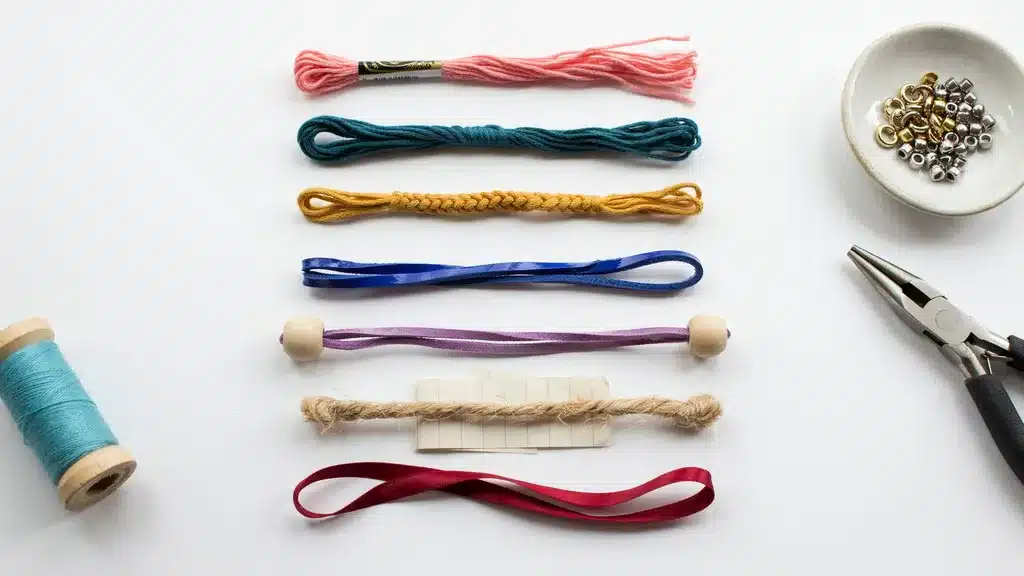
Common options include embroidery floss for traditional bracelets, pearl cotton for decorative designs, crochet thread for detailed patterns, nylon cord for beaded styles, elastic cord for stretch bracelets, and hemp cord for a natural look.
Embroidery floss is the most popular choice because it is affordable, widely available, soft, and comes in many colors, making it suitable for a variety of bracelet designs.
Types of Friendship Bracelet String
The type of string you choose affects how your bracelet looks, feels, and lasts. It can also change how clean different bracelet patterns appear.
1. Embroidery Floss

Embroidery floss is the most popular choice for friendship bracelets because it is soft, colorful, and easy to work with. It comes in a wide range of shades, making it ideal for creating patterns and designs.
The strands can also be separated for different thicknesses, giving makers greater flexibility in their projects.
2. Pearl Cotton

Pearl cotton has a smooth, slightly glossy finish that gives bracelets a polished appearance. Unlike embroidery floss, it is not meant to be separated into strands, which helps maintain a consistent texture.
It works well for decorative bracelets and offers bright colors that stand out while remaining comfortable to wear.
3. Crochet Thread

Crochet thread is a strong and durable option often used for detailed friendship bracelet patterns. Its firm structure helps knots hold their shape and creates clean, defined designs.
Because it is thinner than many other string types, it can be useful for intricate work that requires precision and consistency.
4. Nylon Cord

Nylon cord is commonly used for beaded bracelets because of its strength and resistance to wear. It handles regular use well and is less likely to fray over time.
Available in different thicknesses, nylon cord provides a reliable foundation for projects that need extra durability and support.
5. Elastic Cord

An elastic cord is ideal for stretch bracelets that can be slipped on and off without clasps. Its flexibility makes bracelets comfortable to wear and suitable for wrists of different sizes.
It is especially popular for beaded designs, as the stretch allows the bracelet to fit securely while remaining easy to use.
6. Hemp Cord

Hemp cord is a natural fiber considered good for tying, known for its sturdy feel and earthy appearance. It is often chosen for casual or bohemian-style bracelets and pairs well with wooden or natural beads.
The cord becomes softer with use while maintaining its strength, making it a practical option for everyday wear.
7. Satin Cord

Satin cord features a smooth surface and soft texture that gives bracelets an elegant look. It is often used for simple bead designs because it slides easily through larger bead holes.
Available in many colors, satin cord creates a sleek finish and adds a decorative touch to bracelet projects.
Friendship Bracelet String Comparison
A quick comparison can make it easier to pick the right string for your project. Focus on how easy it is to knot, how long it lasts, and whether it works with beads.
| String Type | Best For | Durability | Beginner Friendly | Works With Beads |
|---|---|---|---|---|
| Embroidery floss | Knotted patterns | Good | Yes | Sometimes |
| Pearl cotton | Smooth designs | Good | Yes | Sometimes |
| Crochet thread | Detailed bracelets | Strong | Medium | Sometimes |
| Nylon cord | Beaded bracelets | Strong | Medium | Yes |
| Elastic cord | Stretch bracelets | Medium | Yes | Yes |
| Hemp cord | Casual bracelets | Strong | Medium | Yes |
| Satin cord | Simple bead styles | Medium | Yes | Yes |
If you want a single thread for most projects, choose embroidery floss. For bead-heavy bracelets, nylon cord or elastic cord is usually easier to use.
How to Choose the Best Friendship Bracelet String
A few simple factors can help you choose the right bracelet string for your project.
- Material: Embroidery floss suits most friendship bracelets, while nylon and elastic cords work well for beaded styles.
- Thickness: Medium thickness is easier for beginners because it is simple to hold, knot, and measure.
- Color variety: Multi-color packs are useful when you want to try stripes, chevrons, names, or gift bracelets.
- Durability: Choose a stronger string if the bracelet will be worn daily or handled often.
- Pattern type: Detailed designs usually look cleaner with soft string that knots evenly, such as embroidery floss.
- Bead use: Check the bead hole size before buying the string so the cord can pass through without fraying.
- Budget: Starter floss kits are a practical choice because they offer a variety of colors at a lower cost.
A basic embroidery floss pack is a safe first buy for most bracelet makers. You can add nylon or elastic cord later for bead-based styles.
Best Friendship Bracelet String for Different Projects
Choose the string type that best suits your bracelet design for easier crafting and better durability.
| Project Type | Recommended String | Why It Works |
|---|---|---|
| Beginner bracelets | Embroidery floss | Soft, affordable, and easy to knot |
| Chevron patterns | Embroidery floss | Creates clear and even angled rows |
| Diamond patterns | Smooth embroidery floss | Supports detailed shapes and color changes |
| Name bracelets | Embroidery floss or nylon cord | Works with different bead sizes and designs |
| Beaded bracelets | Nylon cord | Strong and fits through many bead holes easily |
| Adjustable bracelets | Nylon cord | Handles sliding knots better than soft floss |
For most friendship bracelets, embroidery floss is the best all-around choice, while nylon cord is ideal for beaded or adjustable designs.
Best Friendship Bracelet String Brands to Buy From
Trusted brands offer smoother strings, brighter colors, and less fraying for friendship bracelets.
1. DMC
DMC is one of the most trusted embroidery floss brands available in the United States. Its six-strand cotton floss is known for consistent thickness, colorfast dyes, and minimal fraying, making it ideal for friendship bracelets.
DMC offers more than 500 colors, allowing detailed pattern work. Individual skeins typically cost between $0.65 and $1.20, while larger color packs range from $15 to $50.
2. Loops & Threads
Loops & Threads is Michaels’ in-house crafting brand and a popular choice for beginner bracelet makers in the USA. The embroidery floss comes in a wide range of colors and is easy to find in stores nationwide.
It offers good value for practice projects and casual crafting. Individual skeins generally cost $0.40 to $0.80, while multi-color packs typically range from $5 to $25.
3. Pepperell Braiding Company
Pepperell Braiding Company is a USA-based manufacturer known for producing crafting cords, threads, and bracelet-making materials. Its products are valued for durability, consistent quality, and suitability for both beginner and advanced projects.
The company offers cotton cords and specialty strings that work well for friendship bracelets and macramé. Depending on material and length, products generally cost between $3 and $20 per package.
4. Darice
Darice has long been a recognized American craft-supply brand, offering embroidery floss, bracelet kits, and assorted crafting materials. Its floss products are budget-friendly and available in a wide range of colors, making them suitable for school and group projects.
Darice floss packs often include dozens of colors at affordable prices. Most floss sets range from $5 to $20, depending on quantity and accessories included.
5. Bucilla
Bucilla is a well-known American needlecraft brand owned by Plaid Enterprises. While famous for embroidery and stitching kits, Bucilla also offers quality cotton floss suitable for friendship bracelet making.
The floss features bright colors, smooth texture, and dependable strand separation for intricate patterns. Individual skeins generally cost $0.60 to $1.00, while assorted floss packs and kits typically range from $8 to $30.
How Much Friendship Bracelet String Do You Need
The right string length depends on the pattern, bracelet size, and number of colors. It is better to cut a little extra than run out near the end.
- Simple bracelets: Cut each strand around 30 inches for the most basic designs.
- Chevron bracelets: Use about 36 inches per strand, as the pattern requires more knots.
- Diamond bracelets: Cut longer strands, typically 40 inches or more, to create detailed rows and color changes.
- Beaded bracelets: Add extra length so you have room to place beads and secure the ends.
- Adjustable bracelets: Leave extra string on both ends for sliding knots or braided ties.
- Larger wrists: Add a few extra inches to each strand for a more comfortable fit.
If this is your first project, learning how to make a bracelet can help you estimate string length more accurately.
Common Friendship Bracelet String Problems
Most friendship bracelet string issues can be fixed with simple adjustments and the right materials.
- Use shorter sections of string and separate strands before knotting if the string tangles easily.
- Trim damaged ends and avoid pulling too roughly if the string starts to fray.
- Choose high-quality embroidery floss and avoid soaking bracelets for long periods to prevent color bleeding.
- Maintain consistent tension throughout the bracelet to prevent uneven knots.
- Tighten knots firmly, but do not over-tighten if the bracelet feels stiff.
- Replace the worn or low-quality string before continuing if it breaks.
- Check bead hole sizes and use a thinner cord if the beads do not fit.
Many common bracelet problems can be avoided by knowing how to secure a bracelet.
Conclusion
Selecting the right friendship bracelet string can make the crafting process smoother, enhance the appearance of your patterns, and increase the durability of the finished bracelet.
Whether you prefer embroidery floss for traditional friendship bracelets or nylon and elastic cords for beaded creations, the ideal choice depends on your design and individual preferences.
By paying attention to factors such as material, thickness, and color, you can achieve better results and avoid common frustrations.
Choose a high-quality string that suits your project, pick your favorite colors, and enjoy creating a bracelet that is perfect to wear yourself or give to someone special.
Frequently Asked Questions
Can Friendship Bracelet Strings Get Wet without Damage?
Most friendship bracelet strings can get wet, but repeated exposure to water may cause colors to fade or fibers to wear faster.
Which Friendship Bracelet String is Best for Kids?
Soft embroidery floss is usually the best choice because it is easy to handle, affordable, and available in many colors.
How Many Bracelets Can One Skein of Floss Make?
A single skein can make several simple bracelets, depending on the pattern, width, and number of colors used.
Do Friendship Bracelet Strings Fade Over Time?
Quality embroidery floss resists fading, but frequent exposure to sunlight and washing can gradually reduce its color brightness.