If you’ve ever finished a tie-dye project and wanted to rinse it right away, you know waiting can feel like the hardest part.
But trying different wait times shows that giving the dye more time often leads to richer color and better results after washing.
If you’ve ever wondered how long to let tie-dye sit, you’re not alone. The timing can affect how bright the colors look, how well they stay in the fabric, and even how much white space remains in the pattern.
Here’s everything about waiting times, rinsing, and getting stronger color when you are learning to tie-dye.
Why Letting Tie Dye Sit Matters
After you apply dye, a chemical reaction begins inside the fabric. During this time, the color attaches to the fibers and becomes more permanent.
If you rinse too soon, some of the dye washes away. If you wait the right amount of time, the colors stay stronger after washing.
For anyone new to tie-dye, learning how to tie-dye correctly can help you avoid weak colors and uneven patterns.
This waiting time also helps the dye reach deeper into the folds. That matters most with thicker shirts, socks, and tote bags where color may take longer to settle.
Giving the dye enough time to set often leads to cleaner patterns and richer color after rinsing.
How Long Should You Let Tie Dye Sit Before Rinsing
Waiting longer doesn’t always mean better color; the right amount of time really depends on the look you’re going for.
These ranges reflect what appears most often in warm-room, fiber-reactive projects. Fabric weight and room temperature can slightly shift the numbers in either direction.
| Sitting Time | What to Expect | Best For |
|---|---|---|
| 6 to 8 hours | Dye is only partly bonded, so color looks lighter with crisp edges. | Quick projects, more white space |
| 12 hours | Noticeably stronger color; dye reaches deeper into folds. | Balanced color and contrast |
| 24 hours | Fully bonded, deepest and most even color, least fading. | Bright, long-lasting results |
| 48+ hours | No real gain in the past 24 hours; buys time. Fabric must stay damp. | When you can’t rinse on schedule |
For most fiber-reactive dye projects, 12 to 24 hours hits the sweet spot; keep the fabric damp and warm while it sits.
Does the Type of Dye Change the Waiting Time
Not every dye works on the same clock, so don’t assume yours needs an overnight rest. What’s in the bottle changes everything: some dyes need patience, and others are already done reacting by the time you rinse.
- Fiber-Reactive dye: needs 6 to 24 hours to bond fully, so give it time before you rinse.
- All-Purpose Dye: skips the wait entirely, since Rit sets during the simmer, not after.
- Disperse dye: made for polyester and set in a boiling bath, so most guides skip the rest period entirely, though a few recommend a short rest of a few hours for deeper color.
- Acid Dye: used on silk and wool, goes straight from a hot bath into a hot wash.
- Check the Label: when you’re unsure, read the dye’s instructions first, not the shirt’s.
So before you seal anything in a bag overnight, check your dye type. It takes ten seconds and saves you from waiting on a reaction that already finished hours ago.
What Happens If You Leave Tie Dye Sitting Too Long

Leaving your tie-dye longer than 24 hours usually won’t hurt the project, but it rarely improves the color much either.
As long as the fabric stays damp and sealed in plastic, you can often leave it for 48 hours or more without issues.
The real risk isn’t the extra time: it’s the fabric drying out. Once that happens mid-wait, the dye reaction stops early, leaving dark, uneven splotches instead of a clean, even color.
You’ll likely notice very little difference between items rinsed after 24 hours and those left for 48. The colors look nearly identical once washed, so aim for 24 hours when you can.
If life gets busy and you can’t rinse right away, don’t panic. A damp, sealed project can wait an extra day just fine. Just don’t let it dry out in the meantime.
Comparing Tie-Dye Setting Times
The comparisons below reflect patterns that show up again and again across everyday tie-dye projects, not one single controlled experiment, so treat them as a general guide rather than a guarantee for every fabric and dye combination.
6 Hours vs 12 Hours

The 6-hour piece had more white space and sharper color breaks. It looked cleaner in some areas, but a little lighter overall.
The 12-hour piece had stronger color and better coverage. It still kept some contrast, but the dye reached deeper into the folds.
This difference matters most with patterns that use several colors or sharp sections. For quick results, 6 hours in a warm room can work. For a safer color, 12 hours is the better pick.
12 Hours vs 24 Hours

The 12-hour piece looked balanced. The colors were clear, and the pattern still had good separation. The 24-hour piece looked richer and more filled in.
It had less white space, softer edges, and a stronger finish after rinsing. For most shirts, choose 24 hours when color depth matters.
But 12 hours still works well for contrast and a cleaner pattern, especially if you like clearer color breaks and some white space.
24 Hours vs 48 Hours

The 24-hour piece gave the best result. The color looked deep, even, and steady after washing. The 48-hour piece did not look much different.
As long as the fabric stayed damp, it was fine, but the extra wait added little. Only wait 48 hours if you forget to rinse or need more time.
For planned projects, 24 hours is usually enough to get a strong, even color. Waiting longer rarely noticeably changes the final result.
Does Temperature Affect How Long Tie Dye Should Sit
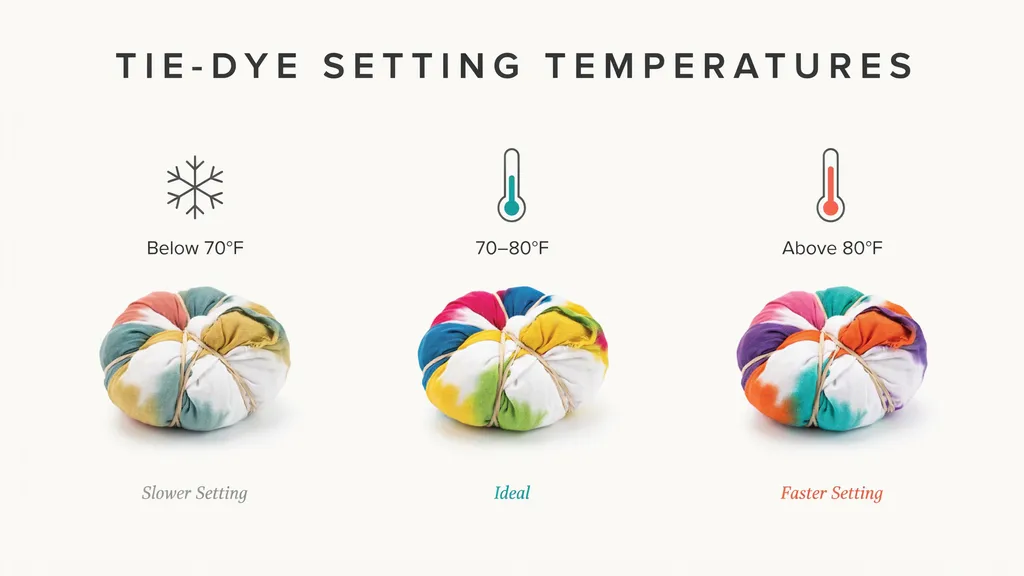
Temperature affects how quickly the dye reacts with the fabric while it sits. If the room is too cold, the bonding process can slow down. This can affect the strength of the final color.
A room around 70°F or higher usually gives the best results. The dye stays active longer, giving it more time to work its way into the fibers.
Cold spaces such as garages, basements, or laundry rooms can slow things down. Colors may appear lighter if the dye has not been given enough heat to set fully.
During winter, keep the project sealed in a plastic bag. Placing it in the warmest room of the house can help improve the final color and coverage.
How to Bag and Cure Tie Dye While It Sits
Moisture is what keeps your dye reacting once it’s on the fabric, so don’t let it dry out too soon. Right after dyeing, seal the item in a plastic bag or wrap it in plastic wrap: this locks in moisture and helps the color bond properly.
Some fabric types hold moisture better than others, so thicker cotton tends to stay damp longer, while thinner fabric can dry out fast if it’s not sealed well.
To speed things along, keep the bag in a room above 70°F, and wrap it in a towel if the space runs cold. Avoid garages, basements, or anywhere drafty.
If the fabric dries out mid-wait, you’ll likely see faded spots or patchy color once you rinse, so aim for 6 to 24 hours in a warm, sealed spot for the best result.
What Happens If You Rinse Tie Dye Too Early
A rushed rinse can affect both the color and the overall look of your project. Even a few hours too soon can change how the final piece turns out.
- Faded colors: Colors may appear faded because the dye has not had enough time to bond with the fabric fully.
- Excess dye loss: More dye can wash out during rinsing, leaving the finished design lighter than expected.
- Uneven sections: Some sections may appear uneven if the dye has not reached all areas of the folds.
- Dye bleeding onto white space: White sections can pick up loose dye during rinsing, making patterns look less defined.
- Faster fading over time: The shirt may lose color more quickly after the first few washes than a properly set project.
- Unpredictable results: Results are often less predictable, especially when working with multiple colors.
If you rinse too early, the project is not always ruined. The colors may turn out lighter than expected. In most cases, you can still get a wearable result, just not the boldest version of it.
What Real Tie-Dyers Say About Letting Dye Sit Longer
In a recent Reddit/Tiedye thread, experienced dyers agreed that fiber-reactive dye finishes bond within 24 to 48 hours, so extra time buys patience, not brighter color.
Several described speeding things up with gentle heat, a low oven, or a hair dryer aimed at a sealed bag, while keeping plastic off hot surfaces.
One reader waited 48 hours in a warm, humid room, then rinsed cold, then hot, then washed once before wearing it.
What to Do After Tie Dye Has Finished Sitting
After the waiting time is over, proper rinsing and washing can help keep more color in the fabric.
- Start with a cold water rinse while the item is still tied. This helps remove loose dye without spreading too much color.
- Untie the fabric and continue rinsing with cold water until most of the excess dye is gone.
- Switch to warm water and keep rinsing until the water runs much clearer.
- Soak the item in equal parts white vinegar and cold water for about 30 minutes. This helps lock in color before you wash it.
- Wash the item by itself the first time using a mild detergent. This helps remove any remaining loose dye.
- Avoid mixing it with other clothes during the first wash to reduce the risk of color transfer.
- Let the item air-dry when possible, or use a low-heat setting in the dryer.
Taking a few extra minutes during rinsing and washing can help your colors stay brighter for longer.
Conclusion
Knowing how long to let tie-dye sit is one of the most important steps in getting bold, long-lasting results.
When the dye is given enough time to set fully, it bonds with the fabric more effectively, creating clearer patterns. Rushing this stage often leads to faded tones and less defined designs after washing.
Most projects benefit from a proper setting period before rinsing, with timing influenced by fabric type, temperature, and dye strength.
The key is patience, allowing the color to fully develop before moving to the rinse stage.
Apply these timing tips to your next tie-dye project and compare the difference in color, clarity, and durability for yourself.
Frequently Asked Questions
Can You Leave Tie-Dye Overnight Before Rinsing?
Yes, leaving tie-dye overnight is one of the most common ways to help the color set properly.
Should Tie-Dye Be Washed the First Time Separately?
Yes, washing it separately helps prevent excess dye from staining other clothes.
Does All Tie-Dye Need to Sit Before Rinsing?
Most tie-dye requires several hours to set properly, but some dyes and techniques work with shorter rest times or no rest at all.
Can You Speed Up Tie Dye Curing With a Microwave?
Yes, a microwave-safe container can cure tie-dye in minutes using short bursts of heat instead of hours of waiting, but let it sit for about an hour first, then do it.